
Basement Bar Room Riddle: Spot the 7 Speakeasy Changes
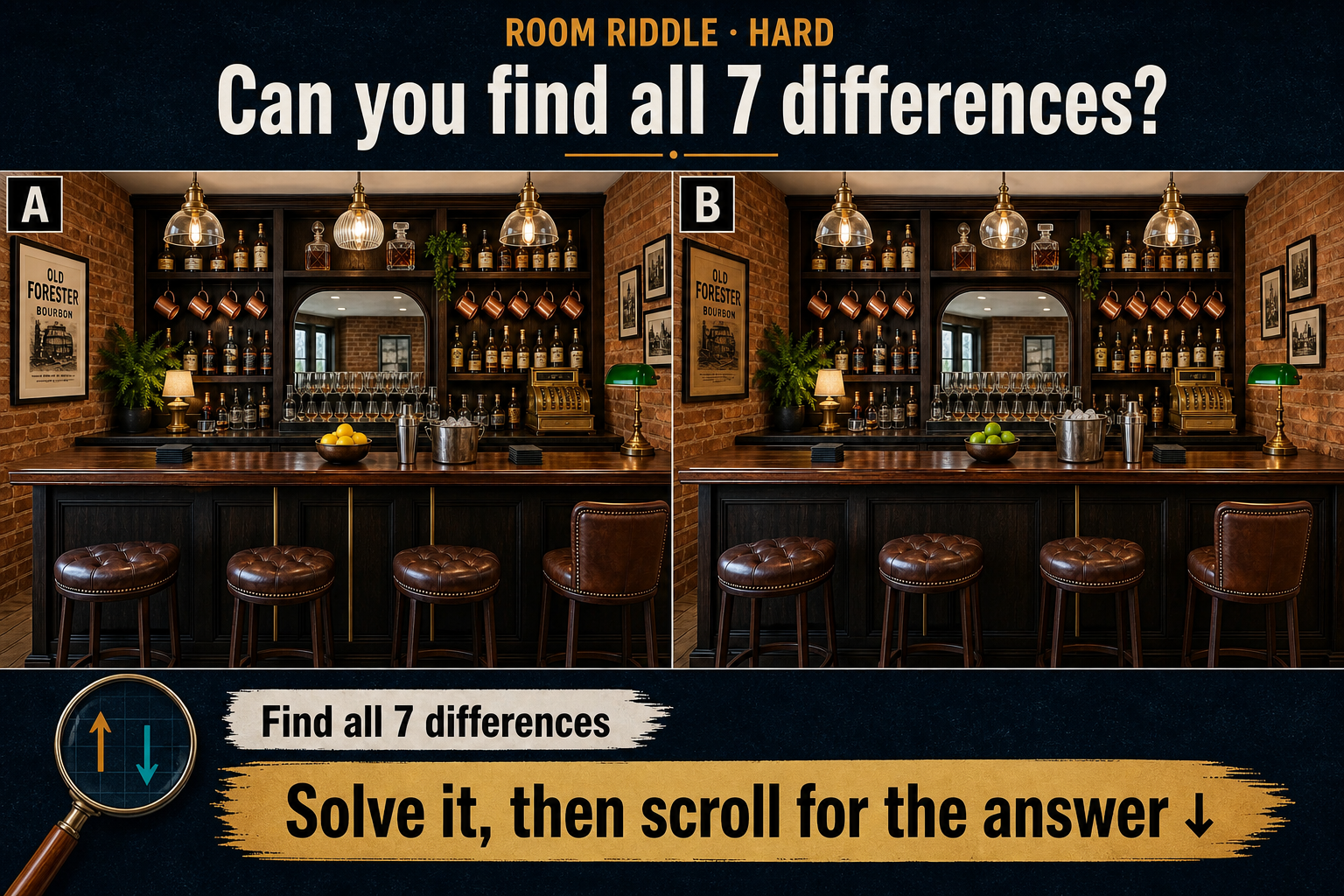
Transforming a basement into a moody speakeasy requires a careful balance of rich textures and warm lighting. Before we reveal the seven hidden differences in our puzzle, let’s explore the design choices that make this underground retreat so inviting.
Mastering the Moody Speakeasy Aesthetic
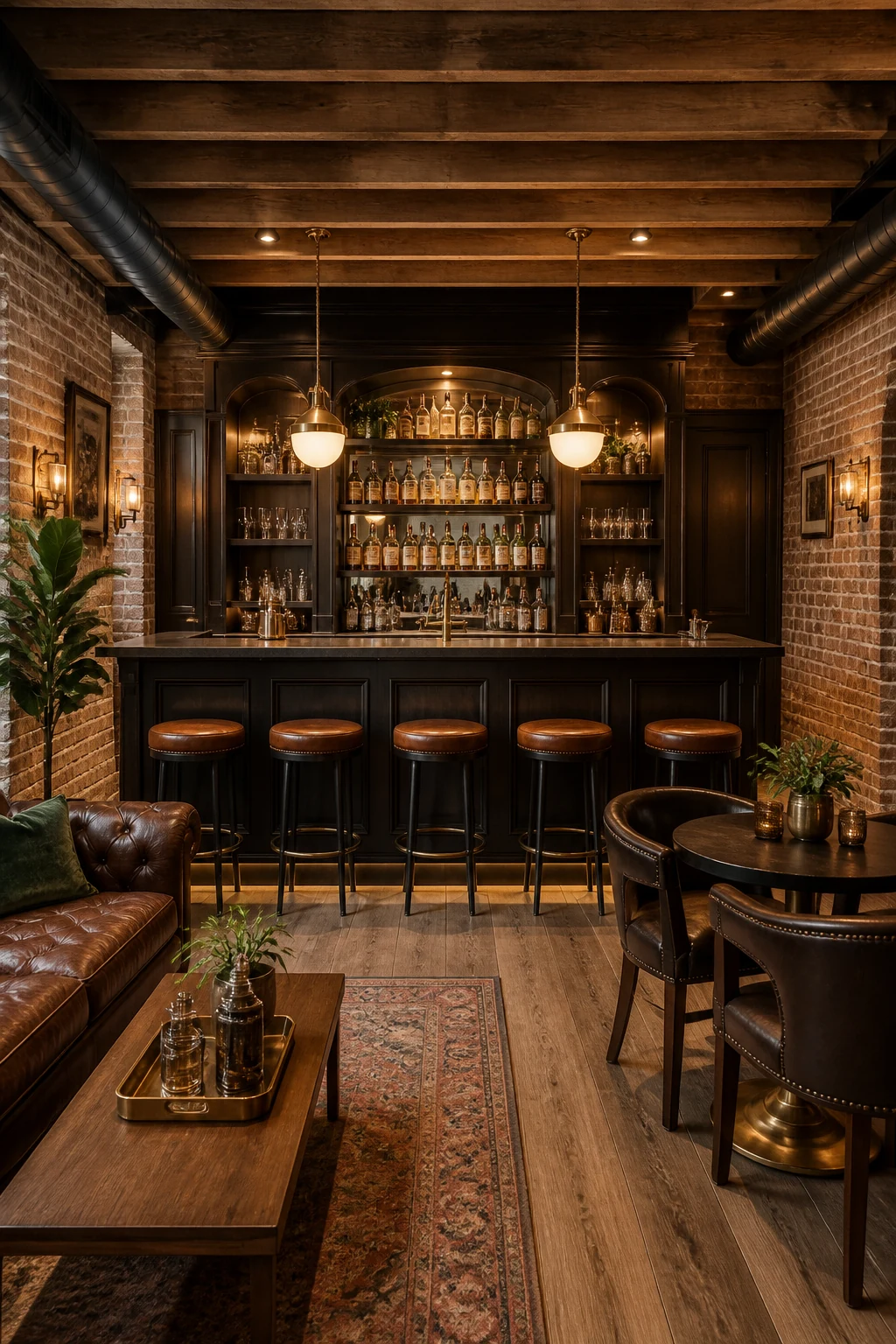
We analyze the room’s foundational materials before solving the puzzle because the rich, layered textures are exactly what camouflage the seven hidden changes. Combining raw, industrial textures like exposed brick with refined dark wood paneling establishes an authentic, cozy underground atmosphere that feels intentionally designed rather than just finished. Understanding these foundational speakeasy elements makes spotting the subtle changes in our puzzle much more rewarding.
All 7 Differences Revealed
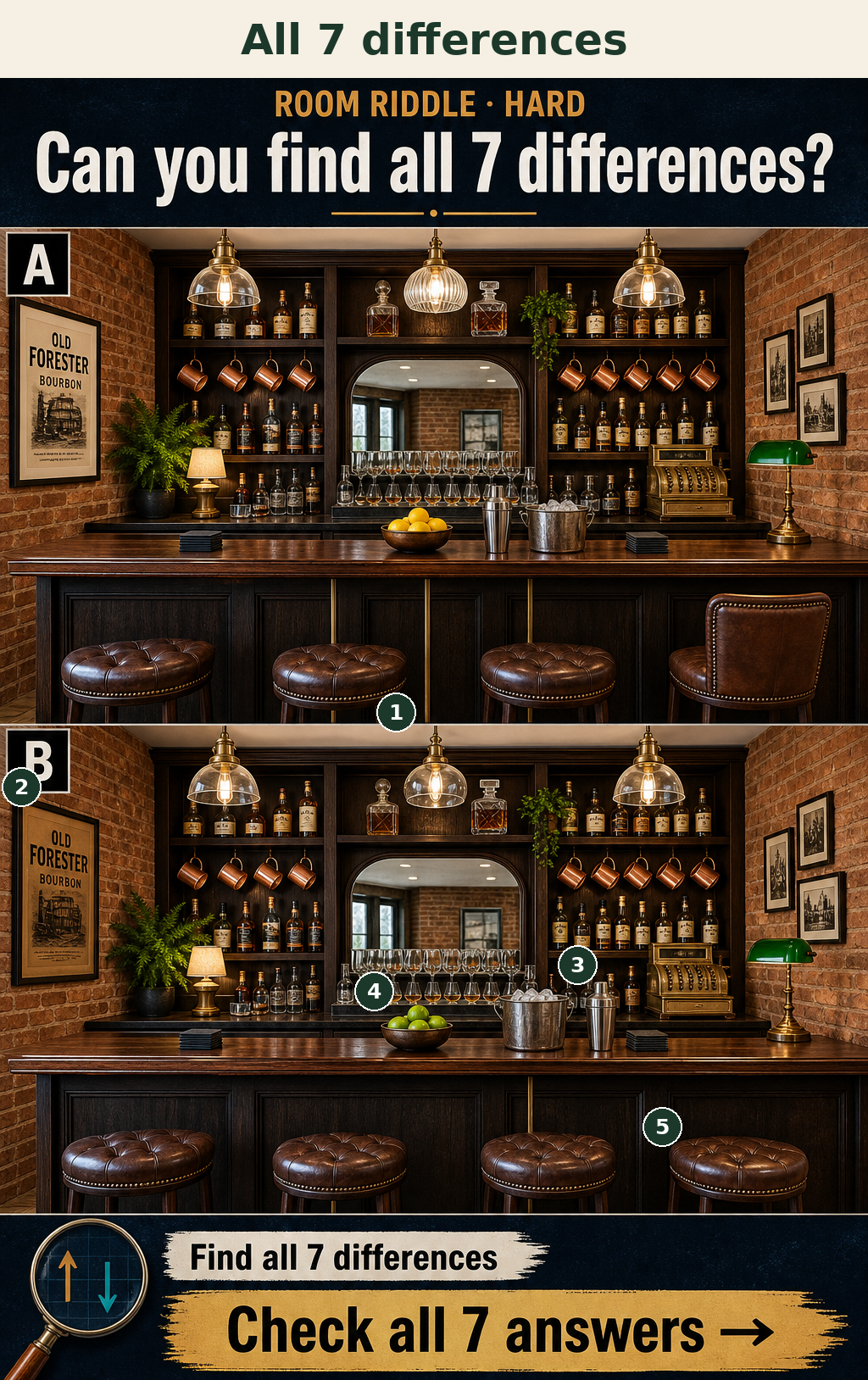
There are exactly seven distinct changes between the upper and lower basement bar views. The top shelf decanter stopper changes from round to square, and the citrus bowl holds yellow lemons instead of green limes. The cocktail shaker shifts to the right of the ice bucket, while the far-right stool loses its leather backrest. Finally, the framed poster drops its white matting, the middle pendant switches to smooth glass, and the bar front paneling drops from three brass strips to two.
Curating a Showstopping Back Bar
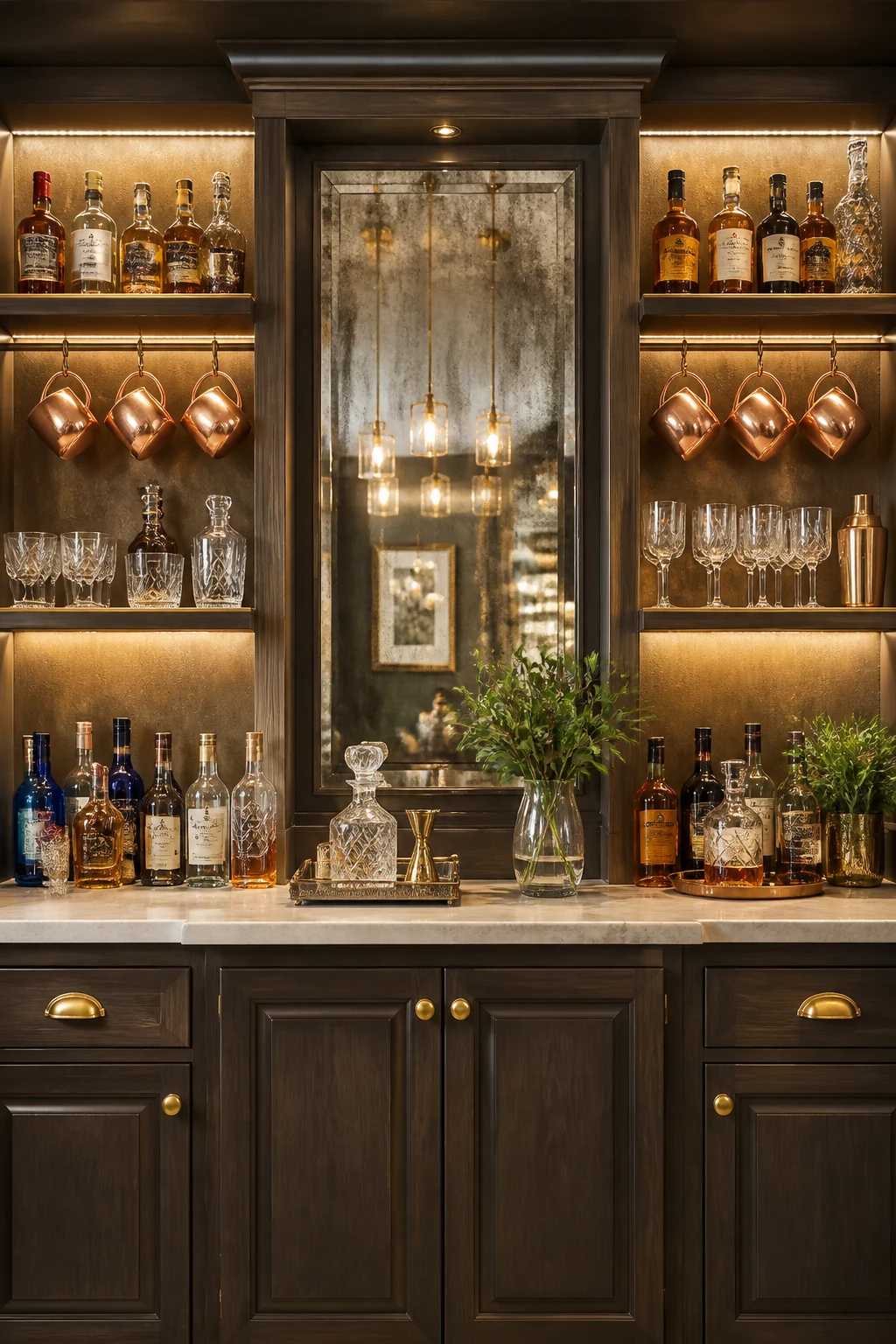
Symmetrical styling and reflective surfaces are crucial for keeping a dark, windowless room from feeling cramped or cavernous. Using a central mirror flanked by neatly arranged glassware and hanging copper mugs adds visual depth while bouncing warm pendant light back into the seating area.
Elevating with Leather and Brass
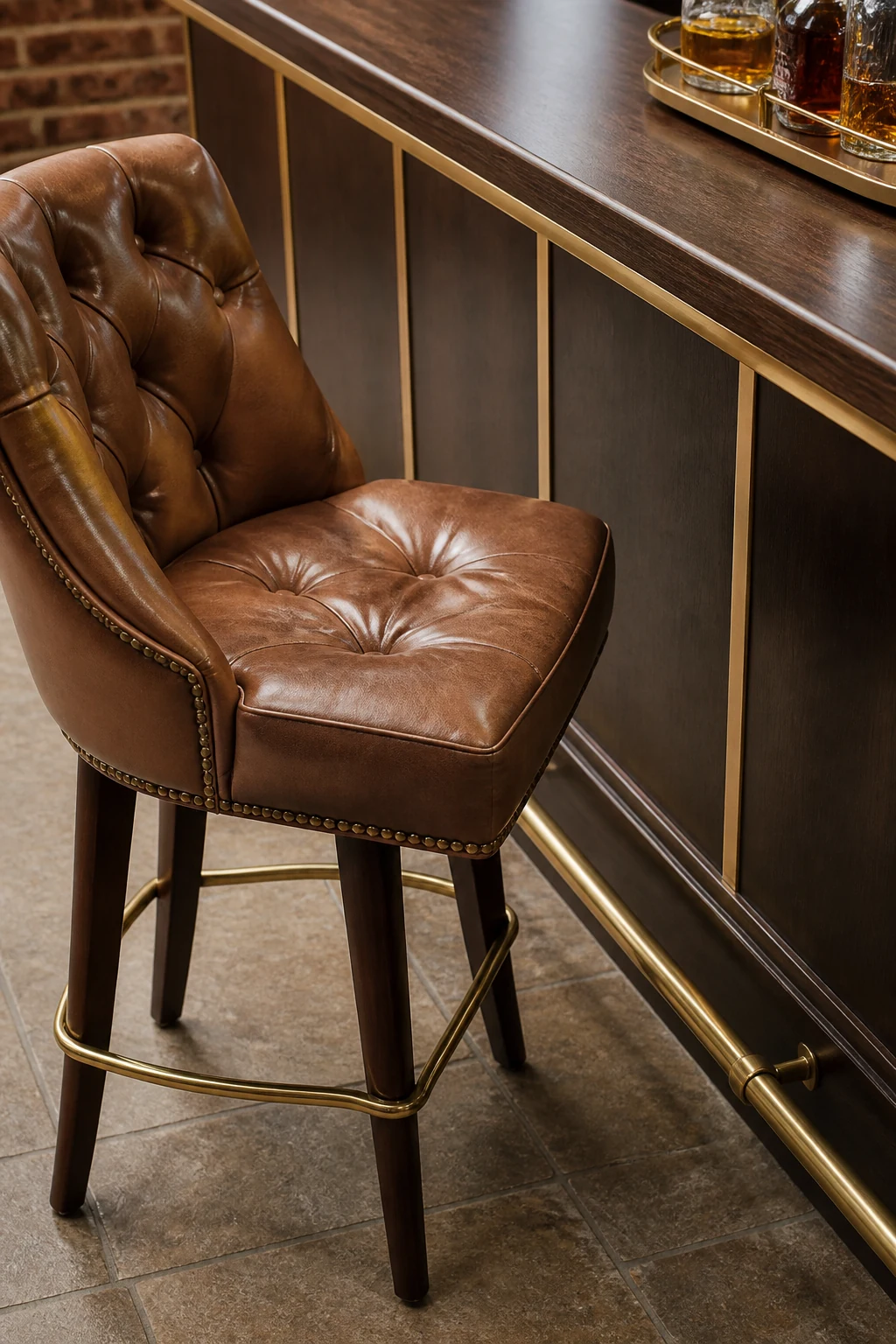
Tactile materials in seating and hardware provide the final layer of luxury that elevates a basic basement bar into a premium tasting room. Incorporate tufted leather upholstery and brass hardware, like footrails or vertical panel strips, to introduce a smooth, luxurious contrast against the rugged brick walls.