Small Space Drop Zone Setup & Exact Spacing Cheat Sheet
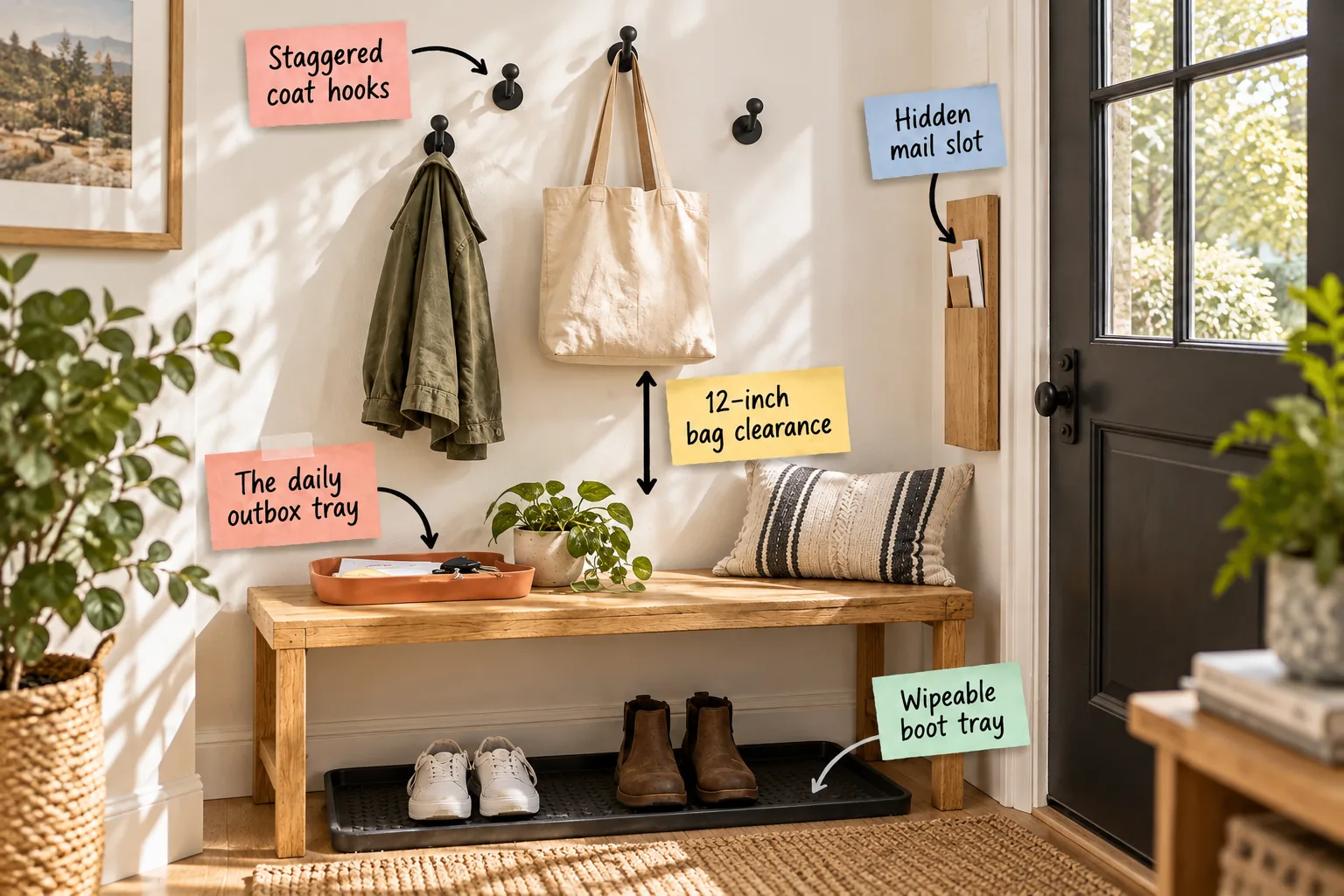
Transform your narrow entryway with this exact small space drop zone setup, perfectly balanced from the wall down to the floor. You will be able to arrange, measure and install a highly functional daily catch-all using our entryway drop zone spacing cheat sheet.
Planning Your Staggered Coat Hooks
We start this layout by mapping our vertical storage like a strategic chess move, ensuring coats never crowd the bench. Alternating your staggered coat hooks maximizes wall utility without creating a cluttered, overwhelming visual mass right inside your front door.
Understanding Vertical Wall Spacing
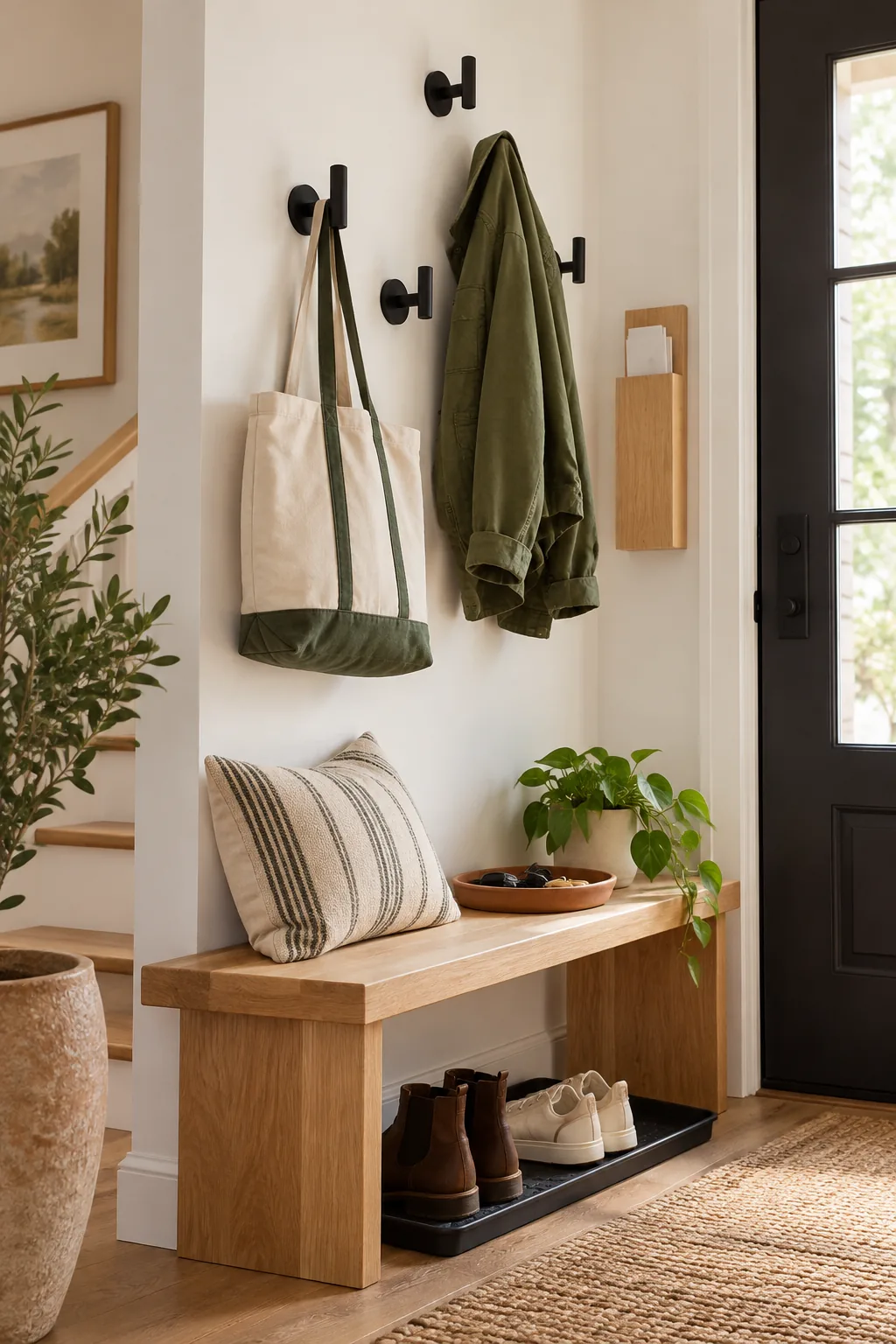
When we treat the wall as a blank canvas, every mounting decision impacts the room’s energy. Offsetting the hardware breaks up the visual monotony and prevents bulky winter layers from overlapping, which keeps the narrow corridor feeling beautifully open and airy.
Determining the Ideal Hook Height
I always recommend a standard placement that accommodates long coats while keeping everyday jackets within easy reach. Anchor your upper hardware row at exactly 60 to 65 inches from the floor to establish a strong, balanced centerline for the entire wall.
- Mark the top anchor tier: Measure up exactly 62 inches from the top of your baseboard and use a laser level to pencil your primary horizontal line.
- Measure the drop distance: Pull your tape measure exactly 8 to 10 inches straight down from your top marks to establish the secondary row.
- Center the lower hardware: Mark your lower placement perfectly between the upper points to create that breathable, staggered diamond pattern.
- Verify the coat clearance: Hang your longest winter coat on the top mark to ensure the hem clears the bench before drilling any holes.
Selecting Matte Black Hardware
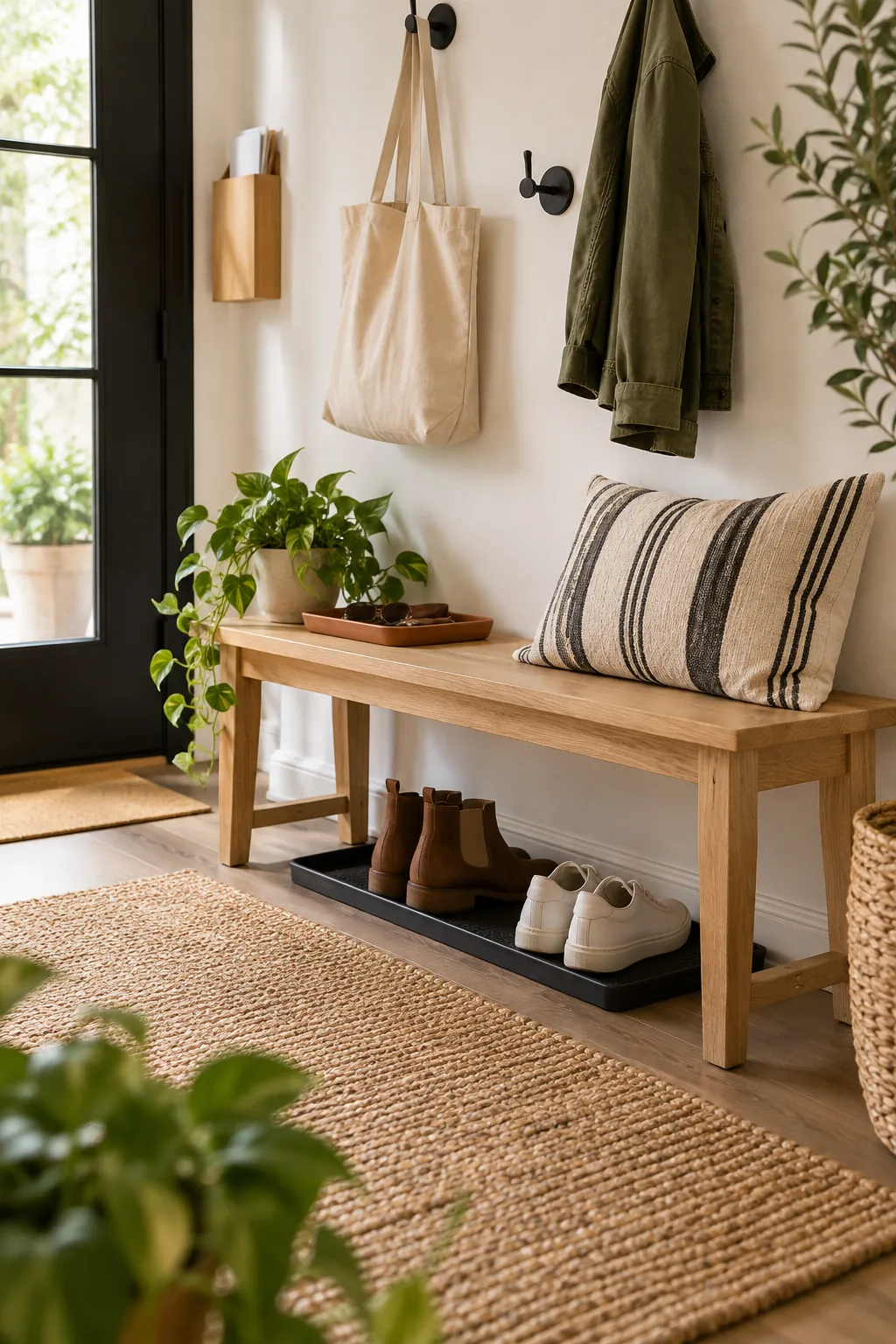
Choosing the right finish is critical for grounding a bright, narrow space with intentional contrast. Matte black wall hooks provide a strong visual anchor that draws the eye upward, beautifully balancing the lighter wood tones we will introduce on the bench below.
Securing Hooks to Wall Studs
Installing heavy-duty hardware requires more than just standard drywall anchors if you want the system to last. Always use a reliable stud finder to anchor at least your outermost hooks directly into the wood framing for maximum load-bearing strength.
Mounting the Hidden Mail Slot
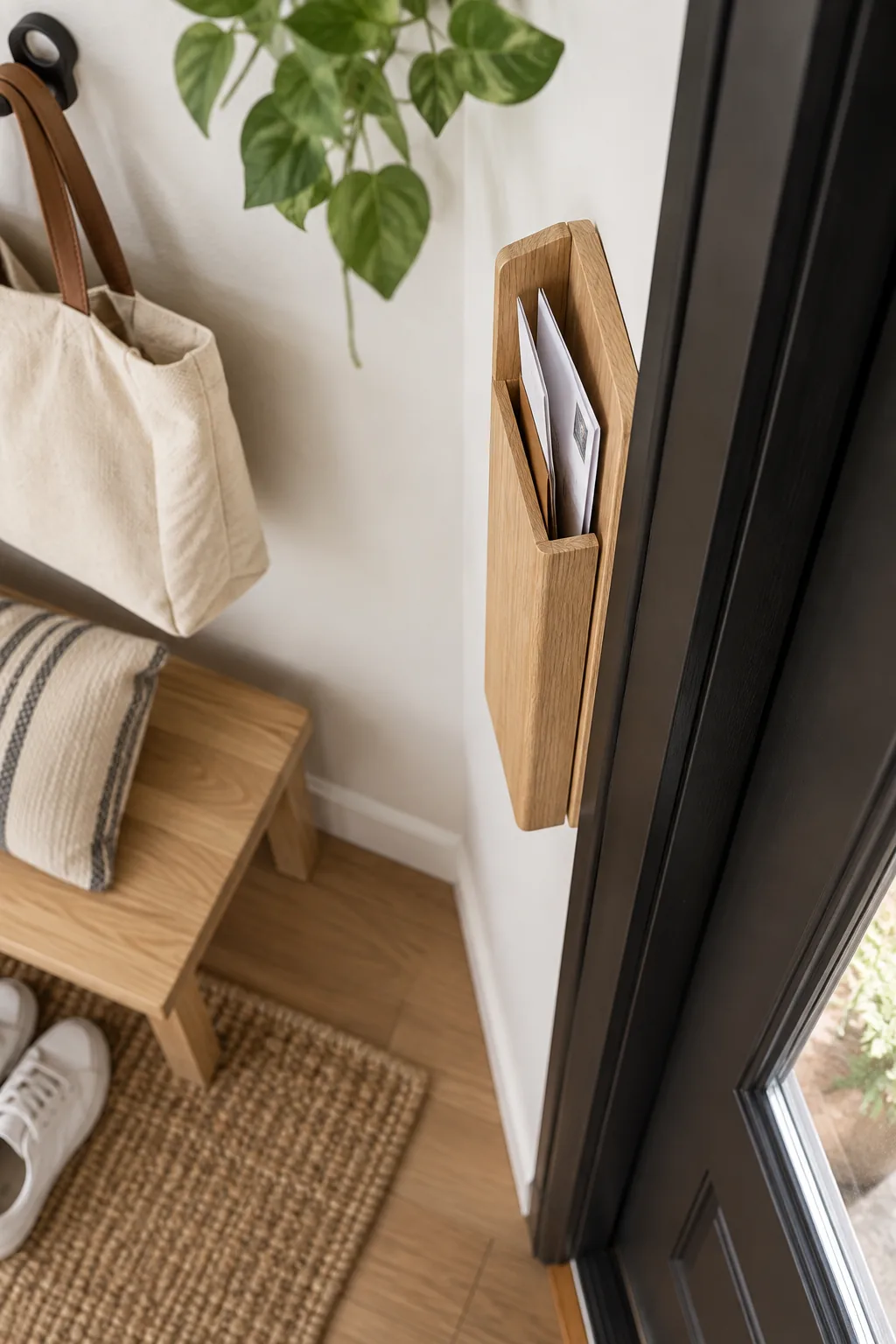
Next, we activate the often-ignored narrow strip of wall directly beside your door frame. Installing a slim hidden mail slot here captures incoming letters and bills immediately, preventing paper clutter from migrating onto your pristine kitchen island.
Positioning the Organizer at Eye Level
Proper ergonomic placement ensures this drop zone actually gets used every single day by everyone in the house. Mount the top edge of your light oak mail pocket at 58 inches high so sorting envelopes feels like a natural, effortless motion.
| Organizer Style | Maximum Width | Mounting Height | Best Used For |
|---|---|---|---|
| Slim vertical pocket | 6 inches | 58 inches high | Standard letters and bills |
| Tiered wall basket | 10 inches | 54 inches high | Catalogs and thick magazines |
| Flush magnetic board | 12 inches | 60 inches high | Invitations and quick notes |
| Key rack combo | 8 inches | 50 inches high | Outgoing mail and car fobs |
| Floating picture ledge | 4 inches | 56 inches high | Displaying decorative outgoing cards |
Choosing a Slim Pocket Profile
A bulky wall pocket will intrude on your shoulder space as you walk through a narrow corridor. Selecting a profile that extends no more than 2 inches from the wall ensures the passage remains unobstructed and visually streamlined.
Managing Incoming Envelopes
Treat this hidden slot as a strict temporary holding zone rather than a long-term filing cabinet. By limiting the physical capacity of the pocket, you force a healthy weekly habit of processing paperwork before it visually overwhelms the entryway.
Measuring the 12-Inch Bag Clearance
The vertical gap between hanging items and your seating area dictates the entire functional flow of the bench. In my own Denver home, I learned quickly that leaving exactly a 12-inch bag clearance below my longest tote prevents crushed groceries.
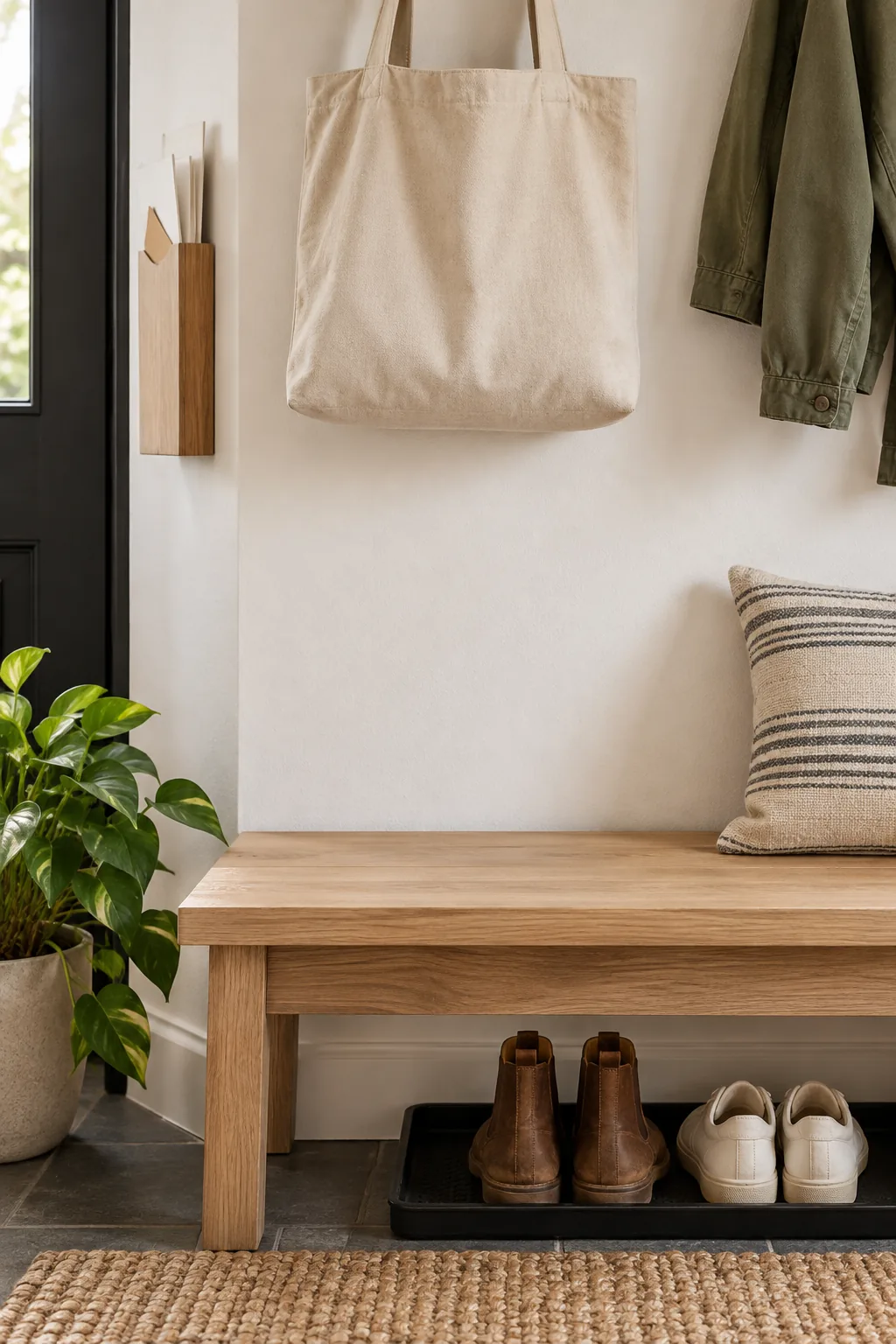
Accommodating Long Canvas Totes
This specific negative space honors the Eastern design principle of Ma, allowing the functional zones to breathe. When bags hang too low, they visually merge with the seating area, destroying the clean, structured separation that makes this entryway work.
Setting Up the Daily Outbox Tray
Moving down to the bench surface, a dedicated catch-all is essential for intercepting items headed out the door. I placed the daily outbox tray on the bench end nearest my door, and it completely stopped my car keys from getting lost.
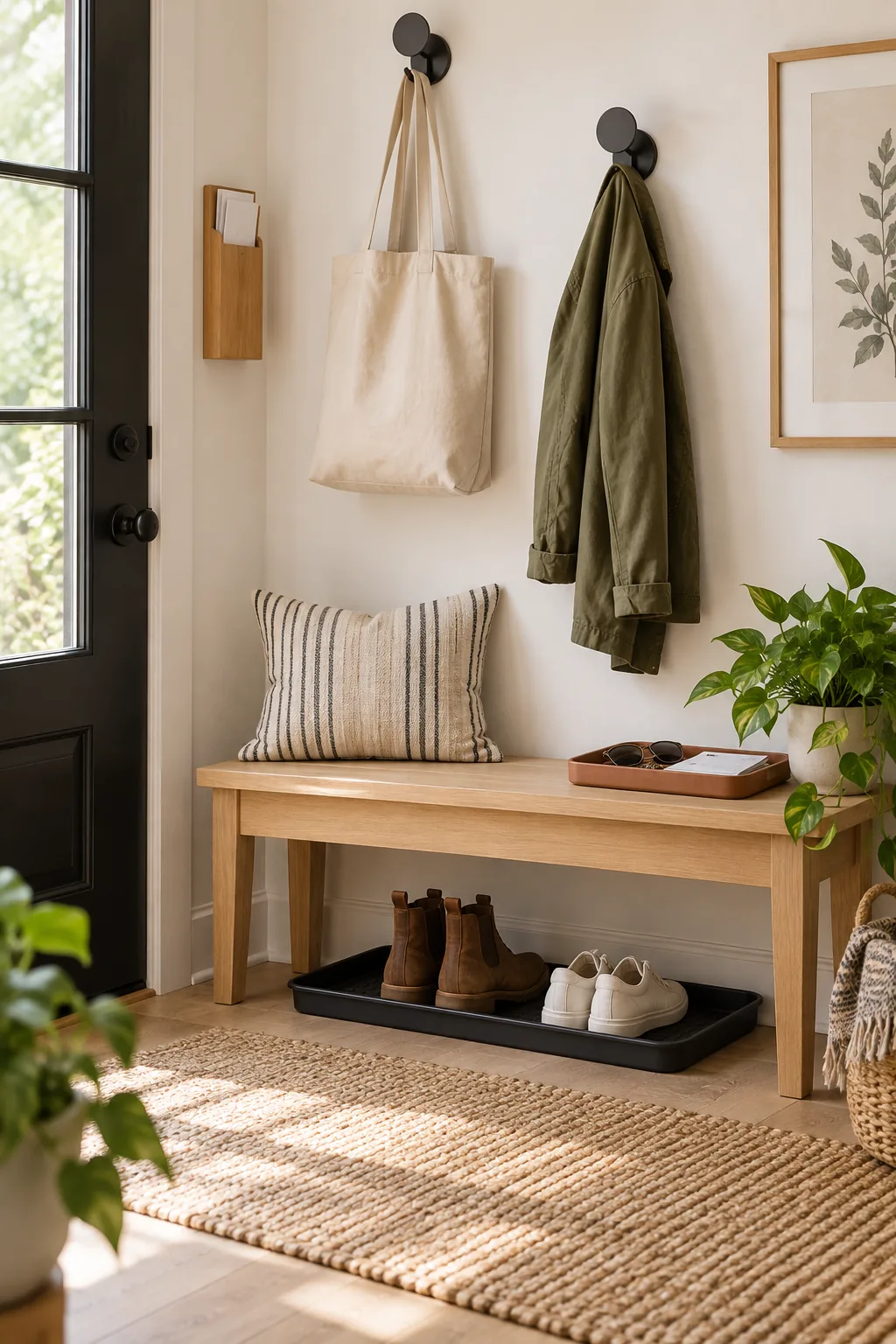
Choosing Warm Terracotta Materials
Introducing natural earth tones onto a rigid wooden surface softens the overall aesthetic while maintaining strict organization. You want a vessel that feels deliberately chosen, grounding the outgoing items with a touch of organic warmth and subtle, matte texture.
Curating the Bench Surface
Avoid the temptation to fill the entire wooden seat with decorative objects or oversized potted plants. Leaving at least two-thirds of the bench completely clear provides essential seating space for lacing up shoes without feeling cramped or overwhelmed.
Sizing the Wipeable Boot Tray
Finally, we address the floor level, where wet shoes threaten to disrupt our carefully planned circulation path. A sleek wipeable boot tray tucked neatly beneath the bench protects your floors without creeping into the main walkway.
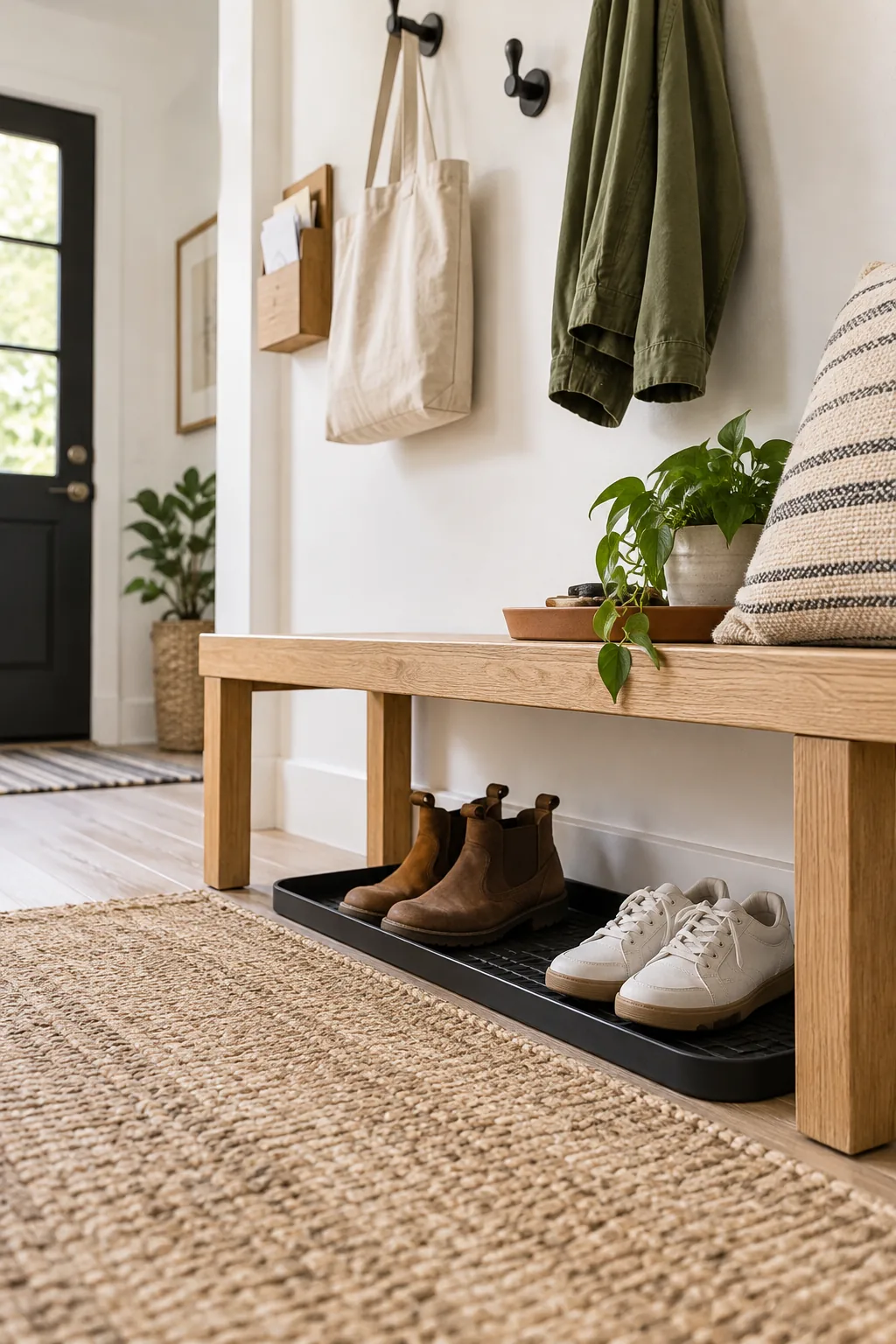
Hiding the Mat Beneath the Bench
The secret to a pristine floor plan is ensuring your utility pieces never fight with your furniture footprint. Choose a mat that is at least 2 inches narrower than the interior distance between your bench legs so it slides completely flush.
Preventing Tripping Hazards
Buying an oversized mat that extends past the bench legs creates a constant, frustrating tripping hazard. Always measure the interior leg span first, ensuring the rubber edges remain strictly confined within the shadow line of the wooden seat above.
Selecting a Flexible Rubber Design
Thick, rigid plastic trays often crack under pressure and create an awkward visual transition against hardwood floors. A sleek, flexible rubber design hugs the floor seamlessly, providing a watertight barrier that practically disappears into the shadows beneath the seat.
Entryway Drop Zone Spacing Cheat Sheet
We have built this system layer by layer, but the magic happens when these precise dimensions work together. Replicate this exact visual balance by strictly following the standardized measurements that keep the visual weight perfectly distributed across the wall.
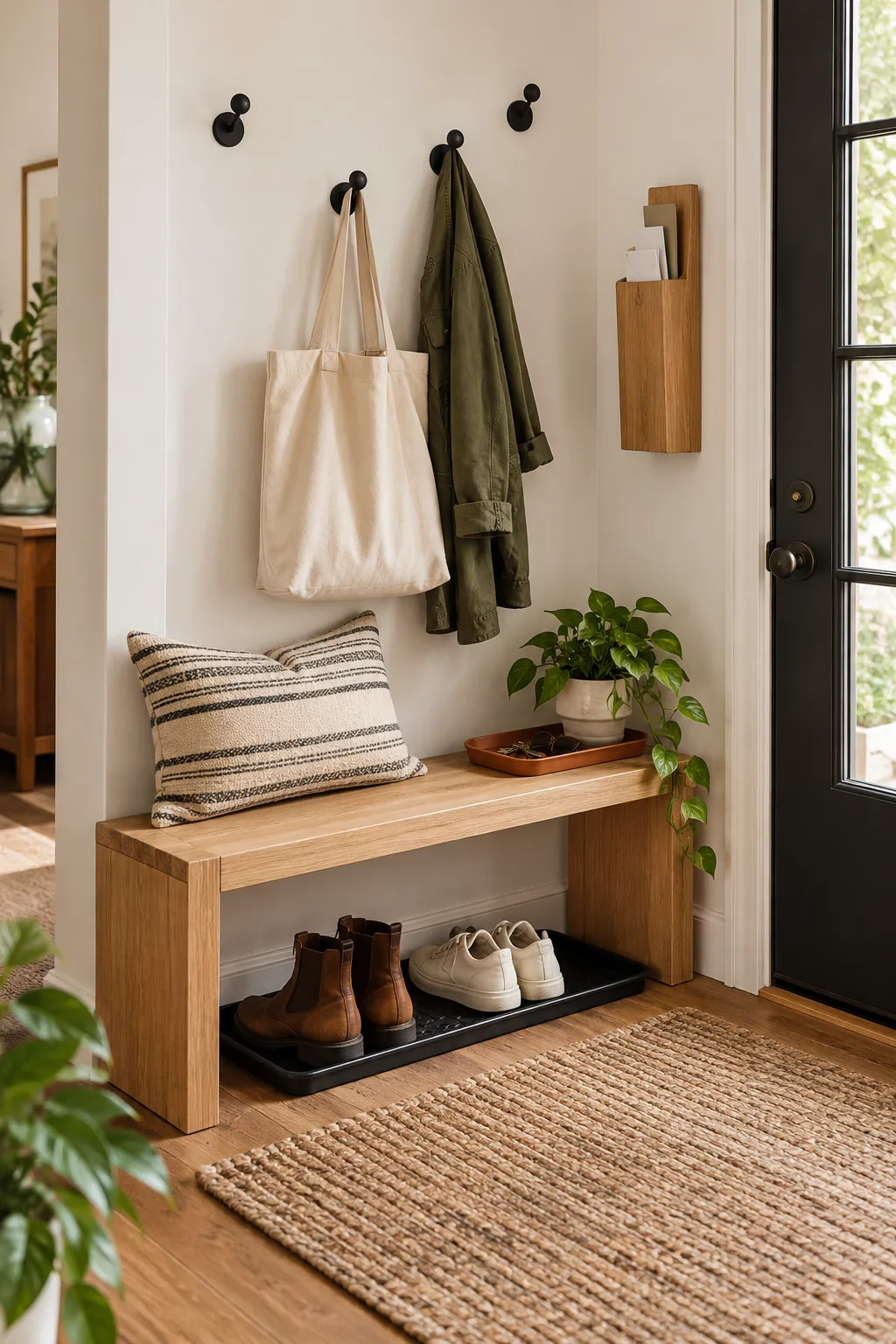
Before you pick up a drill, review these exact measurements to ensure your entryway functions just as beautifully as it looks.
Layering a Durable Jute Rug
Grounding the entire arrangement with a natural fiber rug ties the wooden bench and terracotta tray together beautifully. Jute introduces a rugged, organic texture that warms up the matte black hardware while easily handling heavy daily foot traffic.
Introducing Woven Elements
This interplay of rigid spacing rules and soft, tactile materials is the ultimate key to a welcoming home. By deliberately contrasting the strict geometry of the staggered hooks with woven textiles, you achieve a space that feels highly disciplined.
Softening the Space with Textiles
A hard-working utility zone can easily feel cold and purely transactional if we forget to add comforting layers. In my recent entryway projects, adding a textured throw pillow instantly signals that this is a place to pause, not just pass through.
Drop Zone Styles for Every Home
Find the perfect material and color combination to match your home's aesthetic.
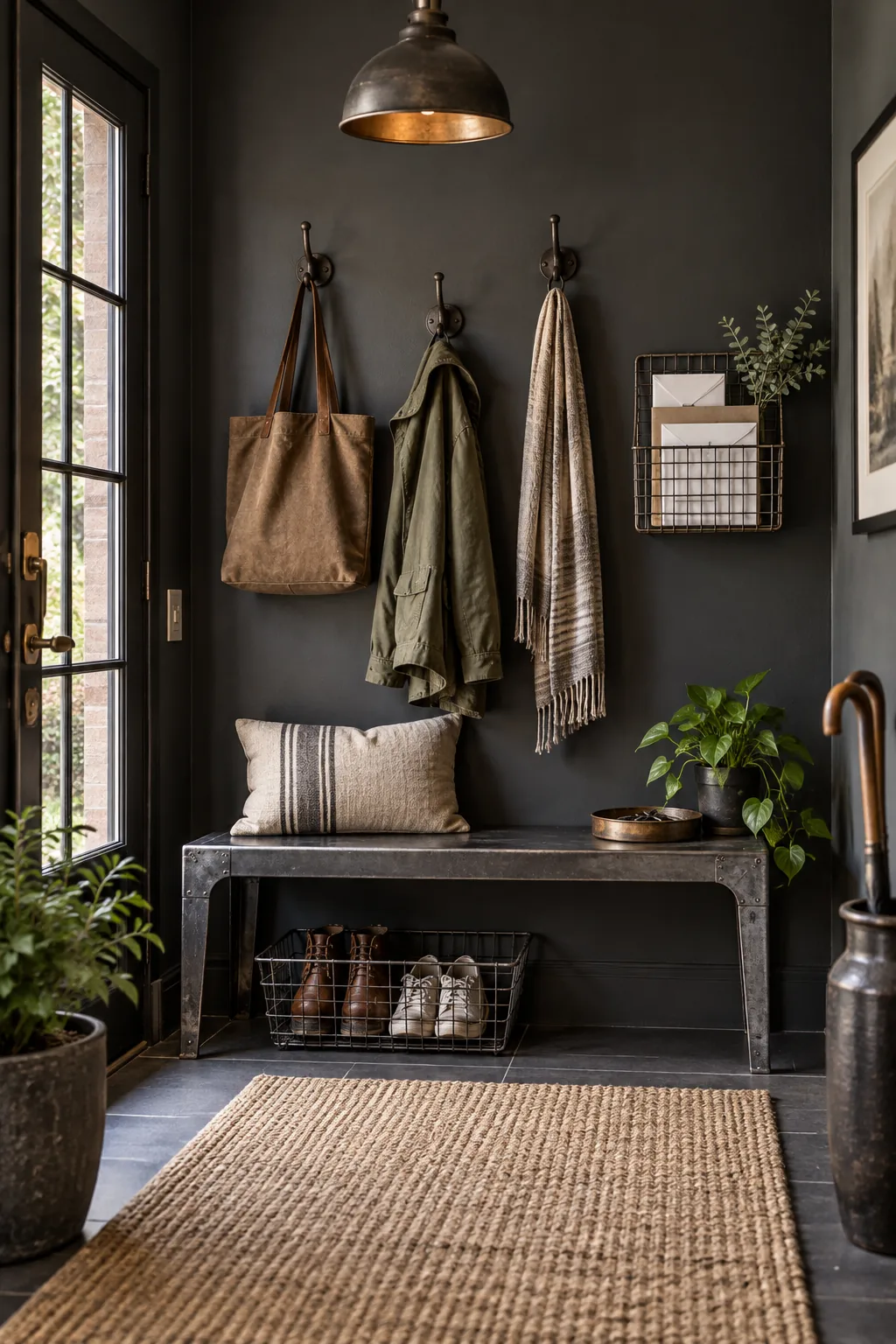
Moody Industrial: Dark charcoal walls and heavy iron hardware give this practical drop zone a sophisticated, urban edge.
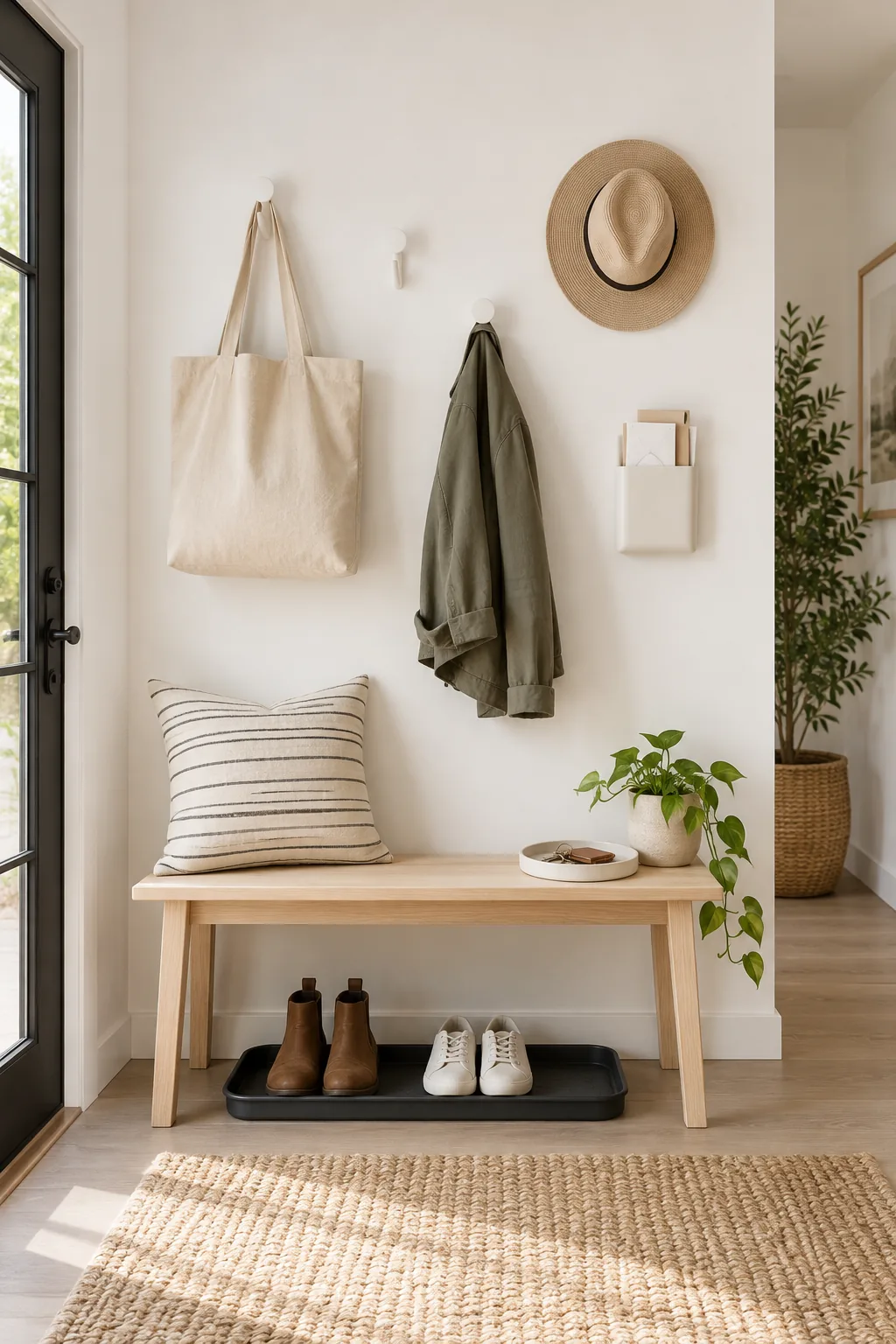
Scandi Minimalist: Keep the look light and airy by blending white powder-coated hooks seamlessly into bright white walls.
Coastal Cottage: Classic white beadboard and a navy blue bench bring a fresh, maritime feel to your daily routine.
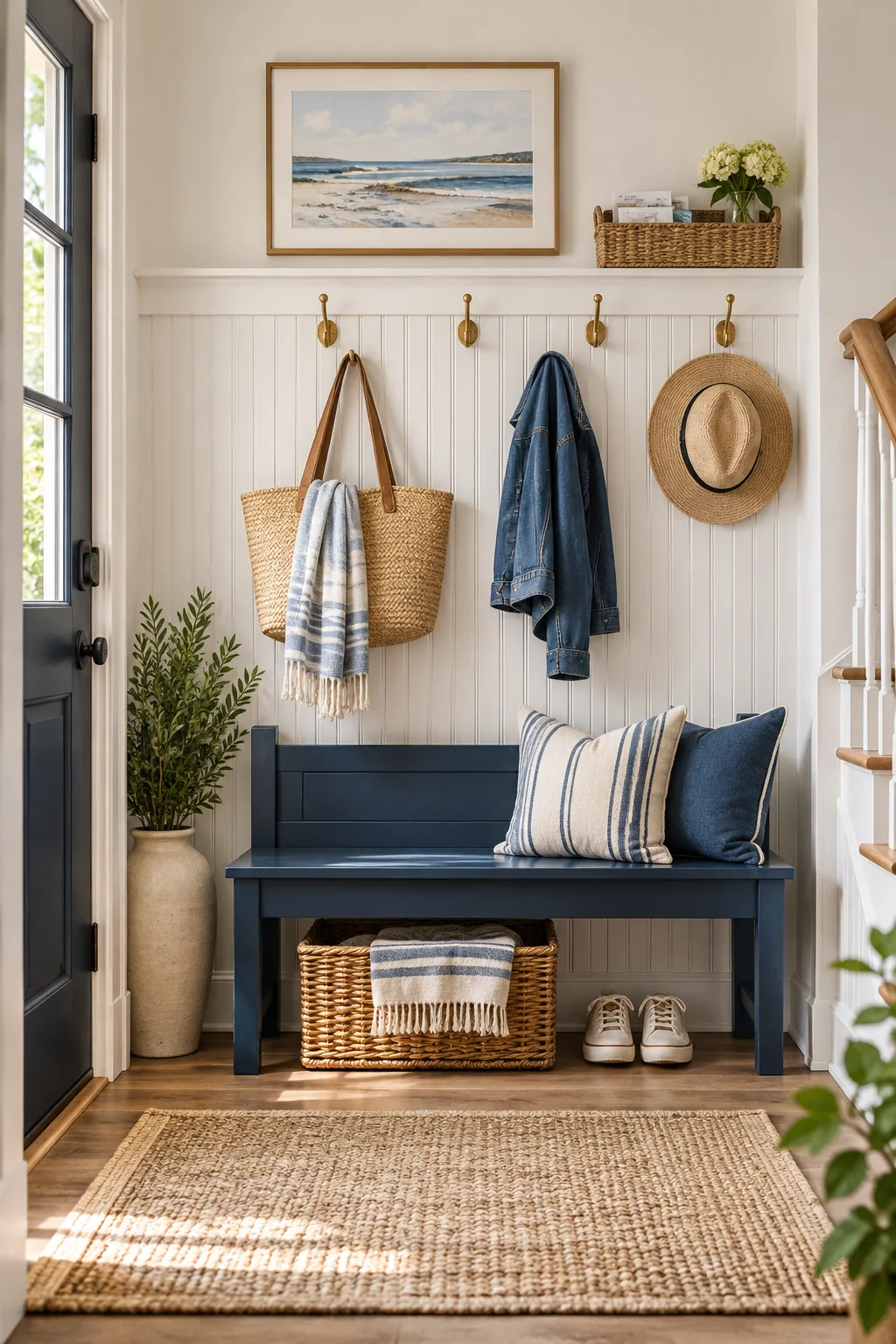
Modern Farmhouse: Vertical shiplap draws the eye upward while a reclaimed wood bench adds instant character and warmth.
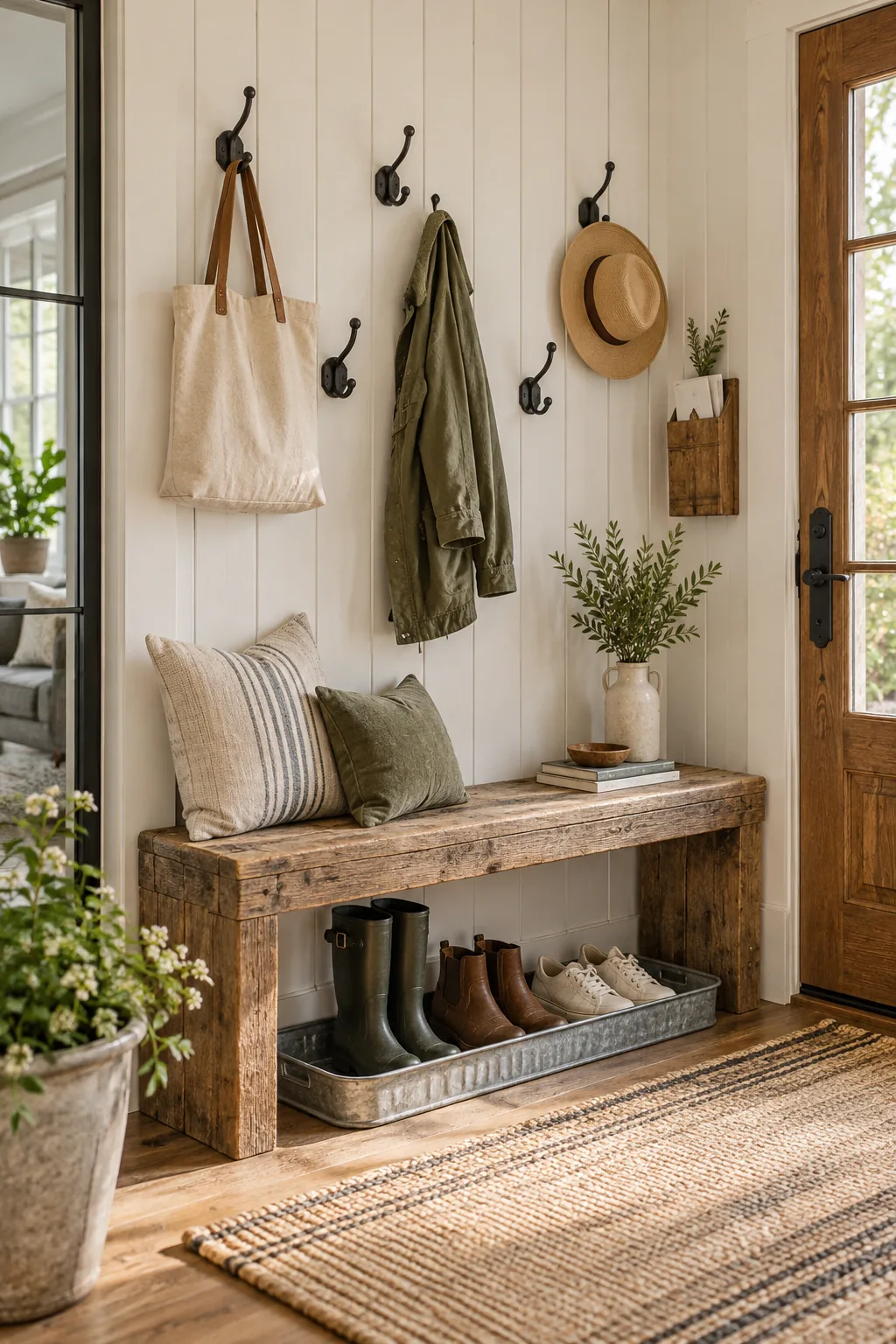
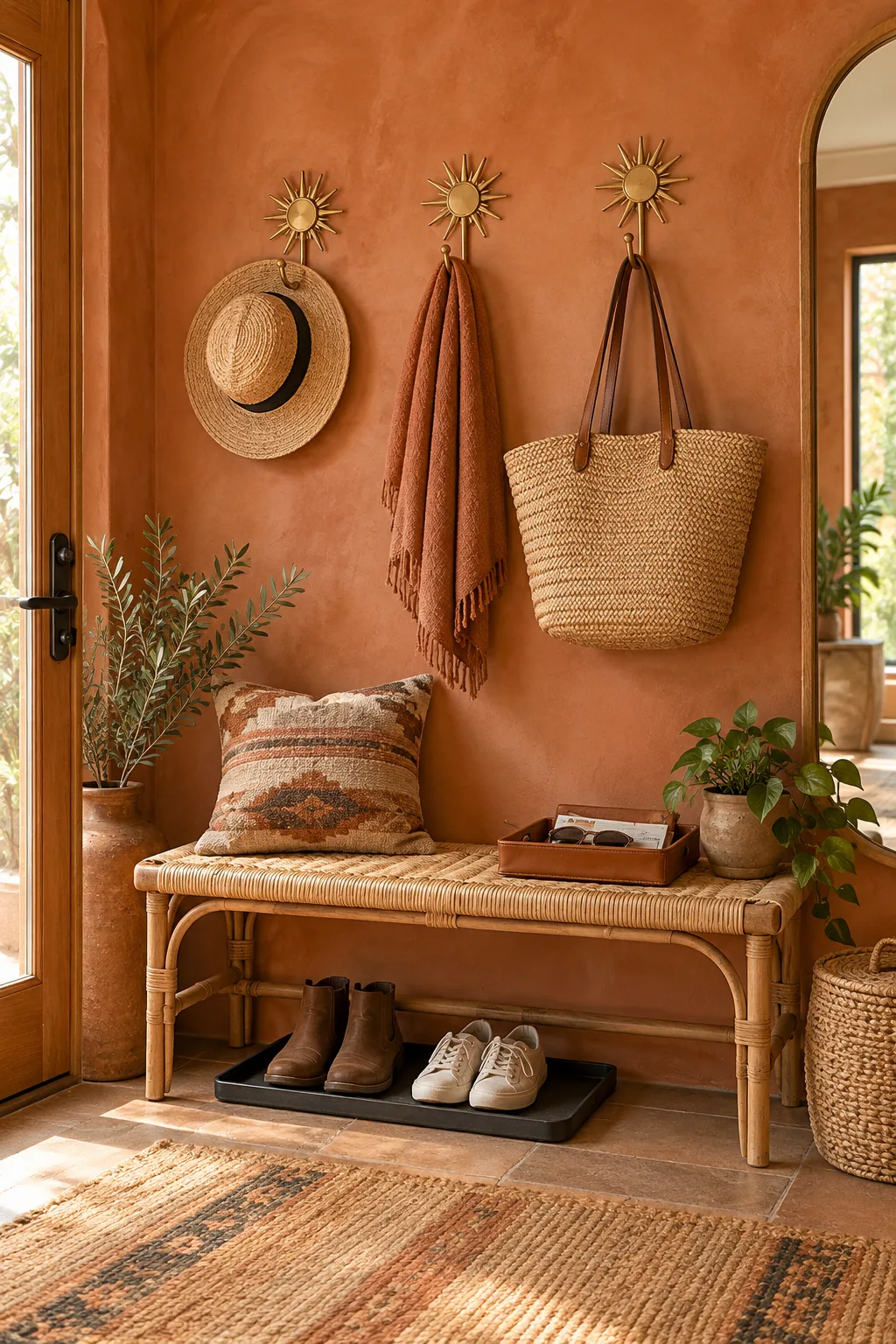
Boho Desert: Warm plaster walls and a woven rattan bench create a relaxed, sun-drenched atmosphere right at the front door.