
Style a Daybed as a Living Room Sofa (Free Sizing Sheet)
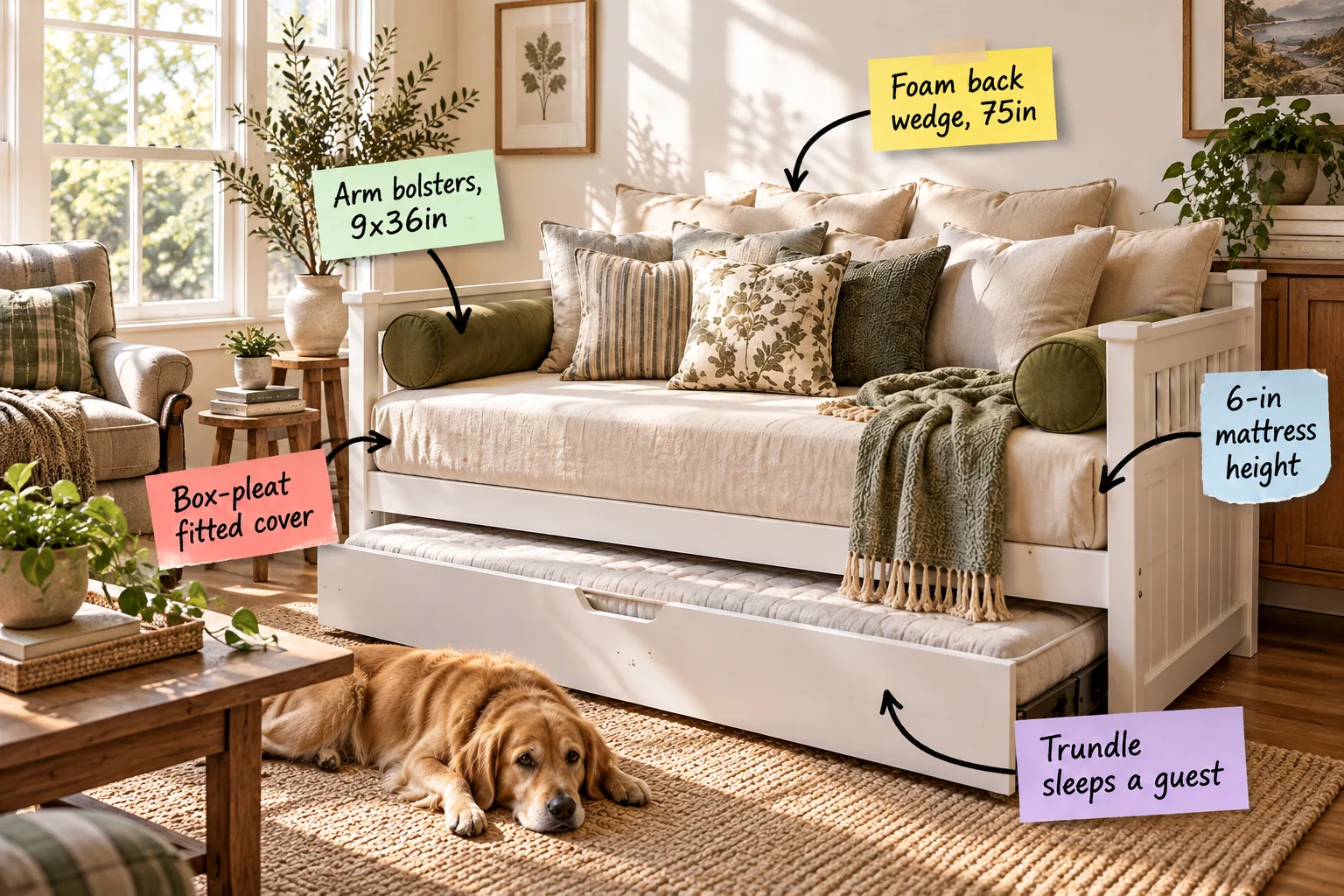
Transforming a twin daybed into a deep, inviting living room sofa requires exact proportions, not just a pile of extra throw pillows. Grab my free printable Daybed-to-Sofa Sizing Sheet below to get the precise pillow math, mattress thickness, and custom cover dimensions for a flawless setup.
The 6-Inch Mattress Foundation
Starting with the correct seat height is the most critical move, which is why a thinner 6-in mattress height keeps the final seating surface proportional. A standard twin mattress placed on a daybed frame perfectly mimics the dimensions of a real sofa.
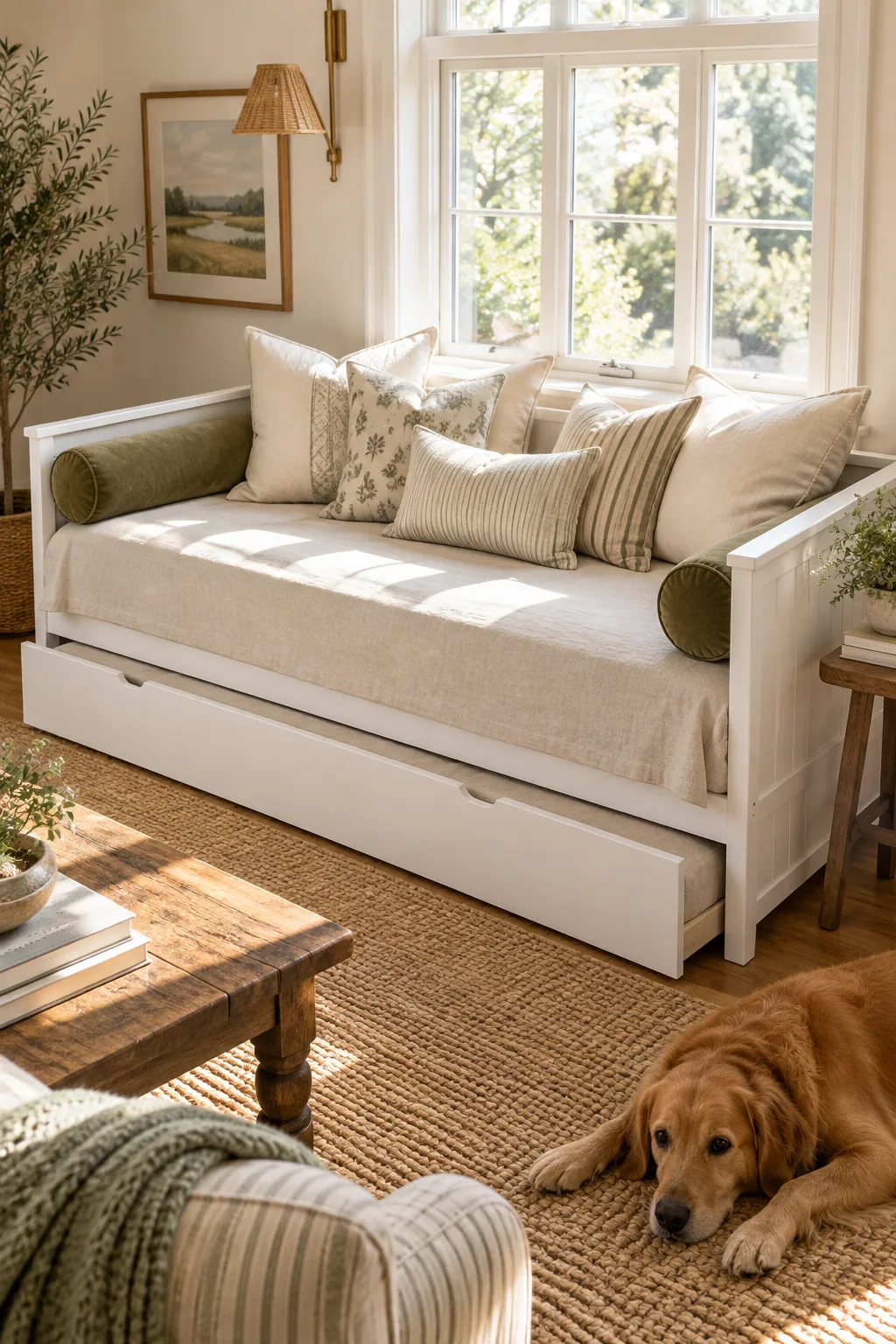
Thicker mattresses will make the seat uncomfortably high for living room conversations, leaving your guests’ feet dangling awkwardly off the floor instead of resting flat.
Measuring Your Frame Height
Before purchasing your mattress, you must measure the distance from the floor to the top of the daybed slats to calculate the final seating position accurately.
| Slat Height | Mattress Thickness | Final Seat Height |
|---|---|---|
| 12 inches | 6 inches | 18 inches (Ideal) |
| 14 inches | 6 inches | 20 inches (Maximum) |
| 14 inches | 10 inches | 24 inches (Too high) |
Keeping this combined measurement between 18 and 20 inches guarantees a grounded, comfortable posture that perfectly aligns with standard living room furniture profiles.
Selecting the Mattress Core
Because this foundation acts as your primary sofa cushion, select a high-density polyurethane foam core rather than traditional inner springs. This firm material prevents sinking over time and maintains the sharp, tailored edges necessary for a sophisticated living room aesthetic.
Evaluating Edge Support
A dense foam core also provides superior edge support, ensuring the front of the daybed does not collapse when guests perch on the rim. Firm edges keep the upholstery cover taut and prevent the fabric from wrinkling during daily use.
The Hidden Pop-Up Trundle
Maximize your living room’s utility without sacrificing style by utilizing the space beneath the frame, where a pop-up trundle sleeps a guest on a second slim mattress. This hidden drawer seamlessly blends into the wooden base when pushed shut.
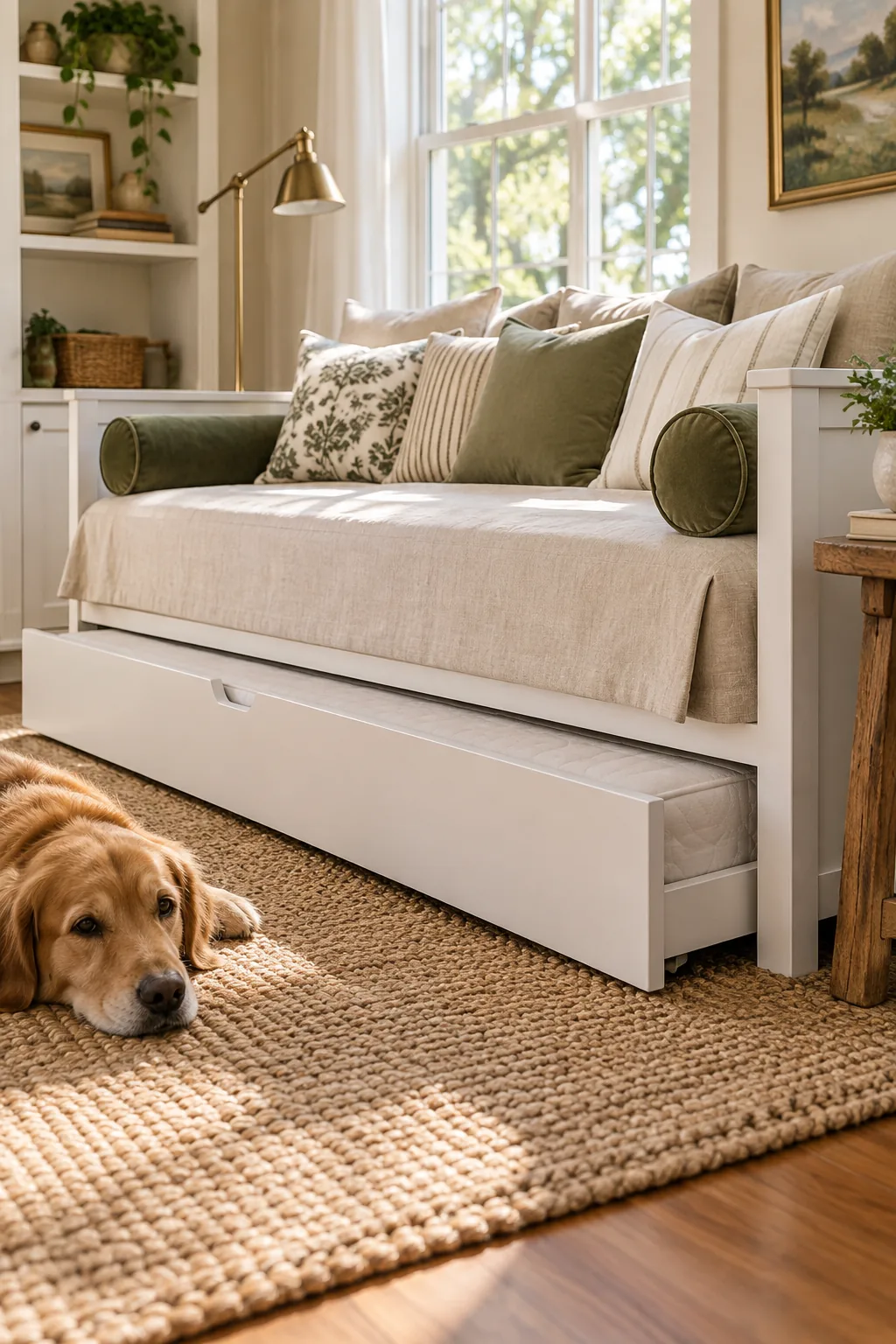
Before finalizing the trundle setup, verify that the pull-out mechanism operates smoothly across your specific flooring and easily clears any surrounding obstacles.
Choosing the Right Trundle Hardware
A reliable pop-up trundle requires sturdy scissor-lift hardware that locks securely into place at the exact height of the main mattress. Testing this locking mechanism prevents the guest bed from accidentally collapsing under weight during the night.
Accommodating the Guest Mattress
The internal clearance of the trundle drawer dictates the thickness of your secondary guest mattress, which usually caps at five inches. Measure the interior depth carefully to ensure the drawer glides shut without the fabric catching on the upper slats.
Selecting a Durable Rug
Because the trundle wheels will repeatedly roll over your flooring, place a durable, low-pile jute or wool rug beneath the daybed. This protects your hardwood from scratches while providing a smooth, snag-free surface for the heavy drawer mechanism to glide across.
The Box-Pleat Upholstery Cover
Transform the bare mattress into a sophisticated seat cushion using a tailored oat linen cover. In my own Denver living room, adding a box-pleat fitted cover completely elevated my basic daybed into a high-end, structured sofa.
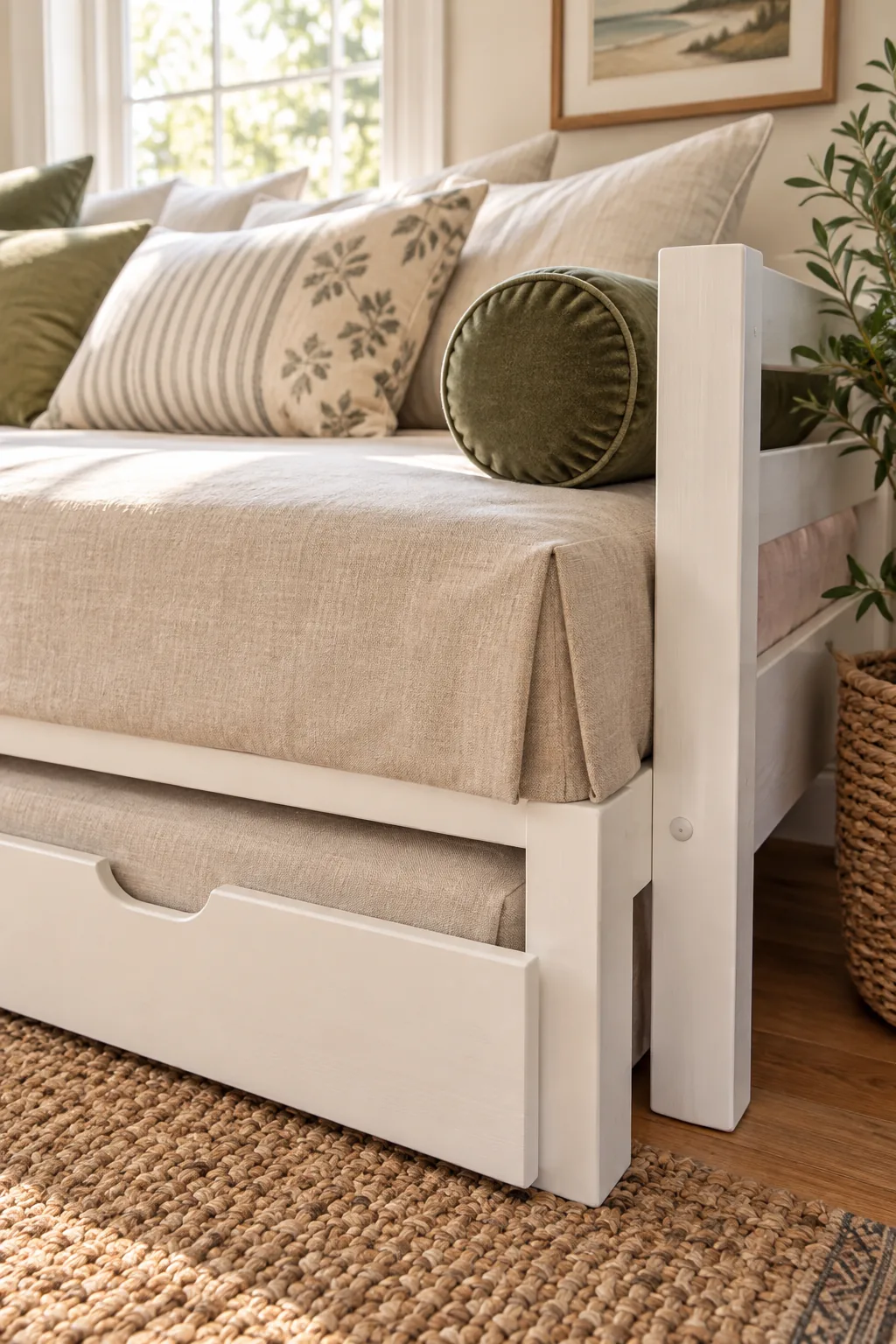
Crisp inverted box pleats at the front corners hide the standard bedding seams and give the soft foundation a permanent, tightly upholstered finish.
Pre-Washing Upholstery Fabrics
Always wash and dry your upholstery-grade linen before cutting the fabric to account for inevitable shrinkage. Skipping this crucial step guarantees your tailored cover will warp and fail to fit the mattress tightly after its first necessary cleaning.
Managing Fabric Direction
When cutting the linen panels, ensure the fabric grain runs vertically across the front face of the mattress cover. Aligning the weave properly prevents the material from sagging over time and keeps the inverted box pleats hanging perfectly straight.
Securing the Mattress Cover
Install a heavy-duty zipper along the entire back edge of the cover rather than relying on elastic corners or loose ties. A full-length zipper allows you to pull the linen drum-tight across the mattress face, eliminating sloppy surface wrinkles.
Hiding the Bedding Seams
Positioning the zipper at the rear ensures it remains completely hidden against the back rail of the daybed frame. This strategic placement maintains the illusion of a seamless, custom-upholstered bench cushion when viewed from the center of the room.
The 75-Inch Foam Back Wedge
The core of the stylist’s pillow math relies on a continuous foam back wedge, 75in long, placed firmly against the back rail. This sloped support reduces the standard 39-inch twin bed depth to a comfortable 22-inch sofa seat depth.
Running the entire length of the mattress, this angled foundation holds your decorative pillows completely upright while actively pulling your seating posture forward.
Selecting High-Density Foam
Order a high-density, firm upholstery foam for the back wedge to prevent it from sagging under the weight of leaning guests. A dense internal structure ensures the wedge maintains its sharp triangular profile and crisp linen slipcover lines indefinitely.
Anchoring the Wedge
To keep the lightweight foam from sliding forward on the smooth mattress, apply a strip of non-slip rug pad beneath its base. This hidden friction layer locks the wedge against the back rail, providing stable, unwavering support for the pillow stack.
Sloping the Backrest Angle
The face of the triangular wedge should feature a slight recline, typically angled at ten to fifteen degrees off vertical. This subtle slope mirrors the ergonomic pitch of a traditional sofa back, offering superior lumbar support for extended sitting sessions.
The 9×36-Inch Arm Bolsters
Create the illusion of traditional sofa armrests by placing two arm bolsters, 9x36in, directly against the side rails. These oversized cylindrical cushions fill the visual gap at the ends of the twin mattress perfectly.
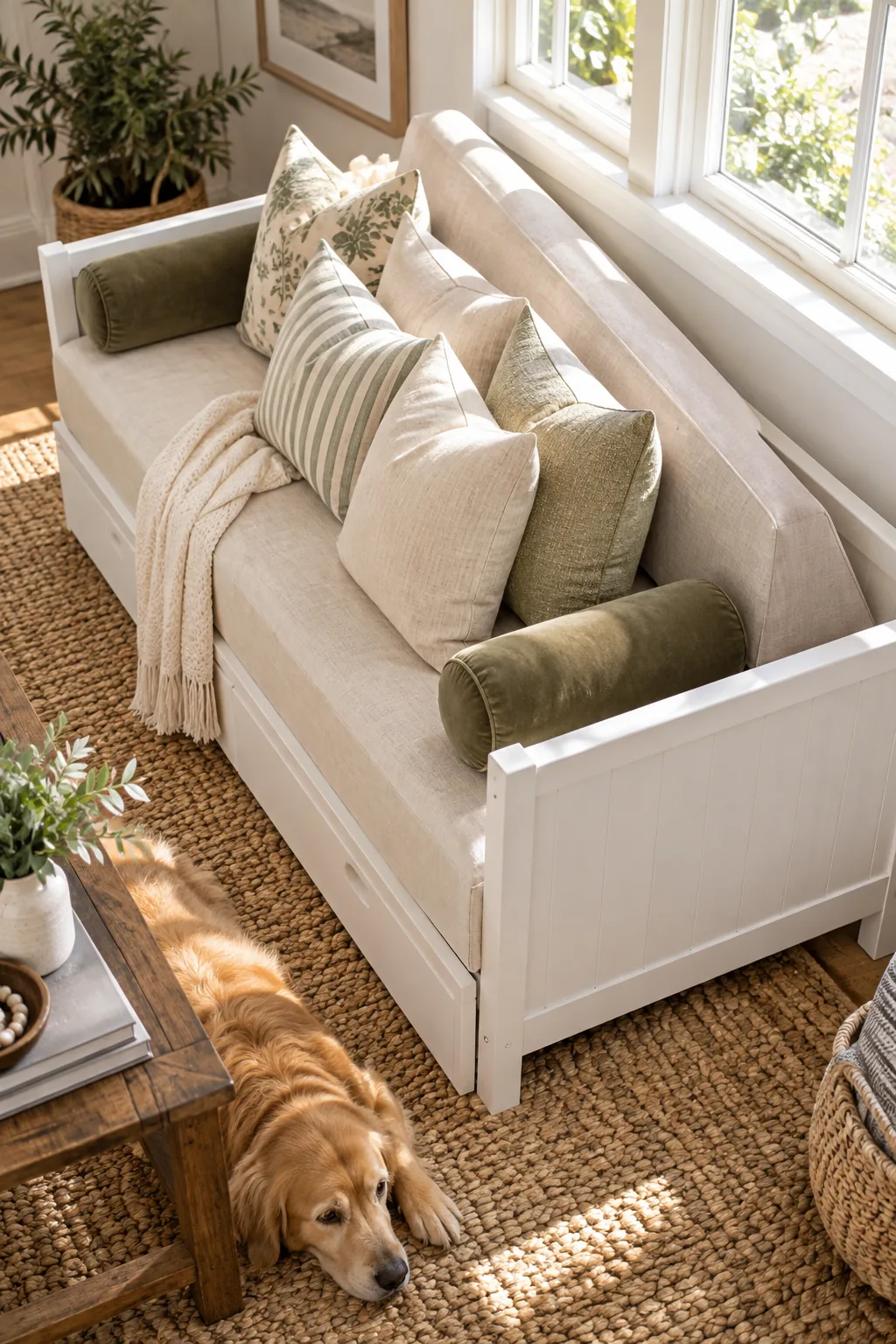
Providing a comfortable resting height for arms, these substantial bolsters frame the seating area and visually contain the loose decorative pillows.
Stuffing the Bolster Inserts
Fill the bolster covers with firm foam cylinders rather than loose polyfill to maintain their strict architectural shape. A rigid insert prevents the bolsters from flattening into oval pancakes when guests lean heavily against the wooden side rails.
Aligning the Side Rails
Ensure the diameter of your arm bolsters aligns proportionally with the height of your daybed’s side rails. A nine-inch bolster typically sits flush with a standard armboard, creating a seamless visual transition from the painted wood to the soft upholstery.
The Stepped Pillow Stack
When I styled a client’s sunroom last month, I found that stepping the pillow sizes creates the most inviting, deep backrest. Finish the arrangement by layering a precise sequence of square cushions directly against the linen-covered foam wedge.

- Place three 26-inch Euro shams across the back to establish the primary height.
- Layer two 22-inch standard square pillows in front to build the mid-level depth.
- Center a single elongated lumbar pillow at the front to support the lower back.
Mixing Pillow Textures
Layering the decorative pillows requires a strategic mix of sizes and textures to make the deep seat feel intentionally styled rather than cluttered.
Choosing the Right Insert Fill
For the decorative pillows, select feather-down or high-quality down-alternative inserts rather than stiff foam. Down inserts allow you to karate-chop the top edges, creating a relaxed, luxurious drape that contrasts beautifully with the rigid lines of the back wedge.
Balancing Asymmetry in Styling
While Western design often demands perfect symmetry, introducing a slightly off-center lumbar pillow or a draped throw adds relaxed, organic balance. This subtle asymmetry softens the rigid geometry of the back wedge and bolsters, making the space feel comfortably lived-in.
Maintaining the Sofa Illusion
To keep the daybed looking like a sofa year-round, store all actual sleeping pillows and duvets inside a nearby closet or the trundle drawer. Keeping standard bedding out of sight preserves the tailored, architectural lines of your daytime seating arrangement.
More Daybed Styling Ideas
Explore how different palettes and textures can adapt the daybed-to-sofa formula for any room in your home.
Modern Coastal in Navy: Crisp white piping on a navy blue cover gives this sunroom daybed a tailored, nautical feel that pairs perfectly with striped pillows.

Moody Library in Charcoal: Rich charcoal velvet and rust-colored bolsters transform a simple wooden frame into a sophisticated reading nook for a home office.

Earthy Minimalist in Terracotta: A warm terracotta linen cover softens the harsh lines of a matte black metal frame, creating an inviting, minimalist lounging space.

French Country in Soft Blue: A soft blue toile cover and ruffled cream bolsters bring romantic, vintage charm to an antique distressed white frame in a guest room.
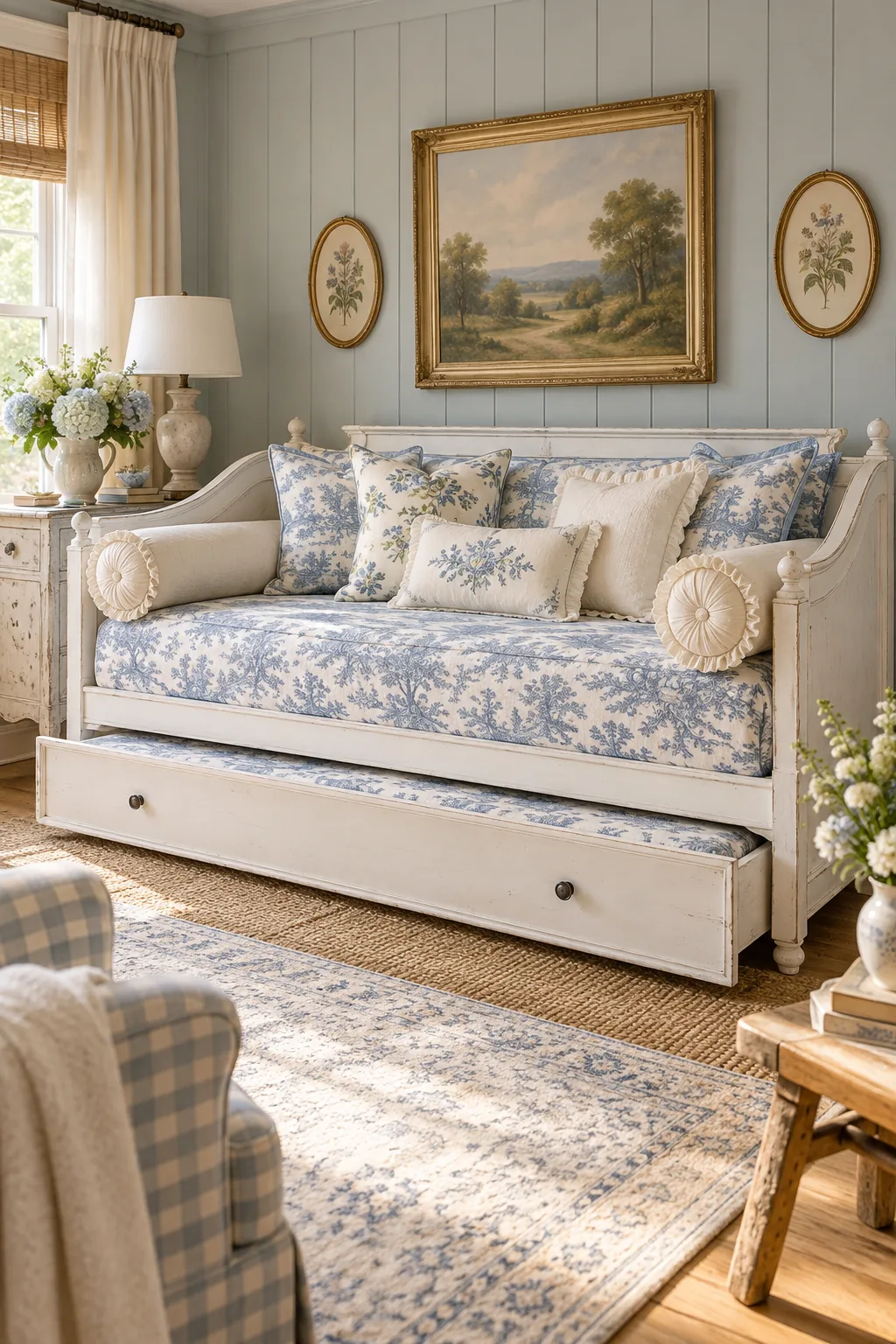
The Daybed-to-Sofa Sizing Sheet
Take the guesswork out of ordering custom foam and sewing the linen cover by using my printable one-page measuring guide. I rely on this exact sheet for all my design projects to guarantee flawless proportions every single time.

Download the Daybed-to-Sofa Sizing Sheet to access the exact dimensions for the back wedge, arm bolsters, mattress thickness, and trundle clearance needed to replicate this setup.