Christmas Porch Decorating: The Florist's Stem-Count Guide
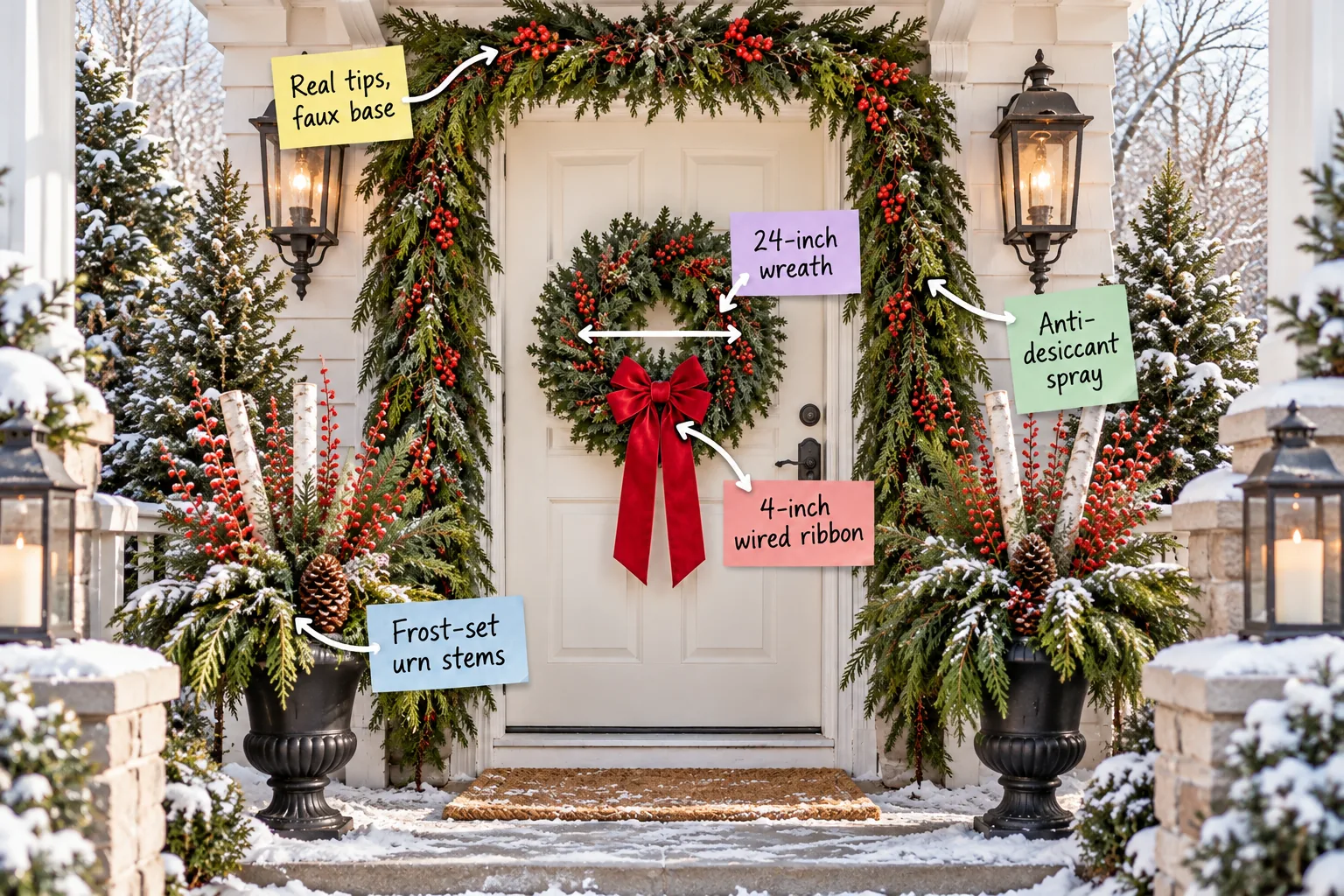
Download our Printable Porch Greens Stem-Count Chart to buy exactly the right amount of fresh cedar, fir, and ribbon for your porch size. You will be able to mix fresh and faux greens using professional florist techniques for a welcoming entry that lasts all season.
Sourcing the Best Faux Core
Building a spectacular entryway begins with selecting a heavily wired artificial garland to serve as your hidden foundation. Look for an inexpensive, unlit pine core that features thick, bendable branches, which will securely grip the heavier fresh clippings you intend to weave into the display.
Selecting Fresh Cedar and Fir
Sourcing high-quality fresh clippings guarantees that your arrangement maintains its vibrant color and rich texture throughout the freezing months. I always inspect local garden center bundles for pliable, bright green needles and a strong, aromatic sap scent before bringing any branches home to my brownstone.
The Faux-to-Fresh Garland Base
In my own Boston entry, I start by blending fresh cedar tips into that inexpensive faux garland core to create a lush, budget-friendly arch. The artificial base provides essential rigid structure, while the fresh clippings deliver that unmistakable winter fragrance and beautiful organic movement.
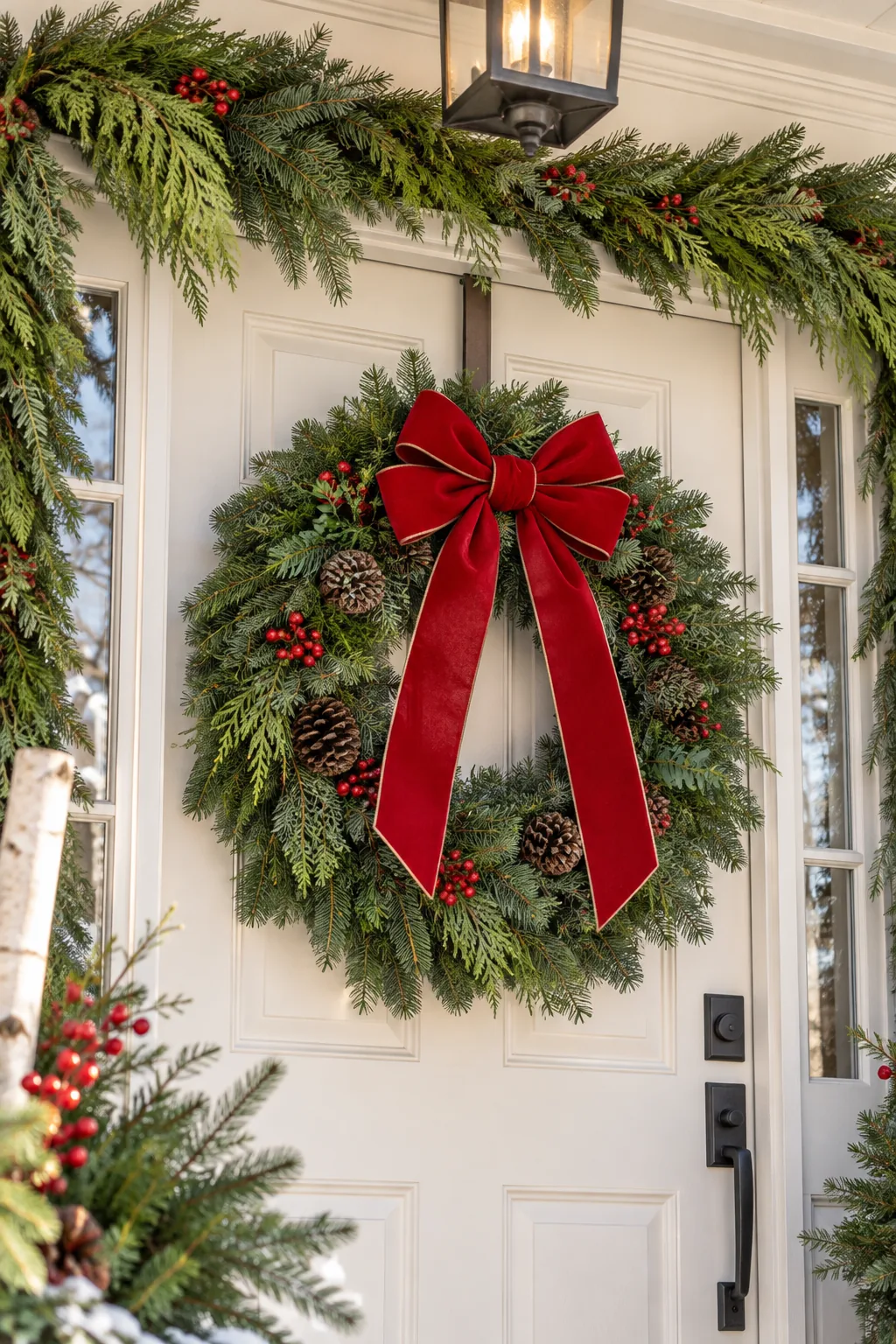
To achieve a seamlessly full look without awkward gaps, space 8-10 inch fresh bundles evenly every foot along the upper arch. Wiring these real tips directly into the faux base guarantees the garland looks entirely custom without the staggering cost of a fully fresh piece.
Wiring Techniques for High Winds
Securing those fresh bundles against severe winter weather requires using heavy-duty paddle wire rather than standard craft string. Wrapping the green floral wire tightly around both the fresh stems and the artificial core three times ensures the branches will never pull loose during intense blizzards.
Securing the Garland Frame
Hanging a densely layered, heavy garland requires robust support that will not permanently damage your exterior door frame or surrounding brickwork. I highly recommend installing commercial-grade tension rods inside the door jamb or utilizing heavy-duty brick clips to hold the substantial weight safely overhead.
Sizing the Door Wreath
A 24-inch wreath is the ideal proportion for a standard 36-inch wide single front door, leaving exactly 6 inches of breathing room on each side, but proper placement is just as critical to ensure the entry feels perfectly balanced from the street view.
Choosing the Right Ribbon Material
Selecting the proper textile for outdoor applications makes the difference between a crisp, professional display and a drooping, weather-beaten mess. You must prioritize materials specifically manufactured to withstand freezing moisture, heavy snowfall, and the constant friction of winter winds whipping across the front steps.
- Choose heavy velvet with a thick, waterproof backing.
- Select outdoor-rated canvas that repels freezing rain.
- Avoid sheer organza that collapses when wet.
Tying the Perfect Bow
Shaping a weather-resistant, perfectly structured bow from 4-inch wired ribbon creates a strong, festive visual anchor for your wreath. The heavy wire edges prevent the loops from collapsing or losing their crisp shape when harsh winter winds inevitably sweep across the exposed porch.
A standard 24-inch wreath requires about 3 yards of ribbon to form a generously full bow with long, elegant tails. Cutting the ribbon tails at a sharp upward angle prevents fraying and naturally draws the eye downward toward your matching flanking planter urns.
Preparing the Urn Soil
Transforming standard summer planters into robust winter foundations requires amending the dirt before the seasonal temperatures plummet. Removing old root balls and saturating the remaining heavy potting soil with water creates the perfect dense medium for locking your tall evergreen branches firmly into place.
Building the Urn Foundation
Creating a stable base for winter planters requires utilizing the frost-set technique before the ground completely freezes over. This professional florist method turns ordinary damp potting soil into a concrete-like anchor that securely grips heavy branches and prevents them from shifting in severe weather.
- Fill your empty urns with damp, heavy potting soil just before a hard overnight freeze.
- Plunge the heavy cut evergreen stems 4-6 inches deep directly into the wet dirt.
- Allow the freezing overnight temperatures to lock the stems permanently upright for the season.
Selecting the Best Birch Poles
Incorporating natural wood elements breaks up the heavy mass of dark greenery and introduces a striking, woodland texture to the display. Look for kiln-dried white birch logs that feature curling, papery bark, as these bright white accents vividly stand out against the shadowy evergreens.
Adding Height with Birch and Berries
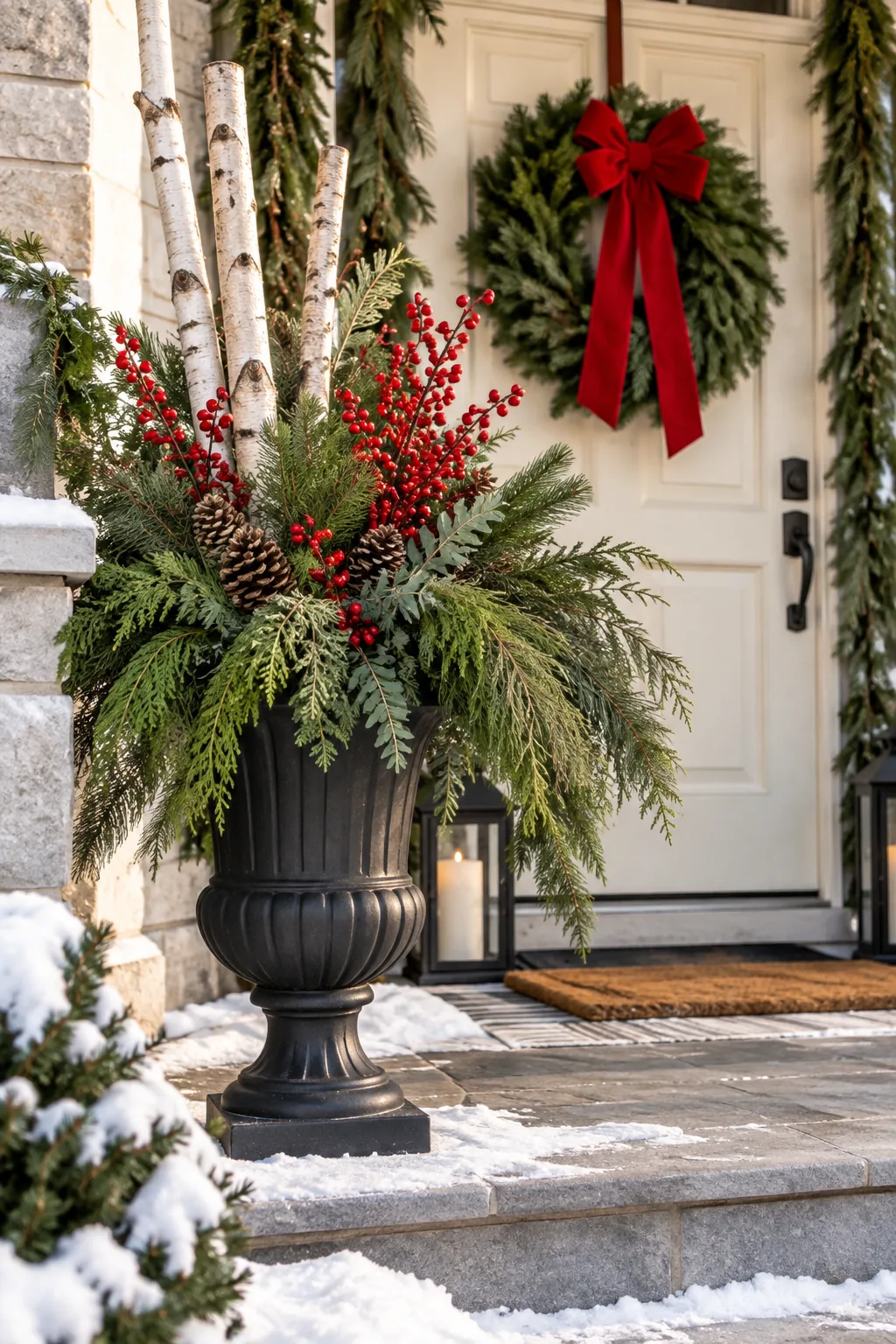
Arranging tall birch poles and red berries provides striking vertical impact and necessary color contrast against the dark green foundation. Establishing this height first gives the arrangement a strong architectural backbone before you begin filling in the softer, trailing greens around the planter edges.
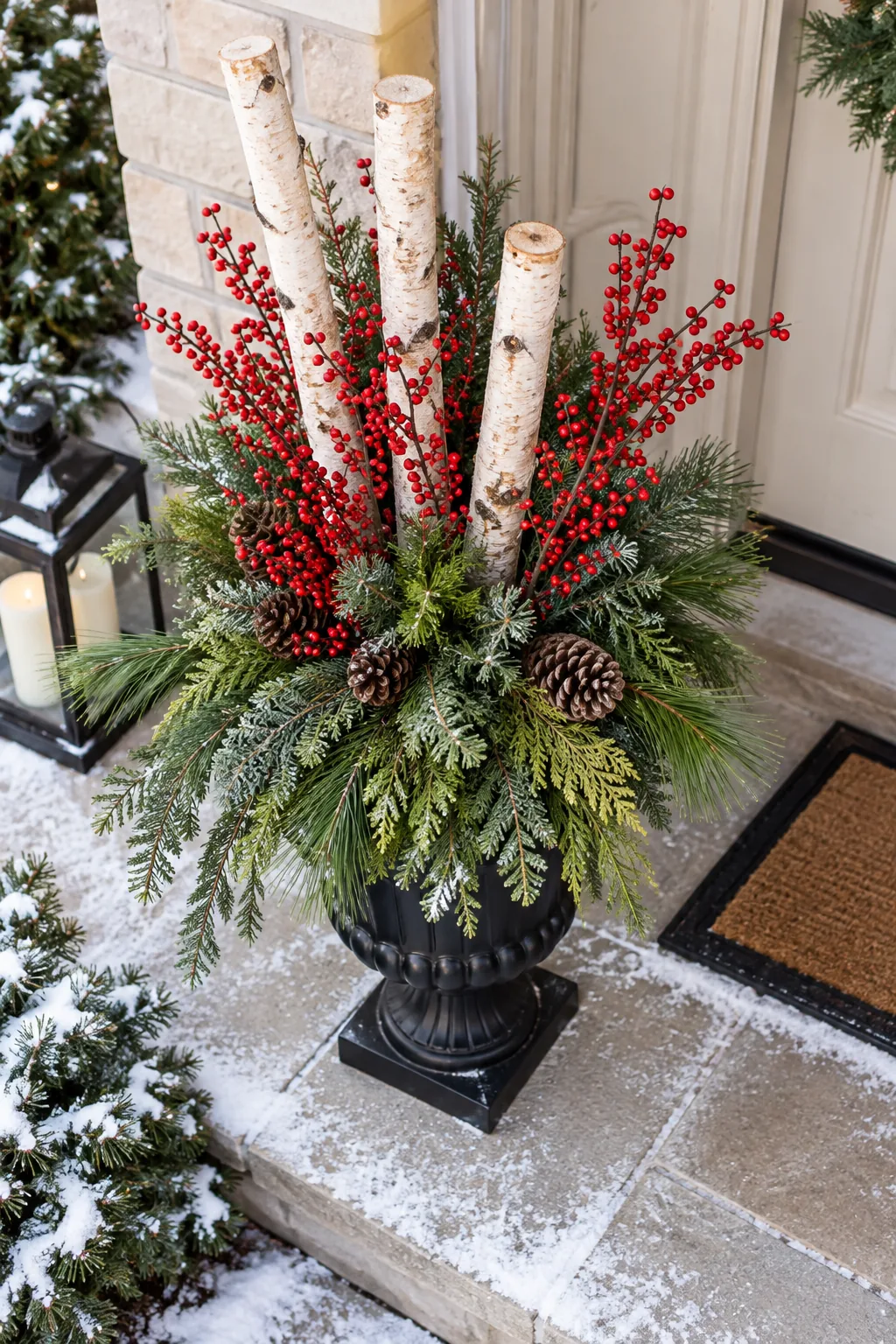
Push 3-4 foot birch poles firmly into the center of the urn to establish the peak height. Surround these pale natural trunks with bright red winterberry stems to immediately draw attention and beautifully brighten the shadowy corners of a deeply covered front porch.
Foraging for Winterberries
Clipping your own native berry stems adds an authentic, wild touch to structured formal planters. Always harvest these delicate branches carefully with sharp bypass pruners, ensuring you leave enough vibrant fruit on the parent shrub to sustain the local bird population through the winter.
Layering Trailing Greens
Once the central height is firmly established, softening the hard rim of the planter creates a natural, overflowing aesthetic. Tucking long, flexible cedar branches around the outer perimeter allows the greenery to gracefully spill down the sides, visually connecting the elevated urn to the floor.
Cleaning and Prepping Stems
Properly processing your fresh materials before assembly drastically extends their lifespan in harsh outdoor conditions. Give every single branch a fresh, angled cut at the base and completely strip the lower three inches of needles so the bare wood can absorb crucial moisture.
Protecting Fresh Greens
I always scale the exact quantities of fresh greenery and ribbon to fit the specific dimensions of the porch before treating the branches. Having the correct bundle count ready means you can process and seal all your fresh materials in one highly efficient batch.
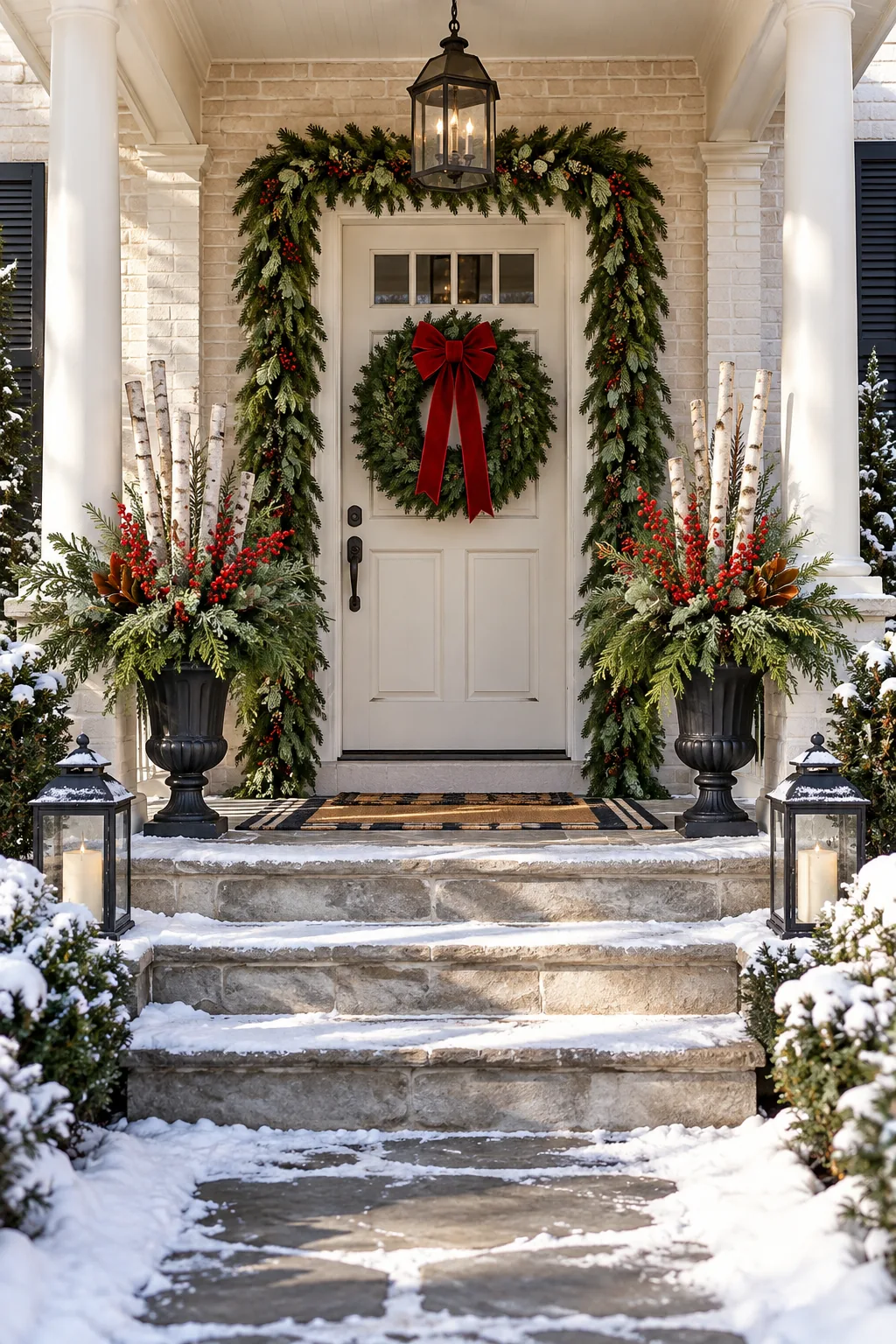
Applying an anti-desiccant spray seals in vital moisture and prevents delicate needles from turning prematurely brown, but this protective coating requires a specific environment to actually work effectively on fresh stems.
Calculating Your Greenery Needs
To completely eliminate the guesswork at the garden center, download the Printable Porch Greens Stem-Count Chart to buy the exact bundles of cedar, pine, magnolia, and berries needed. This comprehensive guide categorizes the required materials by single door, double door, or full porch setups.
| Porch Setup | Fresh Bundles | Wired Ribbon | Anti-Desiccant |
|---|---|---|---|
| Single Door | 4 mixed bundles | 3 yards | 1 bottle |
| Double Door | 6 mixed bundles | 5 yards | 2 bottles |
| Door + 2 Urns | 10 mixed bundles | 8 yards | 3 bottles |
When I styled my own double-door entry last season, strictly following this exact chart ensured I had enough lush magnolia leaves to finish the urns without wasting money on surplus stems.
Hydrating the Porch Display
Even dormant winter branches require consistent moisture to prevent their needles from turning brittle and dropping onto your welcome mat. Treating your outdoor arrangements much like fresh-cut indoor flowers guarantees the foliage remains pliable, fragrant, and visually stunning throughout the driest winter months.
Daily Maintenance for Lasting Color
Maintaining the vibrant, lasting color of winter greens requires proper hydration and a very quick weekly checkup. I make it a strict habit to lightly mist the entire arrangement with water on mild afternoons when the temperature briefly rises above freezing.
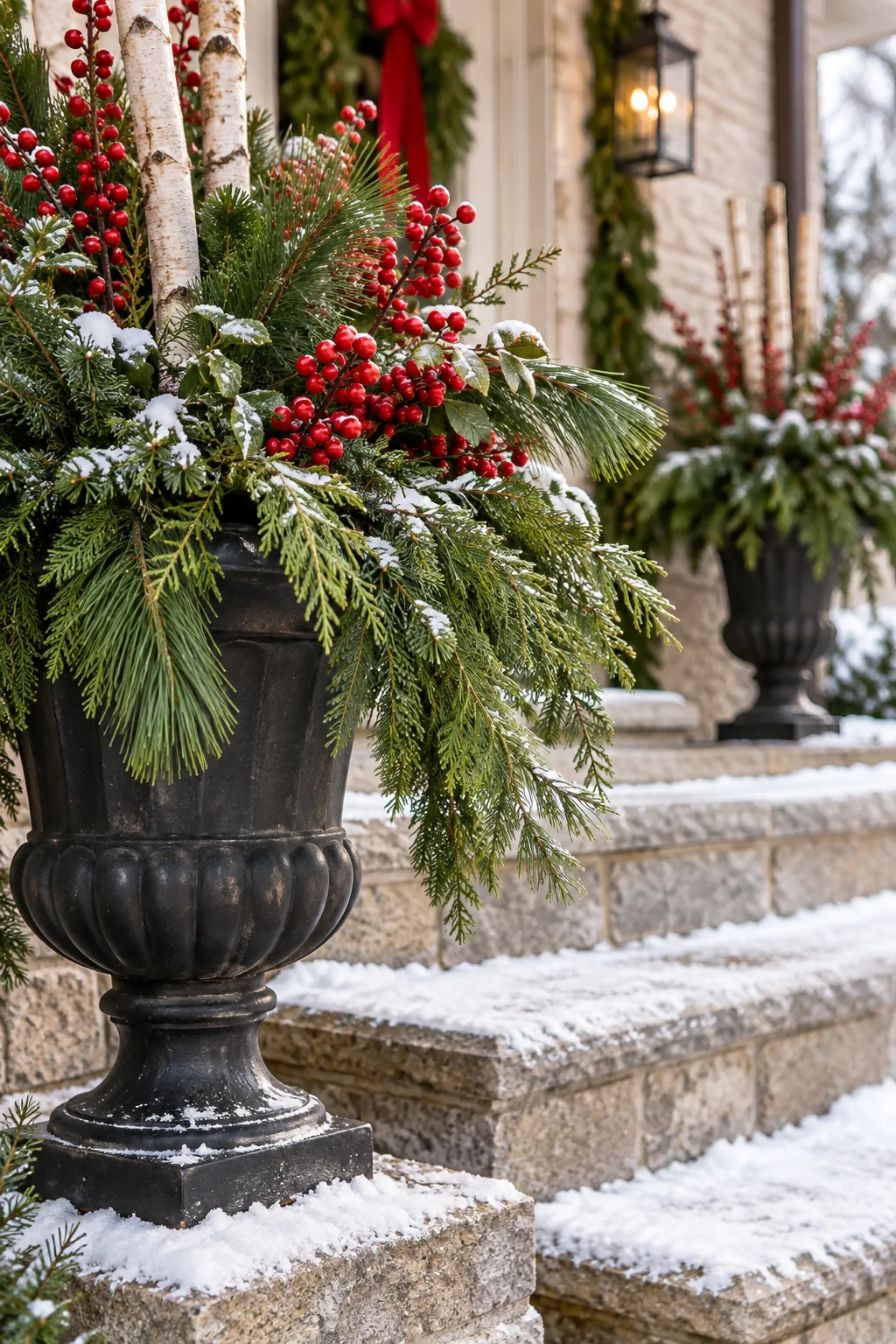
Replace any bright berry stems that hungry local birds have inevitably stripped bare during early winter storms. Keeping the red accents vibrant and the needles hydrated ensures your carefully styled entry remains incredibly welcoming and perfectly intact well into late January.
More Ways to Style Your Winter Porch
Find the perfect holiday aesthetic for your home's exterior with these distinct styling approaches.
Traditional Red and Gold: Classic pine and bright red velvet ribbon pop beautifully against cream brick for a timeless holiday welcome.
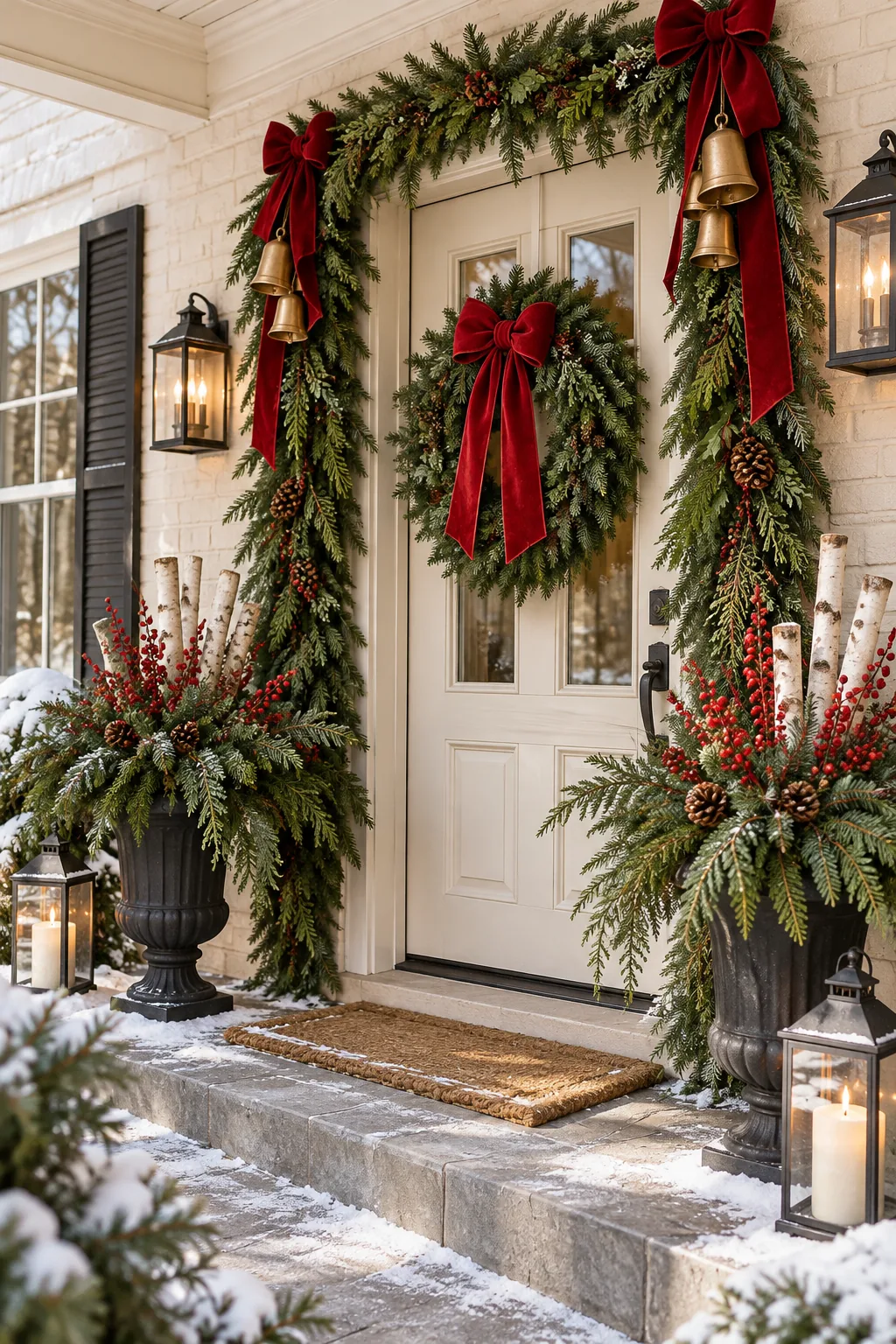
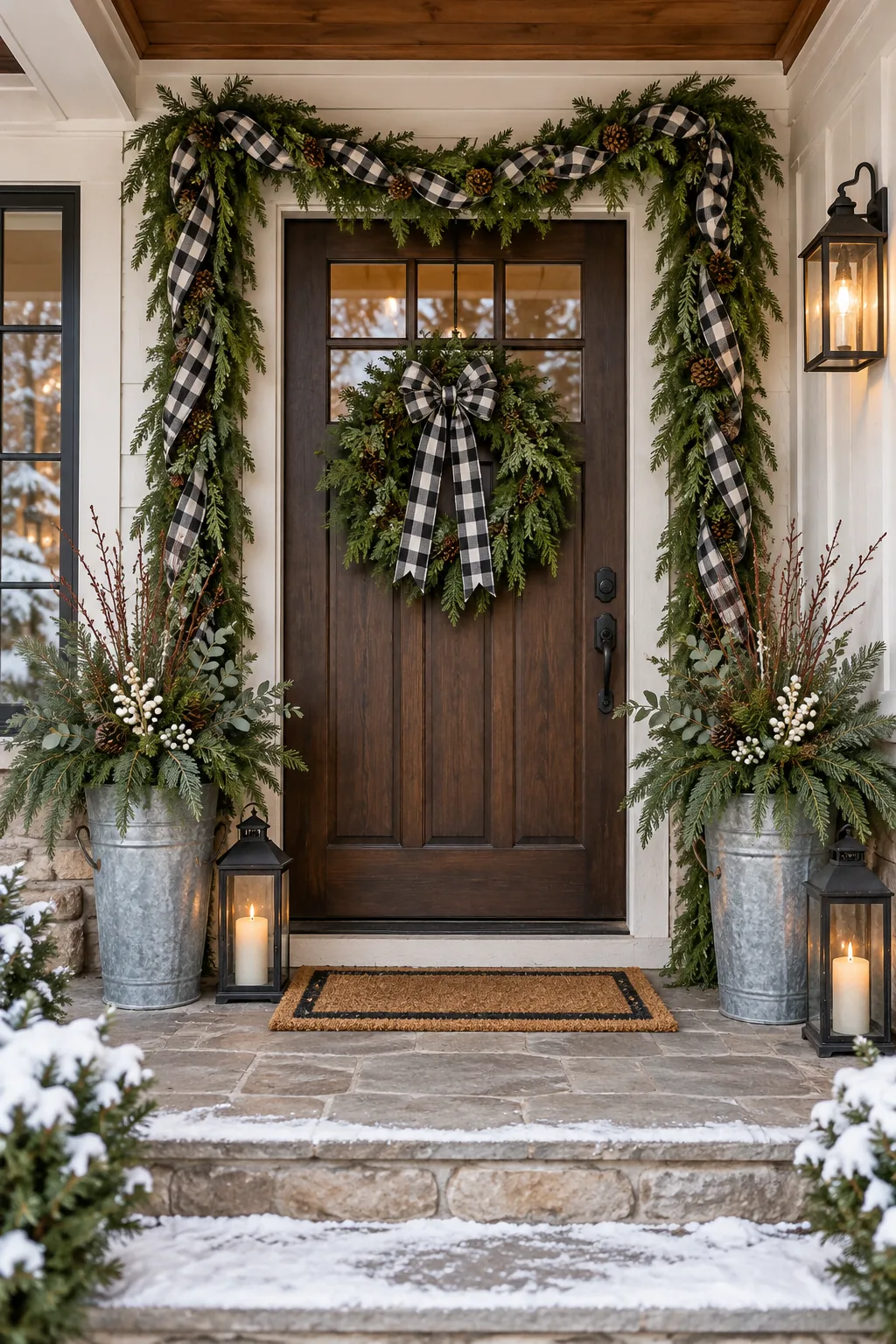
Rustic Farmhouse Buffalo Check: Swap traditional urns for galvanized olive buckets and use bold buffalo check ribbon to ground a rustic aesthetic.
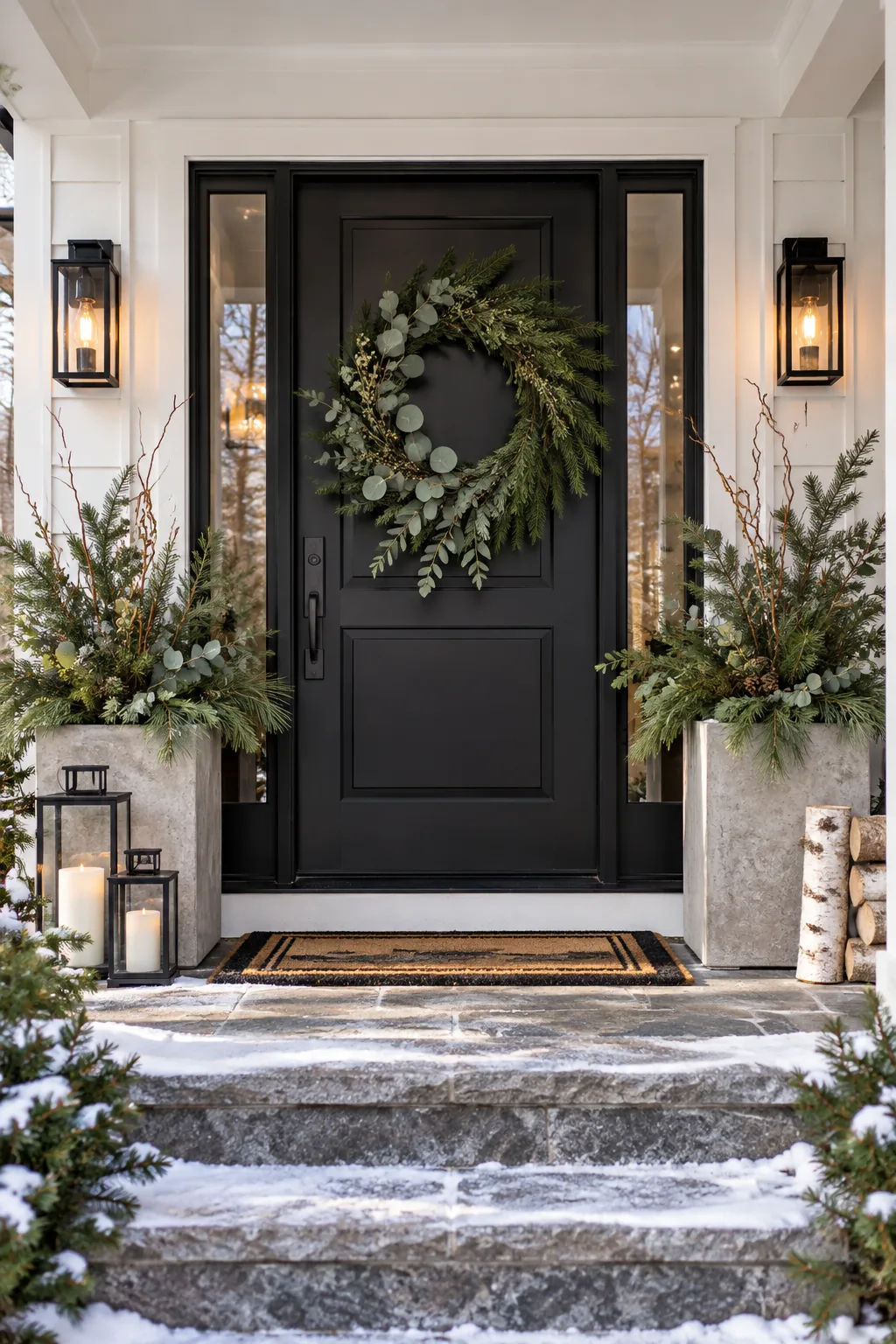
Minimalist Scandi Asymmetry: Embrace a modern look with an asymmetrical pine and eucalyptus wreath on a sleek black door without bows.
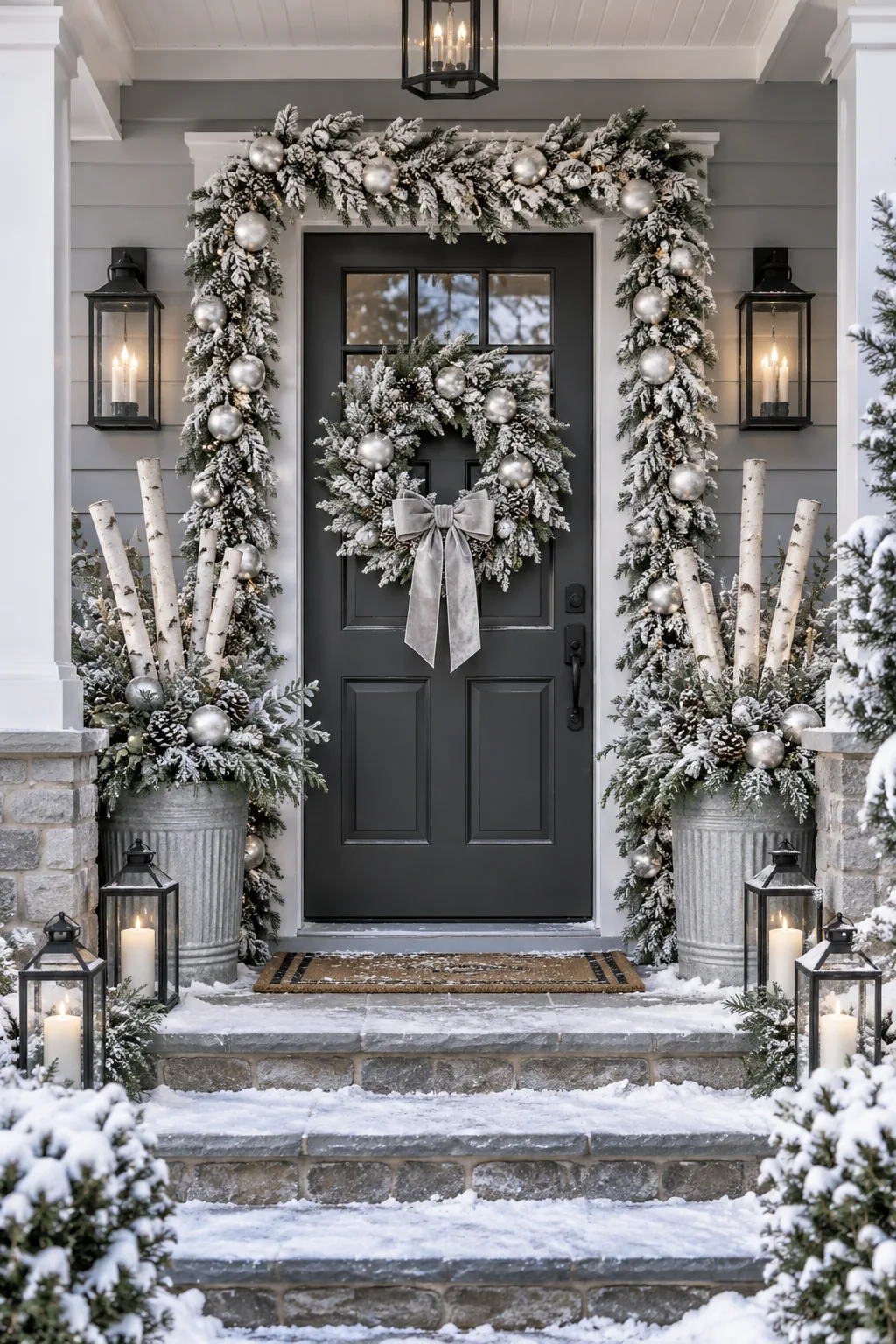
Monochromatic Frosted Silver: Heavily flocked fir branches and silver shatterproof ornaments create an elegant, icy palette on a grey painted porch.
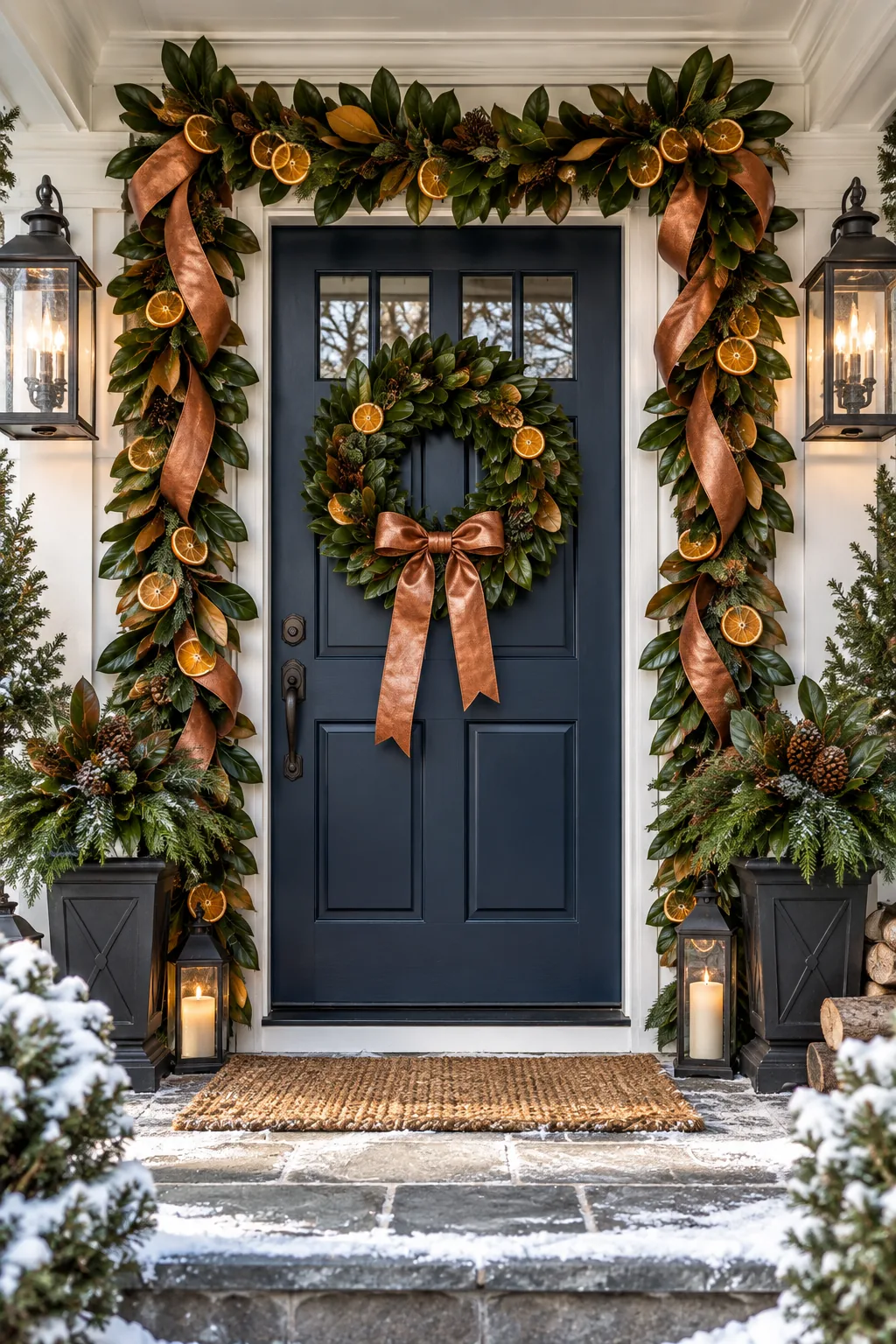
Vibrant Citrus and Magnolia: Thick, glossy magnolia leaves paired with dried orange slices and copper ribbon bring warm Southern charm to a navy door.