
Hello fellow bonsai lovers! If you’re thinking about livening up your living space with a natural touch, considering juniper bonsai is a fantastic move.
1. Classical Vertical Form

The classical vertical form emphasizes symmetry and equilibrium, which can pose a challenge with the inherent bends of a juniper. I’m captivated by how this form introduces a sense of structure and calm to any setting. You can explore more ideas for juniper landscaping to better integrate these unique shapes into your garden design.
2. Floating Form

The floating form imitates a fallen tree that persists to flourish, a demonstration to resilience. I believe it introduces an unexpected narrative to any interior theme. You can explore inspired bathroom photos to see how this aesthetic transforms a space.
3. Root-Grip Form

The root-grip form showcases nature’s strength with roots elegantly embracing a rock. It’s a striking approach to highlight the raw beauty of bonsai. You can apply similar design principles to your landscaping where tree roots grow.
4. Windswept Form

The windswept form embodies a tree surviving in harsh conditions. I adore how it infuses an adventurous mood to any area. You can even incorporate this natural aesthetic into your bathroom decor ideas to celebrate Christmas in style.
5. Double Trunk Form

With its paired trunks, the double trunk form establishes a feeling of harmony and balance. It’s a charming approach to symbolize companionship and progress in your interior. You can enhance this aesthetic by incorporating stylish trunk decor throughout your living space.
6. Easygoing Vertical Form

For those drawn to a more laid-back atmosphere, the easygoing vertical form presents a raw, unspoiled aesthetic with its flowing curves. In my cozy space, this form infuses a lively vibe to my interior. You can enhance this look by choosing the right sunroom paint colors to complement the natural light.
7. Pocket Form

The pocket form features tiny bonsai that fit in the palm of your hand. These little beauties are best for compact locations or as charming accents. They look especially elegant when displayed on beautiful grey decks.
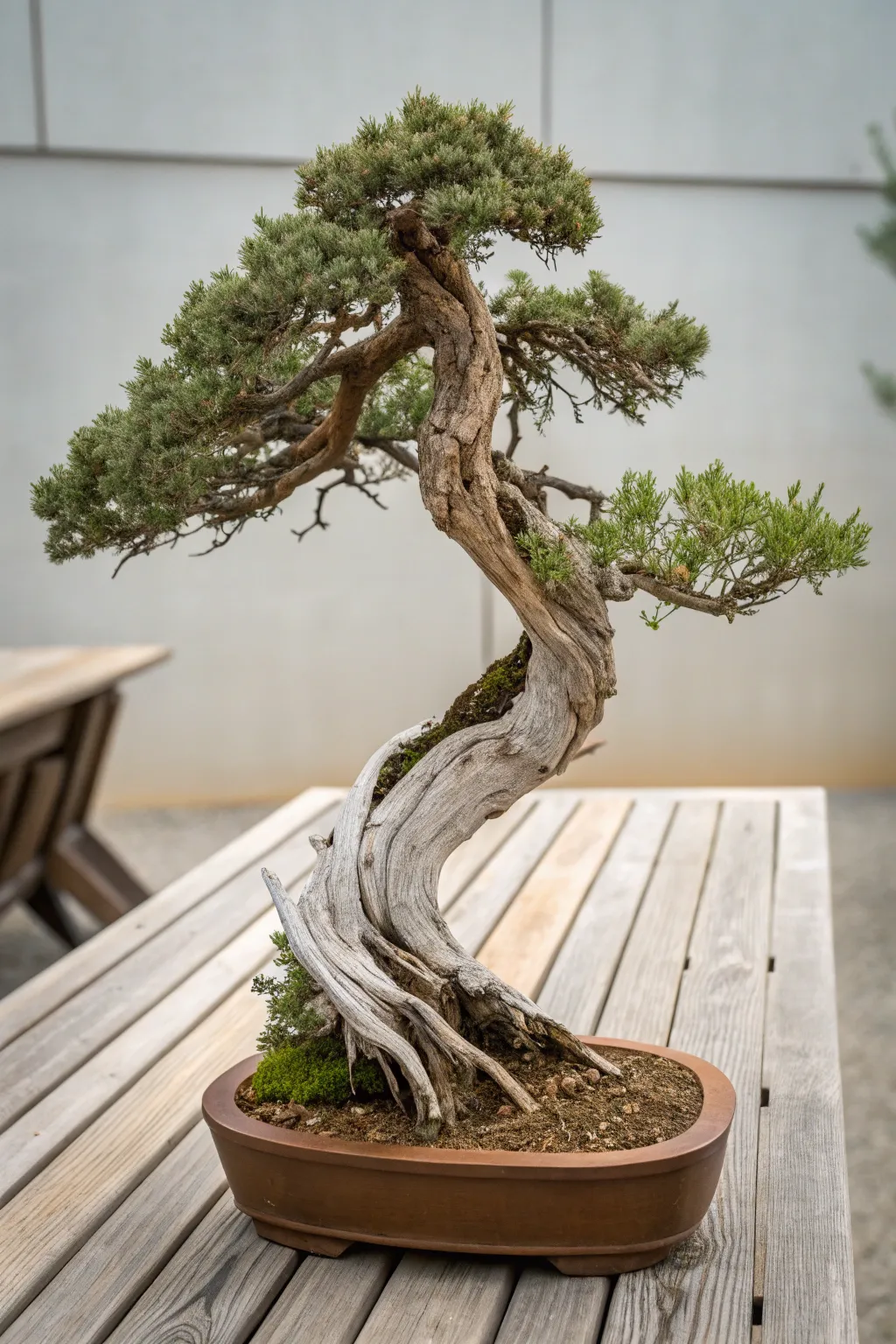
8. Stripped Bark Form

With its stripped bark and lifeless wood, the stripped bark form highlights the tree’s struggle and endurance. It’s a fascinating approach to bring nature’s drama indoors.
9. Scholar Form

The scholar form exhibits the beauty of delicate branches and a twisted trunk. It’s akin to possessing an artwork that conveys a tale of strength and elegance. You can enhance your property’s foundation with smart underpinning ideas to ensure your landscape remains stable.
10. Revealed Root Form

For an artistic spin, the revealed root form reveals the tree’s foundation, offering a distinctive and striking appearance. It’s akin to revealing a hidden tale.
11. Waterfall Form

The waterfall form resembles owning a cascade of leaves indoors. I cherish how it transforms a basic container into an impressive centerpiece, much like the design elements found in our small pool area ideas.
12. Triple Trunk Form

Taking it further, the triple trunk form delivers even greater complexity and attraction. It’s best for those who appreciate detailed patterns.
13. Leaning Form

The leaning form conjures a feeling of vibrant movement, ideal for adding a striking accent to your area. I’m fascinated by how it appears to defy the laws of physics, much like a tree sculpted by strong winds.
14. Semi-Waterfall Form

For a more understated interpretation of the waterfall, the semi-waterfall form provides a gentle decline of branches. This form introduces a stylish aspect to my coffee table. You can find more design inspiration for petite coffee tables to complete your space.
15. Multi-Peak Form

The multi-peak form features multiple peaks, creating a mountain-like impression. This form adds depth and dimension to any interior. You can also explore inspirational ideas for your white vinyl siding house to complement this architectural style.
16. Fan-Out Form

The fan-out form offers a refined silhouette with its fan-like branch spread. It’s ideal for a sophisticated accent in a formal setting. Pair this structure with low-maintenance ground cover plants to create an effortless landscape design.
17. Sanded Wood Form

The sanded wood form incorporates natural wood elements, blending the tree with its environment. I appreciate how it establishes a seamless connection with nature. You can explore more natural wood kitchen cabinet ideas to enhance this organic aesthetic in your home.