Small Yard Fire Pit Seating: The 12-Foot Measurement Sheet
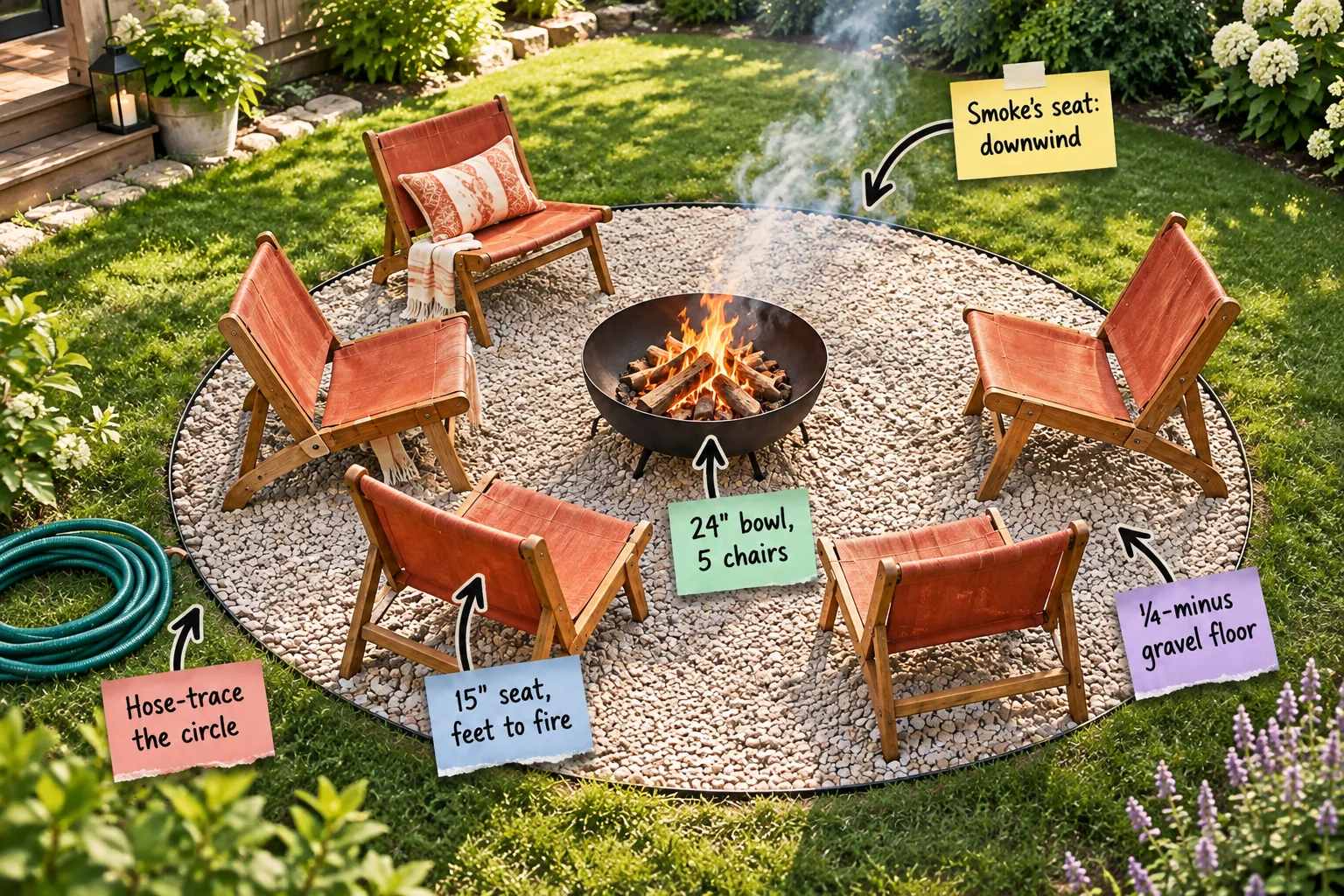
Planning a small backyard fire pit is so much easier when you can grab our 12-foot fire pit seating measurement sheet to get exact chair clearances, gravel tonnage, and chair counts. You will be able to mark out a perfect 12-foot footprint, order the right amount of gravel, and space five chairs safely around a 24-inch fire bowl.
Hose-Tracing the 12-Foot Circle
I always start my backyard hardscaping projects with a standard garden hose because it lets you instantly map out a 12-foot diameter circle before committing to the design or removing a single blade of turf from your lawn.
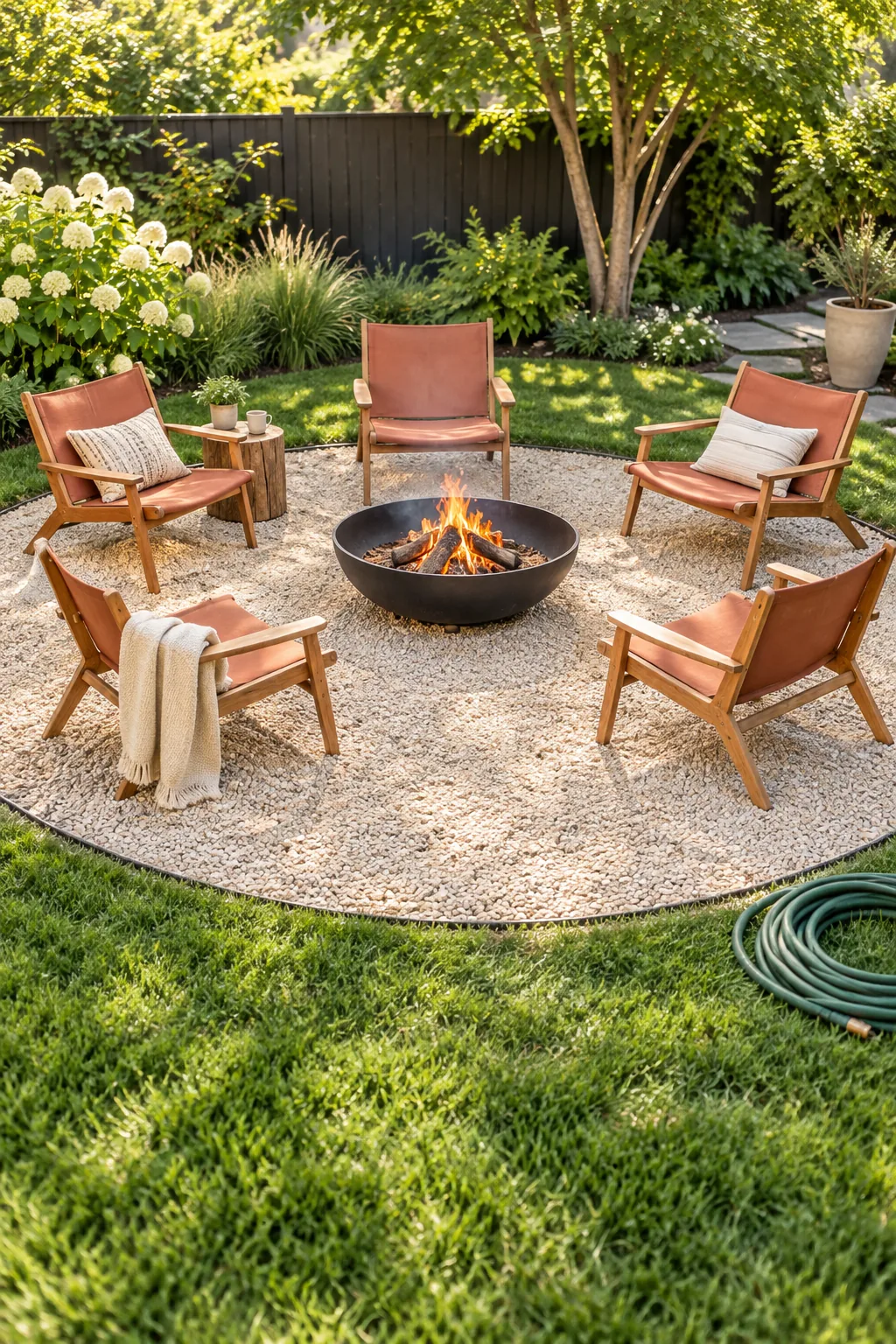
Finding a reliable center point and measuring a strict 6-foot radius outward ensures a perfectly geometric footprint for your seating area, keeping the final gravel patio completely symmetrical and visually balanced within your yard.
Finding the True Center Point
Establishing an accurate central anchor is the absolute best way to ensure your new gravel patio remains perfectly round once you actually start digging into the topsoil.
- Drive a sturdy wooden stake directly into the exact center of your planned seating zone.
- Tie a six-foot string to the stake and attach landscaping paint to the other end.
- Walk the perimeter while pulling the string taut to paint your exact circular cut line.
Once your bright perimeter line is painted directly onto the grass, you can confidently remove the heavy sod knowing your final proportions are entirely locked in place.
Levelling the Excavated Dirt
Once you remove the top layer of grass, taking the time to perfectly level the exposed dirt prevents your gravel from pooling unevenly. Using a long wooden board and a standard carpenter’s level guarantees your foundation starts out completely flat before any stone arrives.
Installing a Heavy-Duty Weed Barrier
Laying down a professional-grade permeable landscape fabric directly over the bare dirt stops aggressive weeds from eventually pushing up through your beautiful new patio. This crucial hidden layer allows rainwater to drain naturally while keeping the underlying soil completely separated from your clean crushed stone.
Installing Slim Steel Edging
Installing flexible black steel landscape edging securely contains the loose crushed stone while creating a beautifully crisp, professional border that separates your dedicated seating area from the surrounding green grass.
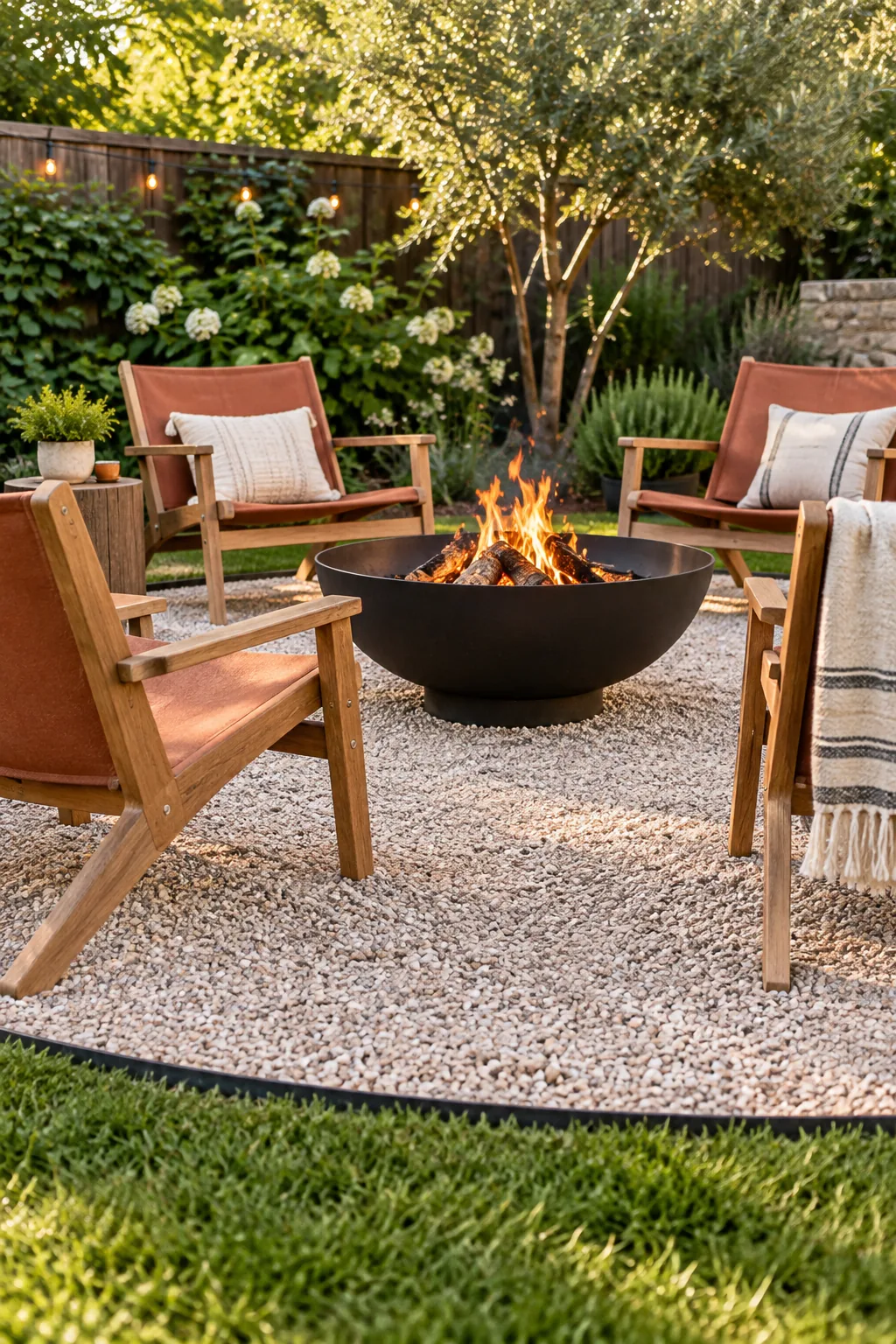
Bending rigid steel edging into a completely seamless 12-foot circle requires careful attention to exactly where the individual metal strips connect along the excavated perimeter trench.
Securing the Border Flush With Roots
Setting your metal edging deeply enough into the soil prevents the sharp upper lip from ever becoming a dangerous tripping hazard when your guests walk toward the glowing fire.
This perfectly flush installation method also allows your heavy lawnmower wheels to glide right over the gravel boundary without ever striking or bending the painted steel strips.
Laying the 1/4-Minus Gravel Floor
Using specialized 1/4-minus crushed gravel creates the absolute ideal fire pit surface because the jagged stone dust naturally binds the pieces into a incredibly firm floor that will never shift.
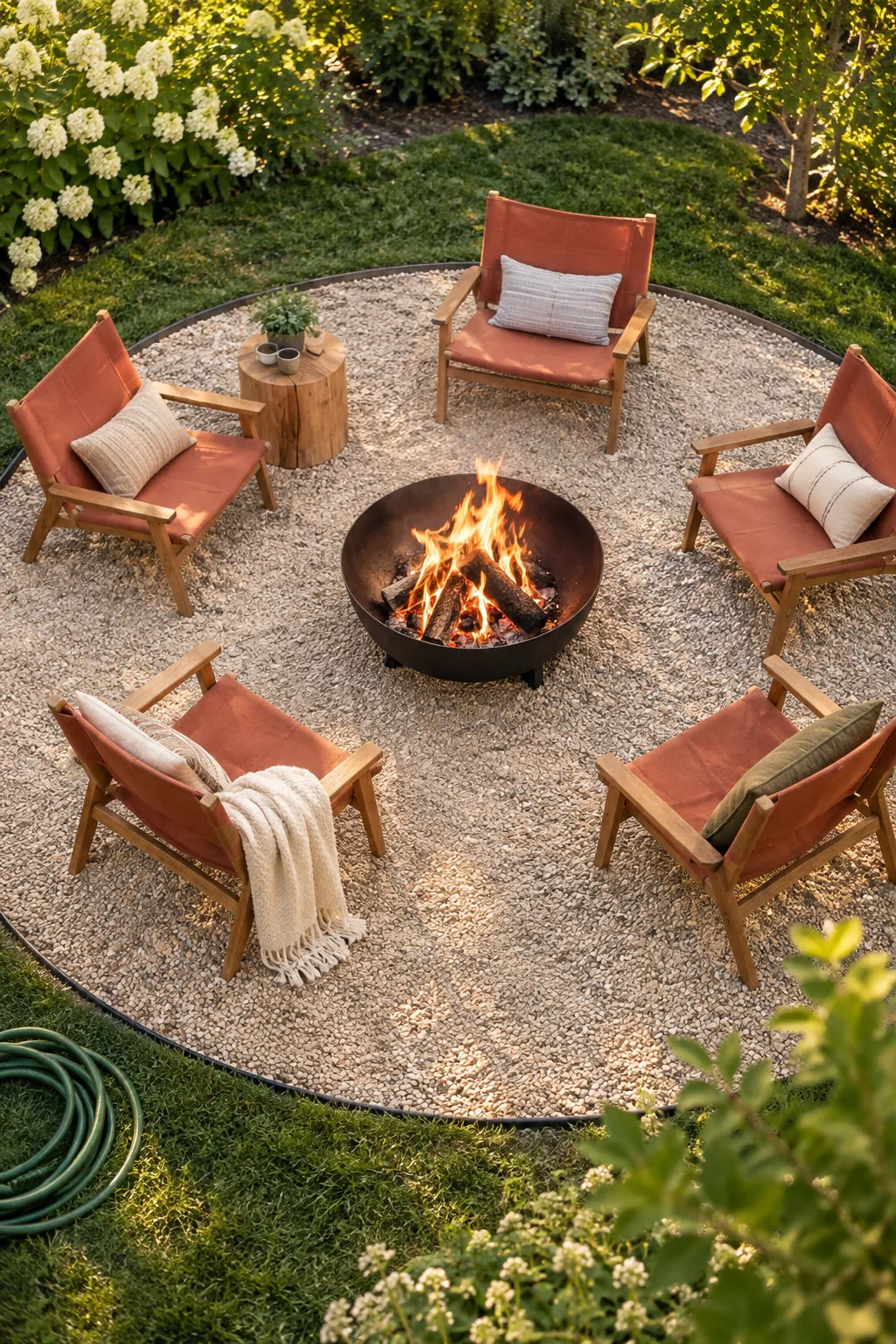
A standard 12-foot circle excavated to a precise 3-inch depth requires exactly 1.5 tons of bulk material to fill the space properly and prevent any future muddy sinkholes.
Compacting the Stone Dust Base
Renting a heavy manual tamper is absolutely essential for locking those loose angular stones tightly together so your wooden chair legs never accidentally sink into the finished patio.
| Layer Depth | Compaction Method | Water Needed | Final Texture |
|---|---|---|---|
| First 1.5 inches | Manual hand tamper | Light misting | Loose but flat |
| Final 1.5 inches | Plate compactor | Heavy soaking | Hard like concrete |
Taking the extra time to lightly wet and tamp down the gravel in two completely separate layers guarantees a perfectly level, rock-solid foundation for your heavy steel fire bowl.
The 24-Inch Fire Bowl Centerpiece
A compact 24-inch bowl is the absolute perfect scale for a 12-foot circle because it leaves plenty of safe walkable space while still comfortably radiating intense heat to everyone.
- It provides enough central fire volume to warm the entire seating radius.
- It leaves ample room behind the chairs for guests to walk safely.
- It allows everyone to fully extend their legs without crowding the flames.
Choosing a massive fire bowl larger than two feet across would quickly overwhelm this compact gravel patio and force your seating uncomfortably close to the damp grass.
Managing Heat Radiation Zones
The incredibly intense heat generated by a roaring wood fire drops off significantly once you move your chairs more than four feet away from the hot metal rim.
Keeping your cozy seating arrangement tightly grouped near the center ensures everyone equally benefits from the radiant warmth during those chilly autumn evenings out in the backyard.
15-Inch Sling Chairs for Warm Feet
The ergonomically low 15-inch seat height of these wooden sling chairs allows your guests to comfortably stretch their tired legs straight toward the glowing heat source.
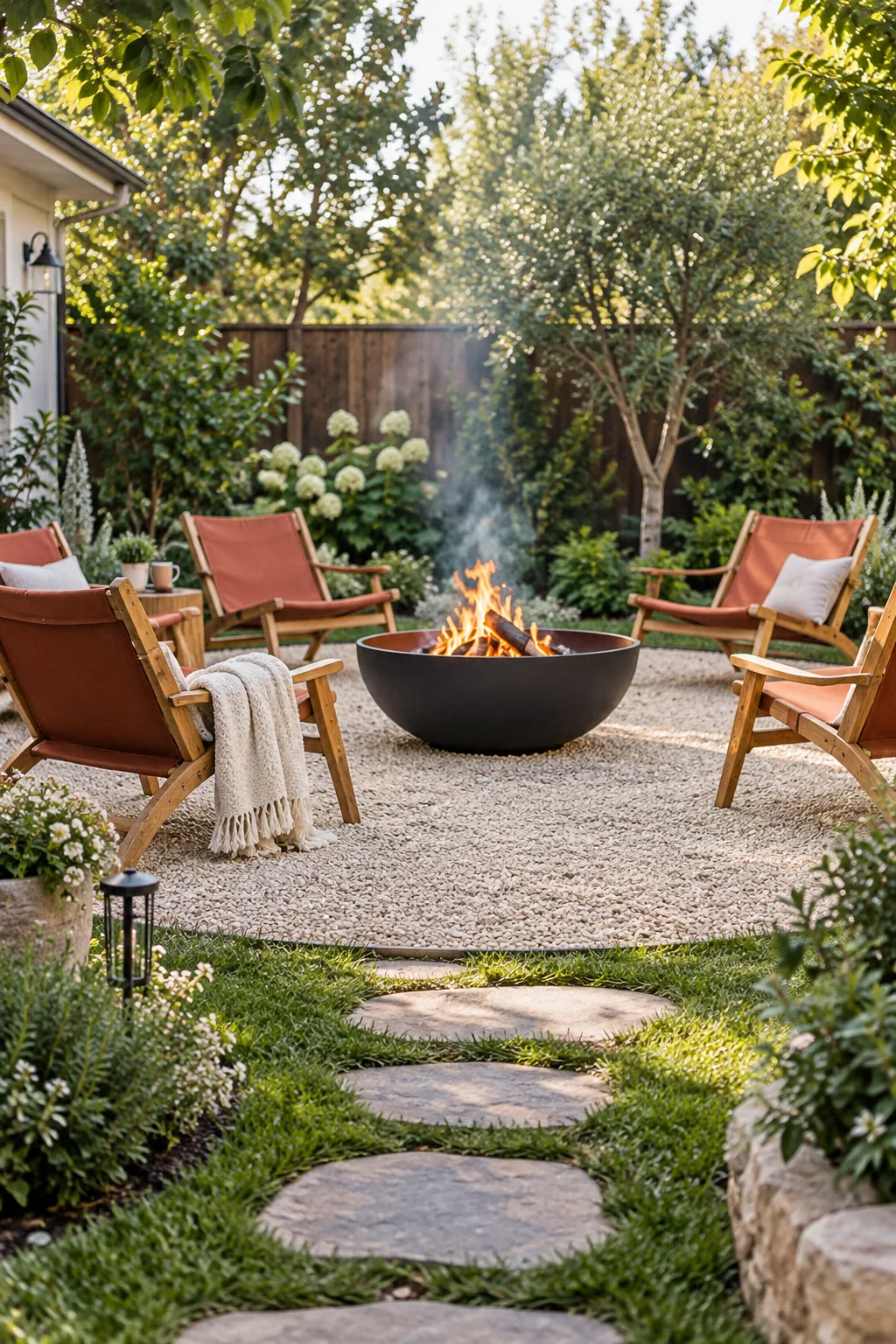
This relaxed ergonomic angle keeps everyone’s feet wonderfully warm without forcing anyone to lean awkwardly forward or trapping rising smoke under a nearby patio umbrella.
Protecting Canvas from Stray Sparks
While deep sling chairs are incredibly comfortable for long evenings, their delicate fabric seats require extra situational awareness when burning natural firewood. Choosing a dense, seasoned hardwood like oak or hickory significantly minimizes the popping embers that could otherwise land on your beautiful canvas upholstery.
Selecting the Right Hardwood
Burning premium kiln-dried oak or ash consistently produces significantly less irritating smoke than throwing standard sappy pine logs onto the fire. This careful firewood selection keeps your seating area incredibly pleasant and prevents heavy black soot from permanently coating your beautiful terracotta fabric.
Leaving the Downwind Gap
Arranging your five wooden chairs in a wide horseshoe shape rather than a fully closed circle instantly gives the inevitable campfire smoke a clear, completely unobstructed exit path.
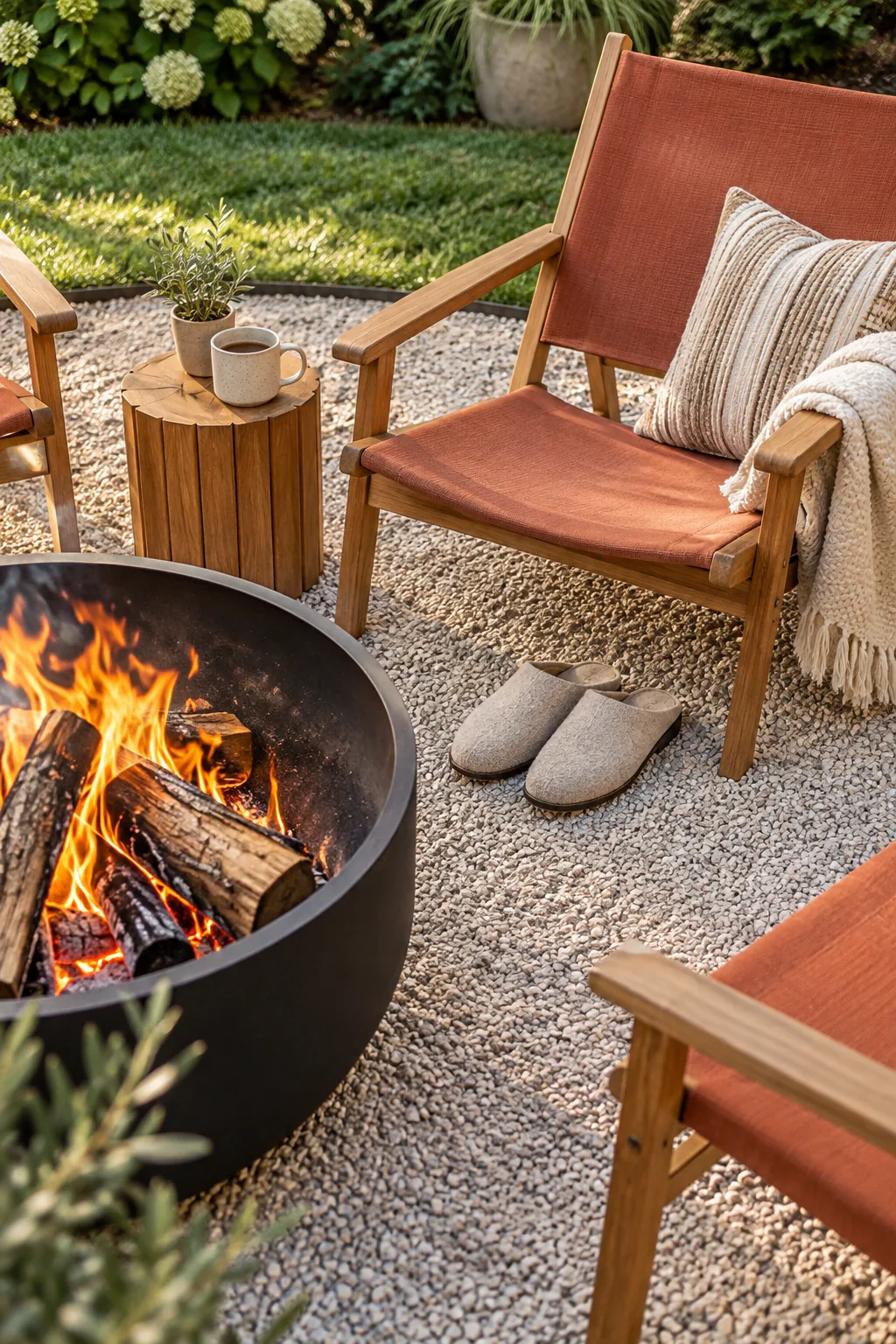
Leaving this one deliberate open gap exactly on the downwind side of the patio ensures a soft wisp of smoke drifts harmlessly out and away from your guests’ faces.
Adjusting for Shifting Breezes
Because unpredictable backyard wind patterns frequently change throughout the evening, keeping your wooden chairs relatively lightweight makes it incredibly easy to quickly rotate the entire horseshoe configuration. I always recommend sliding the seats a few feet over if the breeze suddenly changes direction mid-party.
Safe Clearances for Small Yards
In my own yard, I learned very quickly that maintaining a strictly measured 36-inch clearance between the hot fire bowl rim and the front edge of the seats is entirely non-negotiable.
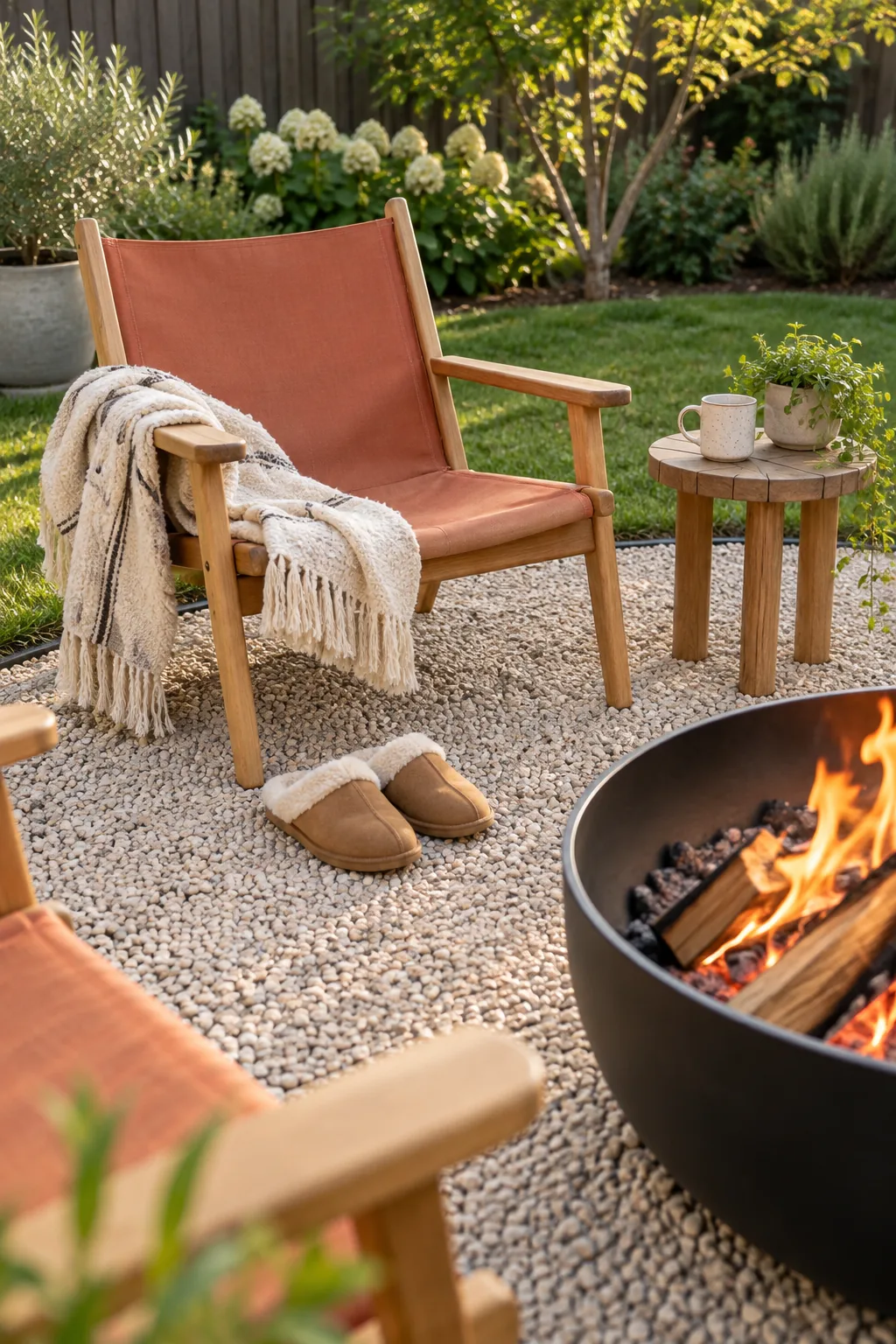
This highly specific setback distance completely prevents permanent heat damage to your wooden chair frames and delicate canvas fabric while still keeping everyone in the circle comfortably warm.
Keeping Pathways Open Behind Chairs
When you strictly maintain that three-foot interior safety radius, you naturally create a highly comfortable exterior walkway directly behind the seated guests. This convenient outer ring of gravel allows friends to easily fetch more firewood without ever awkwardly stepping over someone’s outstretched legs.
Maintaining the Gravel Surface
Over time, crisp fallen leaves and stray gray ash will inevitably settle deeply into your pale crushed stone patio. A quick weekly pass with a flexible metal leaf rake easily keeps the textured floor looking absolutely pristine throughout the entire busy fire season.
The 12-Foot Fire Pit Measurement Sheet
I created this comprehensive one-page guide so you can completely skip the frustrating layout guesswork and immediately print the exact chair spacing needed for your own backyard space.
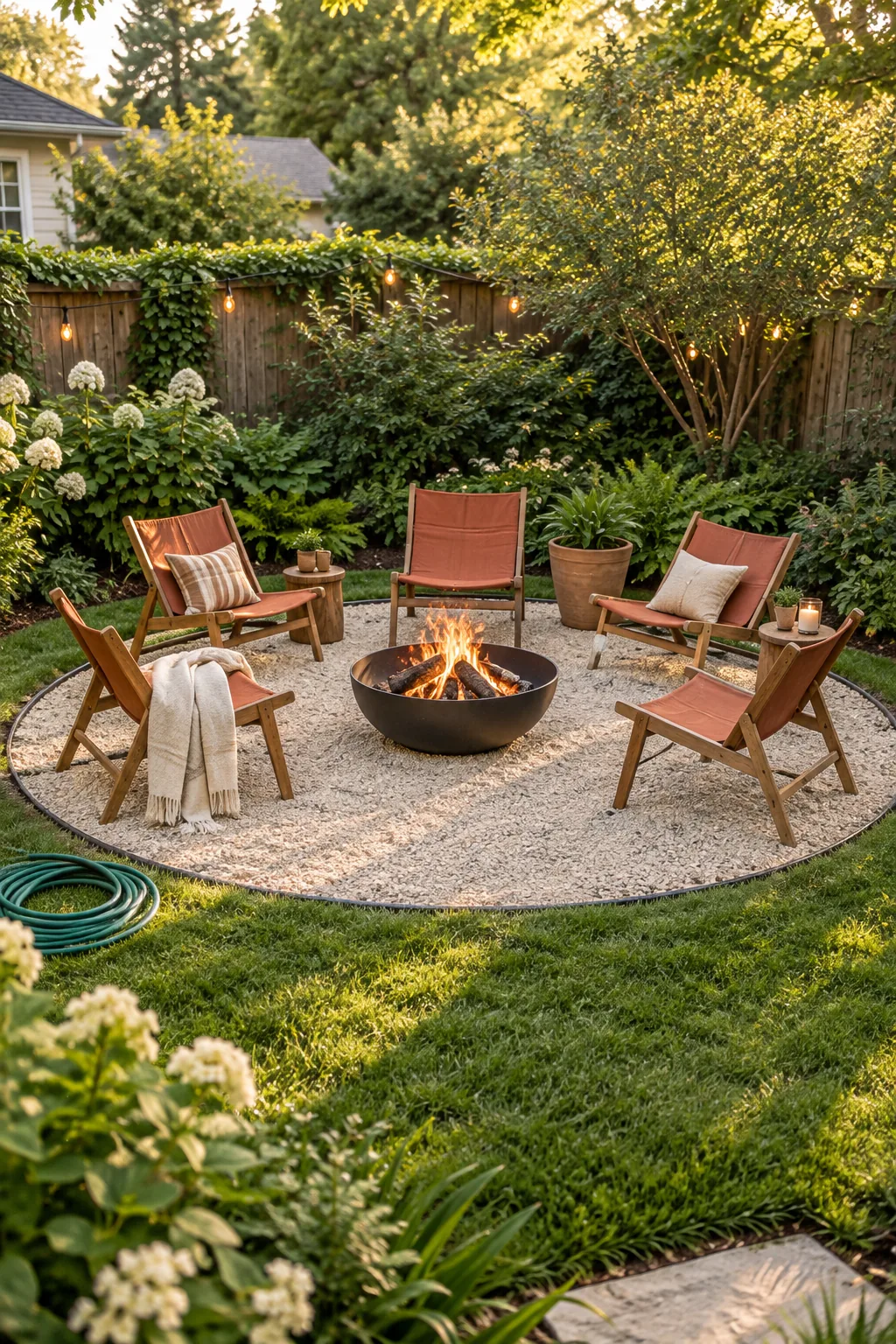
Before finally downloading the handy measurement sheet and officially scheduling your heavy gravel delivery, take just a few minutes to carefully verify your specific backyard site conditions.
5 Fire Pit Styles for Small Yards
Explore how changing the seating and stone completely transforms the same 12-foot footprint.
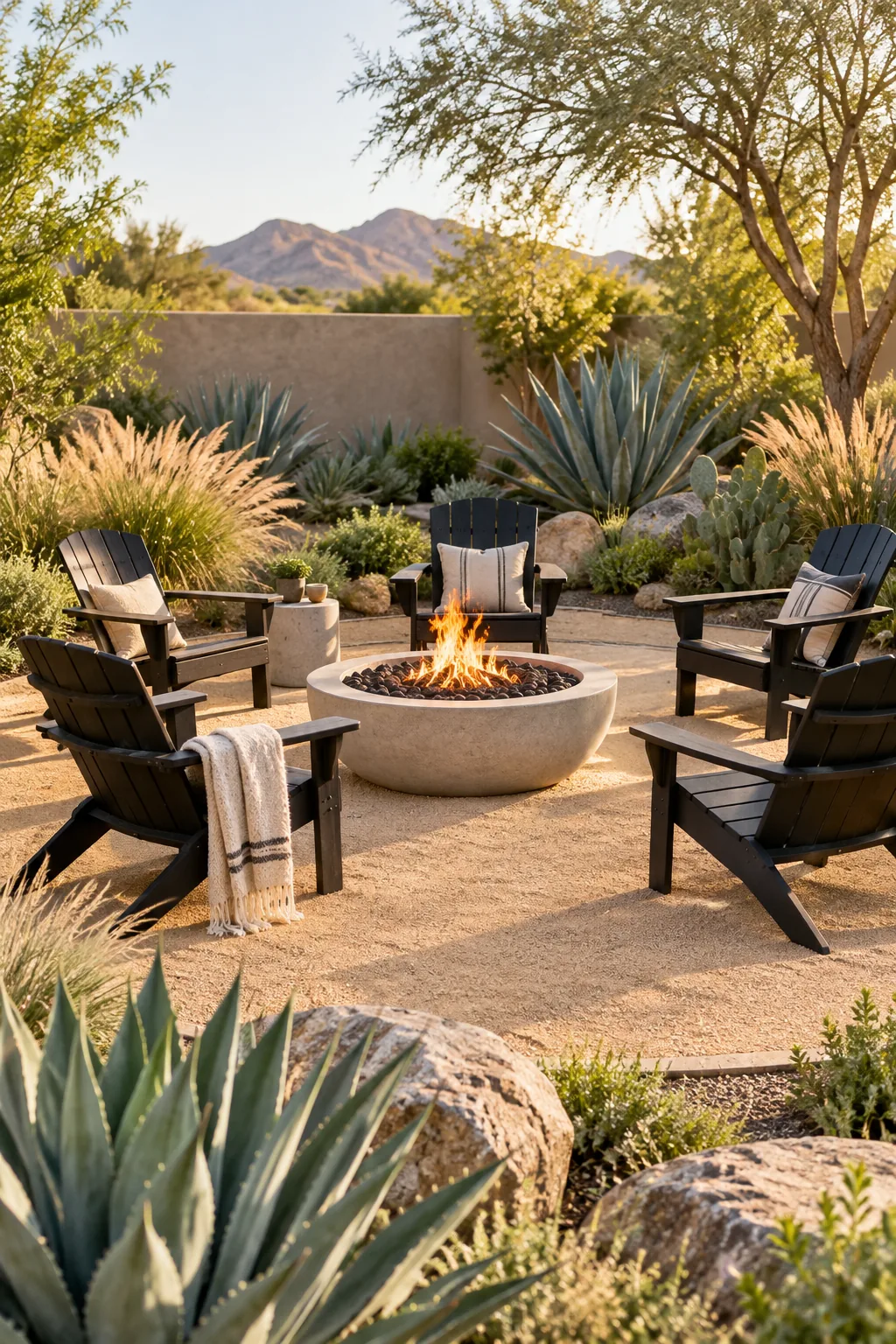
Modern Desert: Black Adirondacks pop against warm decomposed granite for a striking, low-maintenance desert aesthetic.
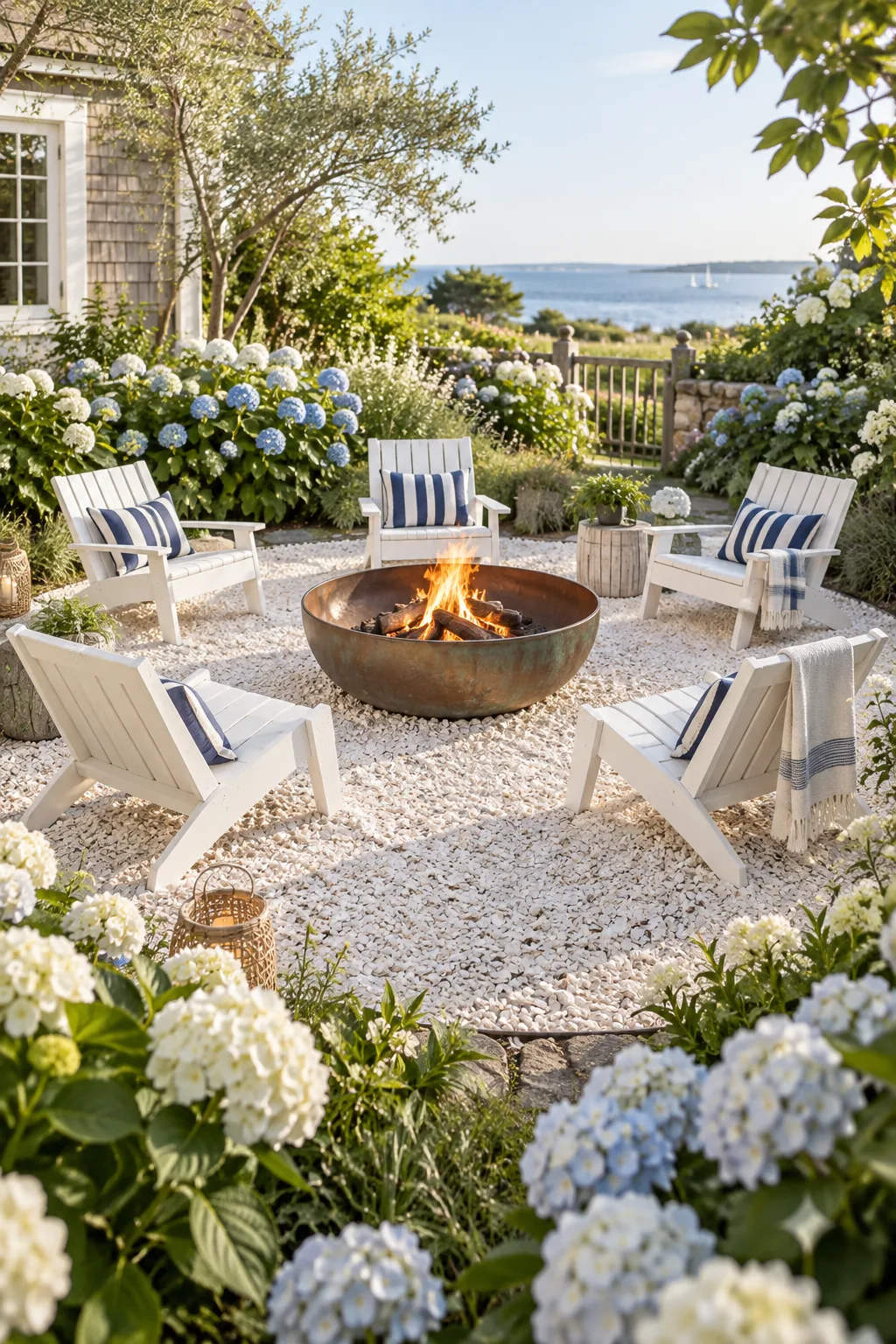
Coastal Cottage: Crushed oyster shells and navy striped pillows bring an instant beachside feel to any backyard.
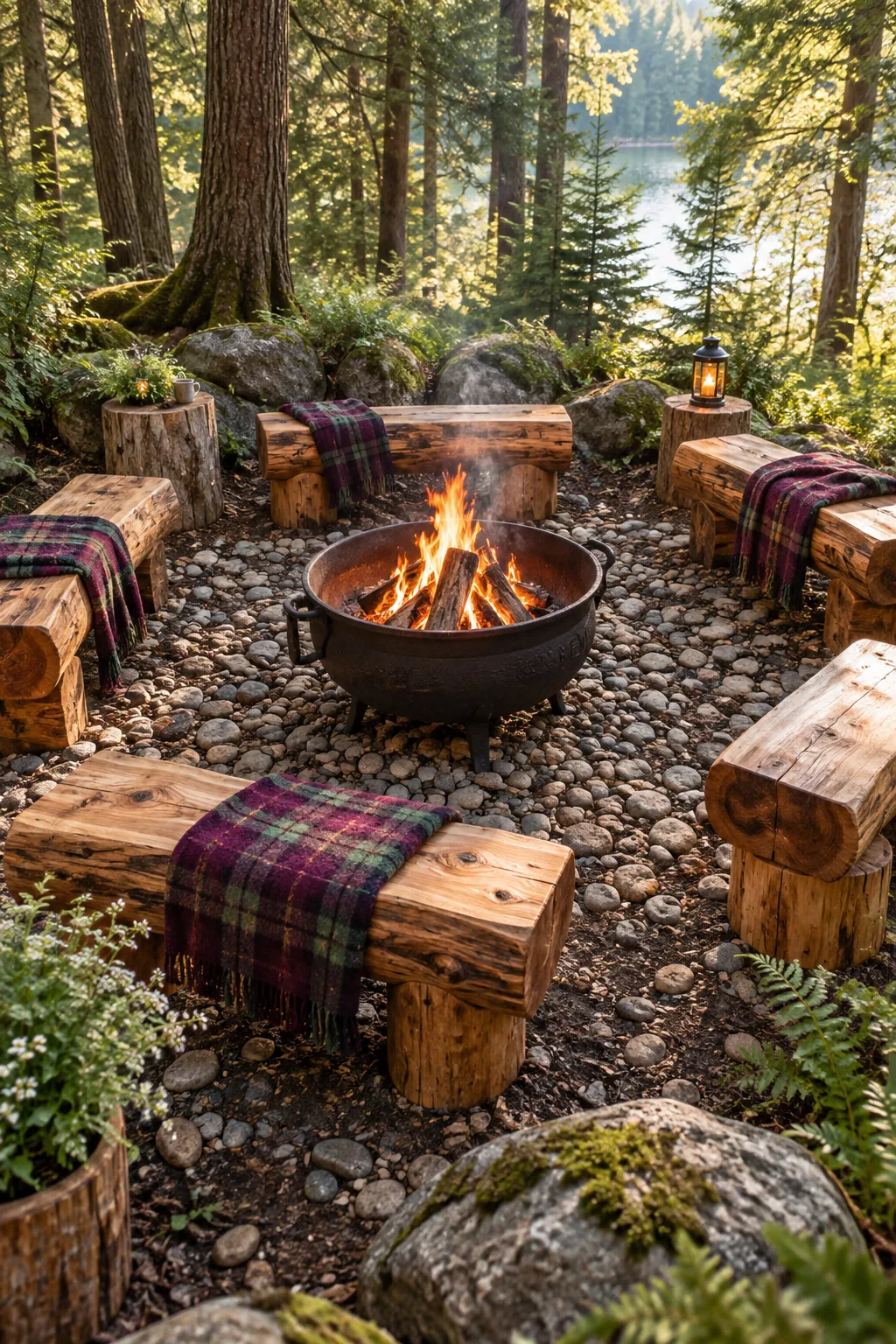
Rustic Woodland: Chunky cedar log benches and a cast-iron cauldron create a cozy, cabin-inspired gathering space.
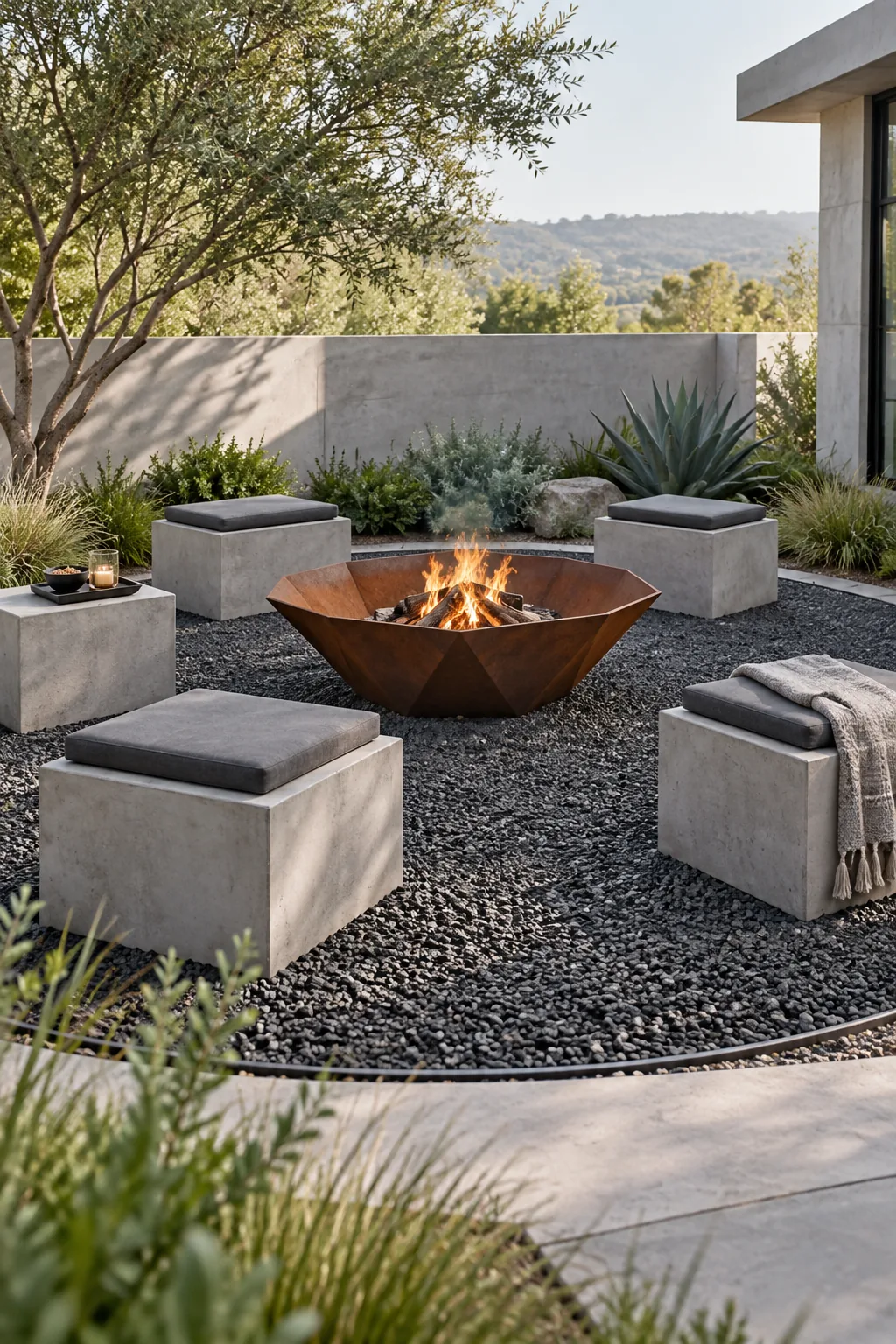
Minimalist Concrete: Dark basalt gravel and geometric corten steel deliver a sharp, architectural look for urban yards.
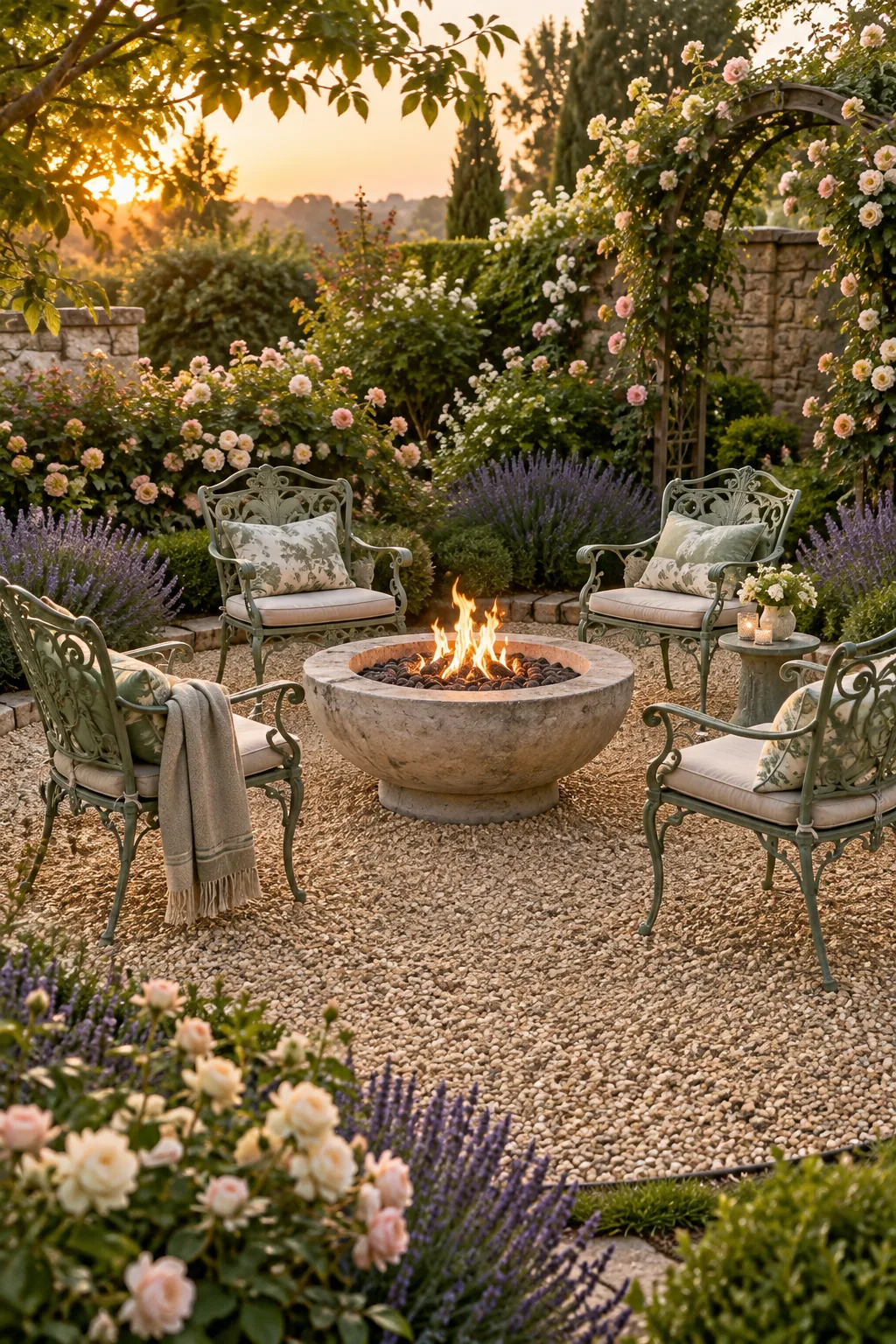
English Garden: Sage green wrought iron chairs and warm pea gravel blend beautifully into a lush, blooming landscape.