
Dorm Loft Bed Setup: The Move-in Measuring Sheet & Cozy Nook
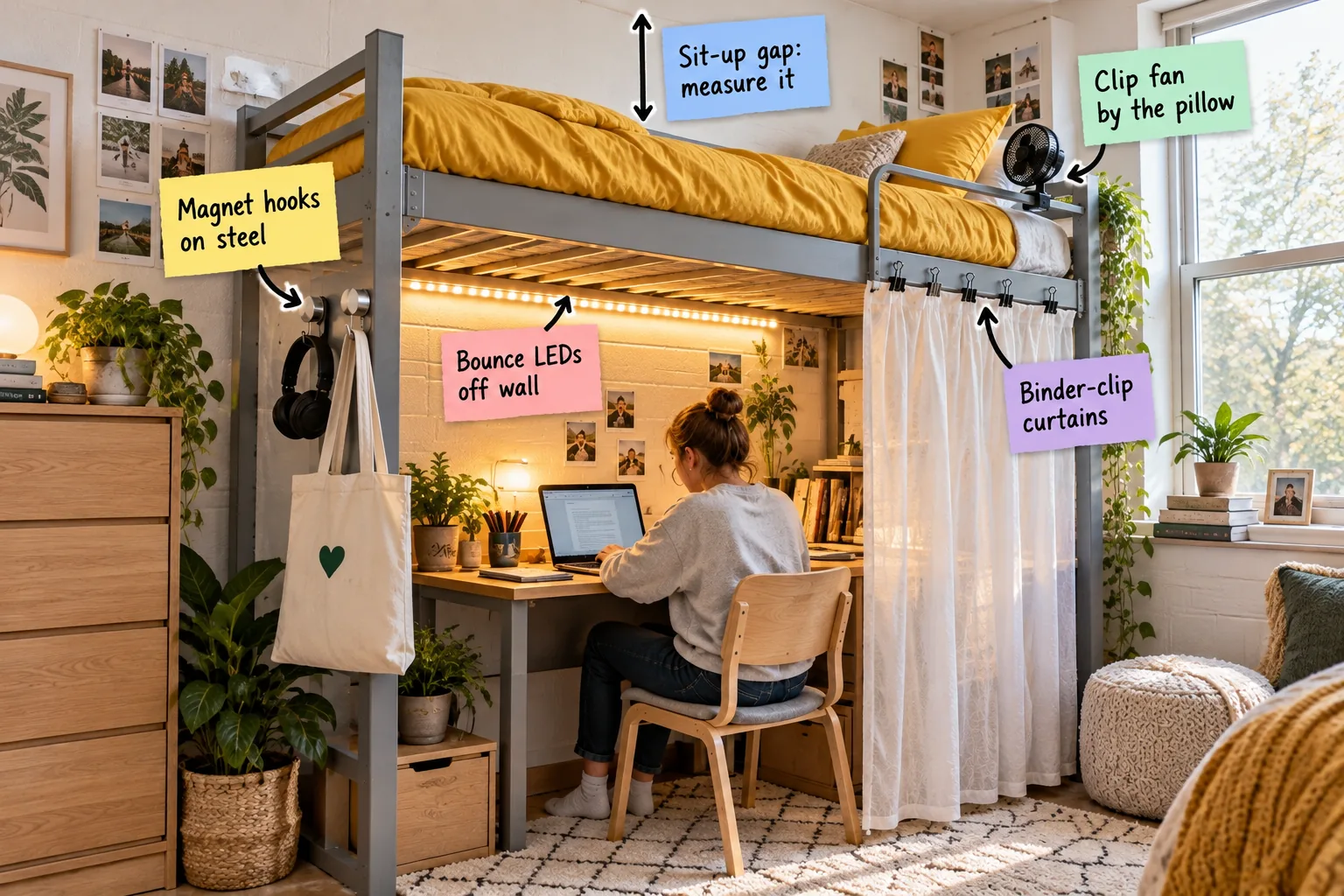
Transform your standard dorm loft bed into a highly functional downstairs study nook with our printable move-in day measuring sheet. You will be able to confidently set your loft height and install damage-free lighting, curtains, and storage to create a private retreat.
The Move-In Day Measuring Strategy
Setting your frame height properly requires knowing exactly what must fit around the mattress before you ever touch the heavy adjustment pins. Balancing these vertical zones ensures you have enough room for both sleeping comfortably above and studying efficiently below.
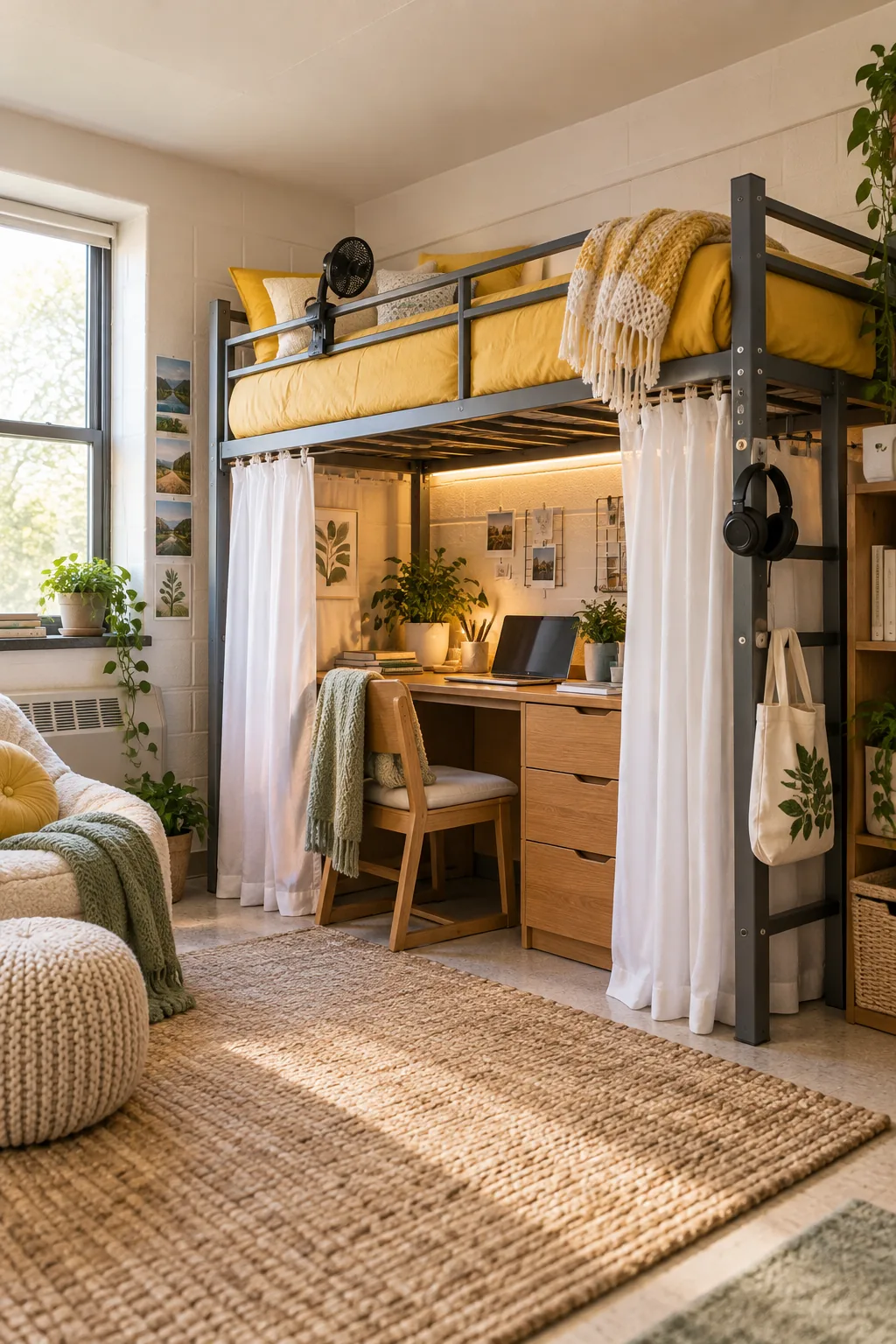
Before lifting those heavy steel frames, use our printable dorm loft measuring sheet. Recording these critical dimensions ensures you leave enough room for your desk setup, and complete your nook with our under-loft shopping list.
Bringing a small clip fan, large binder clips, heavy-duty magnetic hooks, and warm-white LED strips covers the essentials. Having these exact measurements and supplies ready prevents chaotic mid-assembly adjustments while your roommate is simultaneously trying to move in.
Finding Your Safe Sit-Up Gap
The vertical space between your mattress top and the ceiling dictates your daily comfort and safety. When I designed my niece’s dorm, calculating the exact sit-up gap first saved her from experiencing daily bumped heads during early morning classes.
| Bedding Component | Average Thickness Range | Impact on Ceiling Clearance | Measurement Method |
|---|---|---|---|
| Standard Dorm Mattress | 6 to 8 inches | Reduces raw ceiling gap significantly | Measure crown to bottom edge |
| Memory Foam Topper | 2 to 4 inches | Raises your overall sleeping profile | Check manufacturer specifications |
| Quilted Mattress Pad | 0.5 to 1 inch | Minimal but adds to total stack | Measure uncompressed edge |
| Heavy Winter Comforter | 1 to 2 inches | Slightly reduces visual clearance | Measure folded thickness |
| Bed Frame Support Rails | 1.5 to 2 inches | Lowers the mattress foundation | Measure side rail depth |
| Total Sleep Surface Stack | 11 to 17 inches | Subtract from total ceiling height | Add all components together |
Measure the combined thickness of your specific mattress and foam topper, then subtract that total from the raw ceiling clearance. Aim for a minimum of 30 to 36 inches of clearance so you can sit up entirely straight without hitting the ceiling.
Airflow for the Top Bunk
Dorm rooms are notoriously stuffy, and excess heat naturally rises directly to the ceiling where your mattress sits. I always recommend a 6-inch oscillating clip fan because it absolutely saved my sanity during hot September nights in my own college dorm.
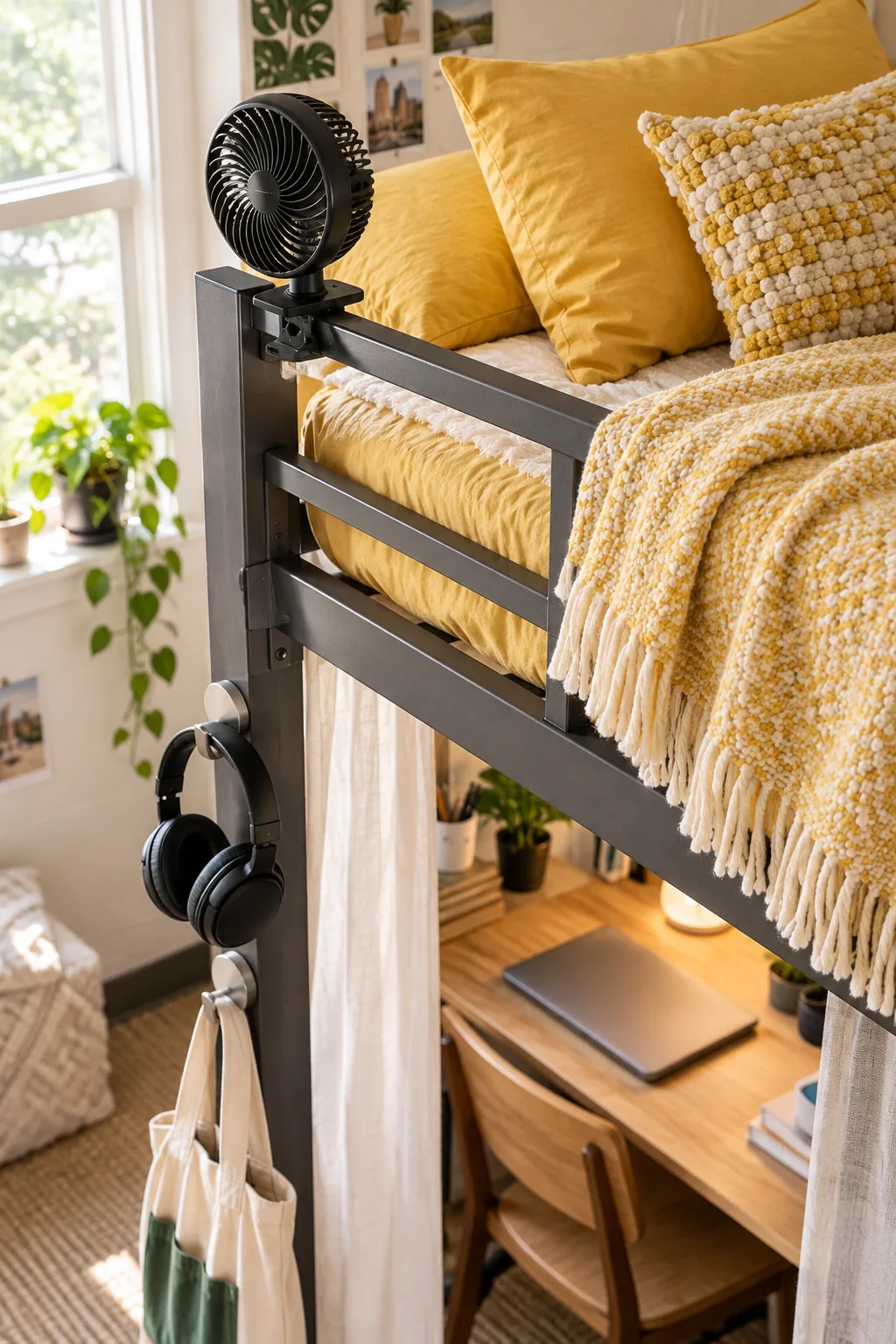
Counteract this stale air by fastening a small, quiet clip-on fan directly to the head-end guardrail beside your pillow. To maximize your comfort without causing disruptions, look for a fan with these specific features.
- A strong rubberized grip clip that will not scratch the steel
- Multiple speed settings for adjustable nighttime airflow
- A rotating head to direct the breeze precisely
- A quiet brushless motor to maintain room peace
This strategic placement provides enough localized breeze to keep you cool throughout the night. It ensures you wake up refreshed without generating a massive draft that disturbs your sleeping roommate across the room.
Hanging Curtains Without Damage
Creating a private downstairs nook requires soft boundaries, but strict dorm rules universally prohibit drilling curtain rods into the walls or ceiling. Instead, use large binder clips clamped directly over the long steel rail of the loft bed to securely hold sheer curtain panels.
This simple tension technique allows you to slide the curtains open or closed effortlessly along the smooth rail. The lightweight fabric beautifully defines your dedicated study zone while still letting necessary ambient room light filter through the space during the day.
Magnetic Storage on Steel Frames
The thick steel posts of a standard dorm loft bed provide the perfect foundation for heavy-duty magnetic storage solutions. Clamp strong magnetic hooks directly to the outer vertical rails to hold bulky everyday items that quickly clutter a small desk.
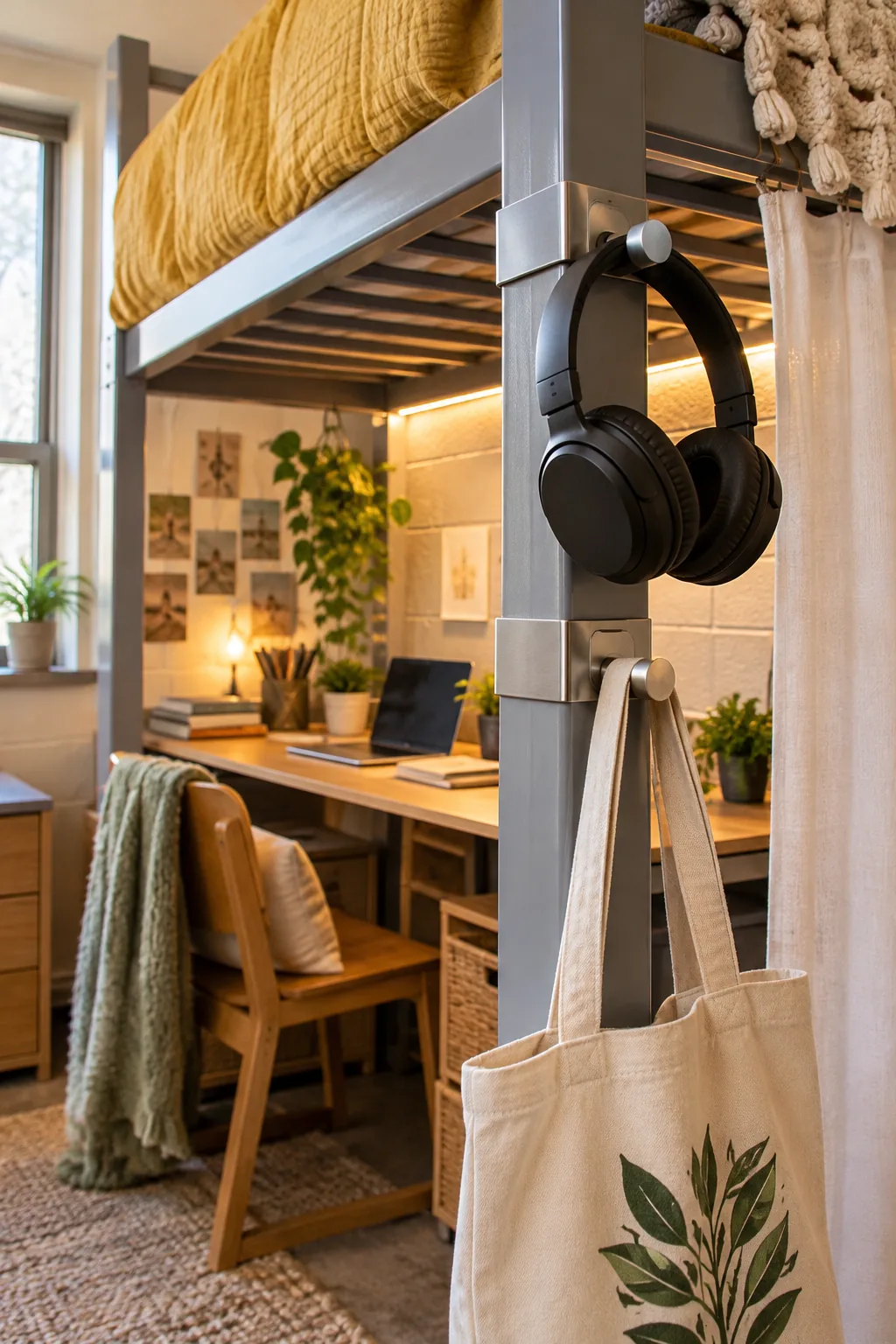
Hooks specifically rated for 20 pounds or more will securely hold heavy over-ear headphones, damp bath towels, or a fully loaded canvas tote bag. This smart placement preserves your valuable workspace for actual studying rather than acting as a dumping ground.
Bouncing Light Off Cinderblock
Overhead dorm fluorescents are notoriously harsh, and relying on a single desk lamp often creates severe, distracting shadows across your textbooks. Stick a slim, warm-white LED strip directly to the underside of the rear bed rail to transform the lighting.
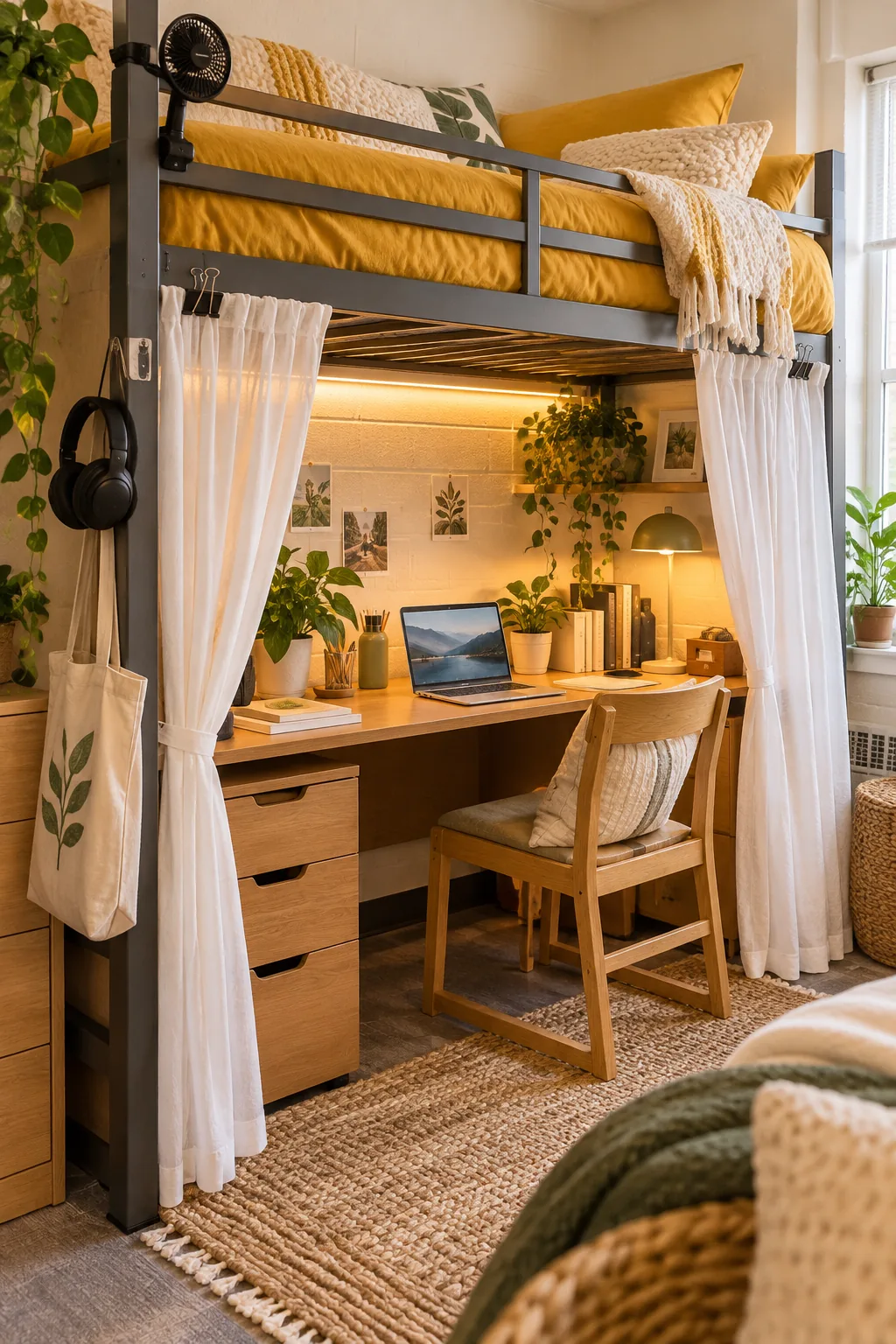
Face the diodes directly toward the cinderblock wall to bounce the illumination outward into the room. This clever technique washes your entire desk surface in a soft, even, and glare-free glow that significantly reduces eye strain during late study sessions.
Sizing the Under-Bed Desk
Your downstairs study space must comfortably accommodate both the provided university furniture and your natural sitting posture. Standard college desks sit about 30 inches high, but you must also carefully measure your seated head height in your specific desk chair.
- Measure your vertical torso height while seated upright
- Add the fixed seat height of your dorm desk chair
- Include an extra 5 inches for safe leaning clearance
- Account for any thick seat cushions you plan to use
- Verify the clearance against the lowest hanging bed rail
Ensure the bottom of the loft frame clears your head by at least 5 inches when you lean back comfortably to study. This crucial buffer prevents accidental bumps and keeps the nook feeling spacious and open rather than cramped and claustrophobic.
5 Ways to Style Your Under-Loft Nook
Explore how different colors and textures can completely change the mood of your downstairs study space.
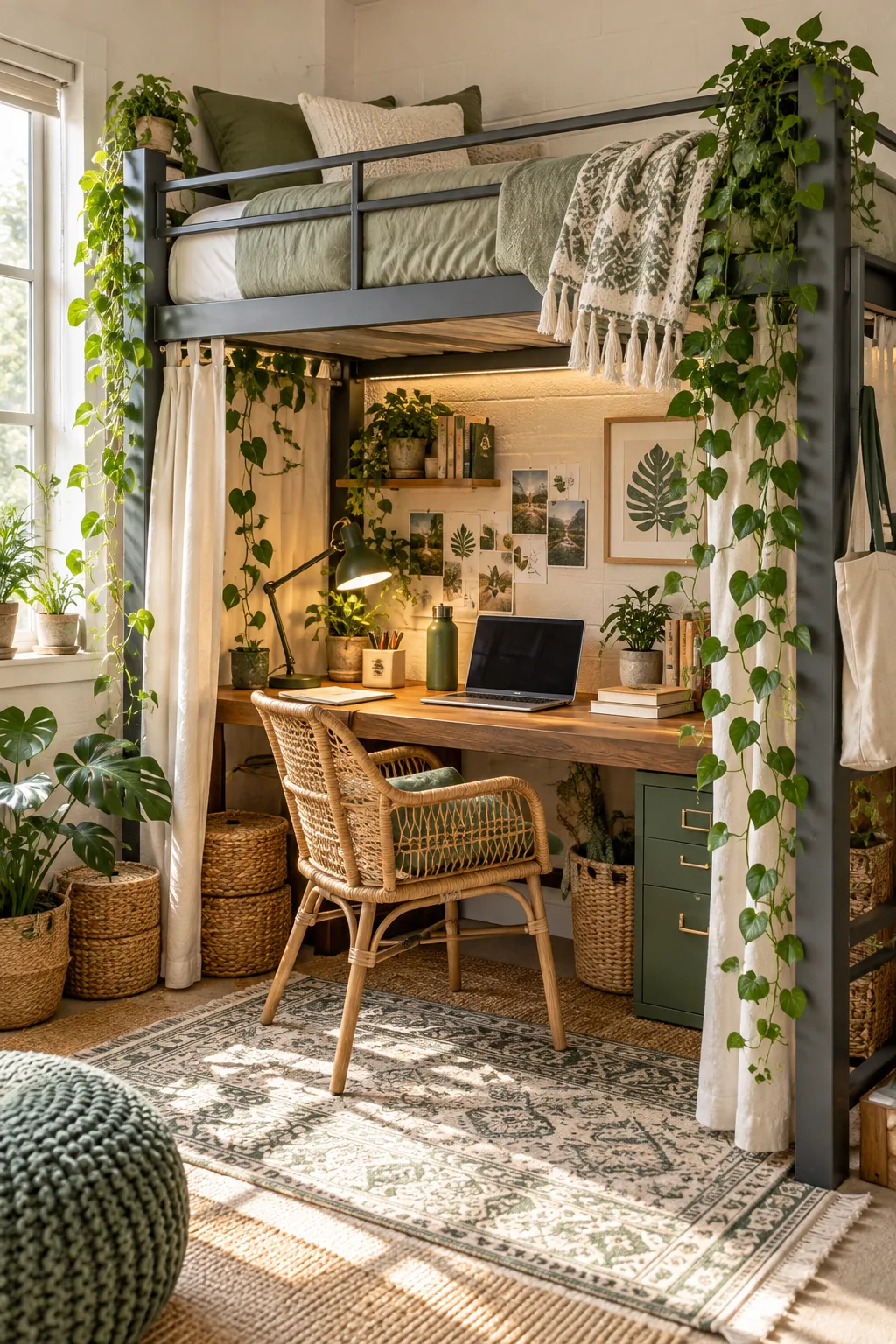
Boho Plant Oasis: Bring life to sterile cinderblocks by hanging trailing faux ivy from the steel frame and incorporating warm rattan textures.
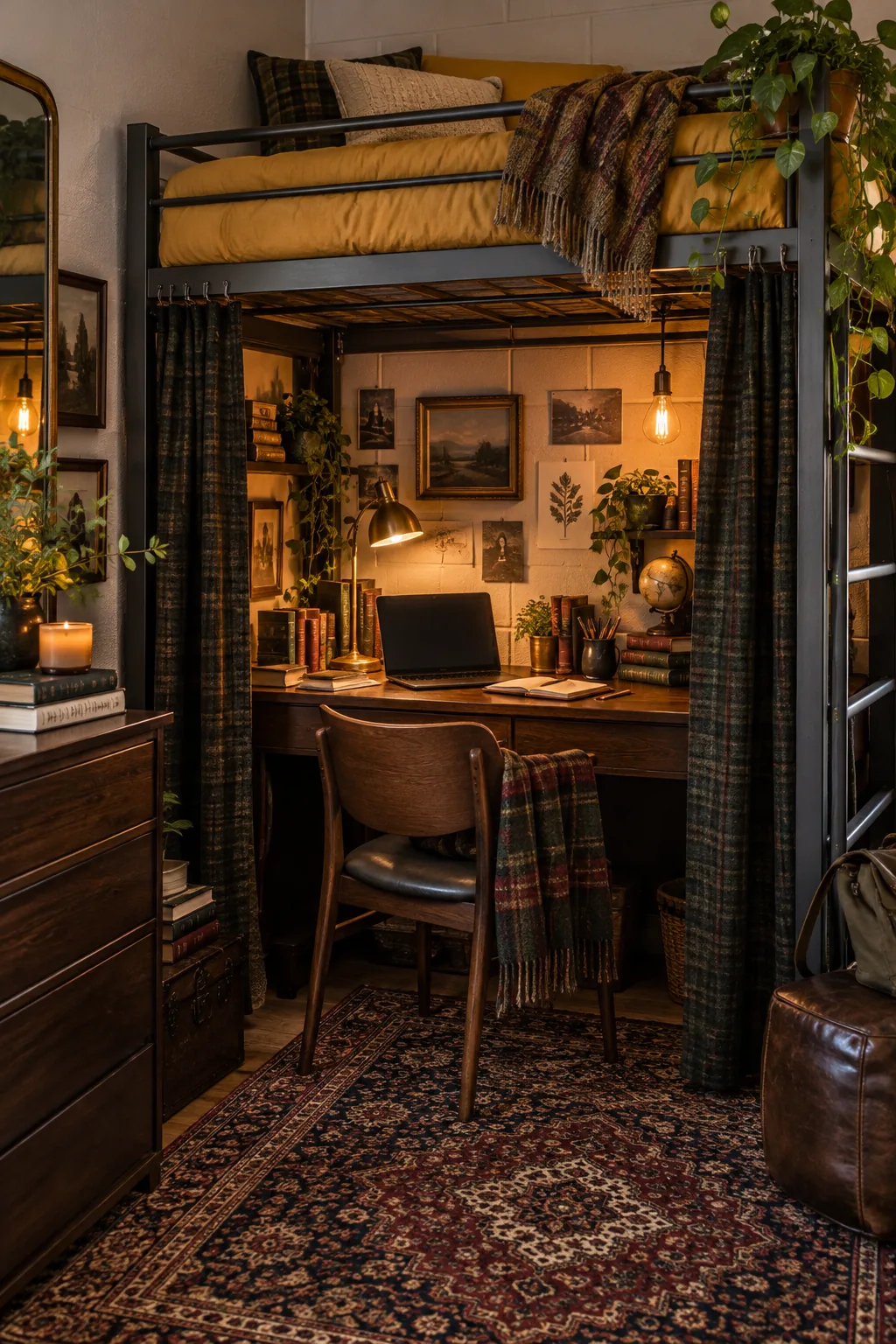
Moody Dark Academia: Swap bright LEDs for warm amber lighting and add dark wood desk accessories to create a cozy, library-inspired retreat.
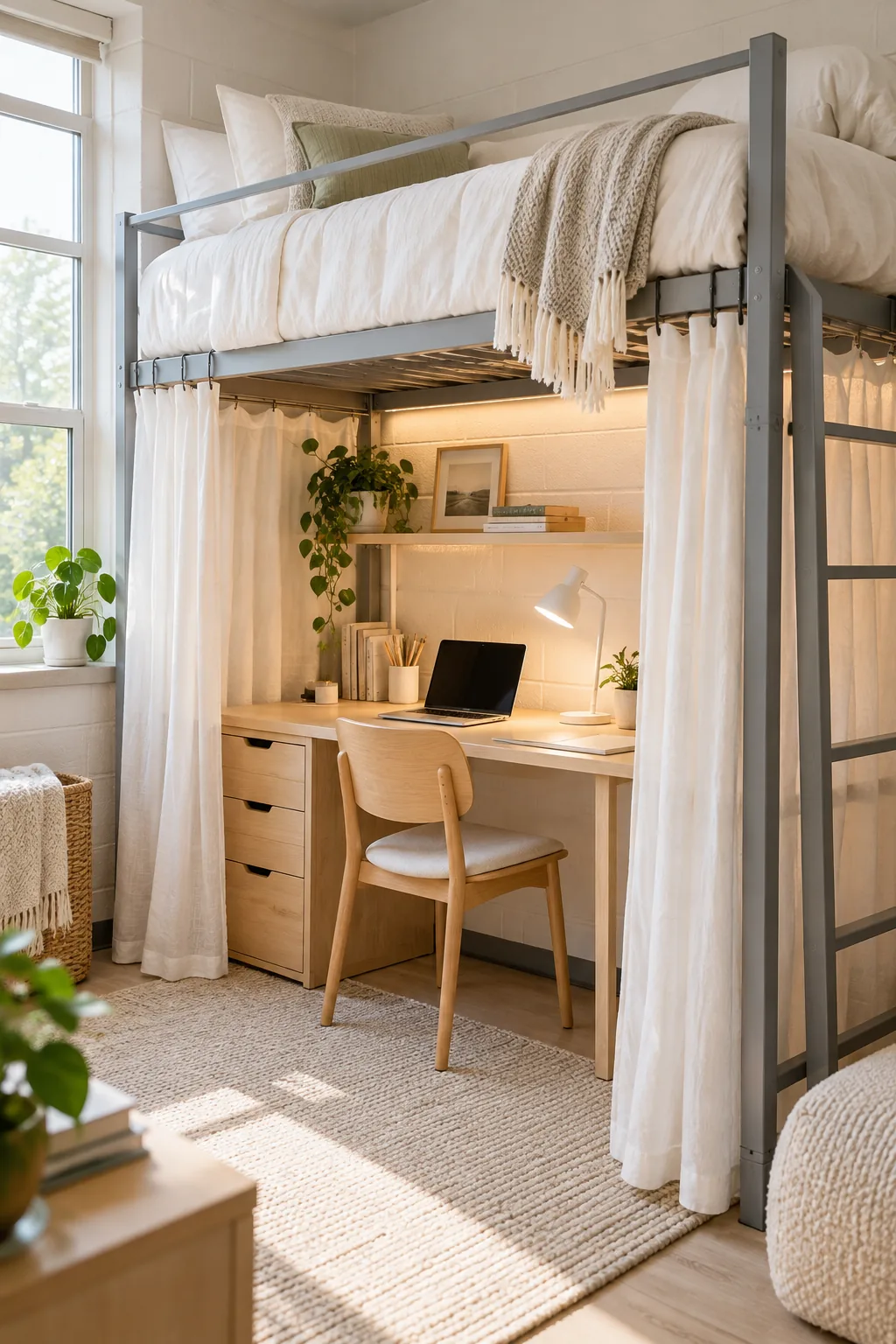
Minimalist Scandi: Keep distractions to an absolute minimum with light birch wood tones, crisp white curtains, and strictly functional desk accessories.
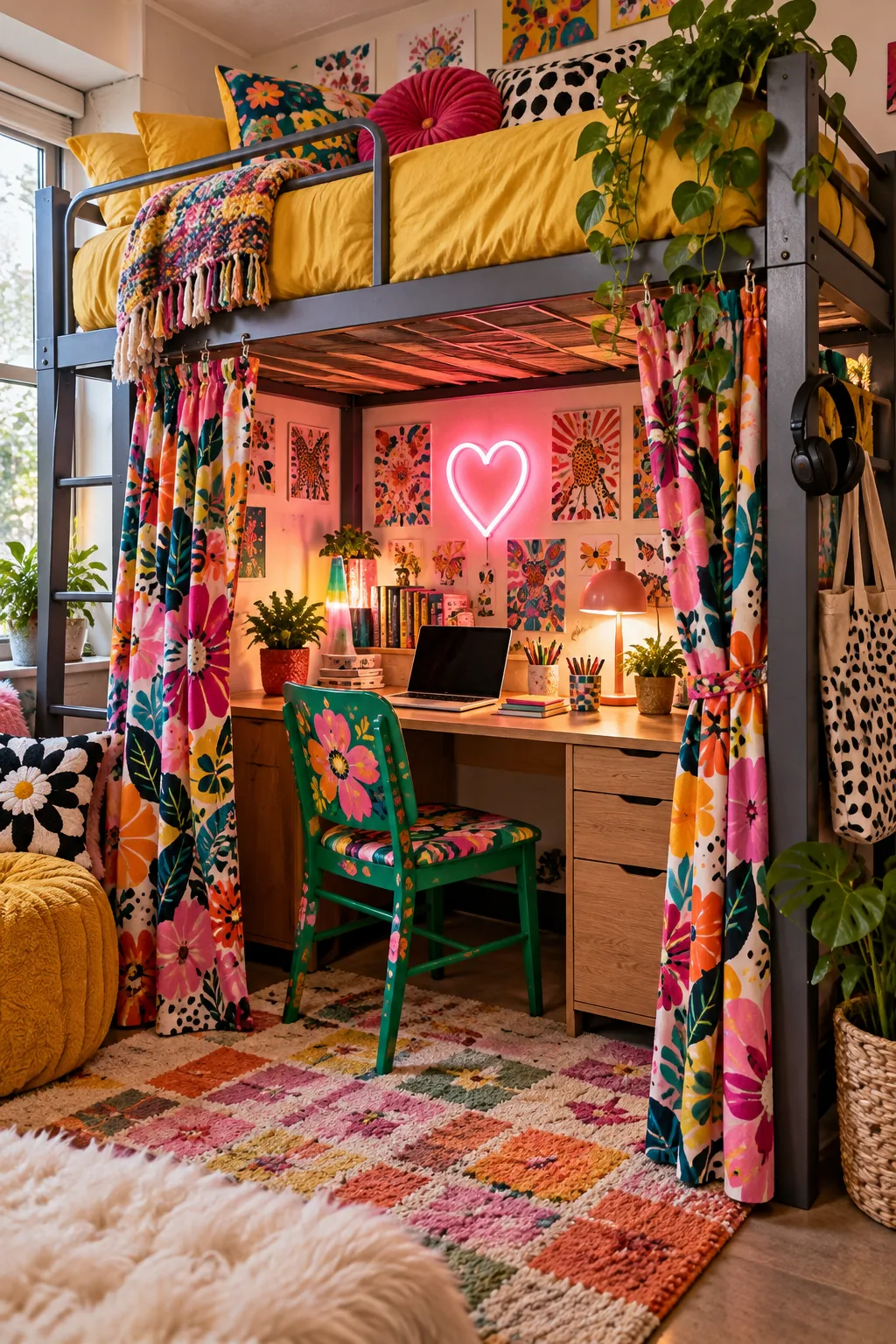
Vibrant Maximalist: Inject high energy into your study sessions with a custom neon sign, heavily layered wall art, and bold patterned fabrics.
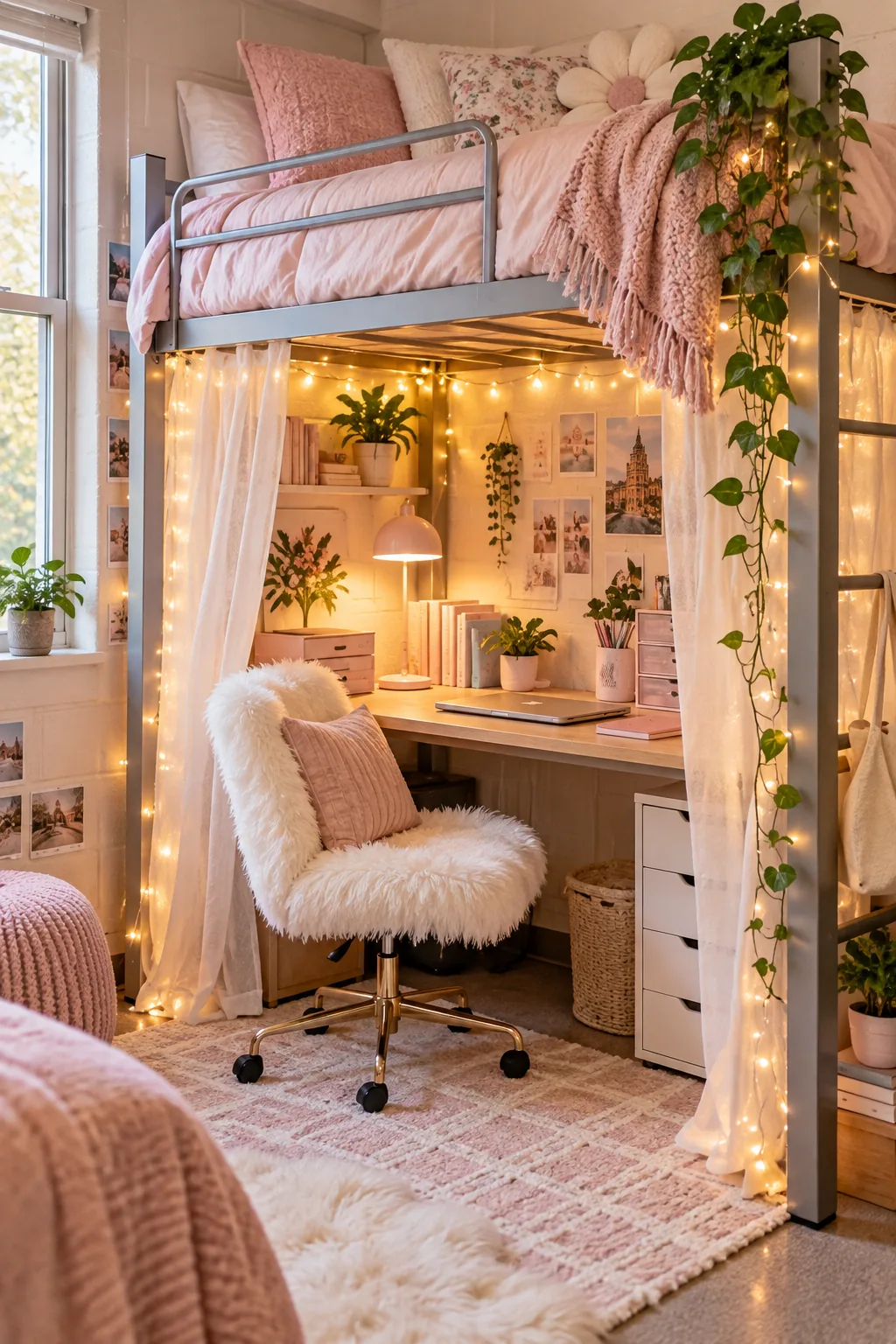
Soft Pastel Dream: Soften the industrial metal frame by draping cascading fairy lights behind sheer curtains and adding a plush, textured desk chair.
Enjoying Your Cozy Downstairs
By carefully measuring your vertical zones and utilizing clever damage-free mounting tricks, the awkward space beneath a loft bed becomes a highly functional retreat. In my own design practice, I find that carving out a dedicated, private space is absolutely essential for deep focus.
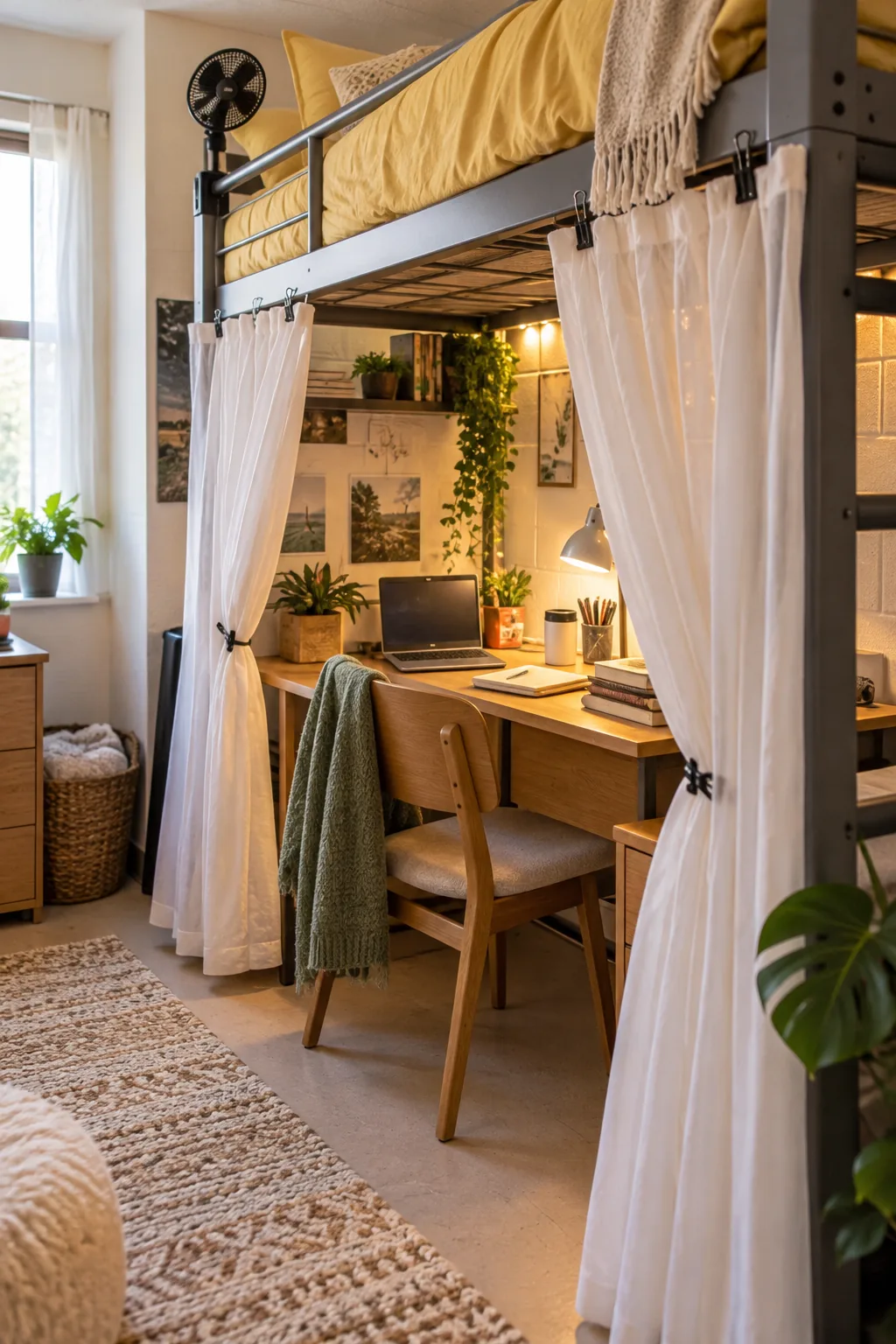
The combination of bounced ambient light, sheer privacy curtains, and off-the-desk magnetic storage transforms a standard-issue dorm into a personalized study environment. Your new cozy downstairs becomes the perfect, organized place to tackle those challenging late-night assignments in total peace.