
How to Hang a Double Shower Curtain Like a Luxury Hotel
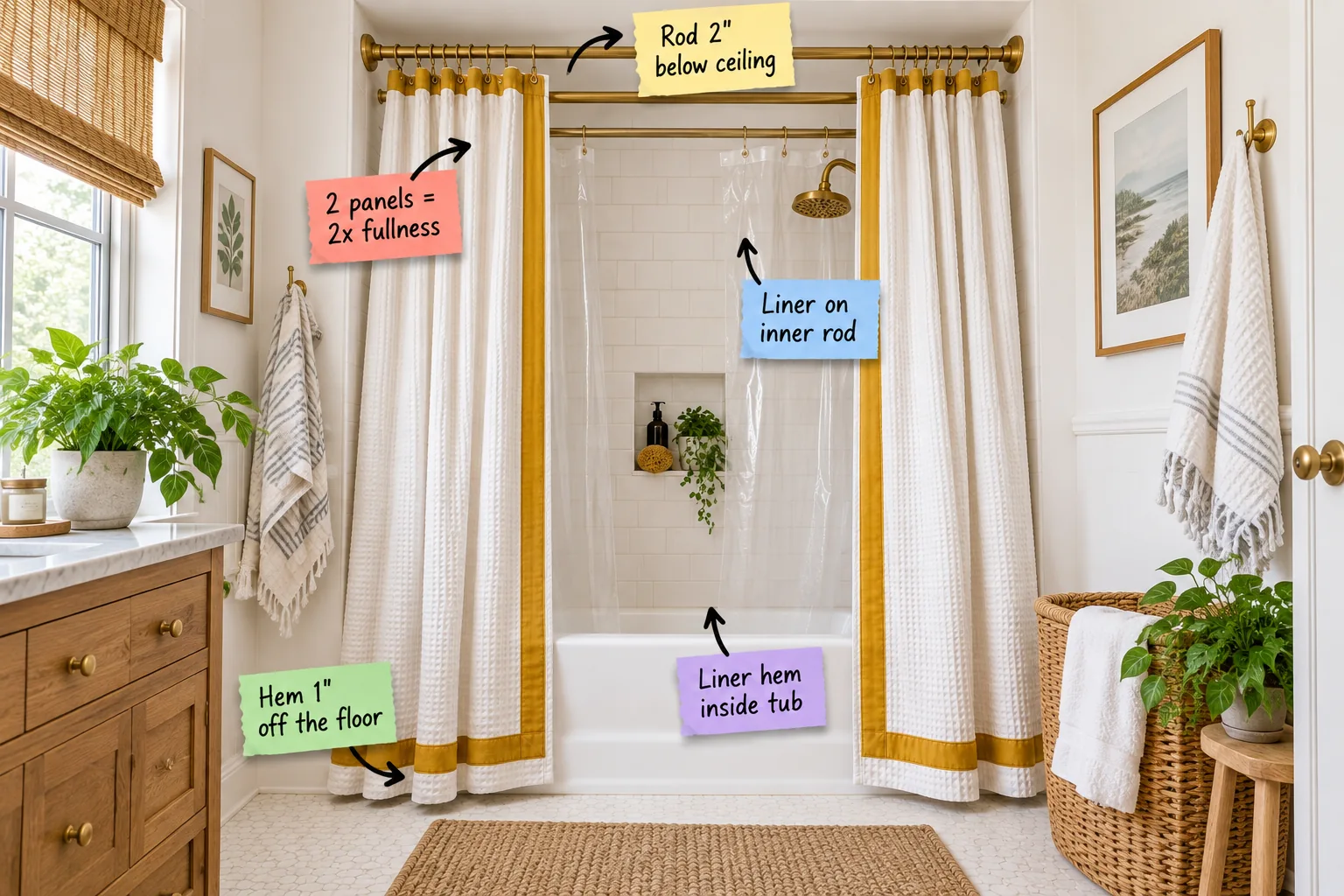
Achieving a custom hotel look in your bathroom is entirely possible when you have the exact measurements, which is why you can print our comprehensive double shower curtain measuring sheet right here. You will be able to confidently measure your space, mount a double rod at the correct height, and hang perfectly sized panels for a seamless, floor-to-ceiling finish.
The Measurement & Sizing Cheat Sheet
Achieving a custom look starts with precise math rather than guesswork, so use our printable measuring sheet to match your ceiling height to the correct panel length. Whether you need 72, 84, 96, or 108-inch panels, this reference chart helps you find the exact rod-mount height for standard 54 to 72-inch bathtubs.
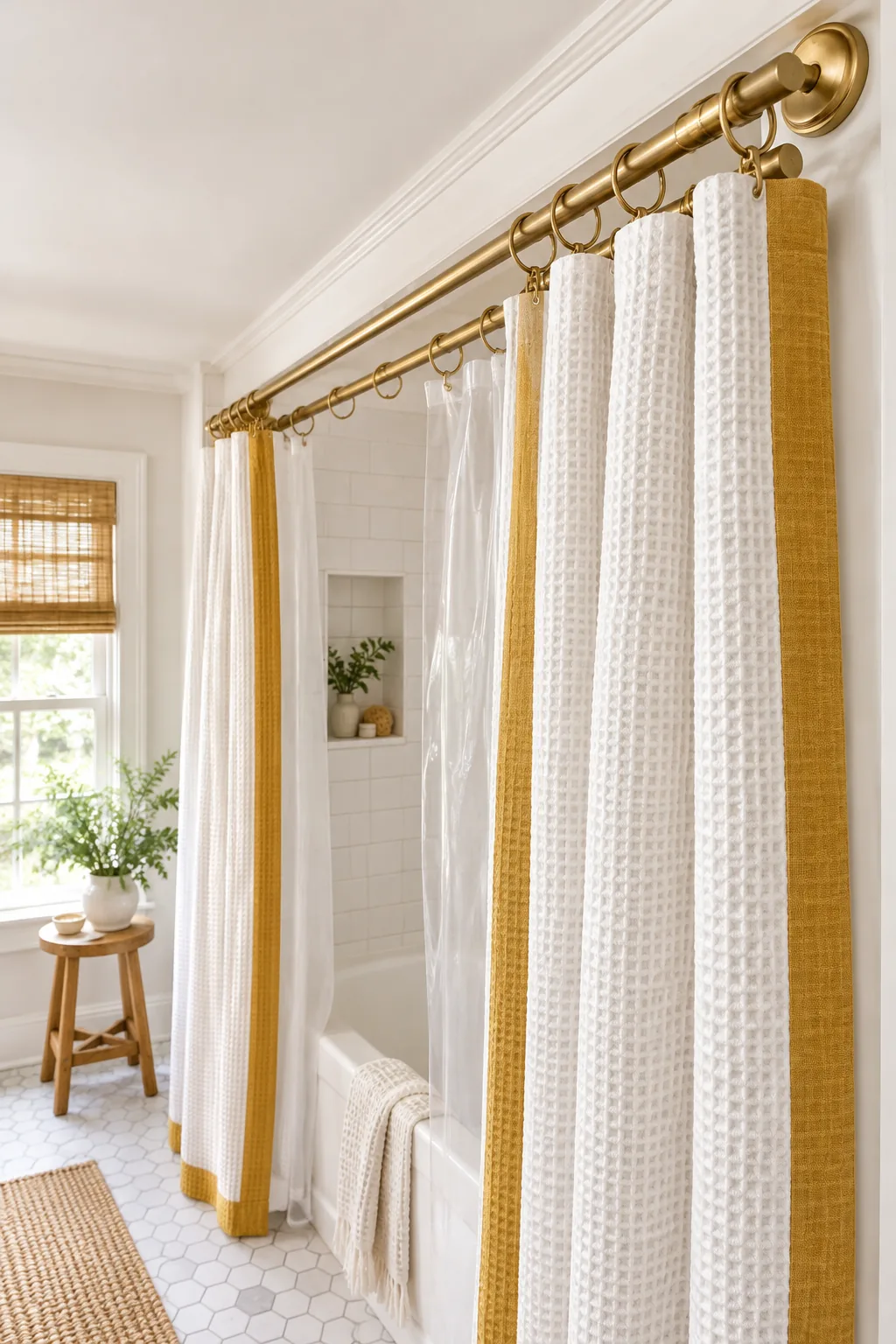
Referencing these specific numbers ensures your fabric hangs beautifully without awkward gaps or dragging hems. Here is the core sizing data from the printable sheet, detailing the necessary panel lengths and rod heights based on standard residential ceiling measurements.
| Ceiling Height | Panel Length | Rod Mount Height |
|---|---|---|
| 8-foot (96″) | 84 inches | 94 inches |
| 9-foot (108″) | 96 inches | 106 inches |
| 10-foot (120″) | 108 inches | 118 inches |
Before buying your textiles or drilling any holes into fresh drywall, gather these three crucial measurements to use with our sizing chart.
Mounting the Rod High
Achieving a custom look requires breaking away from standard builder-grade dimensions. In my Denver projects, I always mount the brass double rod exactly 2 inches below the ceiling to draw the eye up and maximize the room’s vertical space.
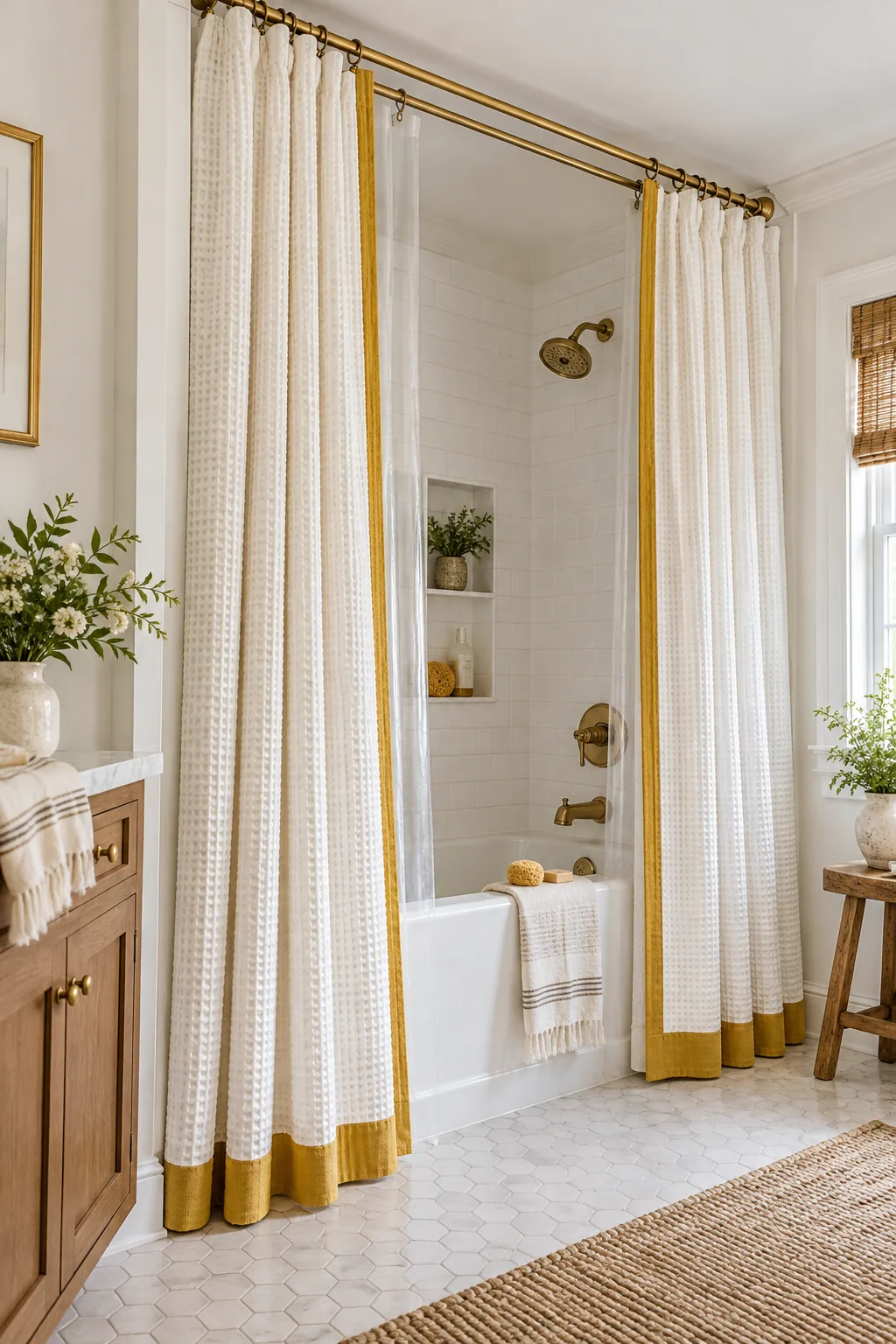
Standard shower rods typically sit just above the tile line, which visually chops the room in half. By elevating the hardware almost to the crown molding, you instantly make a standard bathroom feel significantly taller and far more luxurious.
Securing the Wall Brackets
Elevating the hardware means the mounting brackets will likely anchor directly into drywall rather than resting securely on tile studs. Always use heavy-duty toggle bolts to secure the mounting plates, ensuring the rod can safely support the combined weight of two thick fabric panels and a wet inner liner.
Achieving 2x Fullness
A single curtain pulled taut across a tub looks flat and inexpensive. I always use two full-width panels to create 2x fullness in my own guest bath, ensuring the fabric forms deep, luxurious folds even when fully drawn across a standard 54 to 72-inch tub.
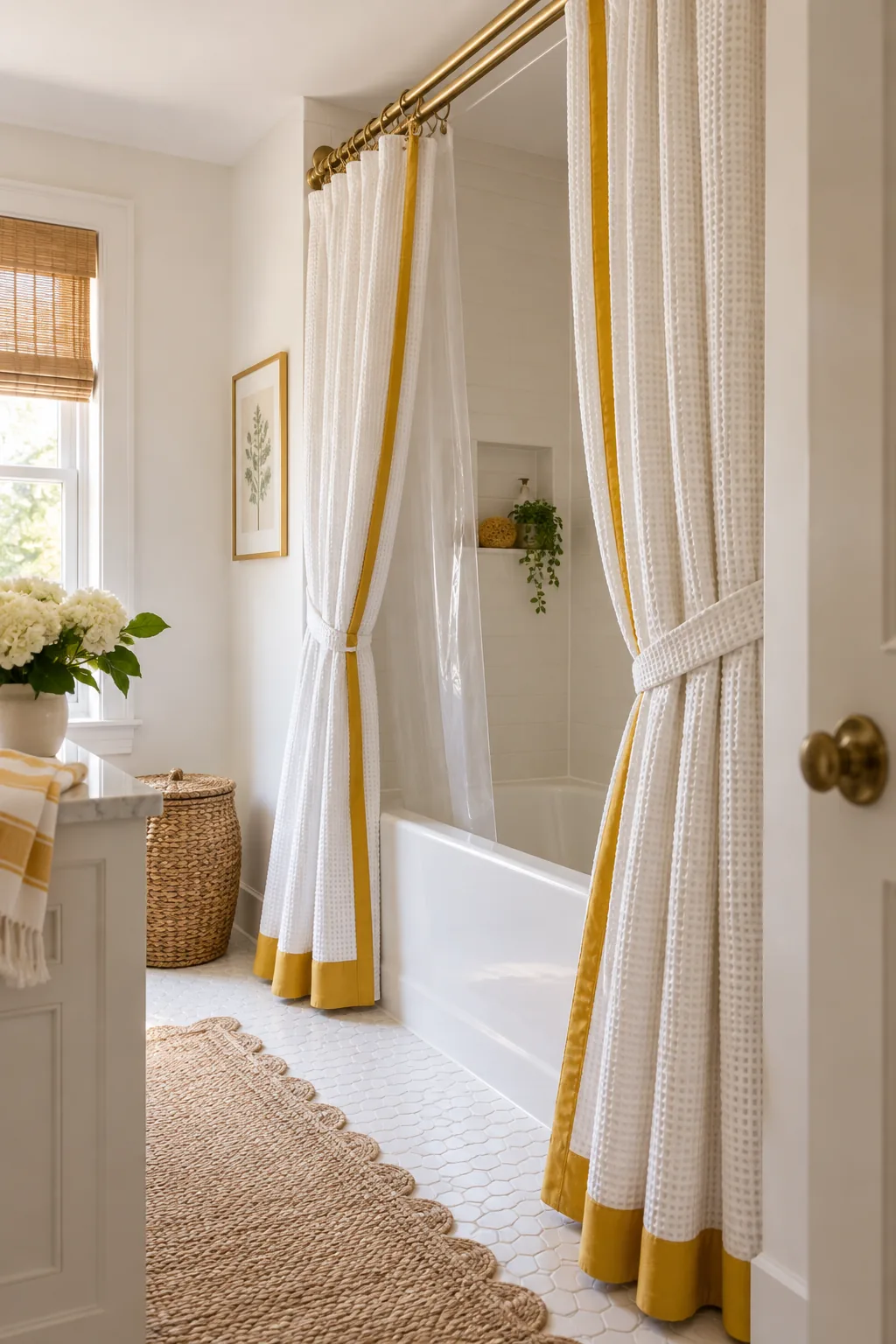
This generous fabric volume instantly elevates standard residential bathroom fixtures into a bespoke, high-end experience. The heavy bunching mirrors the visual weight of custom window treatments, adding essential texture and softness to a space otherwise filled with hard surfaces.
Choosing the Right Fabric Texture
A true hotel aesthetic relies on substantial textiles rather than thin, translucent synthetic sheets. Opt for a heavy cotton waffle-weave or a thick linen blend, as these natural fibers carry enough physical weight to hold deep pleats and resist billowing inward when the shower is running.
Balancing Visual Proportions
To maintain this tailored look, always dress the fabric by hand immediately after hanging the panels. Train the folds by gently pinching the pleats from top to bottom, which encourages the heavy waffle-weave cotton to drape straight down in uniform columns rather than flaring out awkwardly at the base.
Floating the Outer Hem
The decorative outer panels should never drag on wet tile or bunch awkwardly at the base. Calculate your specific rod placement and ring drop so the bottom hem hovers exactly 1 inch off the floor, maintaining a tailored, custom-drapery appearance.
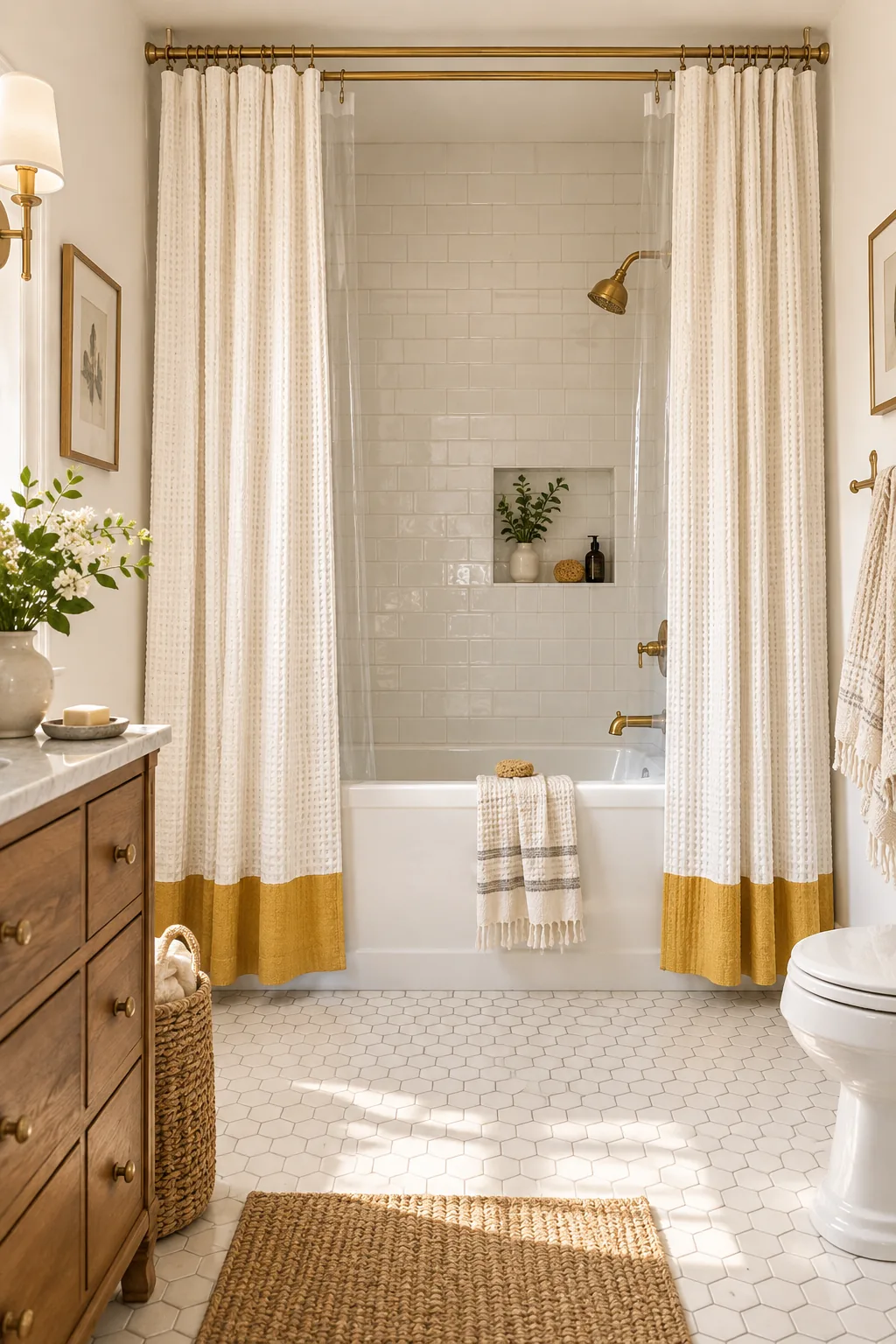
Getting this length exactly right is the main difference between a high-end custom look and a messy, high-maintenance bathroom.
Hiding the Liner on the Inner Rod
The secret to the hotel look is completely separating the wet and dry zones to preserve your textiles. Hang a clear waterproof liner on the hidden inner rod, which allows the outer waffle-weave panels to remain pristine and untouched by daily showers.
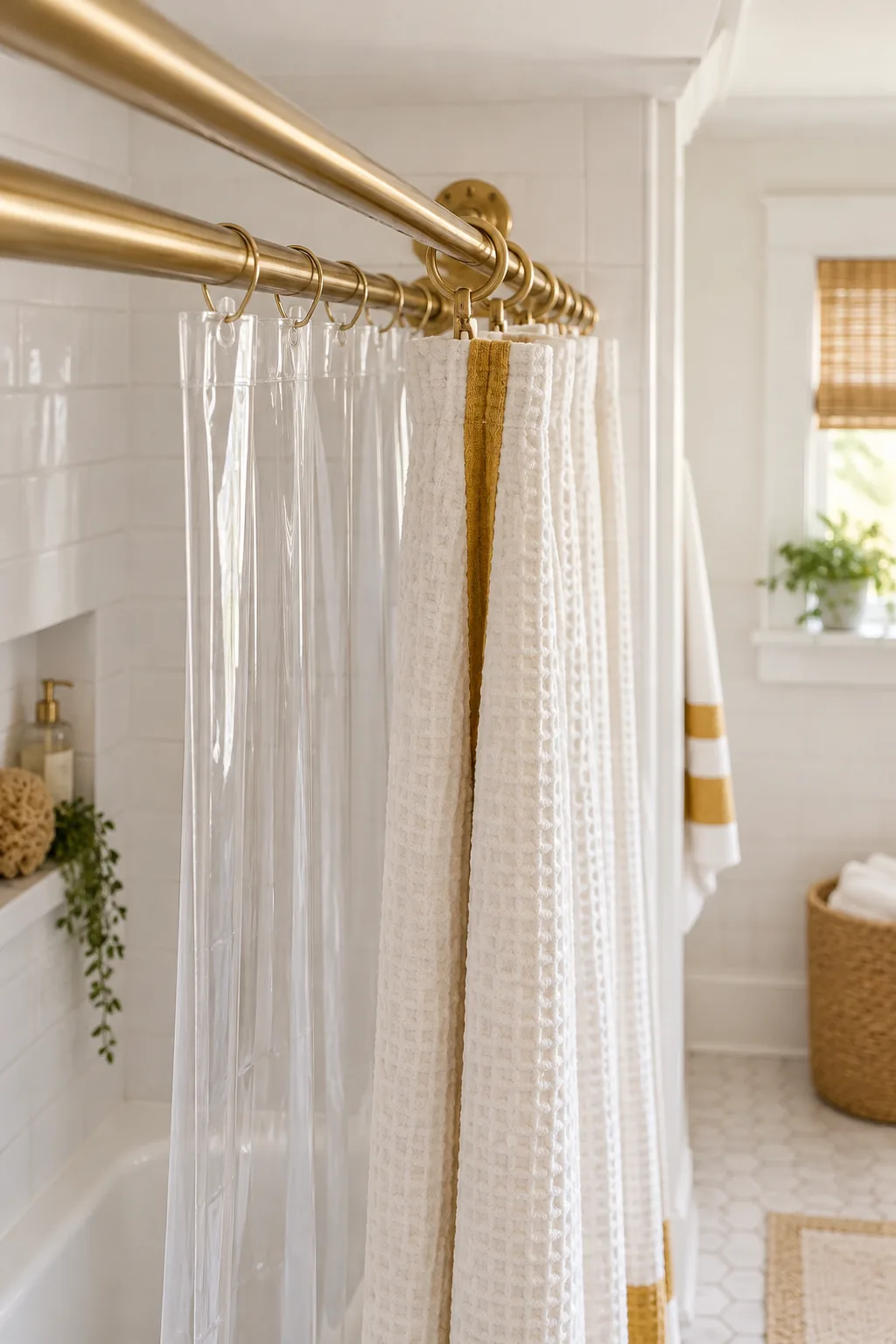
This dual-layer approach means you never have to wash heavy decorative fabric just because it got splashed. The inner barrier takes all the wear and tear, extending the life of your outer curtain while keeping the bathroom looking impeccably styled.
Maintaining the Hidden Layer
Because the clear liner takes the brunt of the daily moisture, it requires regular upkeep to prevent soap scum buildup. Implement a simple care routine to extend the life of your waterproof barrier and keep the entire dual-rod system functioning beautifully.
- Spray the liner weekly with a gentle daily shower cleaner to dissolve hard water stains.
- Leave the curtain fully closed after showering so the vinyl can air dry completely.
- Replace the clear liner every six months when it becomes stiff or permanently cloudy.
This proactive maintenance ensures your hidden layer remains hygienic without ever requiring you to unhook and wash the heavy decorative outer panels.
Tucking the Liner Inside the Tub
While the decorative panels cascade beautifully down the outside of the tub apron, the functional barrier must stay contained. I always ensure the clear liner’s weighted bottom edge is tucked firmly inside the tub rim, a trick I learned early on to direct all water straight down the drain.
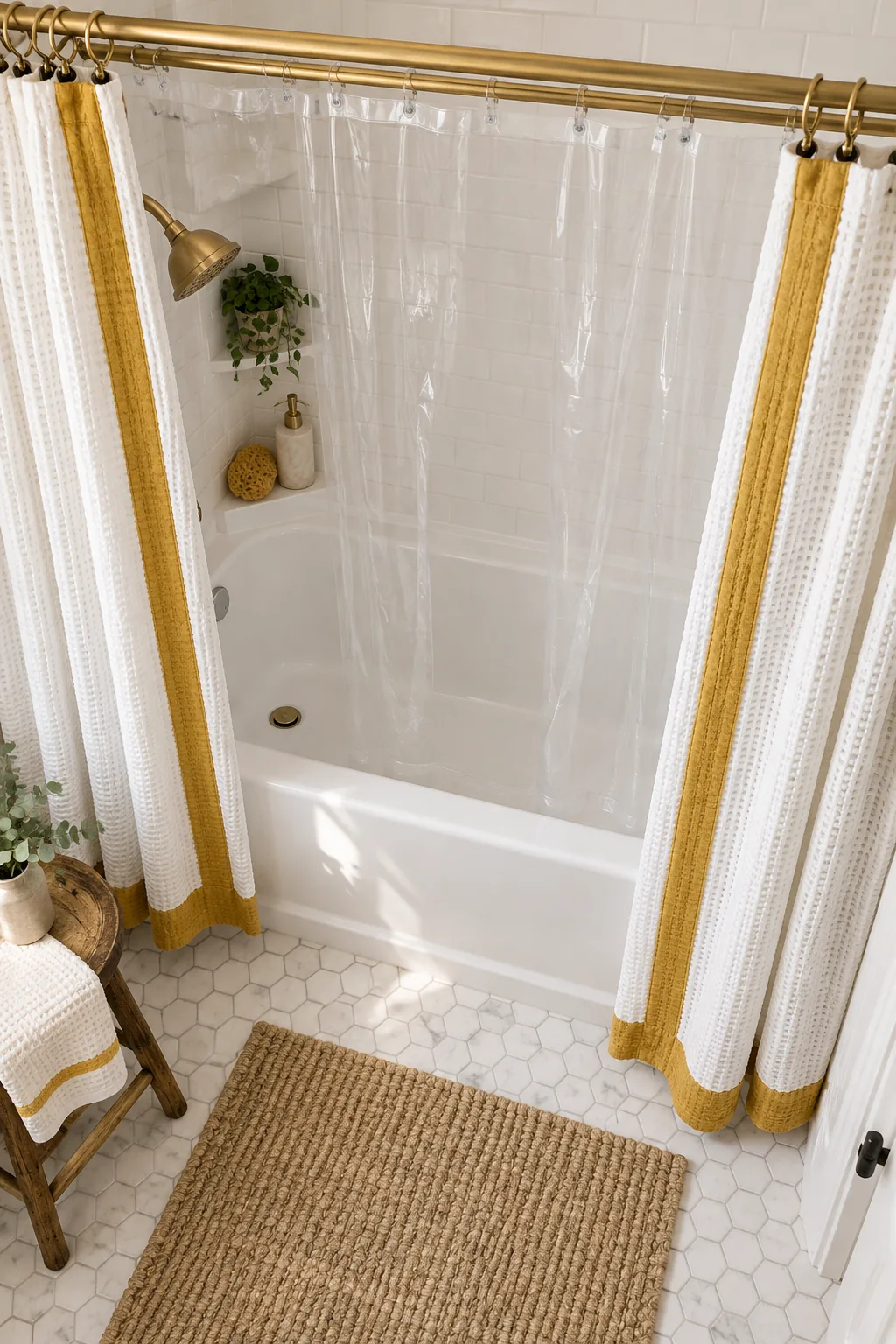
Weighted edges are crucial here because they keep the lightweight plastic or vinyl secure against the water pressure of the showerhead. Containing this functional barrier prevents puddles on your floor while preserving the unbroken, elegant drapery effect on the outside.
Double Curtain Styling Ideas
Explore how different fabrics and hardware finishes can adapt this hotel-inspired hanging method to any bathroom style.
Moody Charcoal and Matte Black: Dark linen panels paired with matte black hardware create a sophisticated, spa-like atmosphere in a modern slate bathroom.
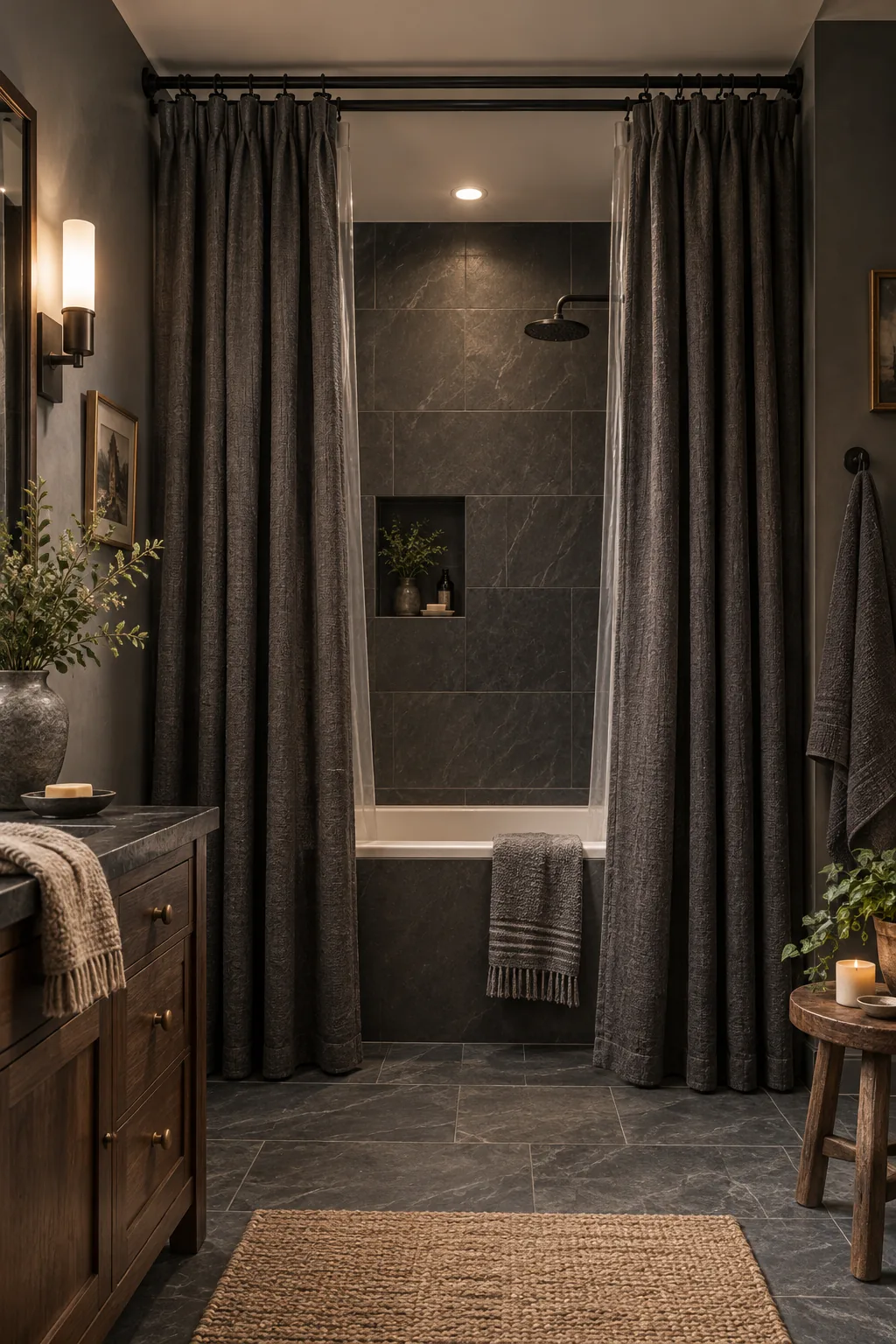
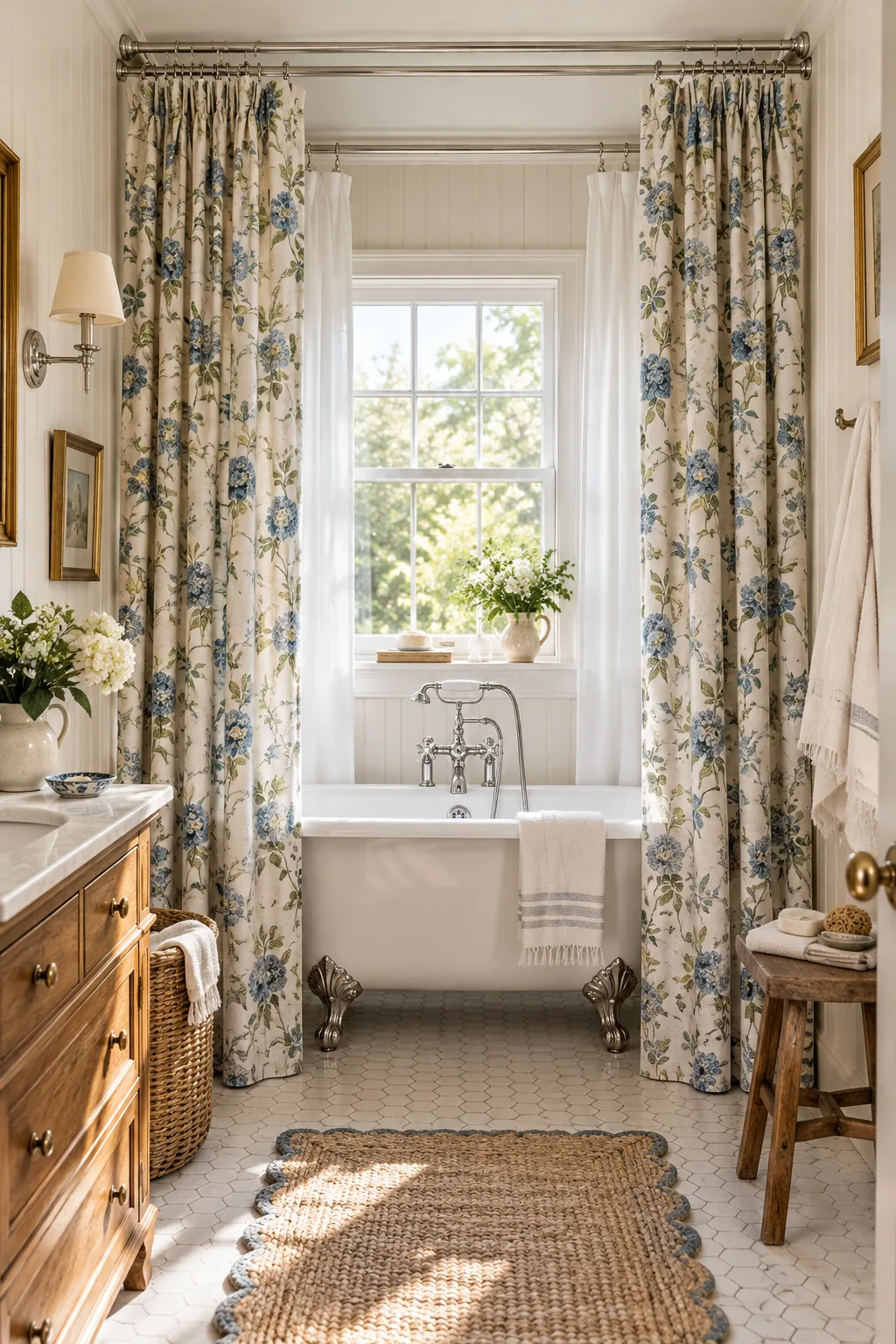
Vintage Cottage Floral Prints: Floor-to-ceiling floral panels instantly modernize a classic clawfoot tub while maintaining its charming cottage character.
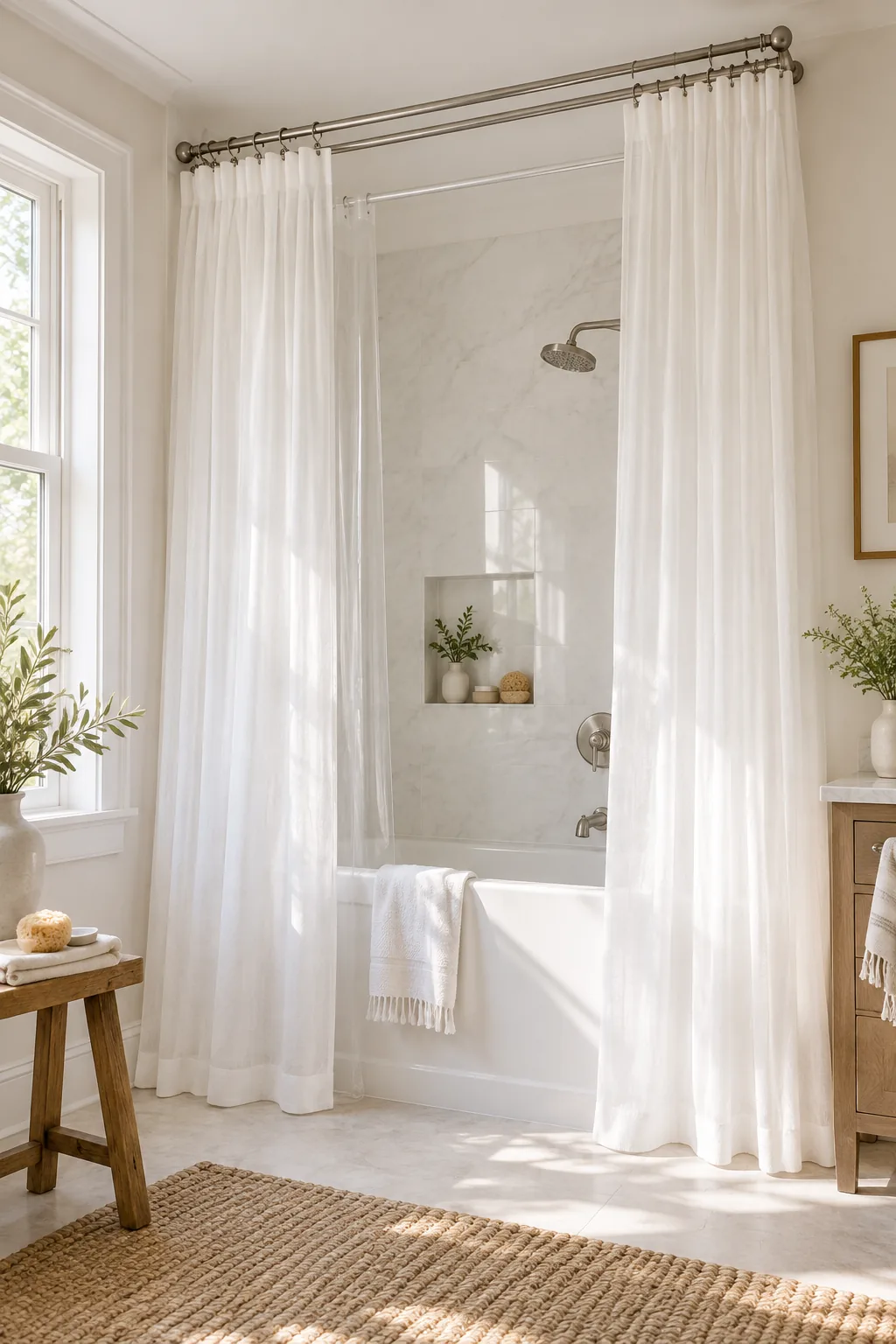
Minimalist Sheer White Panels: Lightweight sheer panels offer an airy, ethereal feel that softens the hard lines of a minimalist bathroom design.
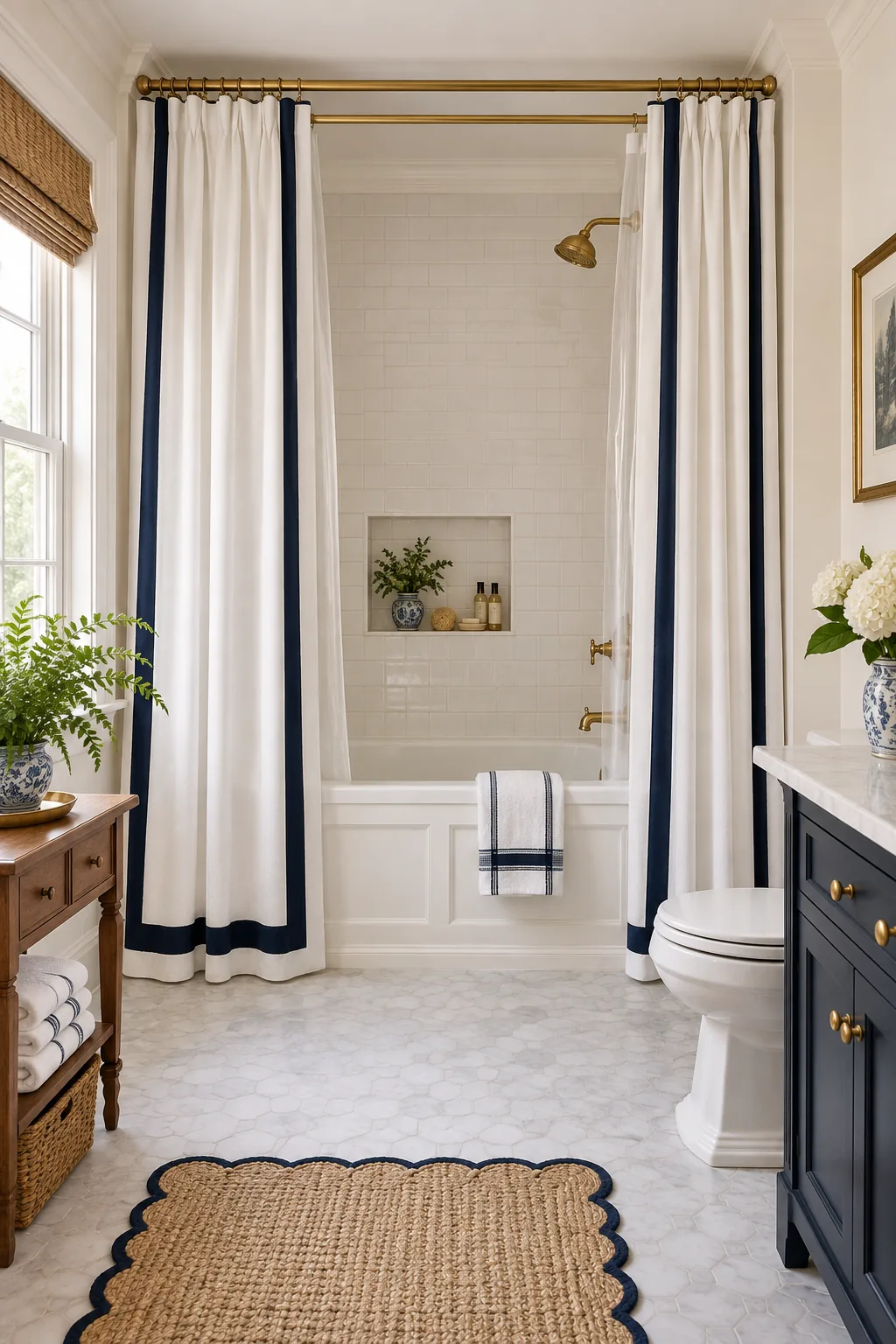
Preppy Navy and Crisp White: A bold navy border on crisp white fabric delivers a tailored, nautical elegance perfect for a traditional guest bath.
Selecting the Right Rings and Hardware
A true double rod system requires independent hardware for each layer to function properly. I prefer using separate, smooth-gliding brass rings for both the liner and the decorative panels in my designs, allowing you to open the waterproof barrier without disturbing the styled folds.
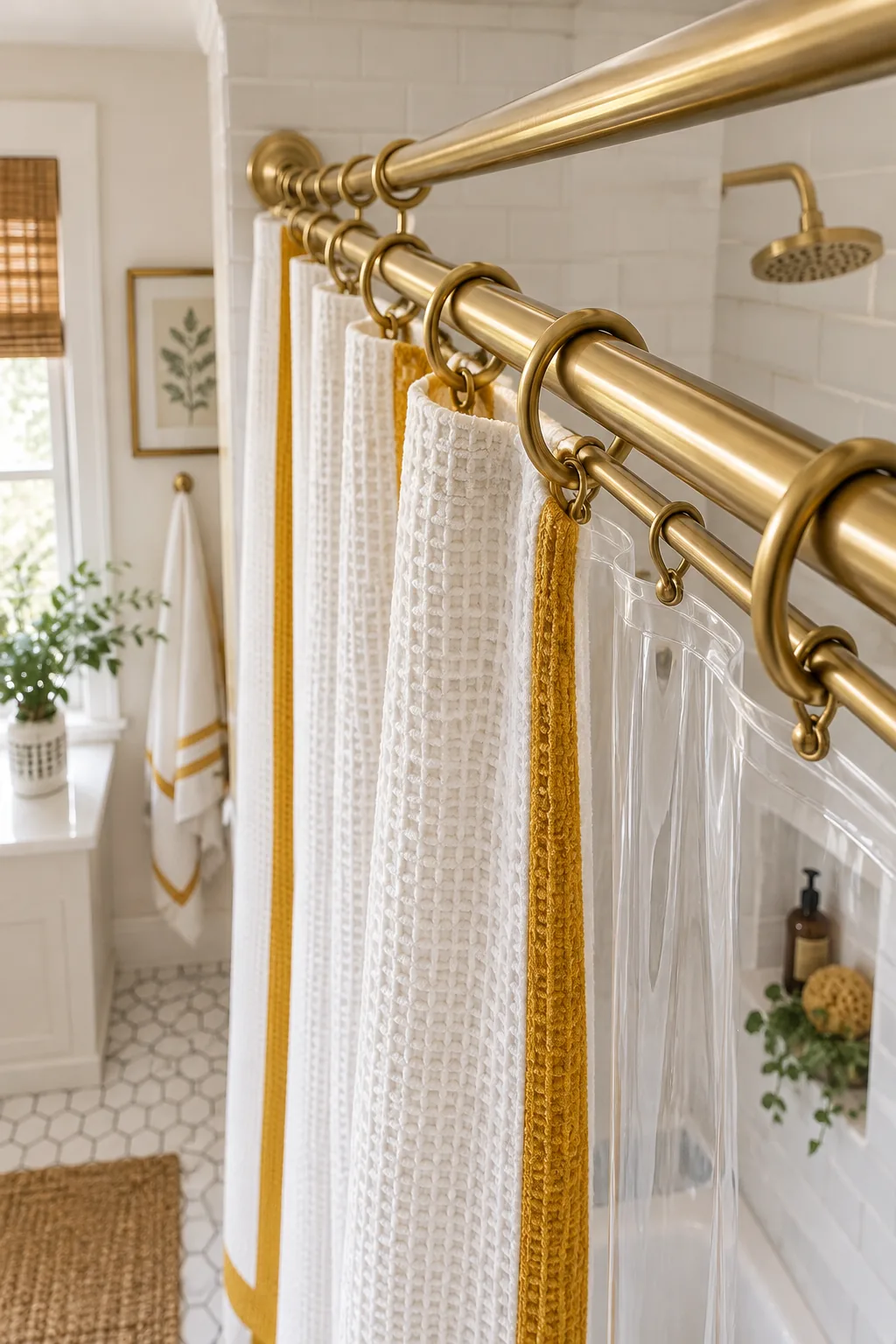
Upgrading to heavy-duty metal rings prevents the frustrating snagging that often happens with cheap plastic hooks. Selecting quality hardware completes the installation, ensuring your new custom drapery glides effortlessly and functions just as beautifully as it looks.