Sofa Side Table Decor: Perfect Heights & Placement Rules
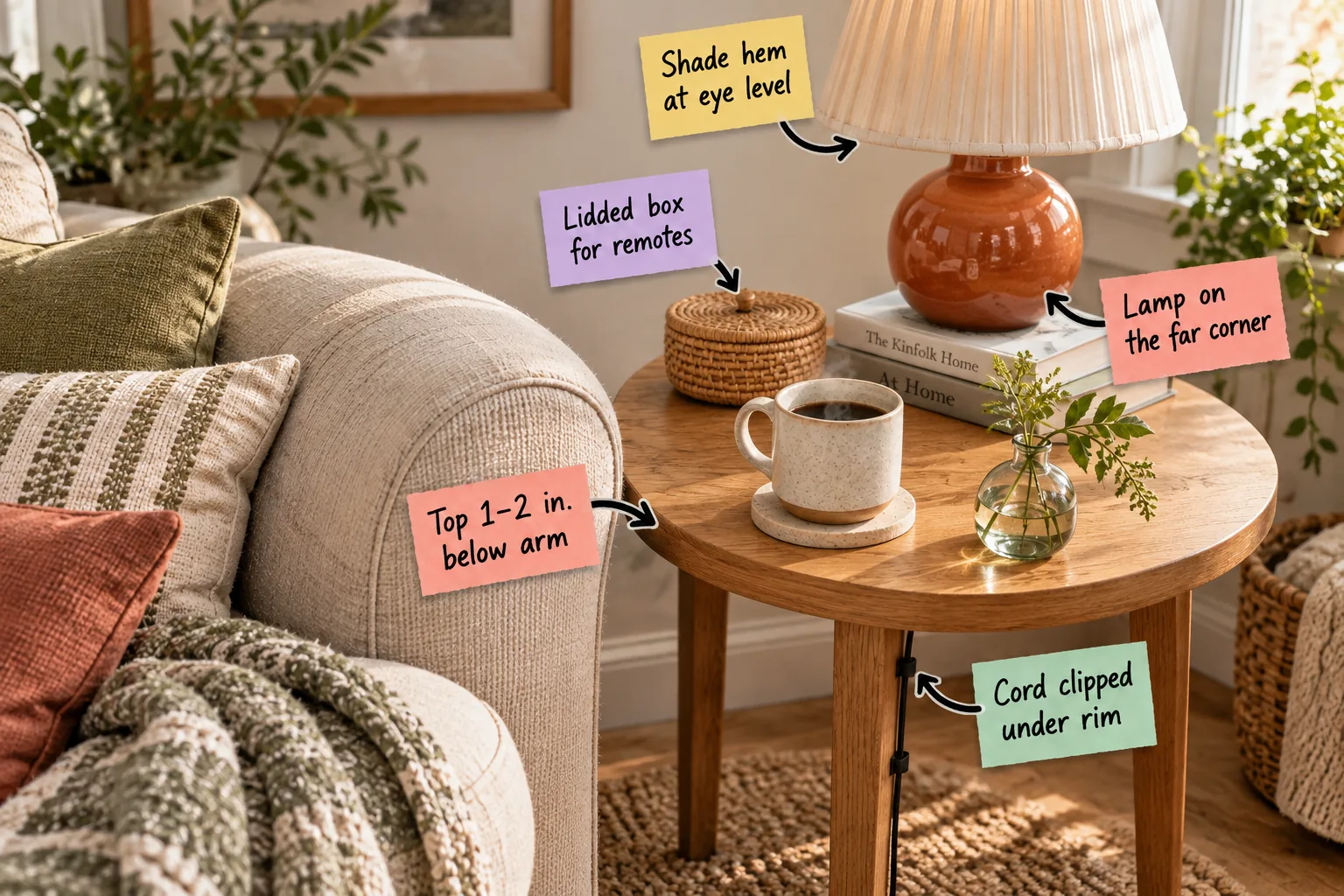
Mastering your living room layout means securing exact spatial alignments, which is why this guide delivers the Sofa-Side Table Height & Placement Sheet. You will be able to arrange your side table with exact height alignments and dedicated drop zones using our printable reference map.
Matching Table Height to the Sofa Arm
Start with the foundational furniture relationship by ensuring your oak tabletop sits exactly 1 to 2 inches below the top of the sofa arm. This specific drop prevents knocked elbows while keeping drinks within an incredibly easy, natural reach for your seated guests.
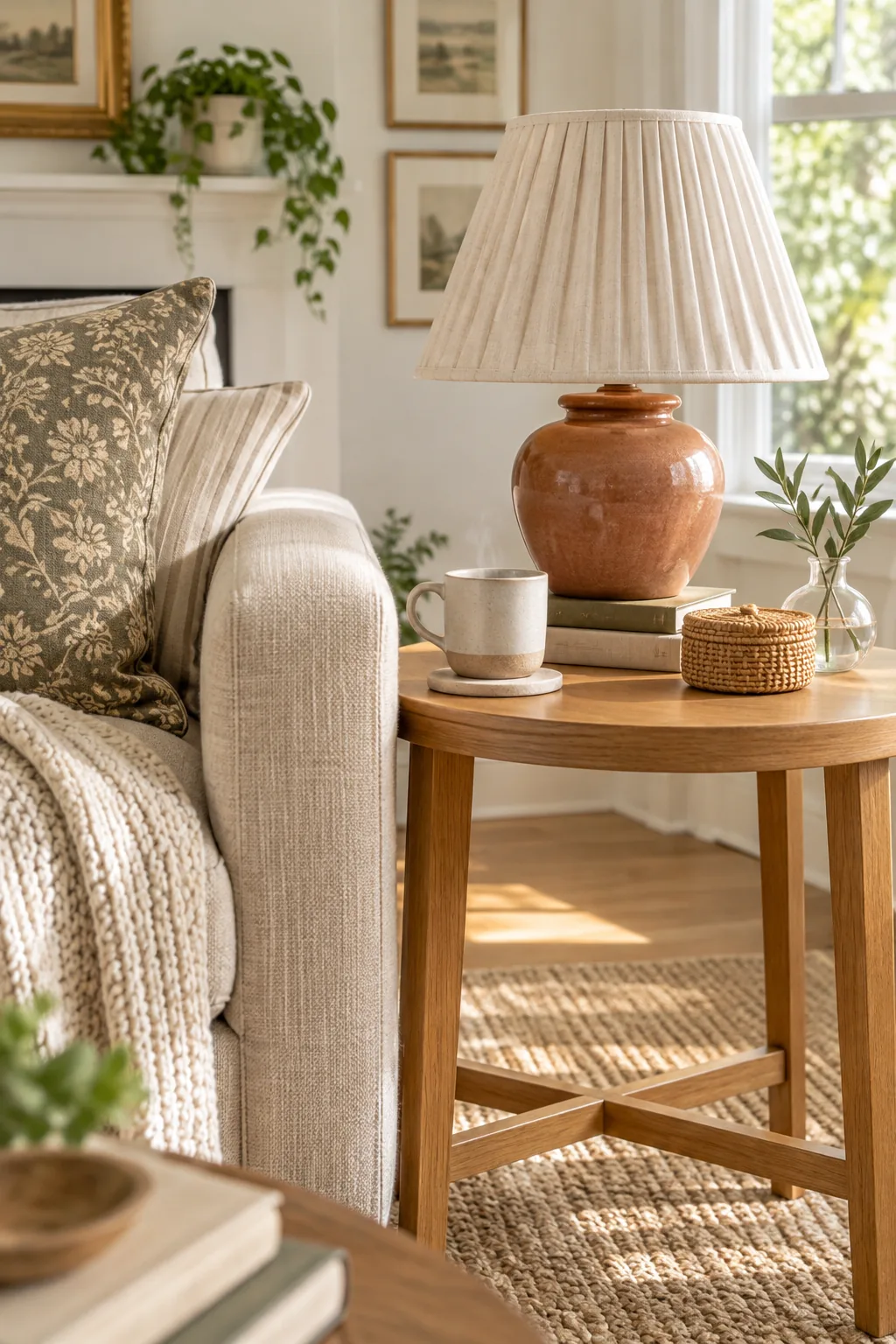
Finding the right table height can feel incredibly tricky if your sofa doesn’t feature perfectly square, level arms that offer a clear, reliable measuring point.
Choosing the Right Table Diameter
A perfectly leveled side table still fails if the surface area cannot support your daily habits alongside your practical lighting needs. You must select a round design measuring between 18 and 22 inches across to provide enough physical space for everyday essentials.
- 18-inch tables fit tight corner spaces perfectly
- 20-inch tables offer the ideal balanced surface area
- 22-inch tables support larger statement lamps safely
Anything smaller than 18 inches forces your decor to crowd the edges, creating a precarious balancing act. Going wider than 22 inches pushes the table too far into the room, disrupting the natural flow of foot traffic around the seating arrangement.
Aligning the Lamp Shade Hem
The most critical rule for living room lighting requires the bottom rim of your pleated lampshade to sit exactly at seated eye level. This precise elevation casts a warm ambient glow across the seating area while completely shielding your eyes from harsh bulb glare.
| Sofa Arm Height | Table Height | Lamp Height Needed | Books Required |
|---|---|---|---|
| 24 inches | 22 inches | 20 inches | None |
| 25 inches | 23 inches | 18 inches | 1 hardback |
| 26 inches | 24 inches | 17 inches | 2 hardbacks |
In my own Denver home, I frequently stack 1 to 2 hardback books as risers to effortlessly fine-tune a beautiful vintage ceramic lamp that is just slightly too short for the adjacent linen sofa.
Testing your exact shade height by sitting on the sofa cushions ensures the bottom rim perfectly intercepts the harsh light path before it reaches your eyes.
Selecting the Right Bulb Temperature
Achieving the perfect shade height only works if the light itself feels welcoming, which requires selecting a bulb with a warm color temperature. Look for LED bulbs rated exactly at 2700 Kelvin to mimic the comforting, traditional glow of incandescent lighting.
Positioning the Lamp on the Far Corner
Strategic spatial planning dictates that you must place the heaviest object at the back of your arrangement. Pushing the terracotta lamp and its book risers to the far corner away from the sofa protects the delicate shade from flailing arms.
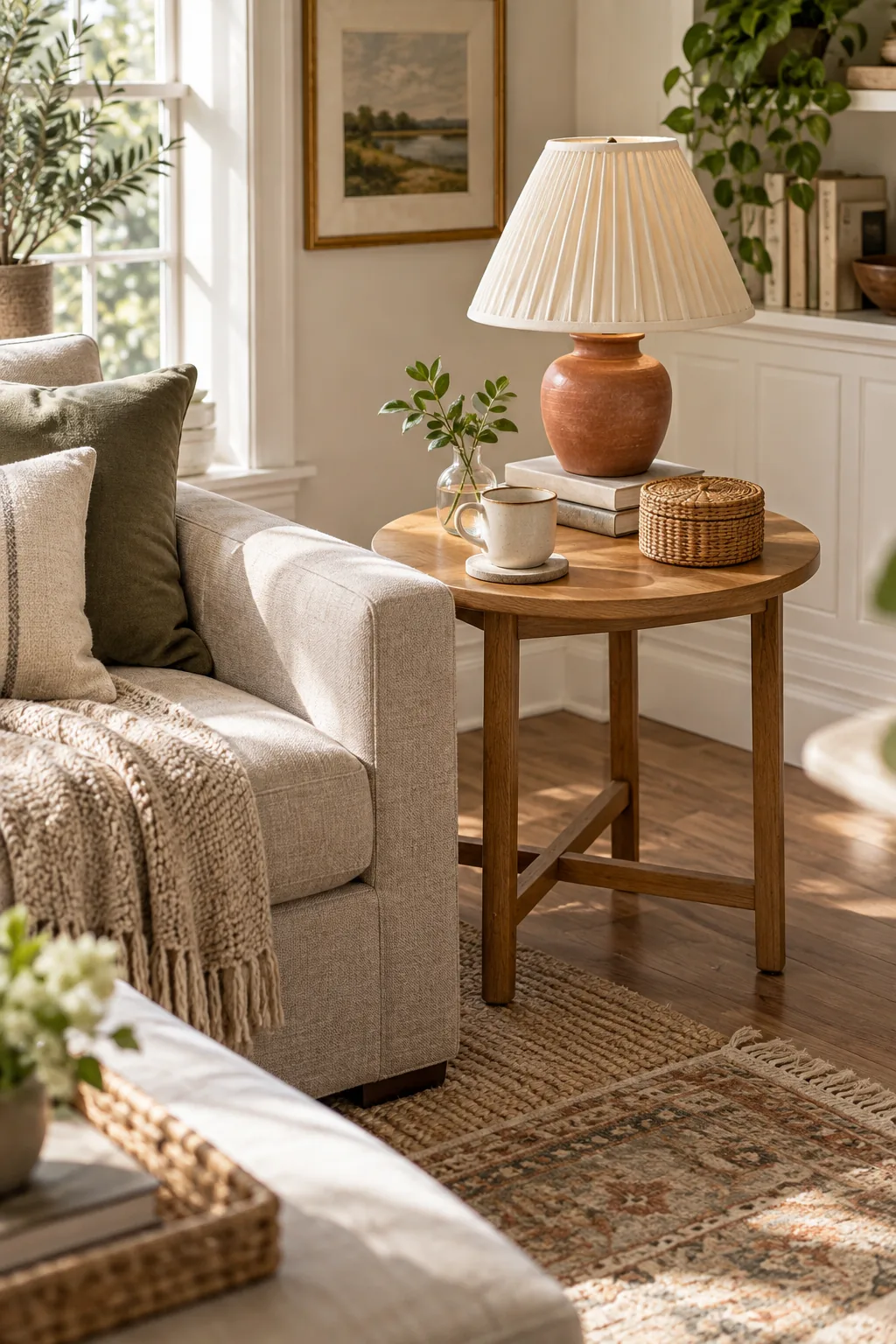
This deliberate asymmetrical placement anchors the entire vignette, blending Western structural rules with Eastern concepts of negative space to ensure the bulb’s radiant glare remains entirely out of your peripheral vision.
Selecting the Proper Lamp Weight
A side table positioned in a high-traffic living room requires a lamp with substantial physical mass to prevent accidental tipping. Solid terracotta, heavy glazed ceramic, or cast iron bases provide the necessary low center of gravity to survive daily household activity.
Coordinating the Hardware Finishes
The visible metal components on your lamp, such as the harp, finial, and socket, should intentionally relate to the other metallic accents scattered throughout your living room. Matching a brass lamp finial to your existing brass curtain rods creates a subtle, cohesive visual thread.
Hiding Cords Along the Table Leg
Visual clutter instantly ruins a perfectly balanced vignette, which means you must route the black lamp cord tightly along the underside of the tabletop edge. Securing the slack prevents the wire from drooping visibly into the negative space below the surface.
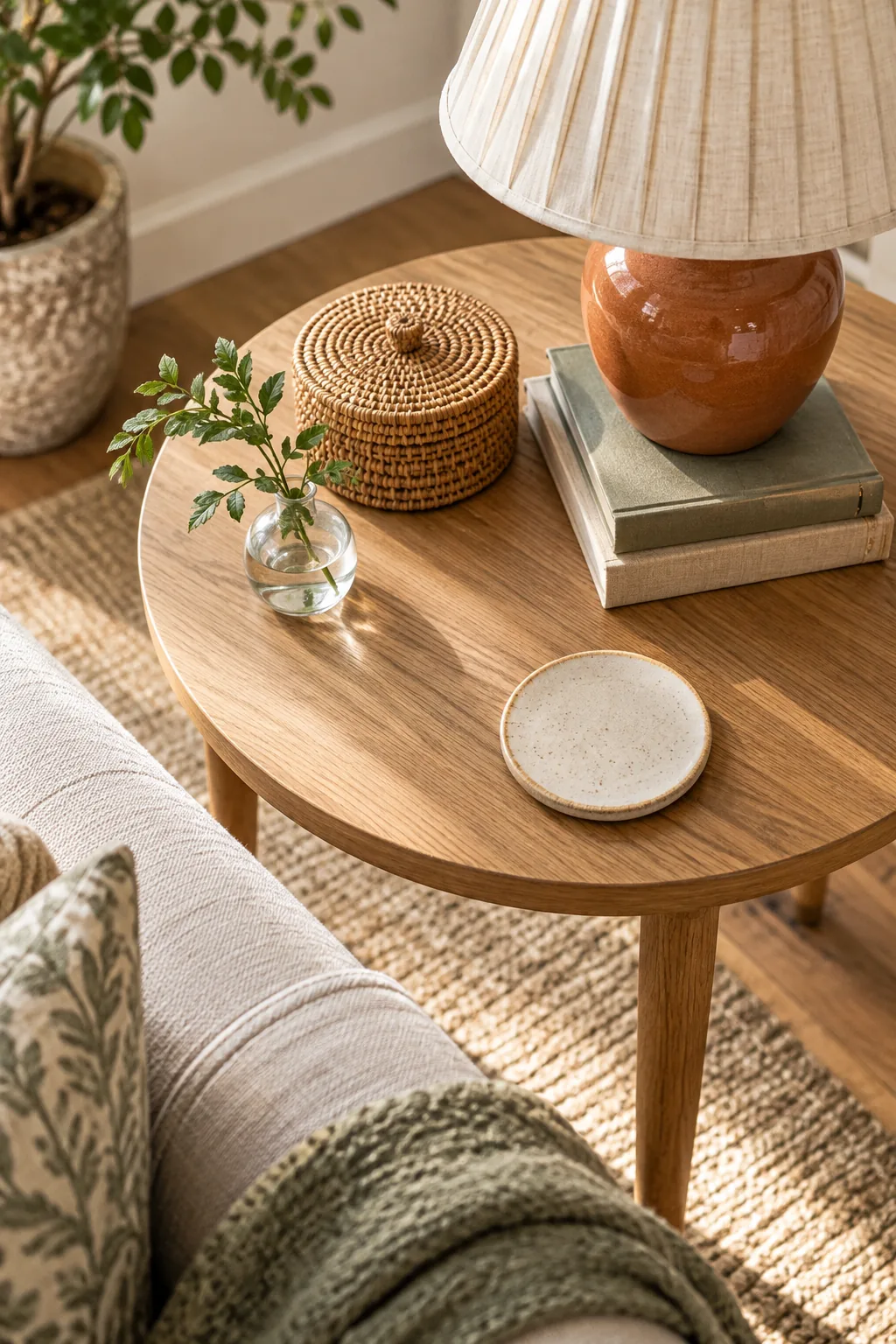
I always recommend using two small adhesive cable clips down the back wooden leg in my client projects to keep the electrical wire completely invisible from the center of the room.
Concealing Remotes in a Lidded Box
Small surfaces demand smart hidden storage, making a compact lidded rattan box near the back center an absolute necessity. This provides a dedicated, dust-free spot for television remotes, spare coasters, and reading glasses without cluttering the visible tabletop.
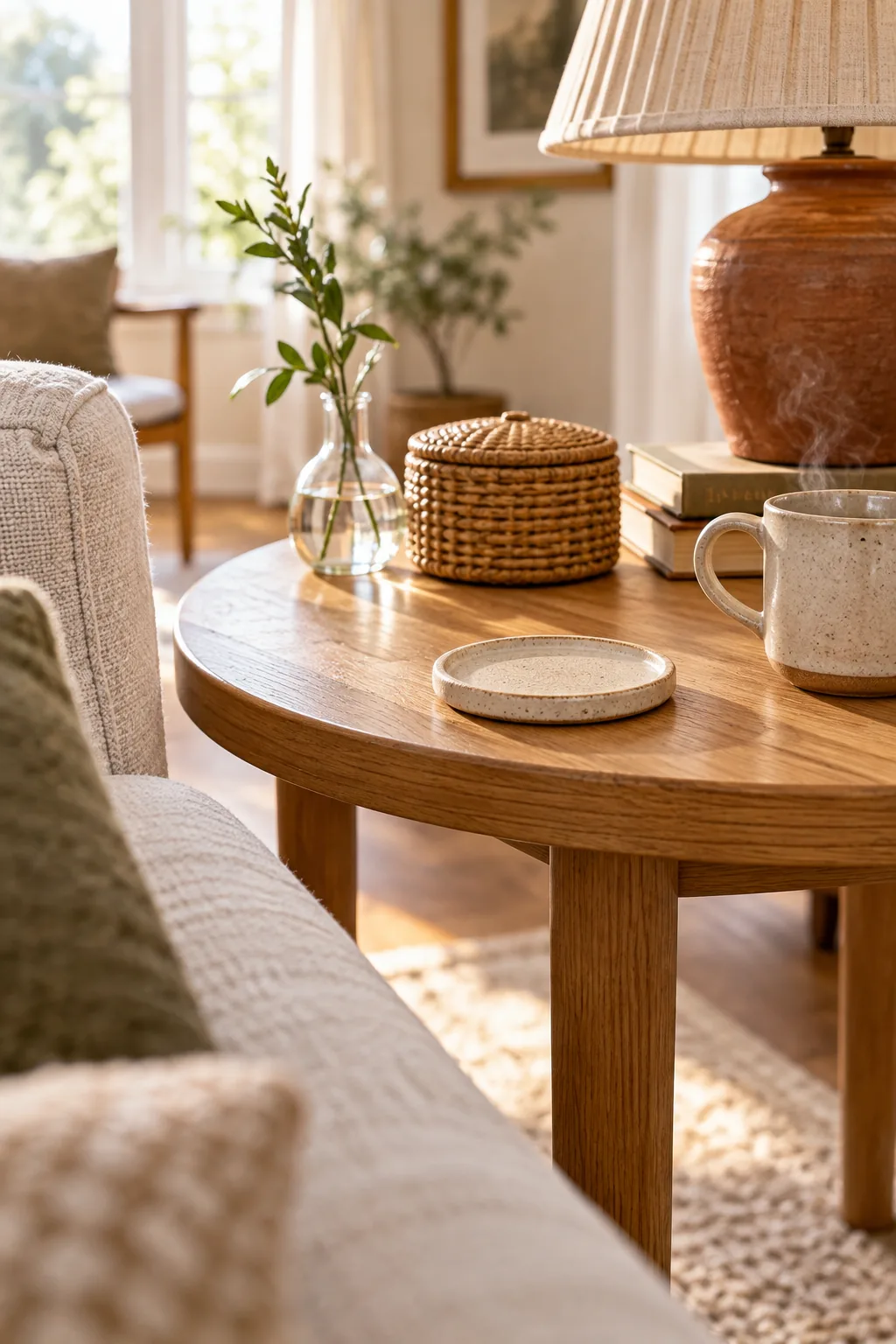
Introducing this woven material adds necessary textural contrast to the smooth wood and ceramic finishes, bringing a crucial layer of natural warmth to the highly structured decorative arrangement.
Curating the Stacked Books
The hardbacks supporting your lamp serve as foundational architecture, meaning their physical dimensions matter far more than their titles. Select two volumes measuring at least eight inches wide, and remove the glossy dust jackets to expose the beautifully textured cloth bindings underneath.
Preserving the Six-Inch Drop Zone
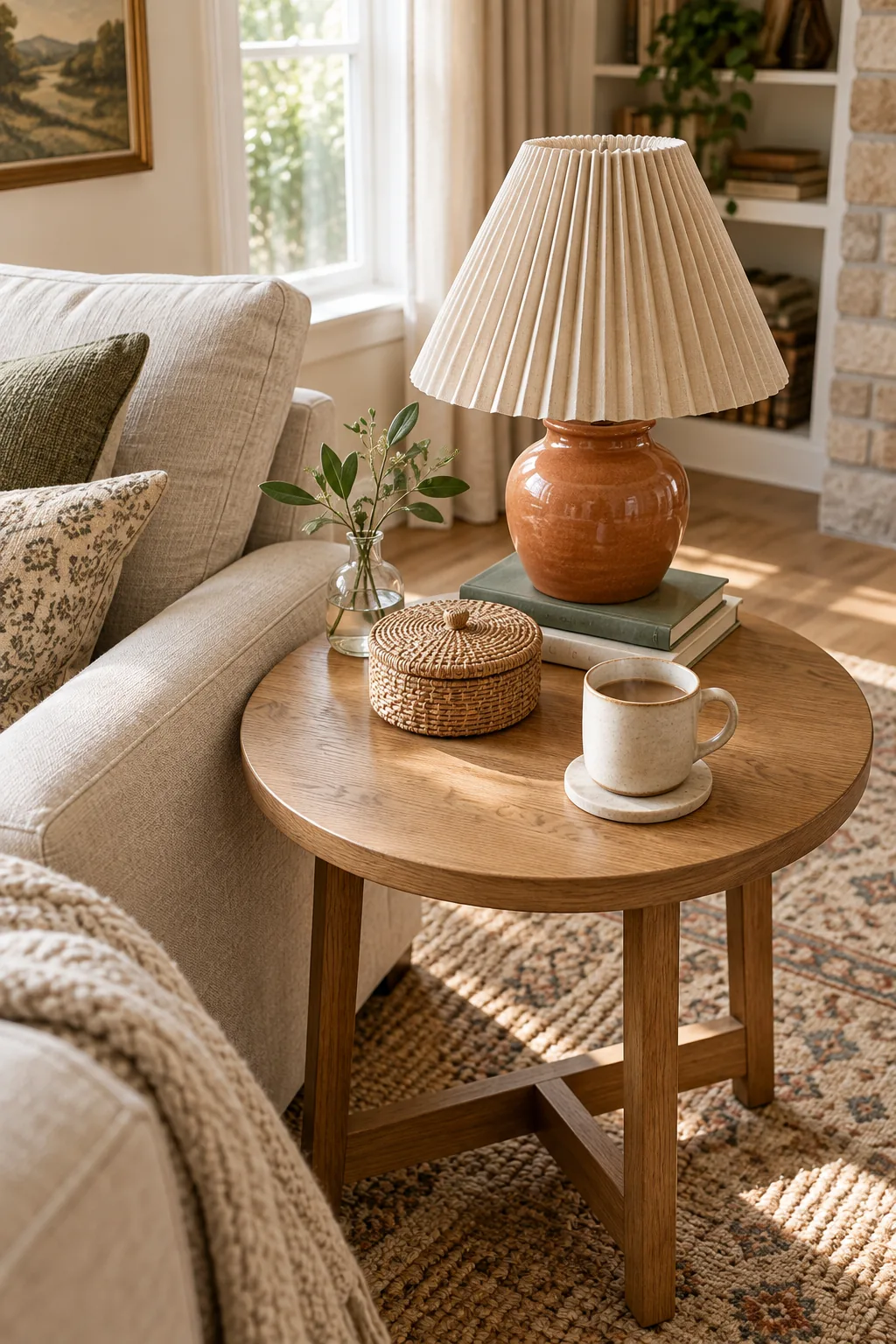
The front edge closest to the sofa must maintain a permanent 6-inch clear drop zone to serve as the primary functional area of the table. Protecting this empty real estate ensures you always have immediate room to set down a steaming mug.
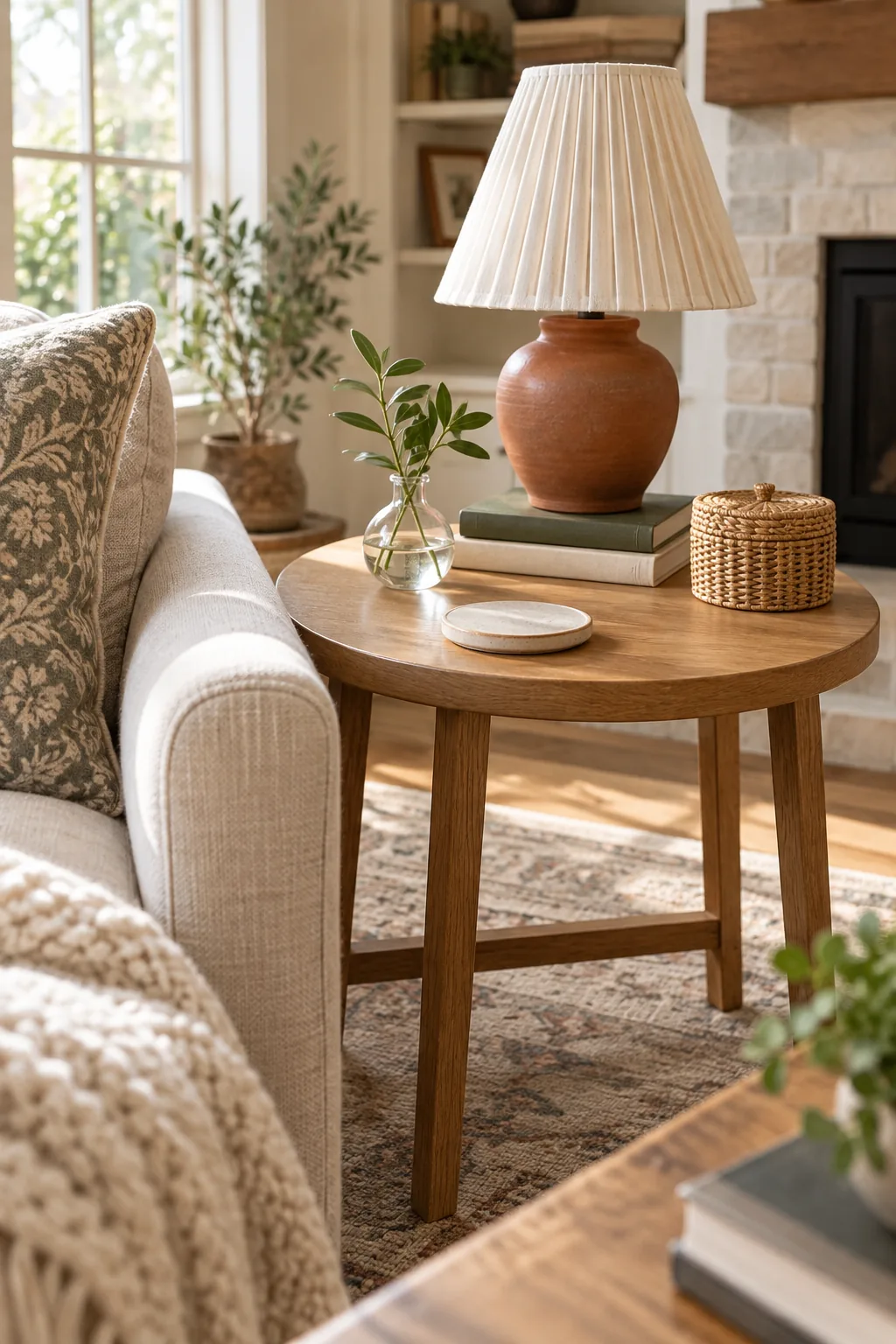
Leaving this negative space intentionally blank prioritizes daily function over the constant temptation to fill every available square inch of the surface with decorative accessories.
Softening the Arrangement with Greenery
Finish your styling by adding a single green stem in a small, transparent glass bud vase to introduce height and organic life without consuming valuable real estate. The delicate foliage beautifully softens the rigid geometry of the stacked books and heavy lamp.
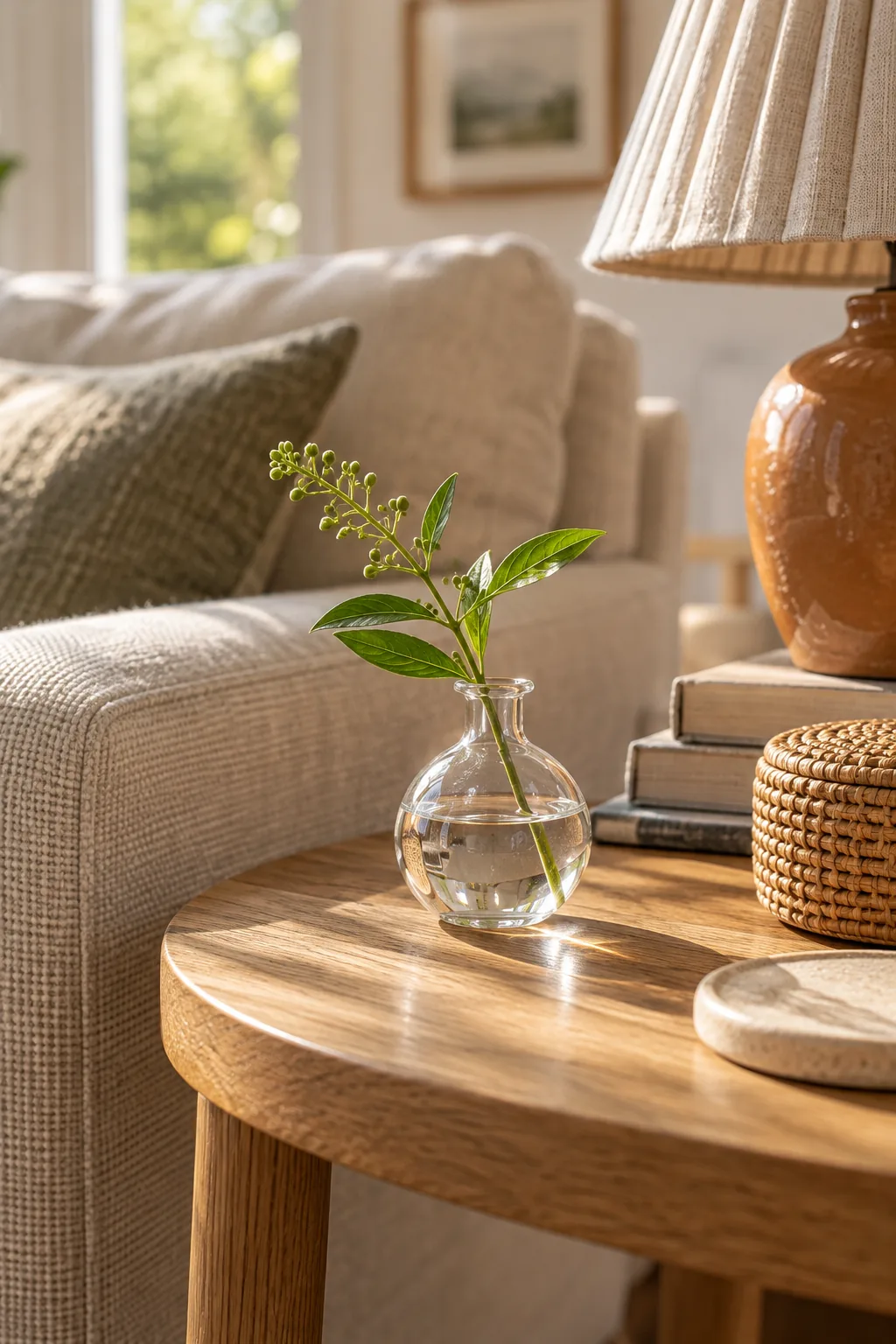
Choosing a clear glass vessel is a deliberate strategic move, as the transparent body ensures you never block important conversational sightlines across the shared living room seating area.
Your Sofa-Side Height and Placement Sheet
Download your Sofa-Side Table Height & Placement Sheet to easily reference the top-down map and match your lamp-plus-riser height combinations. Use this comprehensive five-object shopping list alongside the placement map to confidently recreate this exact balanced setup in your own space.
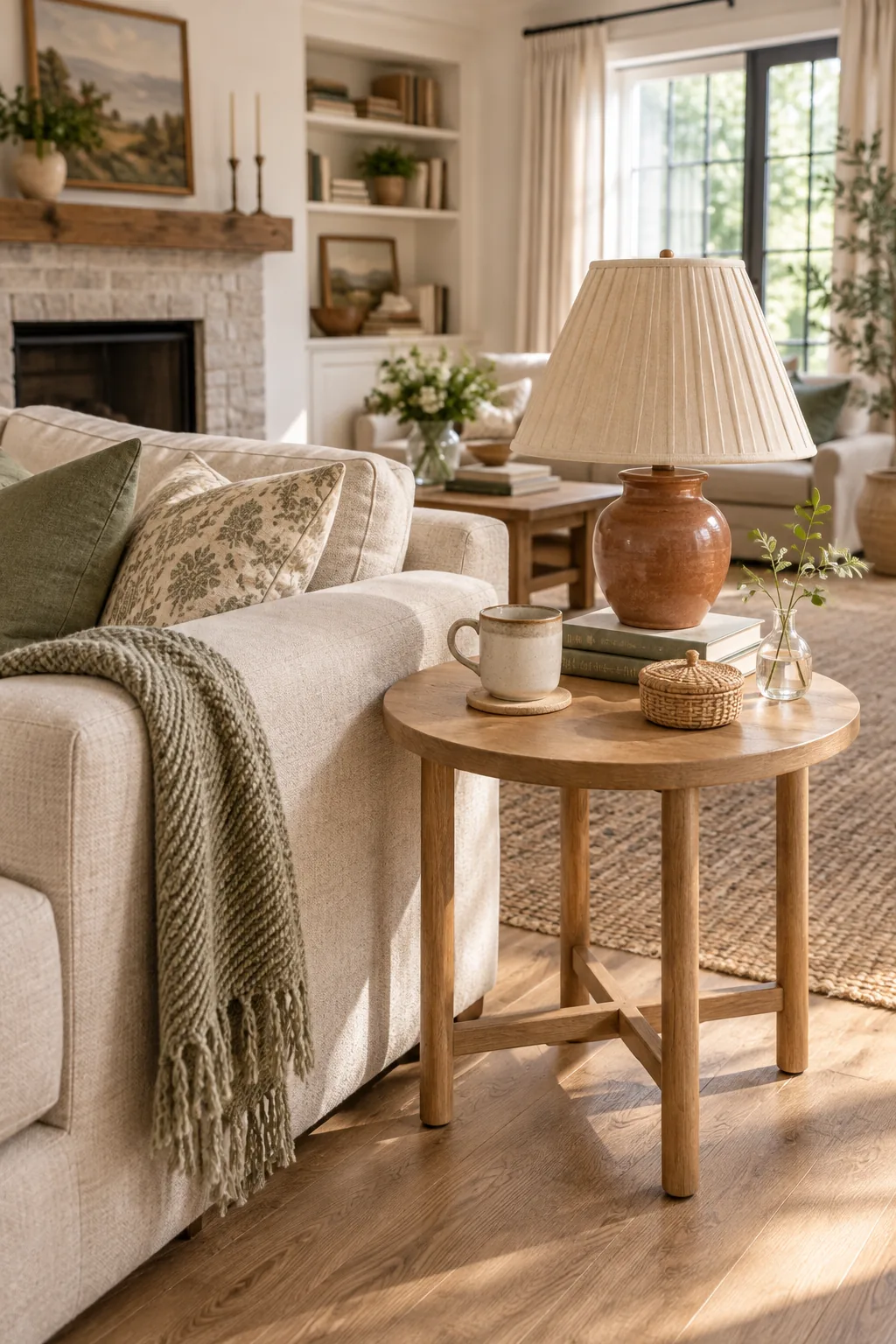
- A heavy ceramic or terracotta lamp
- Two sturdy hardback books for risers
- One small lidded rattan box
- A transparent glass bud vase
- A set of low-profile coasters
Keeping these specific proportions and dedicated drop zones in mind will guarantee your living room feels both beautifully curated and effortlessly functional for years to come.
Before you head to the store with your new measurements, make sure your printed reference guide is completely ready to go.
More Side Table Styling Ideas
Explore how these same placement rules adapt beautifully to different design styles and rooms.
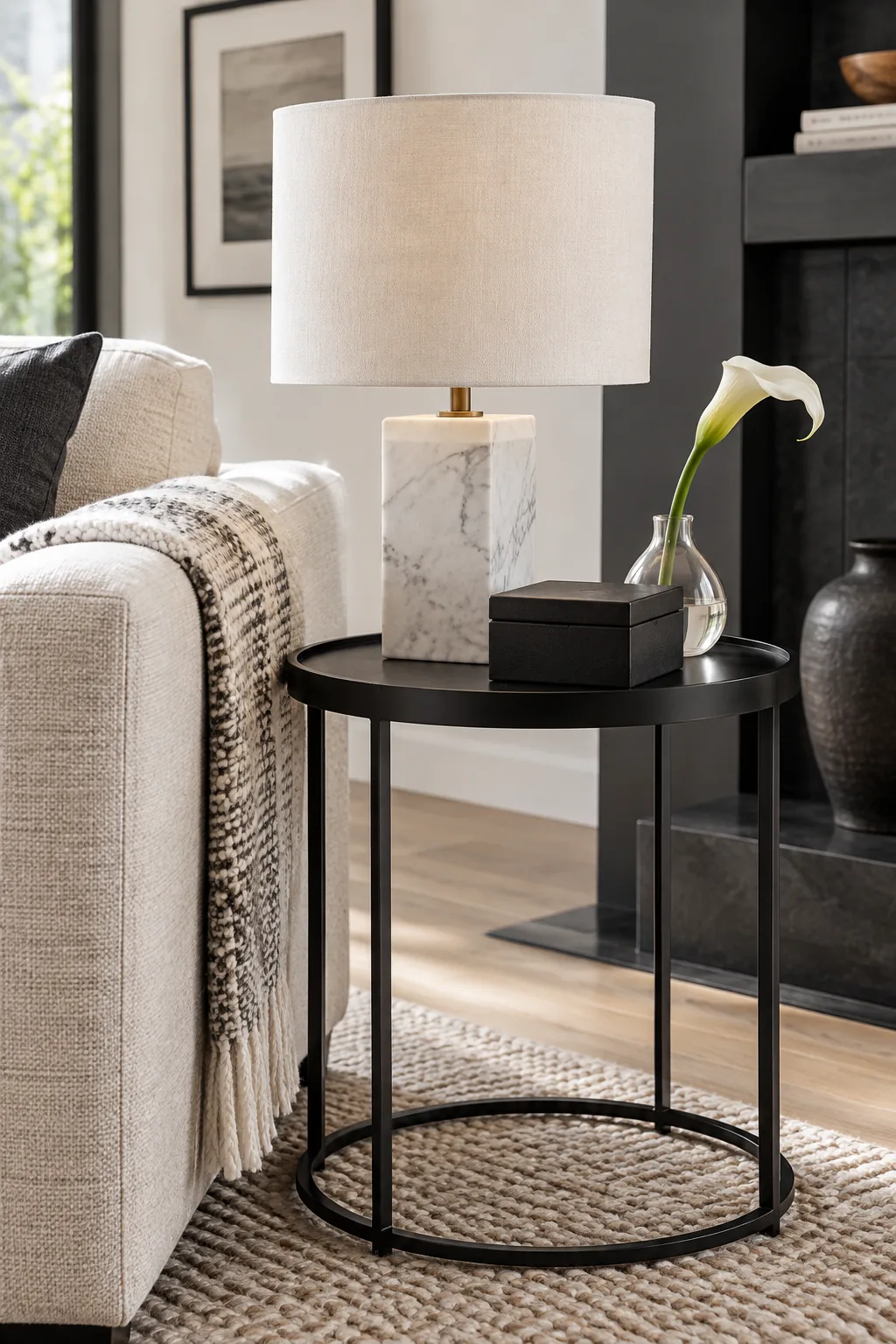
Modern Minimalist Living Room: Swap warm oak for sleek black metal and marble to create a high-contrast, minimalist look while keeping the exact same placement zones.
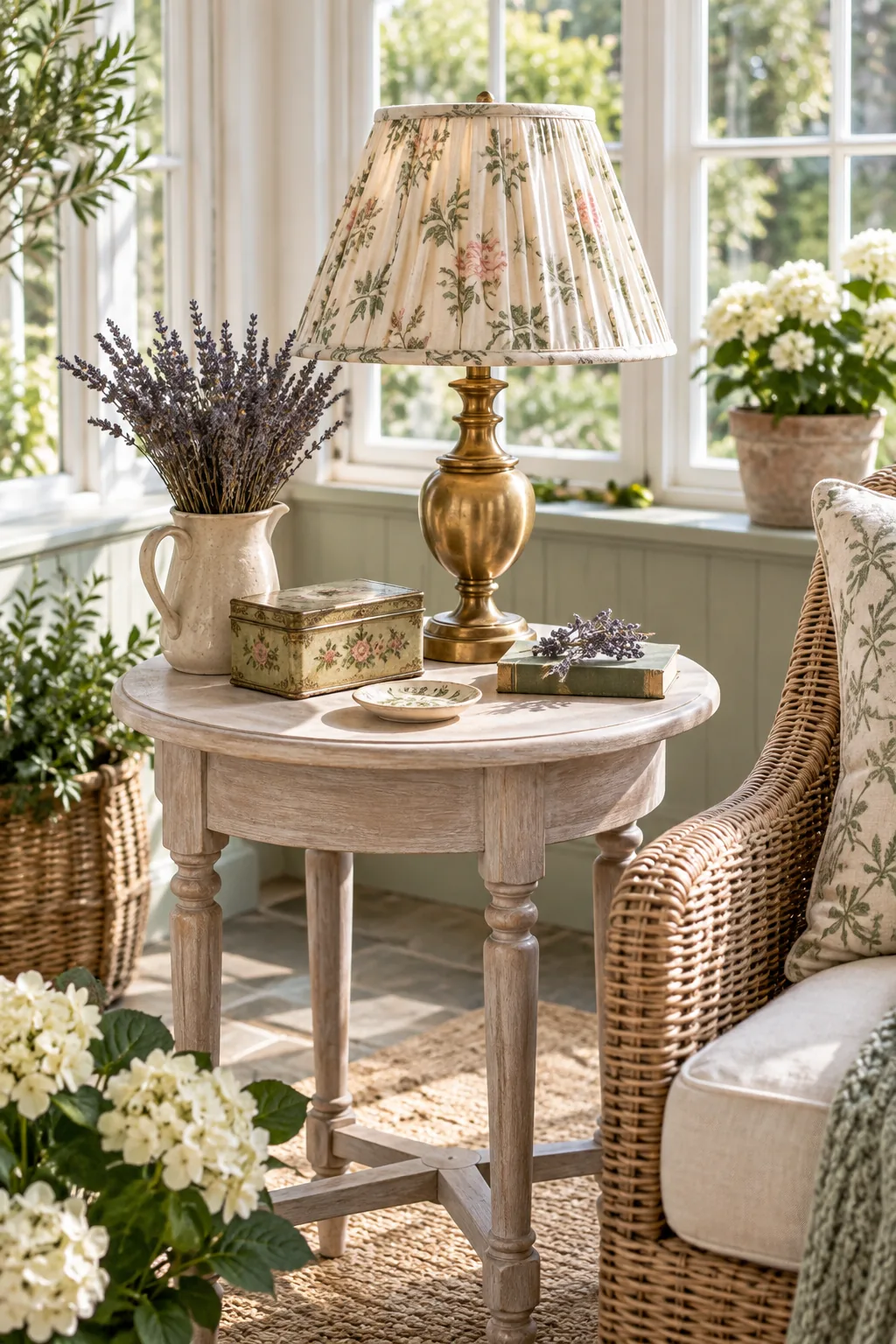
Cozy Cottage Sunroom: Embrace vintage charm by pairing a floral pleated shade with a distressed whitewashed table and a rustic tin storage box.
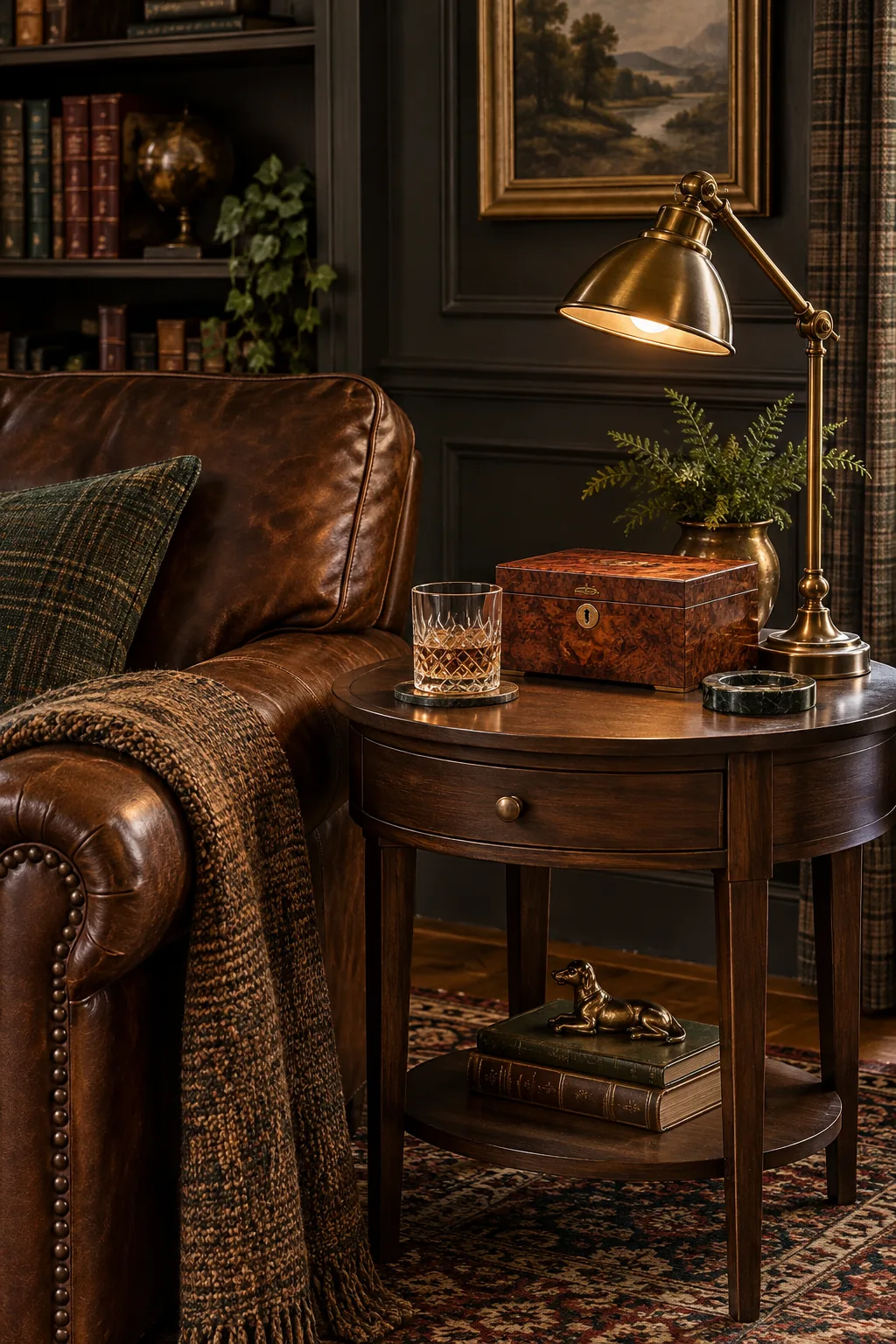
Moody Library Den: Deep walnut finishes and aged brass lighting give this den arrangement a sophisticated, library-inspired atmosphere perfect for evening reading.
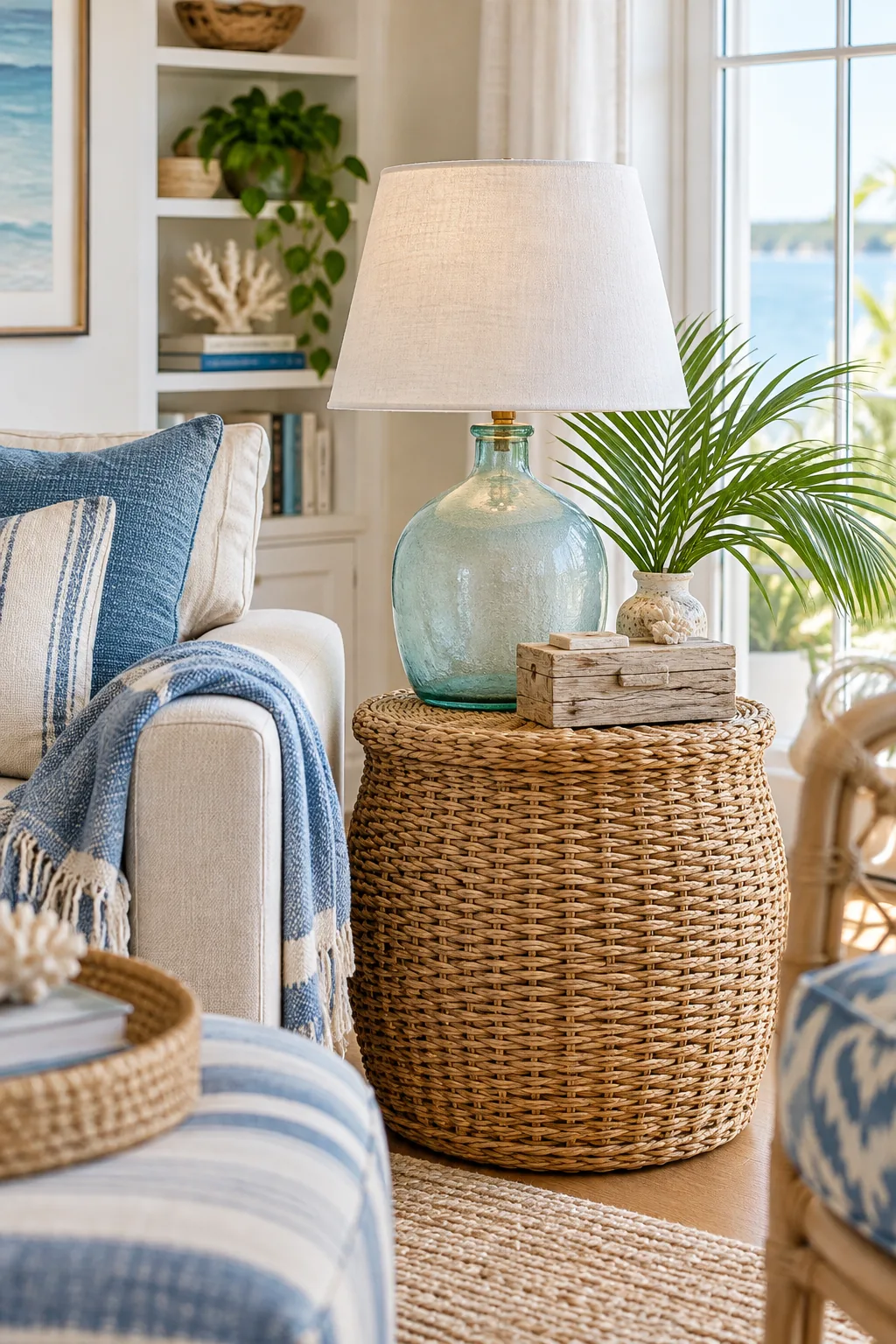
Coastal Casual Family Room: A sea glass jug lamp and a woven rattan table bring a relaxed, breezy coastal energy to a bright family room.