
How to Build an Alpine Rock Garden Outcrop (with Build Sheet)
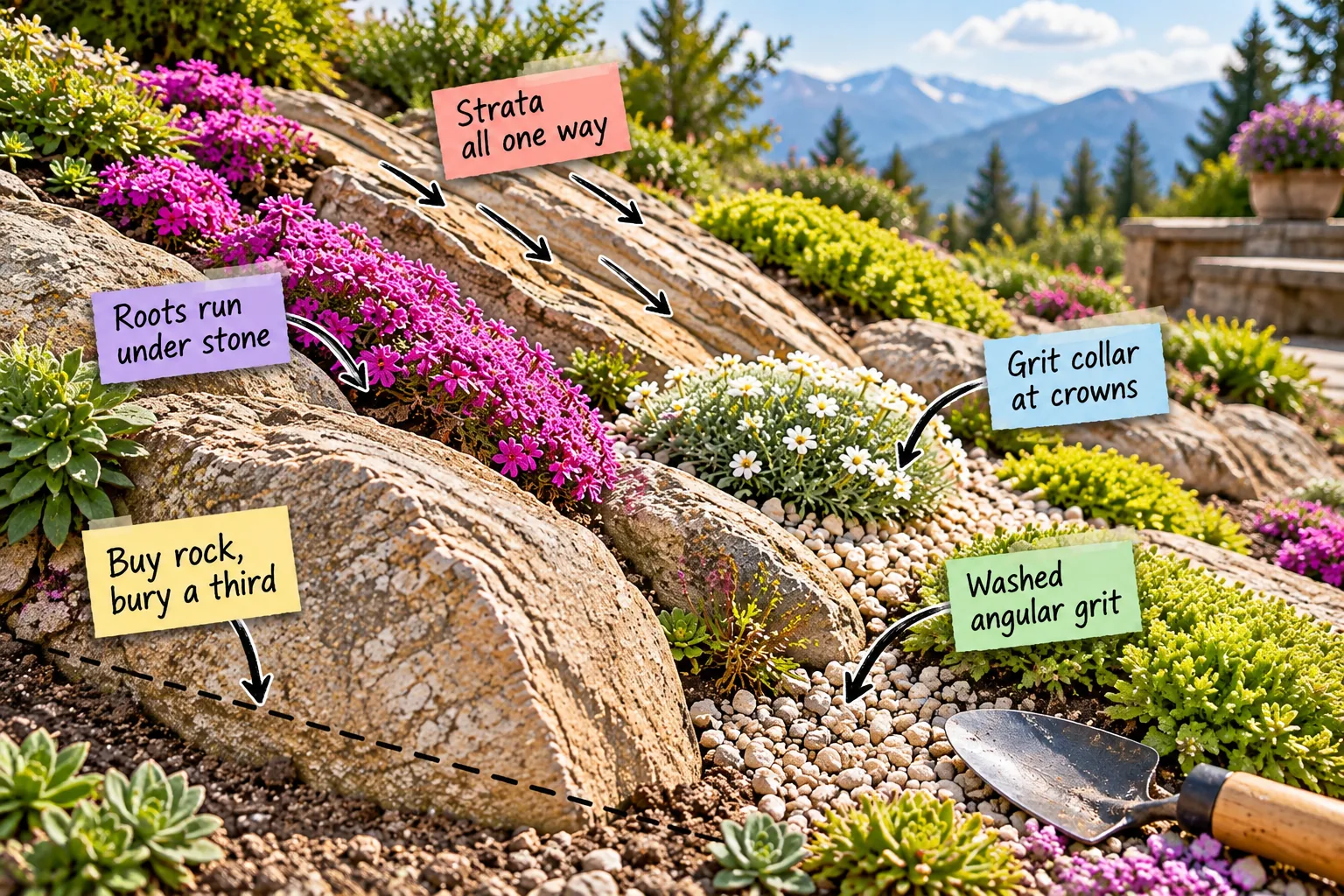
You can build a stunning, natural-looking alpine rock garden using our Rock Garden Outcrop Build Sheet, which includes a printable two-page step sequence for setting stones and a per-square-meter material quantity chart. I designed this comprehensive guide so you can arrange your sandstone boulders like a true mountain fissure and mix the exact volume of grit required for thriving alpine plants.
Mastering the Outcrop Illusion
Alpine plants thrive when they are tricked into thinking they are growing in a deep mountain fissure, surrounded by cool stone and excellent drainage. The secret to a convincing rock garden is making separate boulders look like one continuous, fractured piece of bedrock rather than a random, messy pile of loose stones.
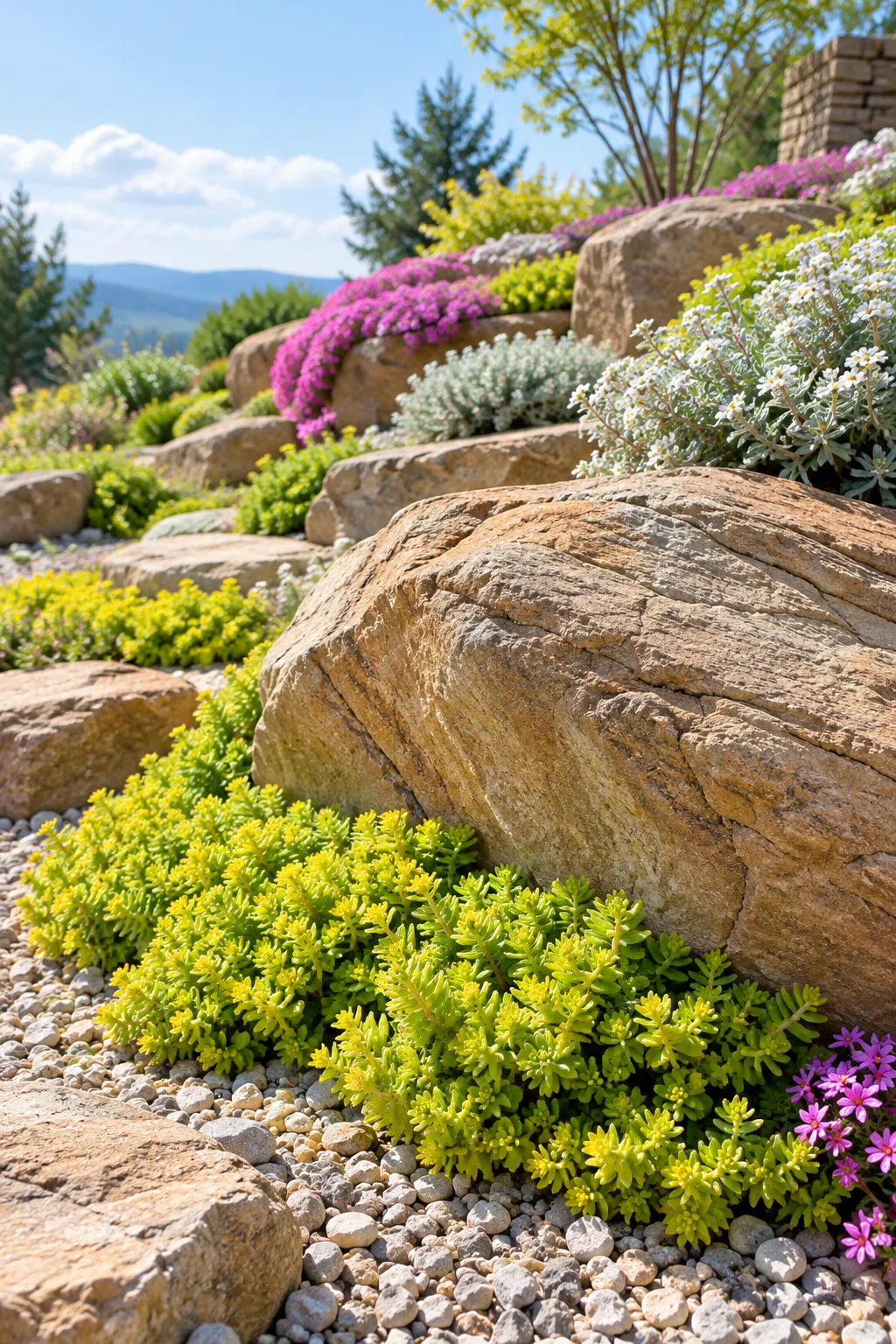
By carefully matching the grain, texture, and angles of your chosen sandstone, you create the visual weight necessary for a realistic mountain landscape. This unified geological approach transforms a standard backyard slope into a rugged, believable alpine habitat that perfectly showcases delicate mountain flora.
- Sandstone blocks: Offer excellent porosity for root attachment and weather beautifully over time, making them ideal for beginner alpine enthusiasts.
- Limestone chunks: Provide the specific alkaline environment preferred by many classic alpine cushion plants, though they are heavier to maneuver.
- Slate slabs: Create striking vertical crevices perfect for tight, deep-rooted mountain specimens that demand absolute drainage.
- Granite boulders: Deliver permanent structural stability and a dramatic, high-altitude aesthetic, but require specialized tools to split.
- Tufa rock: Highly porous and lightweight, allowing you to plant directly into the stone itself for a true cliff-face look.
- Local fieldstone: Blends seamlessly with your surrounding native landscape, providing the most authentic and cost-effective foundation material available.
Setting the Foundation Stones
A stable outcrop requires a strict structural rule: you must buy rock, bury a third of every stone’s total volume below the surrounding soil line. This deep placement anchors the heavy stone against aggressive winter frost heave and creates the visual mass necessary to mimic exposed natural bedrock.
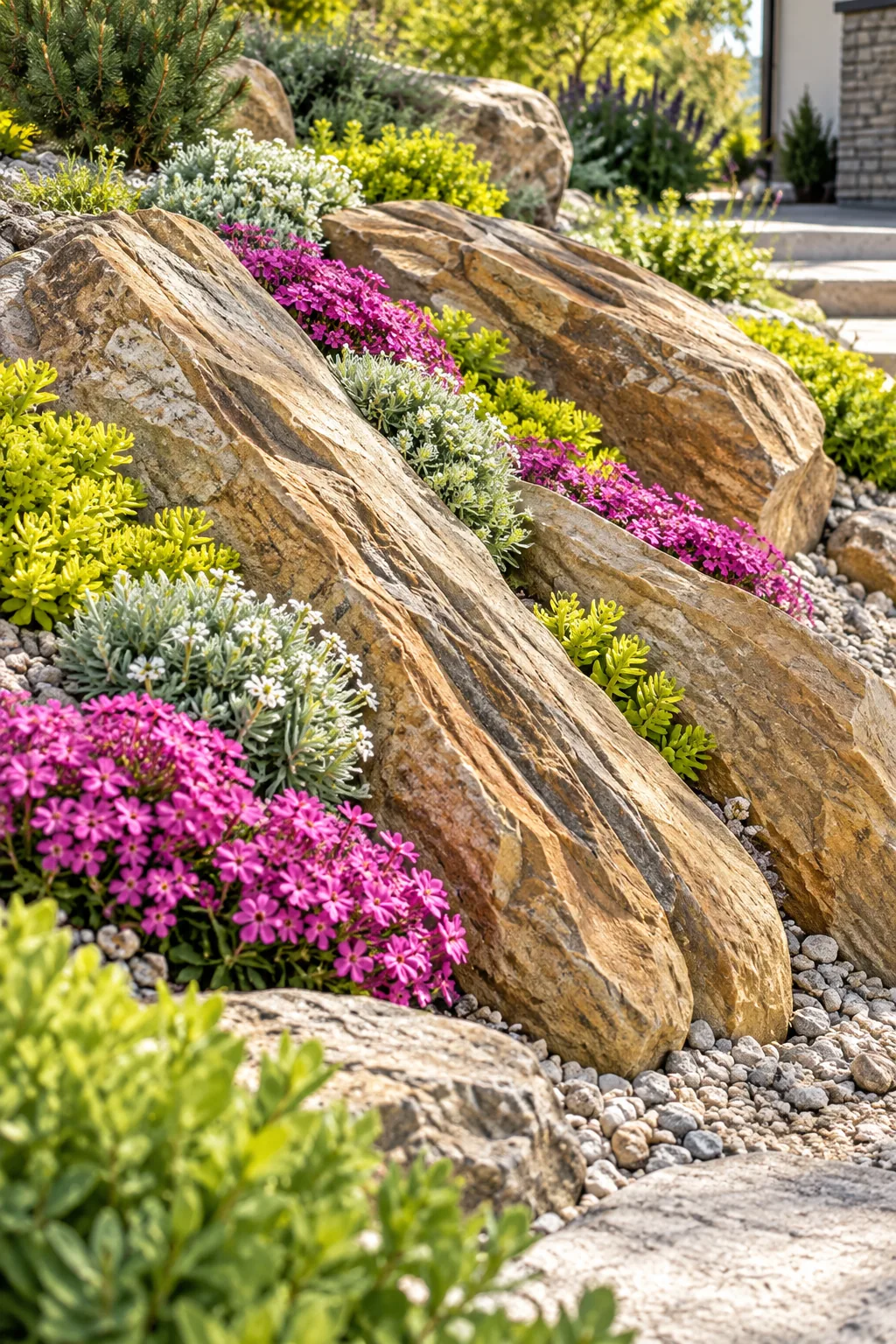
It is incredibly tempting to leave the entire beautiful rock visible above ground, but failing to anchor it properly ruins both the visual illusion and the structural integrity of the garden. Taking the time to dig a proper trench ensures your miniature mountain range never shifts during heavy spring rains.
Aligning the Rock Strata
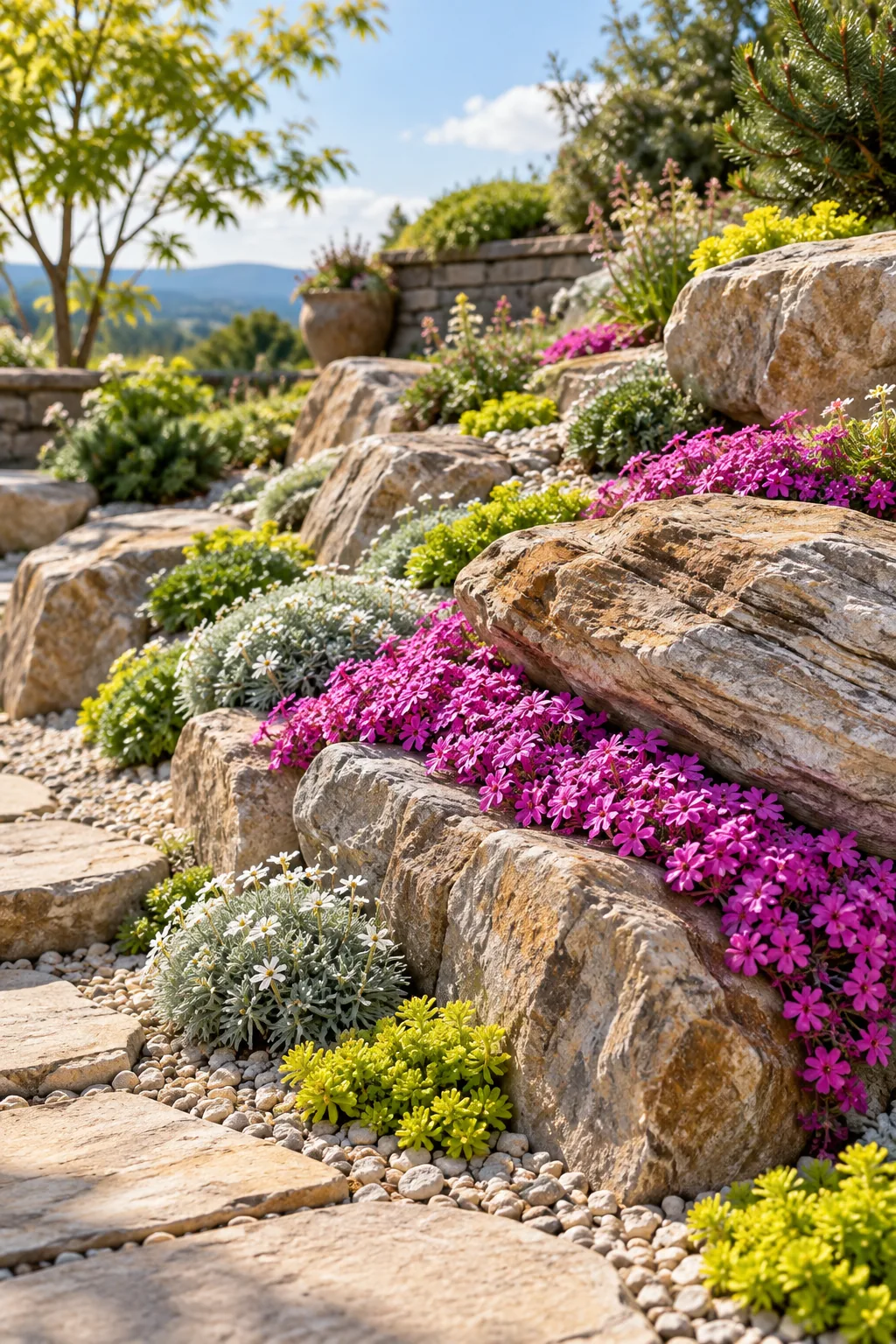
Position every stone so its natural grain lines run parallel and tilt at the exact same angle across the entire garden footprint. This uniform strata alignment—keeping the strata all one way—is the single most important rule for creating a believable, cohesive geological formation.
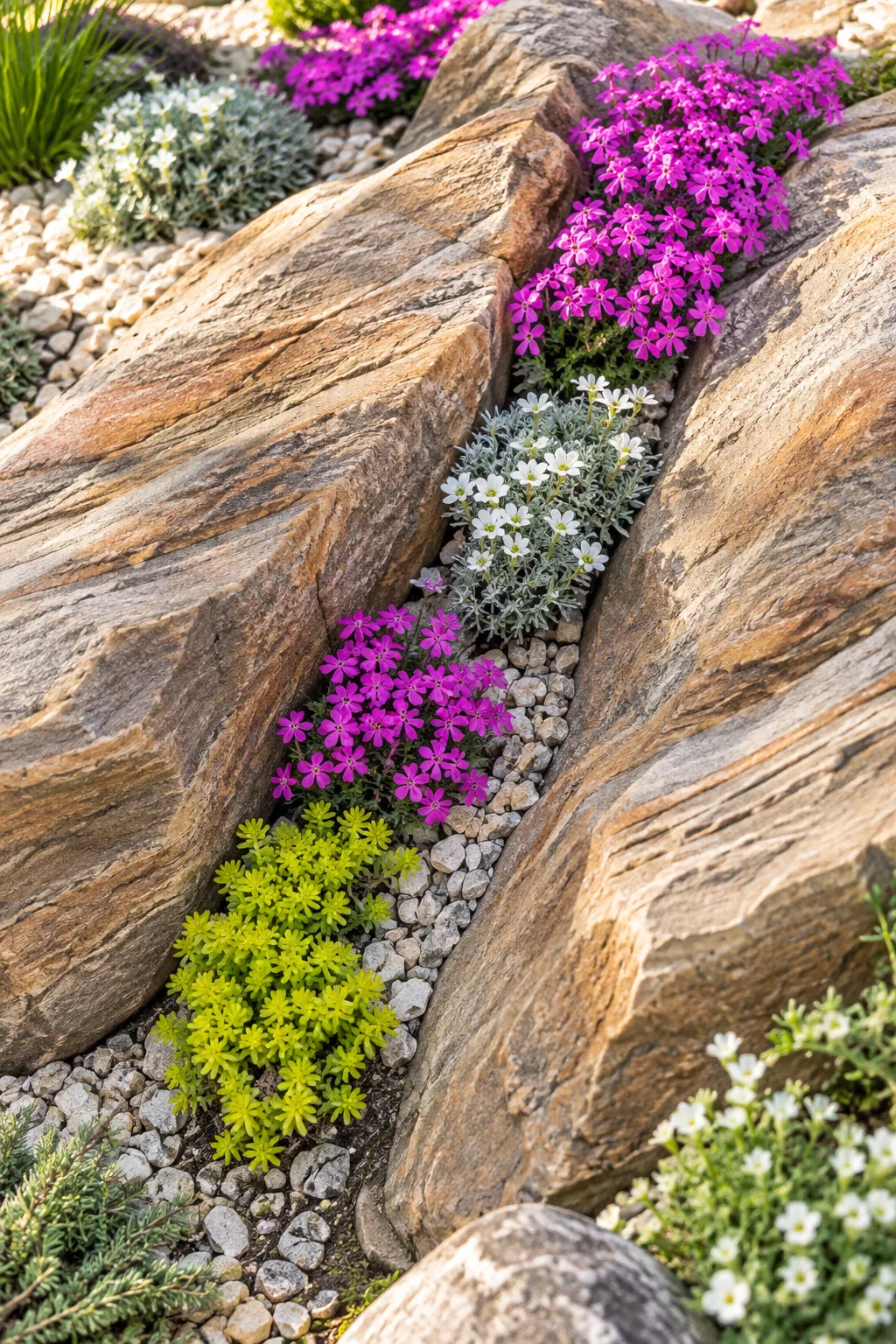
When the grain flows consistently across neighboring boulders, the human eye naturally reads them as a single shattered landmass rather than individual rocks. You can use a simple digital angle finder or a customized wooden wedge to verify the tilt of each new rock before backfilling the crevices.
Mixing the Alpine Substrate
Standard garden soil holds too much winter moisture for mountain plants, inevitably leading to rapid and fatal root rot. Fill the deep crevices between your aligned stones with a free-draining mix of equal parts loam, leaf mold, and washed angular grit to ensure rapid water movement.
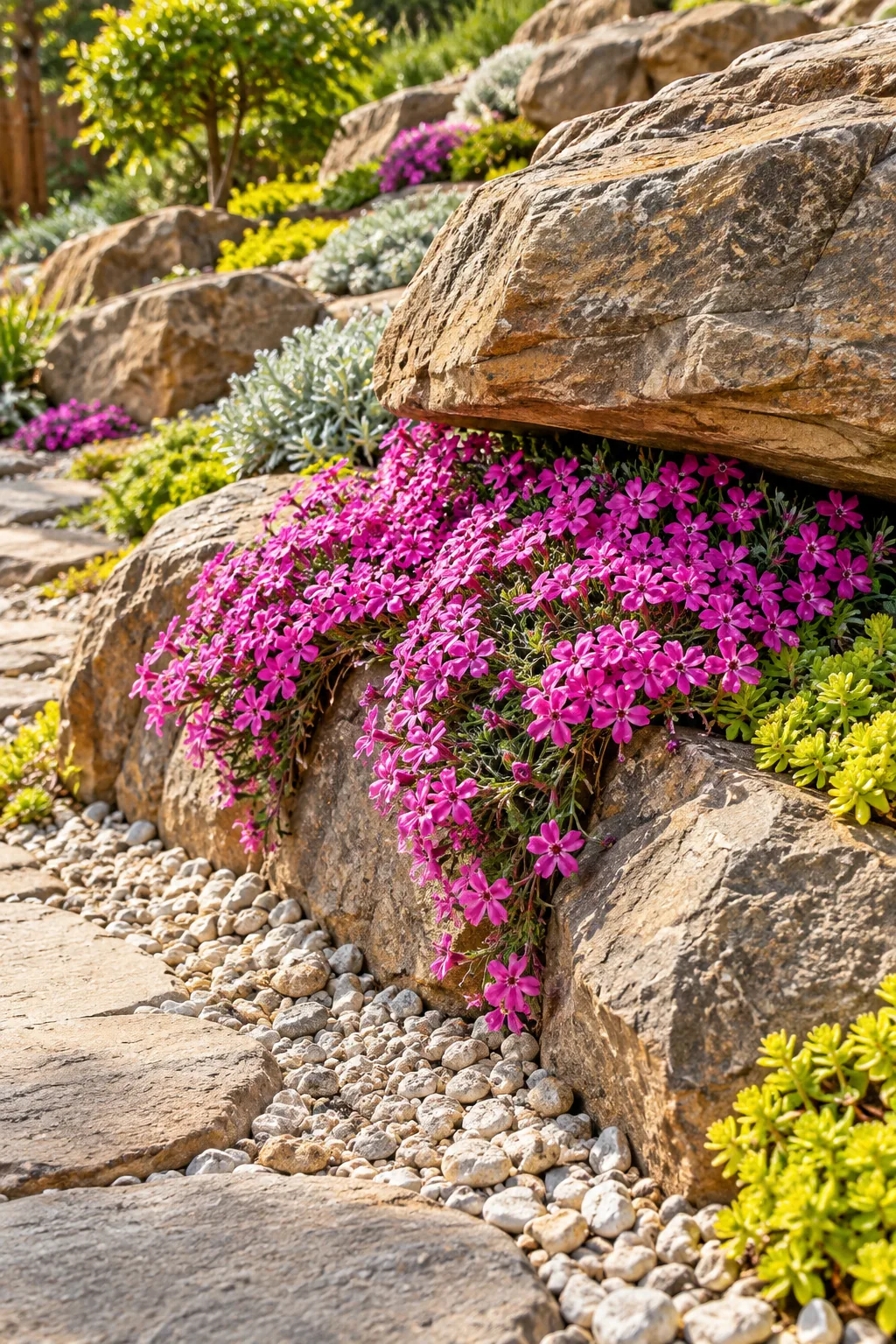
Using sharp-edged grit rather than smooth construction sand creates essential, microscopic air pockets that keep delicate alpine root systems healthy and oxygenated year-round. This specialized substrate perfectly mimics the nutrient-poor, highly porous scree slopes where these fascinating miniature plants naturally evolve and thrive.
| Material | Volume Ratio | Primary Function | Sourcing Tip |
|---|---|---|---|
| Washed angular grit | One Part | Provides rapid drainage and crucial root air pockets. | Buy bulk from agricultural or landscape suppliers. |
| Sterilized loam | One Part | Offers structural stability and essential mineral nutrients. | Use high-quality bagged topsoil to avoid weed seeds. |
| Screened leaf mold | One Part | Retains minimal summer moisture without waterlogging. | Sift homemade compost thoroughly through a fine mesh. |
| Crushed limestone | Optional Add-in | Boosts alkalinity for specific calcicole alpine species. | Check local quarry availability for clean, sharp chips. |
| Pumice stone | Alternative | Lightens the mix for extremely sensitive root systems. | Order in bulk online if local garden centers lack it. |
| Slow-release feed | Pinch per hole | Delivers gentle, long-term nutrition without burning roots. | Choose a low-nitrogen formula specifically for alpines. |
Planting Deep Under the Stone
When adding plants like magenta creeping phlox, tuck the root ball tightly into the crevice so the roots run under stone horizontally beneath the upper rock ledge. I learned this the hard way in my Austin garden, where exposed root crowns literally baked in the intense July sun.
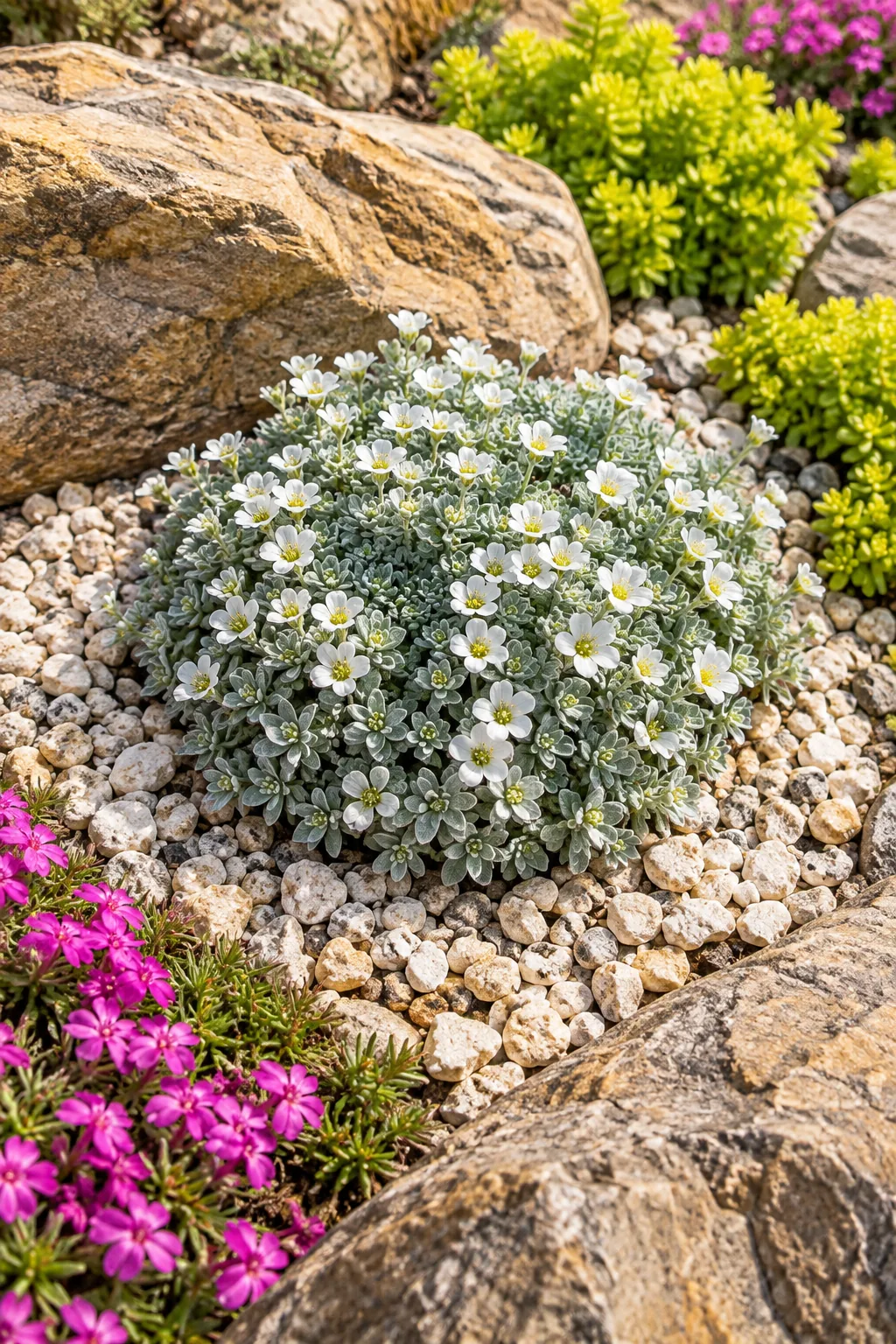
This deep horizontal placement keeps the root system heavily insulated during brutal summer heat spikes and mimics how alpine species naturally anchor themselves in sheer mountain cliffs. Once I started utilizing the cool, damp shade hidden beneath the boulders, my delicate alpine survival rates skyrocketed.
Adding the Protective Grit Collar
Finish the planting pockets by spreading a one-inch layer of pure pale grit completely over the exposed soil surface. Pushing this protective grit collar at crowns right up to the neck of silver saxifrage and sedum cushions prevents the sensitive foliage from resting on damp earth.
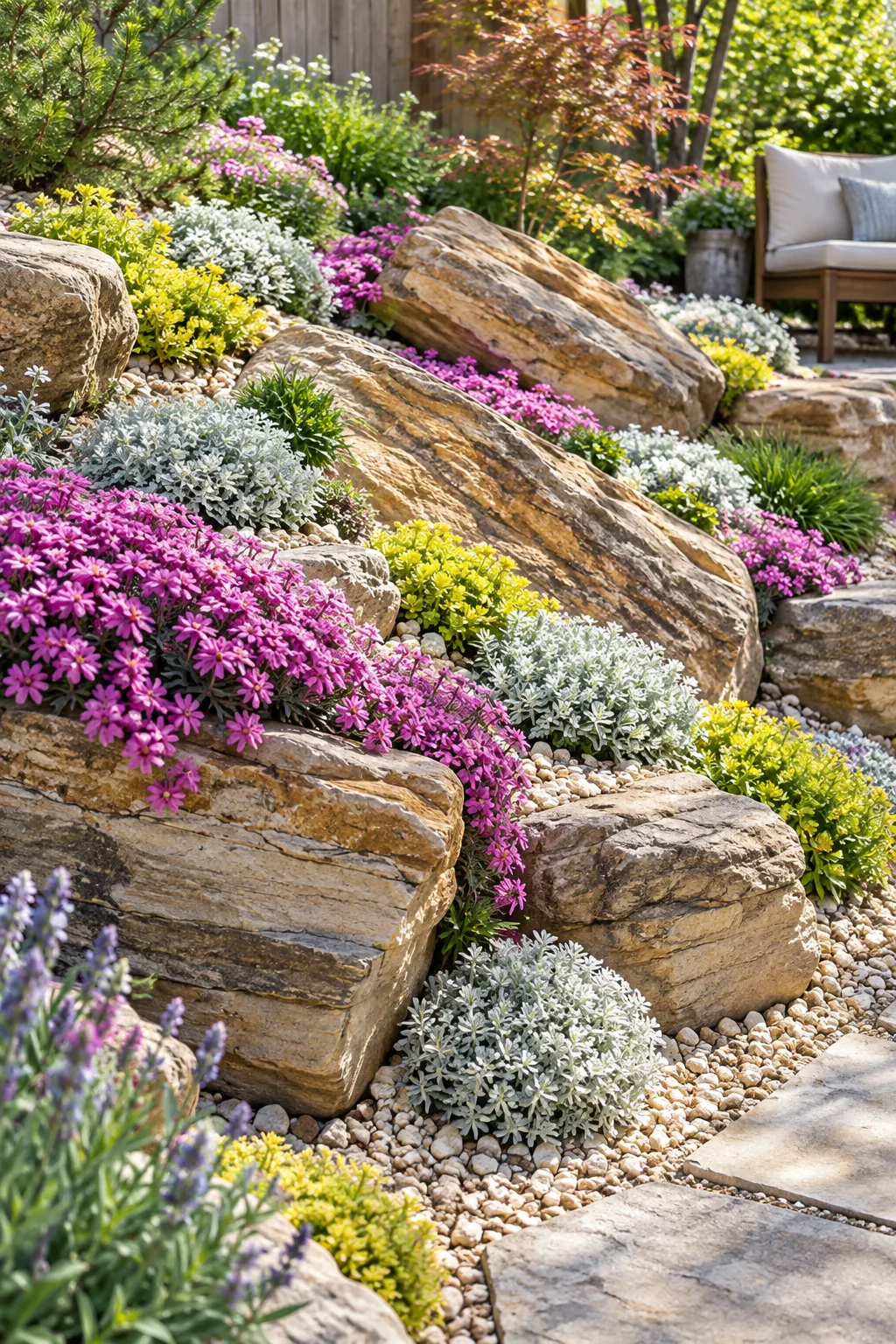
My very first silver saxifrage melted into a sad mush after a rainy spring, but since I instituted a strict one-inch grit collar rule, they stay perfectly dry. You can easily and precisely scoop the heavy material around delicate stems using an old metal soup spoon.
Three Ways to Style an Alpine Outcrop
Explore how different stone choices and plant palettes completely change the mood of a rock garden.
Minimalist Slate Courtyard: Dark slate shards placed vertically create a striking modern contrast against vibrant green moss.
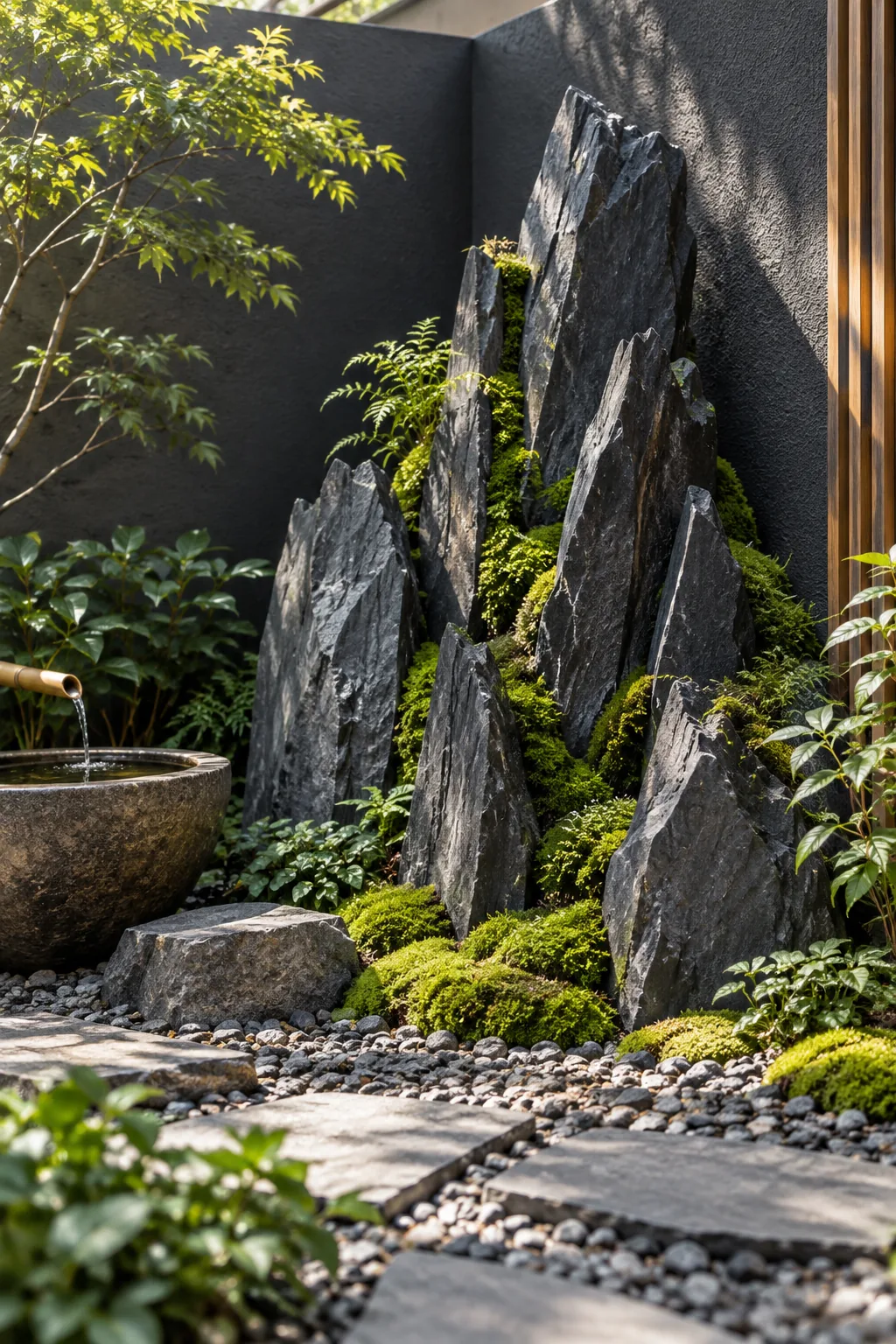
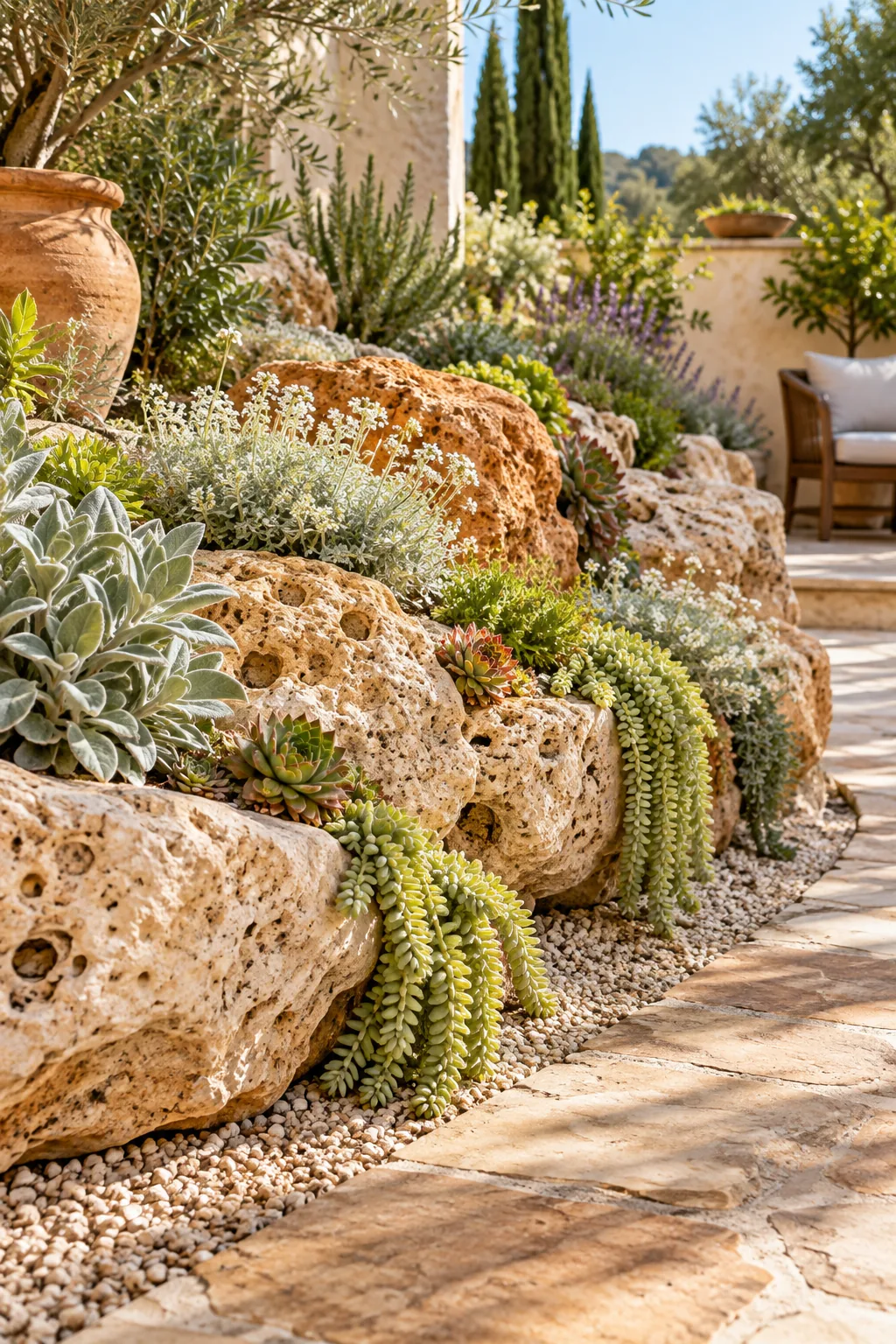
Mediterranean Tufa Border: Porous tufa limestone absorbs moisture and provides the perfect textured backdrop for trailing succulents.
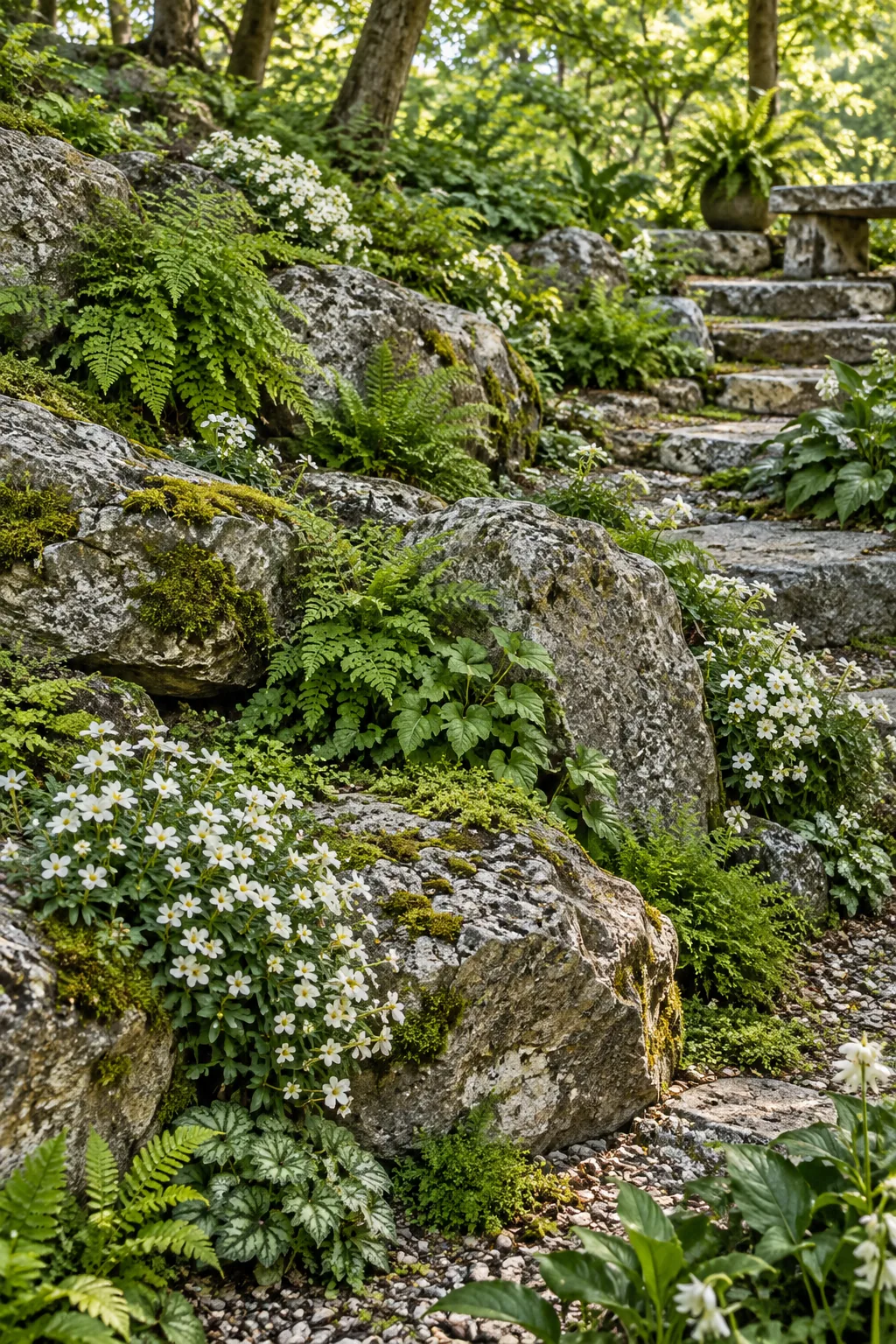
Woodland Limestone Bank: Weathered gray limestone boulders host miniature ferns and shade-tolerant alpines in a naturalistic woodland setting.
Your Outcrop Build Sheet and Material Chart
Download the complete Rock Garden Outcrop Build Sheet below, which fully details the printable two-page step sequence for setting stones and mapping your crevice spacing. I rely on the included per-square-meter quantity chart for every single workshop project here in Texas to calculate exactly how much sharp grit to order.
Before you confidently schedule a heavy stone delivery or start aggressively digging foundation trenches, run through these final critical site preparations to ensure your ambitious build goes smoothly. Proper planning prevents expensive mid-project material shortages and guarantees a stunning, long-lasting alpine landscape.