Landscaping Around Trees: 24 Plants & Pocket Planting Guide
You will be able to safely plant and mulch around mature trees without damaging their surface roots. Grab the printable two-page Under-Tree Planting Sheet featuring 24 root-friendly, dry-shade plants and the complete 6-step pocket-planting sequence.
Clear the Root Flare First
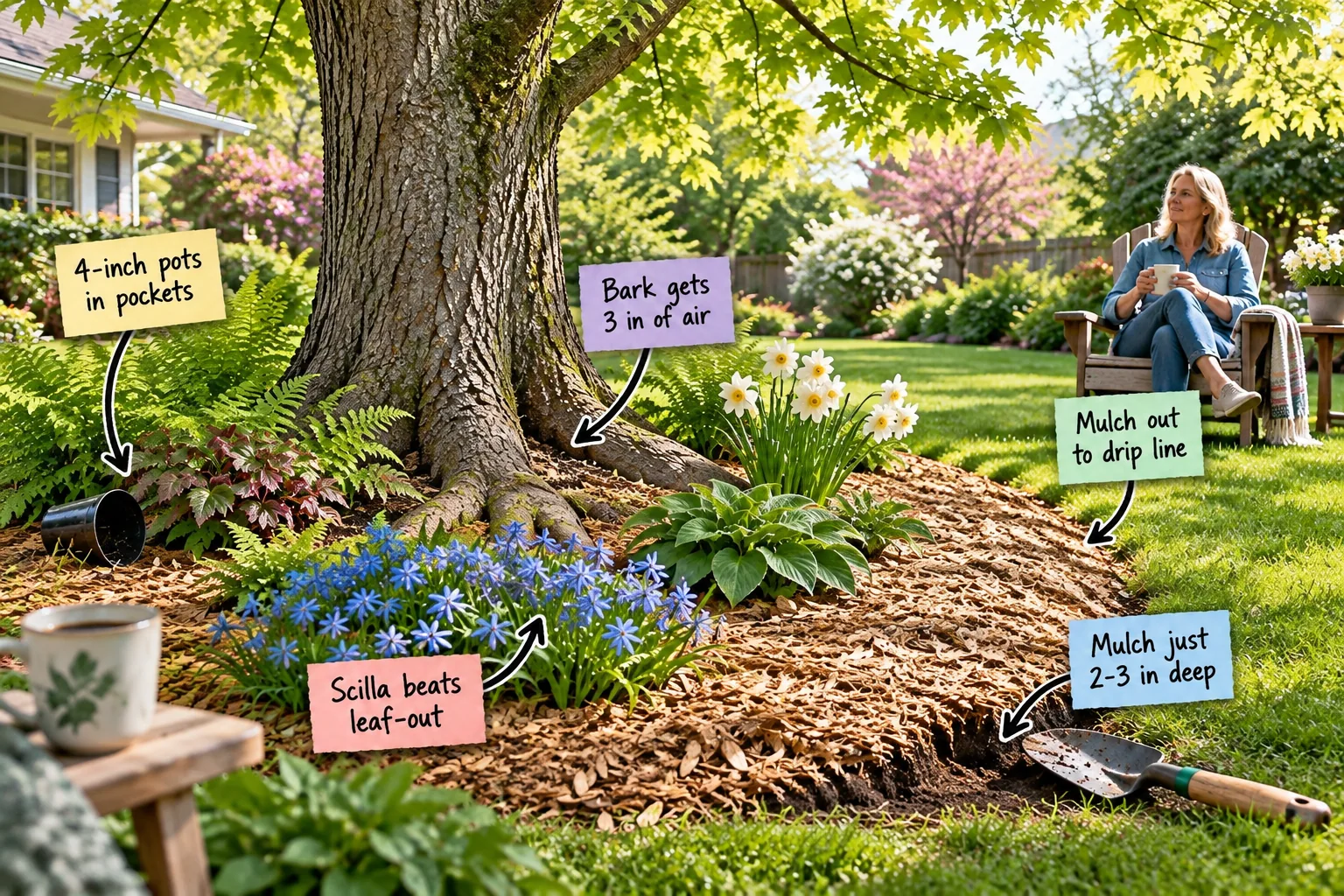
Start by pulling all soil and debris away from the base of the trunk to create a breathable buffer zone. You must ensure the bark gets 3 inches of air where the root flare widens so the tree can resist rot.
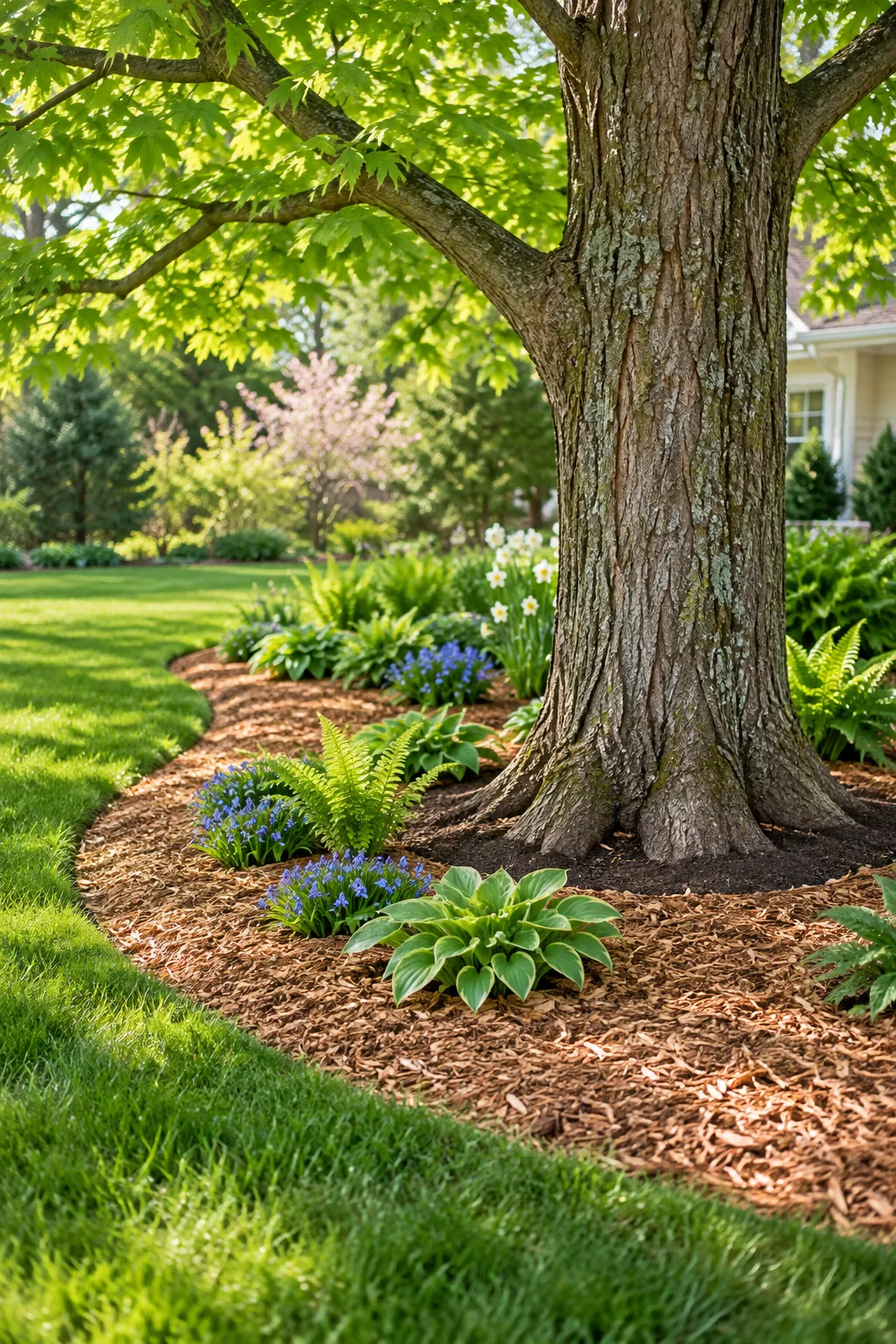
Protecting the tree’s structural anchors is the most critical part of this process. Avoid these common errors that can slowly kill a mature shade tree.
Inspect the Trunk for Damage
Once the base is clear, take a moment to examine the lower bark and visible roots for soft spots or deep mower wounds. Catching these problems early ensures you do not invest time planting under a tree that requires professional arborist care.
Extend the Bed to the Drip Line
Map your bed’s outer edge by looking straight up at the outermost branch tips to determine the mulch out to drip line boundary. Extending the mulch this far protects the tree’s critical, shallow feeder roots from heavy lawnmower compaction.
Establish a Clean Perimeter Edge
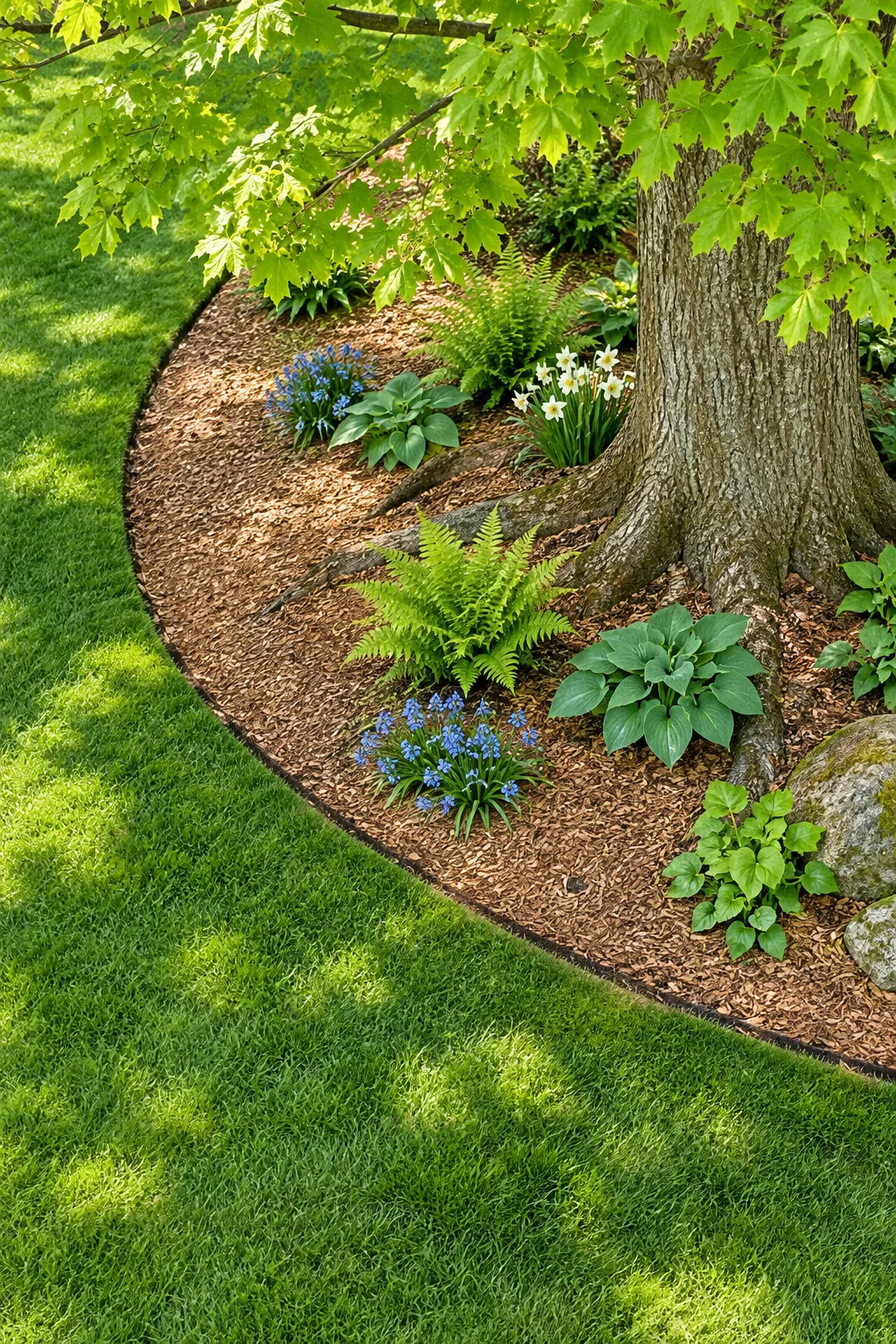
Creating a sharp boundary keeps turf grass from creeping into your new shade garden and competing with your perennials. A simple v-shaped trench works beautifully to hold the mulch in place without requiring heavy concrete blocks.
Keep the Mulch Layer Shallow
Apply a light layer of cedar mulch to suppress weeds while keeping the depth strictly just 2-3 inches deep over the soil. Limiting this mulch depth is essential to preserve soil oxygen levels so the shallow root system can breathe.
Select a Breathable Organic Mulch
The material you spread over the root zone dictates how well water and air penetrate the ground below. I always recommend medium-texture organic options because they break down slowly and enrich the soil without matting into a waterproof barrier.
| Mulch Type | Airflow | Lifespan | Best Use |
|---|---|---|---|
| Shredded Cedar | Excellent | 12-18 months | Sloped beds |
| Pine Bark Nuggets | Very Good | 24 months | Flat terrain |
| Composted Leaves | Moderate | 6-8 months | Woodland edges |
| Dyed Wood Chips | Poor | 24+ months | Avoid near trees |
Hunt for Natural Root Pockets
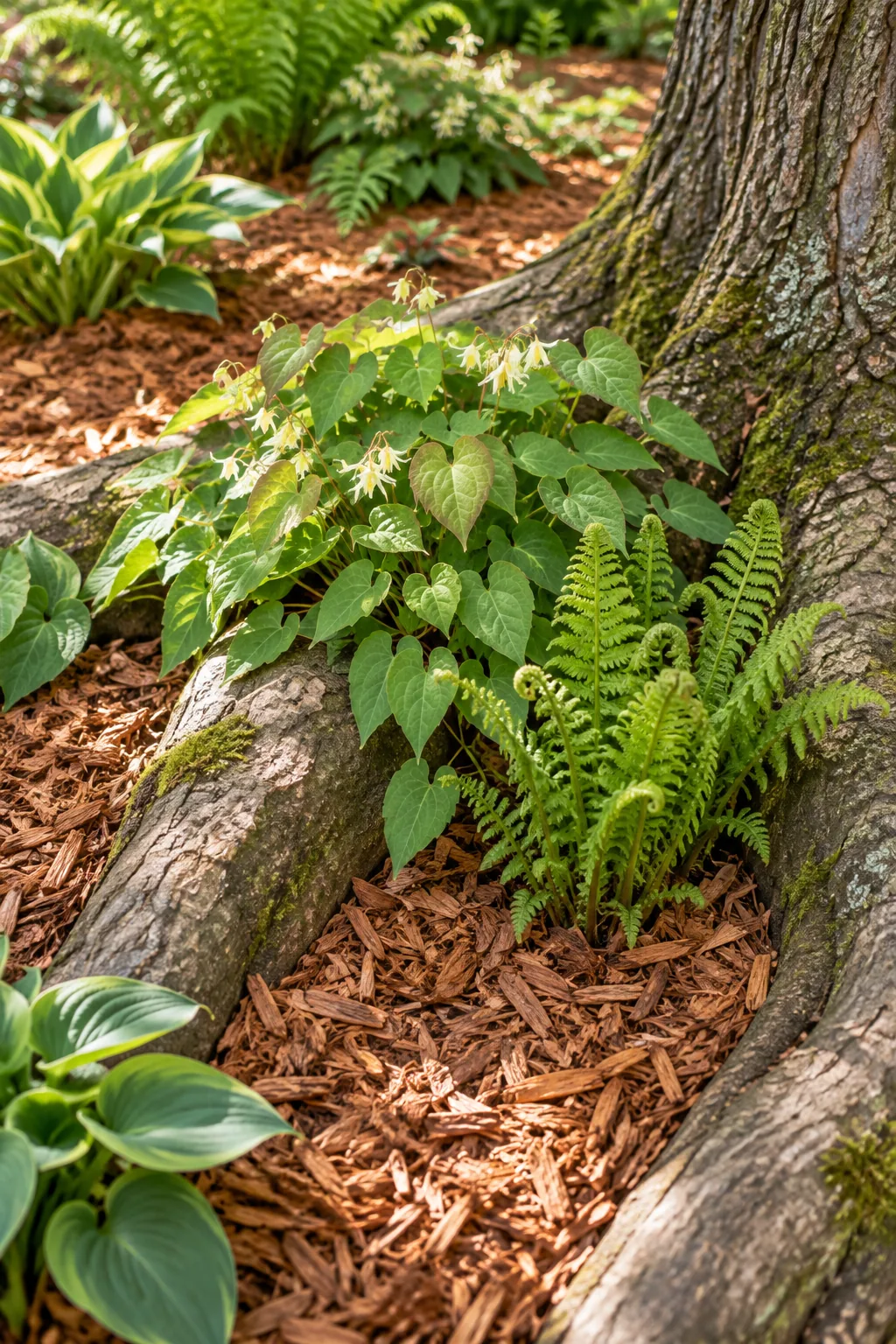
Instead of tilling or digging a continuous trench, probe the soil gently to find natural gaps between the thick woody roots. Finding the right spots to plant requires patience and a delicate touch to avoid slicing the tree’s vital feeder network.
Assess the Soil Quality
The dirt wedged between mature roots is typically dry, compacted, and depleted of basic nutrients. Scratch a handful of compost into the top inch of each pocket to give your new shade plants a slight advantage before they settle in.
Plant Small with 4-Inch Pots
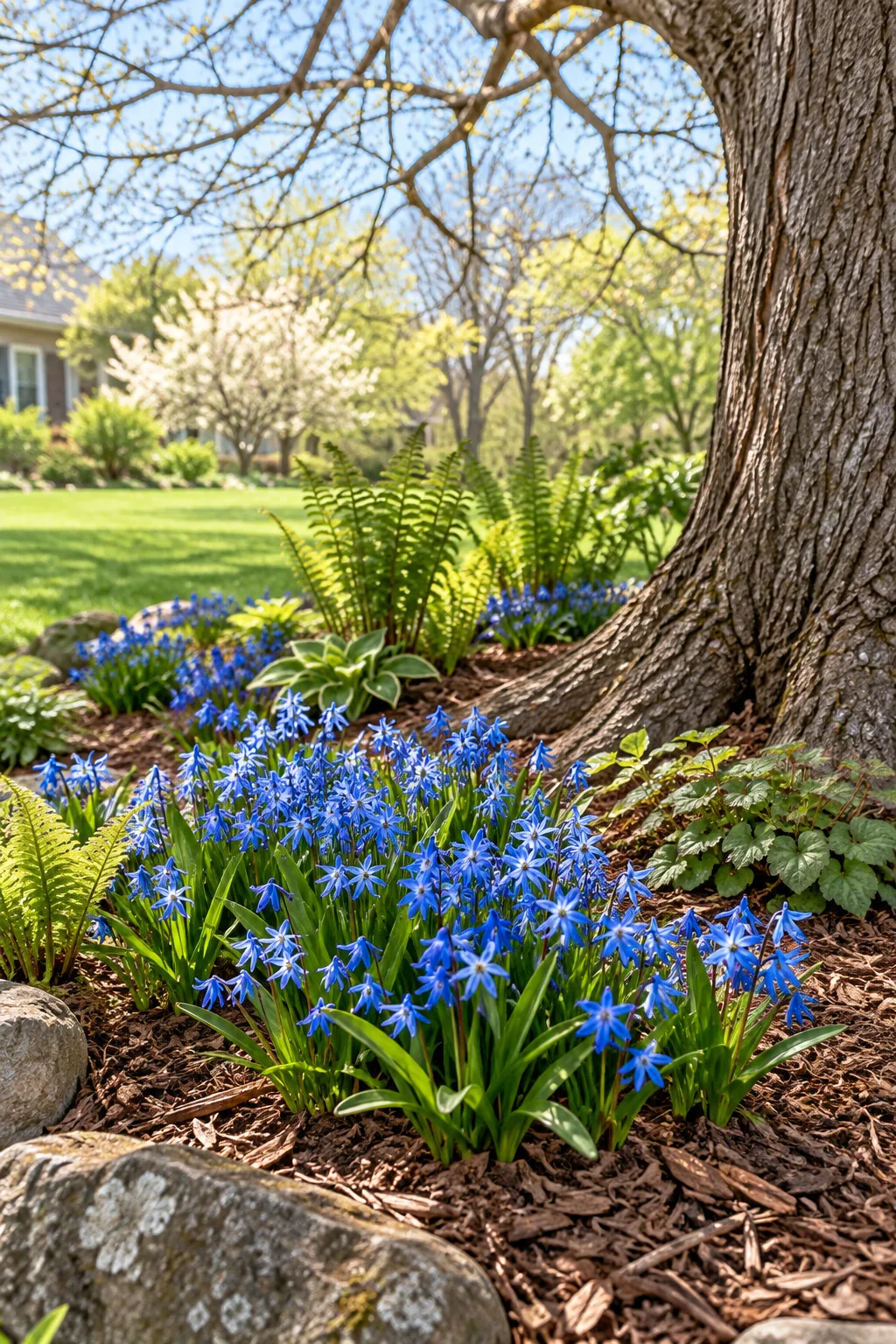
Squeeze new perennials into those natural root gaps by exclusively buying 4-inch pots in pockets so the small root balls fit perfectly. When I tackled the giant oak in my Austin front yard, using tiny starter plants saved me from chopping through any woody anchors.
Gently Tease the Root Balls
Nursery plants grown in small containers often arrive tightly bound and reluctant to spread outward. Massage the bottom of each root ball firmly with your thumbs to loosen the tangled base before tucking it into the prepared soil gap.
Time Blooms Before Canopy Leaf-Out
Choose early-spring bulbs because a plant like scilla beats leaf-out, completing its life cycle while the branches above are still completely bare. I love watching my early daffodils capitalize on that unfiltered spring sunlight before the thick summer canopy plunges my garden into deep shade.
Layer Ferns for Summer Interest
Once the spring bulbs fade and the tree leaves fully emerge, you need foliage plants that thrive in the resulting gloom. Native ferns and variegated hostas provide excellent texture and color throughout the hottest months when flowers are scarce.
Water the Pockets, Not the Trunk
Deliver water directly to the new root balls using a targeted drip line or a watering wand to help them establish. Avoid spraying the tree trunk, and monitor soil moisture carefully during the first year as the new plants compete with the mature tree.
- Place the wand nozzle right at the base of the perennial.
- Soak the small pocket until water begins to pool slightly.
- Let the moisture soak in completely.
- Repeat once more to ensure deep saturation.
Monitor Moisture During Year One
The massive tree will always win the battle for groundwater, leaving your fresh additions vulnerable during dry spells. Check the soil right next to the new plants twice a week, supplementing with hand watering whenever the top inch feels dusty.
Avoid Adding Raised Borders
Resist the temptation to build heavy stone retaining walls around the trunk to create a raised planter box. Piling deep topsoil over the existing grade suffocates the established root system just as quickly as a massive mountain of mulch.
Skip the Weed Fabric
Never lay down landscape fabric or black plastic before spreading your cedar chips under the canopy. These synthetic barriers prevent essential oxygen exchange, block natural water penetration, and eventually tangle disastrously with the tree’s fine feeder roots.
Refresh Mulch Annually
Organic materials decompose naturally over the seasons, adding valuable nutrients to the depleted soil below. Plan to lightly top-dress the bed with a fresh inch of cedar chips each spring, always verifying the total depth never exceeds three inches.
Grab the Under-Tree Planting Sheet
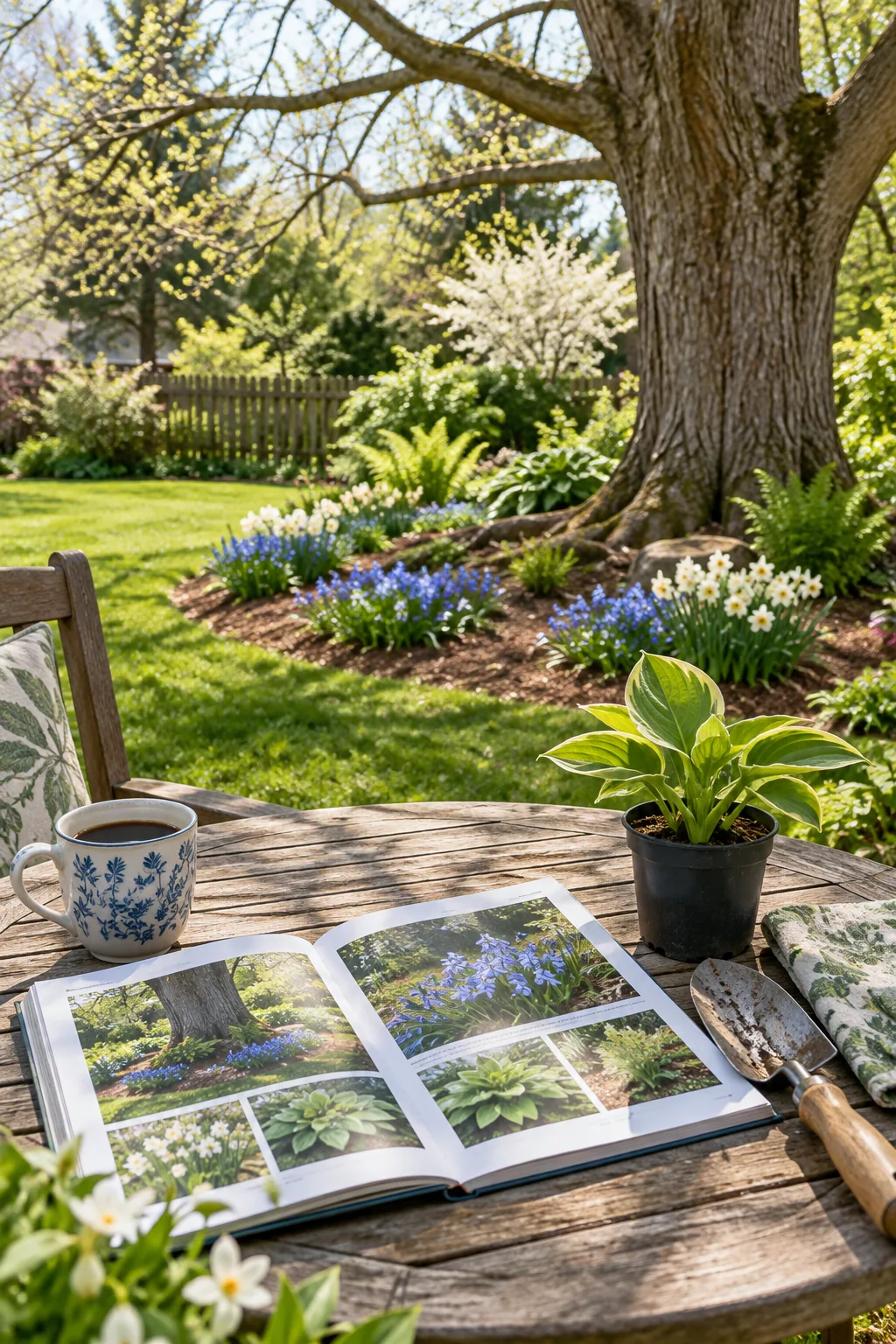
Take the guesswork out of dry-shade gardening with this printable two-page Under-Tree Planting Sheet, which includes the complete 6-step pocket-planting sequence. I keep my own copy pinned to my potting bench so I can easily sort my 24 root-friendly shade choices by their bloom month.
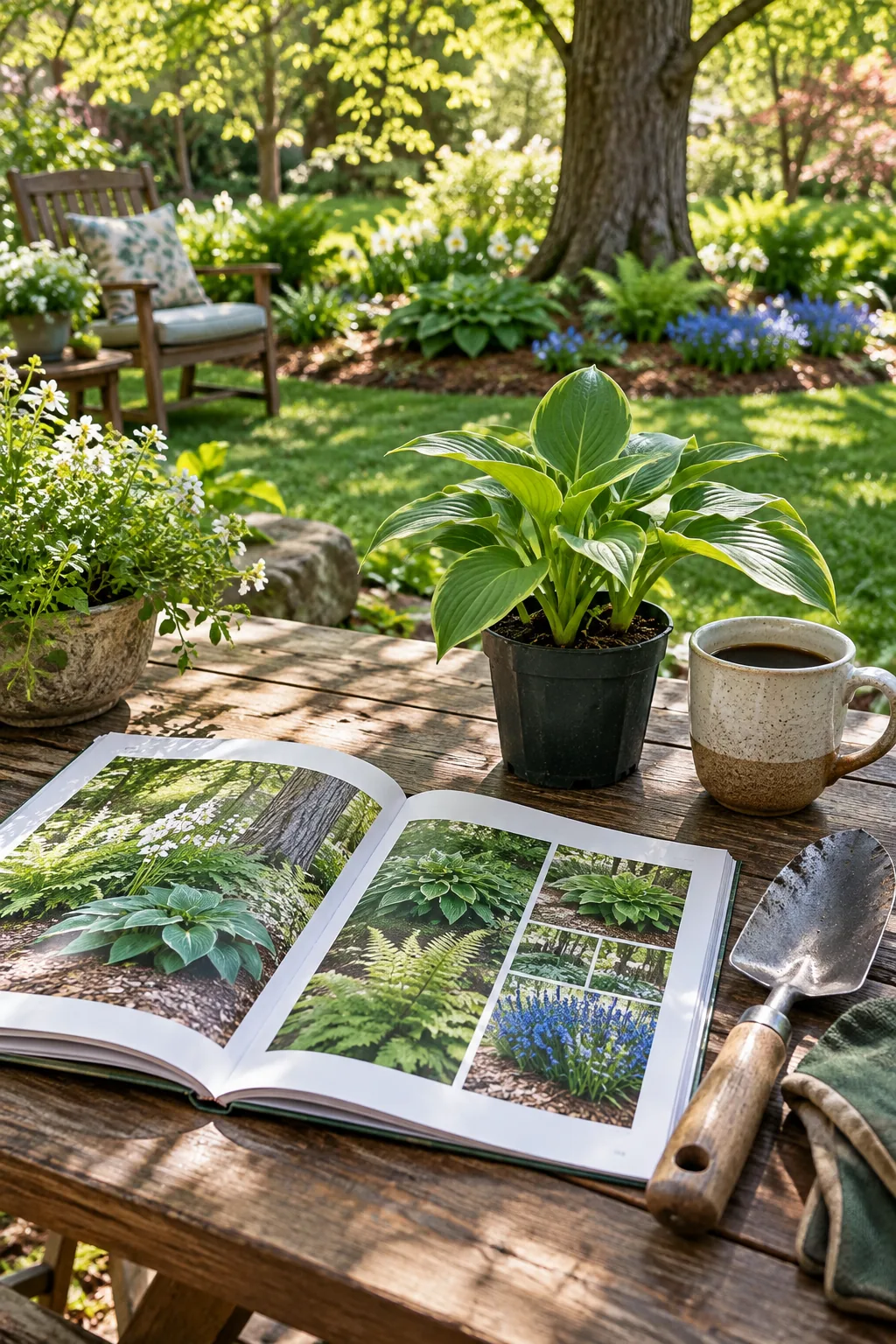
4 Beautiful Under-Tree Garden Styles
Get inspired by these distinct approaches to styling the shaded zone beneath your trees.
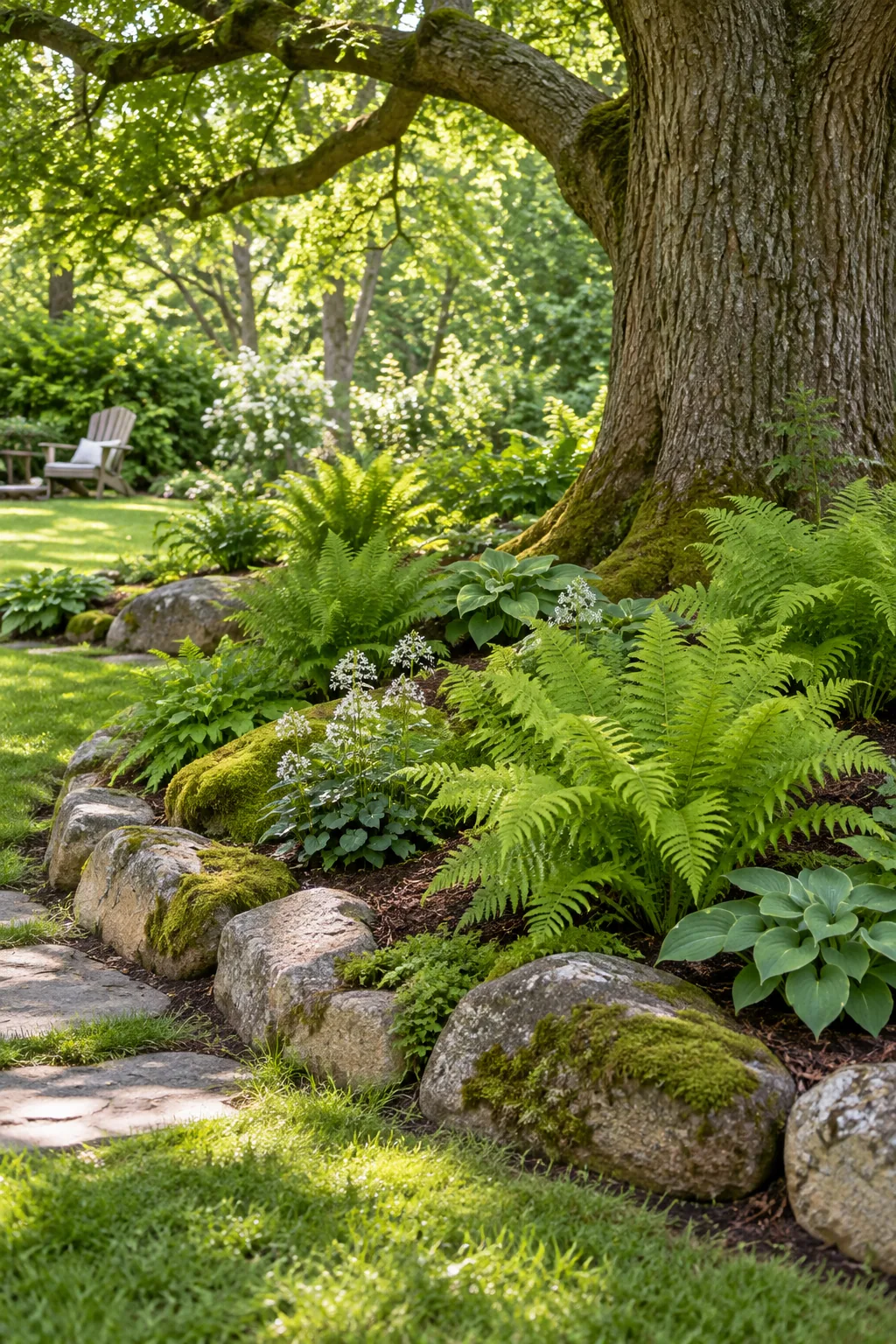
Woodland Ferns and Natural Stone: Embrace a wilder aesthetic by pairing native ferns with mossy stones that blend seamlessly into the surrounding landscape.
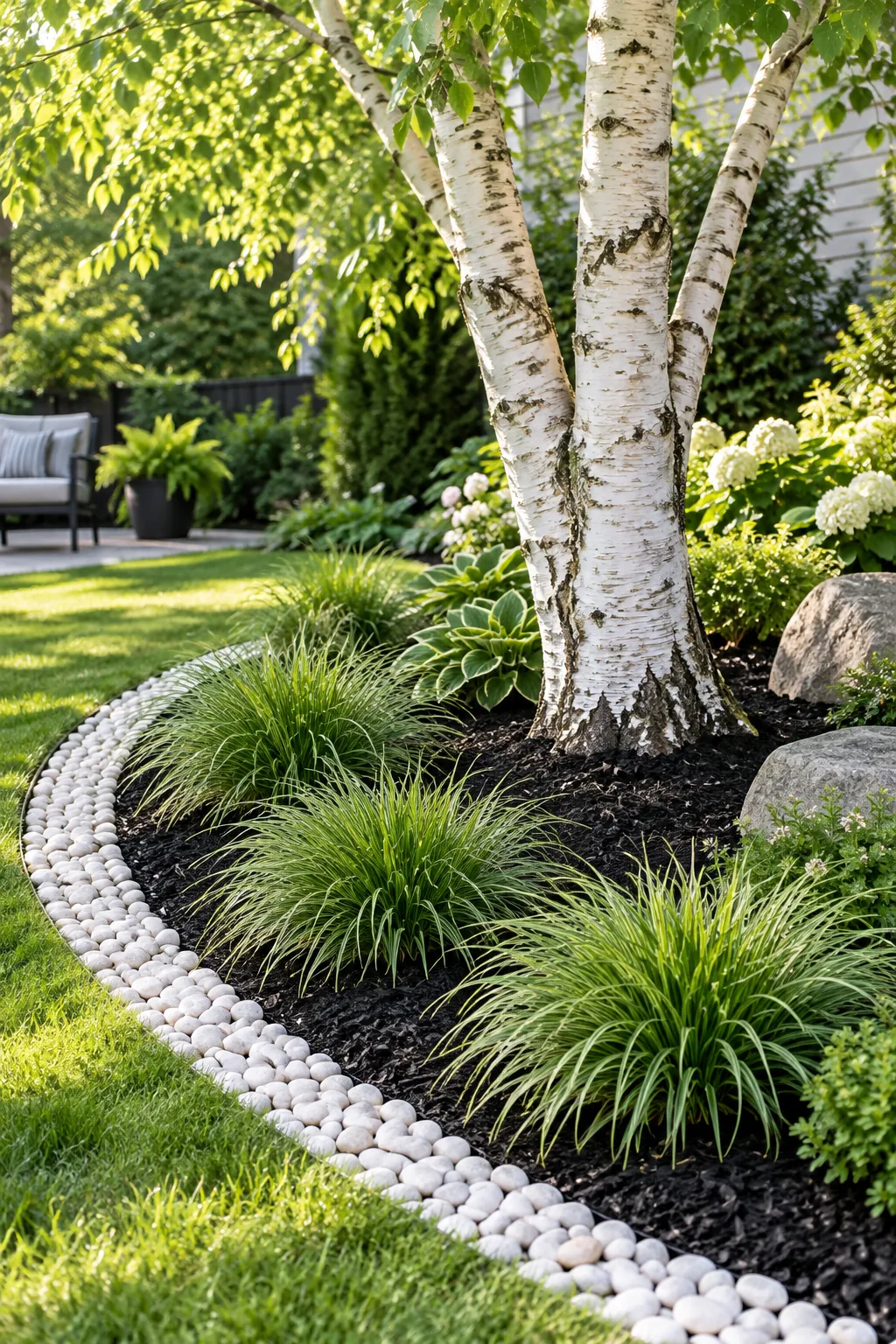
Modern Minimalist Grasses and Pebbles: Achieve a contemporary look by using high-contrast black mulch and white river rocks to frame structural ornamental grasses.
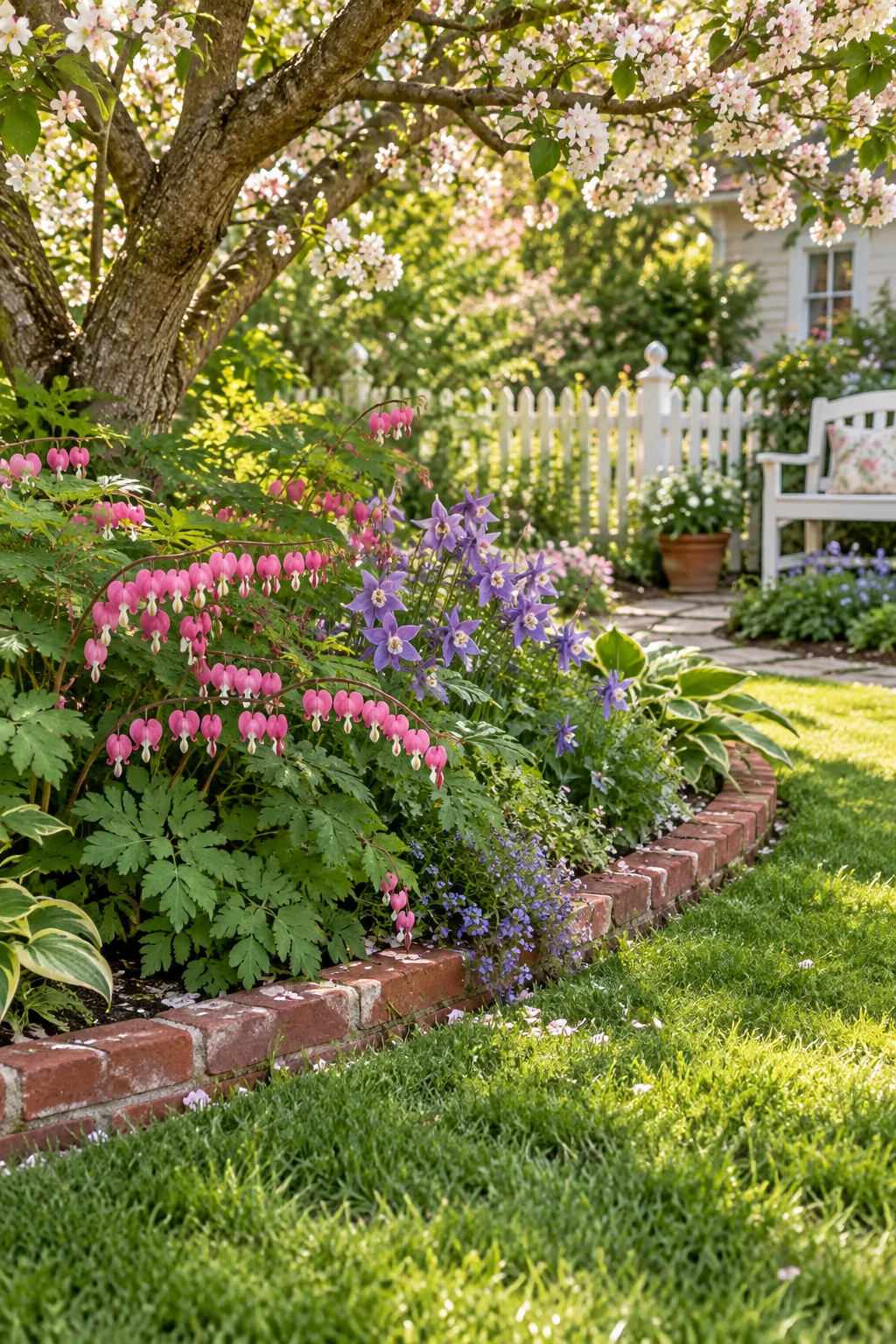
Romantic Cottage Garden Florals: Soften the base of a fruit tree with delicate bleeding hearts and a classic reclaimed brick border for timeless charm.
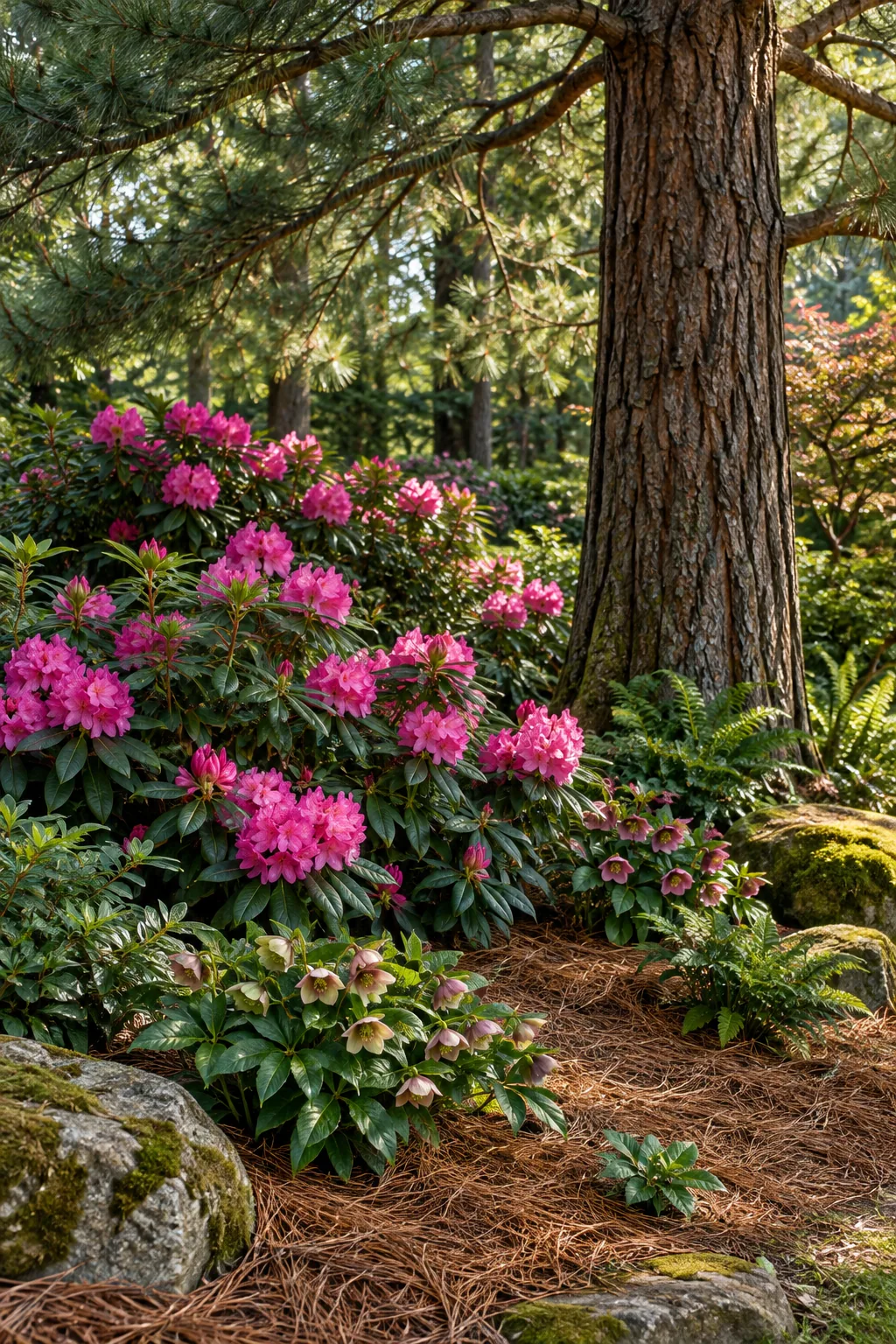
Acid-Loving Evergreens and Hellebores: Take advantage of the acidic soil beneath pine trees by planting vibrant rhododendrons and letting the fallen needles act as free mulch.