Front Entrance Styling Rules & the Secret Hollow Planter
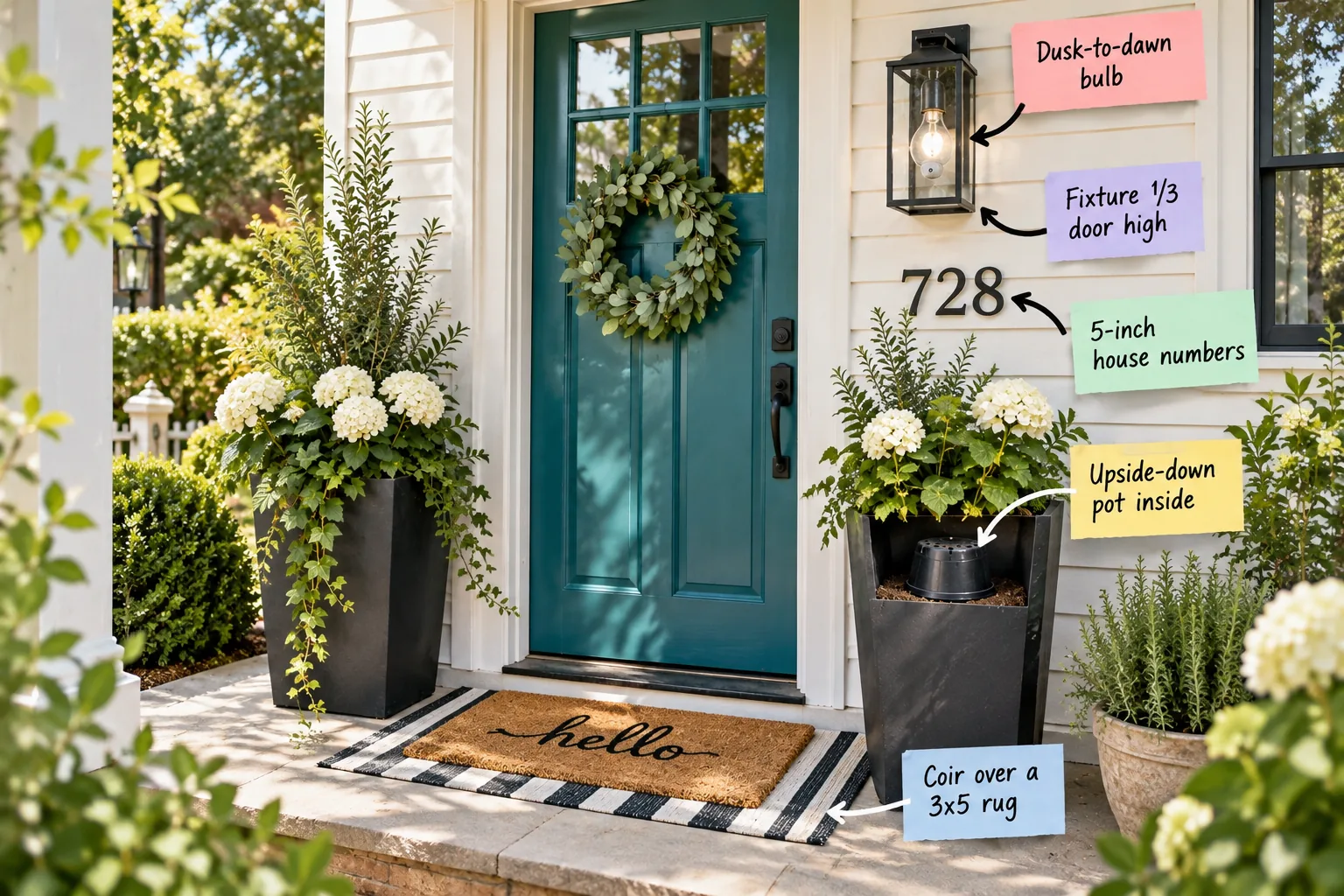
You can confidently scale your outdoor fixtures, layer your welcome mats, and pot large statement planters without wasting soil using our printable Front Entrance Sizing & Shopping Sheet. Grab the chart below to nail your curb appeal proportions without the guesswork.
Sizing the Wall Lantern
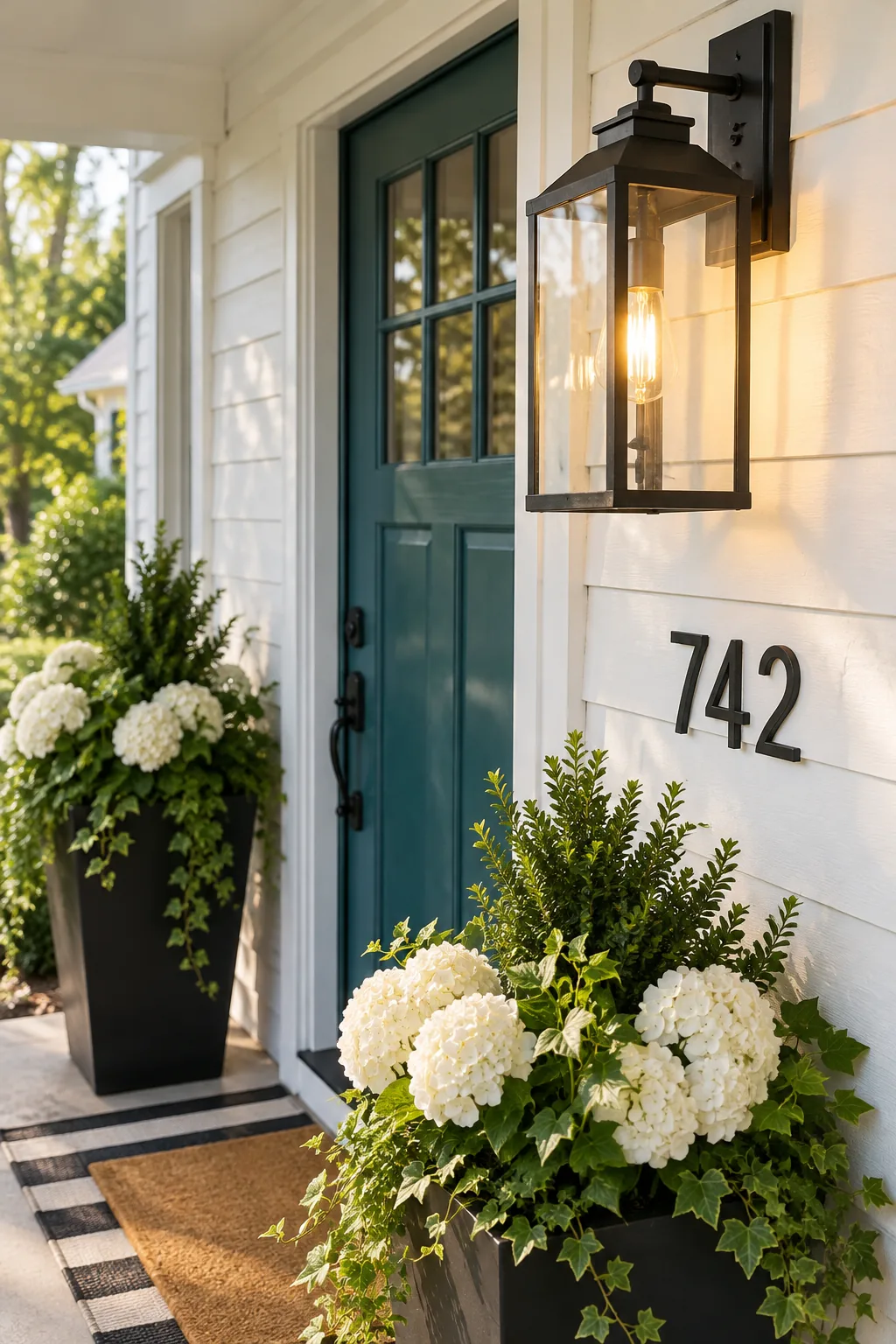
A wall lantern should be approximately 1/3 the height of the door, meaning a standard 80-inch door pairs best with a fixture around 26 to 27 inches tall. I swapped my undersized builder-grade lights for 26-inch lanterns, and the whole facade instantly looked grounded.
Moving from the fixture housing to the electrical placement, getting the mounting height right ensures the larger scale feels intentional rather than overwhelming.
Positioning the Junction Box
The center of your wall lantern should sit roughly 66 inches above the porch floor to align naturally with the top third of the door. Measuring from the threshold guarantees your lighting casts a wide, welcoming glow across the entire entry step.
Choosing the Right Fixture Finish
Matte black or deep bronze finishes provide necessary visual weight that prevents a large glass lantern from fading into light-colored siding. Matching this metal tone to your door hinges creates a cohesive, architecturally planned appearance from the street.
Automating with a Dusk-to-Dawn Bulb
Selecting a dusk-to-dawn bulb with a built-in sensor eye provides automatic evening illumination while keeping a clear glass lantern looking polished.
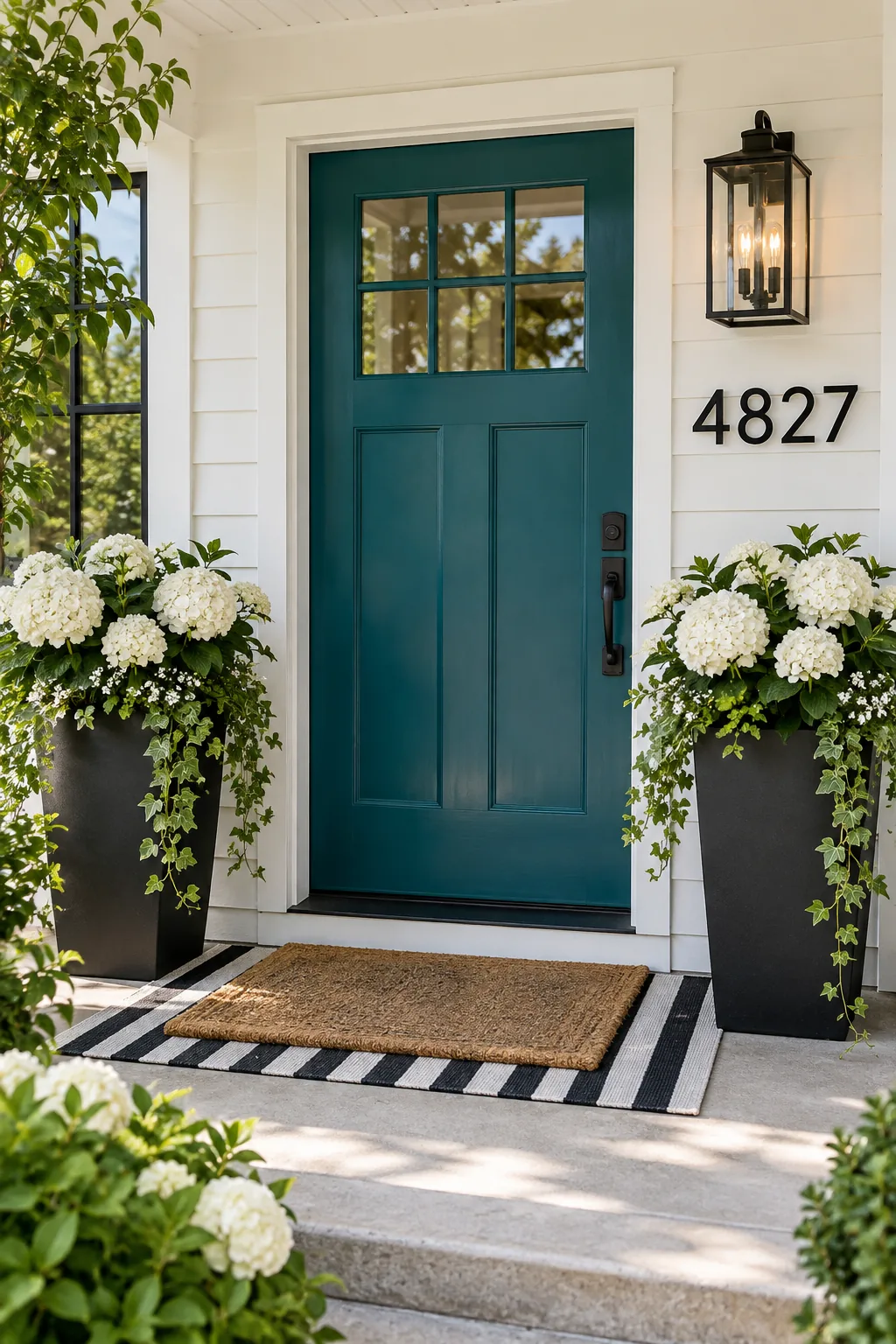
Automatic bulbs are incredibly convenient, but they rely on an unobstructed view of the sun to function properly.
Balancing Light Color Temperature
Outdoor bulbs look best when they emit a warm, inviting glow rather than a harsh blue glare. Select LED bulbs rated at 2700K to 3000K to perfectly mimic the traditional, welcoming look of incandescent porch lights without the high energy draw.
Mounting Visible House Numbers
Street visibility is a safety necessity, making 5-inch house numbers the standard minimum for homes sitting at an average setback.
- Mount digits at eye level so emergency responders spot them immediately.
- Choose high-contrast finishes that stand out clearly against your exterior siding.
- Ensure nearby porch lights cast enough ambient glow to illuminate the metal at night.
Selecting the House Number Font
Clean, sans-serif fonts offer the highest legibility from a moving vehicle, making them the safest choice for modern and transitional homes. Avoid overly ornate scripts that can blur together into unreadable shapes when viewed from more than thirty feet away.
Spacing the Digits Correctly
Leave at least a half-inch of breathing room between each numeral to prevent visual crowding. Proper kerning allows the eye to quickly distinguish individual digits, which is especially important for delivery drivers navigating unfamiliar neighborhoods after dark.
Coordinating Hardware Finishes
Tie your house numbers, door handle, and wall lantern together by sticking to a single, unified metal finish. This deliberate repetition signals a thoughtful exterior design strategy and prevents the entrance from looking like a collection of random weekend upgrades.
Layering the Doormat and Rug
Placing a standard coir over a 3×5 rug creates a substantial, welcoming footprint that perfectly anchors a standard 36-inch wide front door.
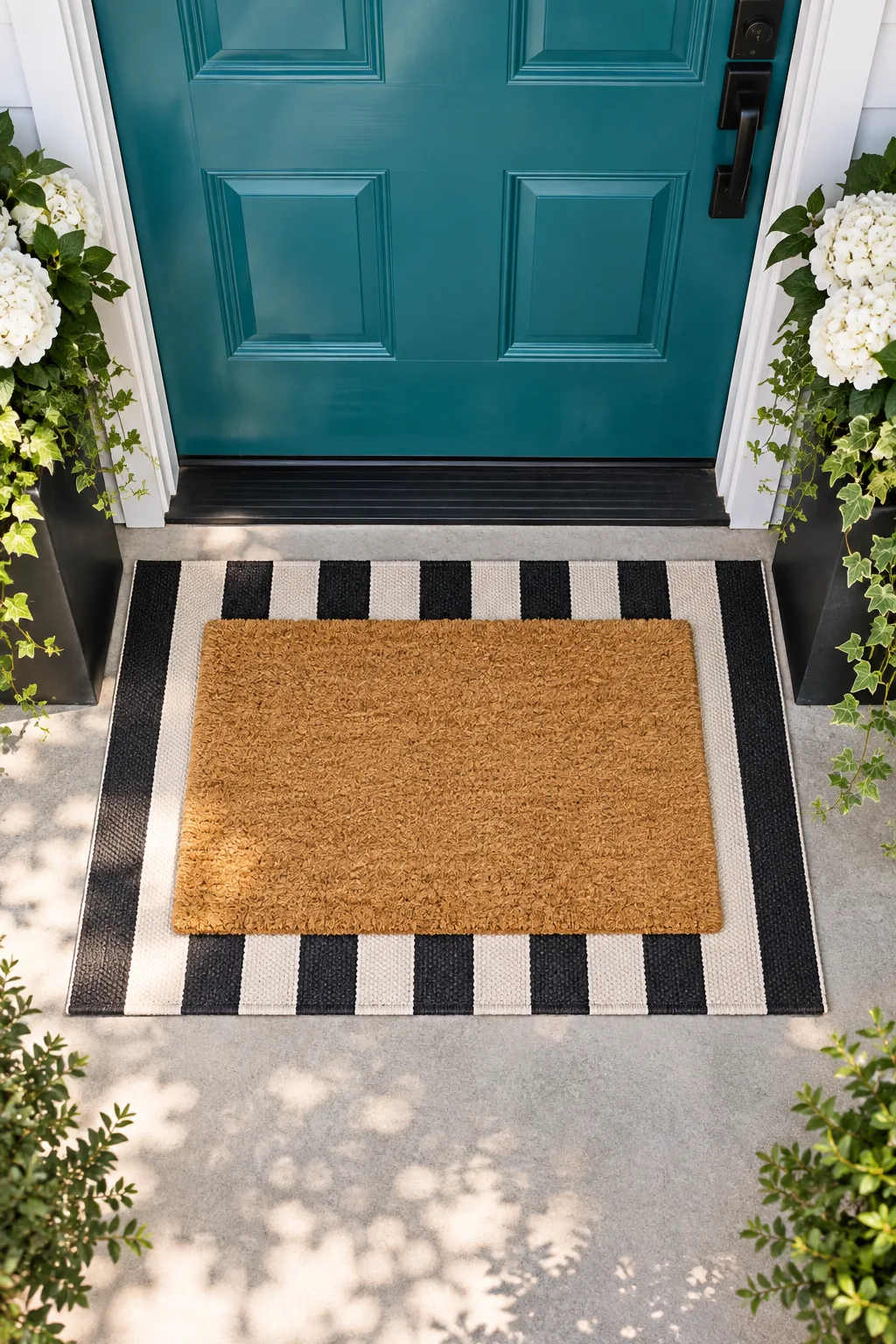
A wider base rug visually extends the threshold, making a narrow concrete porch feel significantly more expansive and inviting.
Selecting an Outdoor Base Rug
Choose a base rug woven from durable polypropylene rather than cotton to prevent mold growth on shaded porches. A bold geometric or striped pattern adds necessary contrast against the solid, earthy texture of the natural coir mat layered above it.
Maintaining Coir Mat Longevity
Shedding is inevitable with natural fibers, but keeping the mat out of direct rainfall extends its lifespan significantly. Give the coir a vigorous shake over the lawn every two weeks to dislodge embedded dirt and keep the bristles standing upright.
Framing the Doorway Symmetrically
Once your layered mats establish a strong center, flanking the door with identical statement planters completes the balanced symmetry. Matching containers draw the eye directly to the entrance, creating a classic, structured look that enhances any architectural style.
The Secret Hollow Planter Trick
For tall porch planters, placing an upside-down pot inside acts as a hollow riser that takes up empty space before any soil is added.
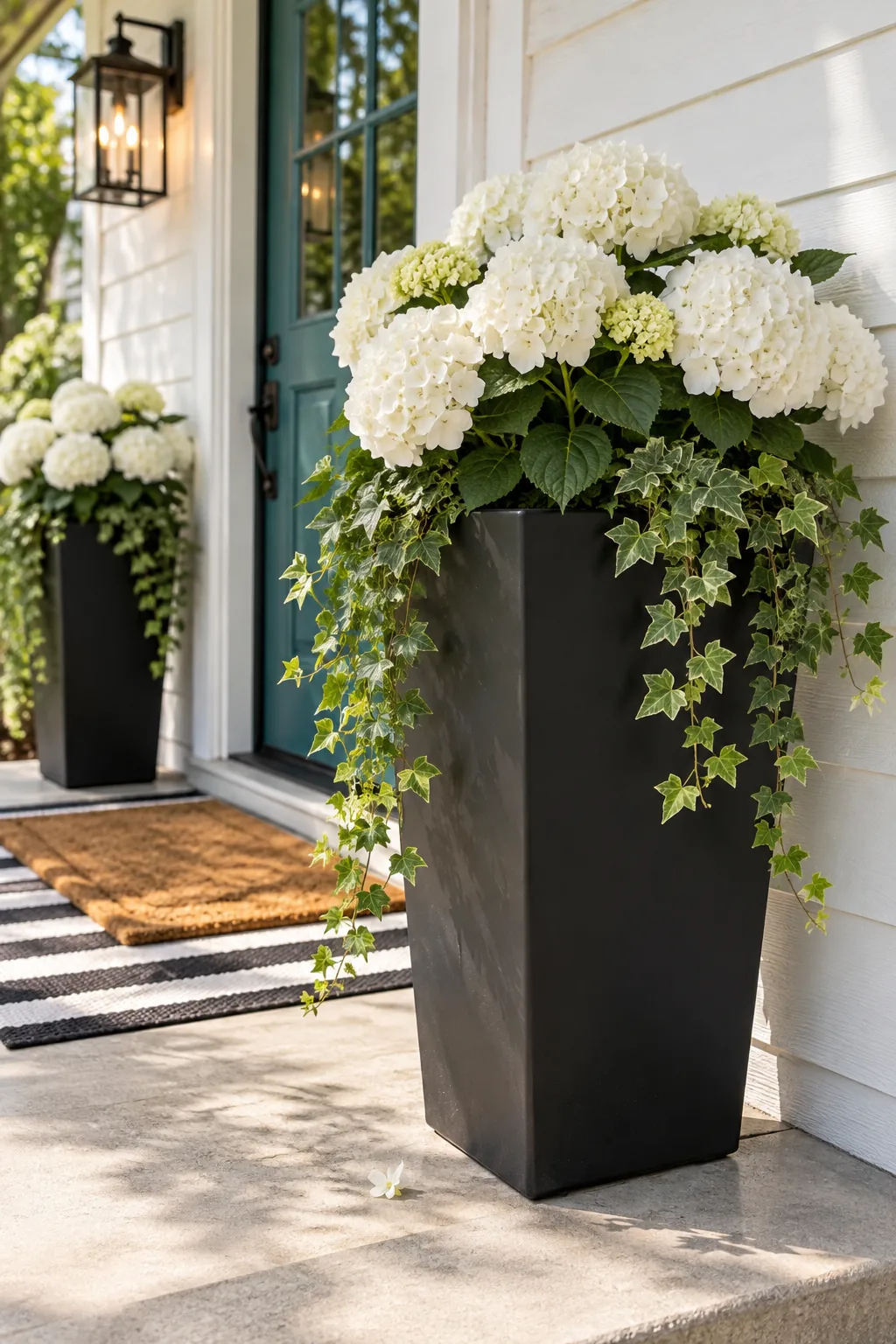
This simple structural trick fundamentally changes how the container performs, turning an impossibly heavy concrete vessel into a manageable design element.
Sizing the Internal Riser
Select a plastic nursery pot that leaves at least four inches of clearance around the interior walls of your decorative container. This gap ensures roots have enough room to expand downward while still significantly reducing the total volume of required fill.
| Planter Height | Nursery Pot Riser | Soil Required |
|---|---|---|
| 24 inches | 10-inch pot | 1.5 cubic feet |
| 30 inches | 12-inch pot | 2.0 cubic feet |
| 36 inches | 14-inch pot | 2.5 cubic feet |
Managing Soil and Drainage
A hollow base saves money on potting soil, keeps the planter light, and creates a massive drainage void to prevent root rot. When I first used this method on a client’s Denver porch, we entirely eliminated their winter freezing issues.
Choosing the Right Potting Mix
Fill the remaining top space with a lightweight, moisture-retaining potting mix rather than dense garden soil. A quality mix containing perlite ensures excess water flows quickly down past the root zone and into the empty void created by your plastic riser.
Securing the Riser Structure
If your decorative planter is slightly wider at the base, weigh down the inverted nursery pot with a single brick before adding soil. This prevents the lightweight plastic riser from shifting off-center during heavy summer rainstorms or aggressive watering sessions.
Seasonal Planter Updates
Because your tall planters are no longer weighed down by a hundred pounds of wet dirt, updating them for the holidays takes only minutes.
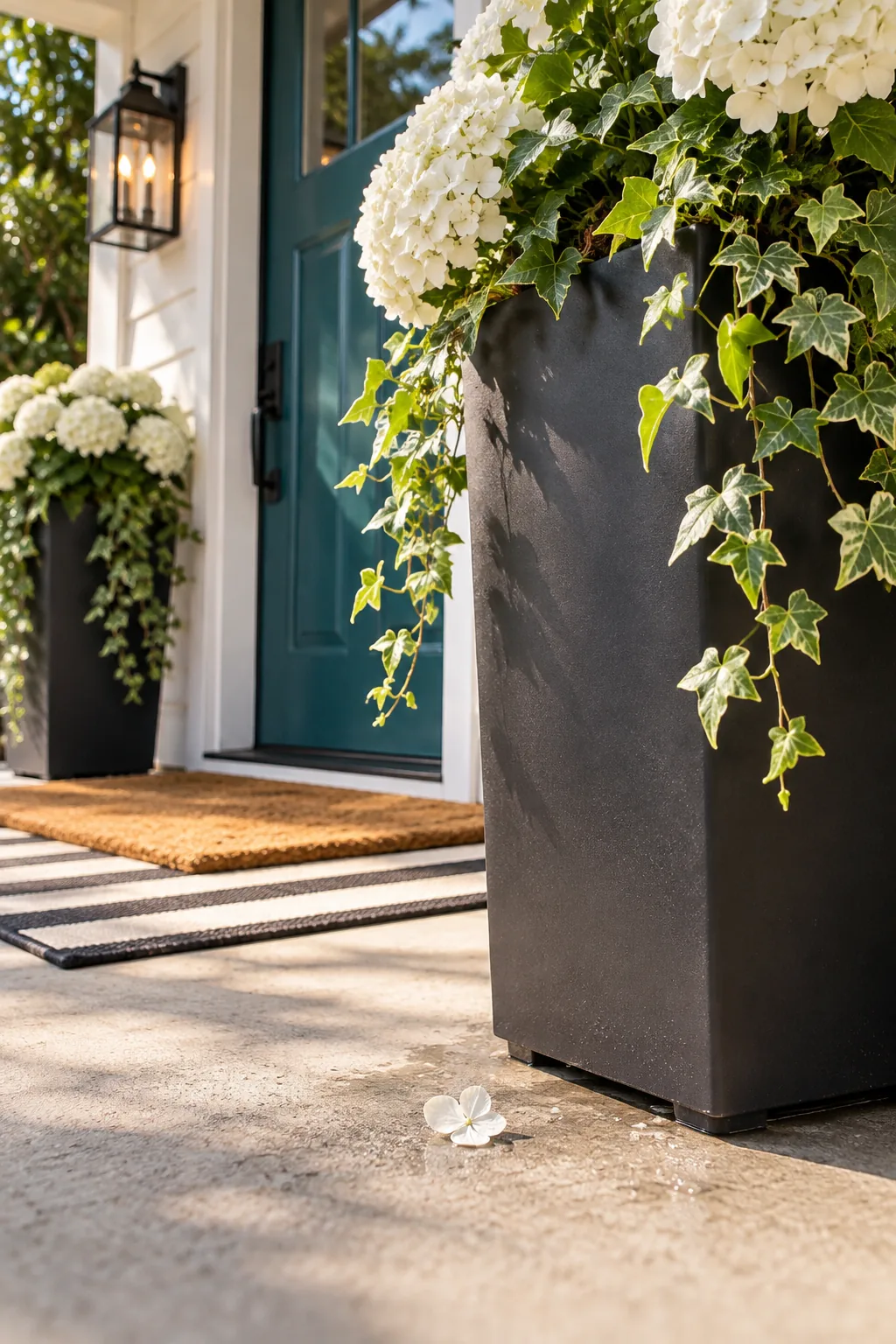
Before dropping in your new seasonal arrangements, a quick maintenance sweep ensures everything stays healthy and structurally sound.
Winterizing Your Containers
The large air gap created by the upside-down pot gives freezing water room to expand without cracking expensive ceramic or concrete planters. Simply remove dead summer annuals and fill the top layer with evergreen boughs to keep the soil insulated.
Watering Tall Planters Efficiently
Focus your watering can directly at the base of the plants rather than soaking the entire soil surface. Because the container holds less overall dirt, it dries out slightly faster, making targeted watering essential for keeping summer blooms vibrant.
Your Front Entrance Sizing Sheet
Grab our printable Front Entrance Sizing Sheet to confidently execute all these measurements, from lantern scale by door height to exact planter fill quantities. I keep this exact one-page chart pinned above my studio desk whenever specifying exterior finishes.
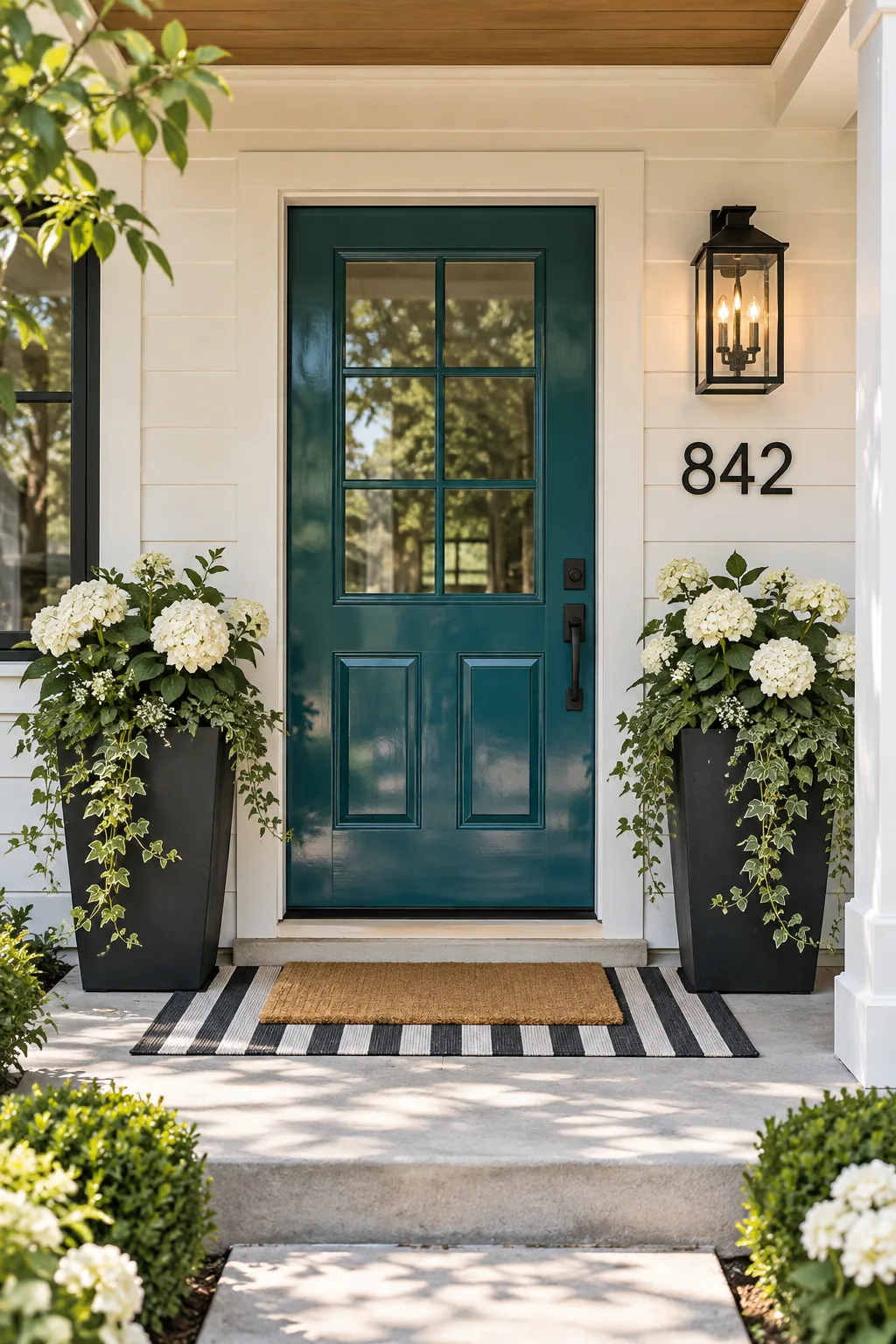
Print your copy today to take the guesswork out of your curb appeal upgrades and get your proportions right the first time.
5 Ways to Style a Welcoming Front Entrance
Find the perfect color palette and fixture combination to match your home's unique architecture.
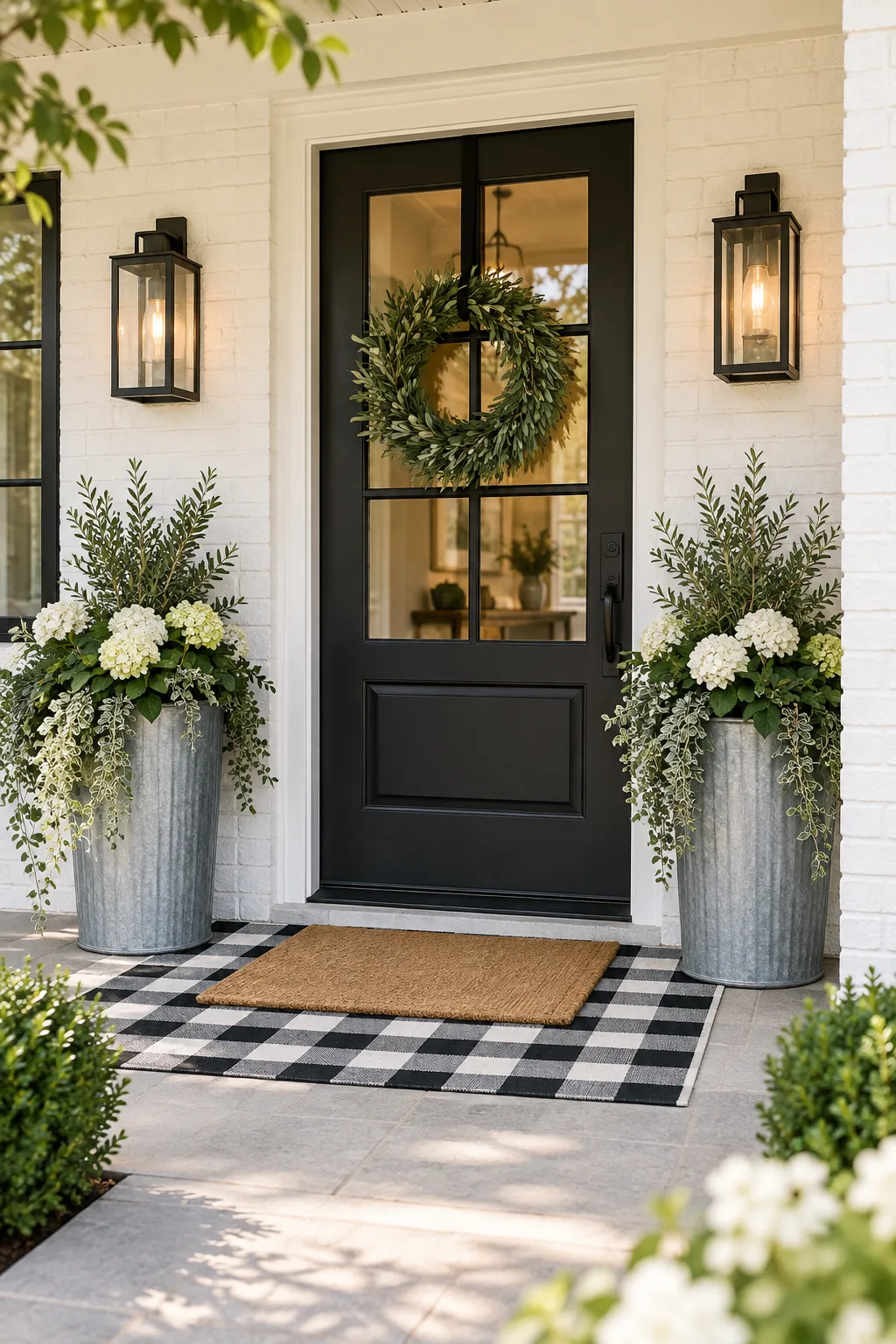
Crisp Modern Farmhouse: High-contrast black and white details pop beautifully against rustic galvanized metal planters.
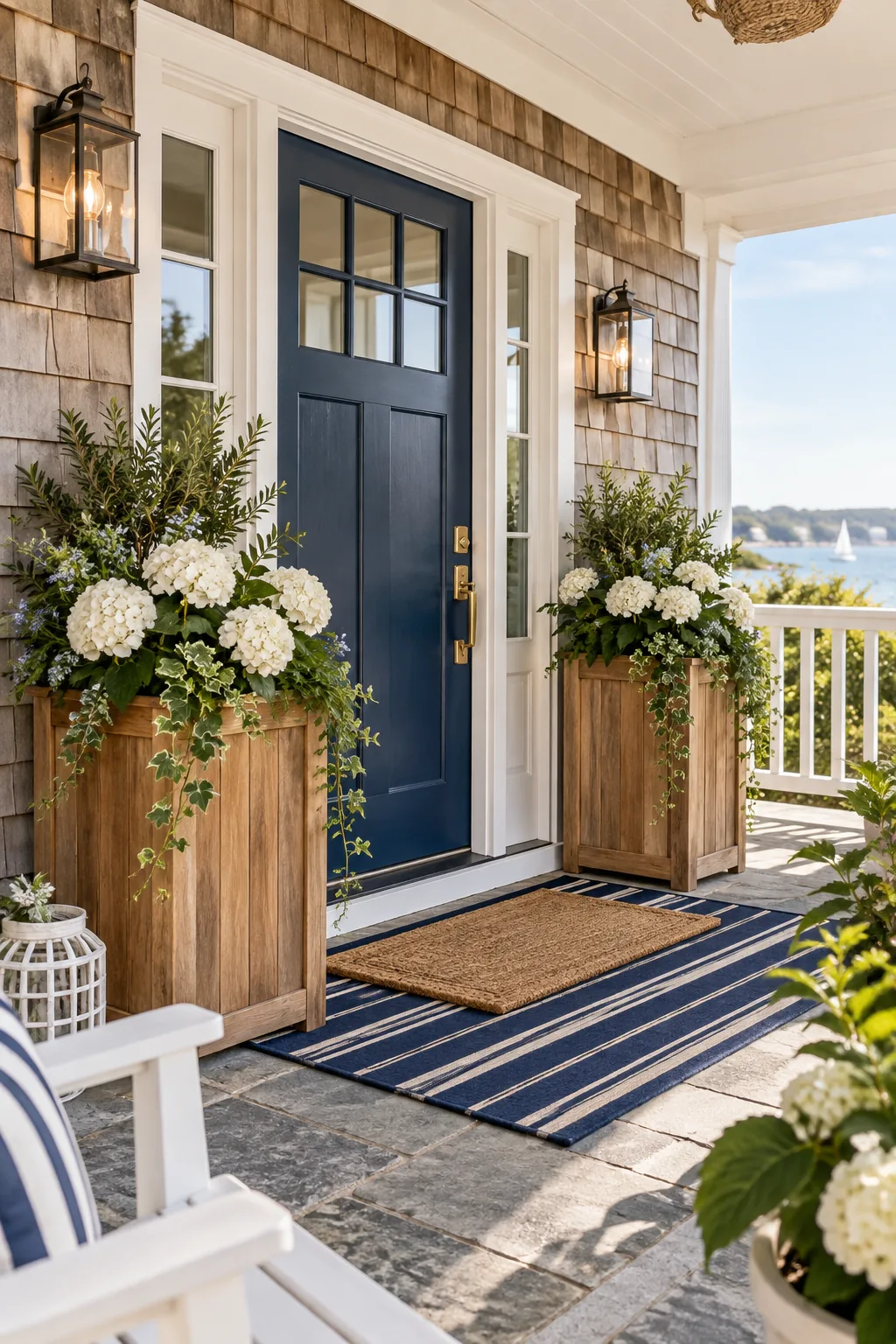
Breezy Coastal Cottage: Weathered wood and deep navy accents bring an effortless seaside feel to the porch.
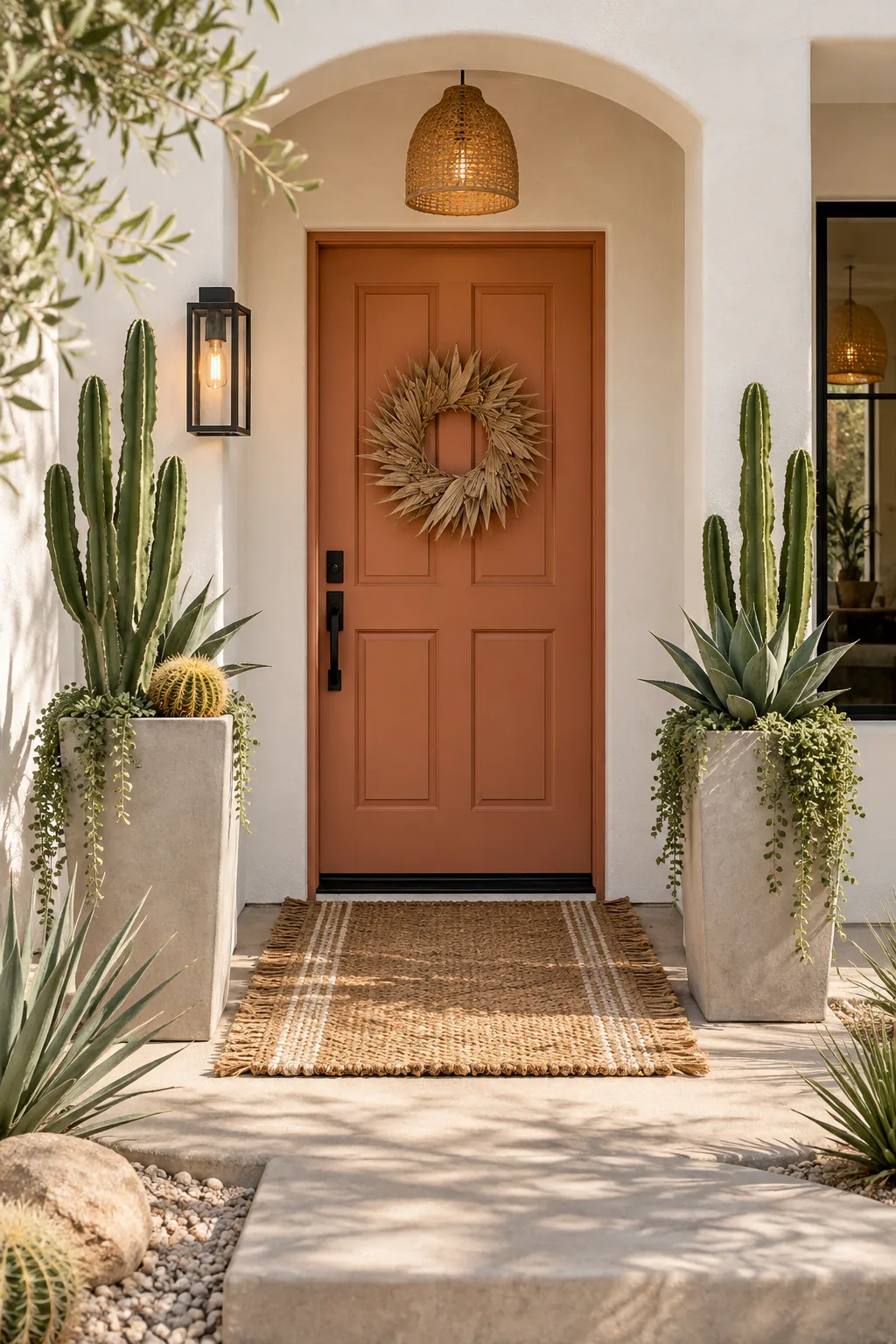
Warm Desert Boho: Earthy terracotta tones and structural cacti thrive against smooth, sun-bleached stucco walls.
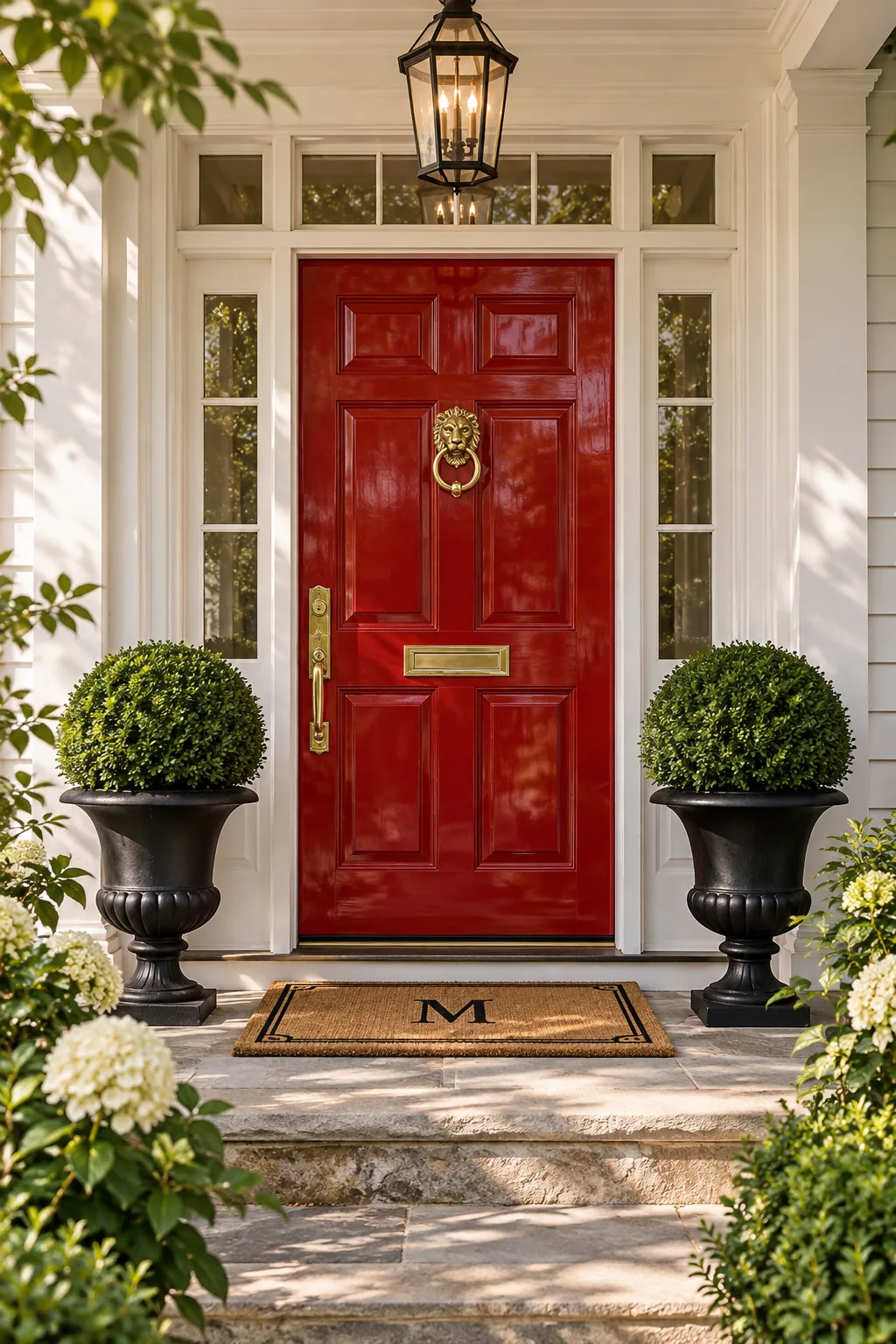
Timeless Classic Traditional: A glossy red door and manicured boxwoods deliver an undeniably elegant, welcoming first impression.
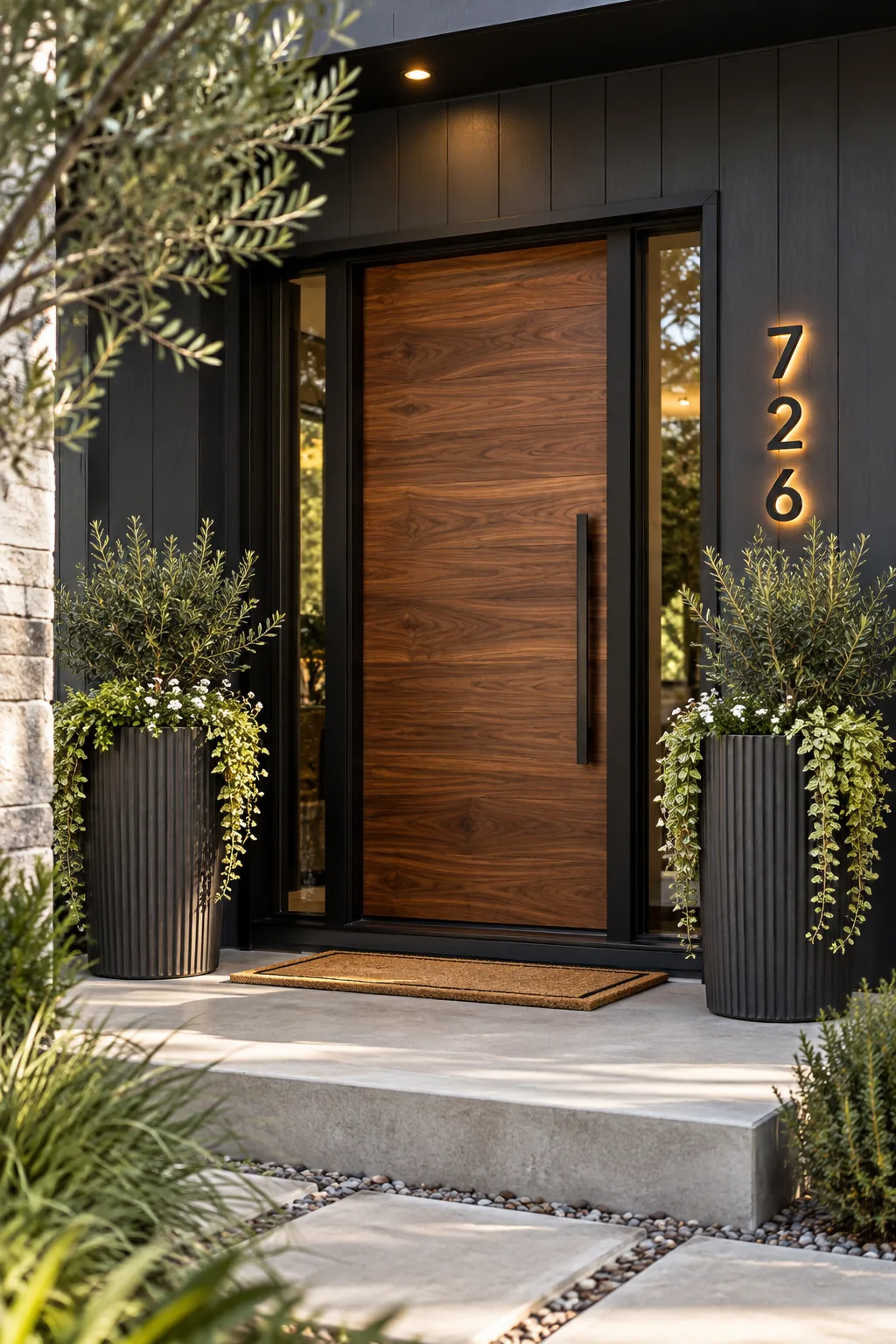
Sleek Minimalist Contemporary: Warm walnut wood softens the sharp, clean lines of dark charcoal siding and ribbed planters.