
Cozy White Bedroom Guide & Warm White Paint Cheat Sheet
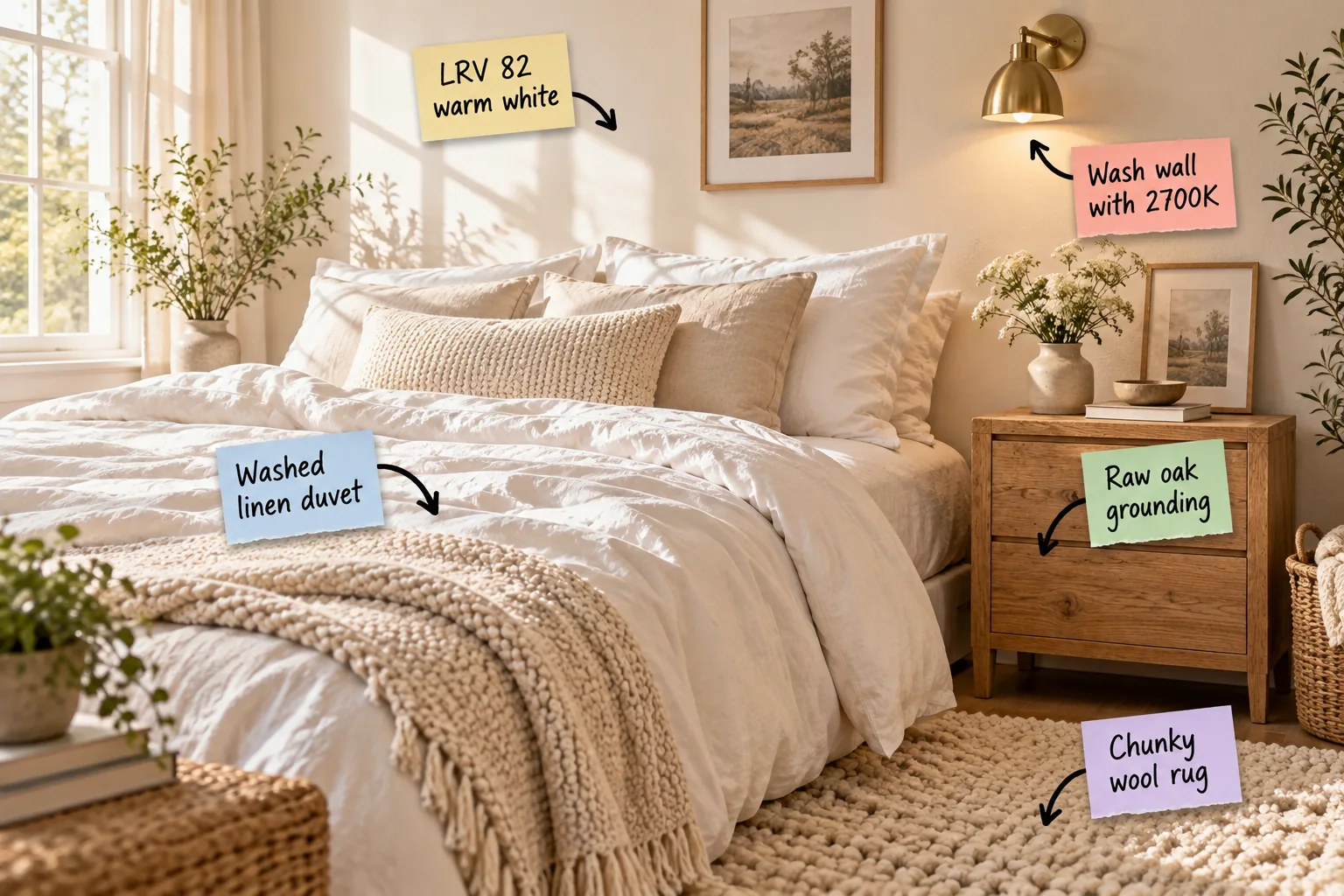
Skip the sterile, clinical look and use our warm white paint cheat sheet to find the perfect shade and layer cozy textures for your bedroom. You will be able to select the exact LRV 82 warm white paint and balance it with raw oak and linen to build an inviting retreat.
Finding the Perfect LRV 82 Warm White
Light Reflectance Value measures how much ambient light a color bounces back into your space, and an LRV around 82 is the absolute sweet spot for bedrooms. This specific value reflects enough light to feel bright but retains enough pigment to stay soft.
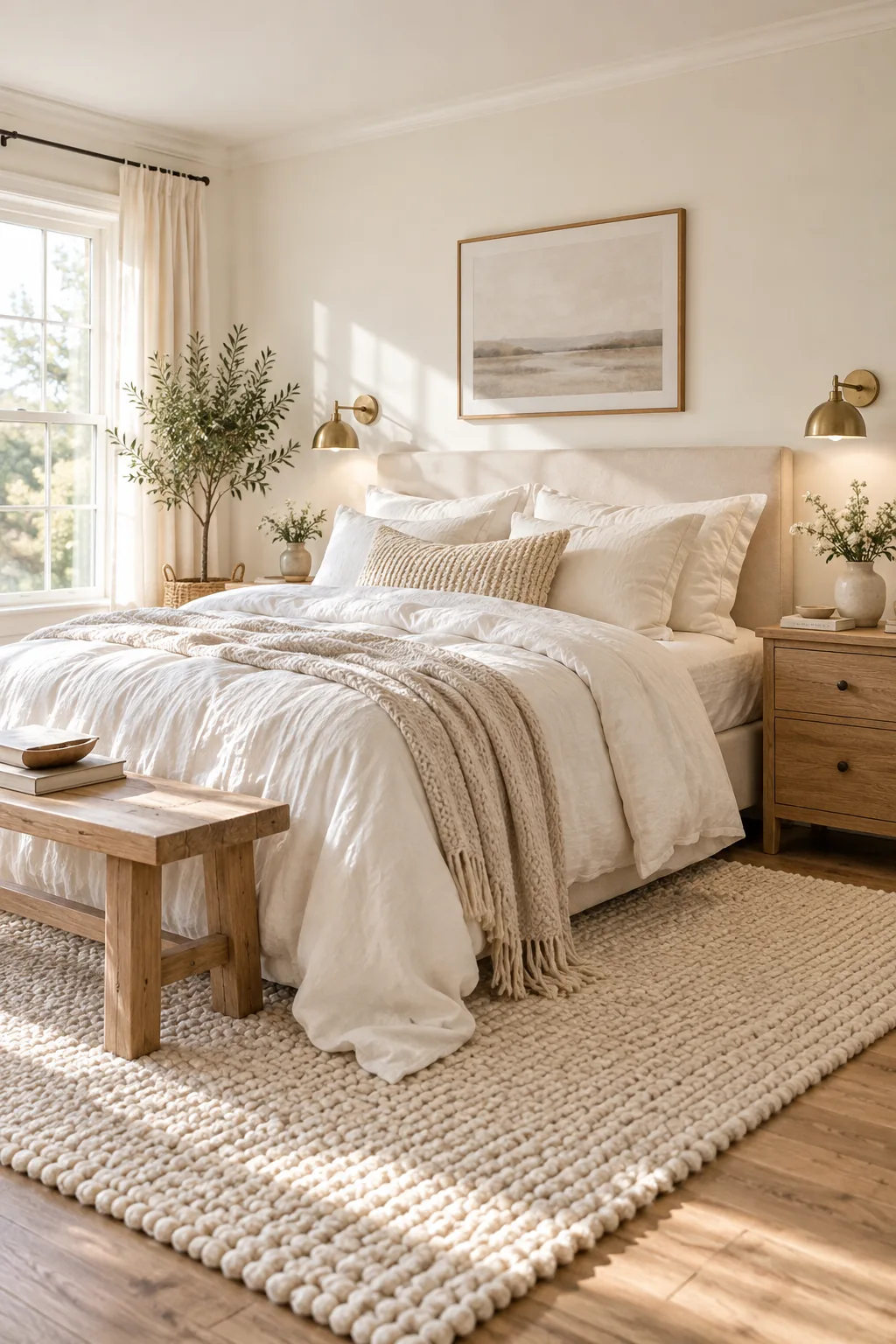
Choosing a paint with this exact reflectance prevents the walls from feeling like a stark hospital corridor when the morning sun hits. We must verify how this technical measurement behaves in your specific environment before moving forward.
Testing Paint Light Reflectance
Paint chips at the hardware store are illuminated by harsh fluorescent bulbs that completely misrepresent how an LRV of 82 performs in residential spaces. You must observe the color as the sun moves across your specific geographical orientation.
| Room Exposure | Light Quality | Recommended Undertone |
|---|---|---|
| North-Facing | Cool, bluish indirect light | Strong yellow or beige |
| South-Facing | Warm, intense direct light | Subtle pink or neutral |
| East-Facing | Bright morning, dark afternoon | Balanced cream |
| West-Facing | Shadowy morning, warm evening | Earthy beige or sand |
Understanding your room’s natural exposure is the only reliable way to predict how your chosen warm white will shift throughout the day. This brings us directly to the specific shades that work best.
Your Warm White Paint Cheat Sheet
In my own Denver home, I learned that high-altitude light turns neutral whites icy, so I rely on this warm white paint cheat sheet to spot hidden pink or yellow undertones. Knowing whether your light brings out warmth or ash dictates your choice.
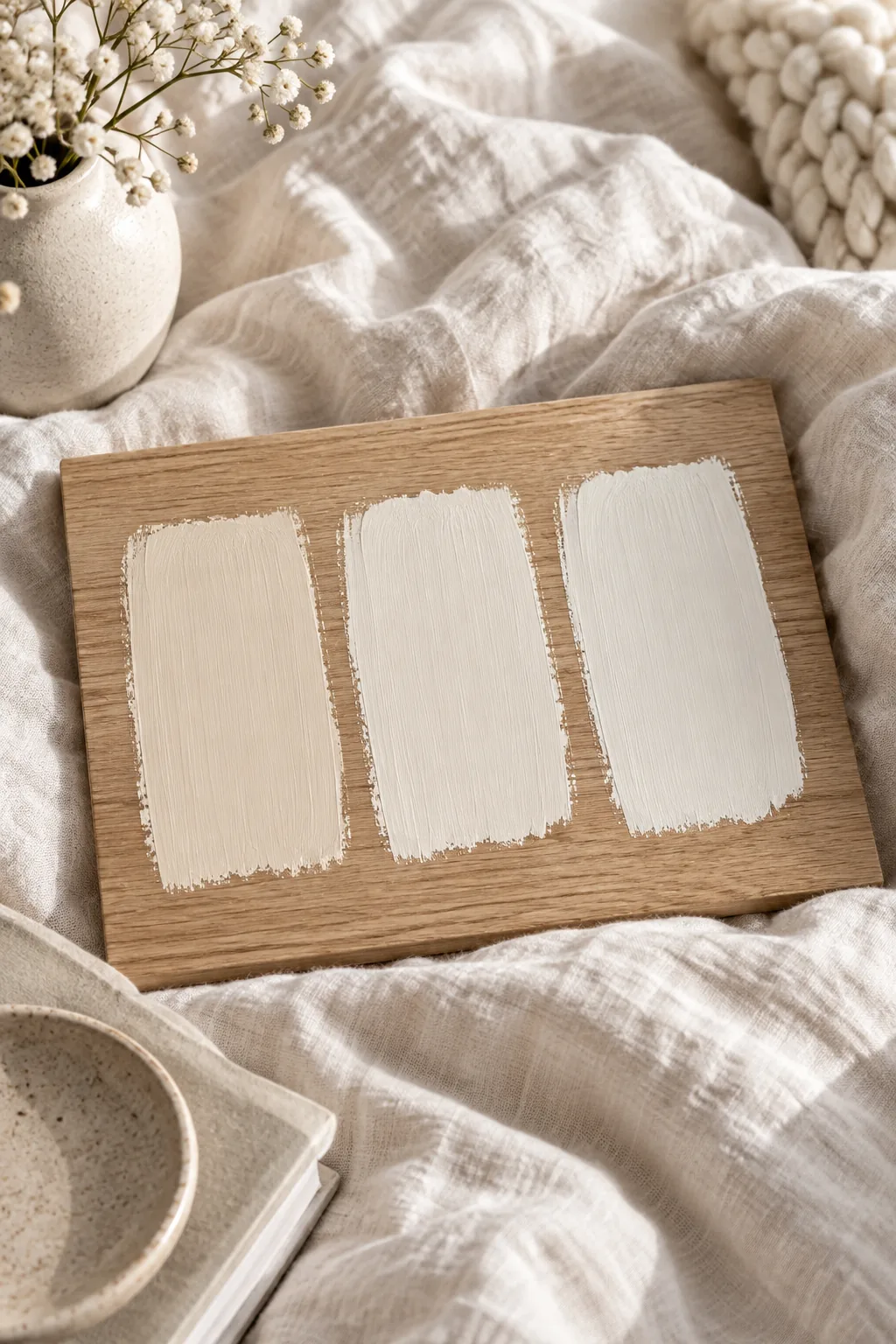
Before you commit to a gallon, run your top cheat sheet picks through this quick testing process in your actual bedroom.
Washing the Walls With 2700K Light
Your perfectly chosen paint will fall flat if you do not wash the wall with 2700K light once the sun goes down. This soft white color temperature casts a warm glow that enhances the creamy undertones rather than washing them out.
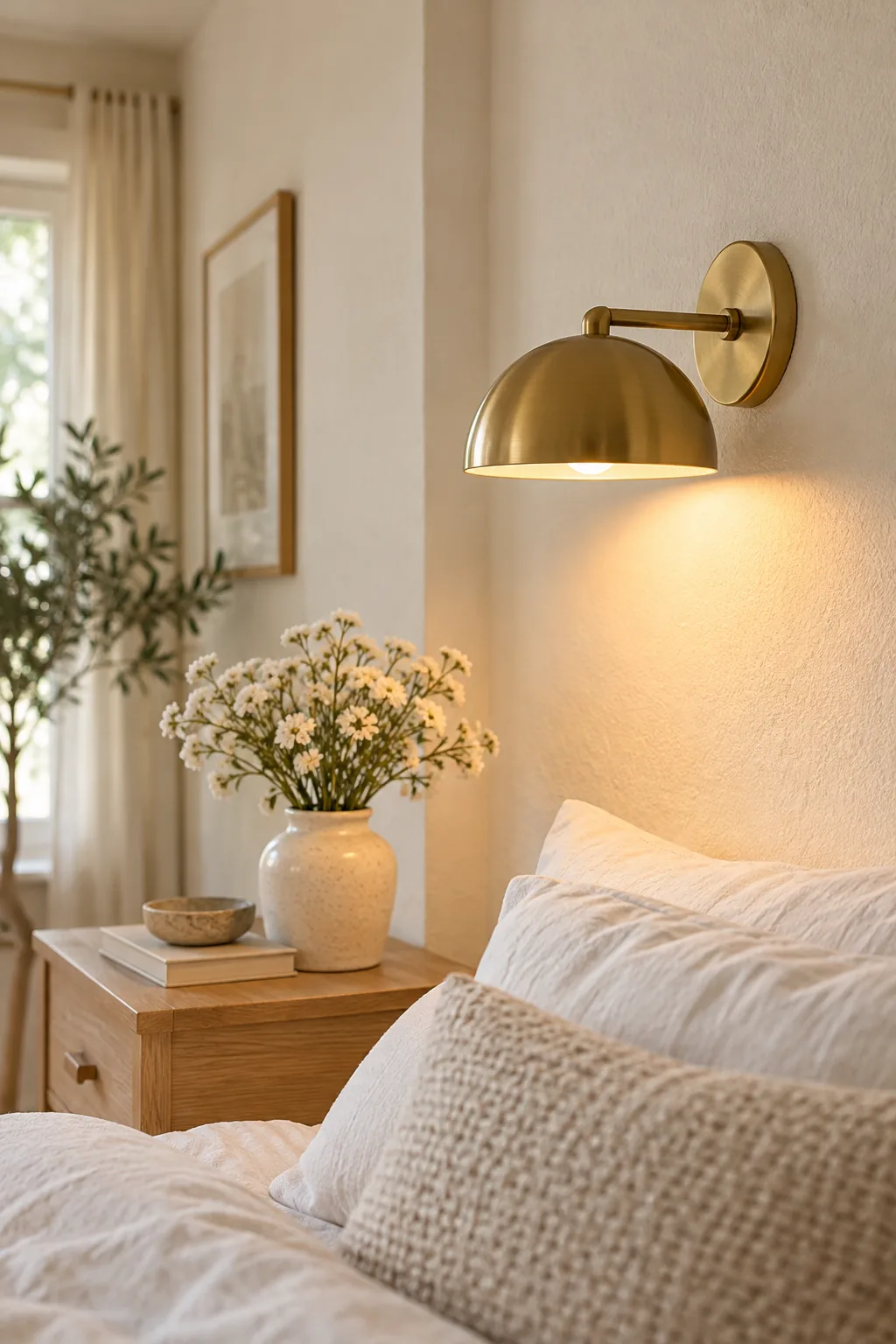
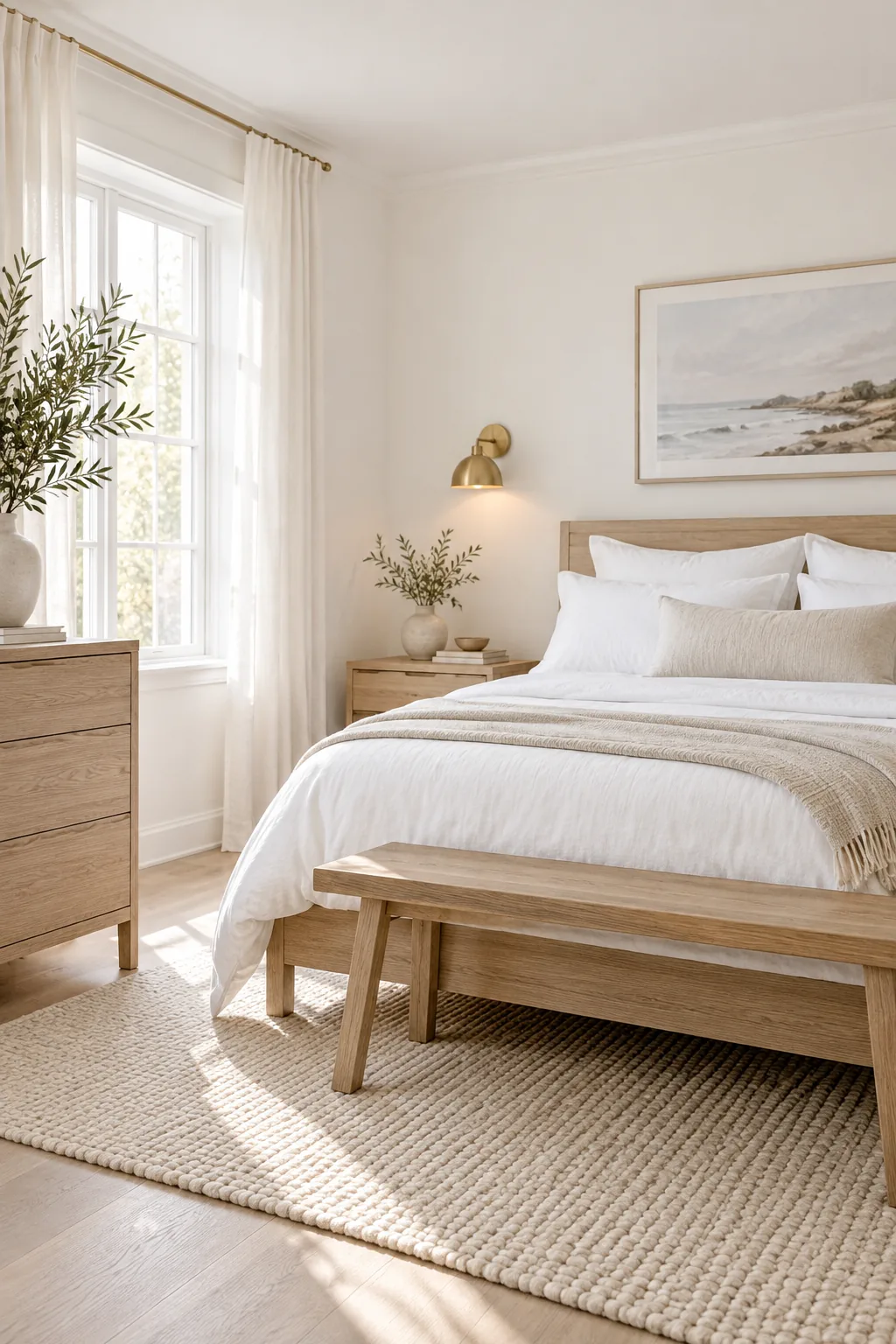
A brass wall sconce acts as a beautiful amplifier for this temperature, bouncing golden reflections across your freshly painted surface. We can now introduce the physical materials that will anchor this luminous foundation.
Selecting the Right Sconce Placement
Mounting your brass sconces at the correct height is critical for achieving that perfect wall wash without glaring directly into your eyes while in bed. Position the center of the fixture exactly 60 inches from the floor for optimal light distribution.
- Measure 60 inches from the finished floor to the sconce junction box.
- Ensure the fixture sits at least 8 inches inward from the edge of the mattress.
- Install a dedicated dimmer switch within arm’s reach of the pillows.
This precise placement ensures the 2700K bulbs cast a gentle, grazing light over the wall rather than a harsh spotlight. With the lighting established, we need heavy materials to ground the airy space.
Grounding the Room With Raw Oak
To break up a monochromatic palette, you need raw oak grounding to anchor the room and provide necessary visual weight. The natural grain and medium tone of an oak nightstand keep the bright space from feeling entirely weightless.
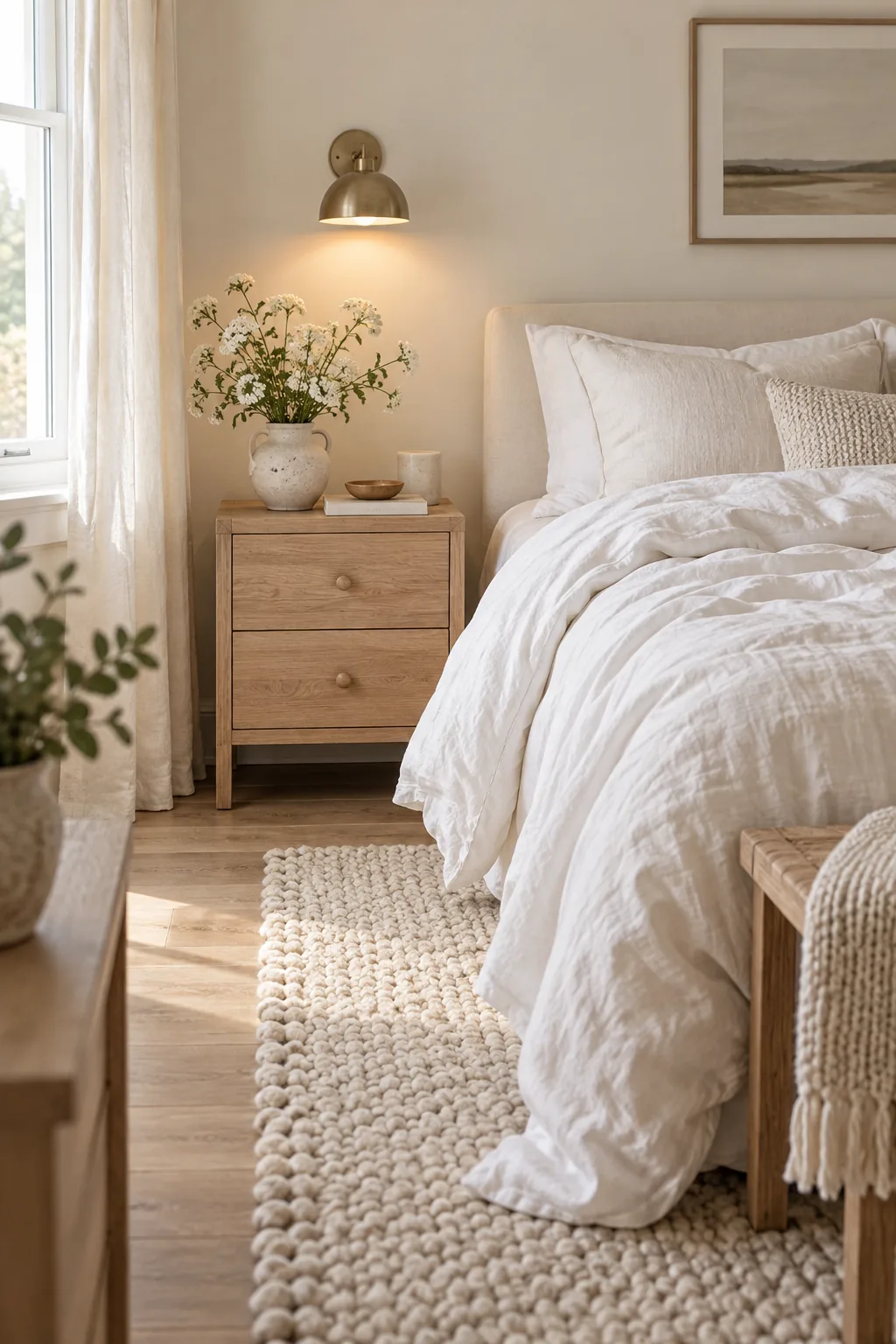
Wood introduces a rigid, architectural element that beautifully contrasts with the softer textiles we will layer next. Moving from hard surfaces to soft fabrics is where the bedroom truly becomes a sanctuary.
Choosing the Right Wood Tone
Avoid dark walnut or cherry finishes, which create too harsh of a contrast against the LRV 82 walls and disrupt the serene atmosphere. Raw, unstained white oak offers a gentle, sandy tone that harmonizes perfectly with creamy paint.
Draping the Bed in Washed Linen
In my recent client projects, I always insist on a washed linen duvet because it instantly cures the stiff, hotel-bed syndrome. The natural, rumpled texture prevents the bed from looking flat, adding an essential layer of relaxed comfort.
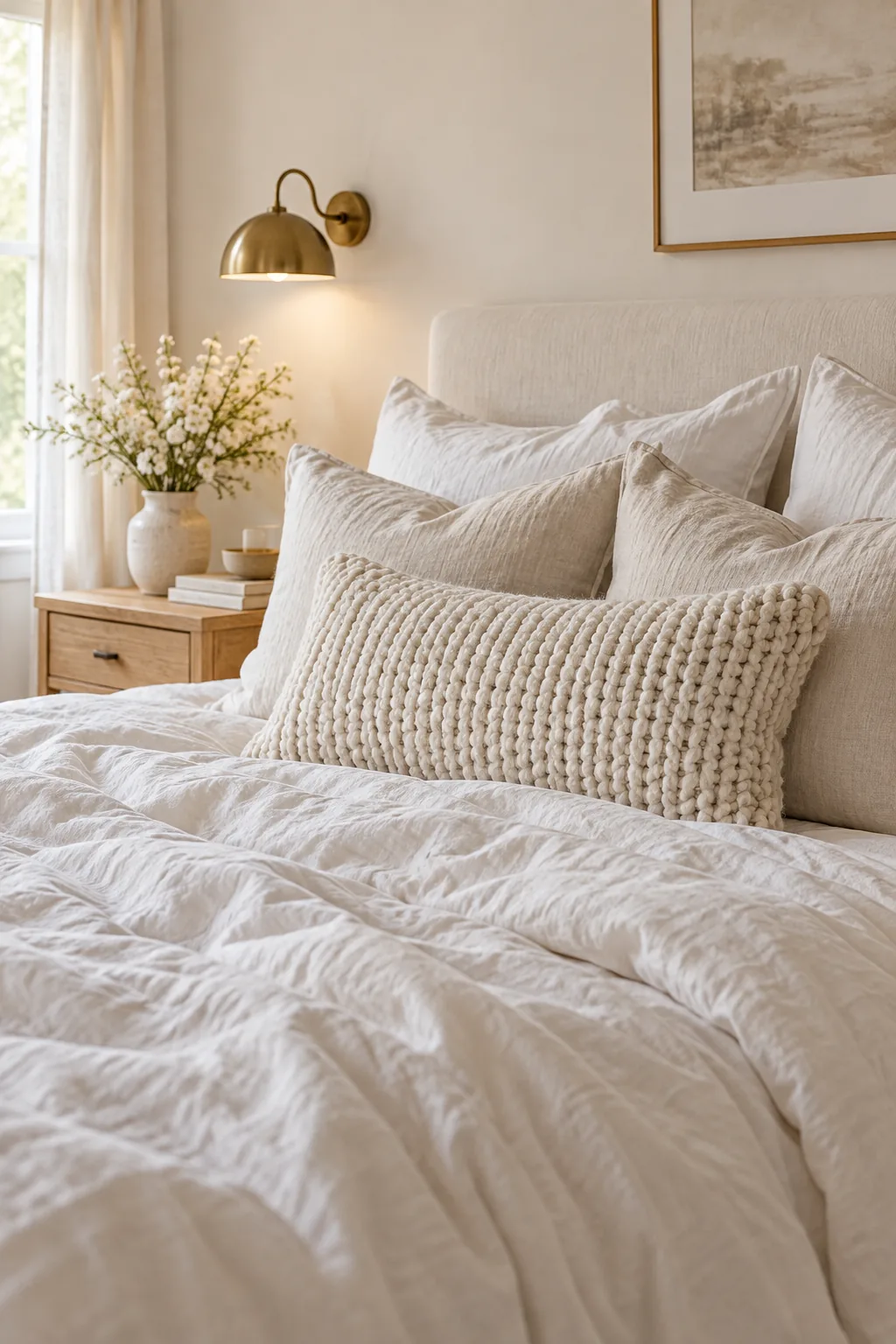
This effortless draping sets a casual foundation that practically begs you to dive in at the end of the day. Once the main coverlet is established, you can start building dimension at the headboard.
Managing Linen Care
Embrace the wrinkles, as ironing washed linen completely defeats its textural purpose and flattens the cozy aesthetic we are building. Simply wash the duvet cover in cold water and tumble dry on low to maintain that perfectly undone, organic appearance.
Layering Tonal Accent Pillows
I keep the pillows in my own bedroom within the same tonal family of beige, cream, and off-white to build depth without introducing jarring colors. Mixing a chunky knit lumbar with smooth linen shams creates instant tactile interest.
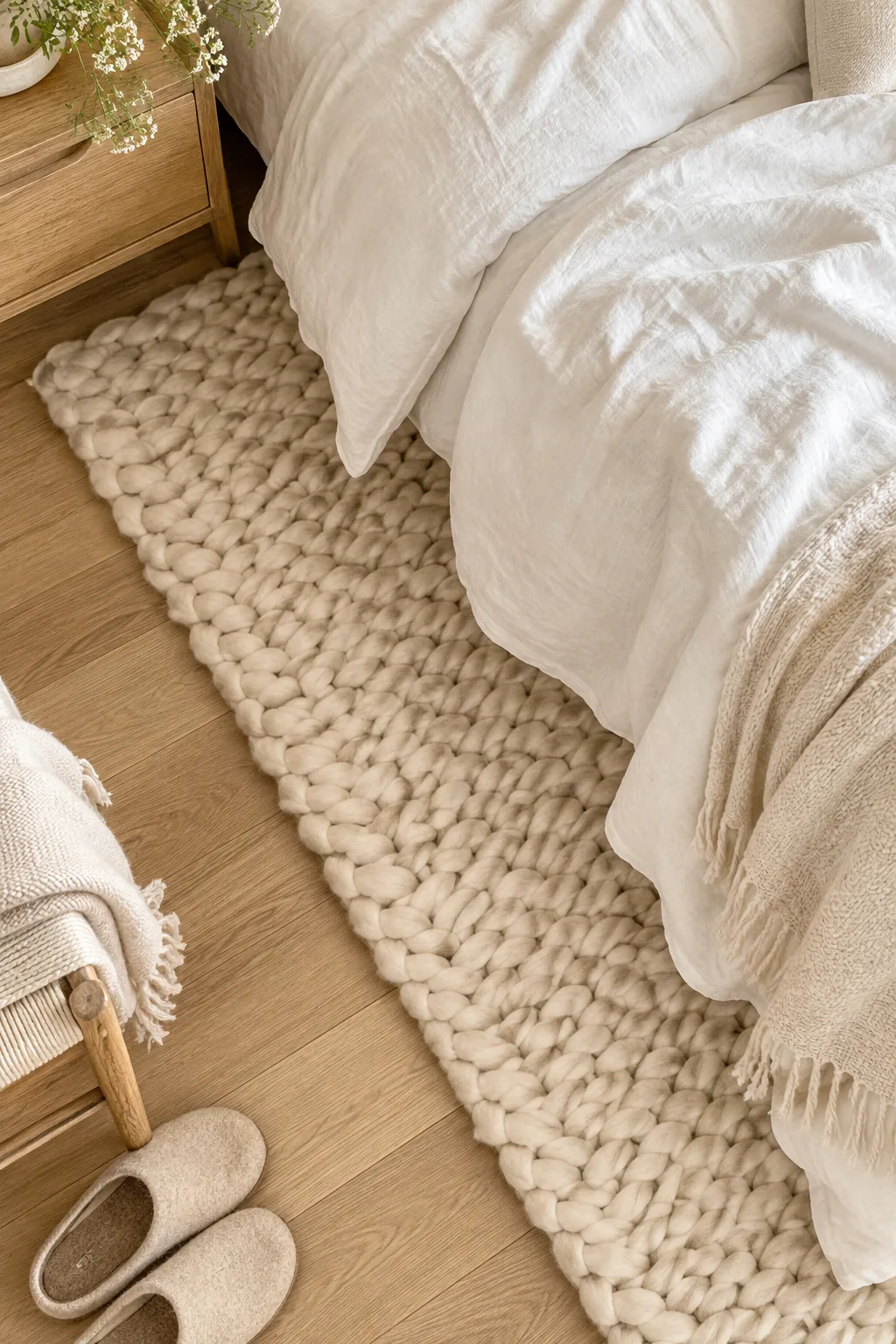
Keeping the contrast strictly textural rather than colorful maintains the serene, uninterrupted visual flow across the bed. With the mattress fully dressed, we must address the final tactile layer underfoot.
Sizing the Lumbar Accent
For a king-sized bed, use a single extra-long lumbar pillow measuring at least 14 by 36 inches rather than multiple small squares. This elongated shape spans the width of the sleeping area, simplifying the bed-making process while looking incredibly intentional.
Softening the Floor With Chunky Wool
A chunky wool rug anchors the bed frame and adds a heavy, dense texture to contrast the lightweight linen above. You should extend the rug at least 24 inches around the sides and foot of the bed for a soft landing.
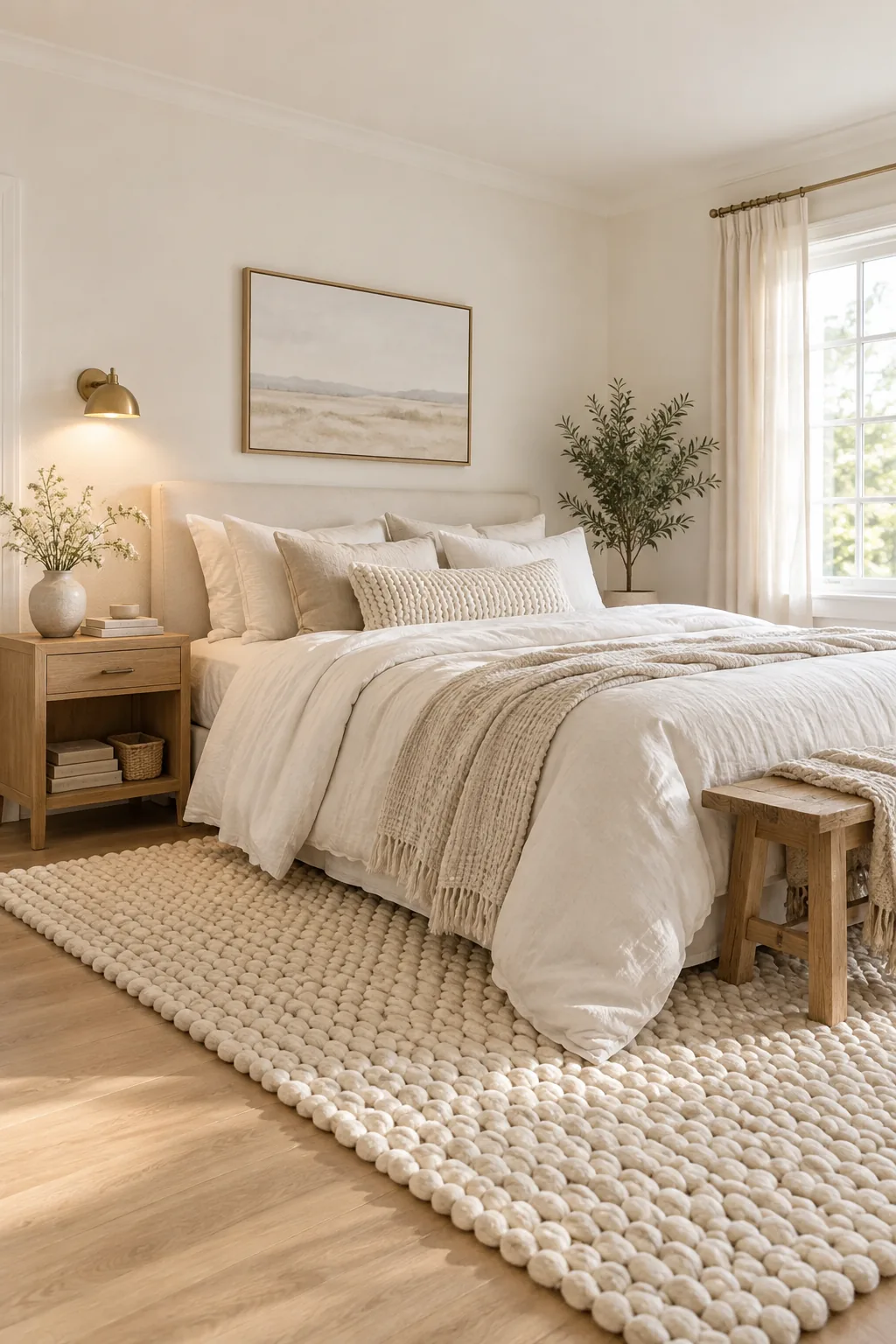
This generous border ensures your feet meet warmth every morning rather than cold hardwood, cementing the cozy experience. Pulling all these individual textures together requires a simple mathematical approach to proportion.
Securing the Wool Layer
Always place a solid, quarter-inch felt rug pad beneath your chunky wool rug to prevent slipping and protect your hardwood floors. This hidden layer adds crucial cushioning that makes the natural wool fibers feel twice as plush under bare feet.
More Ways to Style a White Bedroom
If warm and cozy isn't your only goal, explore these distinct white bedroom variations.
Minimalist Scandinavian Retreat: Swap warm tones for cool, crisp whites and smooth ash wood to achieve a minimalist Scandinavian retreat.
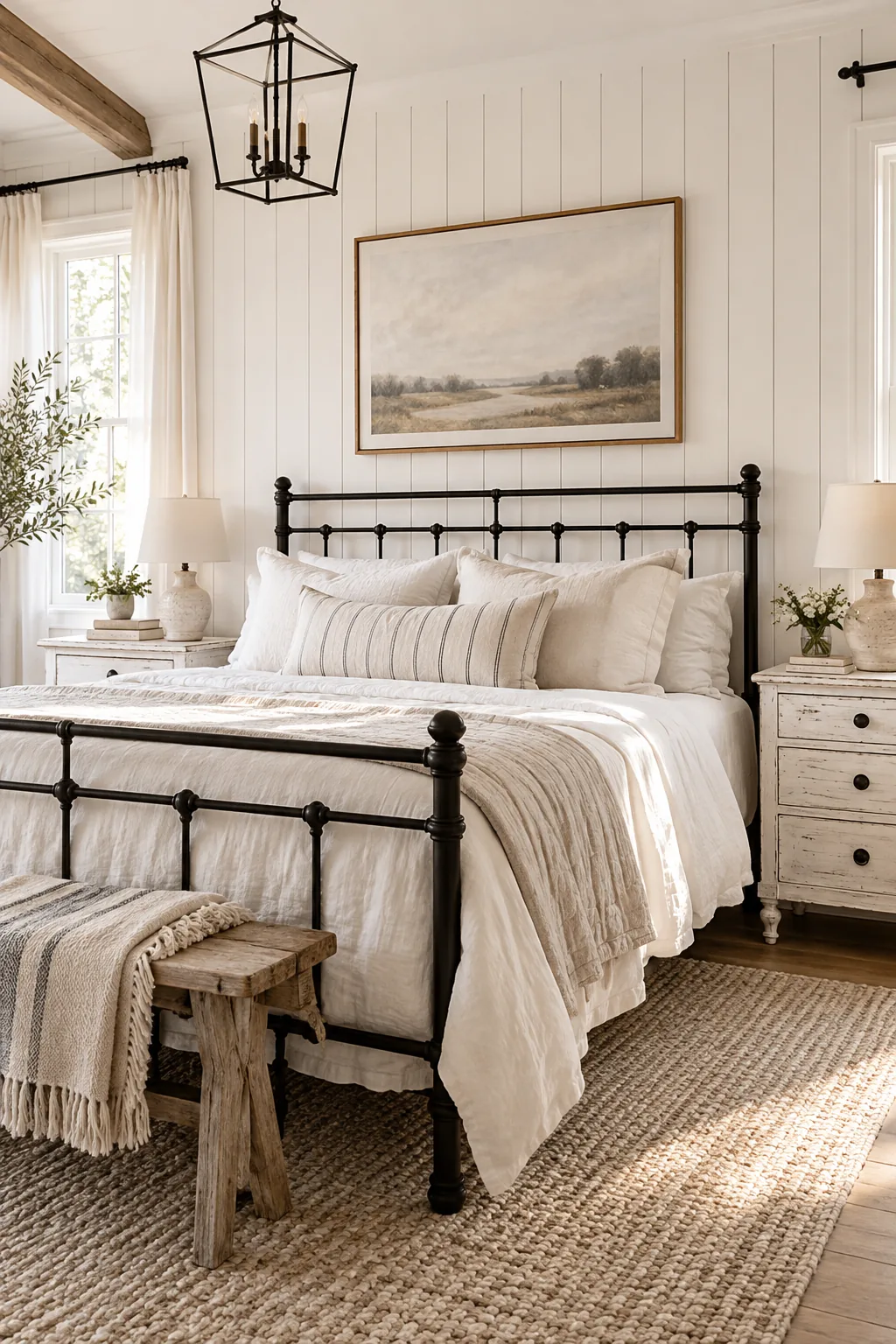
Structured Modern Farmhouse: Introduce vertical shiplap and matte black iron fixtures to give your white bedroom a structured, modern farmhouse edge.
Breezy Coastal Serenity: Pair bright white linen with natural woven rattan and subtle sea-glass accents for a breezy coastal atmosphere.

Balancing the Elements for a Cozy Finish
Synthesize the entire room using the 60-30-10 rule to guarantee a balanced, harmonious space that feels professionally designed. Aim for 60% warm white foundation, 30% textural layers like linen and wool, and 10% grounding accents like raw oak and brass.
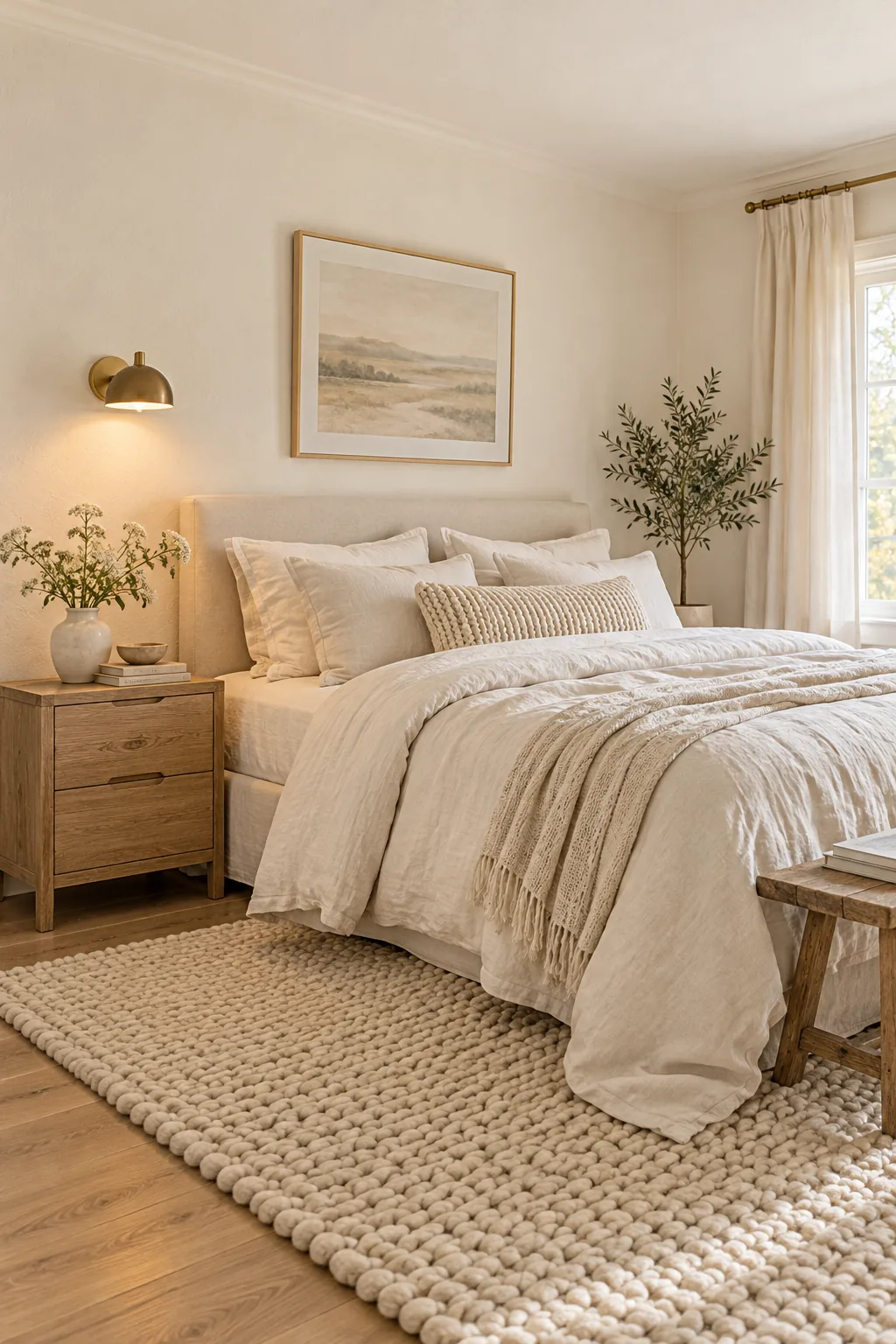
Even with the right materials, a white bedroom can easily miss the mark if the proportions are off or the undertones clash. Watch out for these common styling traps as you finalize your sanctuary.