
Cool Room Tricks: Your 24-Hour Passive Cooling Schedule
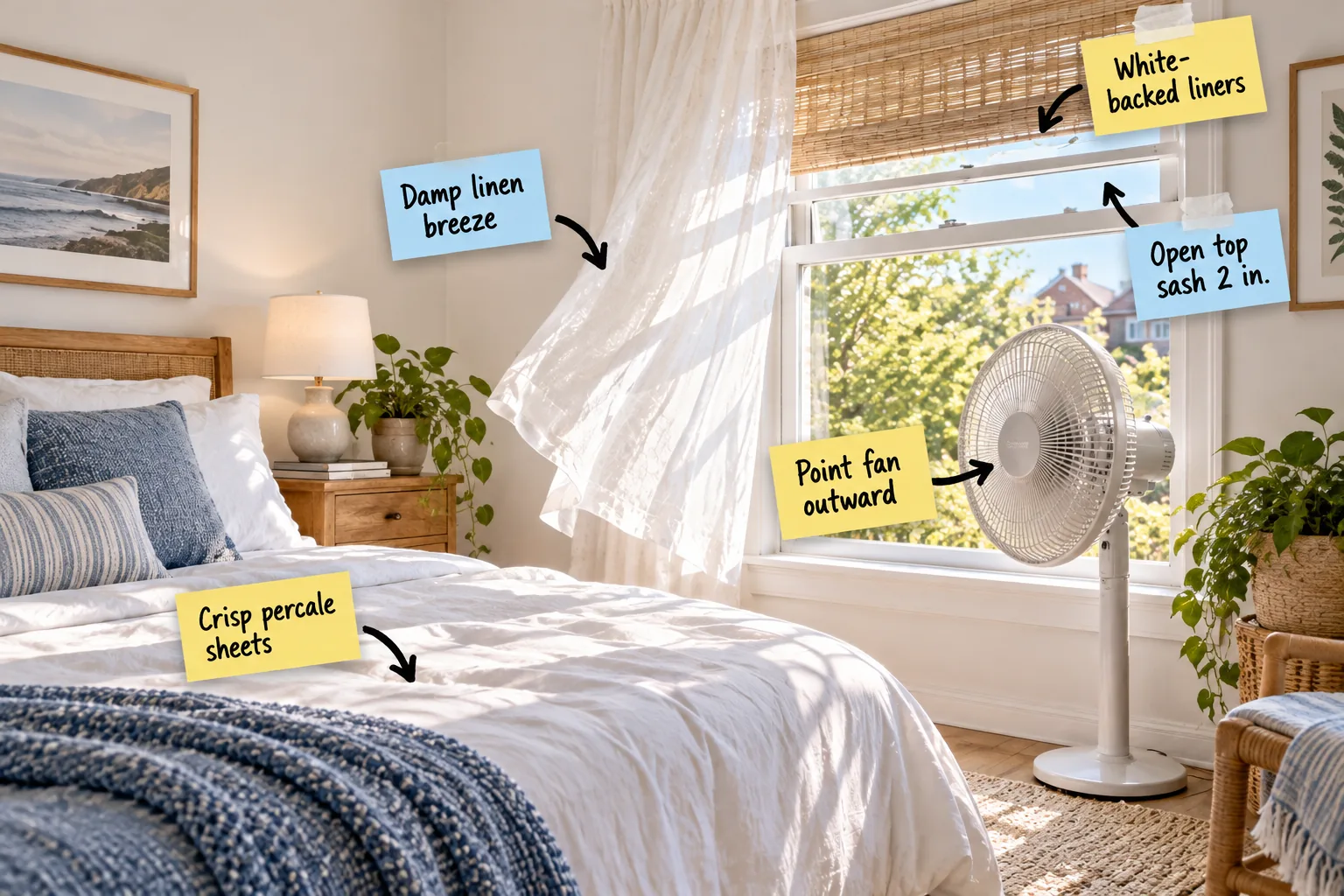
You will be able to arrange your fans, windows, and shades to actively drop your room temperature and follow our precise 24-hour passive cooling schedule to lock in the chill.
Block Heat With White-Backed Liners
Stop solar radiation before it enters the room by installing white-backed liners on your sun-facing window shades to bounce UV rays outward.
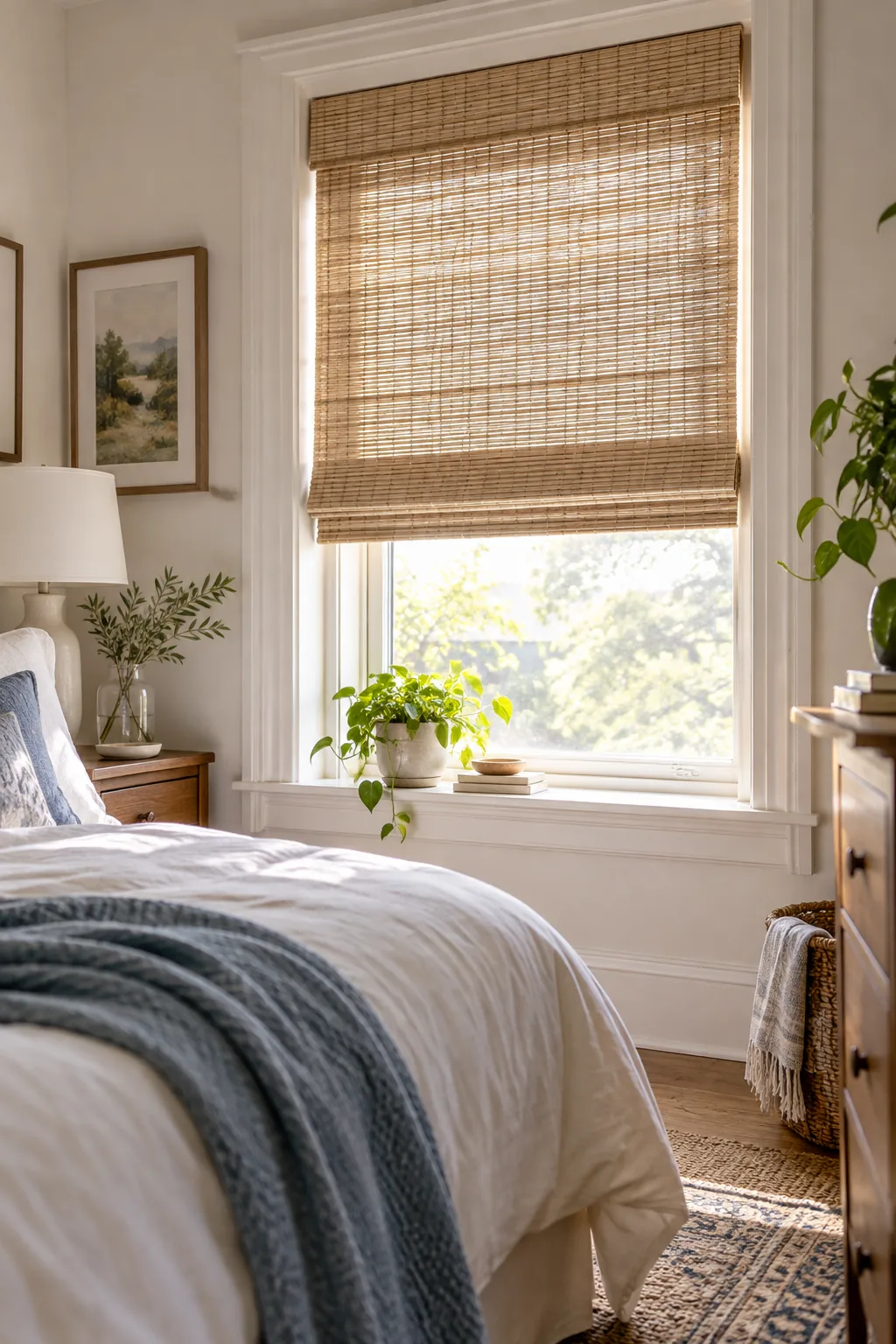
Choosing the right window treatment is only half the battle; how you install and manage it determines whether the ambient heat actually stays outside your sanctuary.
Vent Hot Air Through The Top Sash
Because hot air naturally rises, the warmest air in your bedroom pools near the ceiling, creating an uncomfortable thermal layer directly above your bed.
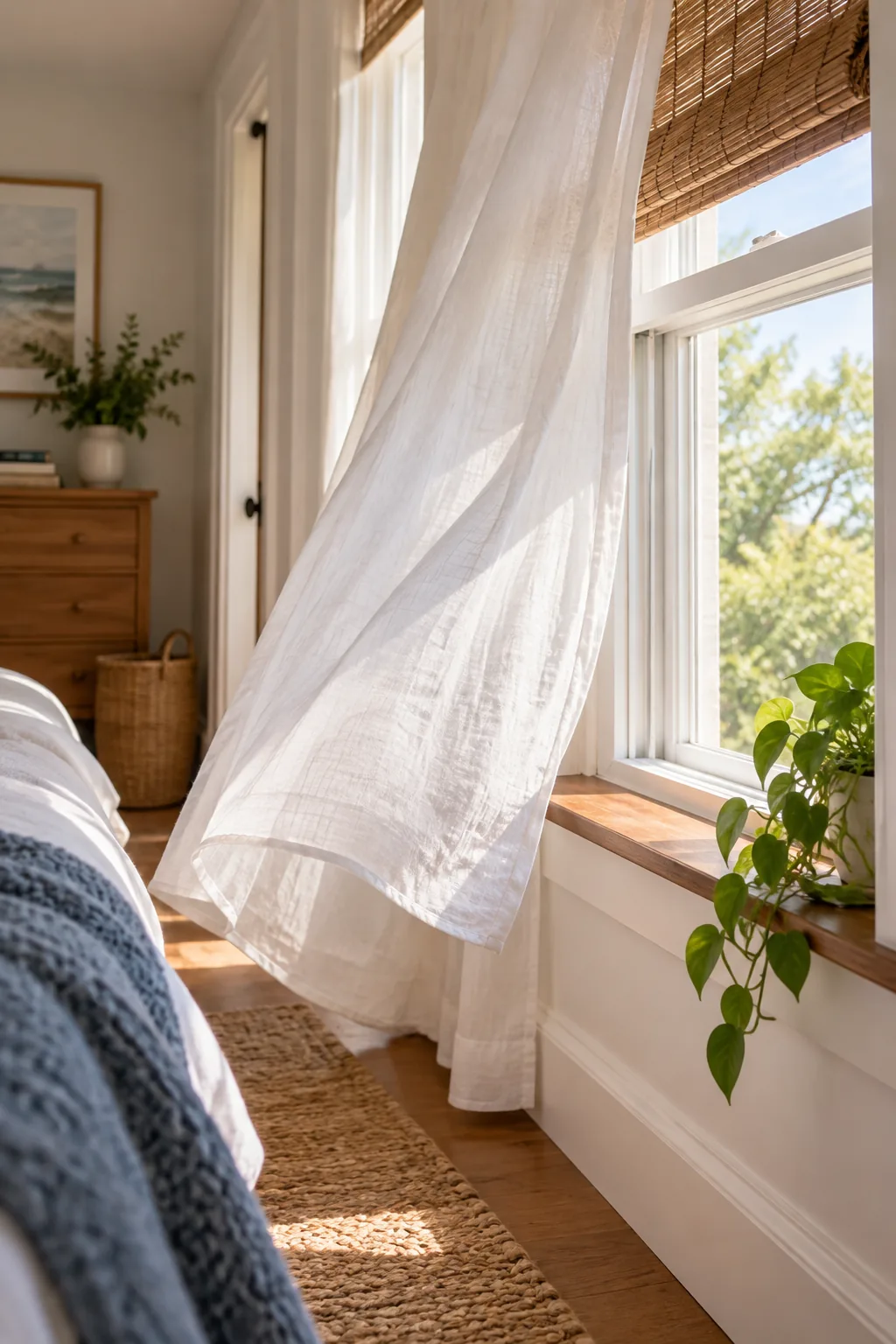
Lowering the top sash of a double-hung window exactly two inches creates a high, efficient escape route for this trapped thermal energy.
| Window Type | Daytime Action | Nighttime Action |
|---|---|---|
| Double-hung | Close bottom, crack top | Open both fully |
| Casement | Keep fully closed | Crank open to catch breeze |
| Slider | Keep fully closed | Open shaded side only |
Create A Damp Linen Breeze
Hang a lightweight, sheer linen curtain and mist it until it is slightly damp to harness the powerful physics of evaporative cooling in your space.
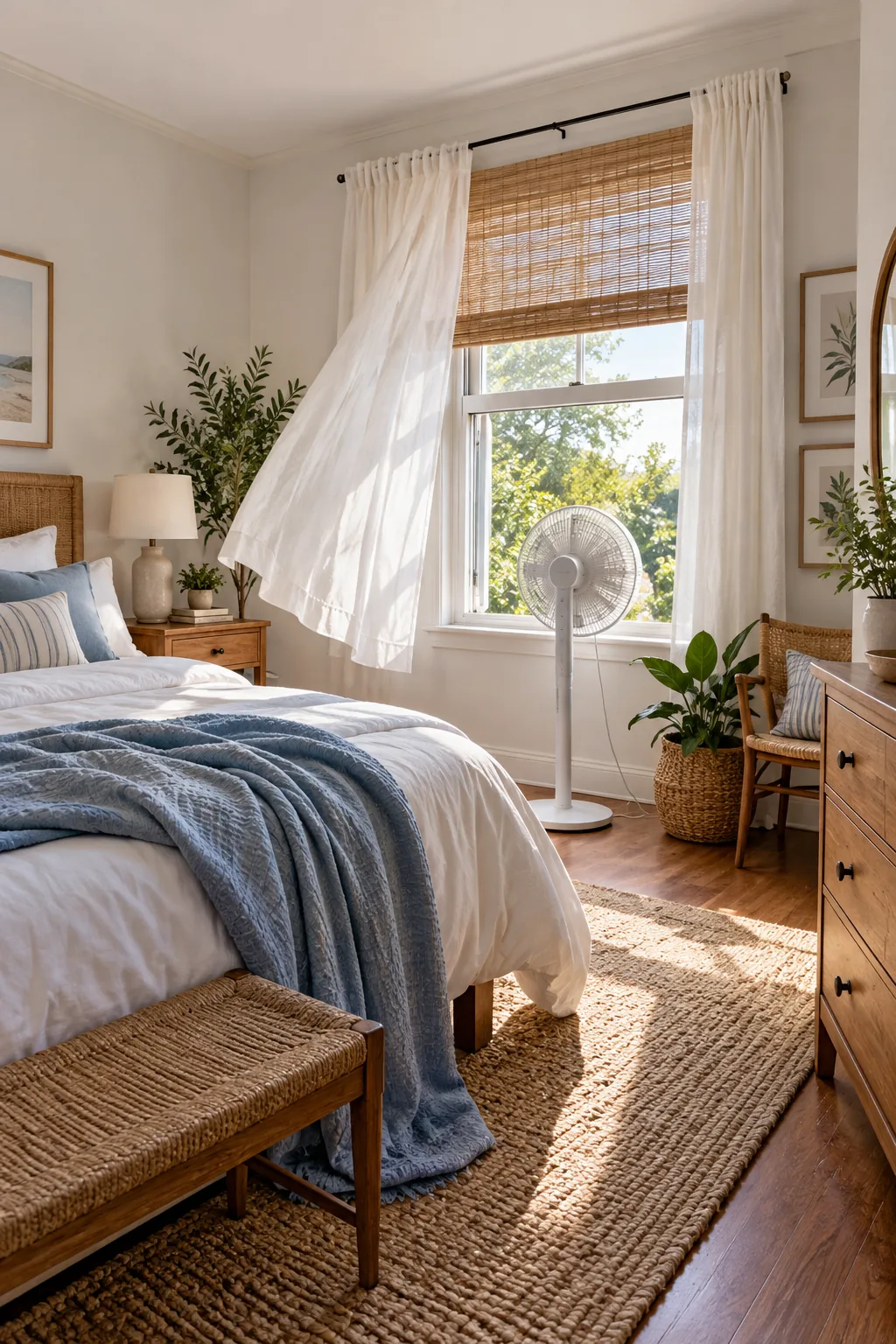
As the evening breeze blows inward through the wet fabric, it actively drops the temperature of the incoming air before it reaches your sleeping area.
Point Your Fan Outward
Instead of merely circulating stale, warm air around the room, position your pedestal fan facing out the window to actively exhaust the heat.
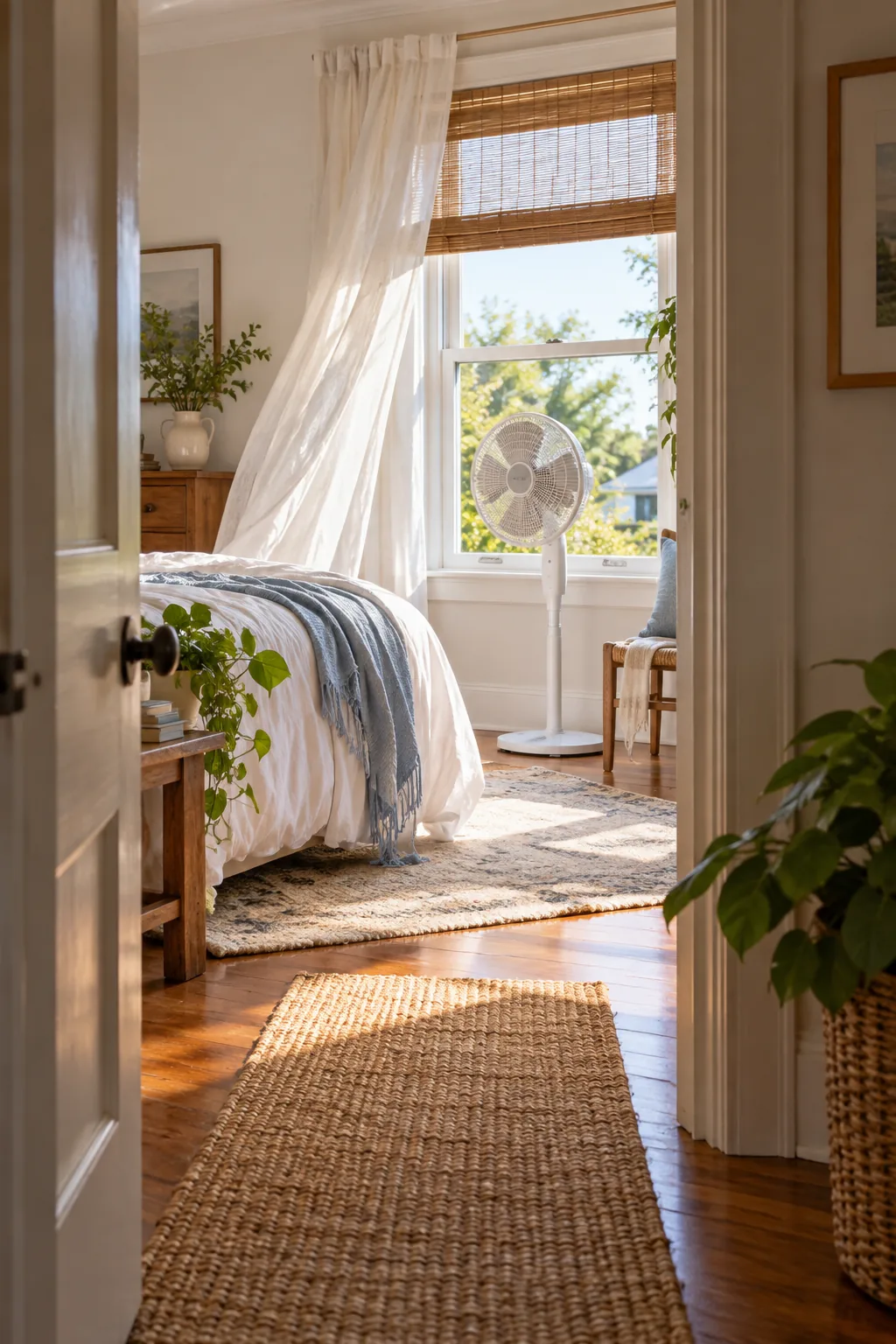
Pull the fan back roughly two feet from the screen to maximize thrust, creating a pressure differential that pushes hot room air outside.
Establish A Cross-Ventilation Path
An outward-facing exhaust fan only works effectively if fresh, cool air can seamlessly replace the hot air being pushed out of the bedroom.
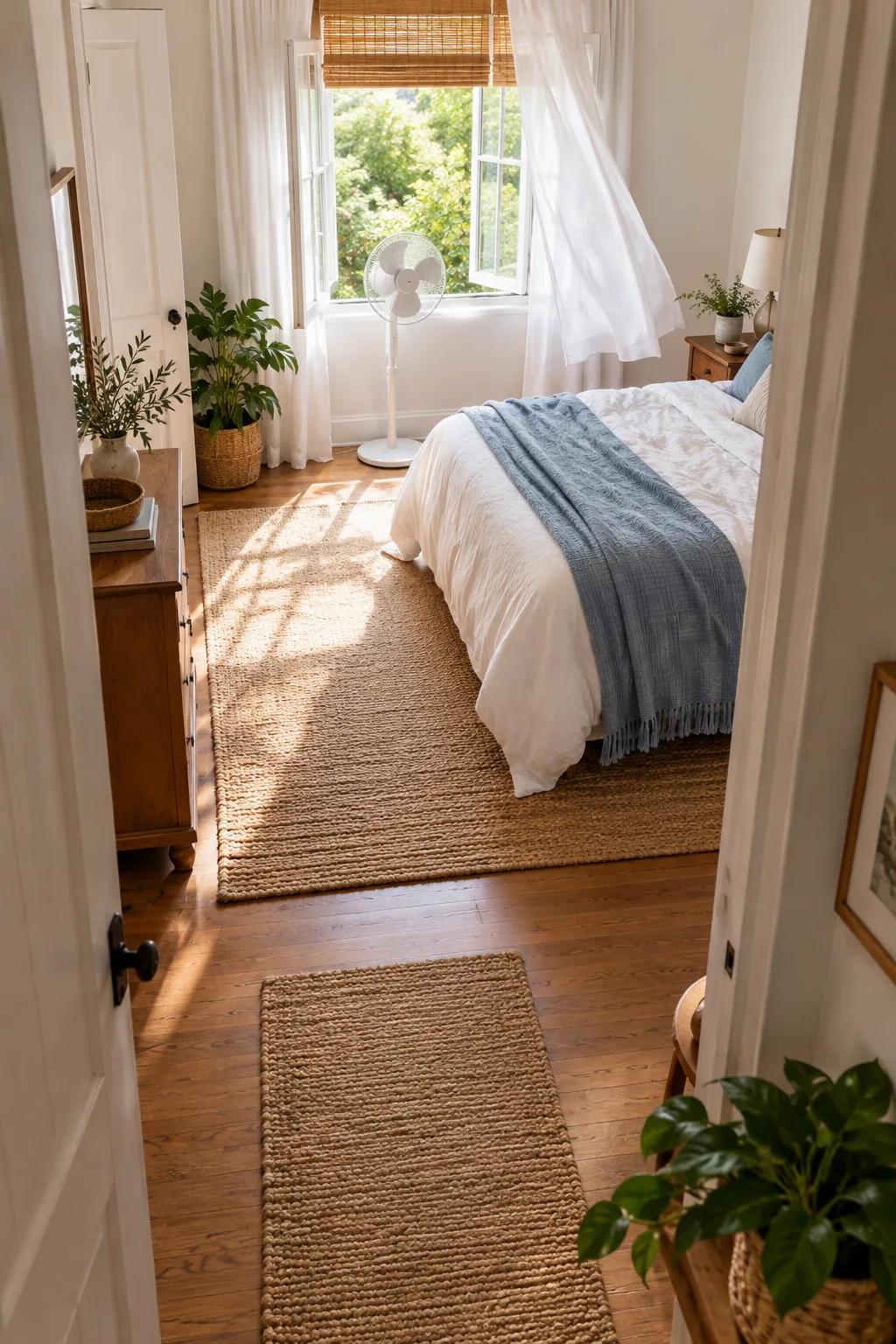
In my own Denver bungalow, I leave the shaded north-facing hallway window open to pull a continuous stream of cooler air right into the space.
Switch To Crisp Percale Sheets
Swap out heat-trapping sateen or synthetic blends for 100 percent cotton percale sheets, which feature a tight, simple over-under weave that breathes exceptionally well.
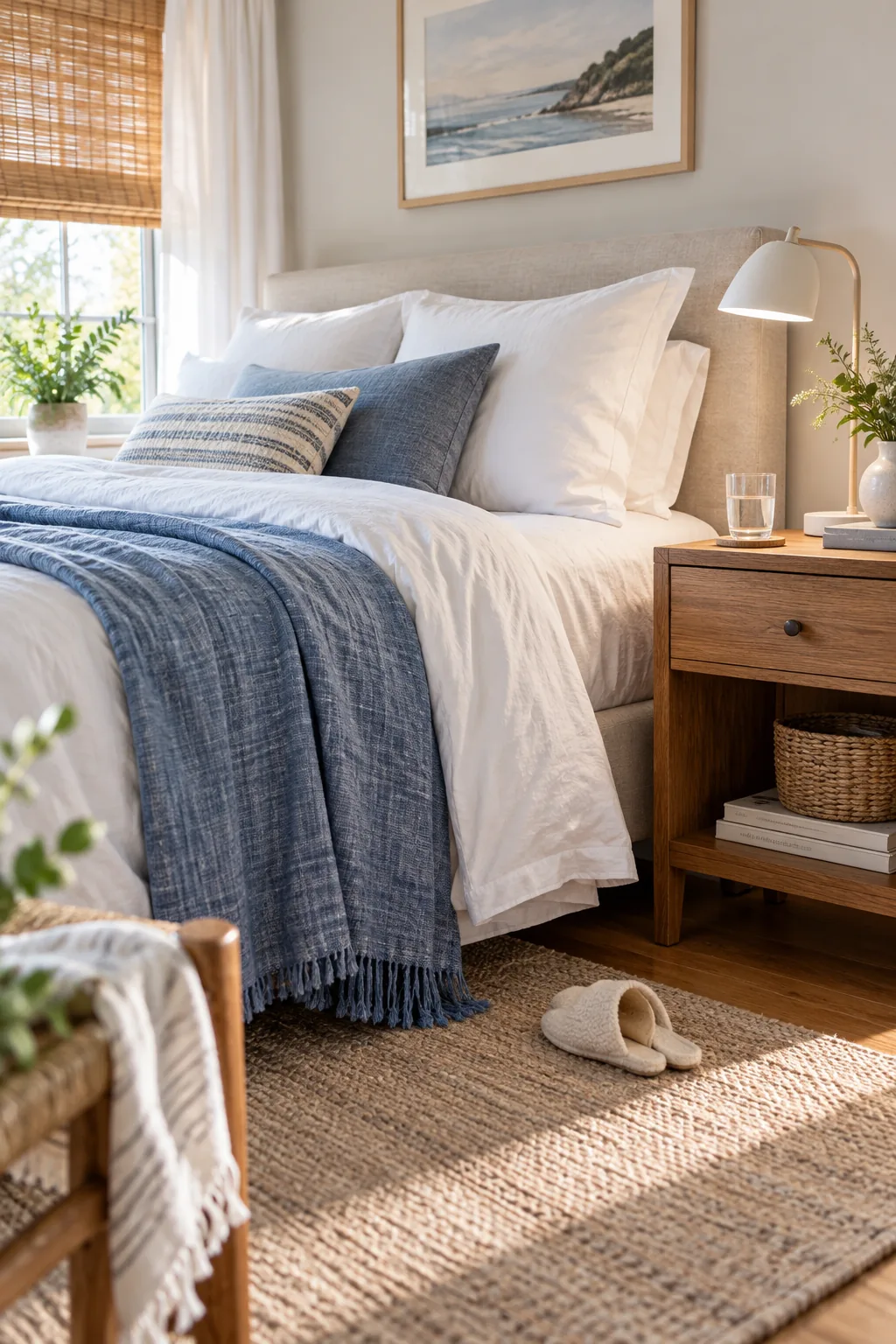
Not all summer bedding performs the same in high temperatures, so verify your linens meet the strict criteria for maximum breathability and comfort.
Keep Internal Heat Sources Low
Even small electronics act as passive heat sinks that steadily raise the ambient temperature in a closed room over the course of the day.
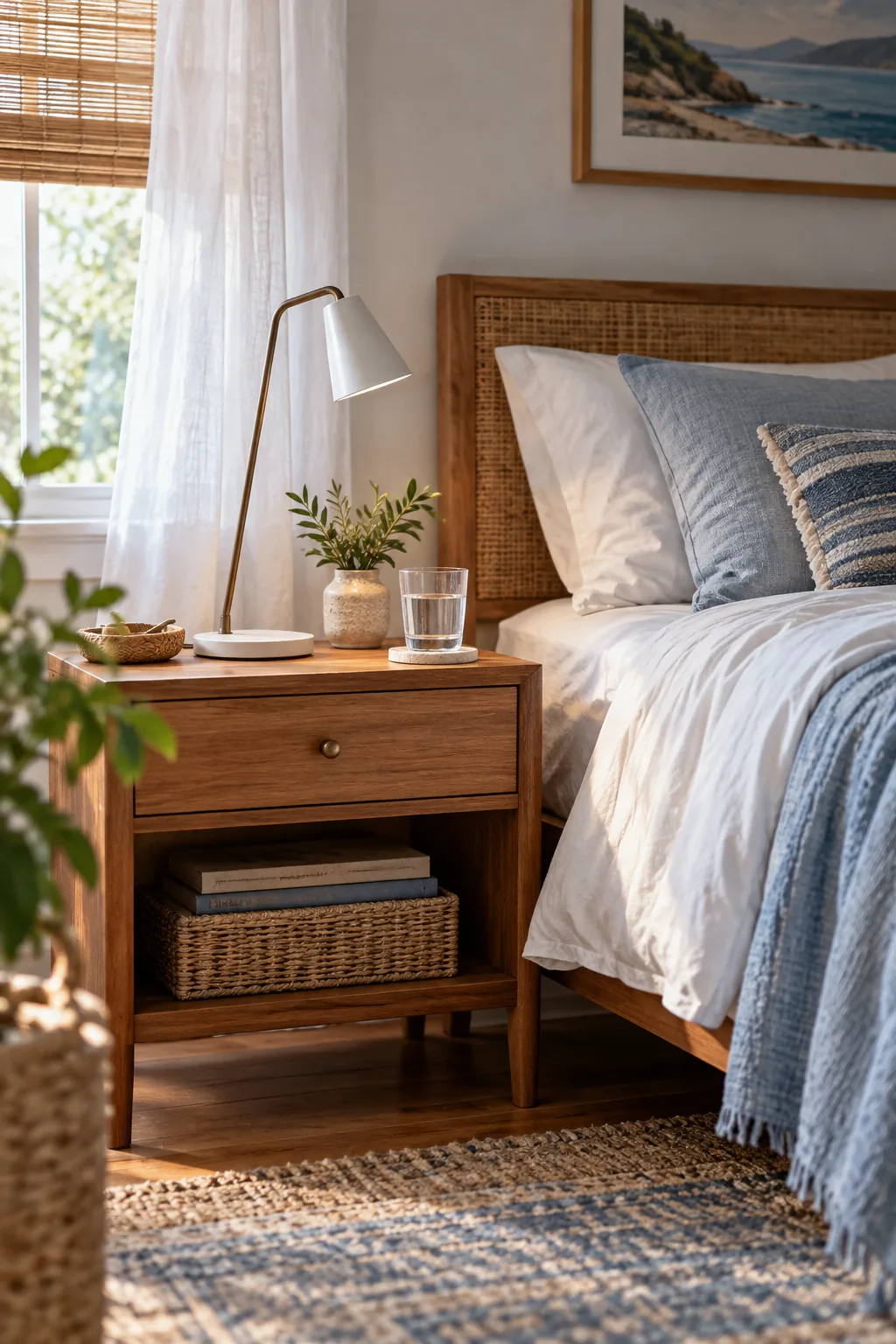
I swapped my vintage bedside lamps for low-wattage LED bulbs, which emit virtually no thermal gain while I read before sleep.
Cool Room Styling Ideas
Explore how different bedroom styles seamlessly integrate these passive cooling techniques.
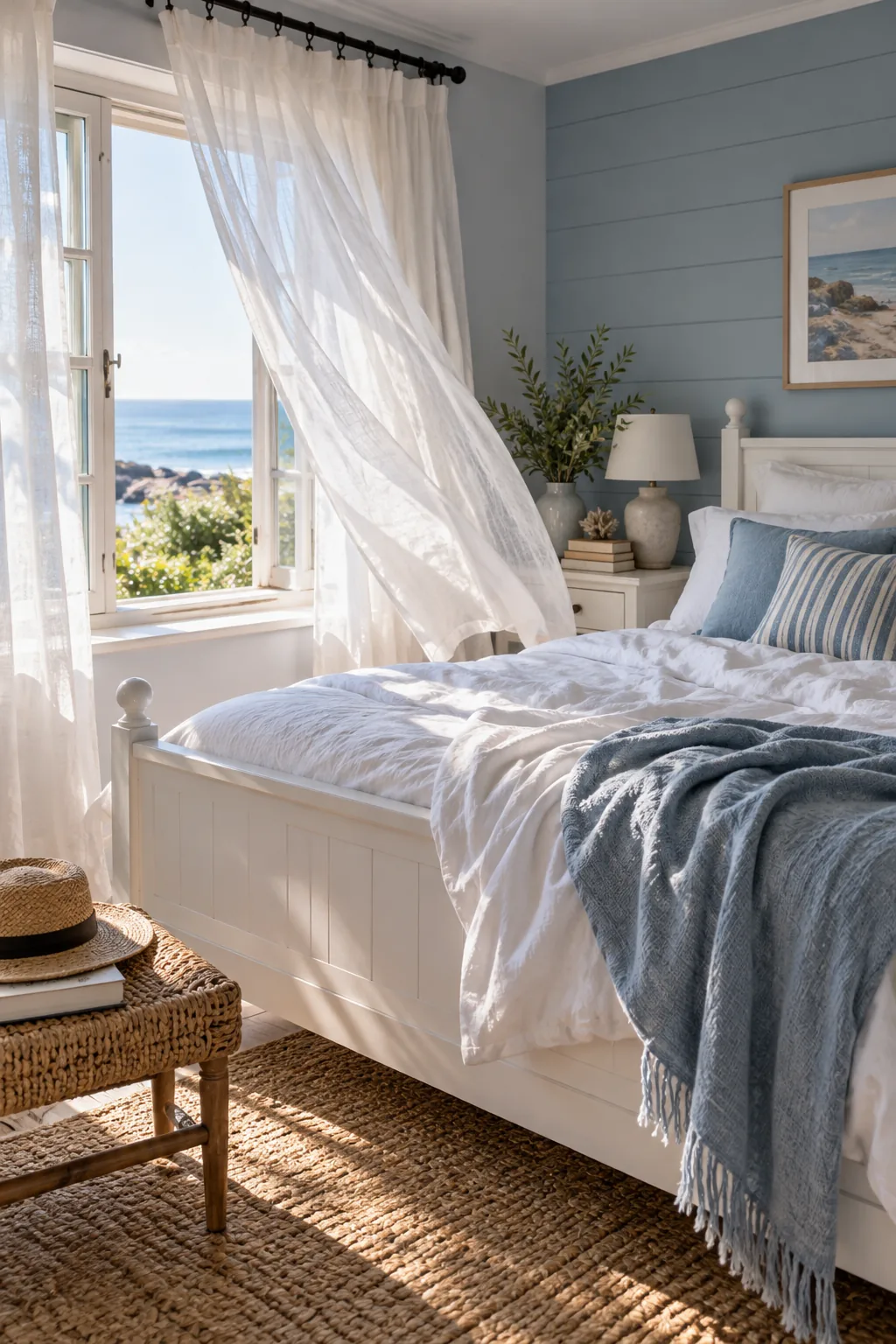
Breezy Coastal Blue: Soft blue tones and lightweight linens give this coastal space a naturally cool, refreshing atmosphere.
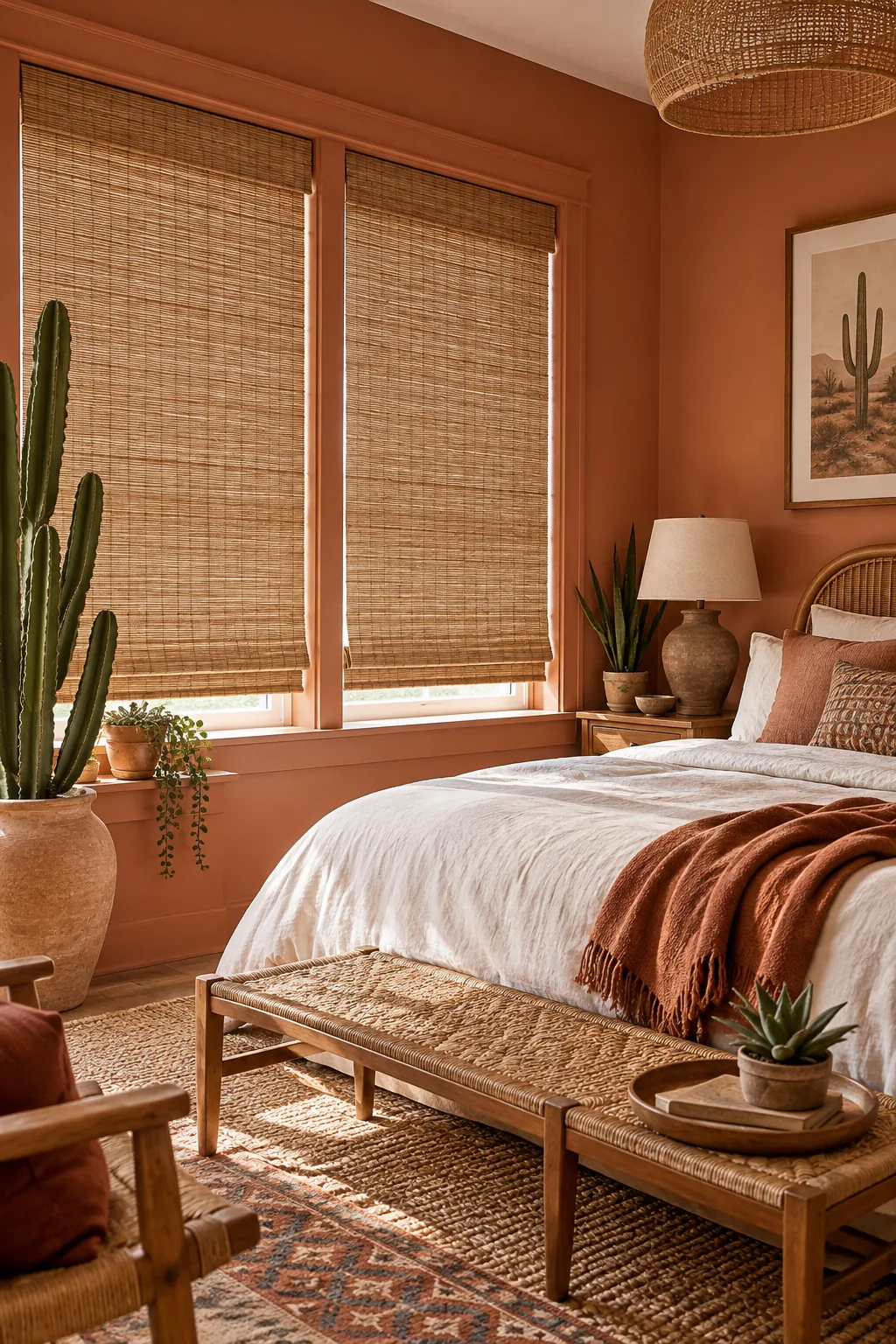
Earthy Desert Oasis: Warm terracotta walls stay perfectly comfortable when paired with heavy, white-backed woven shades that block afternoon heat.
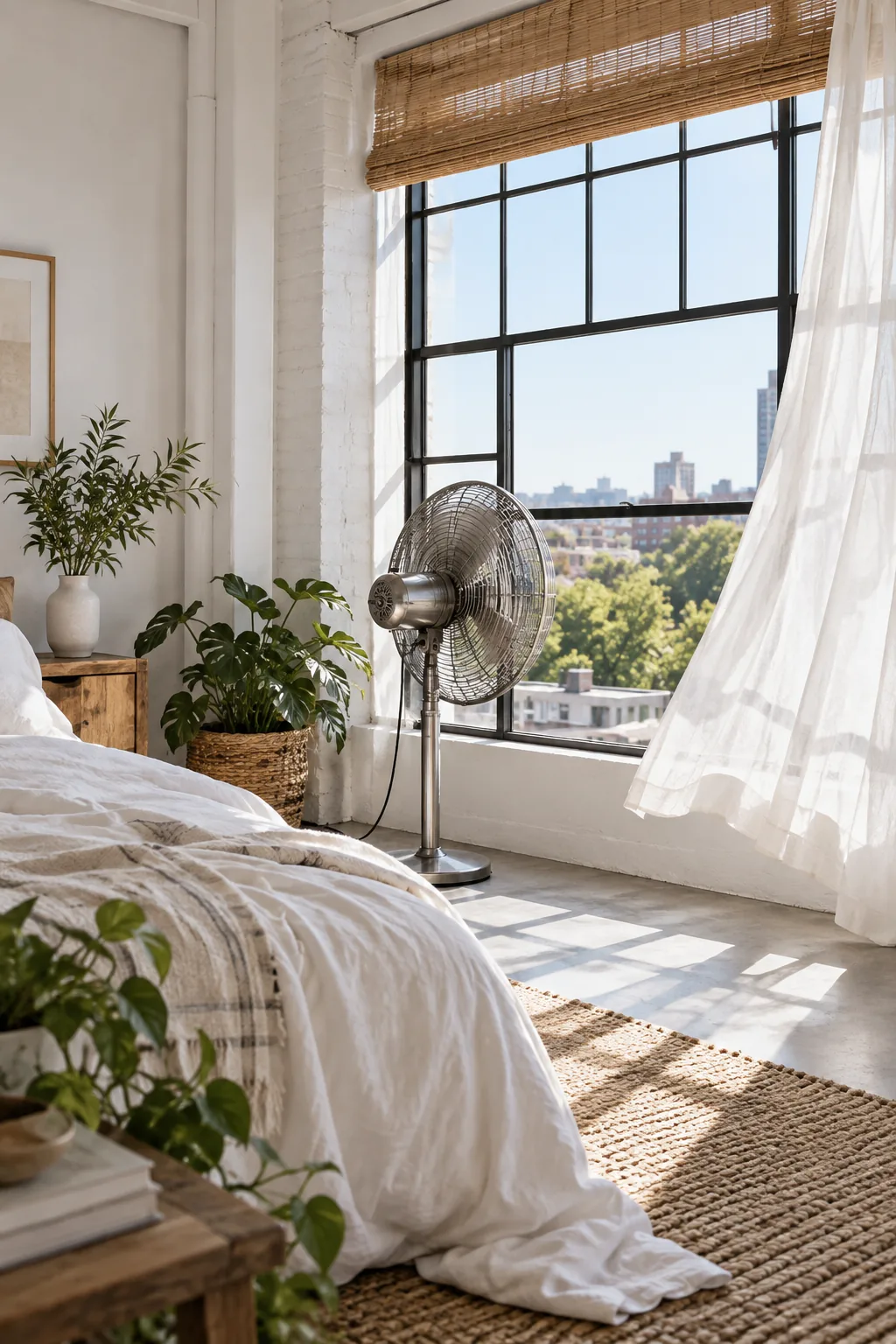
Minimalist Loft Ventilation: An industrial floor fan acts as a powerful exhaust system in this sleek, bright minimalist loft.
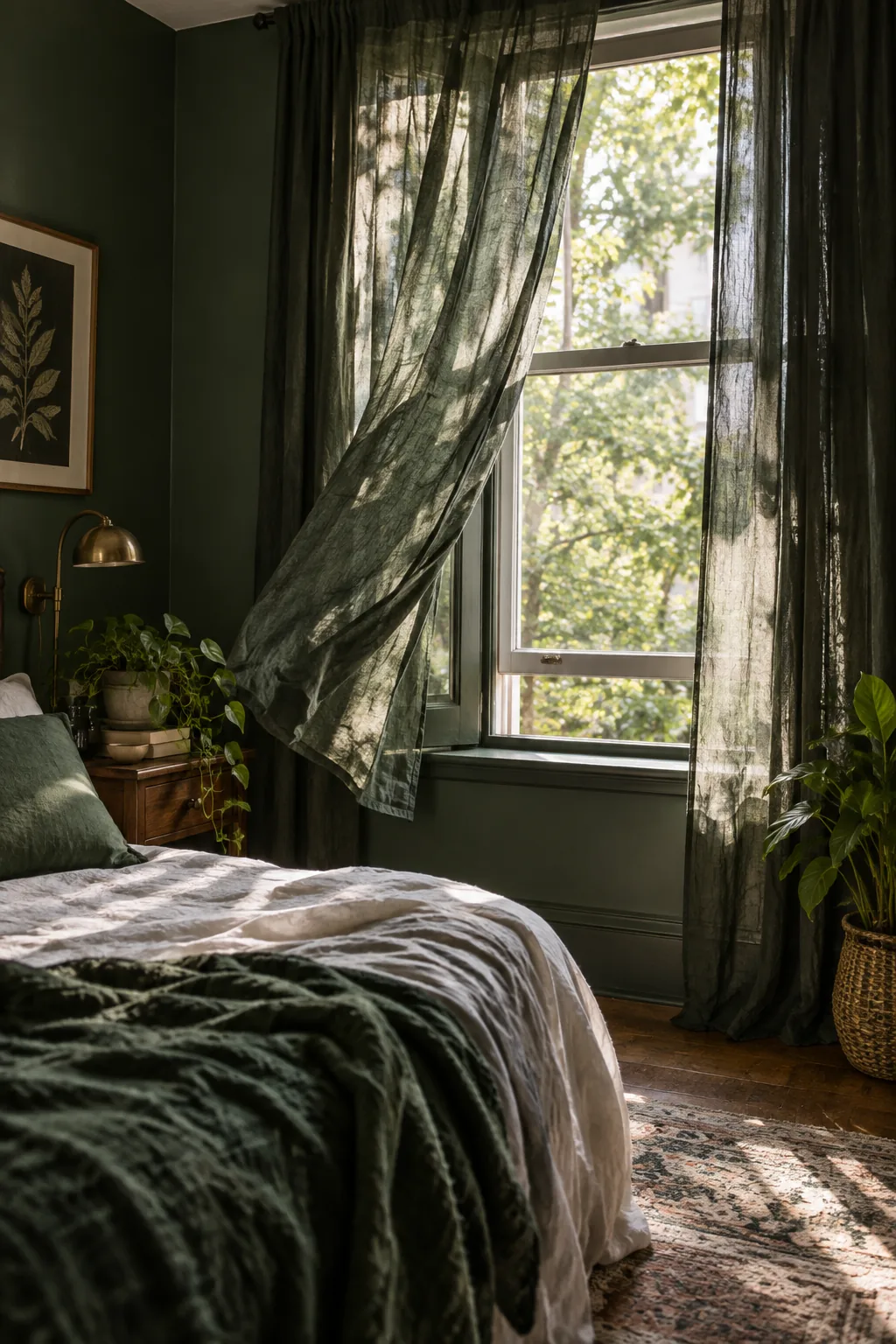
Moody Green Retreat: Deep green walls absorb less visual light, while damp sheer curtains provide an instant evaporative chill.
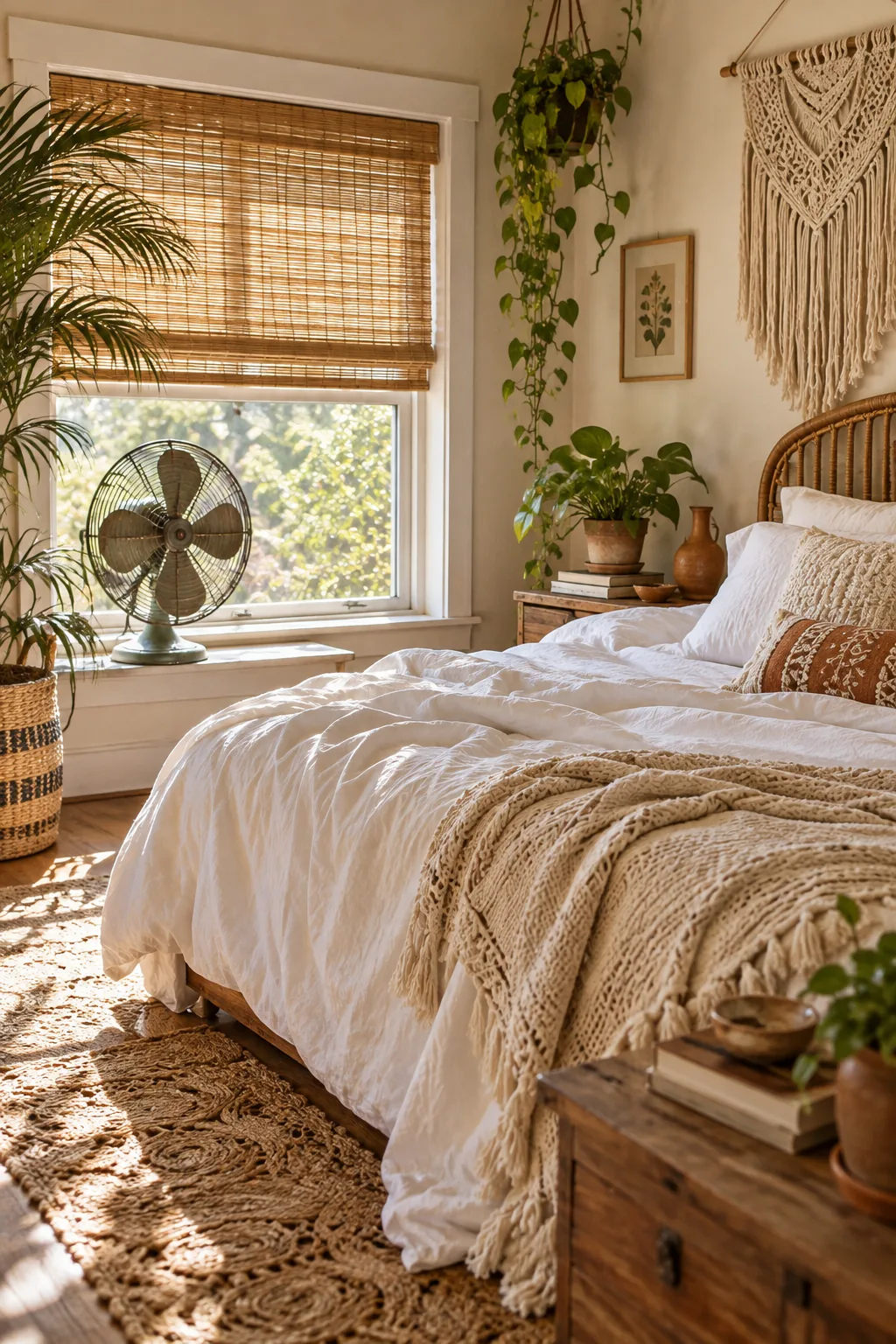
Textured Bohemian Comfort: Layered, breathable cotton percale sheets keep this textured bohemian space cool without sacrificing its cozy, lived-in style.
Follow The 24-Hour Cooling Schedule
Execute this precise daily timeline to lock in the chill, stopping the climbing heat before it penetrates your carefully managed bedroom environment.
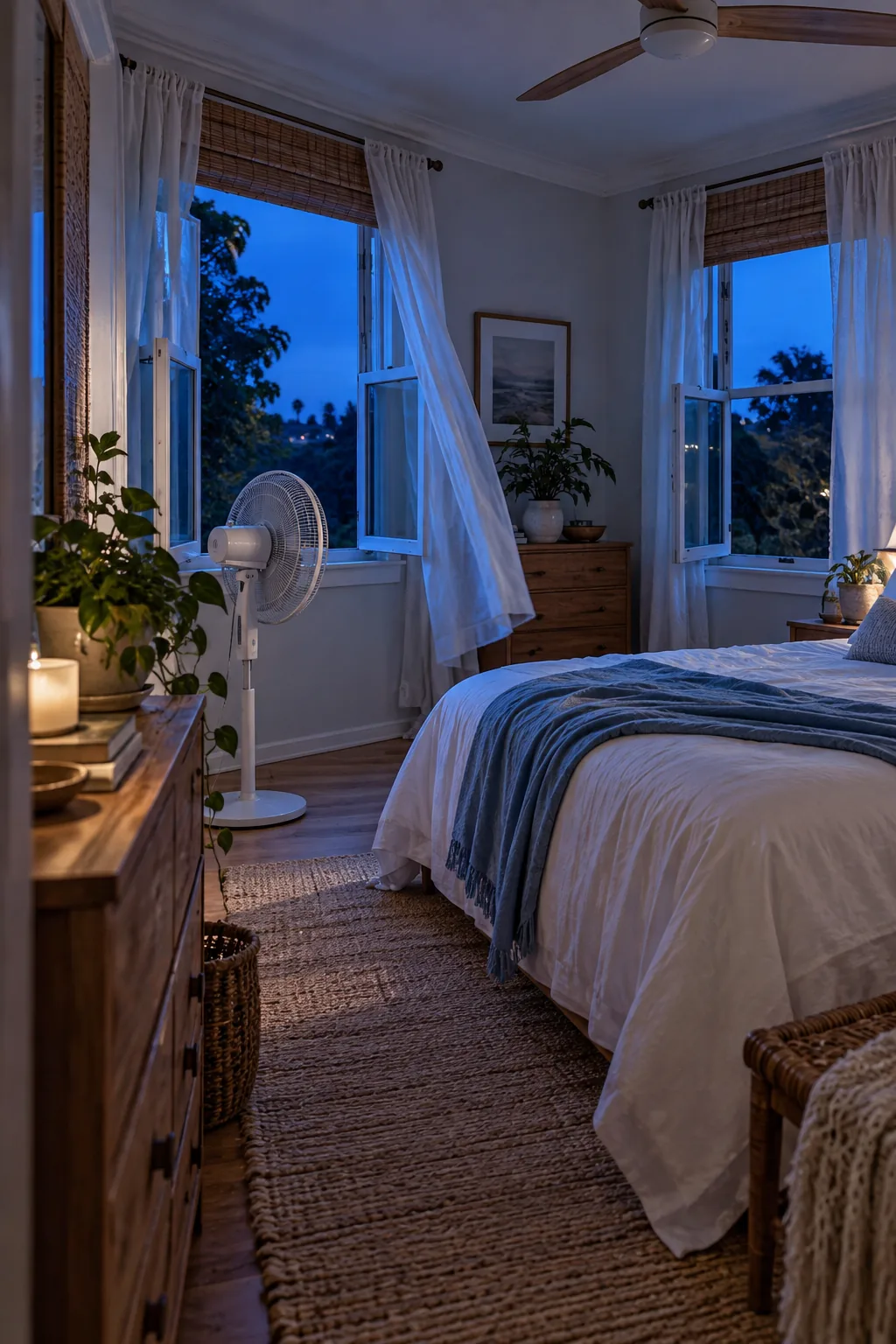
Stick to these exact transitions to maintain a comfortable sleep sanctuary without ever touching the thermostat or relying on expensive air conditioning:
- 9 AM: Close all windows and white-backed shades to block the climbing solar radiation.
- 6 PM: Open the shaded windows on the cool, eastern side of the house.
- 8 PM: Start your outward-facing exhaust fan to initiate the cross-ventilation breeze.
- Bedtime: Mist your sheer linen curtains right before getting into bed.