
Shade Garden Guide: The Sun-Hours Plant Sheet & Light Log
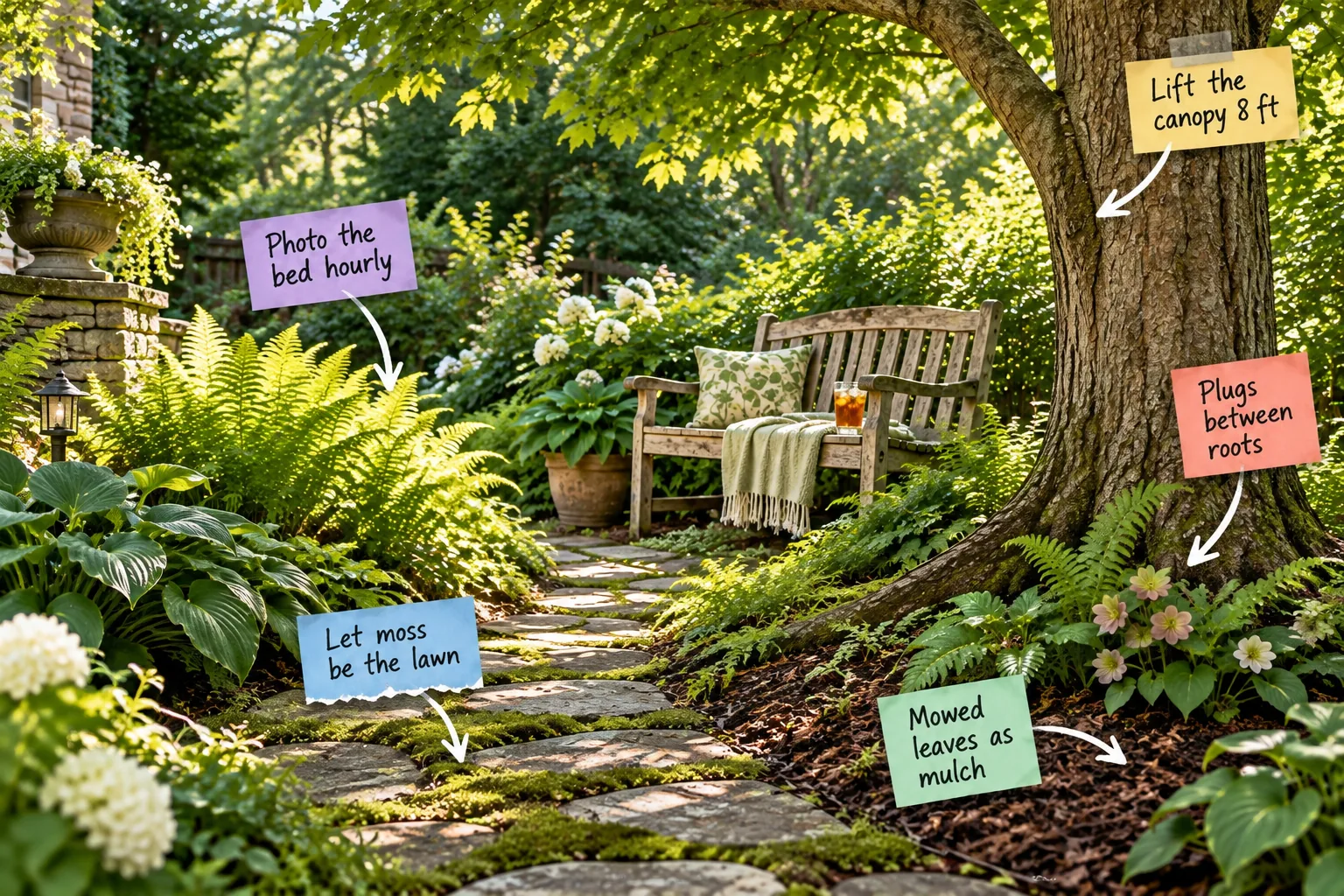
Turn a dark, struggling yard corner into a lush, thriving retreat by printing our free sun-hours light log and shade garden plant list. You will be able to accurately measure your dappled light and choose the exact ferns and hostas that thrive in your specific shade conditions.
Track the Sun Hourly
Human eyes naturally adjust to shadows, making visual guesses about light highly inaccurate, so taking a reference photo of the bed every hour from 9 AM to 4 PM provides a factual record of your exact shifting sun exposure.
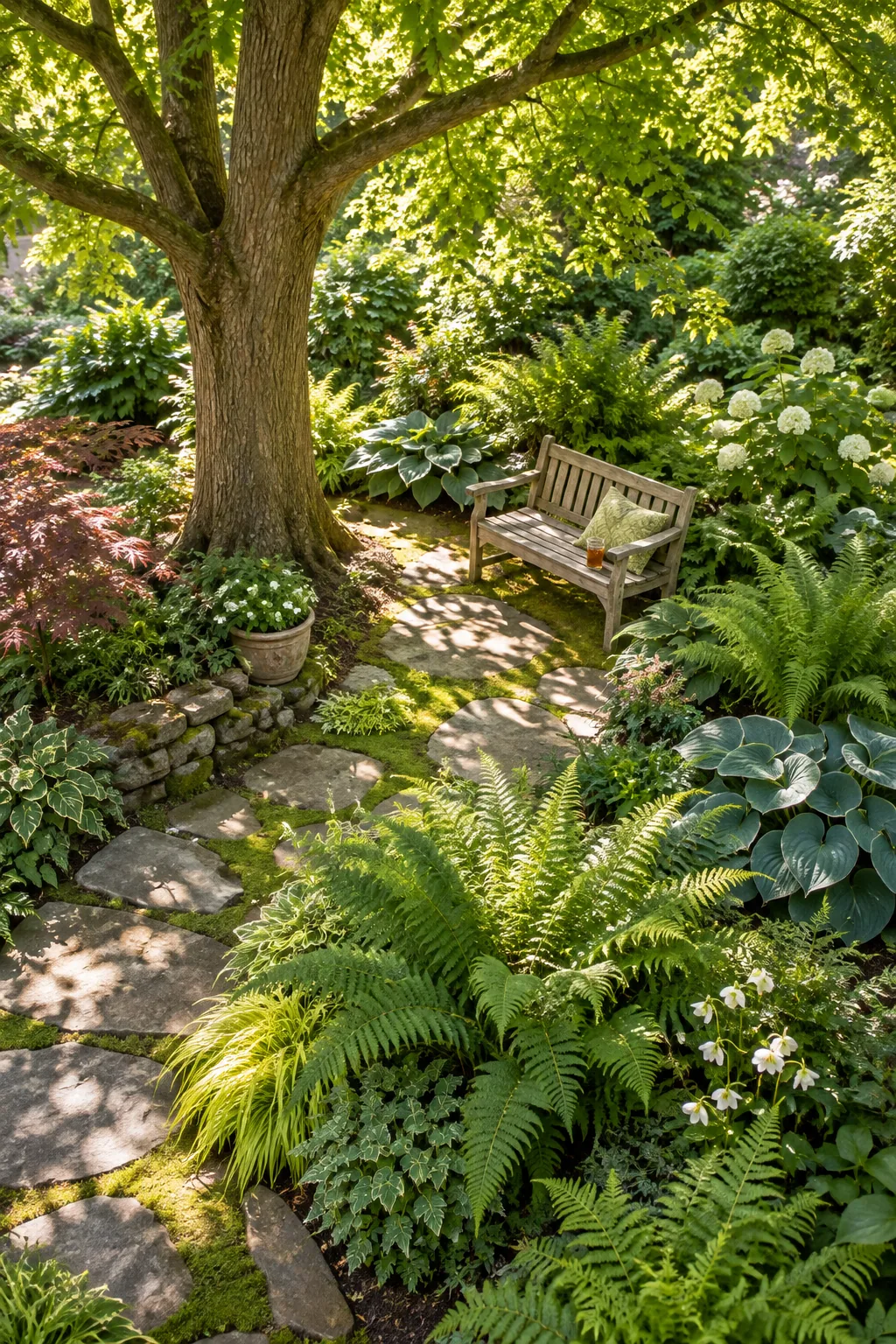
Before buying a single plant, spend one sunny weekend day documenting exactly how the light moves across your space, ensuring you understand the microclimates perfectly before investing in expensive nursery stock.
Armed with this factual photographic evidence, you can confidently categorize every square foot of your garden bed, completely eliminating the costly trial-and-error process of planting expensive shade perennials in the wrong location.
Lift the Tree Canopy to 8 Feet
Deep gloom rarely supports flowering plants, but pruning the lowest branches of a mature deciduous tree up to a clean 8-foot height allows angled morning and late afternoon sunlight to sweep under the canopy.
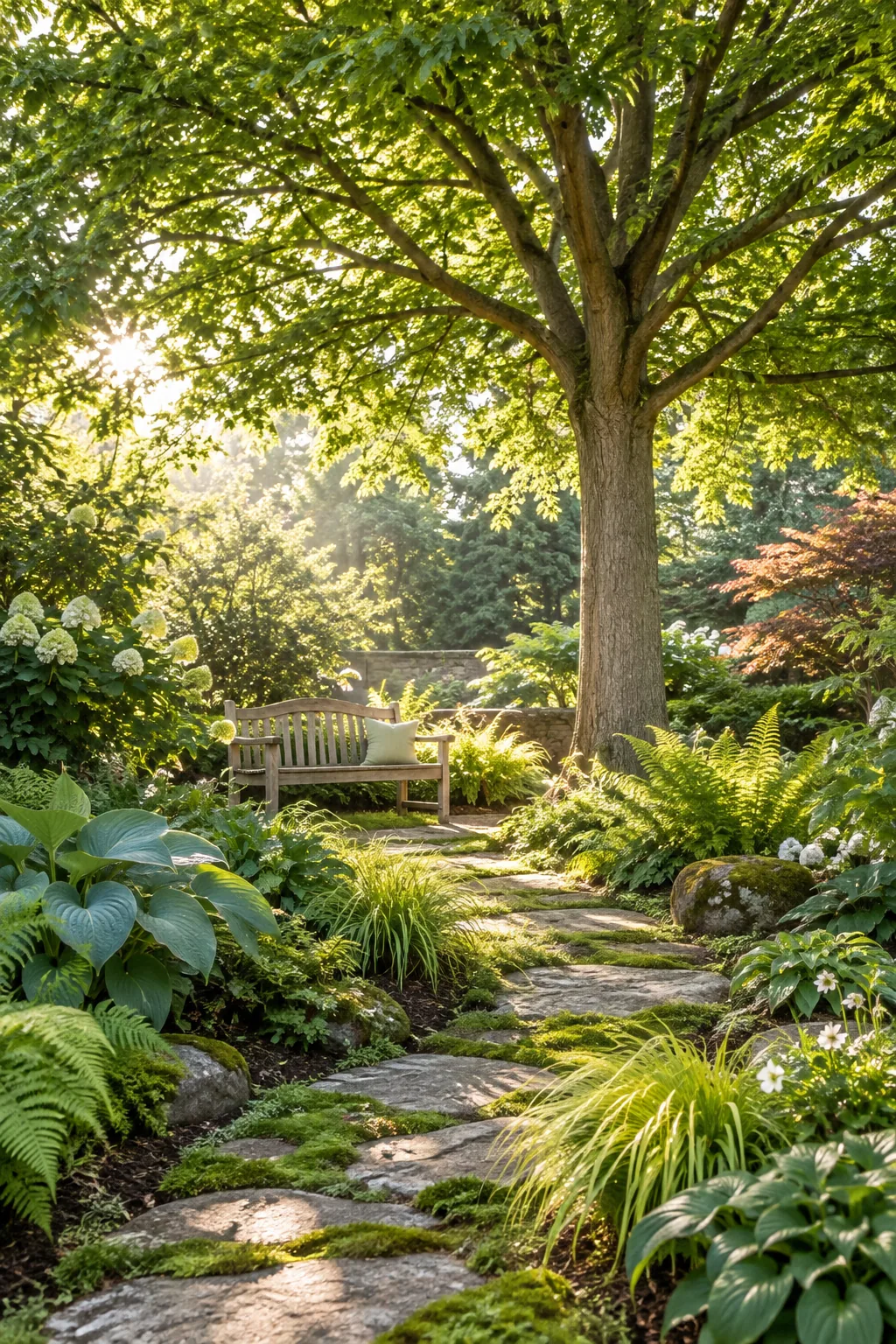
This strategic canopy lifting creates the bright, ambient dappled shade that woodland plants require to thrive, completely transforming the dark microclimate beneath your favorite mature maple or oak into a welcoming garden room.
| Shade Category | Daily Sun Hours | Typical Light Quality | Best Plant Selections |
|---|---|---|---|
| Deep Shade | Under 2 hours daily | Heavy gloom with no direct solar beams reaching the ground | Hardy native ferns, lush mosses, and shade-tolerant groundcovers |
| Dappled Shade | 2 to 4 hours daily | Filtered, shifting light passing through moving overhead tree leaves | Blooming hellebores, delicate hostas, and colorful heuchera varieties |
| Part Shade | 4 to 6 hours daily | Cool morning sun only, fully protected from harsh afternoon heat | Flowering astilbe, traditional bleeding hearts, and vibrant Japanese painted ferns |
| Full Sun | Over 6 hours daily | Harsh, direct afternoon exposure that aggressively bakes the topsoil | Drought-tolerant prairie perennials, ornamental grasses, and sun-loving succulents |
| Dry Shade | Varies by tree canopy | Intense root competition combined with an umbrella-like rain shadow | Durable epimedium, tough liriope, and resilient native sedges |
| Moist Shade | Varies by drainage | Consistently damp soil enriched by naturally decomposing organic woodland matter | Moisture-loving ligularia, giant butterbur, and dramatic ostrich ferns |
By actively managing the tree canopy overhead, you dramatically expand your planting options, turning a barren, dusty zone into a highly productive growing space that supports continuous summer color.
Let Moss Replace the Lawn
Turf grass actively starves under dense tree canopies, leading to patchy, muddy walkways, so I finally stopped fighting the environment and encouraged native moss to fill the joints between my flagstone stepping stones.
Moss requires zero mowing, thrives in acidic soil, and provides a soft, lush carpet that handles light foot traffic beautifully while visually cooling the entire garden space during the hottest summer months.
- Test your soil acidity: Moss strongly prefers a low pH environment, so aim for soil testing between 5.0 and 5.5 to encourage rapid, healthy spreading across your newly designed woodland pathway.
- Keep it consistently damp: During the first three weeks of establishment, mist your new moss patches daily to prevent the delicate shallow rhizomes from drying out and turning brown in the summer heat.
- Weed out the struggling grass: Manually pull any remaining turf blades that pop up through the moss to prevent aggressive competition for surface moisture and essential soil nutrients in the shade garden.
- Avoid heavy foot traffic: While perfect for the narrow joints between stepping stones, moss cannot survive being constantly crushed by heavy wheelbarrows, active lawn games, or daily running dogs.
- Sweep instead of raking: When autumn leaves fall, gently sweep them off your moss carpet with a soft broom rather than using a harsh metal rake that will tear the delicate green matting apart.
- Embrace the natural spread: Allow the moss to naturally creep over the edges of your flagstones, creating an incredibly soft, aged appearance that makes the pathway look like it has existed for centuries.
Once established, this vibrant living pathway requires almost zero maintenance, allowing you to spend your weekends actually enjoying the shade garden rather than struggling to drag a heavy lawnmower through the mud.
Mulch with Mowed Leaves
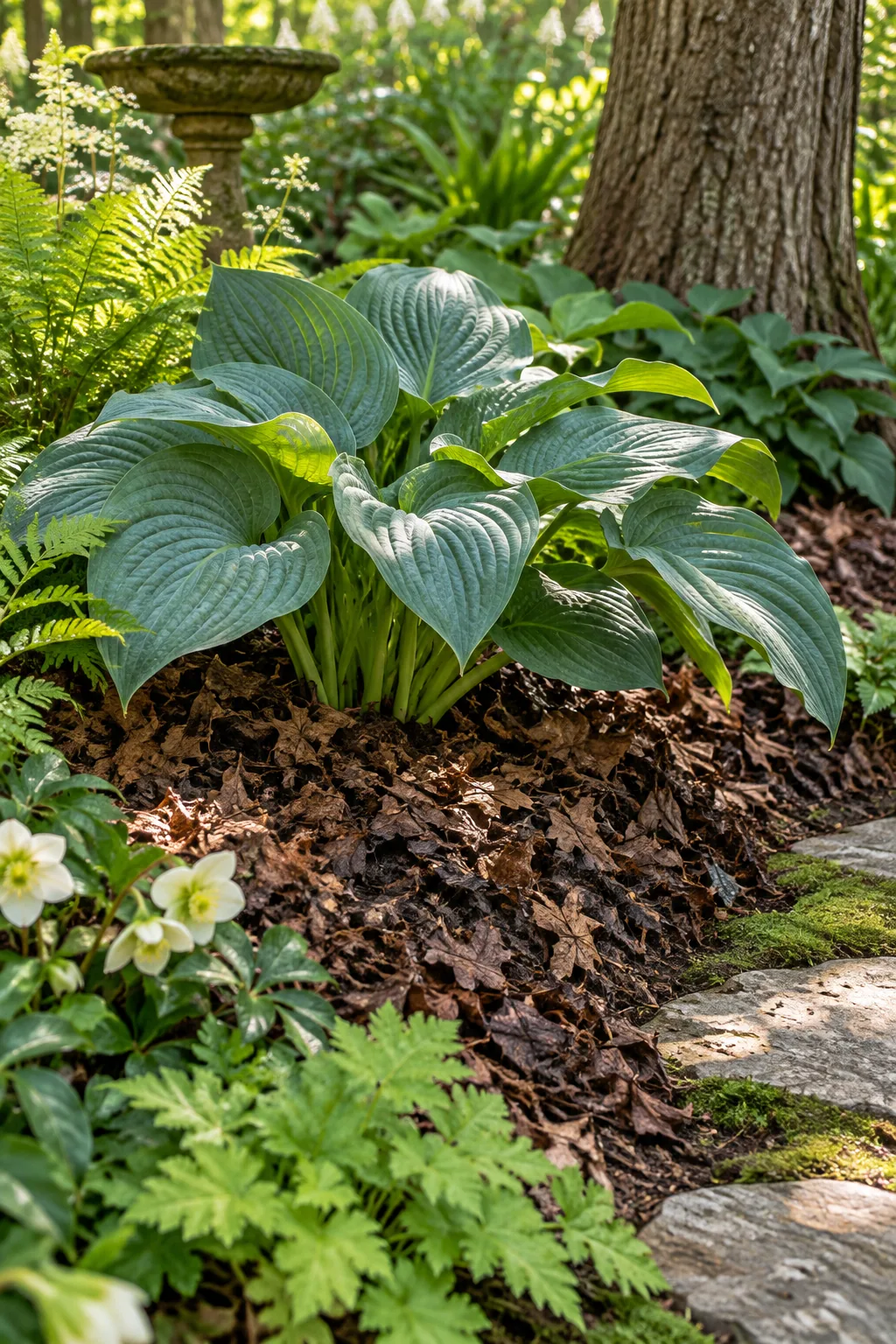
Woodland plants evolved to grow in rich, decaying organic matter rather than heavy commercial woodchips, so run a lawnmower over fallen autumn leaves to shred them into a fine, nutrient-dense texture.
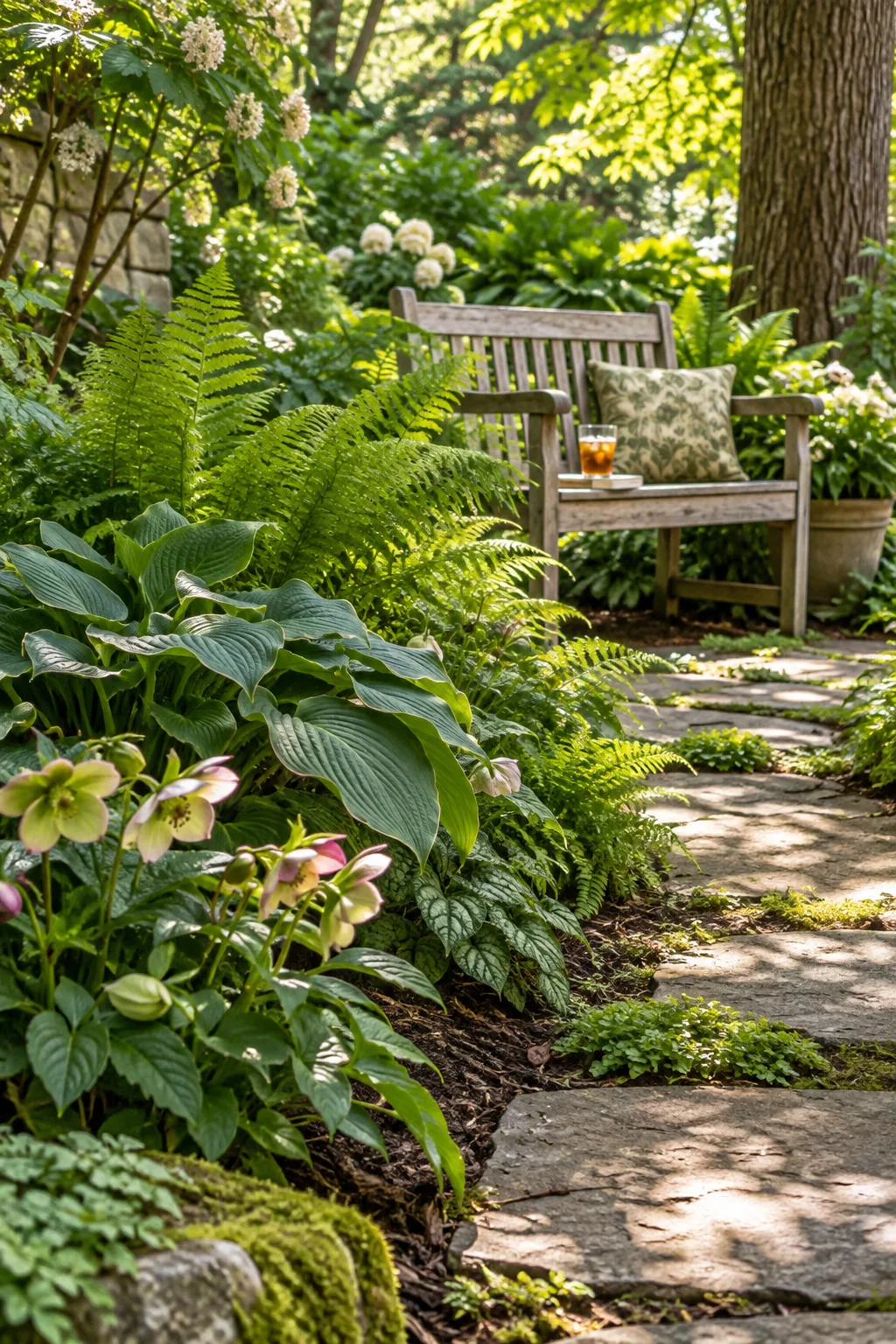
Apply a strict 2-inch layer of this leaf-mould mulch over the bed to retain essential moisture, suppress aggressive weeds, and break down rapidly to feed the shallow soil surrounding your delicate shade perennials.
This natural mulching method perfectly mimics the undisturbed forest floor, providing the exact biological environment that delicate woodland ephemerals and deep-shade ferns require to establish strong, resilient root systems.
Tuck Plugs Between Surface Roots
Digging large holes near a mature tree severs critical feeder roots, so I always purchase shade perennials as tiny 2-inch plugs that easily slip into natural soil pockets without requiring destructive excavation.
Respecting the established root architecture ensures that both your towering shade trees and your newly planted delicate perennials survive the landscaping process, creating a harmonious, layered ecosystem that thrives for decades.
5 Ways to Style a Shade Garden
Discover how different plant palettes and hardscaping materials can completely change the mood of your shaded retreat.
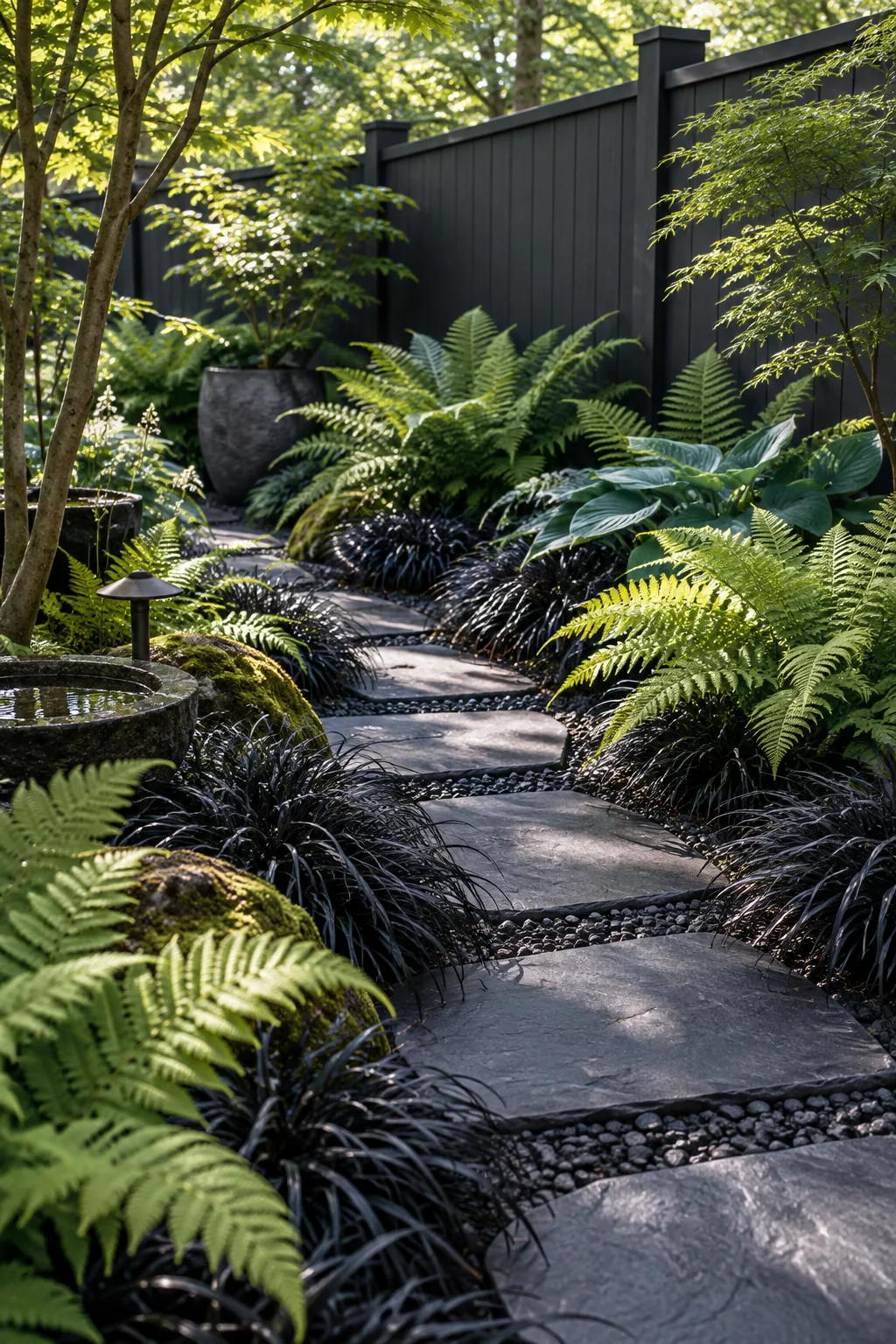
Modern woodland slate path: Dark hardscaping and minimalist plantings give this shaded side yard a distinctly contemporary, architectural feel.
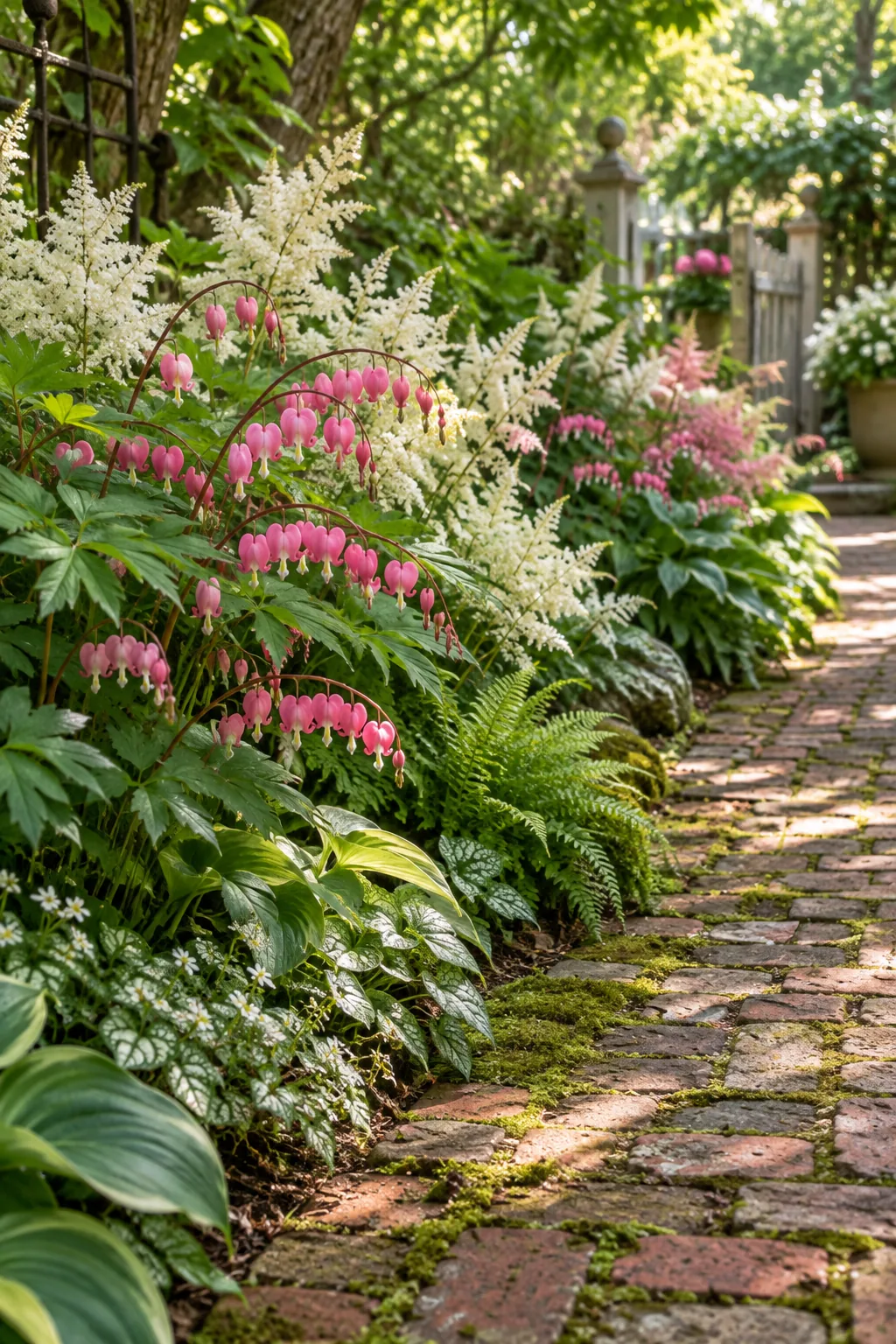
Romantic cottage shade border: Flowering shade perennials like astilbe and bleeding hearts soften the edges of a weathered brick walkway.
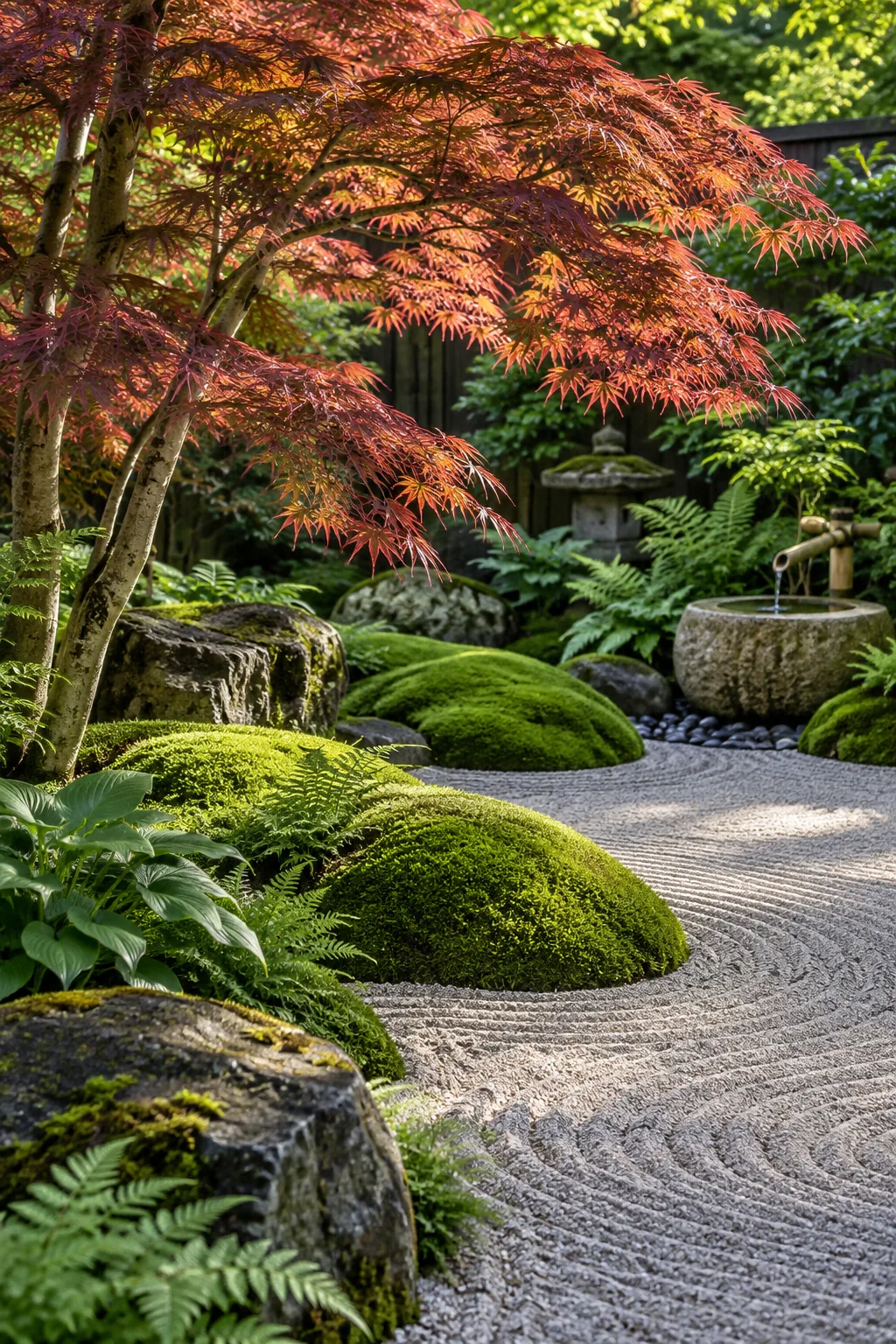
Serene Japanese-inspired shade: Raked gravel and meticulously shaped moss mounds create a calming, low-maintenance retreat under a delicate maple.
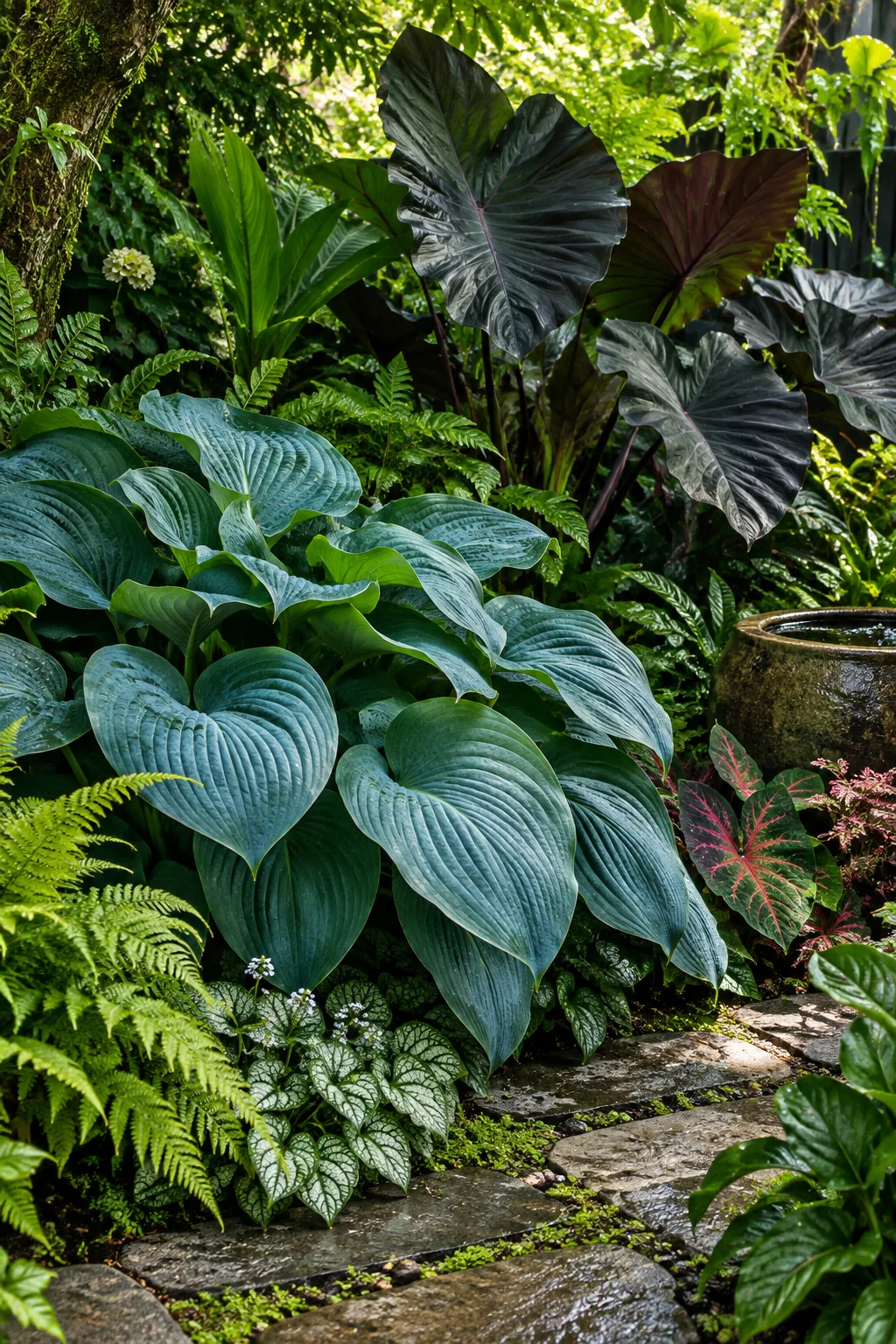
Bold tropical-style shade: Oversized foliage plants like giant hostas and elephant ears turn a shaded corner into a lush jungle.
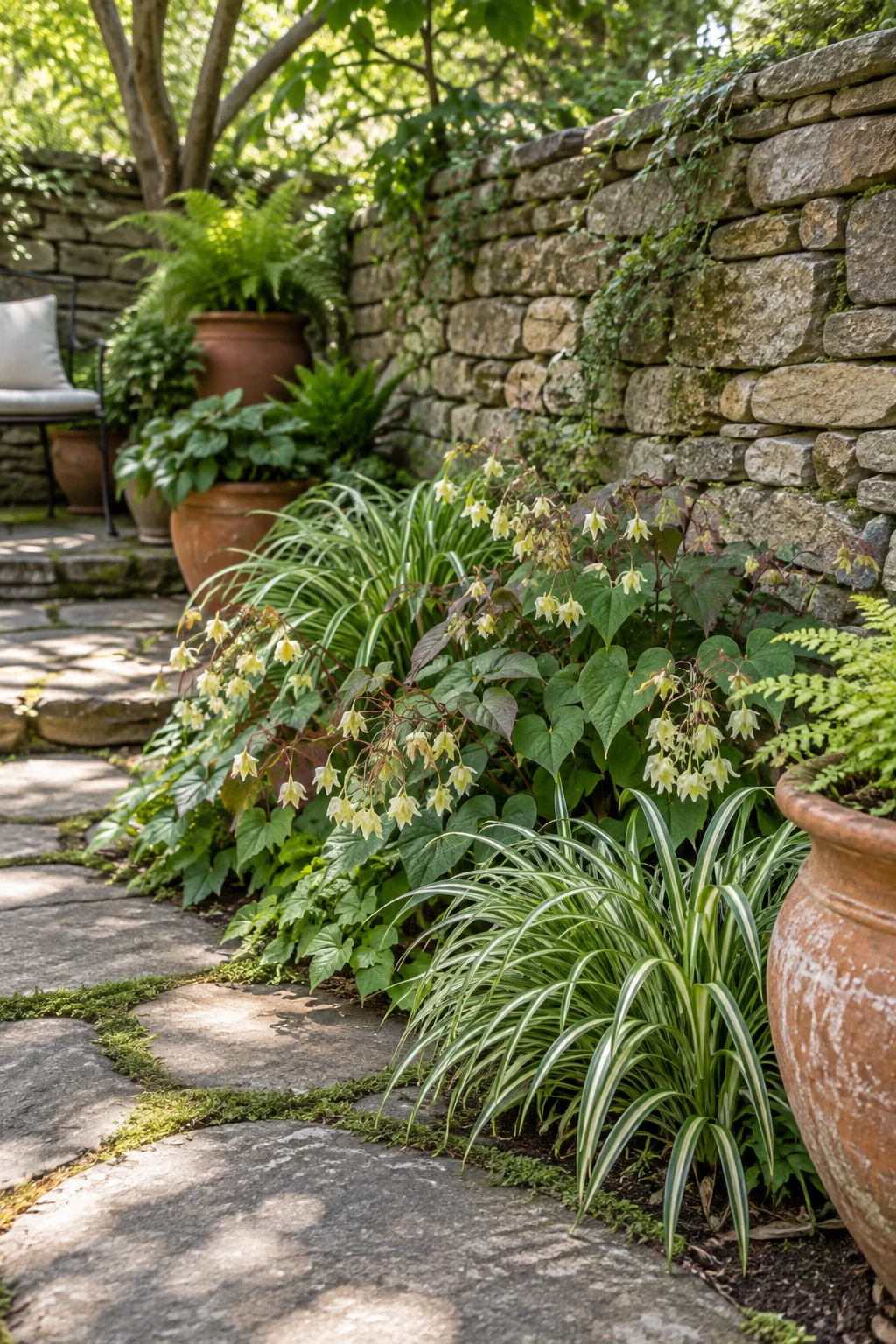
Dry shade courtyard garden: Drought-tolerant shade plants thrive in the challenging, dry soil found at the base of established stone walls.
Print the Sun-Hours Plant Sheet
With your light logged and the bed prepared, use page two of the printable sheet to select your varieties, which are strictly sorted by sun requirements and specific soil moisture levels.
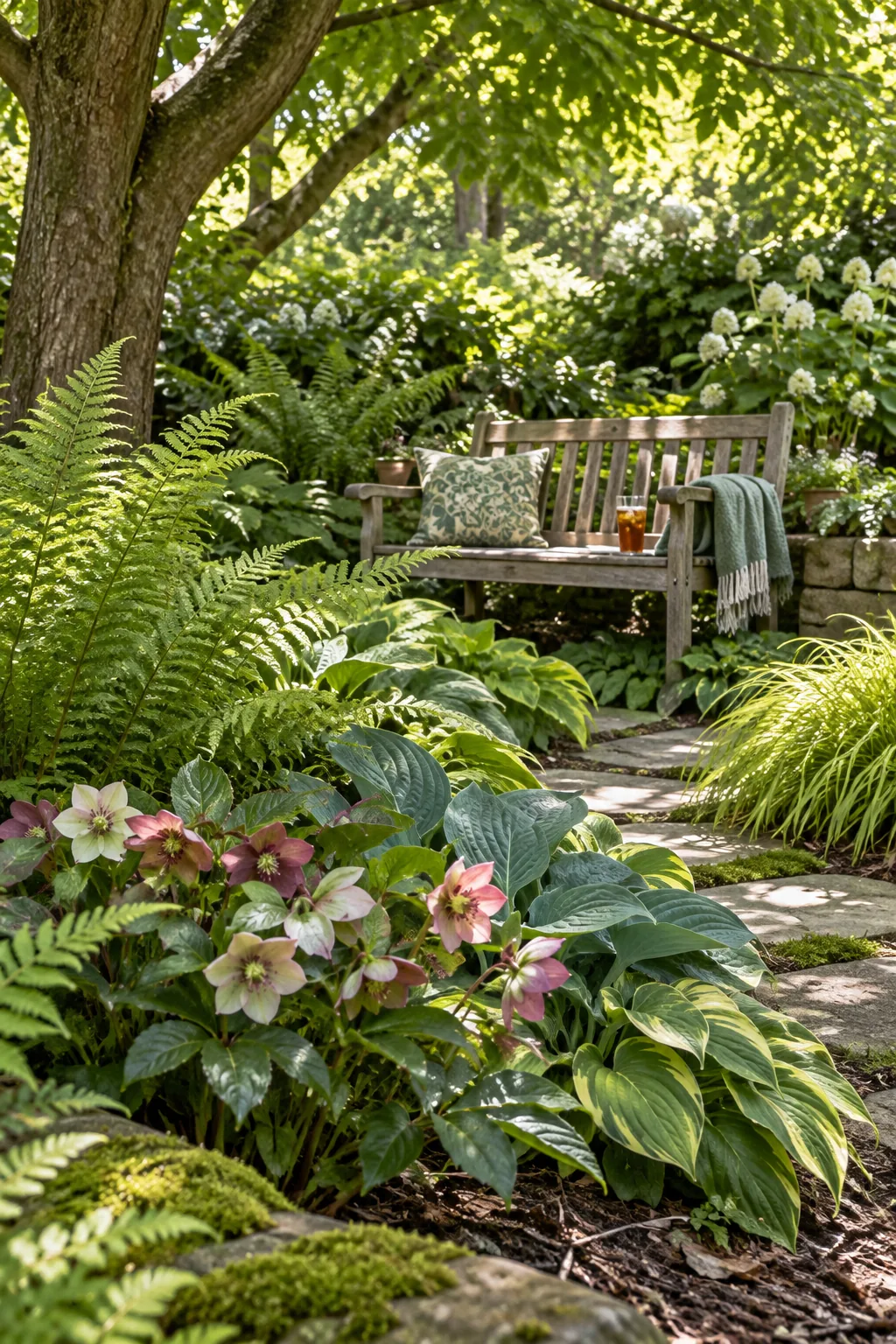
Cross-reference your hourly light log with this comprehensive plant list to guarantee every single fern and hosta is placed exactly where it will flourish, effortlessly turning your careful planning into a thriving summer retreat.