Movie Room Secrets: The Ultimate Hidden Setup Checklist
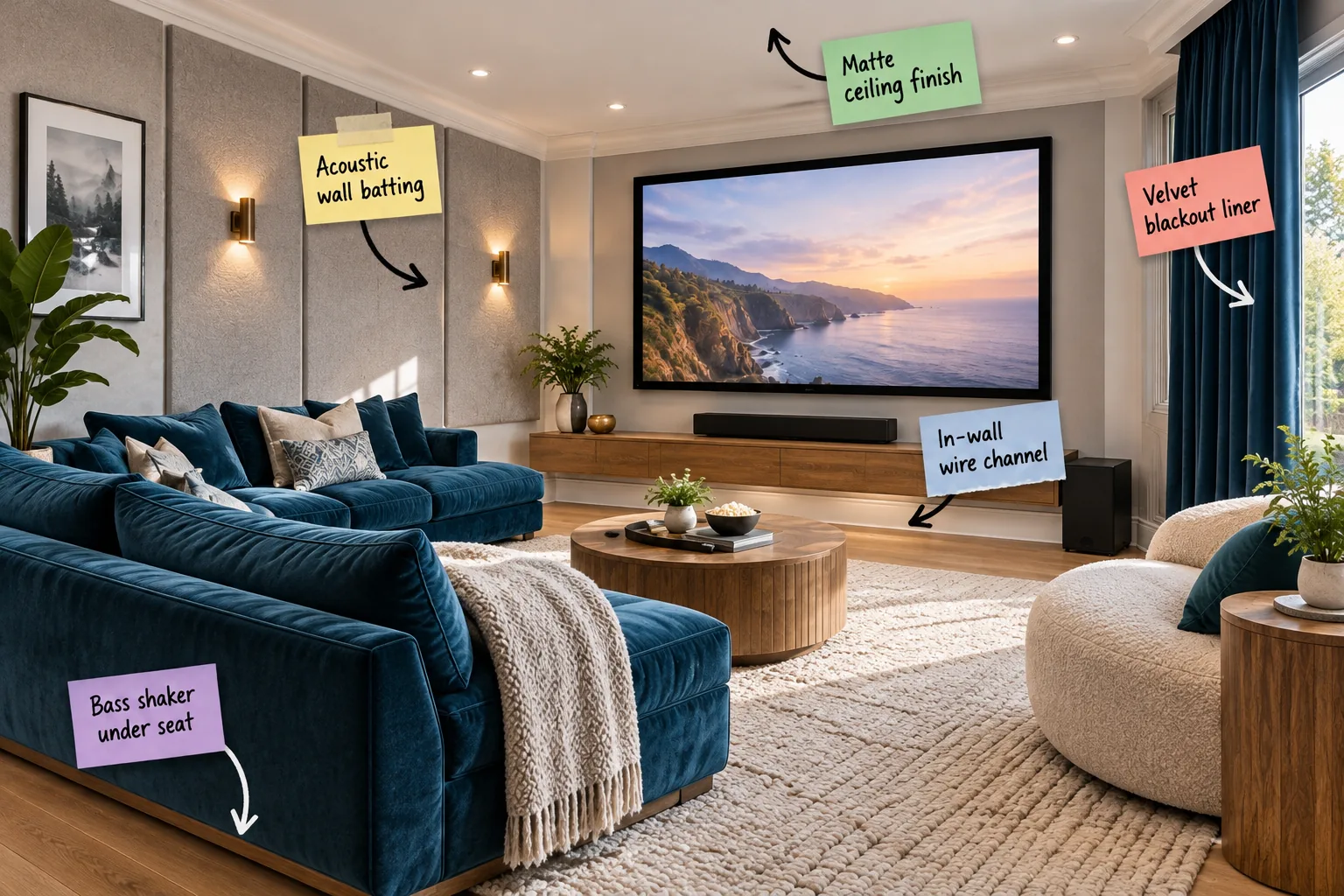
You can build a truly immersive home theater with hidden acoustic and visual upgrades using our complete movie room setup checklist. Moving from the room’s architectural shell down to the tactile seating experience ensures every cinematic detail shines.
Eliminate glare with a matte ceiling finish
Ceiling reflections ruin screen contrast and instantly pull the viewer out of the experience. In my own Denver basement, switching the glossy overhead paint to a true matte ceiling finish completely eliminated distracting light pools during dark scenes.
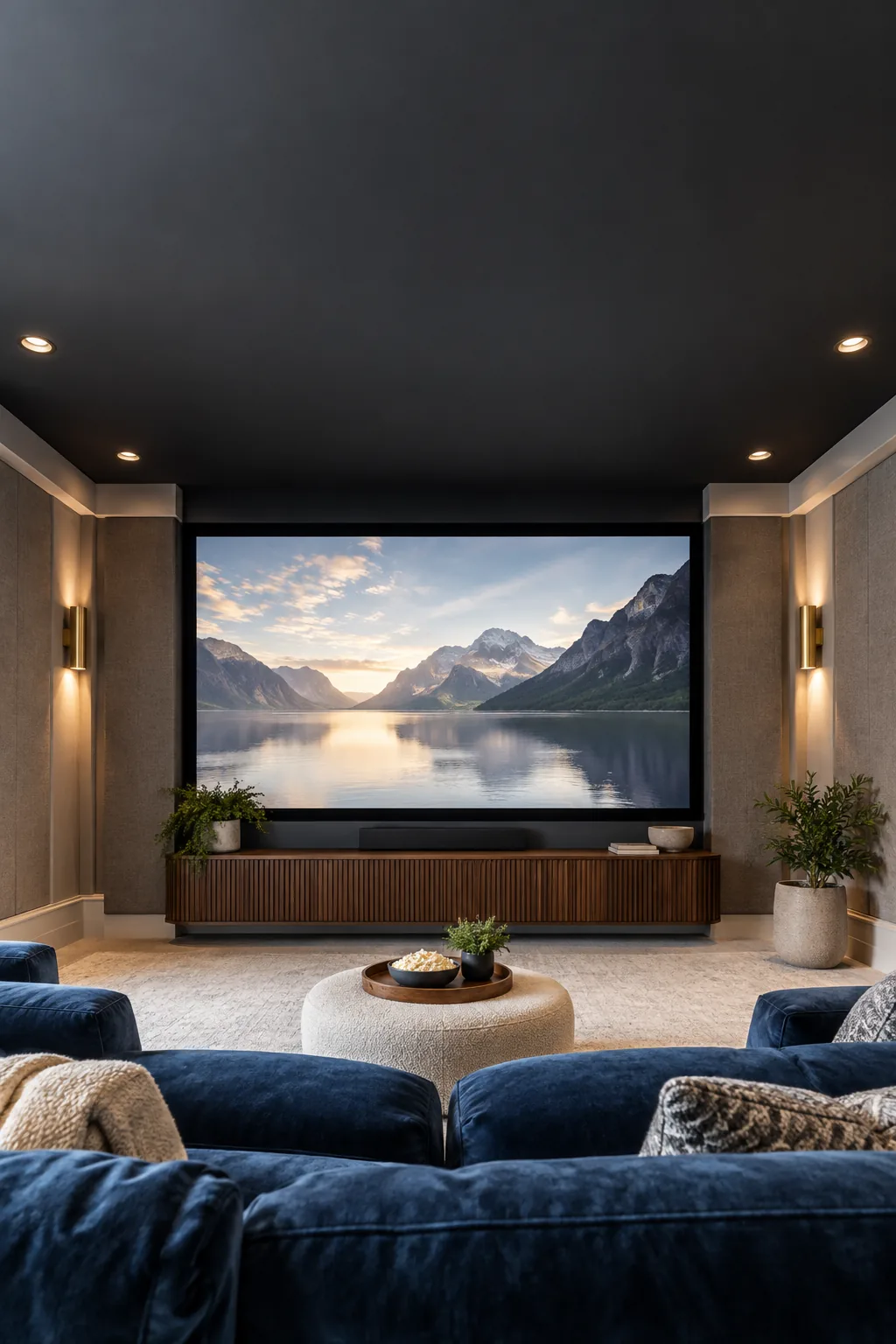
For the ceiling area immediately surrounding the screen, always specify a flat paint formula with a Light Reflectance Value (LRV) below 15.
Select a dark architectural color palette
Establishing a proper baseline for your theater begins with wrapping the entire space in deep, light-absorbing tones. Bright walls reflect ambient screen light back into the room, washing out the delicate shadow details in your favorite films.
| Surface | Finish | LRV Limit |
|---|---|---|
| Walls | Eggshell | Under 20 |
| Trim | Satin | Under 15 |
| Doors | Matte | Under 15 |
Choosing rich charcoal, deep navy, or forest green ensures the room virtually disappears when the projector turns on. Keep the trim strictly monochromatic to prevent any distracting architectural outlines during dark scenes.
Seal the room’s entrance with a solid core door
Containing the explosive sound of an action sequence requires mass and tight physical barriers. Replacing a standard hollow interior door with a heavy solid core slab immediately blocks low-frequency rumble from escaping into the hallway.
- Install an automatic acoustic door bottom that drops down to seal the floor gap.
- Apply perimeter weatherstripping to the door stops to block high-frequency leaks.
- Choose heavy-duty ball-bearing hinges to support the added weight smoothly.
A properly sealed entrance acts as the first critical boundary in your acoustic isolation strategy. You should feel a slight resistance from the air pressure when pulling the door completely shut.
Soften echoes using acoustic wall batting
Standard hard drywall bounces high frequencies around the space, severely muddying dialogue and surround effects. Installing acoustic wall batting directly behind elegant fabric-wrapped panels traps those errant sound waves before they reflect.
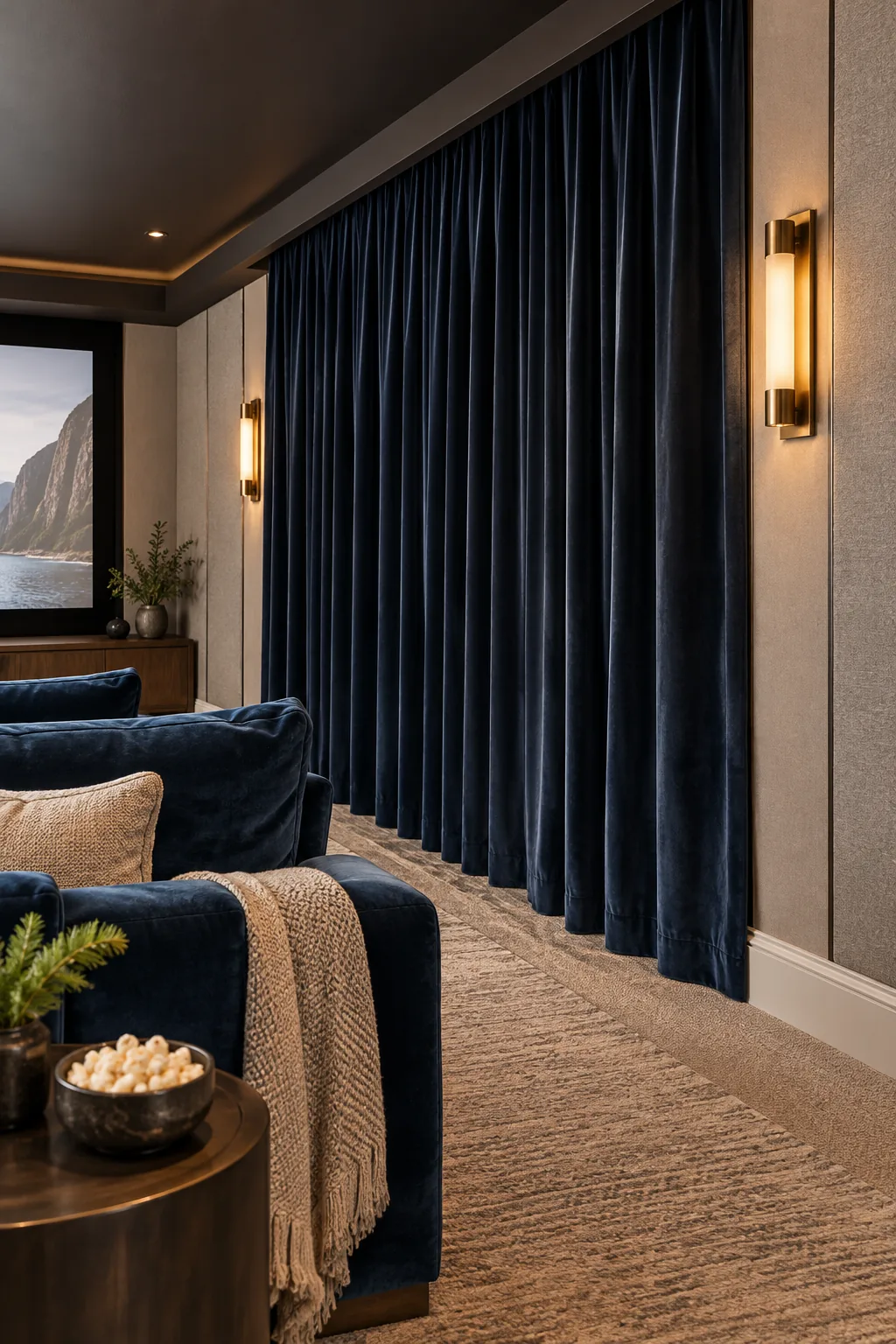
Aim to cover at least 30 percent of the wall surface with 1-inch to 2-inch thick acoustic batting for optimal dampening.
Choose a low-pile rug to minimize sound reflections
Hardwood or polished concrete floors create massive acoustic bounce directly between the speakers and your ears. Rolling out a dense, low-pile rug anchors the seating area while absorbing those harsh primary floor reflections.
Ensure the rug extends at least two feet beyond the front of your main seating to catch the direct acoustic bounce from the center channel speaker.
Block daylight with a velvet blackout liner
True cinematic darkness requires far more than standard heavy curtains covering the glass. I learned early on that adding a dedicated velvet blackout liner to the back of your drapes is the only way to stop midday sun.
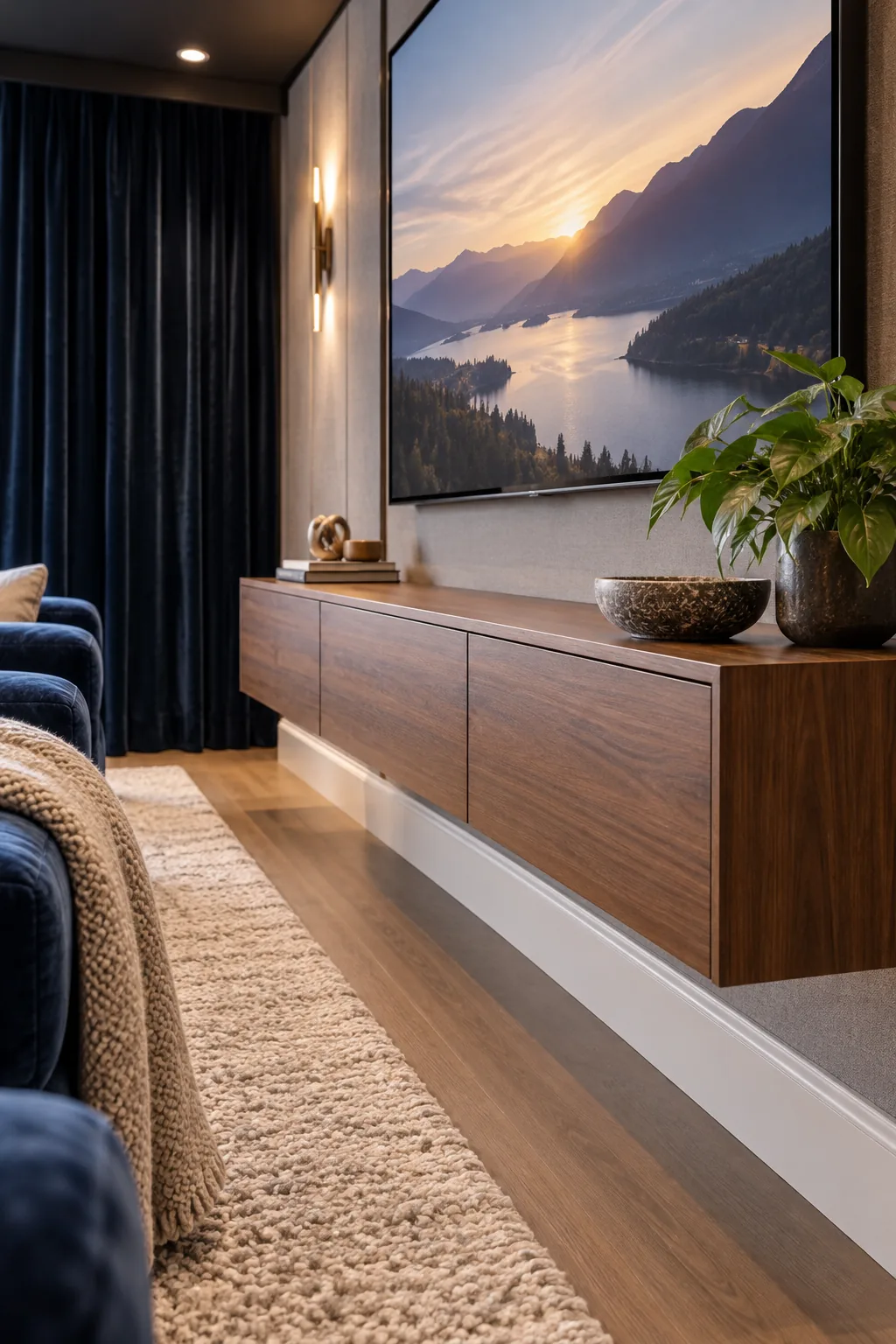
Even the thickest velvet will fail to keep a room pitch-black if the installation ignores how light wraps around edges.
Install a dedicated circuit for AV hardware
High-end amplifiers draw massive amounts of current during explosive dynamic peaks. Running a dedicated 20-amp electrical circuit straight to the equipment rack prevents voltage drops that can clip your audio or dim the lights.
Manage power with a dedicated power conditioner
Raw wall power fluctuates constantly, introducing subtle hums and static into sensitive audio equipment. Plugging your entire rack into a high-grade power conditioner filters out electrical noise and protects your investment from catastrophic power surges.
Incorporate a dedicated media storage closet
Keeping physical media, spare controllers, and 3D glasses out of the main viewing area maintains the room’s sleek aesthetic. Converting an adjacent hallway space into a dedicated media storage closet ensures everything remains accessible without cluttering the theater.
Hide cables in an in-wall wire channel
Dangling cords instantly ruin the polished cinematic illusion you worked so hard to create. Routing your HDMI and power cords through an in-wall wire channel keeps the visual focus entirely on the screen.
Position a 2-inch PVC channel directly behind the media console to keep the baseboards completely clear of clutter.
Plan for equipment ventilation
Modern AV equipment packs massive power into small chassis, making active airflow a strict requirement for closed media consoles.
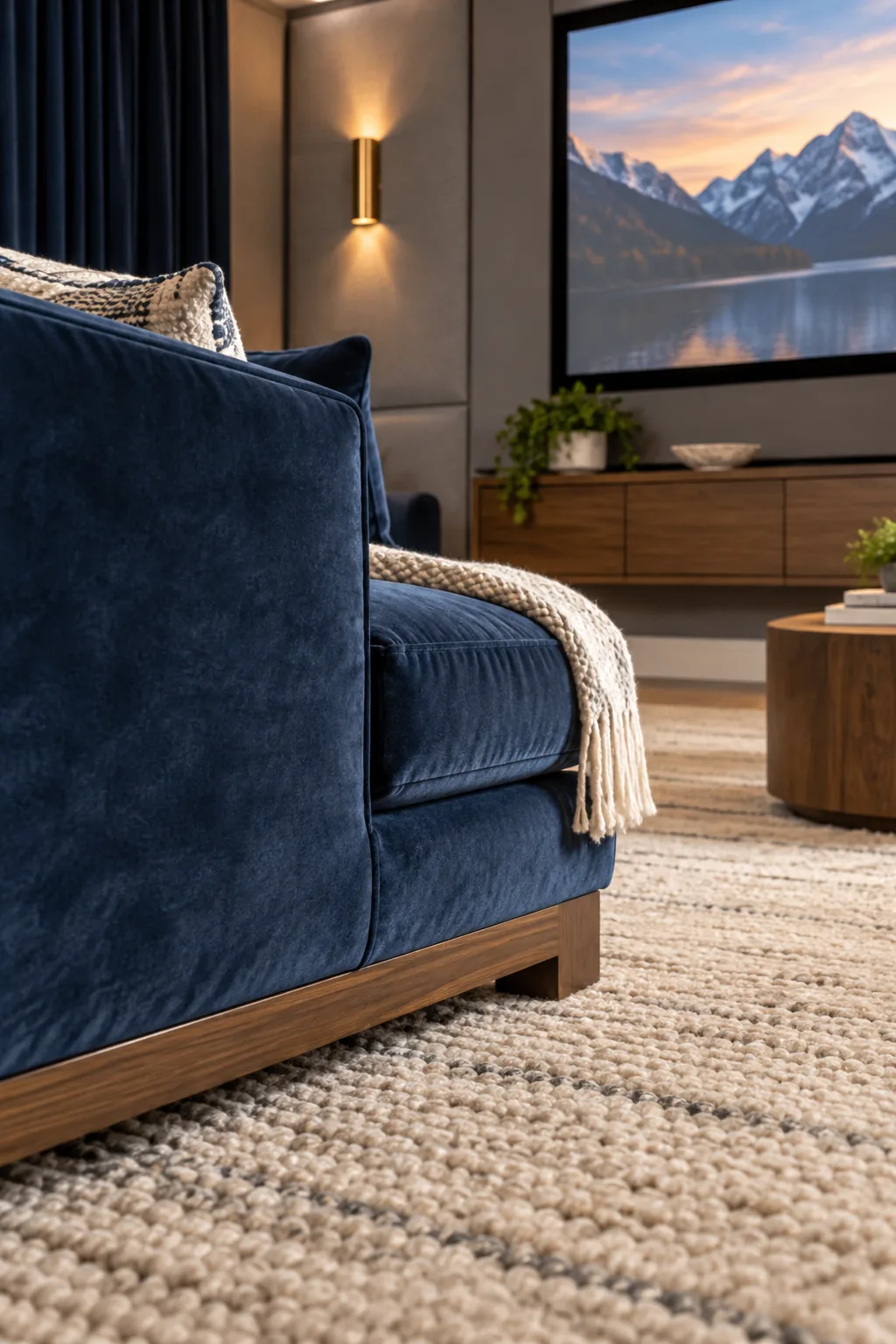
Always leave at least 3 inches of vertical clearance above power-heavy receivers to prevent mid-movie thermal shutdowns.
Zone the climate control for a full theater
A room packed with warm bodies and hot electronics will quickly become uncomfortably stuffy. Adding a dedicated mini-split AC unit or a zoned damper ensures the theater stays cool without freezing the rest of the house.
Dampen the HVAC supply registers
Standard metal air vents rattle aggressively when hit with heavy bass frequencies, ruining quiet, suspenseful movie moments. Swapping them for heavy-duty wood or composite registers lined with felt strips completely eliminates that distracting metallic vibration.
Calibrate the surround sound speaker angles
Throwing speakers into random corners destroys the immersive three-dimensional soundstage. Angle your front left and right speakers exactly 22 to 30 degrees from the primary viewing position to lock in the audio imaging.
Conceal surround speakers behind acoustic fabric
Bulky speaker cabinets jutting out from the walls disrupt the clean, cinematic aesthetic. Building shallow columns wrapped in acoustically transparent fabric allows you to hide the surround channels completely without muffling the high-frequency details.
Anchor the seating platform for optimal bass
Building a tiered riser gives the second row perfect sightlines, but an empty wooden box acts like a giant resonant drum. Fill the entire platform cavity with standard pink fiberglass insulation to kill unwanted bass reverberation.
Add tactile immersion with a bass shaker
You can feel the intense on-screen action without needing deafening, neighbor-waking subwoofer volume. Mounting a tactile transducer, or bass shaker under seat, translates low-end audio frequencies directly into physical vibration.
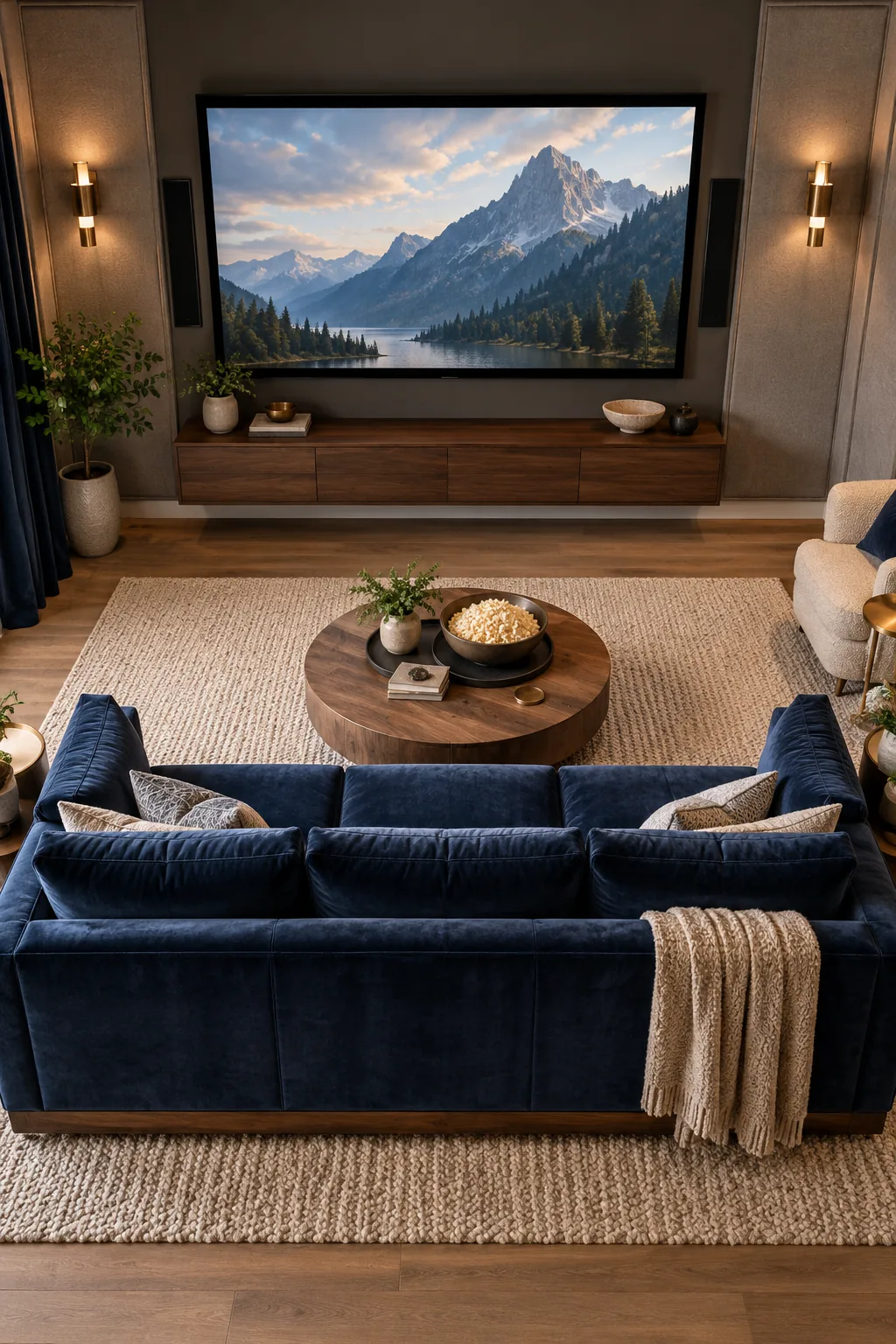
Secure the shaker firmly to the solid wooden frame beneath your main plush sofa for maximum impact.
Layer dimmable LED bias lighting
Staring at a blindingly bright screen in a pitch-black room causes rapid eye fatigue. Installing a soft 6500K LED bias light strip behind the display eases the strain while making the screen’s black levels appear deeper.
Install smart lighting control keypads
Fumbling for a traditional light switch in the dark instantly breaks the cinematic mood. Programming a smart lighting control keypad near the seating area allows you to slowly dim the overheads and activate the bias lighting with a single button press.
Calculate screen height and viewing distance
Neck strain is the absolute fastest way to ruin a weekend movie marathon. Position your display so the middle third sits exactly at eye level from your primary seating position.
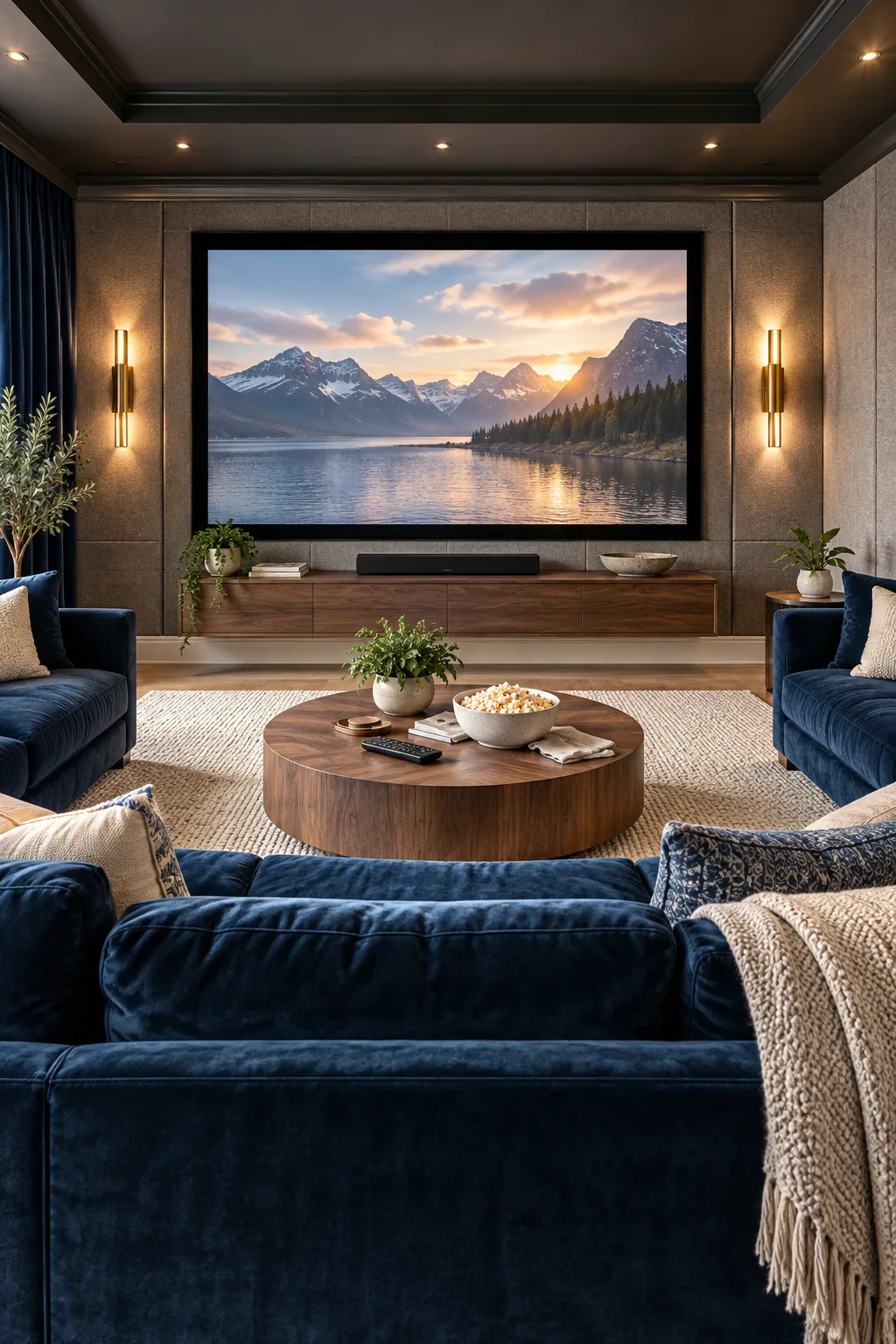
Keep the main sofa positioned at a distance equal to 1.5 to 2 times the screen’s diagonal measurement.
The hidden movie room setup checklist
Bringing all these hidden architectural and hardware upgrades together requires one organized, actionable plan. Running through a final checklist guarantees your space is perfectly tuned before the first screening.
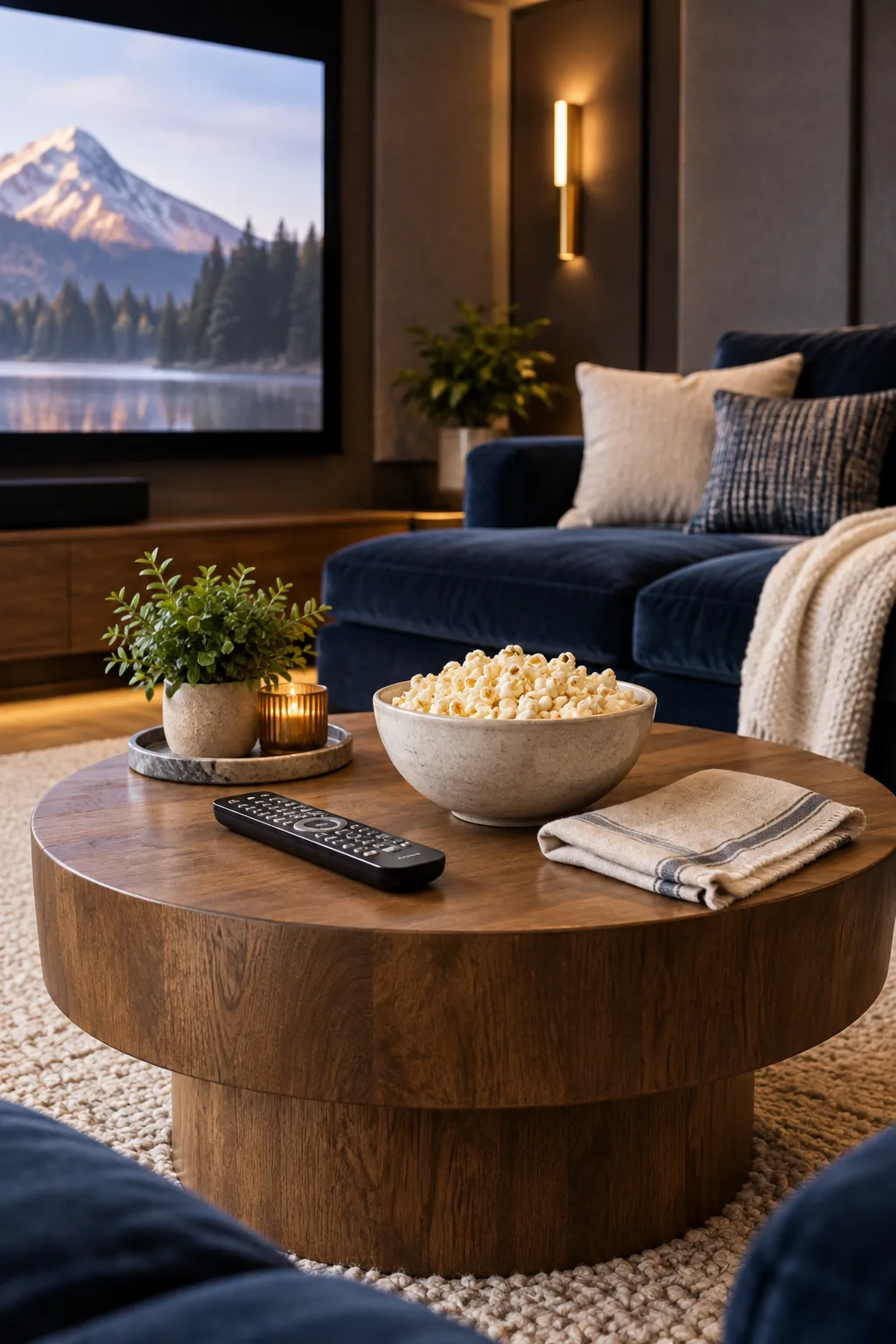
Complete these critical verification steps to confirm your movie room setup checklist is fully implemented.
- Verify acoustic panels cover 30 percent of the hard wall surfaces.
- Check that blackout curtain tracks extend 6 inches past the window frame.
- Confirm all cables are routed through the in-wall channel.
- Test the bass shaker response on the sofa’s wooden frame.
4 ways to style your home theater
Find the perfect aesthetic for your movie room with these distinct cinematic looks.
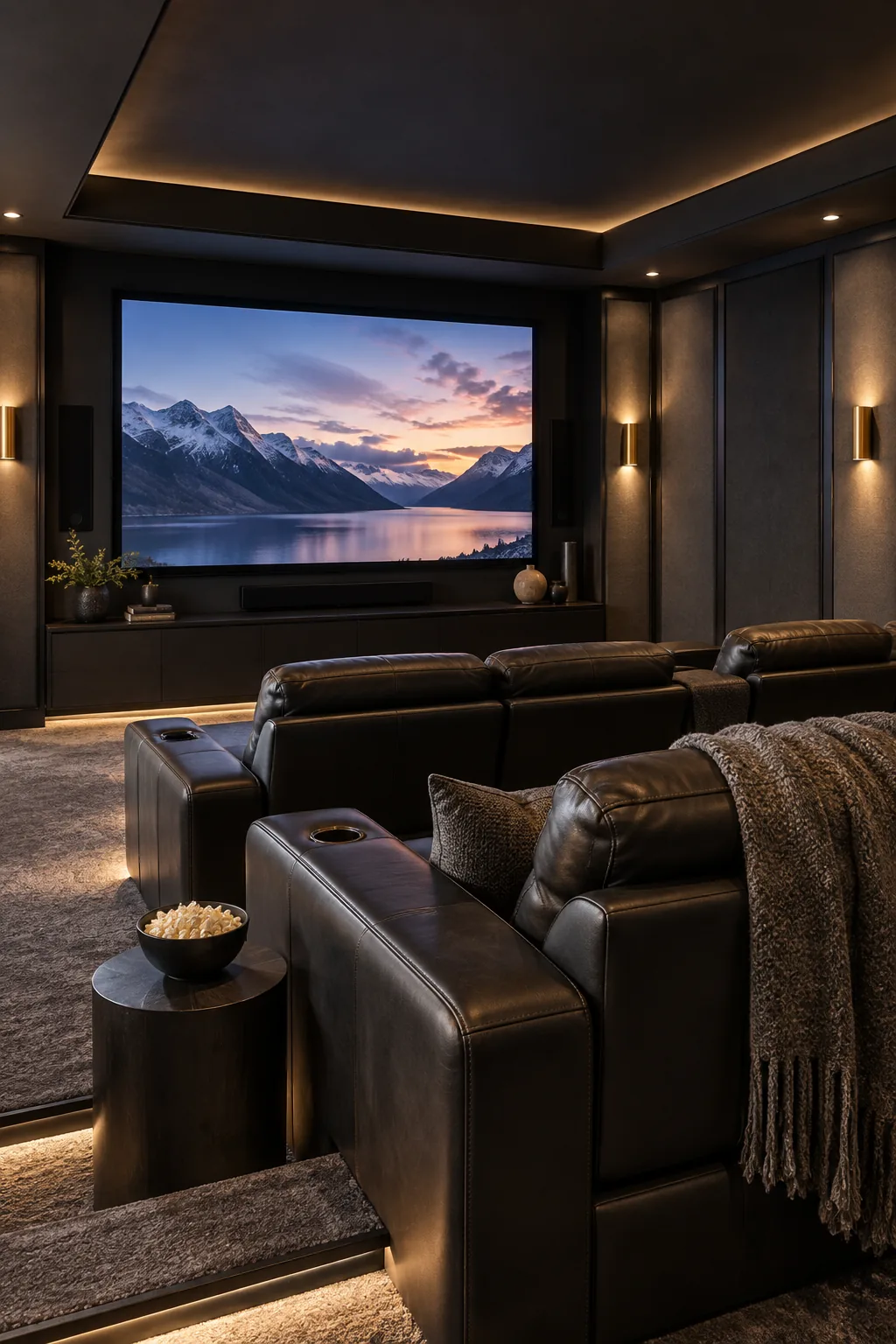
Moody modern leather theater: Dark slate walls and sleek leather seating create a distraction-free environment. Use matte black finishes to absorb stray light completely.
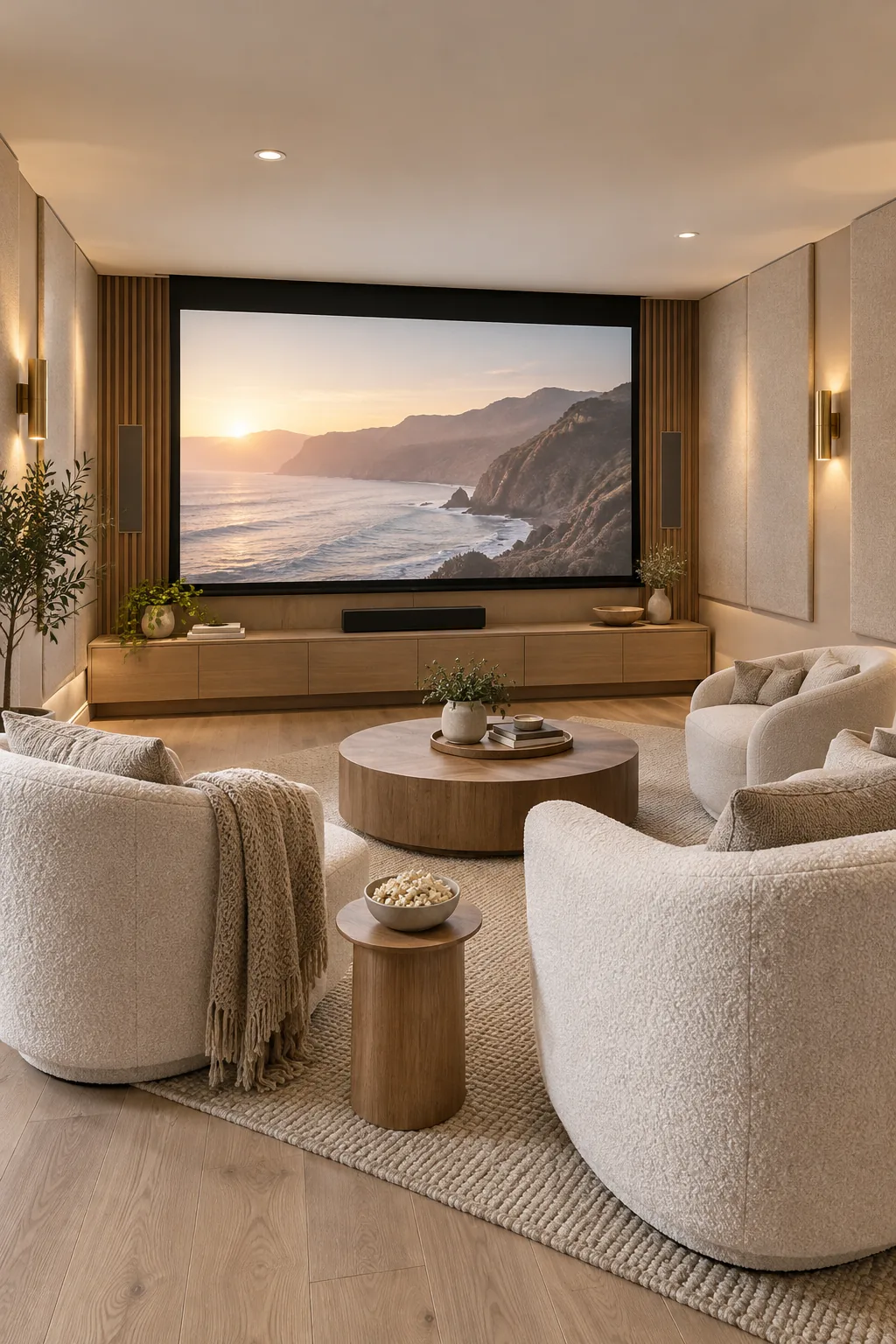
Warm minimalist media room: Beige acoustic panels and ivory boucle chairs prove a media room can feel bright. Hide all technology within light oak cabinetry.
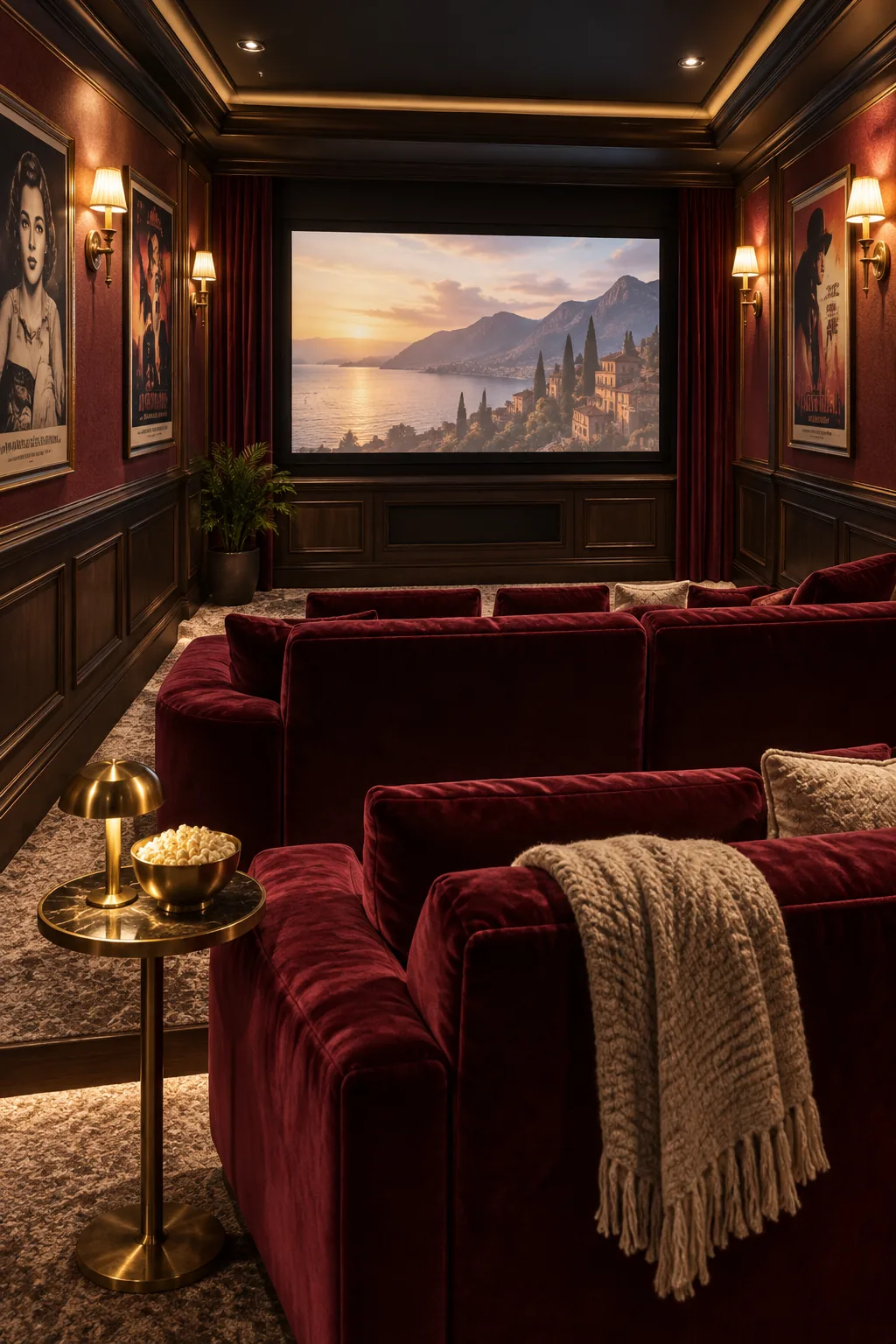
Classic burgundy cinema style: Deep burgundy velvet and ornate brass sconces evoke the golden age of cinema. Frame vintage posters behind anti-reflective museum glass.
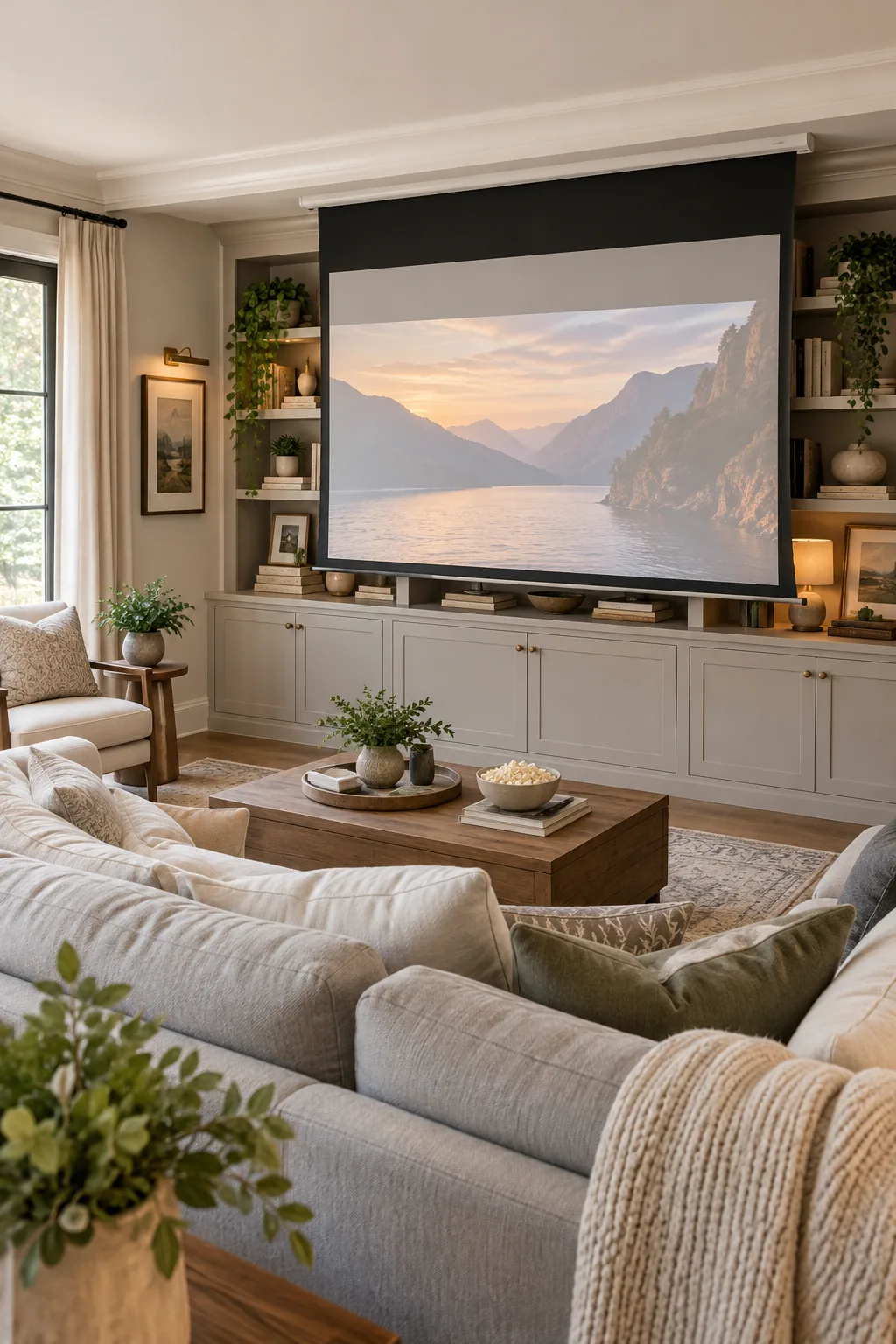
Hidden dual-purpose living room: A motorized drop-down screen transforms an elegant living space instantly. Conceal the projector within a custom ceiling bulkhead.