
12+ Practical Dining Room Rug Ideas for Your Home
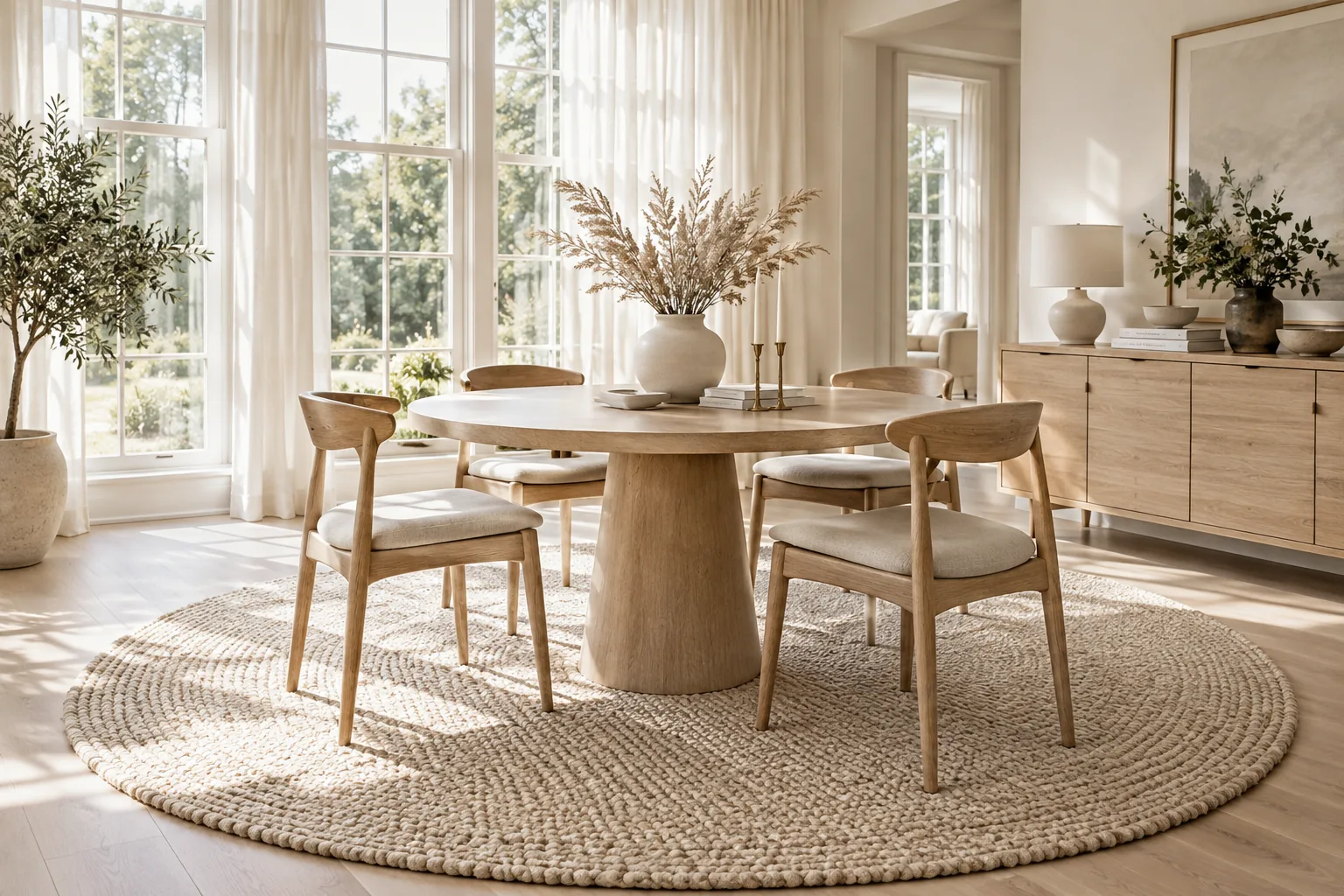
A good dining room rug anchors your table and instantly makes the space feel finished. I put together these practical styling tips to help you choose the perfect rug for your daily life.
1. Measure for Chair Clearance
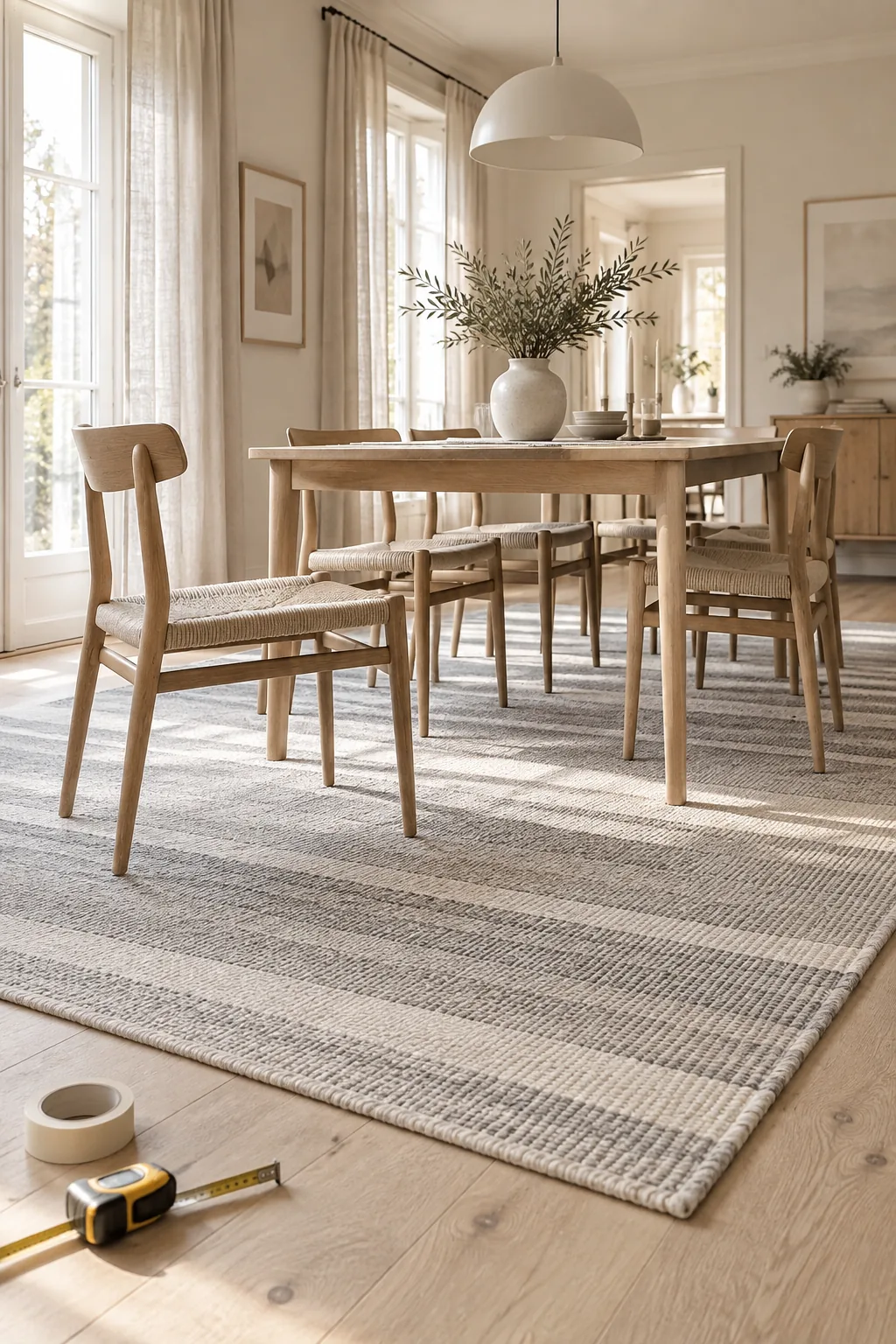
Leave at least 24 inches of rug extending beyond all sides of your dining table. This gives your guests plenty of room to slide their chairs out without catching the edge of the rug. A flatweave rug works beautifully here because chairs glide right over it.
I always tape out the dimensions on the floor before buying anything.
2. Add Modern Contrast
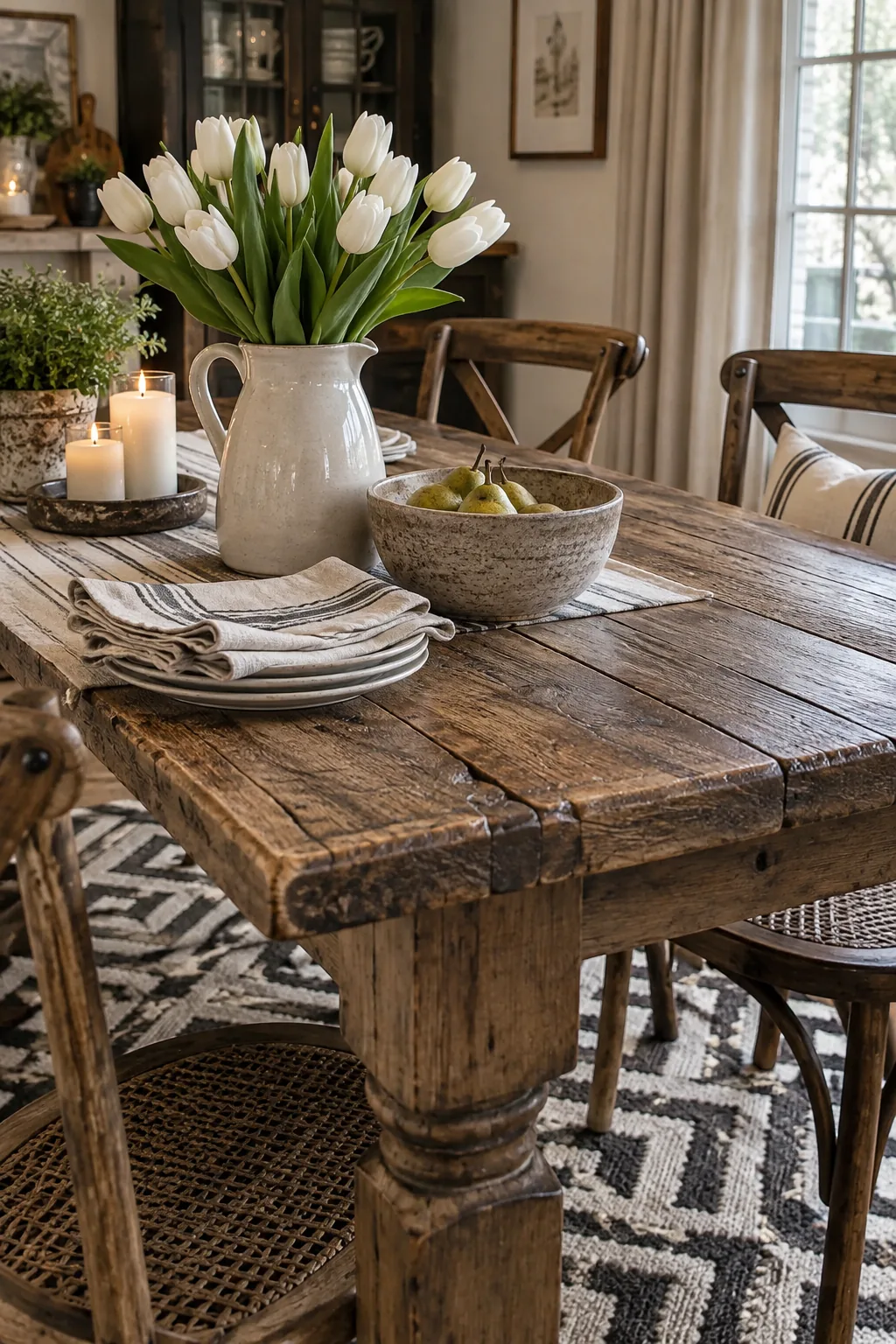
A bold geometric pattern brings an instant modern edge to a traditional dining set. You can mix a heavy wooden farmhouse table with a black and white patterned rug to keep the room from feeling too heavy. The stark contrast creates a perfect balance between rustic and contemporary.
Just make sure the pattern scale does not clash with your curtains.
3. Embrace Washable Materials
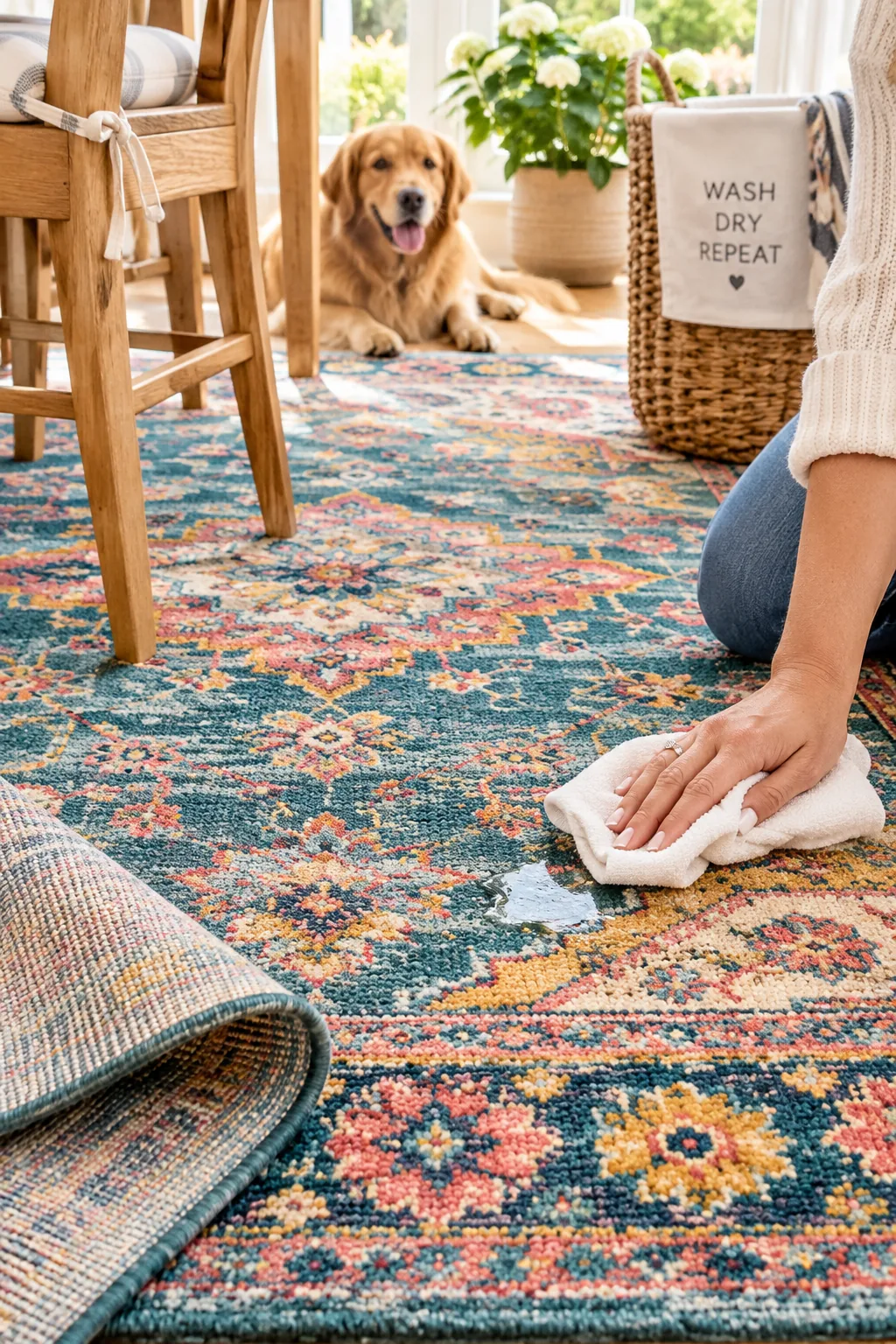
I recently swapped my thick wool rug for a vintage-inspired washable rug, and it completely saved my sanity during family dinners. Spills wipe right up, and you can just toss it in the machine when it gets too messy.
Why it works: Why it works: The low profile of a washable rug stops tripping hazards while keeping dining room maintenance incredibly low.
4. Match the Table Shape
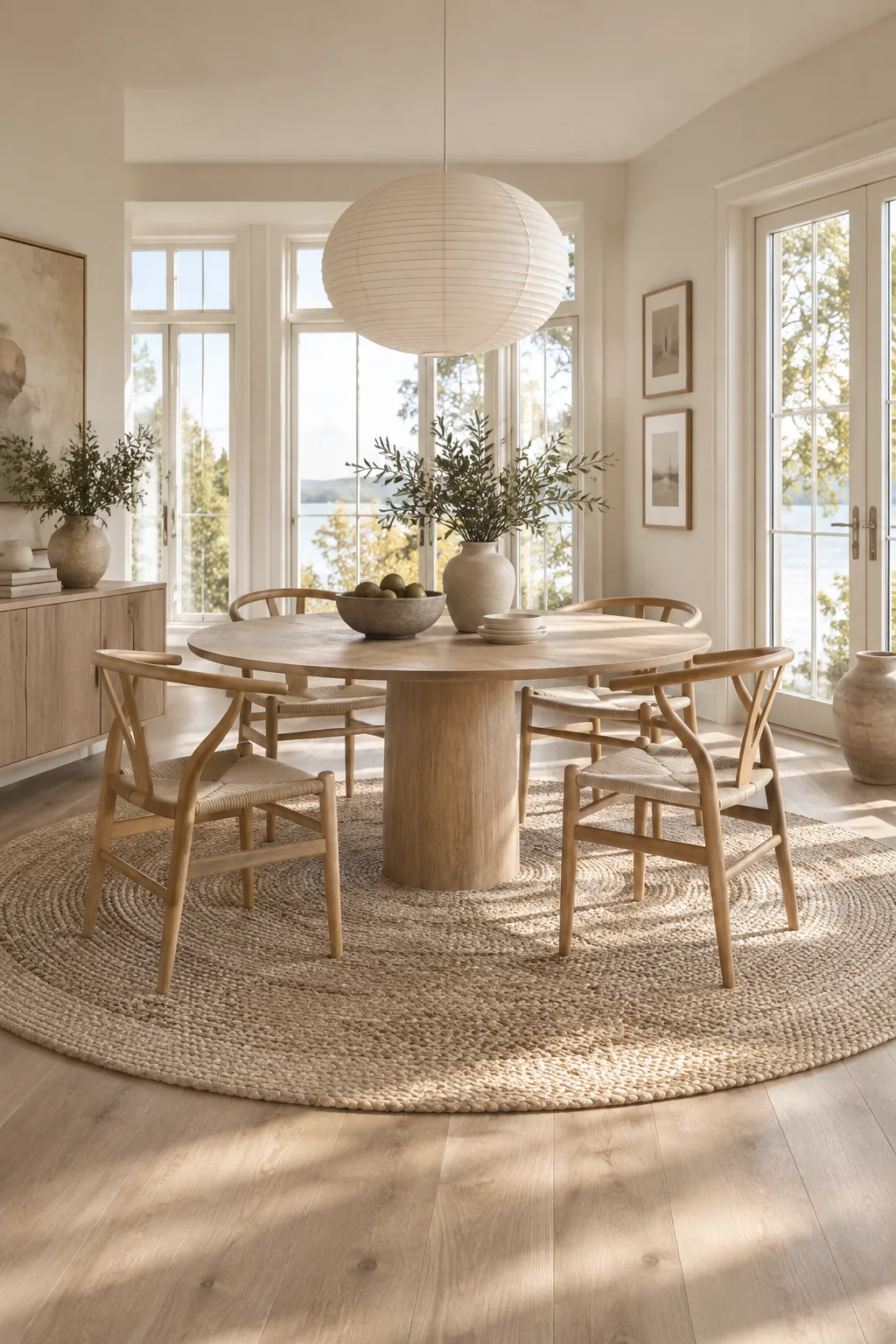
Round dining tables look best when paired with an 8-foot round rug to mirror the shape of the furniture. If you are styling a circular dining setup, keep these materials in mind for the best durability:
- Natural jute for a relaxed coastal feel
- Low-pile synthetic blends for easy spot cleaning
- Tightly woven wool for long-lasting stain resistance
5. Follow the Room Shape
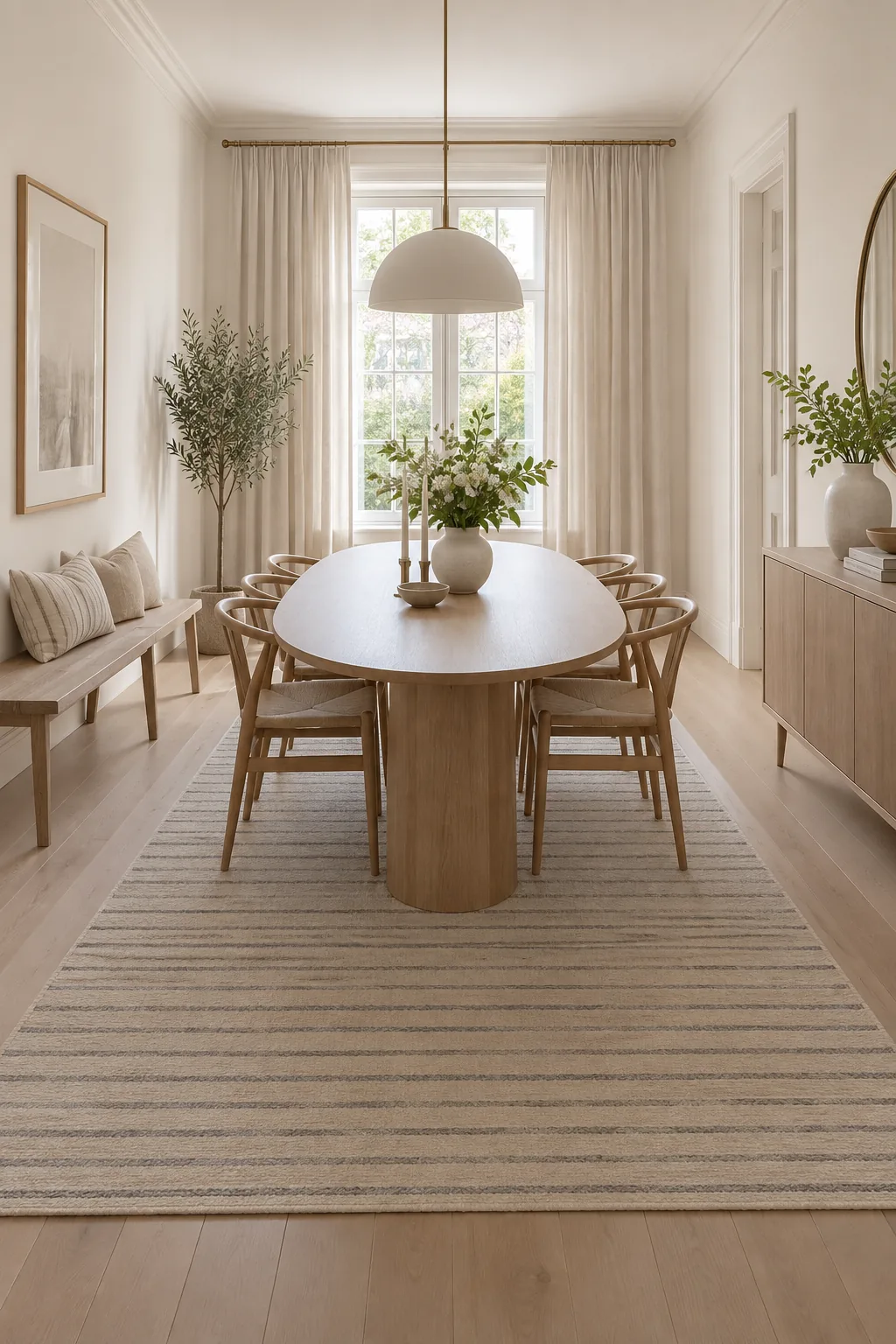
Match the shape of your rug to the shape of your room rather than just the table. A long, narrow dining room benefits from a rectangular runner-style rug, even if you have an oval table sitting in the center. This visually expands the space and makes the whole room feel cohesive.
Leave an equal border of bare floor exposed around the perimeter to frame the space.
6. Layer Textures for Depth
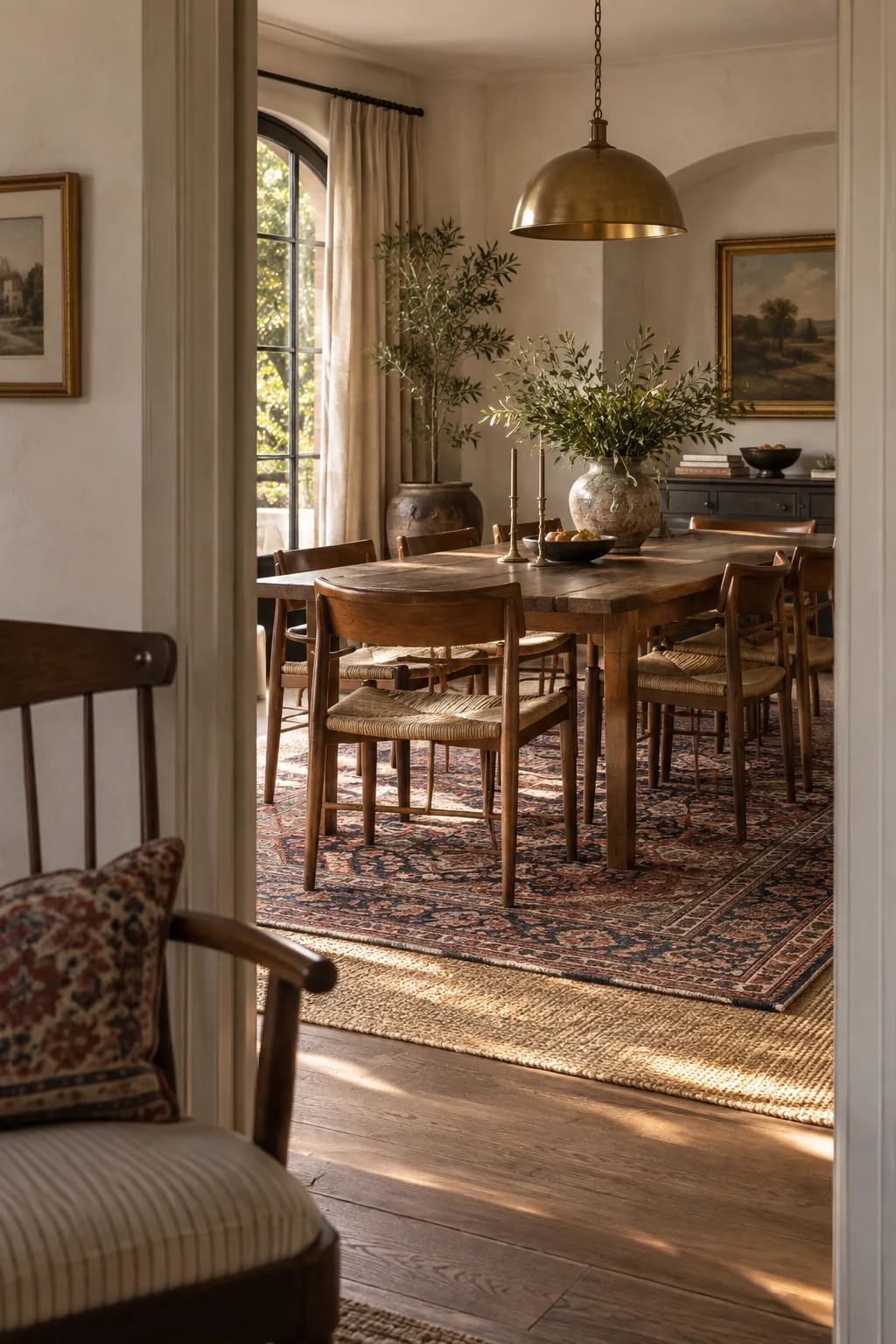
Layering a vintage Turkish rug over a larger sisal base creates a rich, textured, designer-level aesthetic. The natural fiber rug acts as a neutral foundation while the smaller vintage piece adds a necessary pop of color right under the table.
7. Soften Hard Lines
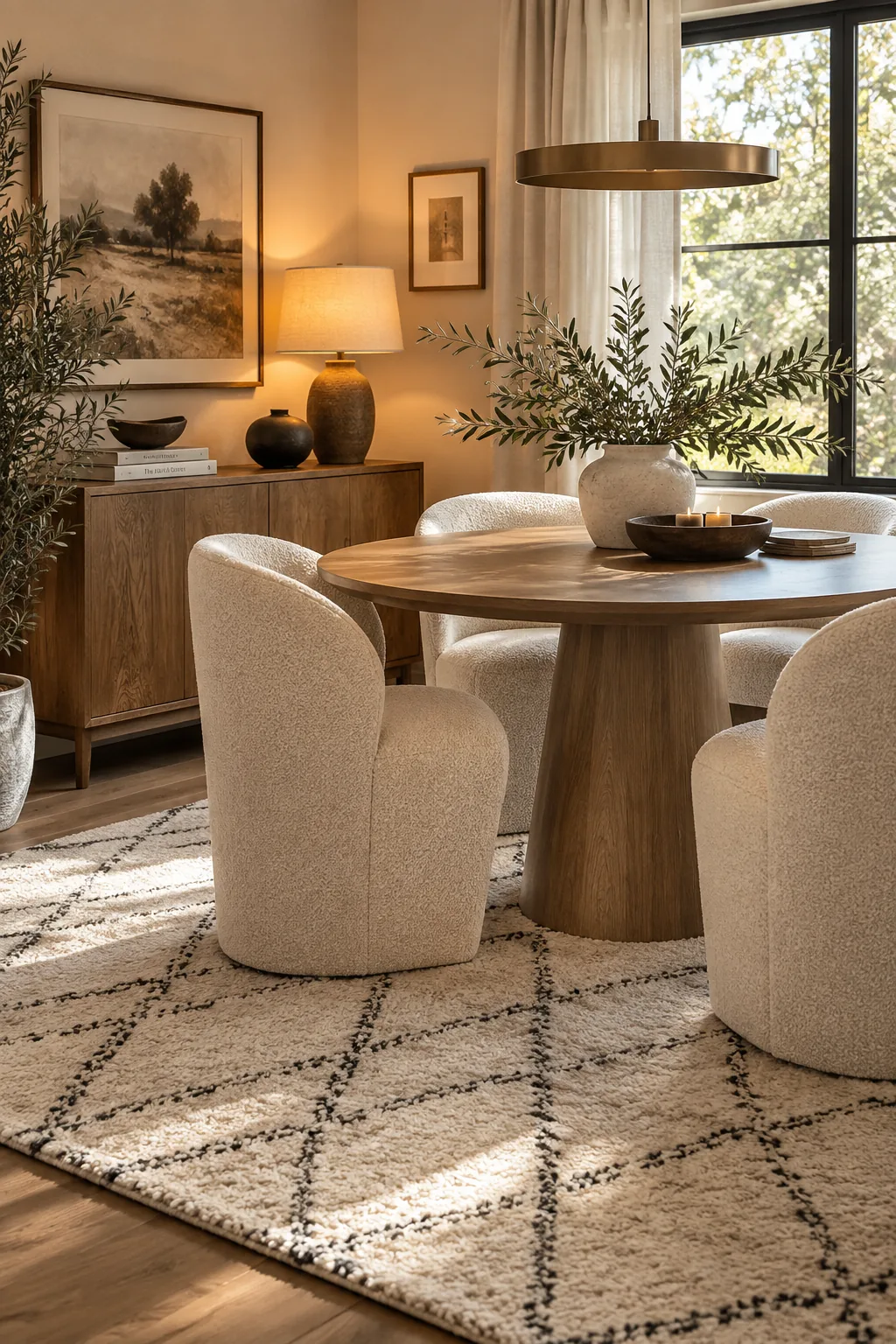
Most dining rooms suffer from too many hard surfaces and straight lines.
Adding a plush Moroccan-style rug introduces much-needed softness. You just have to be careful with food drops.
Keep the pile height under half an inch to make vacuuming easier.
Why it works: Why it works: The textured pile absorbs sound in an echoey room while instantly warming up cold tile or hardwood floors.
8. Brighten Dark Floors
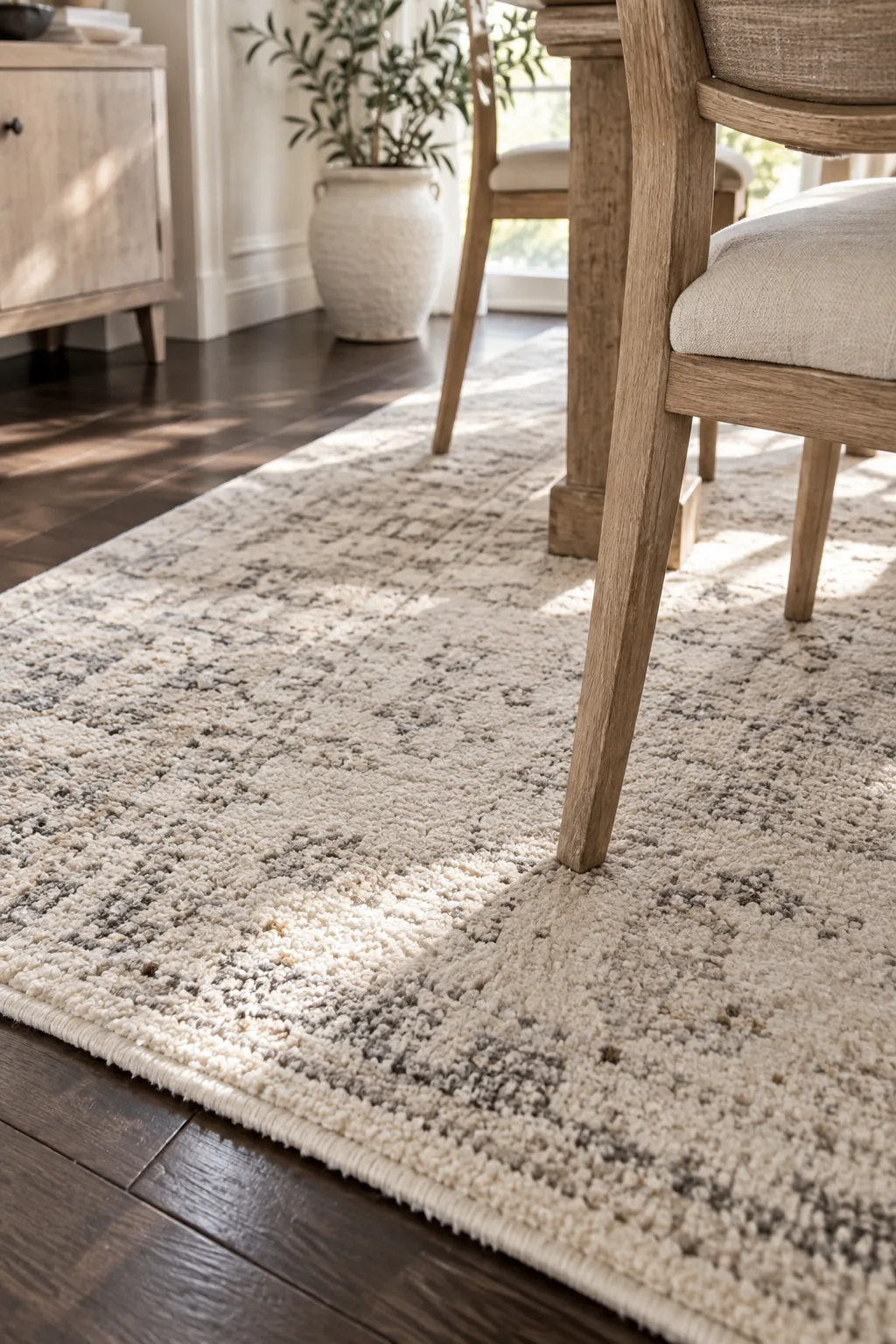
Dark-colored floors absorb light, which can make a small dining room feel cramped and heavy. You can easily counteract this by putting down a light cream rug with subtle gray undertones. The lighter color instantly bounces natural light back up toward the ceiling. I love using a subtle distressed pattern so it hides minor crumbs between vacuuming sessions. It completely brightens the space without requiring a massive renovation.
9. Connect with Wall Art
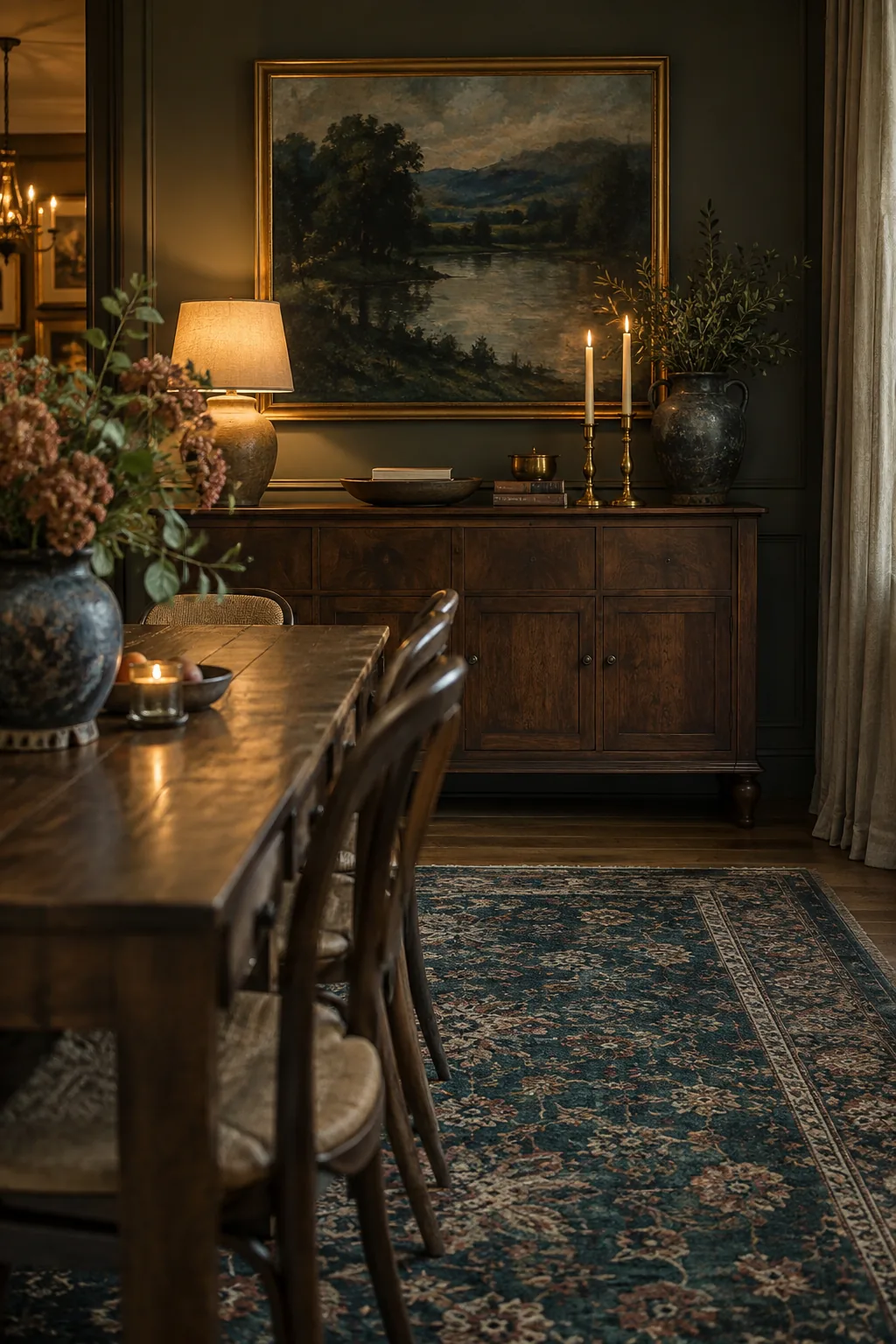
Tying the colors of your rug to your dining room art is what makes the space feel intentionally designed. If you have a moody landscape painting on the wall, pull those deep greens and blues down to the floor with a dark traditional rug.
10. Define Open Floor Plans
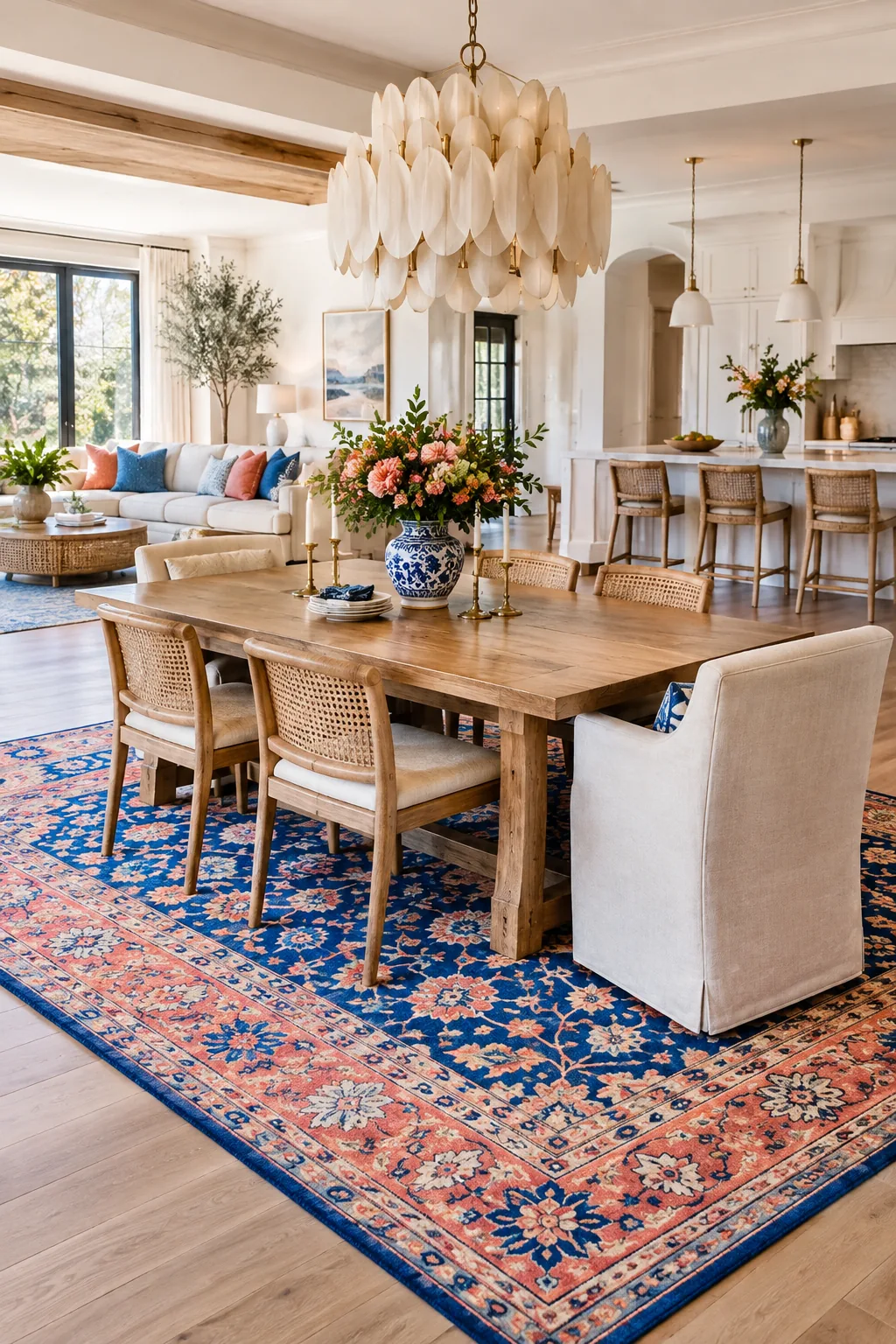
I always struggle with open-concept floor plans because the dining space tends to float away.
Using a vibrant bordered rug creates a clear visual boundary. It acts like an island, telling everyone exactly where the dining room begins and ends.
Pair it with a statement chandelier directly above the table to lock the zone in place.
11. Create Tone-on-Tone Elegance
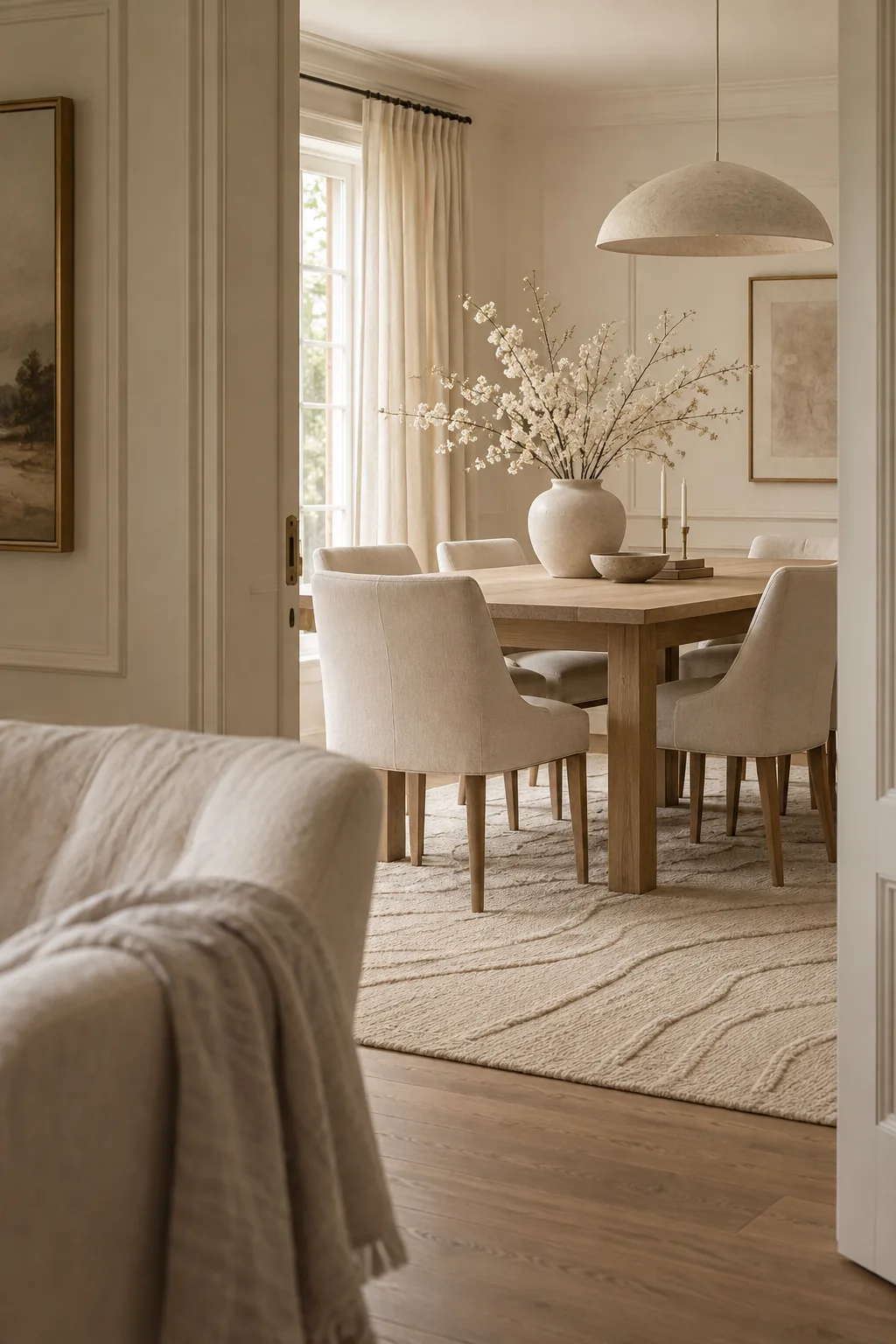
A monochromatic, tone-on-tone setup delivers an incredibly elegant and soothing dining experience. You can achieve this by pairing a light oak table with a warm beige wool rug that features a raised texture rather than a printed pattern. The subtle texture provides visual interest without overwhelming the senses. This approach lets your food and your dinner guests be the absolute stars of the room.
12. Use Outdoor Rugs Inside
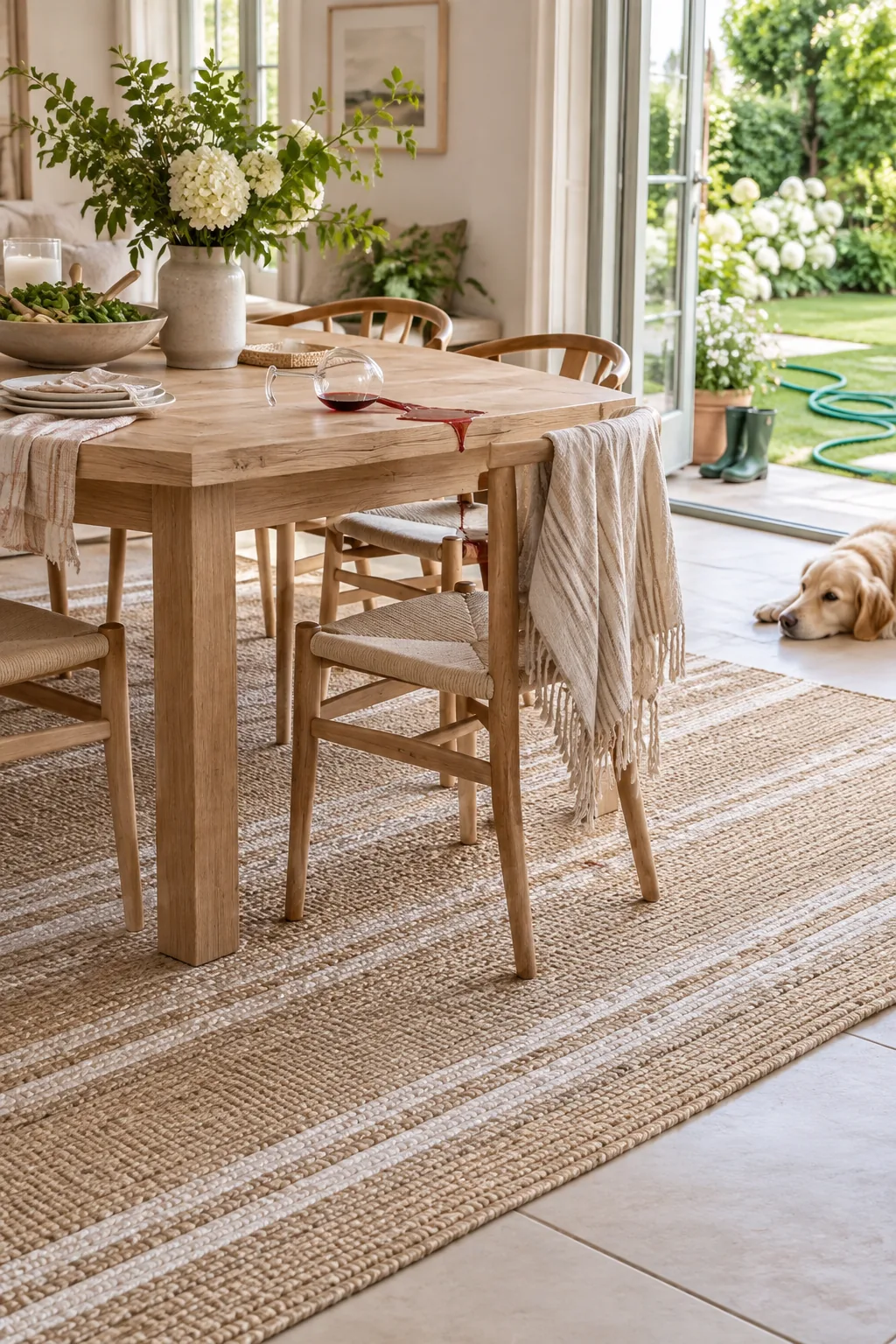
Skip the thick shag rugs entirely if you use your dining room for daily family meals. Opt for an indoor-outdoor rug instead, because they are practically indestructible and can literally be hosed off outside if someone spills a glass of wine.
13. Break Up Wood Tones
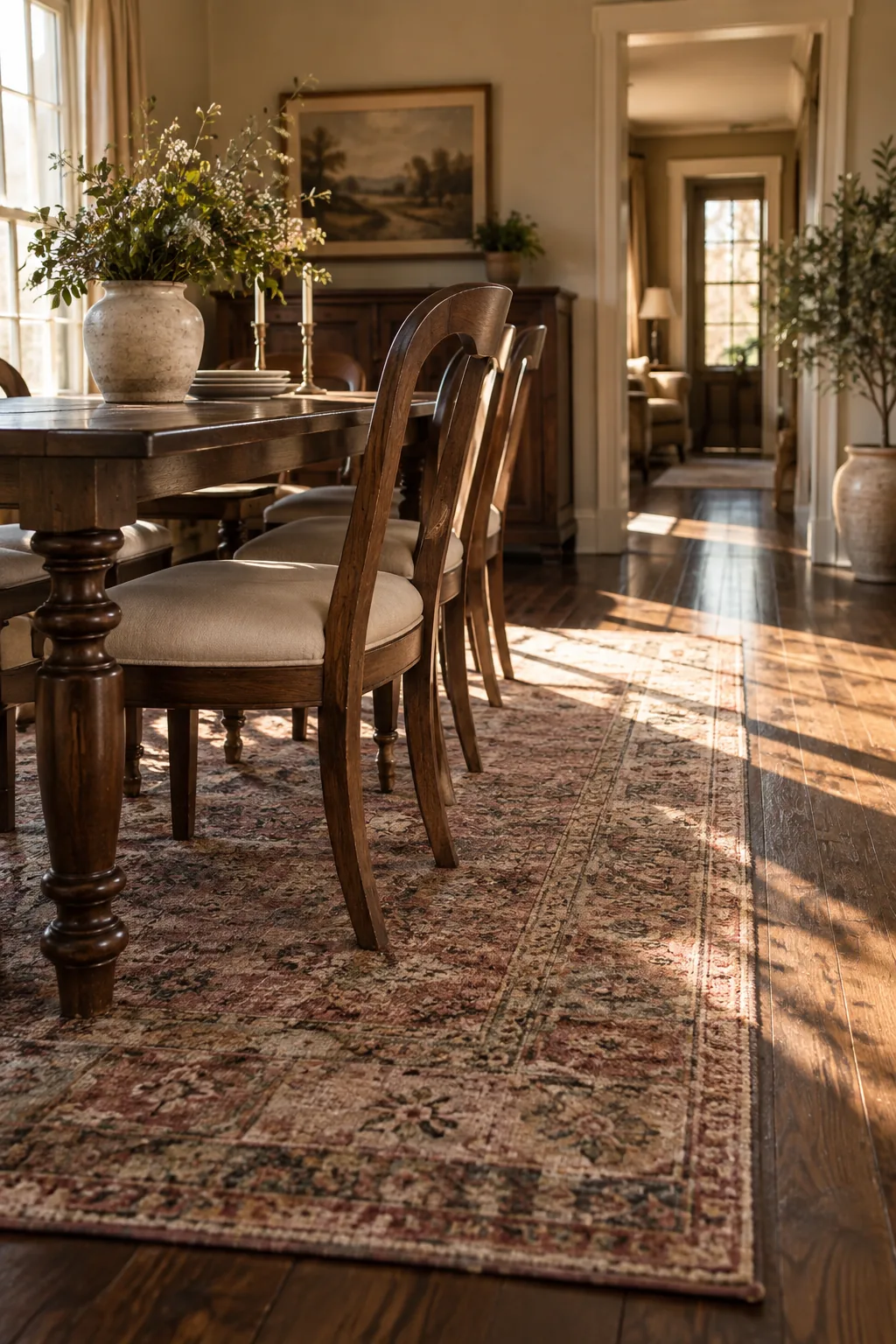
Dark wood dining sets often look heavy and dated when placed directly on dark wood floors. Slipping a faded Persian-style rug between them breaks up the wood tones and gives the furniture room to breathe.