
Heavy Oak Footboard Upcycle with a Moody Matte Black Finish
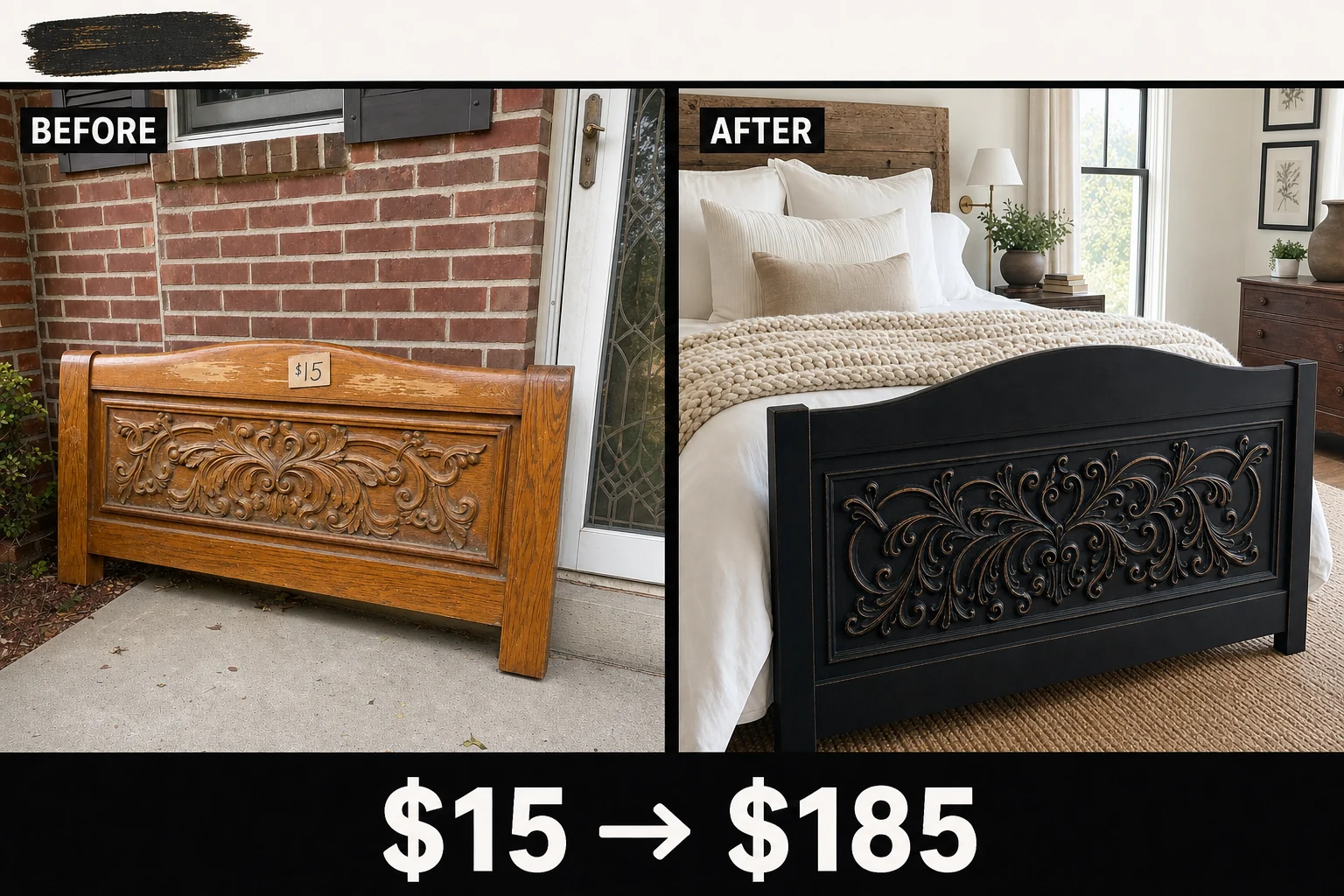
Found on a neighborhood app for a few dollars, this heavy 90s oak piece was waiting on a seller’s front porch. We transformed the faded footboard with matte black milk paint and wet-distressed carvings to reveal the warm wood grain.
Condition Audit
This local listing pickup yielded a solid red oak frame measuring 64 inches wide, 32 inches high, and 3 inches deep. The rectangular silhouette features a gently arched top rail and a massive, deeply carved scrollwork center panel joined with traditional mortise and tenon construction. Unfortunately, the original glossy, faded orange oak finish showed severe wear after years of daily use.
- Sun-faded and flaking clearcoat: Yellowed, peeling patches along the top arched rail prevent new paint from adhering smoothly without a paint bonding agent or heavy sanding.
- Embedded grime in carvings: Dark, sticky buildup deep inside the scrollwork crevices will cause paint to separate and flake off the detailed areas if not degreased thoroughly.
Step 1: Assess the Faded Oak
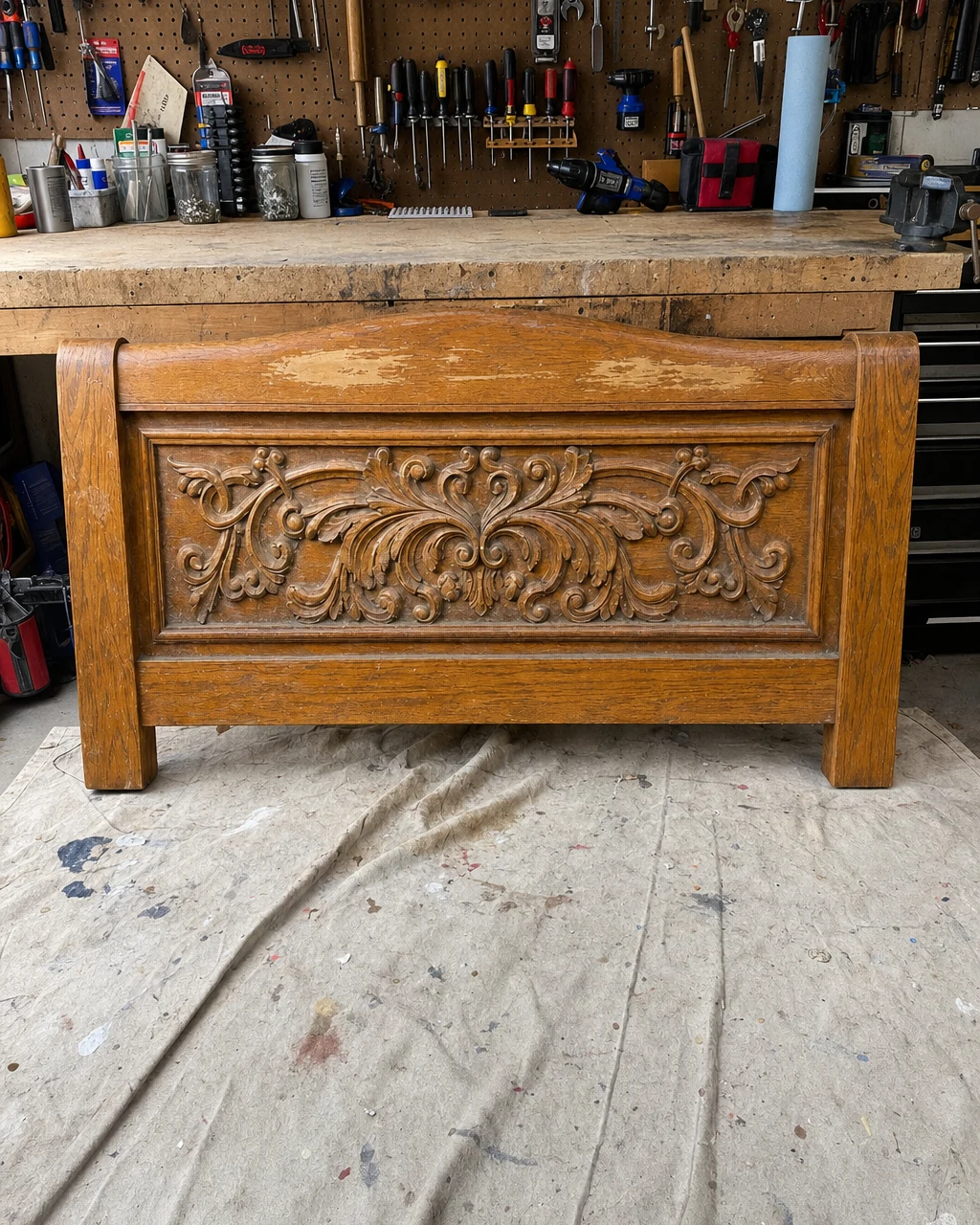
Bring the footboard into the workshop and lay it across a canvas drop cloth. Inspect the flaking clearcoat and grimy carvings to plan the necessary prep work before cleaning. The piece originally sat on a concrete suburban front porch, waiting after the sellers upgraded to a modern upholstered bed. Always wear work gloves when handling secondhand furniture to avoid splinters from degraded finishes.
| Item | Cost |
|---|---|
| Purchase Price | $15 |
| Heavy-Duty Degreaser | $8 |
| Black Milk Paint | $18 |
| Paint Bonding Agent | $12 |
| Liquid Hemp Oil | $15 |
| Total Investment | $68 |
| Estimated Resale Value | $185 |
| Value Gain | $117 |
Step 2: Scrub the Scrollwork
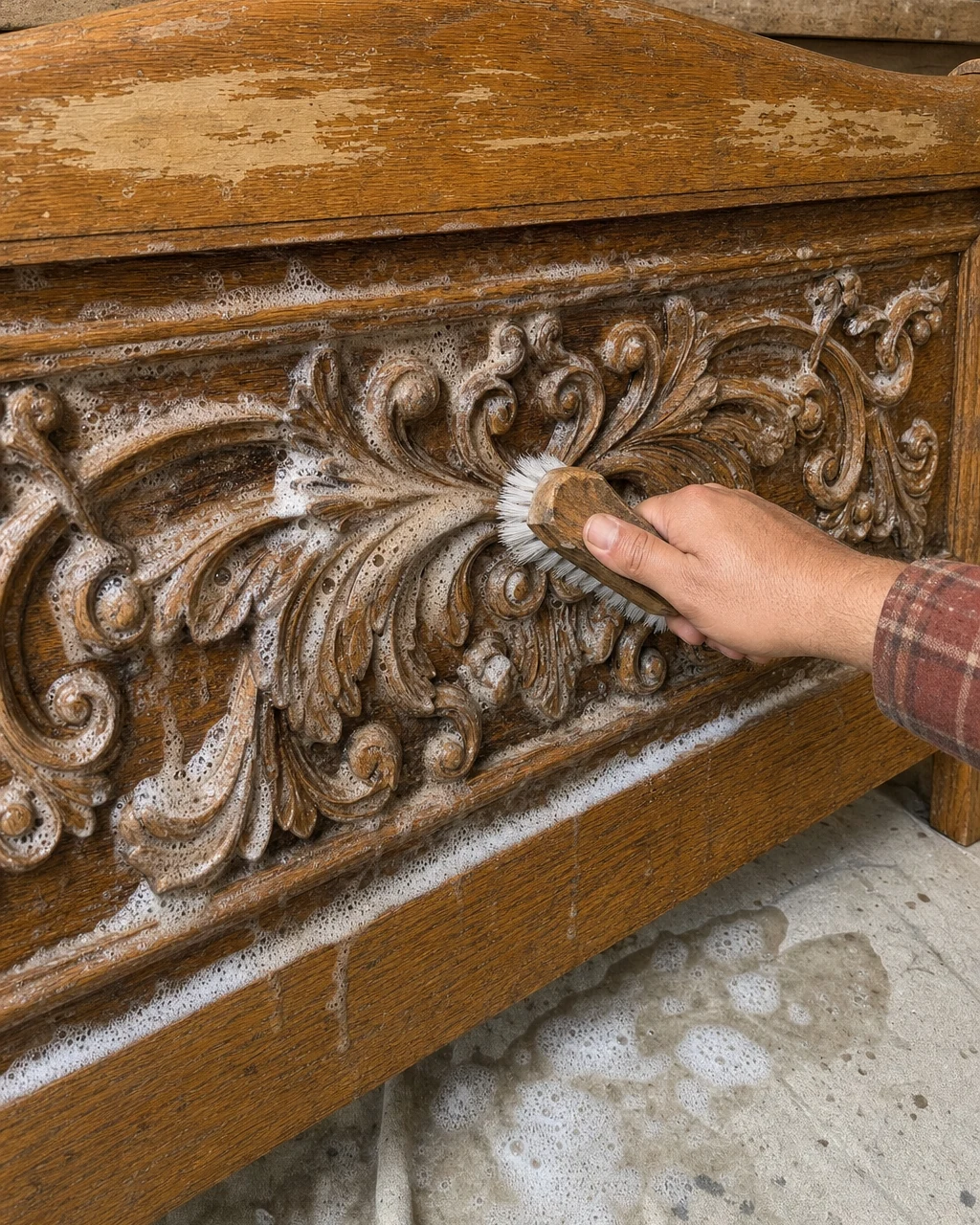
Spray a foaming heavy-duty degreaser directly into the deep scrollwork. Scrub vigorously with a stiff nylon bristle brush to remove all embedded grime, dust buildup, and decades of skin oils. Keep shop rags handy to wipe away the dark brown dirt as the foaming action lifts it from the wood. Wear safety glasses to prevent degreaser splatter from reaching your eyes.
Step 3: Apply the Milk Paint
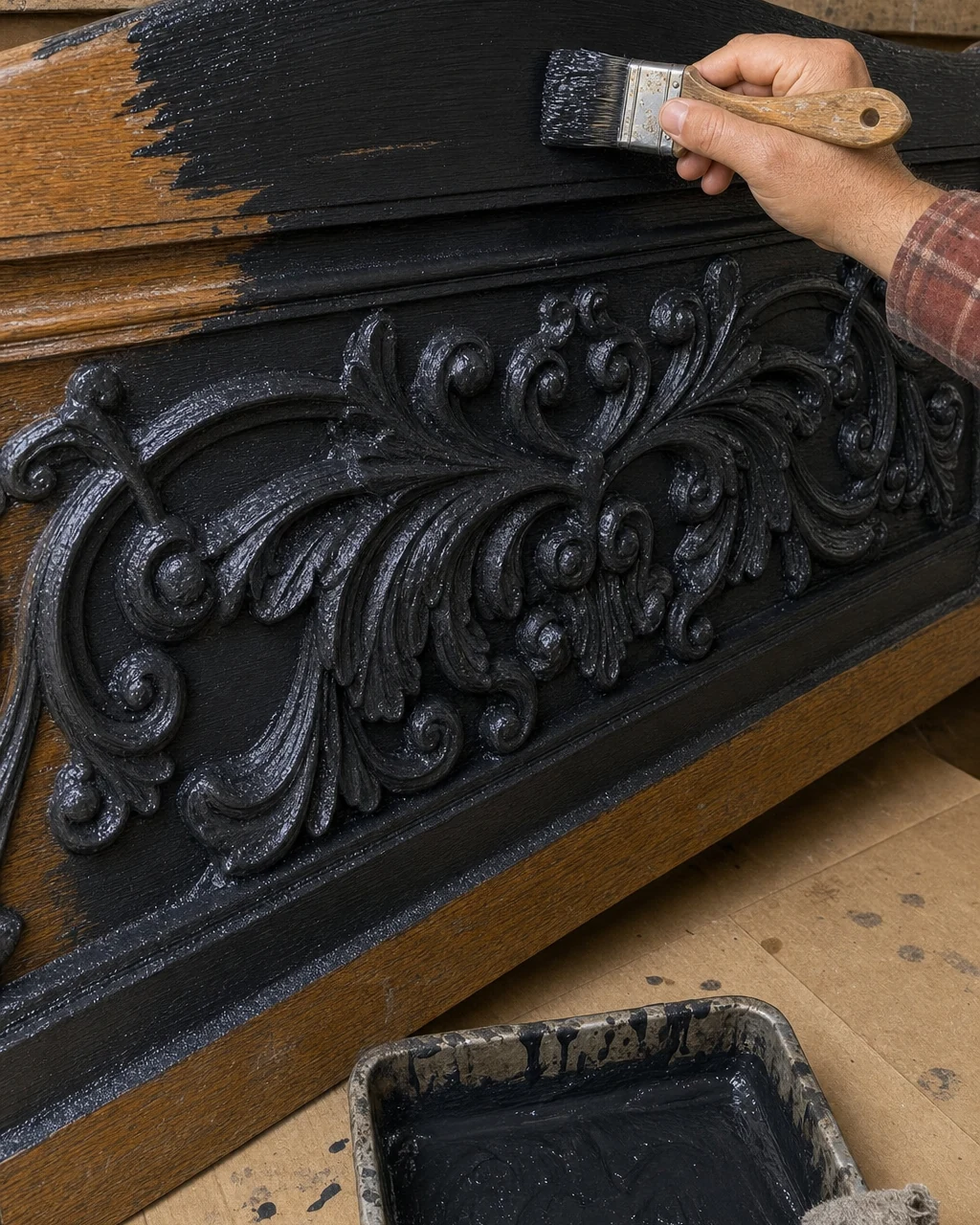
Mix the black milk paint powder with water and the bonding agent in a mixing cup. Using a synthetic paint brush, apply a thick, even coat over the entire footboard, working it deep into the carvings. The bonding agent ensures the new finish grips the old lacquer perfectly without heavy sanding. Mix milk paint powder in a well-ventilated area to avoid inhaling fine dust.
Materials checklist
Step 4: Wet-Distress the Carvings
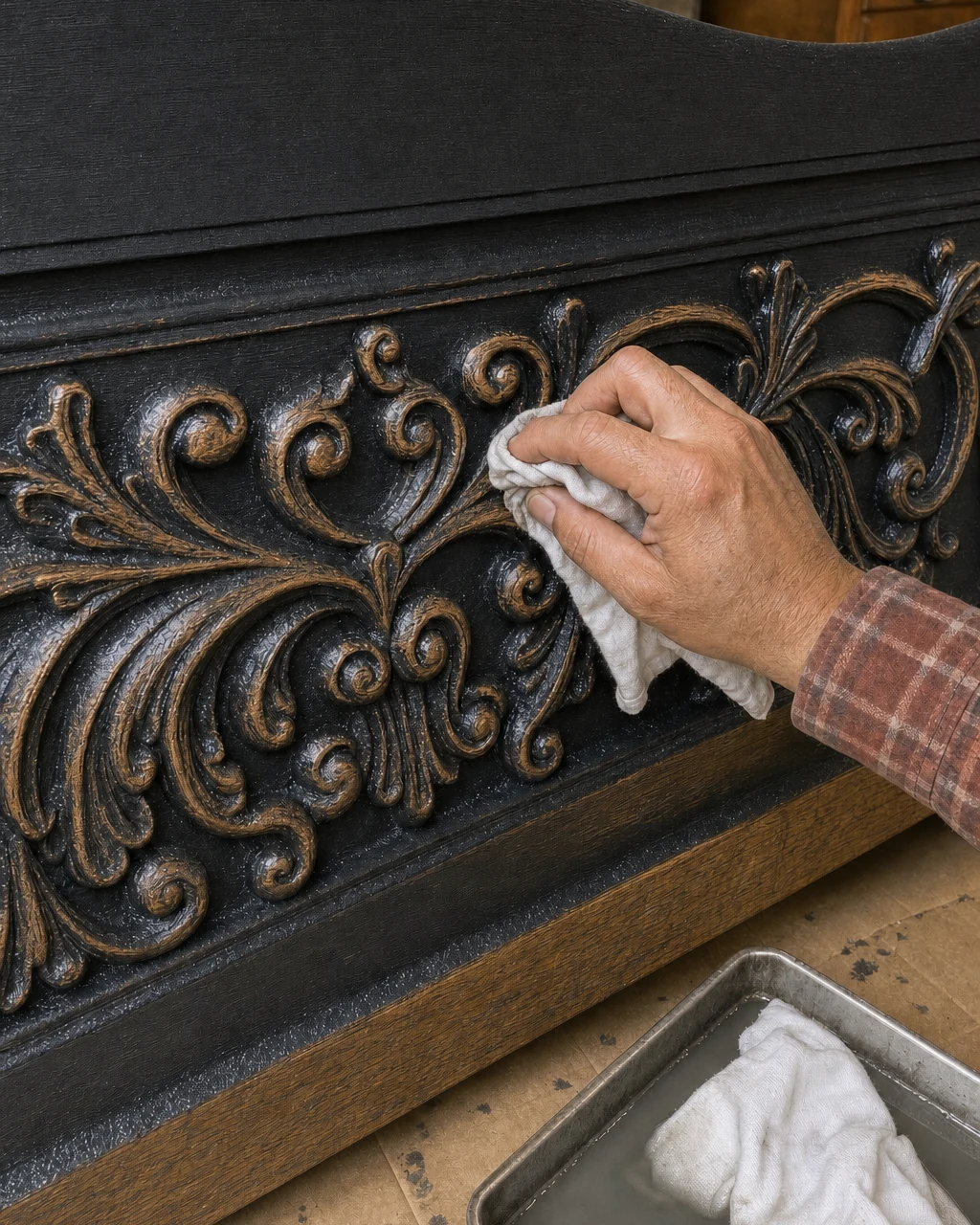
Take a damp, lint-free cotton rag and gently rub the high points of the painted scrollwork. This reactivates the paint and wipes it away, exposing the warm oak beneath while leaving matte black in the crevices. Keep a water bowl nearby to use clean water and change rags frequently, which helps avoid smearing reactivated paint into the exposed wood grain.
Step 5: Seal with Hemp Oil
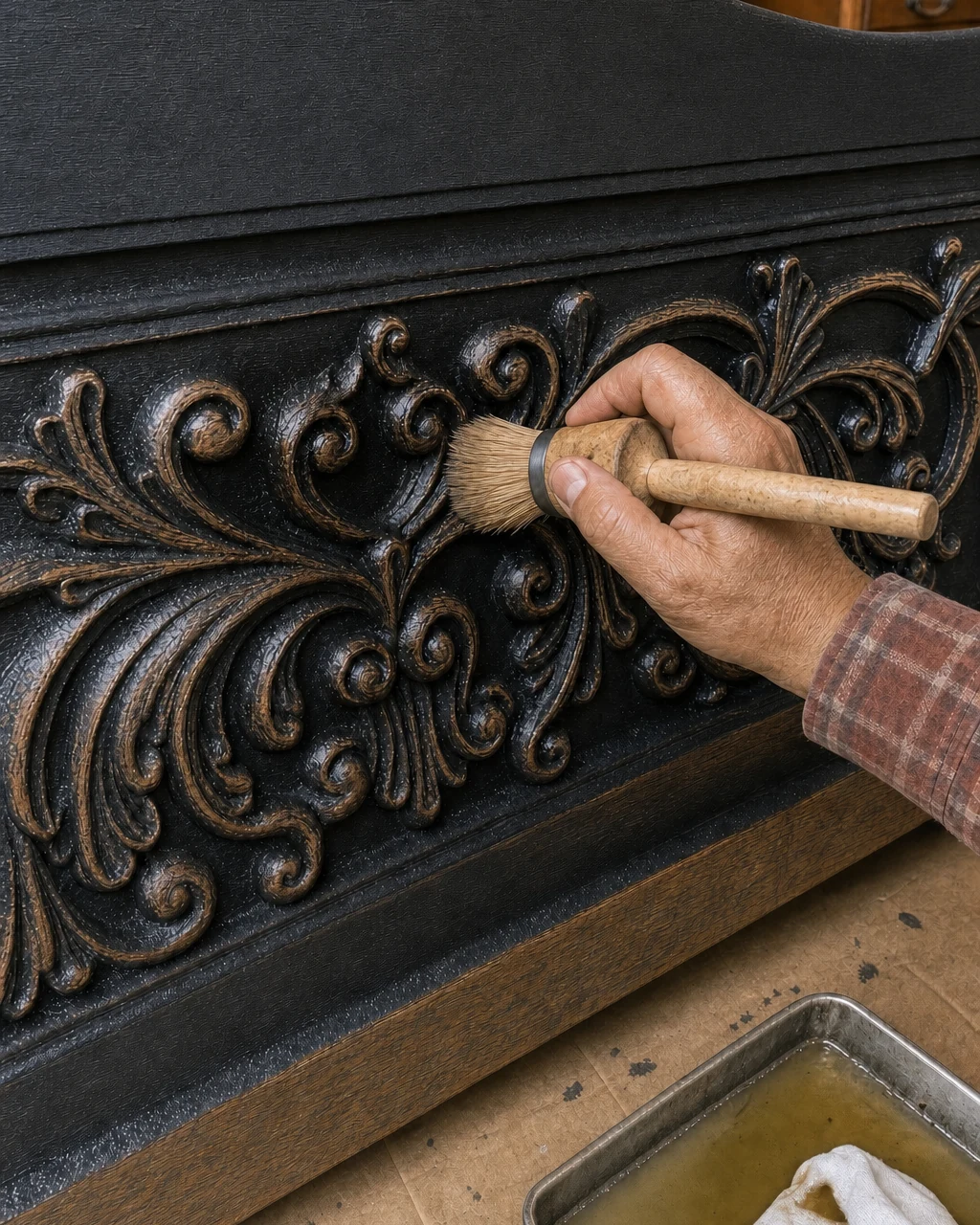
Apply liquid hemp oil over the entire piece using a round natural-bristle wax brush. Buff the oil into the porous milk paint and the exposed oak with a buffing cloth to protect the finish. Watch the ashy black paint turn into a rich, deep, velvety black that highlights the features. Dispose of oil-soaked rags properly by laying them flat outside to prevent spontaneous combustion.
Step 6: Review the Finished Finish
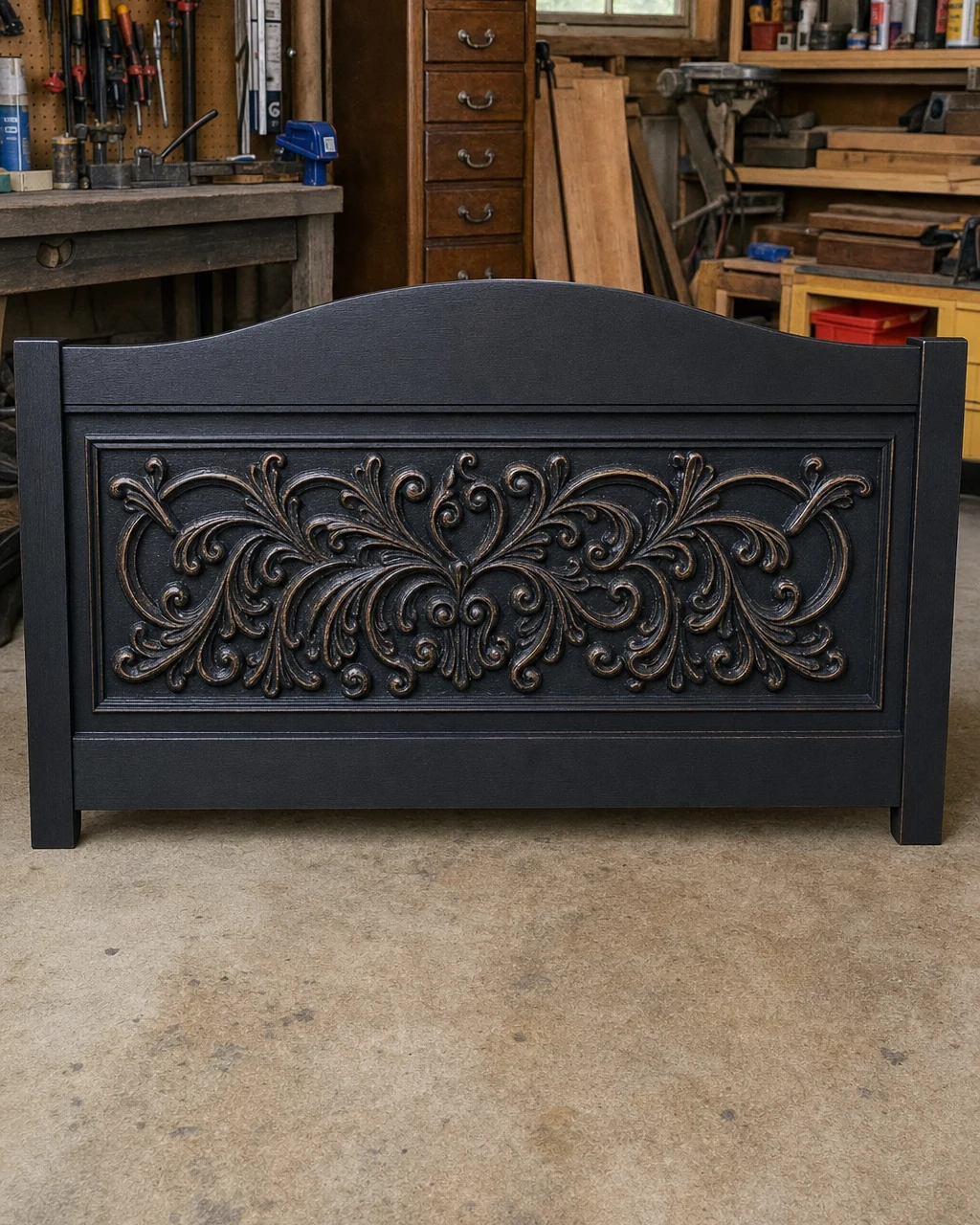
Stand the completed footboard upright in the center of the workshop using basic hand tools to secure any loose joints. Inspect the evenness of the distressed details and the depth of the cured hemp oil. The completed footboard stands alone, showing off its rich black finish and completely transforming from a faded orange oak piece. Ensure the piece is stable when standing upright unattached.
Valuation and Resale Potential
The heavy solid oak construction provides excellent structural value, ensuring the piece will last for decades. The moody, historic milk paint finish elevates it from dated 90s surplus to a boutique-style statement piece, generating a significant value multiple of 2.72. Please note that the estimated resale value provided in our cost table is strictly an editorial estimate rather than a completed sale.
Step 7: Style the New Bed
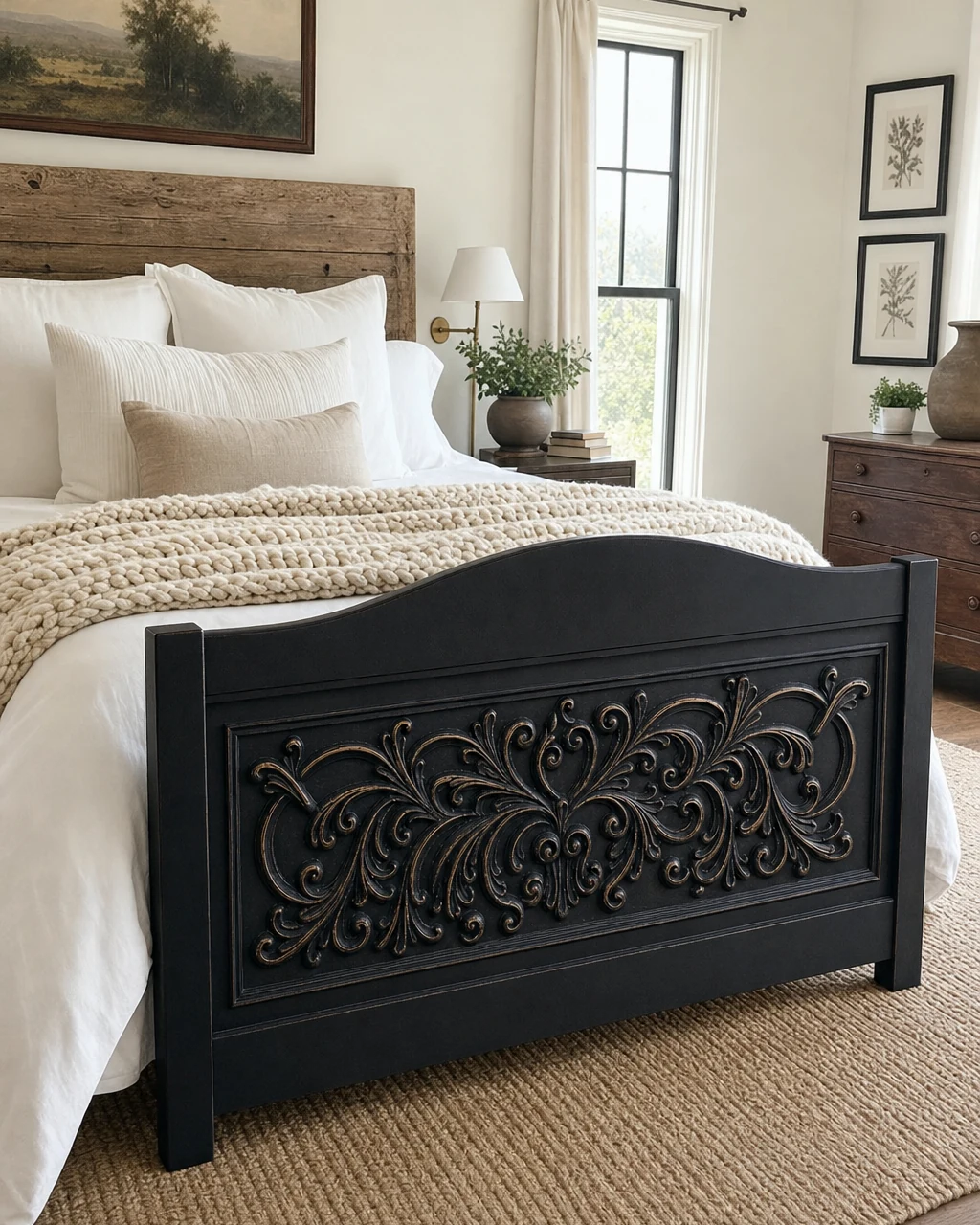
Attach the footboard to a standard metal bed frame in a bedroom using a wrench set. Dress the bed with light, textured linens to contrast with the dark, heavy oak. The footboard now anchors a bright, styled bedroom setting with warm oak peeking through the scrollwork, creating a stunning visual hook. Tighten all frame bolts securely to prevent the heavy oak footboard from wobbling.