
This Witch Hat Became a Gothic Library
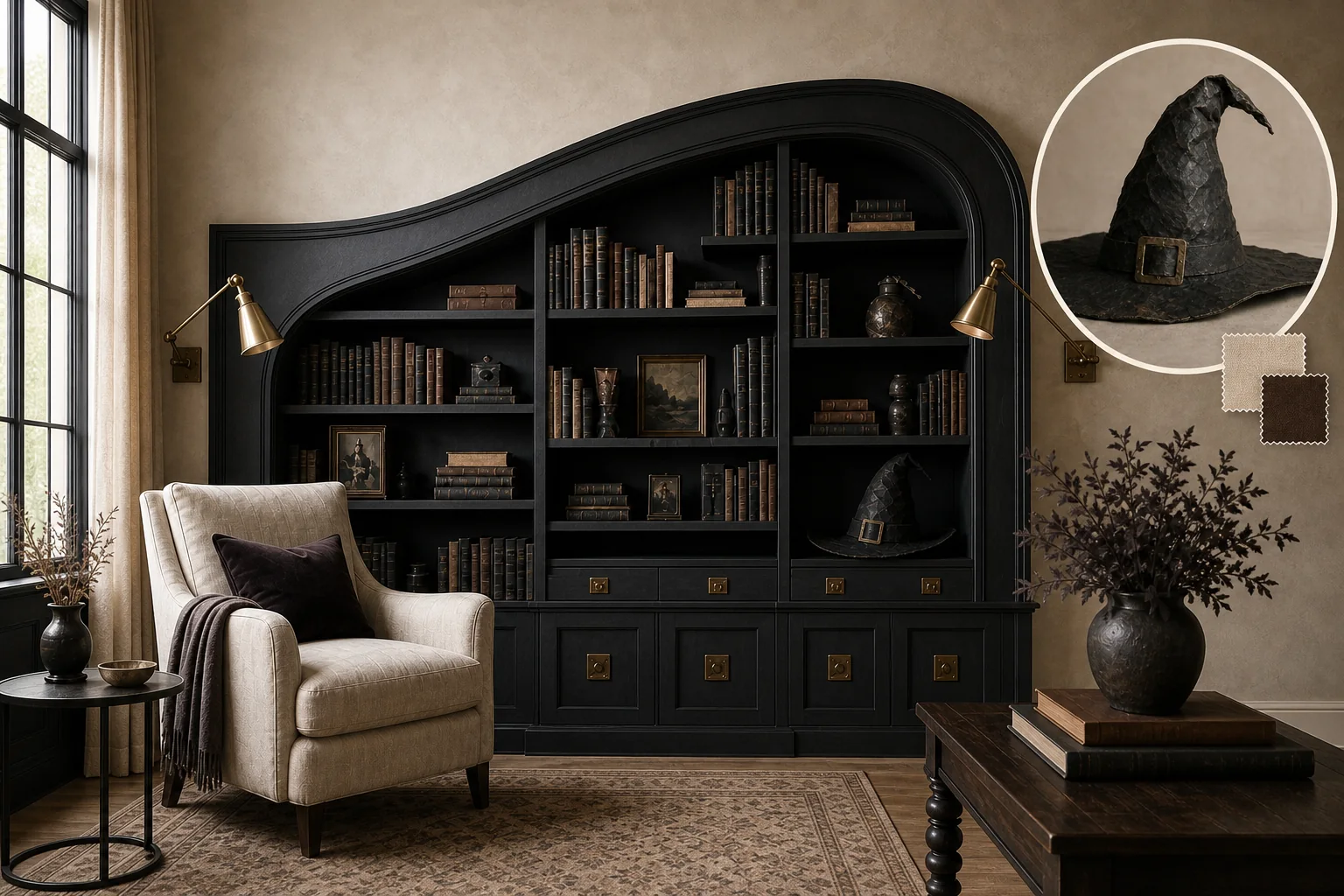
A weathered papier mache witch hat offers a masterclass in moody design, transforming into a sophisticated gothic library without a single seasonal cliché. This balanced translation relies on matte, light-absorbing surfaces and sweeping, asymmetrical geometry to create an enveloping study designed for quiet focus, timeless architectural drama, and deep textural richness.
Shaping the Architectural Sweep
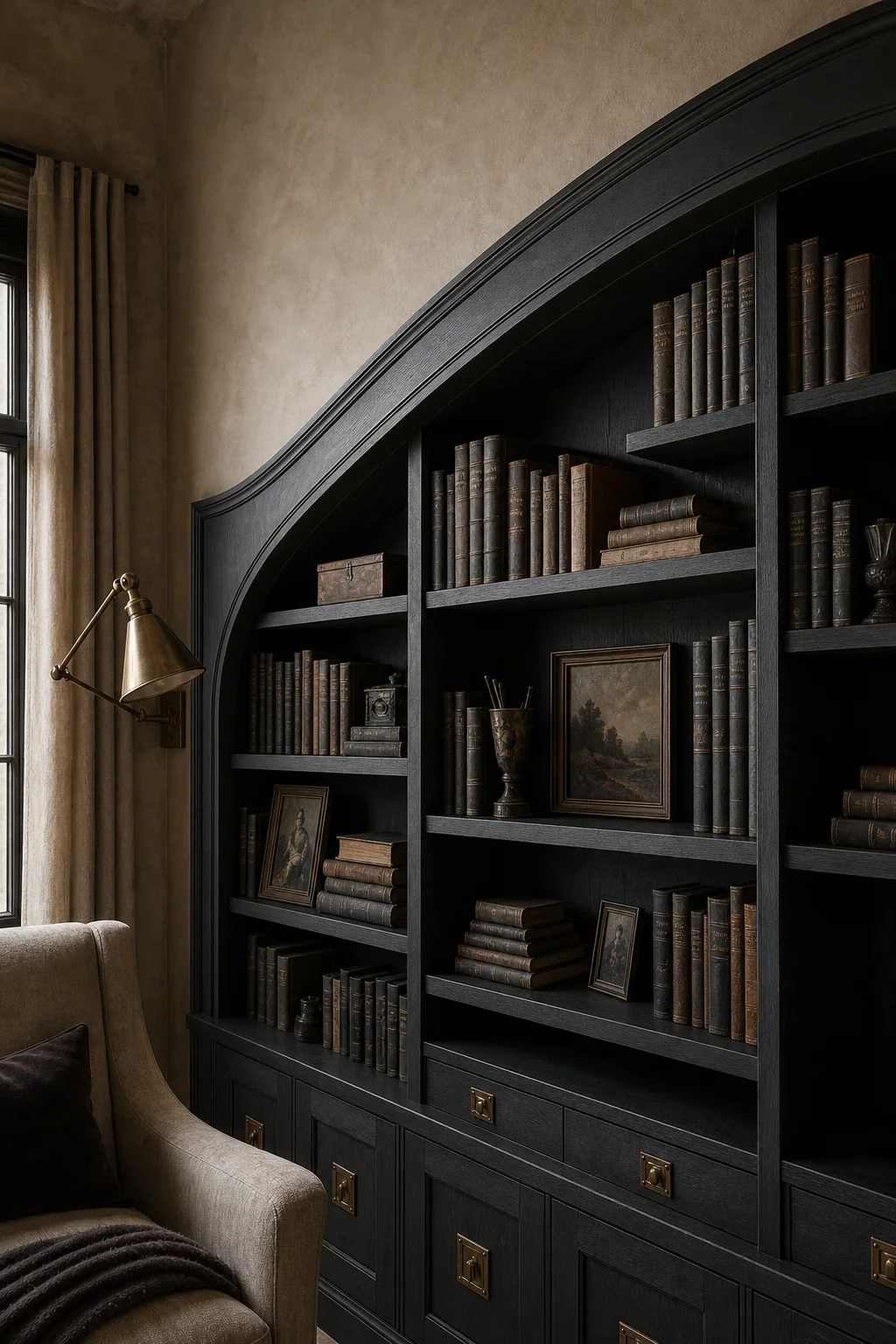
The room’s primary architecture mimics the hat’s organic, slouching silhouette to establish an enveloping, moody footprint, requiring you to ground the dramatic, sweeping curves with rigid, heavy squares to prevent the space from feeling whimsical or theatrical. Design the main bookcase with an asymmetrical arch to break up rigid room lines, ensuring the shelving extends floor-to-ceiling to maximize the dramatic scale while using a matte finish on the millwork to absorb light and emphasize the shape.
- Measure the primary focal wall for built-in millwork, ensuring the dimensions perfectly capture the floor-to-ceiling height and width required for maximum visual impact.
- Frame an asymmetrical arched alcove within the shelving framework so the curve sweeps gently and organically rather than forming a perfect, rigid semi-circle.
- Install fixed wooden shelves with heavy, substantial profiles that are thick enough to visually ground the sweeping architectural arch positioned directly above them.
- Paint the entire built-in structure in matte charcoal, verifying that the chosen finish absorbs light evenly across the room without any reflective sheen.
Grounding in Soot and Tarnish
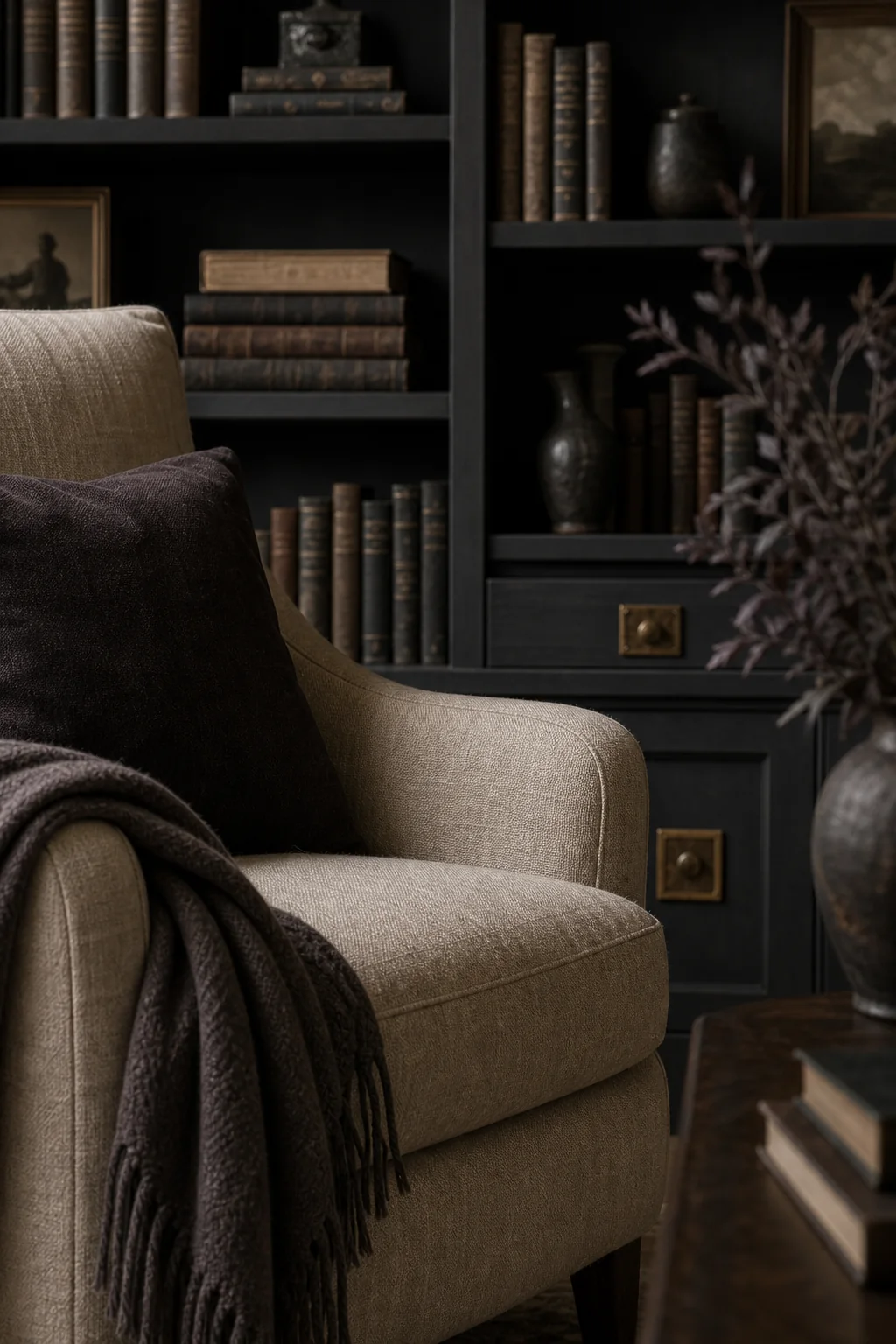
Translating the faded black paper and aged buckle into room finishes creates a deeply saturated, grounding palette that relies on a soft, faded black rather than a harsh jet black for the primary woodwork. Introduce dusty parchment tones on the ceiling to balance the dark cabinetry, and use oxidized brass sparingly to replicate the isolated gleam of the buckle, mapping these distinct visual traits directly from the source object into the room’s foundational elements to create a cohesive atmosphere.
| Source trait | Visible evidence | Room move |
|---|---|---|
| sweeping brim | the wide, asymmetrical curving brim of the hat | a large built-in charcoal bookcase featuring a sweeping, slightly asymmetrical arched top profile |
| soot and tarnish | the faded black body contrasting with the oxidized brass buckle | matte charcoal-black millwork accented by heavily oxidized, square brass cabinet pulls |
| dry papier mache | the uneven, dry, and weathered paper-paste surface | surrounding walls and ceiling finished in a dry, parchment-colored Roman clay plaster |
| slouching cone | the crumpled, angled peak of the hat | a pair of articulated brass reading sconces with conical shades, mounted at a slightly drooping angle |
The Tarnished Buckle Effect
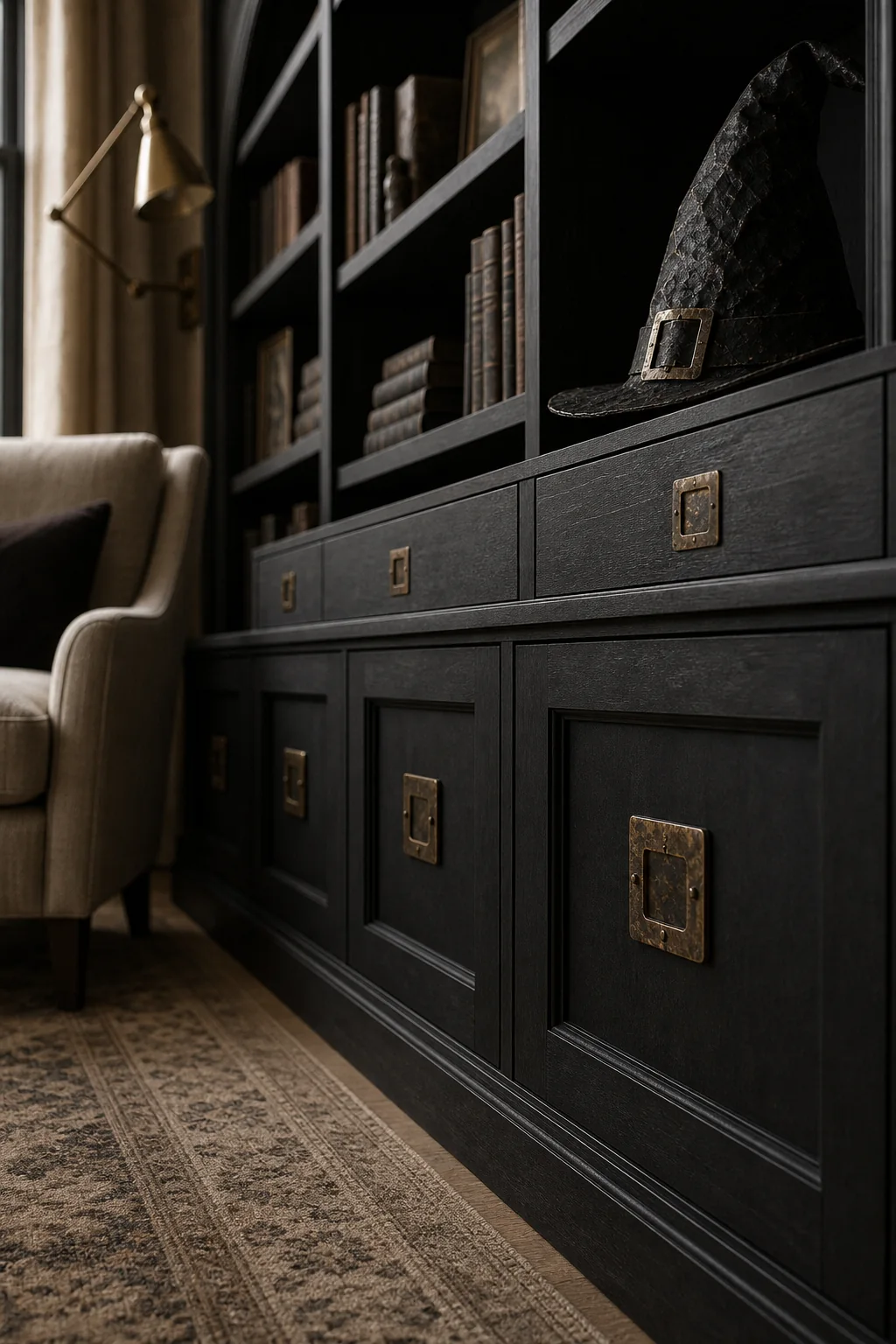
The isolated gleam of the hat’s hardware translates beautifully into the room’s functional jewelry, where heavy square oxidized brass pulls mimic the aged buckle against the dark millwork. Selecting the right hardware profile is crucial to maintaining the sophisticated tension between the sweeping architectural curves and the necessary rigid, grounding elements that keep the design anchored, ensuring the space feels deliberately curated rather than purely thematic.
Choose unlacquered brass hardware that will continue to darken and oxidize naturally over time, enhancing the room’s lived-in, gothic character while providing a beautiful, evolving contrast against the matte black cabinetry.
Layering Dry, Weathered Surfaces
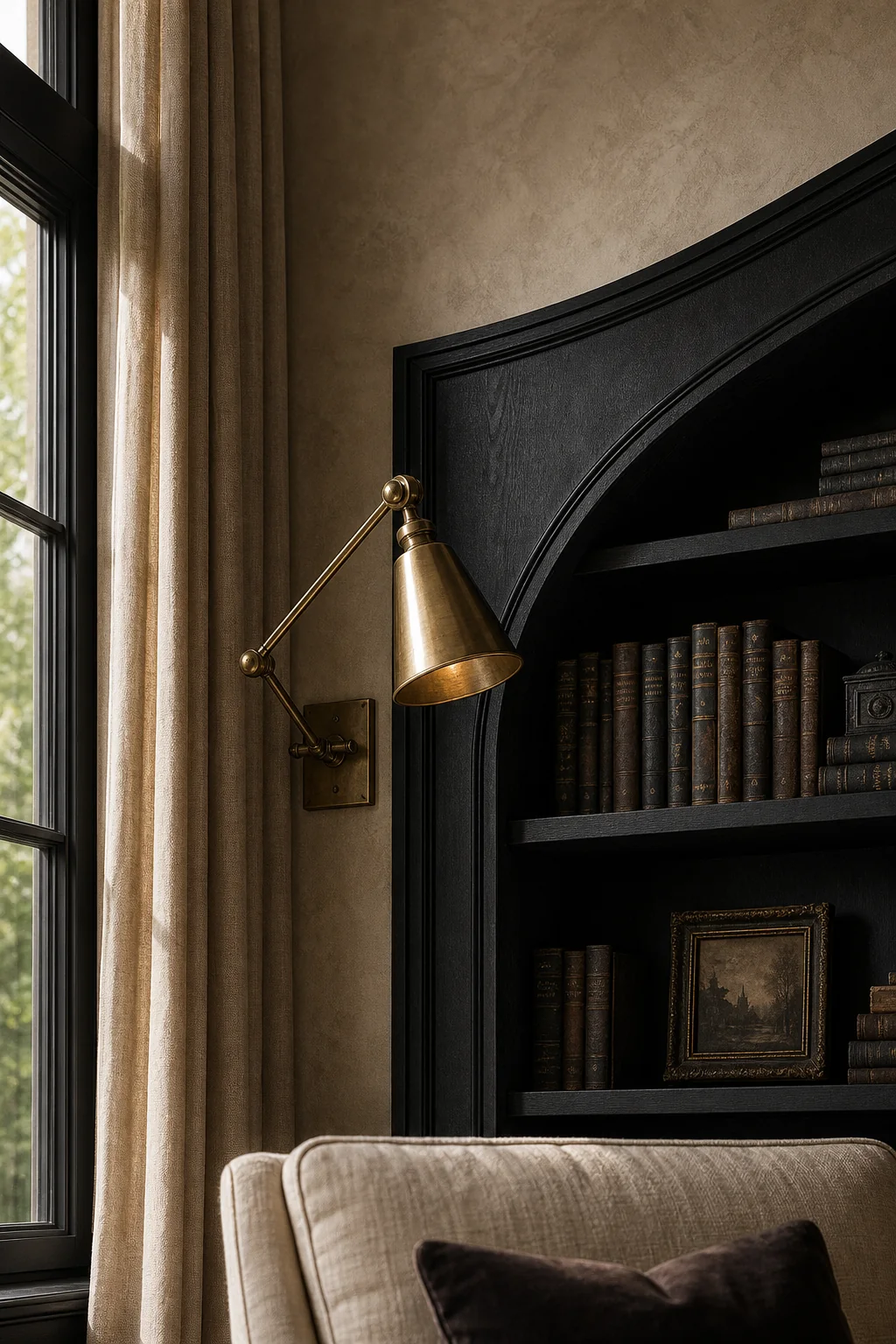
The tactile, uneven nature of papier mache is reimagined through light-absorbing plaster and dry textiles, establishing a matte material palette that completely avoids high-gloss varnishes or polished metals that would break the muted spell. Apply Roman clay or limewash to the walls to eliminate flat, sterile drywall finishes, and upholster seating in dry linen or faded leather to secure these essential tactile ingredients, bringing the weathered texture of the hat into the physical room.
Translating the Papier Mache
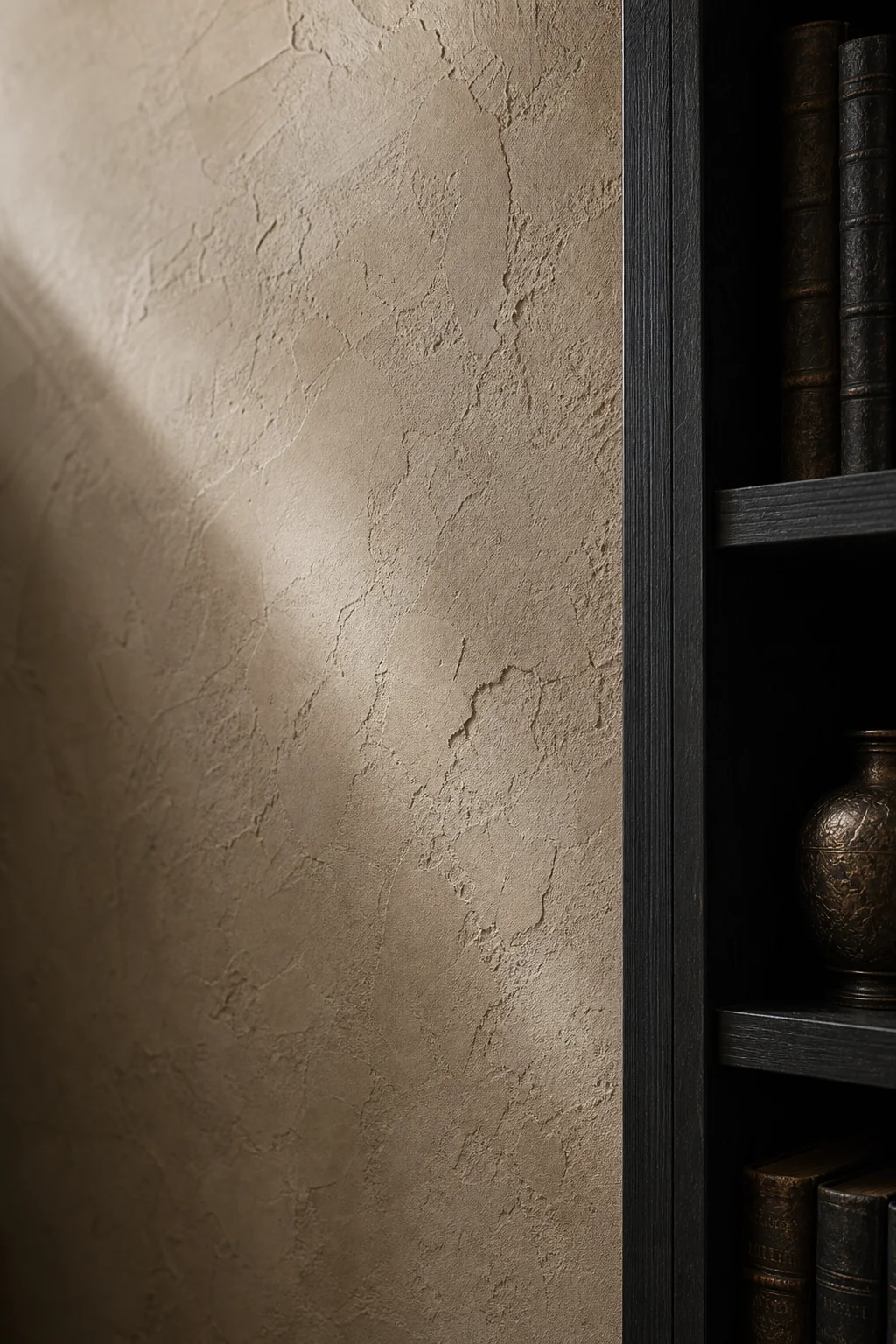
Emulating the dry, weathered paper-paste surface requires a deliberate approach to wall treatments, ensuring that the surrounding walls feature a dry parchment Roman clay plaster that catches shadows beautifully. This textured application provides a crucial visual counterpoint to the dark, heavy millwork, wrapping the reading nook in a soft, mottled warmth that feels instantly historic and perfectly complements the moody, light-absorbing qualities of the surrounding charcoal cabinetry.
Apply the Roman clay with a wide putty knife in sweeping, overlapping strokes to build a subtle, organic texture that catches shadows and replicates the uneven surface of vintage papier mache.
Capturing the Slouching Silhouette
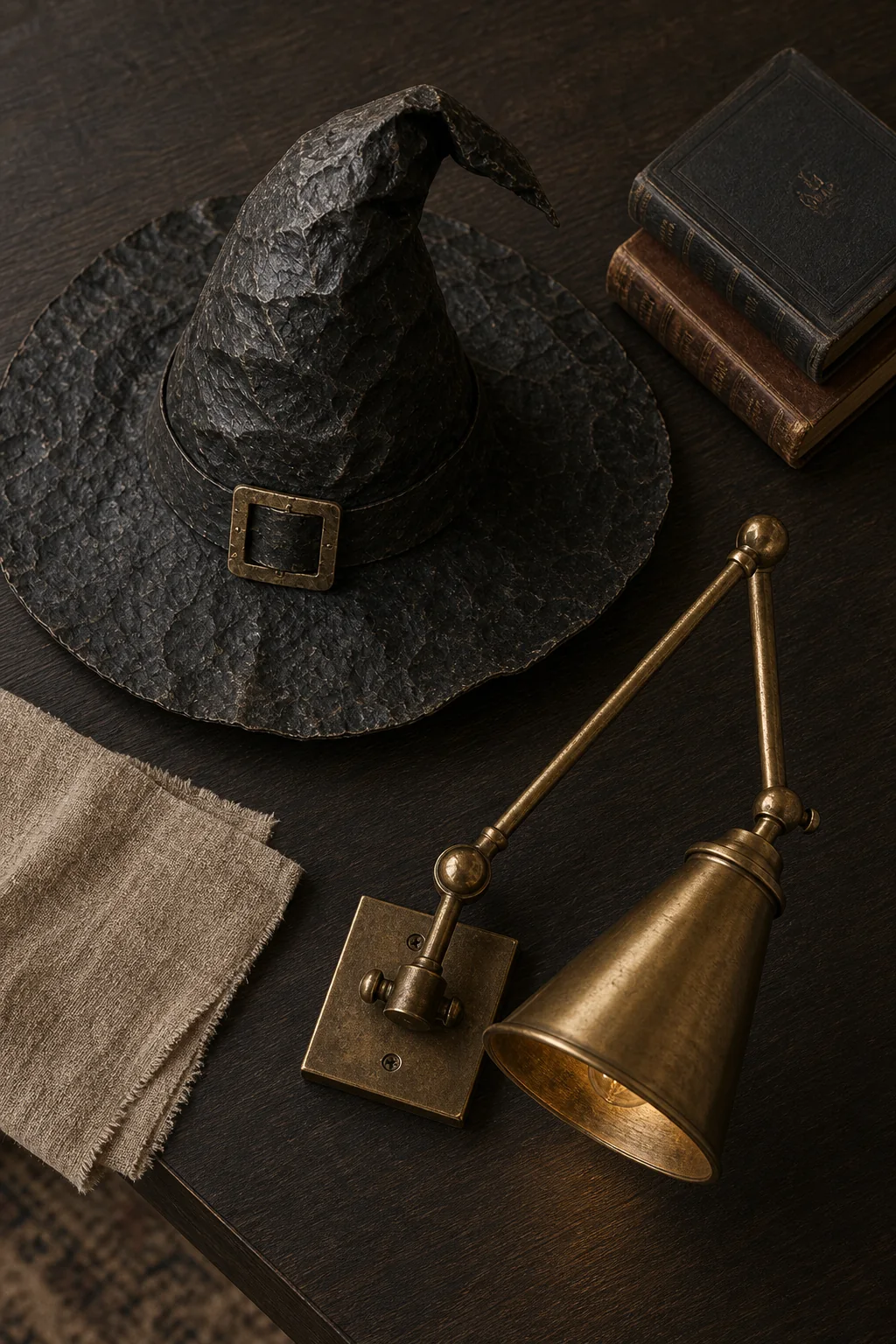
The crumpled, forward-leaning peak of the hat informs the directional, slightly drooping posture of the room’s task lighting, where articulated conical brass sconces mount at a drooping angle. Select reading sconces with conical metal shades to echo the hat’s pointed geometry, pairing these angled forms with rigid square books to maintain balance. You can scale this moody atmosphere from a subtle nod with a single charcoal bookcase, to a balanced room wrapped in asymmetrical arches, or go bold by drenching the entire space in soot black for maximum impact.
Position articulated sconces so they lean slightly downward into the room, creating an intimate, focused pool of warm light specifically designed for late-night reading while emphasizing the slouching silhouette.