
This Butterfly Dome Became a Reading Nook
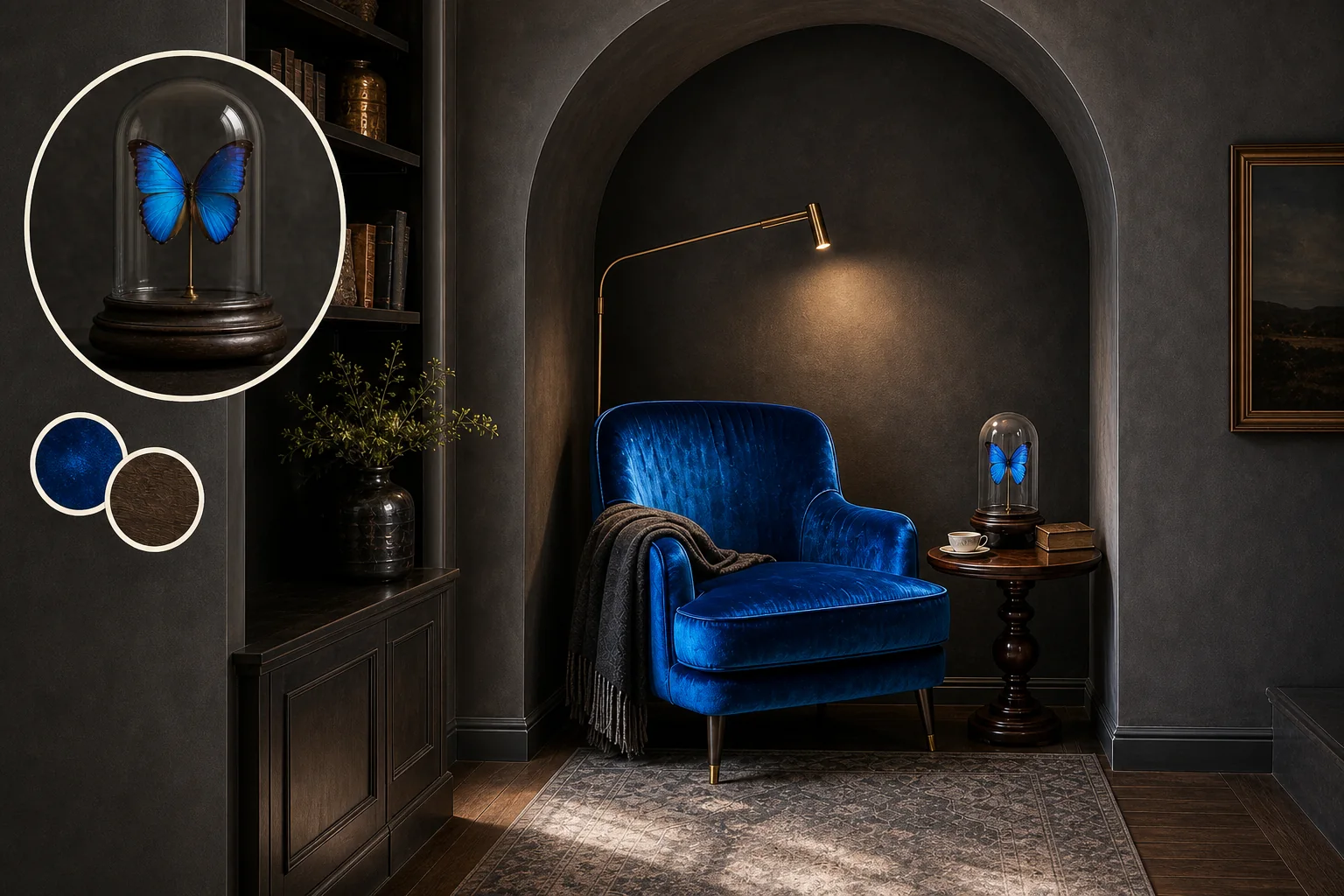
Translating a vintage entomology dome into a reading nook requires balancing deep shadows with brilliant color. By treating the architecture as a protective glass cloche, the room allows a single vibrant piece of furniture to glow.
Carving Out the Protective Shell
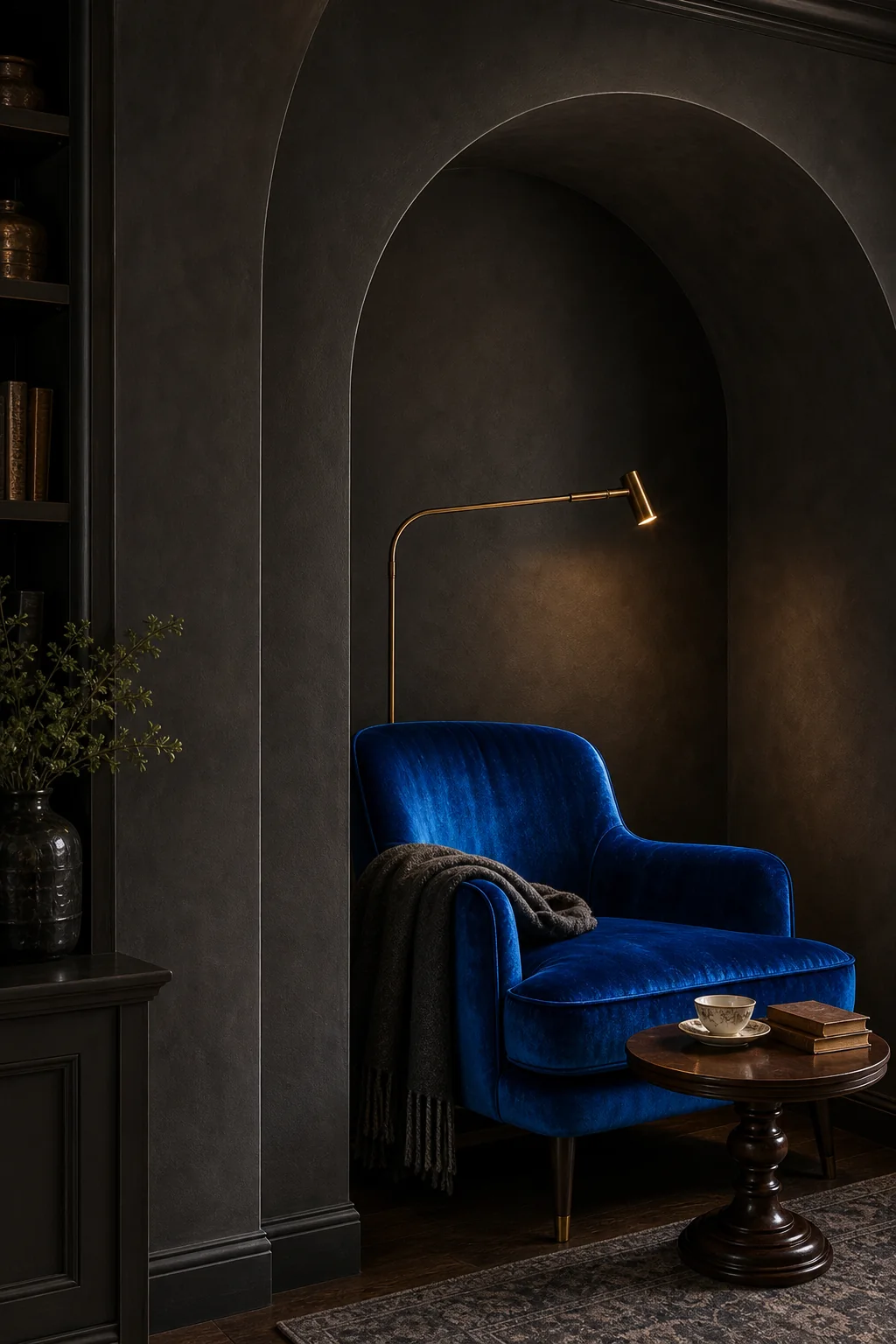
Just as the glass dome creates a physical boundary that isolates and protects the delicate specimen within, a deep architectural niche provides the necessary sense of enclosure for a focused reading space. Framing an arched wall alcove deep enough to fully encompass the reading chair creates a quiet, protective void that physically wraps the seating area. Keeping the interior lines clean emphasizes the negative space rather than the architecture itself, allowing the dark shell to recede. This deliberate encapsulation transforms a standard room corner into an intimate, purposeful sanctuary designed exclusively for reading and reflection.
- Frame a deep arched alcove into the existing wall structure, ensuring the niche provides at least 36 inches of depth to fully encapsulate the seating area.
- Apply a smooth, matte charcoal plaster to the interior walls so the dark finish absorbs light and creates a seamless, enveloping void.
- Install a recessed, low-glare spotlight in the alcove ceiling to cast a soft, controlled glow without generating harsh shadows.
- Position a single, comfortable armchair squarely within the center of the protective architectural shell.
- Place a minimal dark walnut side table next to the chair to offer a resting spot without crowding the footprint.
Mastering Luminous Contrast
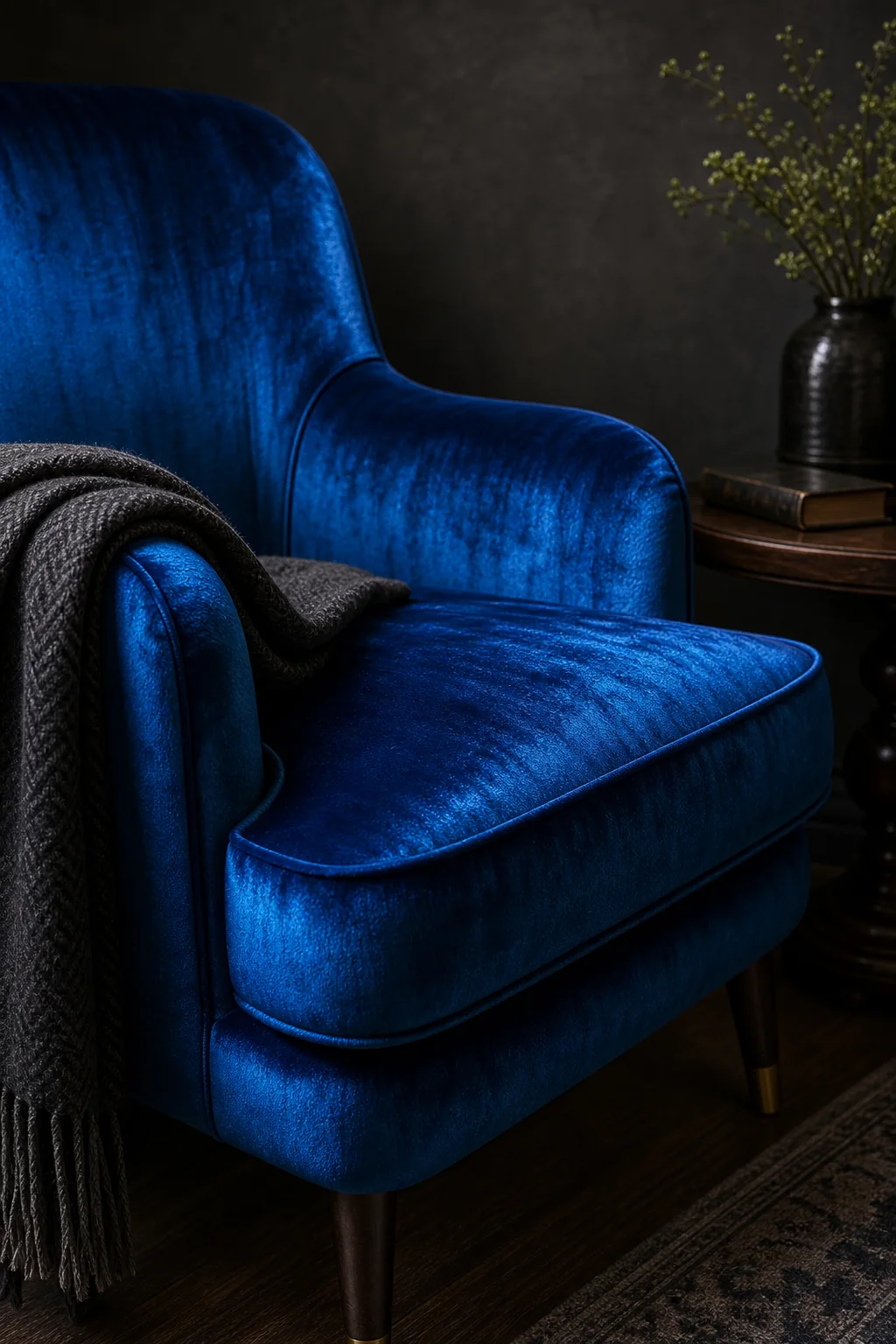
The dramatic impact of this design relies on extreme luminous contrast, using a light-absorbing backdrop to amplify a single, highly saturated focal point. Matte charcoal-black plaster walls serve as a dark, quiet canvas that contrasts the vibrant electric-blue armchair, directly mirroring how the morpho’s electric blue wings pop against the deep shadows of the dome’s interior. Mastering this effect requires keeping the dark background strictly neutral to let the blue shine without competition. By eliminating secondary accent colors, the architecture recedes entirely, allowing the luminous core of the nook to command the visual hierarchy.
| Source trait | Visible evidence | Room move |
|---|---|---|
| Encapsulation | The curved glass cloche that isolates and protects the delicate specimen. | A deep, arched architectural wall alcove that physically wraps the seating area in a quiet, protective void. |
| Luminous contrast | The electric blue wings popping against the deep shadows of the dome’s interior. | Matte charcoal-black plaster walls serving as a dark, light-absorbing backdrop to a single, vibrant electric-blue armchair. |
| Structural iridescence | The microscopic scales of the butterfly wings that shift in saturation and catch the light. | Upholstering the reading chair in a high-pile silk velvet that shifts from deep navy to brilliant cyan depending on the viewing angle. |
| Delicate suspension | The thin, precise brass entomology pin holding the butterfly aloft in the center of the dome. | A spindly, ultra-thin aged brass floor lamp with a cantilevered arm, arcing delicately over the chair to provide reading light. |
The Electric Blue Focal Point
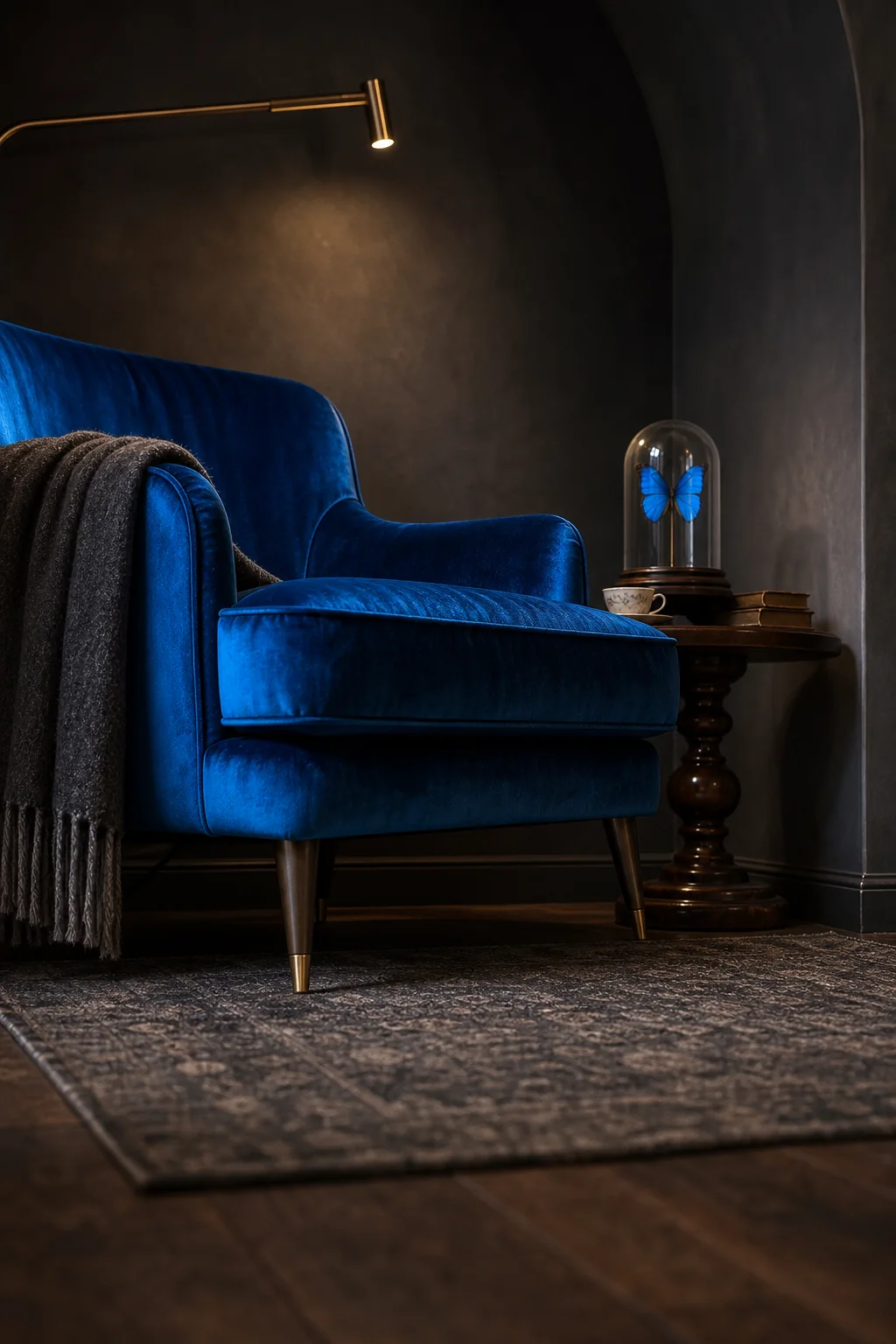
Adjusting the room’s energy is simple when you control the intensity of the contrast. A subtle approach softens the palette by using a deep navy velvet instead of electric blue, paired with warm, medium grey walls. A balanced design sticks to the matte charcoal void, the vibrant electric blue silk velvet chair, and a single spindly brass lamp. For a bold statement, you can upholster the entire interior of the alcove in dark velvet to eliminate hard surfaces entirely, and introduce a high-gloss electric blue lacquer for the side table to maximize the luminous effect.
Translating Structural Iridescence
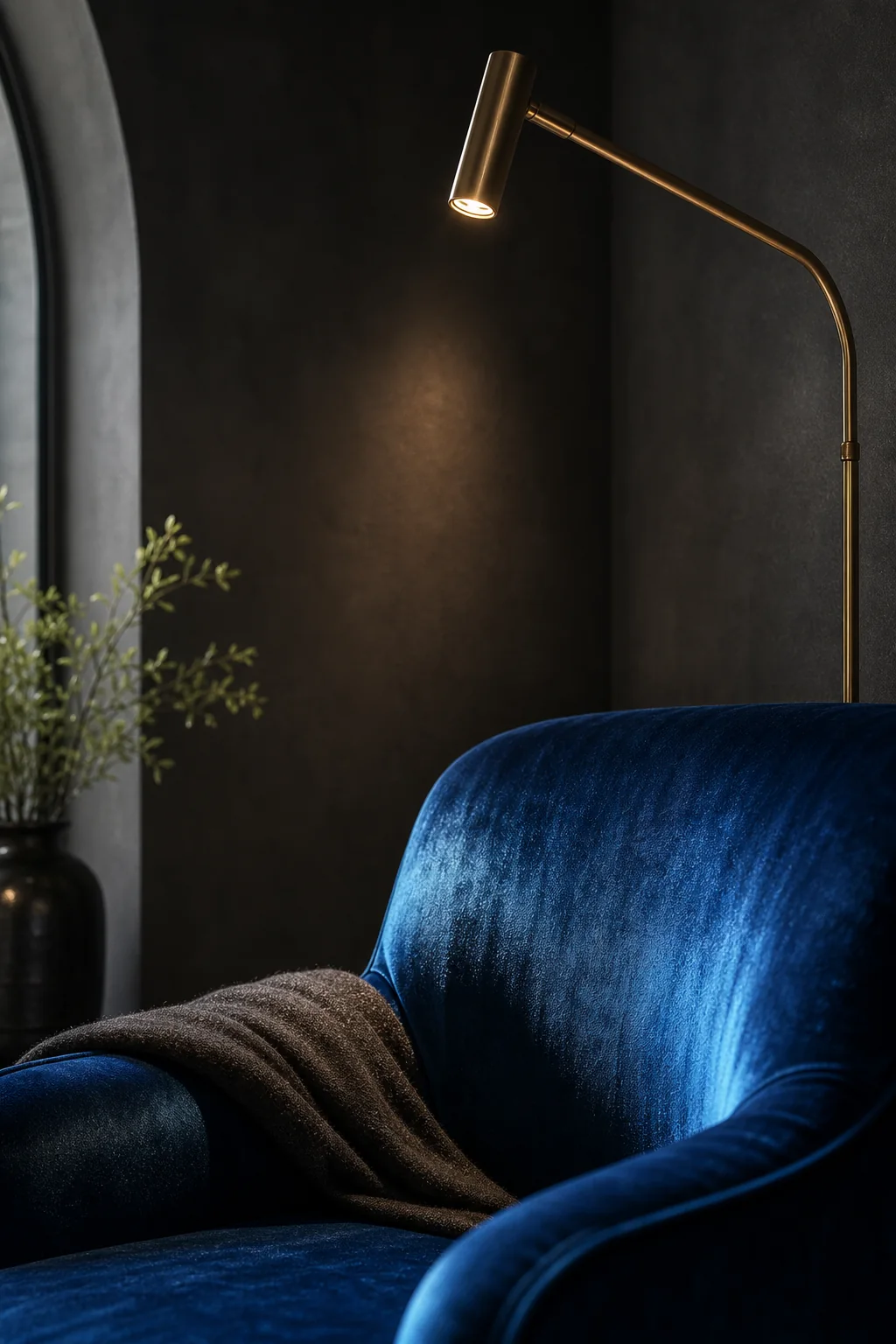
To capture the living, shifting quality of the morpho butterfly, the room relies on textiles that react dynamically to the reading light. Upholstering the reading chair in a high-pile silk velvet mimics the butterfly’s structural iridescence, shifting from deep navy to brilliant cyan depending on the viewing angle. This strategy requires contrasting highly reflective soft textures with the hard, matte plaster of the surrounding walls. Ensuring the velvet pile runs in a direction that catches your primary light source guarantees that the fabric will shimmer and change, breathing life into the otherwise static, dark architectural shell.
The Velvet and Plaster Boundary
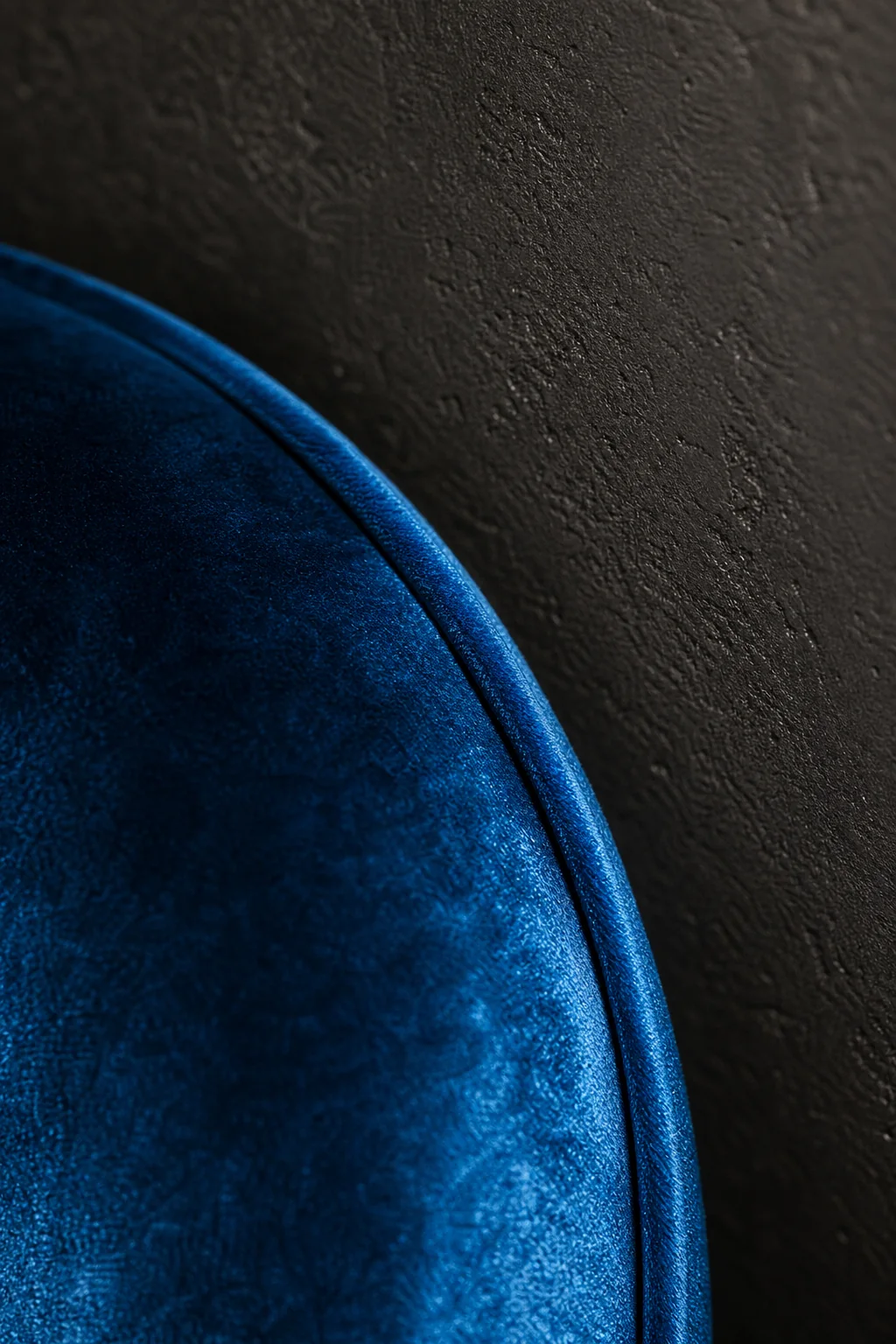
The stark intersection between the luminous upholstery and the dark architectural shell is where the design truly activates. This boundary ensures the light-absorbing backdrop remains visually distinct from the glowing focal point, preventing secondary textures from muddying the dramatic, jewel-toned atmosphere of the space. By placing the plush, light-reactive silk velvet directly against the rough, matte charcoal plaster, the room highlights the inherent qualities of both materials. This deliberate juxtaposition reinforces the concept of encapsulation, ensuring the vibrant seating area feels like a precious, delicate specimen protected within a heavy, immovable enclosure.
Engineering Delicate Suspension
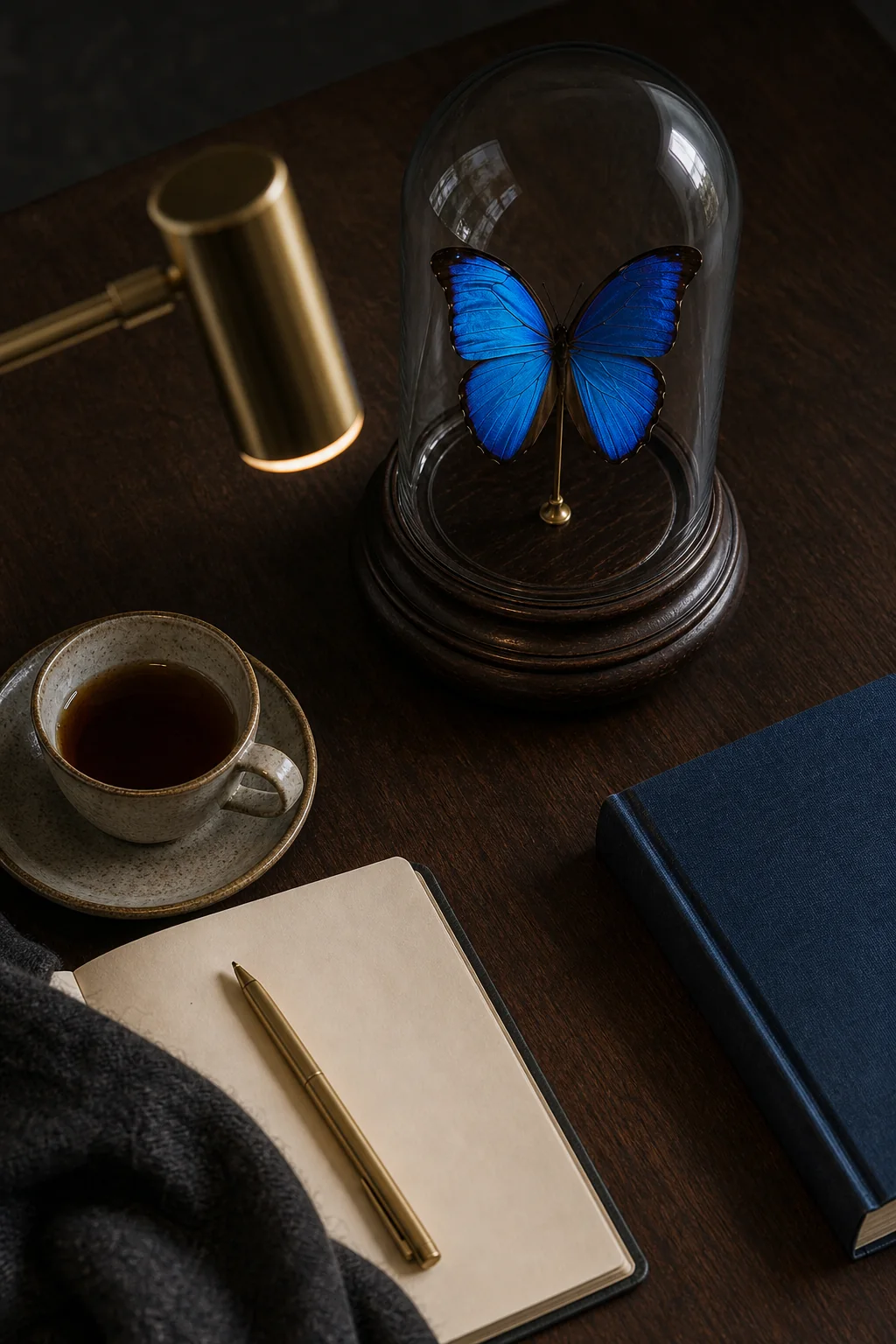
The final layer introduces a fragile, linear element that cuts through the heavy dark space, providing functional reading light while mimicking the precise entomology pin holding the butterfly aloft. A spindly brass floor lamp with a cantilevered arm arches delicately over the chair, utilizing an ultra-thin profile to contrast the visual weight of the alcove. Choosing aged brass adds a necessary touch of warmth to the cool, moody palette without breaking the sophisticated tone. This delicate suspension completes the visual mapping, transforming a heavy architectural void into a balanced, meticulously curated display of comfort.
Position the cantilevered lamp so the bulb sits directly above the book’s resting place, ensuring the brass arm visually pins the chair in place. This precise alignment guarantees optimal reading light while reinforcing the delicate, suspended geometry of the vintage specimen display.