
Mexican Traditional Meets Industrial: Dining Room
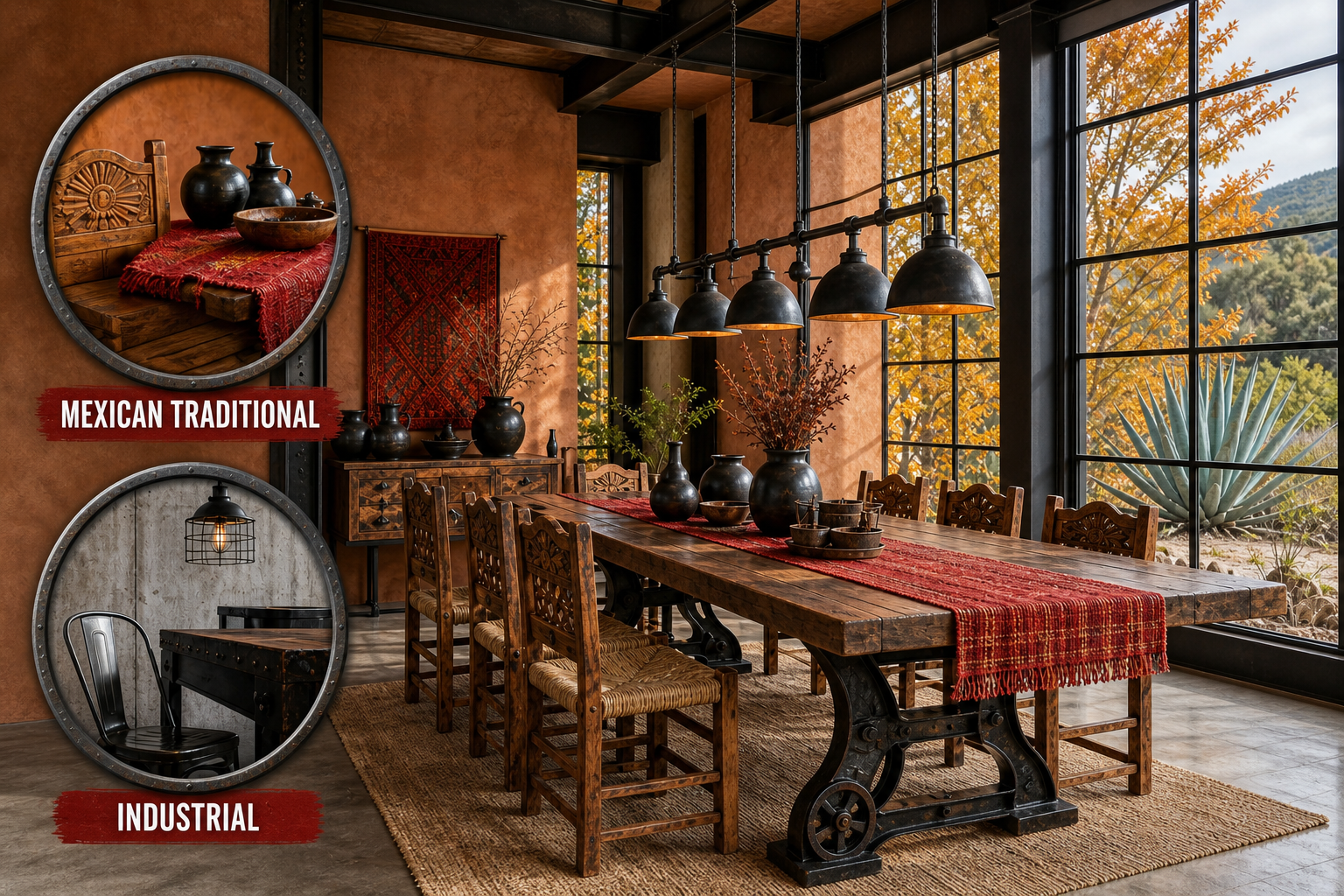
The organic, handmade imperfection of mexican traditional craft inherently clashes with the rigid coldness of industrial utility. Yet, a structural steel framework provides the perfect high-contrast shell to firmly ground, sharply define, and dramatically elevate warm, tactile textiles and artisanal.
Establish the Organic Foundation
Hand-troweled terracotta plaster and carved copal wood establish a deeply warm, organic foundation. This tactile abundance softens the dining room, providing a crucial sense of history and profound humanity before the heavy, unforgiving architectural elements are allowed to intervene and dominate the visual landscape.
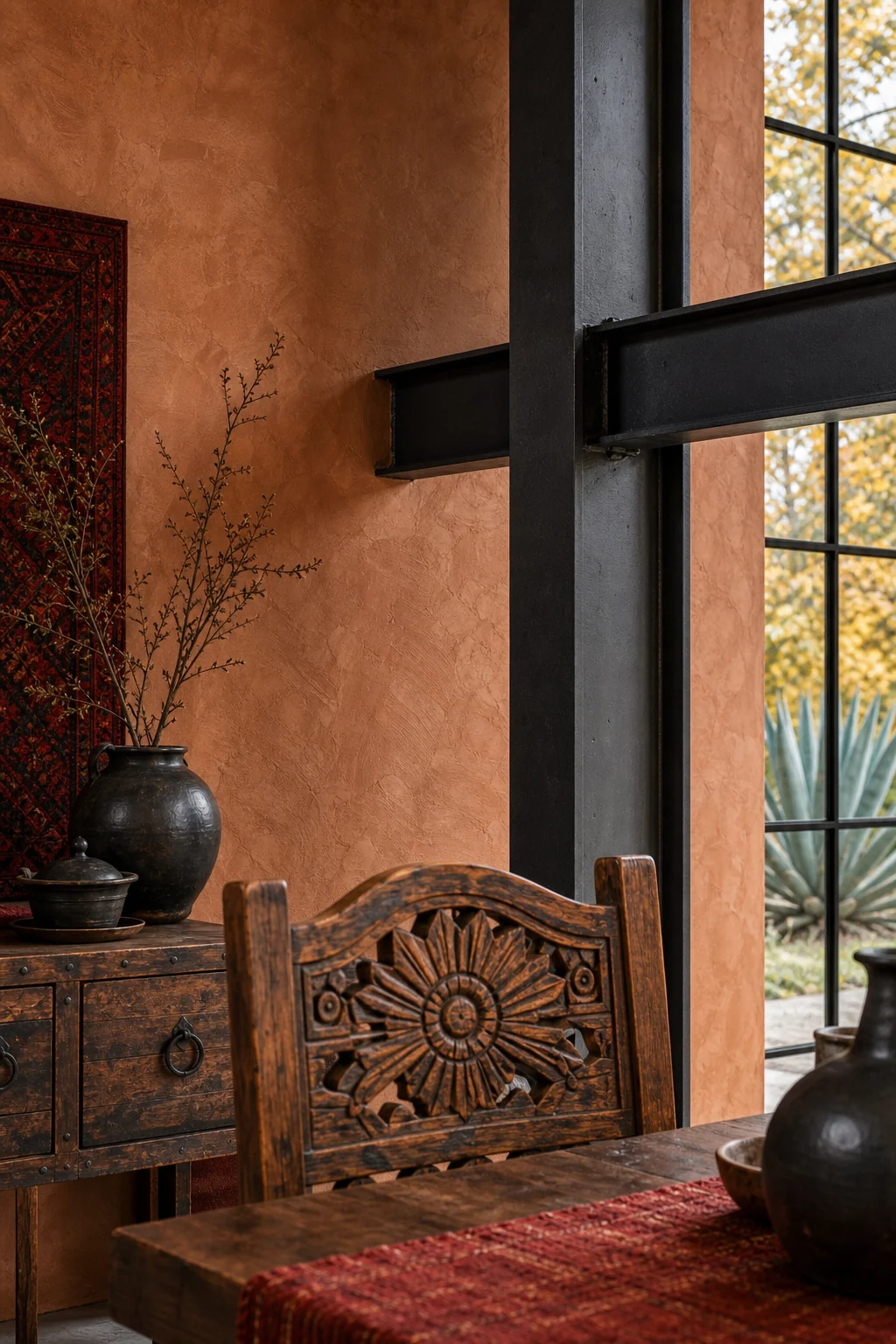
This rich artisanal texture desperately needs a strict boundary. Without a rigid architectural frame to contain it, the inherent warmth of mexican traditional design risks feeling overly rustic, unmoored, or completely lacking in the sharp, contemporary definition required for a modern, sophisticated dining space.
By keeping the expansive walls visually soft, you create a welcoming, luminous envelope. The resulting terracotta expanse acts as a glowing, highly textured backdrop, perfectly prepared to be sharply intersected by unforgiving, machine-made structural lines and dark iron fixtures without losing its inherent warmth.
Anchor with Rigid Geometry
Heavy cast-iron machine legs and exposed steel I-beams introduce a rigid, entirely unforgiving geometry. This structural coldness anchors the room, firmly locking the softer artisanal elements into place and preventing the dining space from feeling overly delicate, sentimental, or historically trapped in the past.
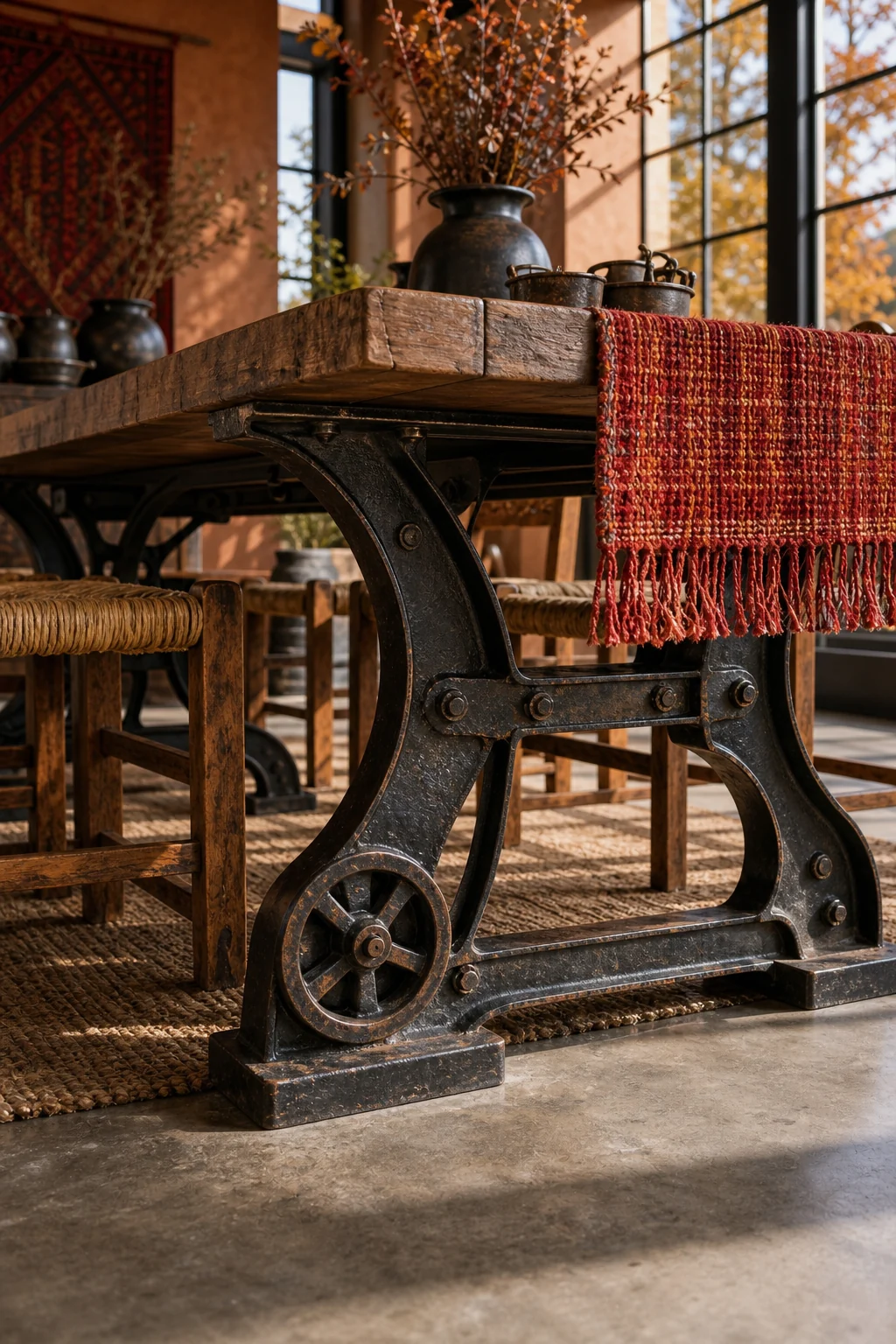
These raw factory materials provide the necessary visual tension to completely modernize the space. The unyielding, machine-made nature of industrial architecture acts as a high-contrast framework, deliberately engineered to elevate, frame, and ground the surrounding handmade craft with absolute precision and striking visual clarity.
- Exposed black steel I-beams provide rigid, uncompromising architectural boundaries that boldly define the upper volume of the room.
- Heavy cast-iron machine legs securely anchor the massive dining table, establishing an immovable foundation for daily gatherings.
- Factory-style multi-pane steel windows frame the natural autumn landscape while enforcing strict geometric patterns on the incoming light.
Forge a Material Bridge
The transition between these opposing languages relies entirely on shared dark, matte finishes. Finding common visual ground in texture and light absorption prevents the two distinct styles from feeling disconnected, chaotic, or accidentally thrown together in the finished dining room, ensuring a cohesive aesthetic.
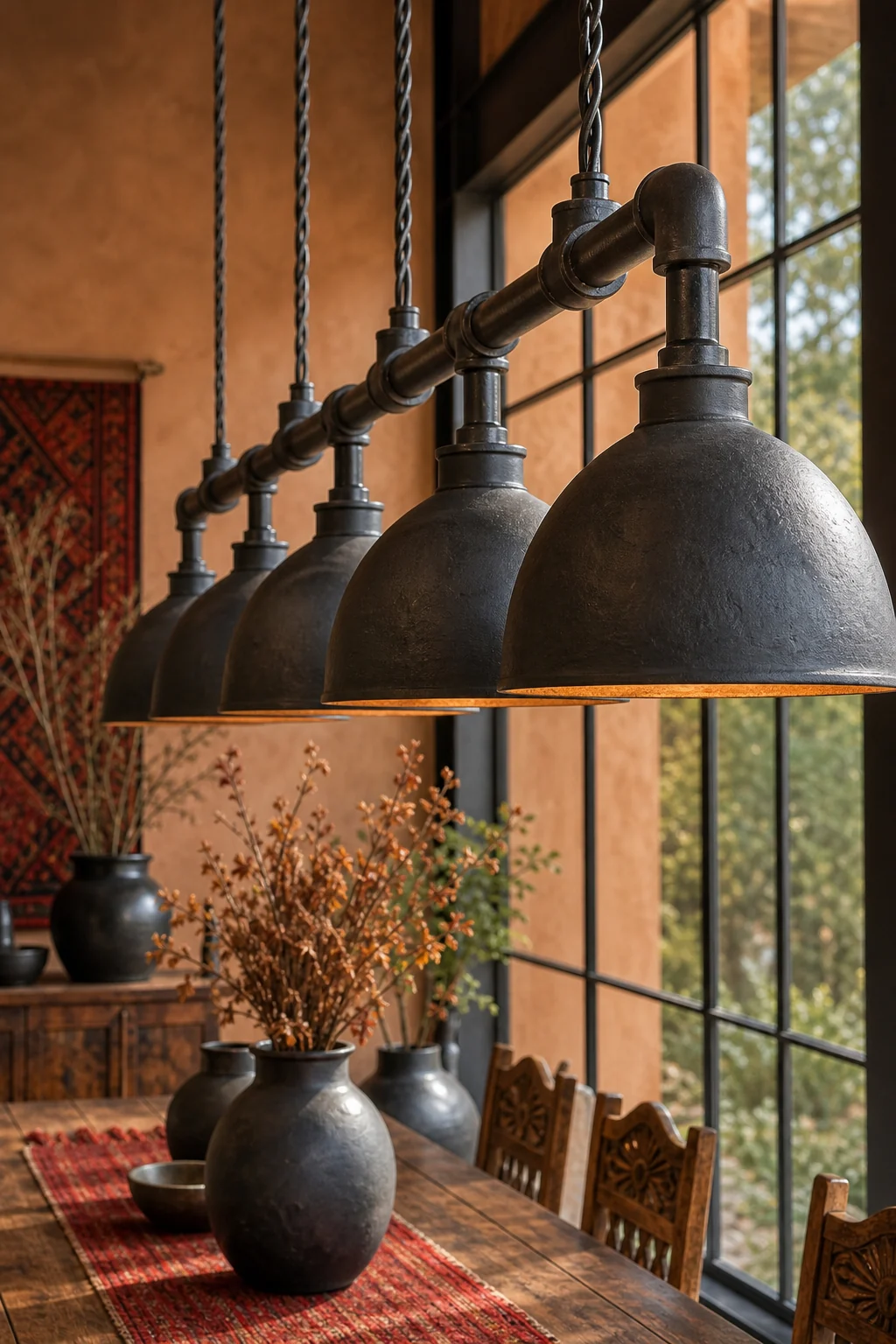
Matte blackened steel perfectly echoes the dark, smoky sheen of traditional barro negro ceramics. This deliberate material pairing creates a seamless visual bridge, effectively linking the heavy factory ceiling fixtures directly to the delicate artisanal tabletop accessories displayed below, unifying the entire vertical space.
When these materials share the exact same light-absorbing qualities, the contradiction softens beautifully. The eye easily travels from a heavy iron beam to a delicate clay vessel, registering them as essential parts of a single, highly unified aesthetic vocabulary rather than competing design elements.
Assemble the Dining Vignette
Assembling the dining vignette requires a strict, deliberate alternation of hard and soft materials. The heavy, unyielding factory base demands the immediate warmth of organic textures to maintain an inviting, hospitable atmosphere for daily meals, long evening gatherings, and extended conversations around the table.
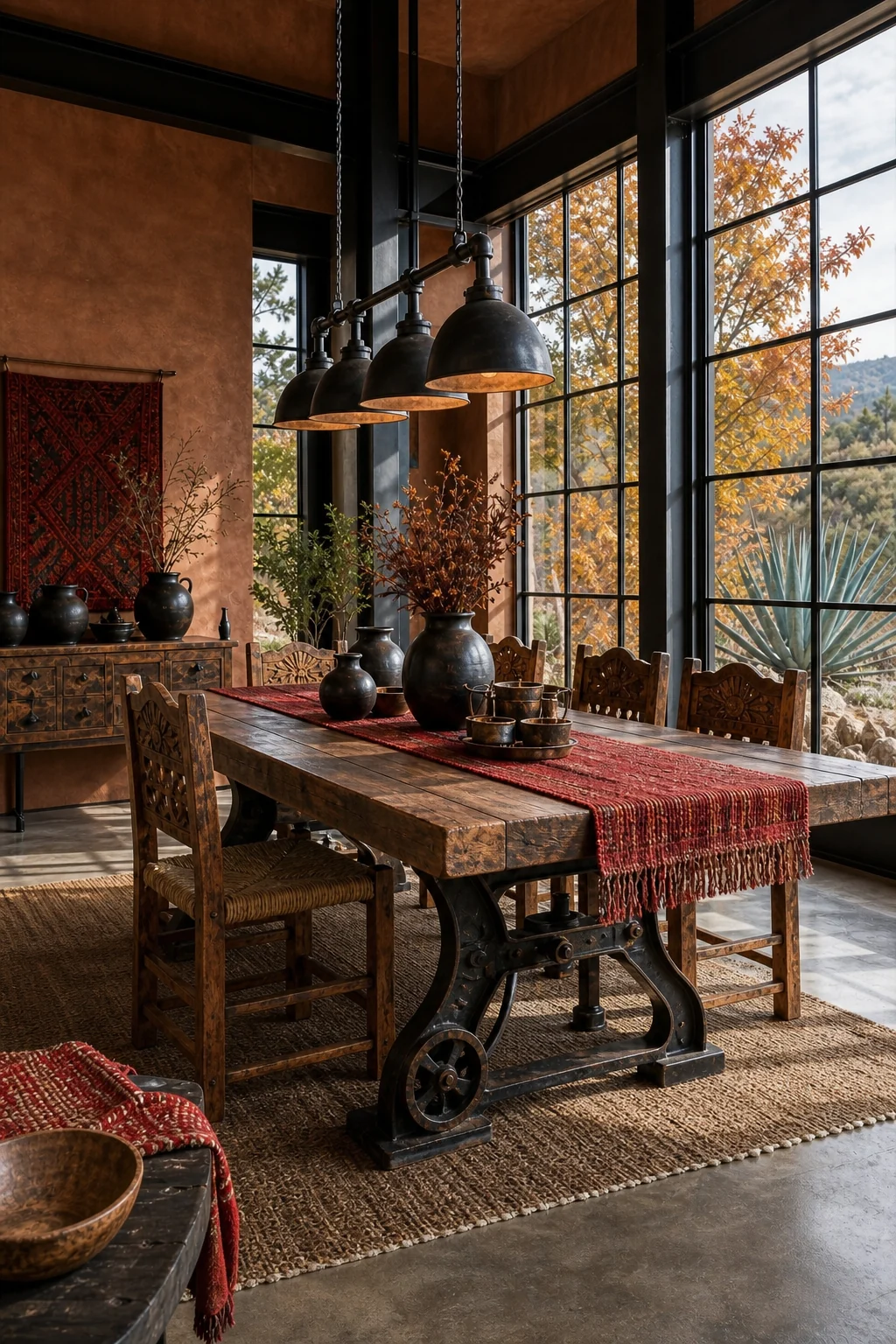
Surrounding a massive reclaimed wood table with hand-carved seating perfectly resolves the tension. The tactile woven agave seats physically soften the severe, rigid lines of the iron base, creating a perfectly balanced seating arrangement that welcomes guests immediately while maintaining a strict architectural edge.
| Design Layer | mexican traditional Role | industrial Role | Bridge Decision |
|---|---|---|---|
| Architectural Shell | Hand-troweled terracotta plaster walls | Exposed black steel I-beams | Matte black framing against warm ochre |
| Large Furniture | Carved copal wood dining chairs | Heavy cast-iron machine table legs | Reclaimed factory wood tabletop |
| Tactile Textiles | Cochineal-dyed woven agave runners | Utilitarian absence of soft fabric | Woven texture softening rigid iron lines |
| Overhead Lighting | Handmade smoky clay dome shades | Raw steel factory suspension pipes | Custom linear chandelier merging both materials |
| Small Accents | Smoky barro negro ceramic vessels | Oxidized iron cabinet hardware | Dark, smoky finishes shared across both |
This structured layering ensures neither aesthetic overwhelms the other. By assigning specific structural roles to the metal and specific comfort roles to the carved wood, the dining room remains highly functional, visually striking, and deeply welcoming for everyone who enters the carefully curated space.
Manipulate Light and Shadow
Massive steel factory windows manipulate the generous golden autumn daylight to completely transform the interior surfaces. They cast rigid, geometric shadows that intentionally highlight the organic, uneven, and highly tactile imperfections of the hand-troweled plaster walls throughout the entire day, adding dynamic visual interest.
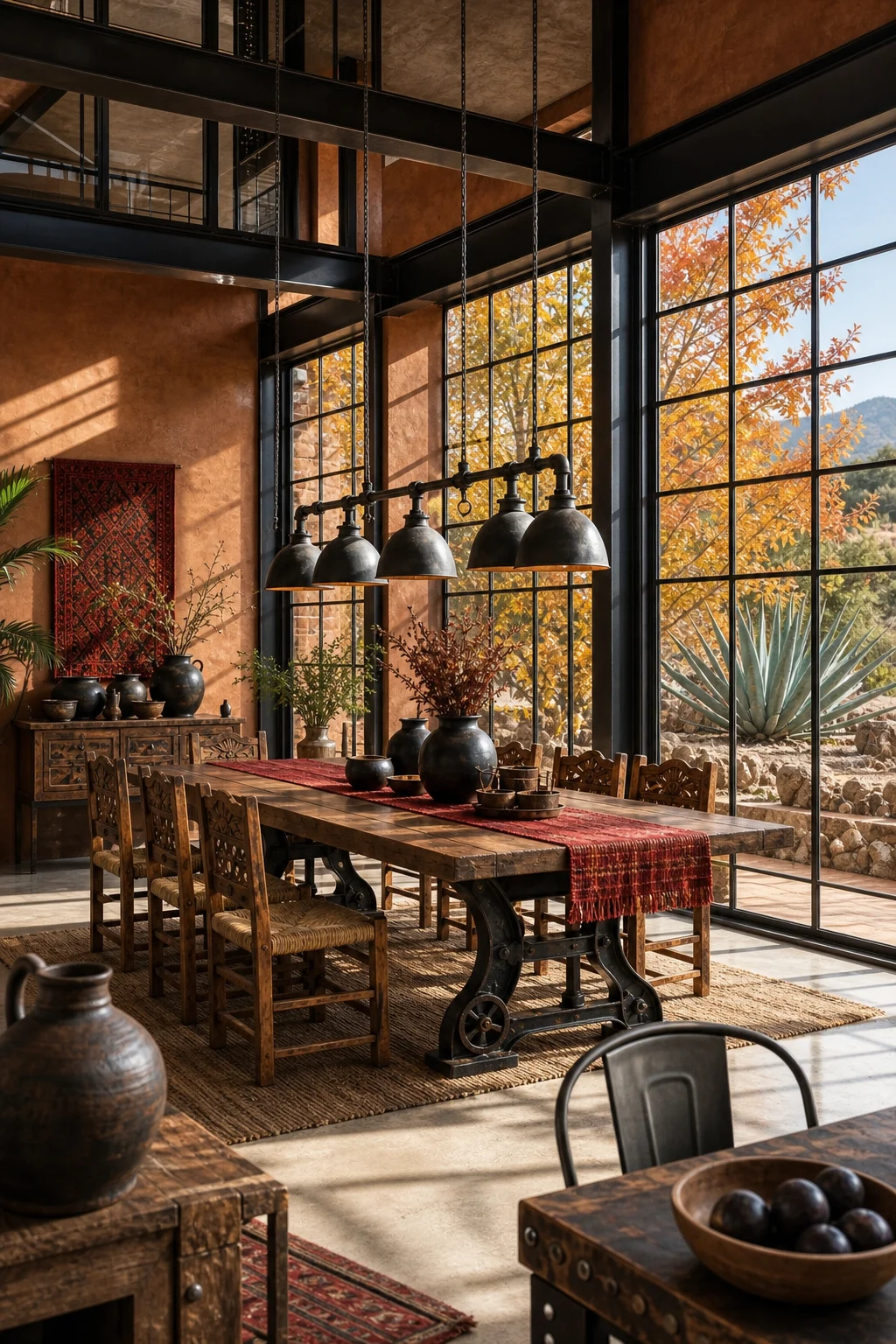
Controlling this natural and artificial illumination is crucial for emphasizing the room’s rich texture. You must deliberately position your lighting to graze the terracotta plaster walls, revealing the profound depth, subtle variations, and human history embedded in the artisanal finish without washing it out.
- Maximize natural daylight through unadorned, multi-pane steel window frames to ensure the dark metals never feel gloomy.
- Use warm-toned bulbs in your fixtures to dramatically enhance the rich terracotta wall tones during the evening hours.
- Allow harsh, directional shadows to deliberately emphasize the hand-troweled plaster textures and highlight the artisan’s physical labor.
Style the Surfaces
Surface styling seamlessly blends warm, oxidized rust tones with vibrant cochineal-dyed textiles. This deliberate material pairing cleverly ties the visual concept of industrial factory decay directly to the rich, historical legacy of artisanal Mexican dyes and traditional weaving techniques, creating a compelling thematic connection.
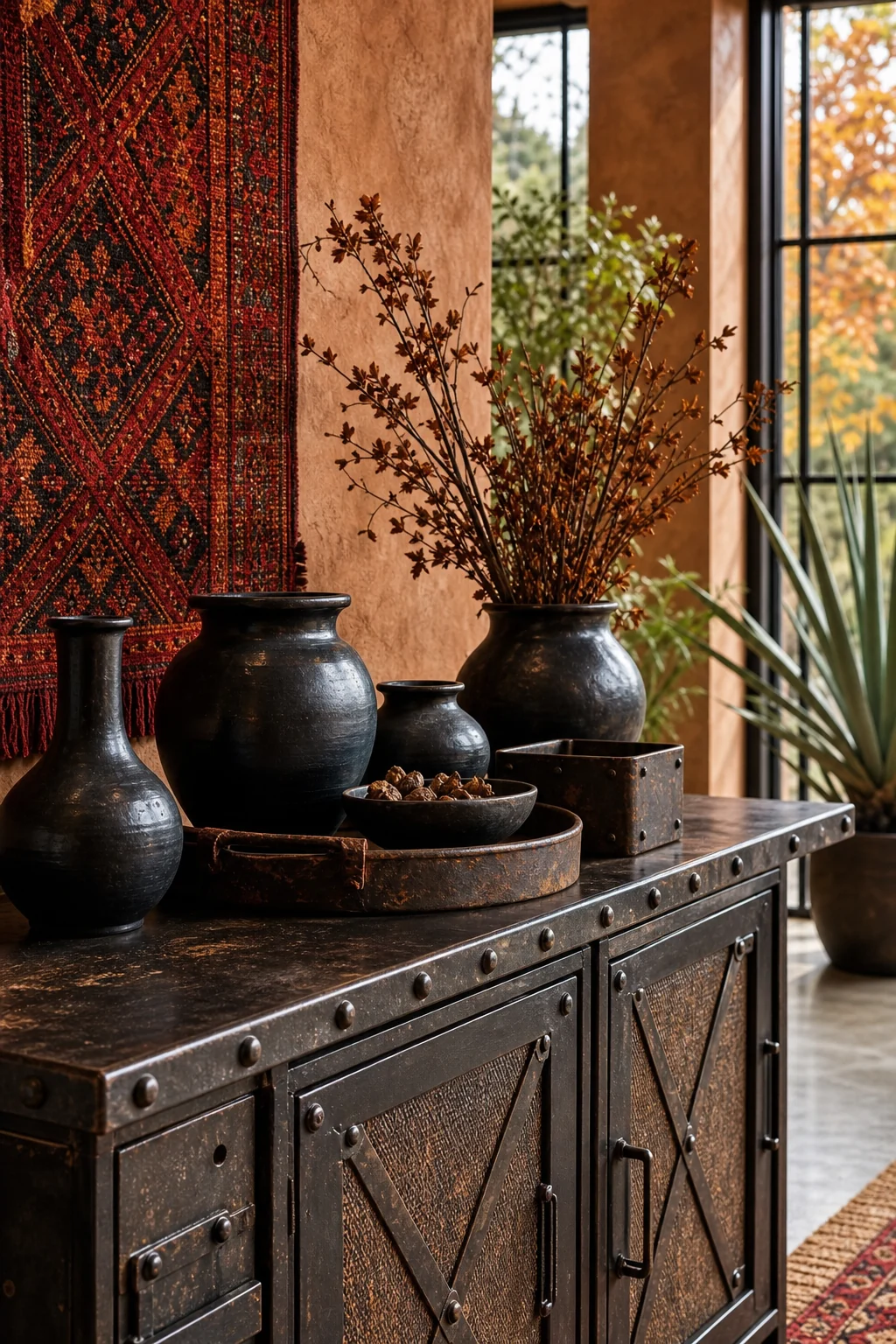
Every tabletop accessory must serve both aesthetic languages simultaneously to maintain perfect balance. A vibrant cochineal-red woven runner adds vital organic warmth while perfectly complementing the weathered, rusted steel accents positioned nearby on the heavy metal console or sideboard, bridging the two distinct styles.
By keeping the tabletop arrangements highly curated, you prevent unnecessary visual clutter. Allowing generous empty space around the ceramics ensures the heavy industrial table beneath remains a highly visible, defining architectural feature of the dining room rather than disappearing under excessive layers of decoration.
Extend the Logic
You can easily extend this strict design logic into adjacent transitional spaces. Framing a textured woven agave runner with a heavy, unyielding steel door threshold carries the established visual tension perfectly into the hallway, maintaining the narrative throughout the home and ensuring stylistic continuity.
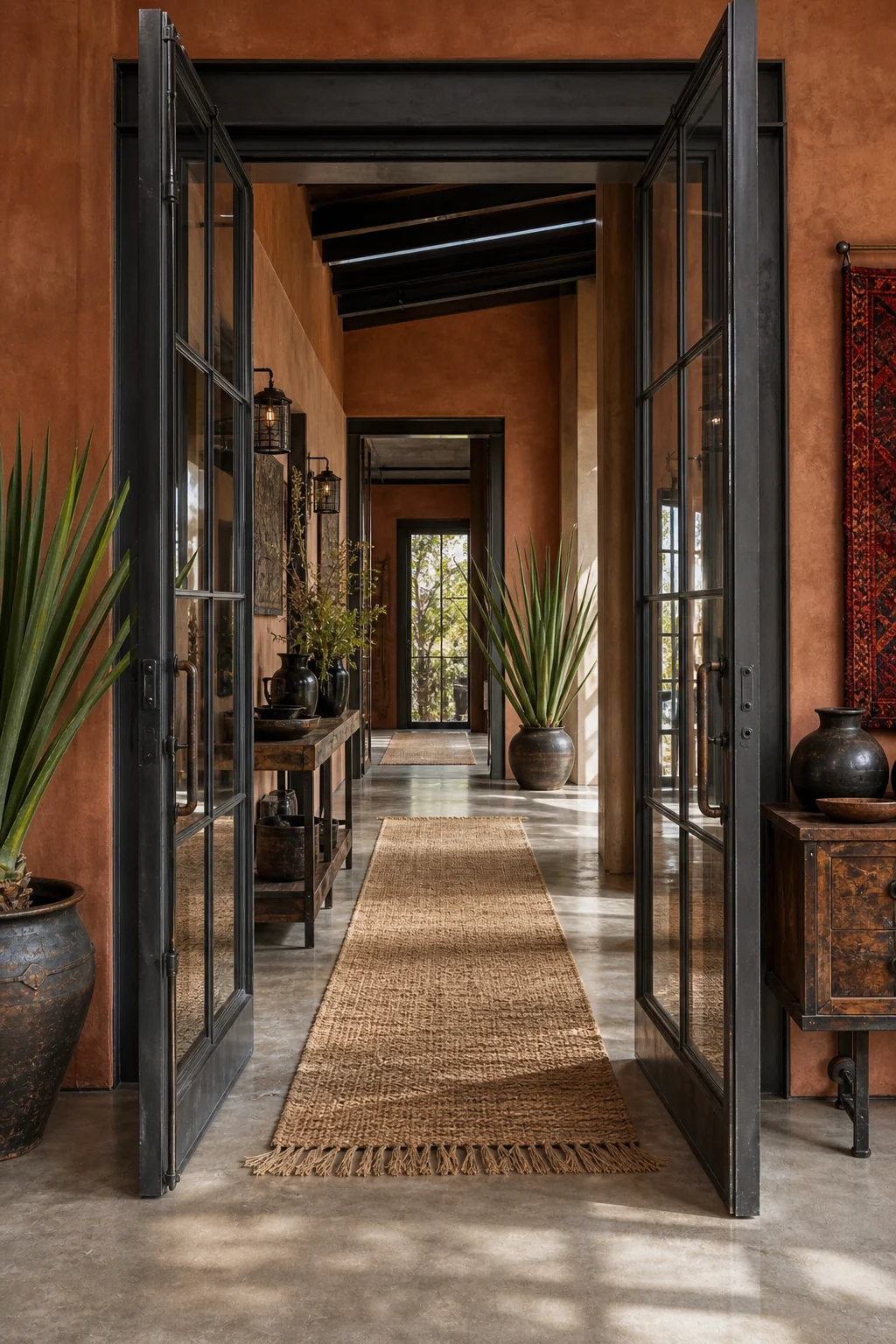
Adapting this ambitious architectural approach for smaller budgets requires strategic, thoughtful compromises. You can easily swap massive cast-iron bases for standard blackened steel legs while keeping the reclaimed wood top to save significantly on heavy freight shipping costs and installation without sacrificing the aesthetic.
- Install simple matte black hardware on existing doors to convincingly mimic the visual weight of heavy cast iron.
- Use smaller terracotta planters to introduce organic warmth if replastering entire dining room walls is structurally impossible.
- Source vintage wooden chairs with woven seats to contrast sharply with modern, accessible steel dining tables.
Avoid the Theme Park
A successful hybrid strictly avoids the superficial costume trap. By physically intertwining these distinct raw materials rather than merely placing them side-by-side, the dining room achieves a highly mature, cohesive, and authentic identity that feels entirely earned, deeply personal, and structurally sound from every angle.
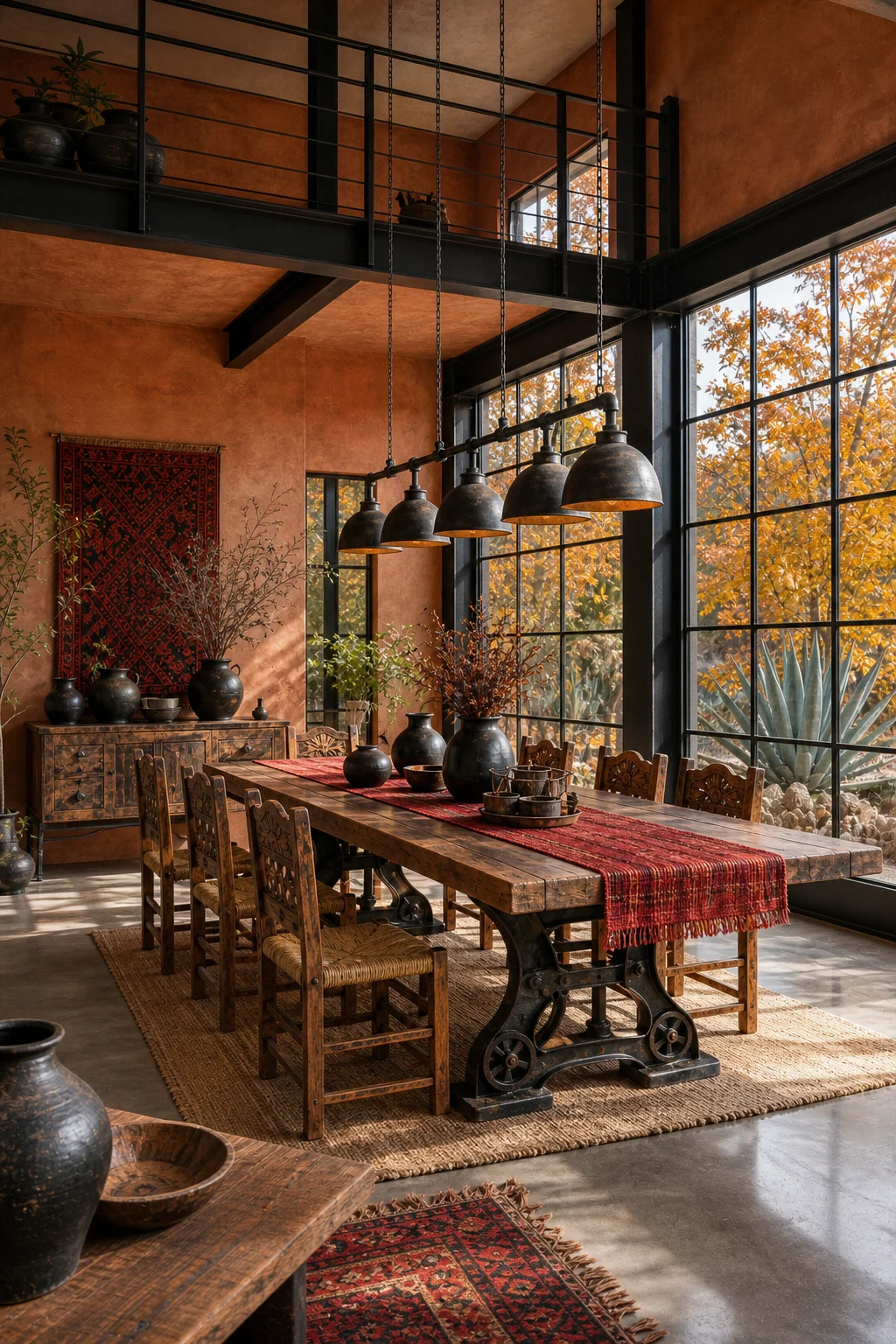
True architectural balance is achieved through structural integration, not isolated decoration. When rigid industrial steel framing directly supports and suspends traditional handmade clay, the fundamental stylistic contradiction is finally and beautifully resolved for the viewer, creating a lasting impression of harmony and intentional design.
- Avoid using pristine, glossy metals that ruin the carefully cultivated patina and clash with the matte clay.
- Do not cluster all traditional handmade crafts onto one single wall; distribute the warmth evenly throughout the space.
- Never substitute authentic, tactile clay for cheap, mass-produced ceramic knockoffs that lack genuine depth and historical character.