
This Brass Samovar Became a Breakfast Room
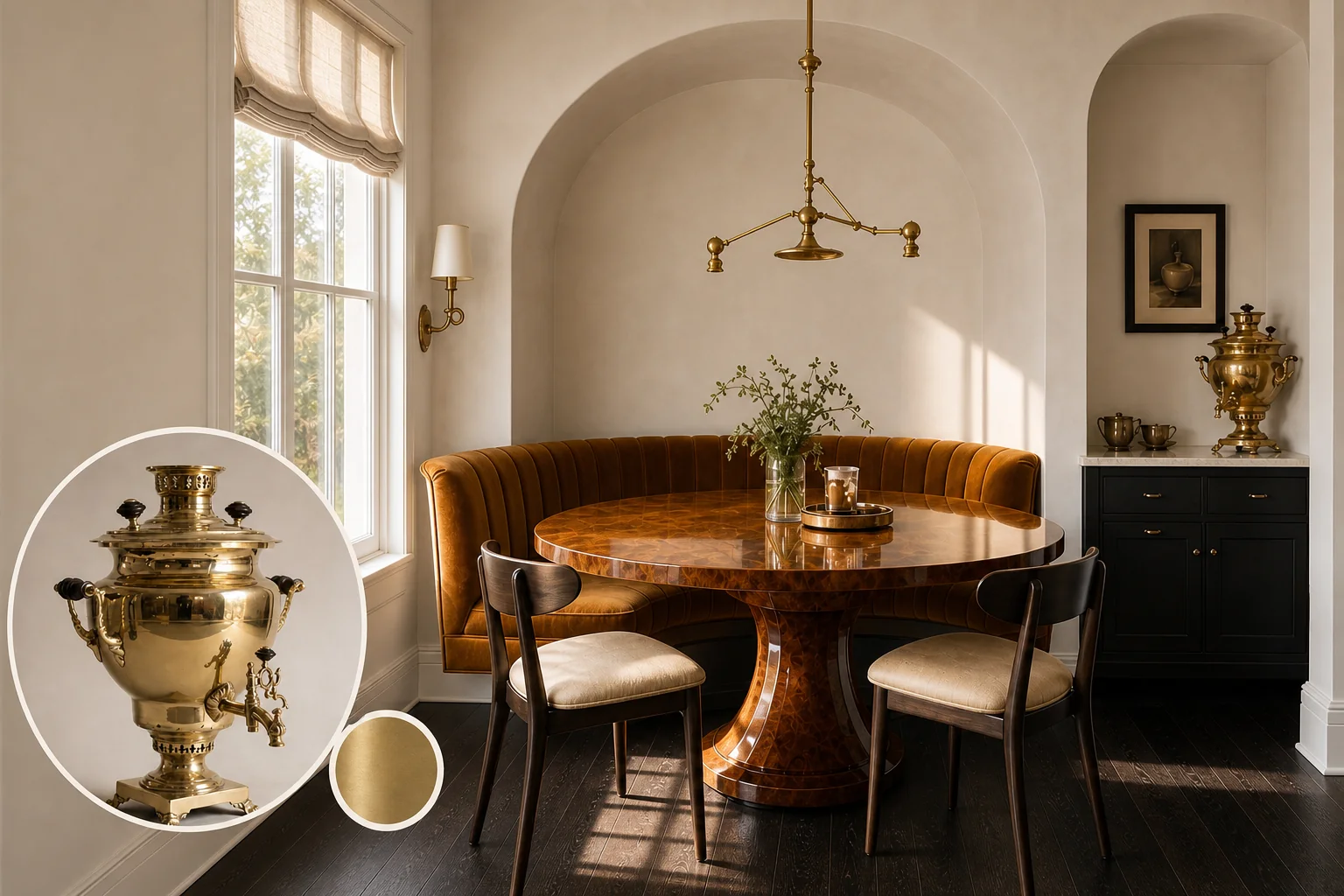
An ornate Victorian antique proves that heavy metals and classic curves can inspire a surprisingly bright, modern morning space. By extracting the samovar’s core visual traits, this breakfast room balances enveloping, soft volumes with the sharp, reflective metallic precision of its source, ensuring glossy surfaces are always grounded by expansive, quiet matte backgrounds.
Carving out a soft, enveloping architectural shell
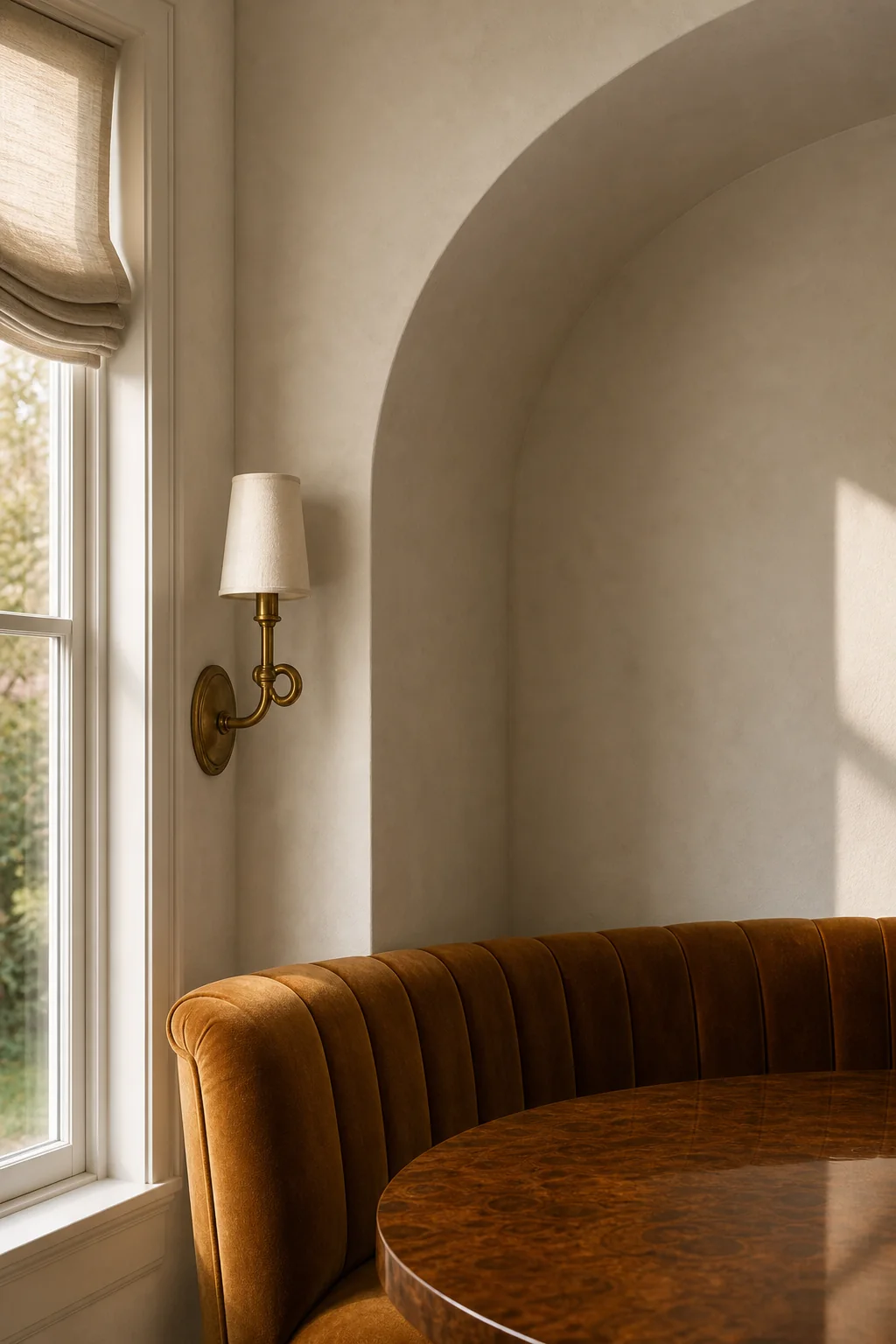
The samovar’s voluptuous profile translates into a deep architectural alcove, providing a soft foundation that embraces the morning light. To capture this swelling urn-like curve, use matte plaster to create a seamless, quiet background that ensures the alcove is deep enough for comfortable banquette seating. Instead of relying on standard right angles, this curved shell physically wraps around the dining space, offering a sense of intimate enclosure that mimics the vessel’s rounded belly. Following a few structural steps will guarantee the room feels as cohesive, inviting, and solidly formed as the original brass antique.
- Frame the curved banquette alcove to ensure a deep, rounded architectural recess is ready for plaster.
- Apply matte steam-white plaster so walls have a soft, seamless finish with no harsh corners.
- Install the ebonized oak flooring so dark, grounded floors provide high contrast for the seating.
- Build in the custom banquette seating so it fits perfectly within the curved plaster shell.
- Mount the adjustable linen Roman shades so morning light is easily controlled and softly diffused.
Grounding warm amber tones with ebonized contrast
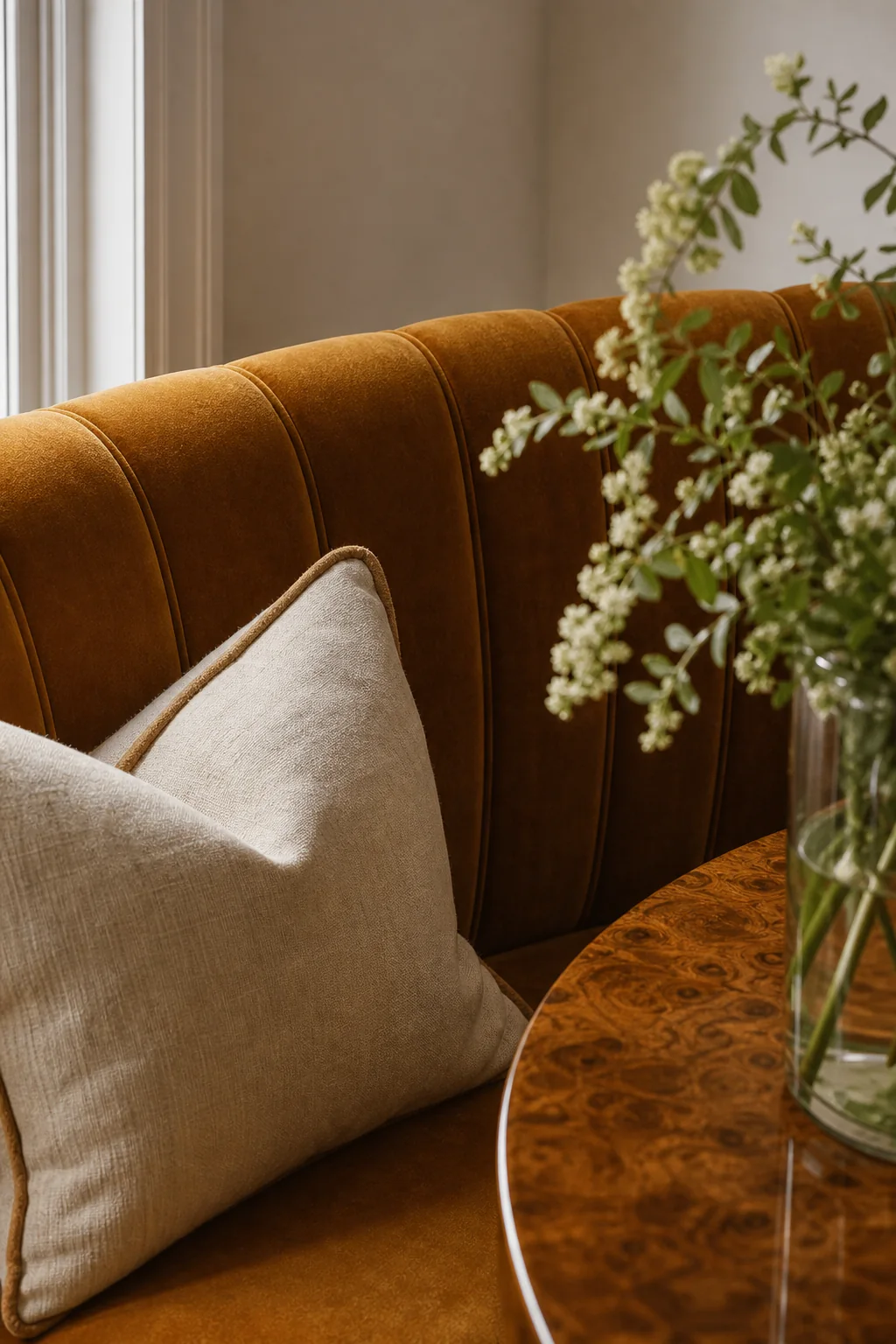
The stark contrast between the antique’s bright metal and dark wooden handles informs a palette of glowing amber grounded by deep, ebonized oak. By keeping the surrounding walls a soft steam white, the amber velvet seating pops beautifully against the dark floors, ensuring the room feels vibrant rather than heavy. This careful distribution of light and dark tones prevents the space from feeling like a literal antique shop. The visual-DNA mapping table below illustrates exactly how the steeped contrast and other defining traits of the Victorian object translate into specific, actionable room moves.
| Source trait | Visible evidence | Room move |
|---|---|---|
| Swelling Profile | The rounded, voluptuous urn-like belly of the samovar body | A deep, curved matte plaster alcove that houses the breakfast banquette, providing a soft, enveloping architectural shell |
| Steeped Contrast | The bright polished brass body set against dark, turned wooden finials and handles | Warm amber velvet upholstery on the banquette grounded by dark, ebonized oak flooring |
| Reflective Warmth | The high-gloss, mirror-like finish of the polished brass | A highly polished, lacquered burl wood dining table that catches and reflects the morning sunlight, paired with matte linen shades |
| Articulated Details | The intricate, mechanical geometry of the ornate spigot protruding from the smooth body | A slender, multi-jointed unlacquered brass pendant light centered over the table, providing a sharp, precise counterpoint to the curved alcove |
Anchoring the bright metals
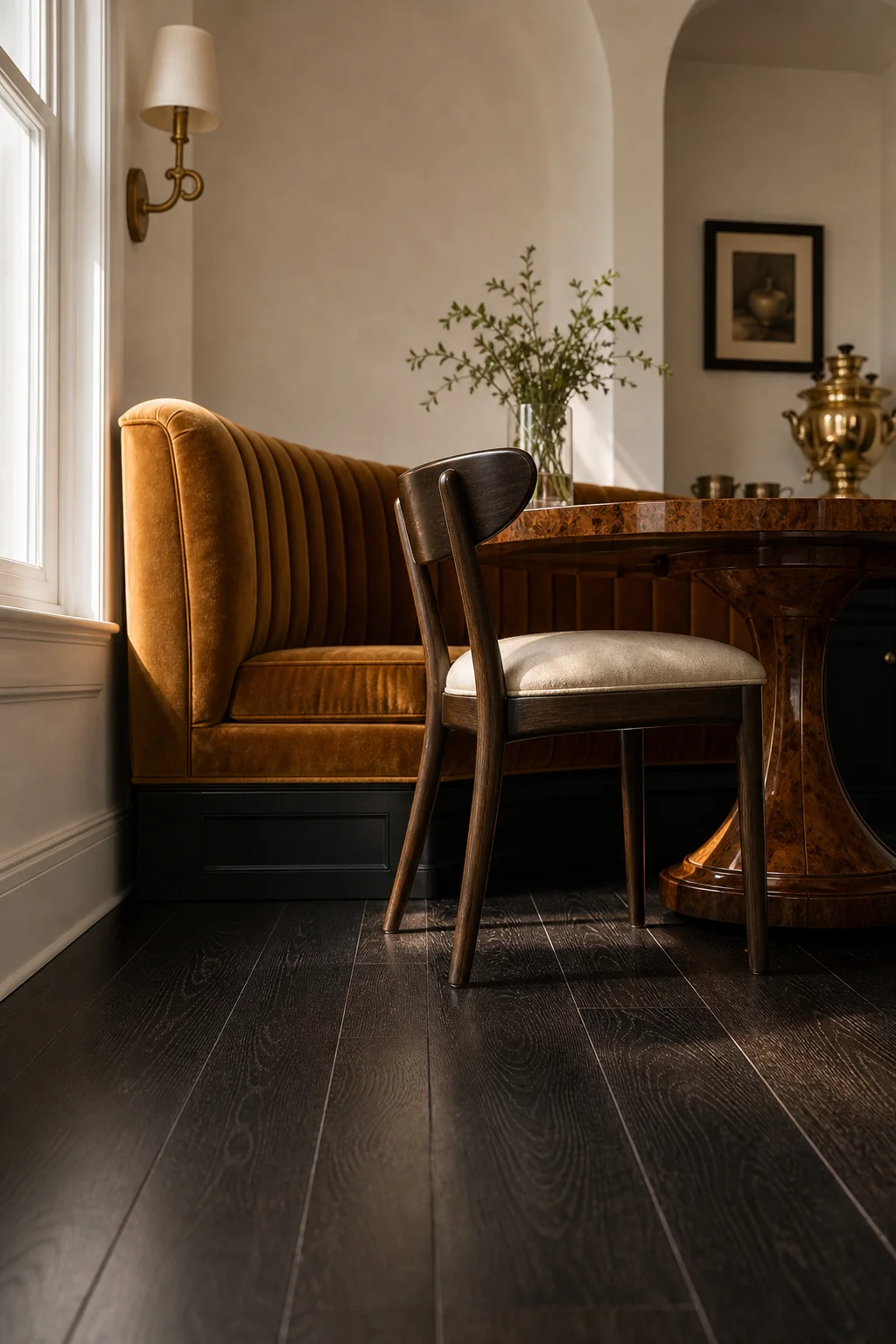
Dark oak floors ground the room just like the wooden samovar handles anchor its gleaming body. This heavy, dark base layer is essential for preventing the bright seating and metallic accents from floating away, establishing a quiet matte background that lets the room’s more reflective elements command attention without overwhelming the morning eye. The ebonized finish absorbs excess light, creating a necessary visual weight that balances the airy, steam-white plaster walls and the luminous, golden hues of the central dining area.
Balancing high-gloss reflection with matte linen
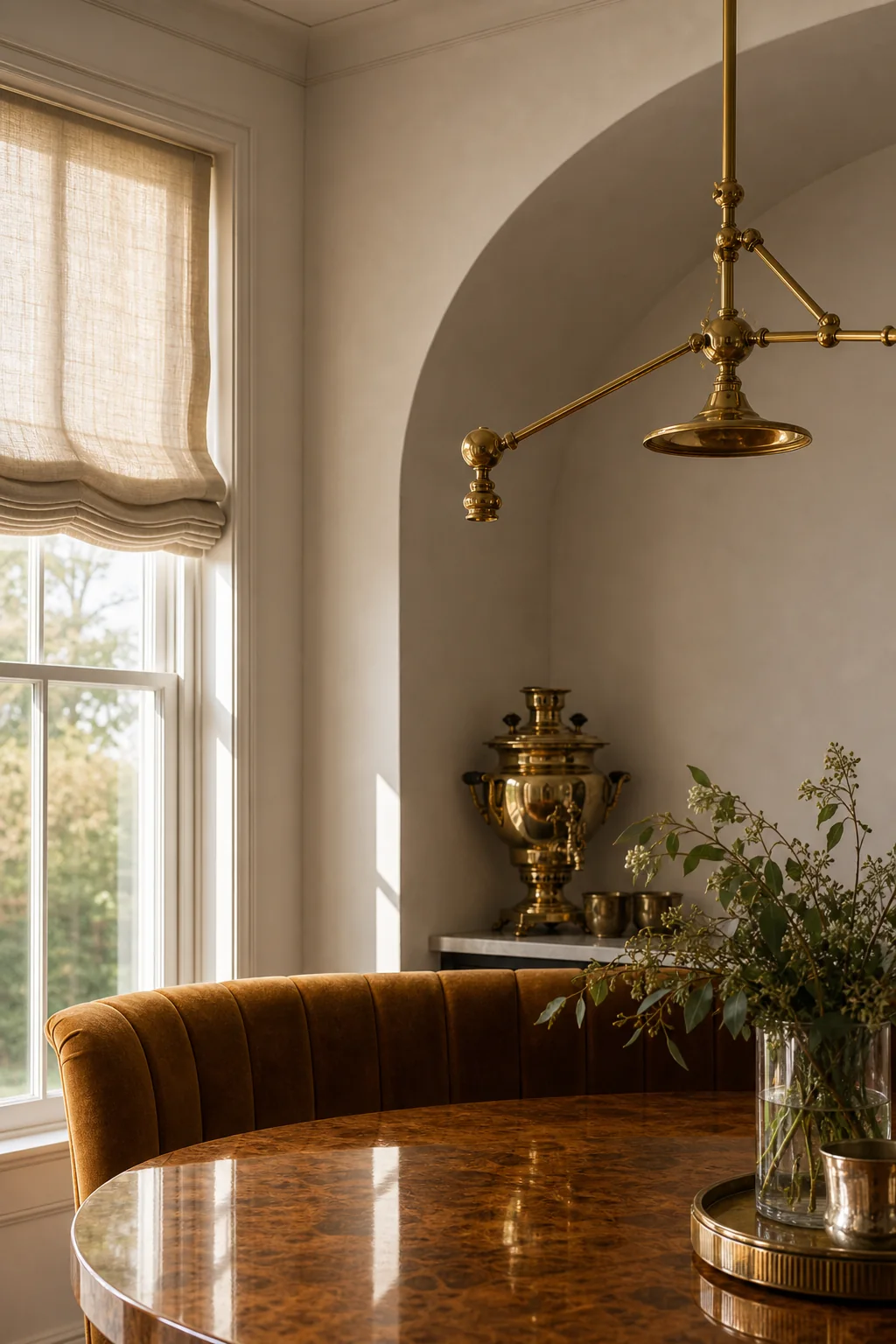
The mirror-like finish of the brass vessel is reimagined as a highly polished dining surface, catching the morning sun against quiet, matte window treatments. Selecting a lacquered burl wood table provides durable, wipeable reflectivity that mimics the high-gloss brass without feeling overly literal. This interplay between sheen and softness is crucial for a comfortable breakfast room, where harsh glares can easily ruin the morning mood. To execute this textural balance perfectly, gather these specific materials for your room recipe and ensure each finish plays its designated role.
Catching the morning light
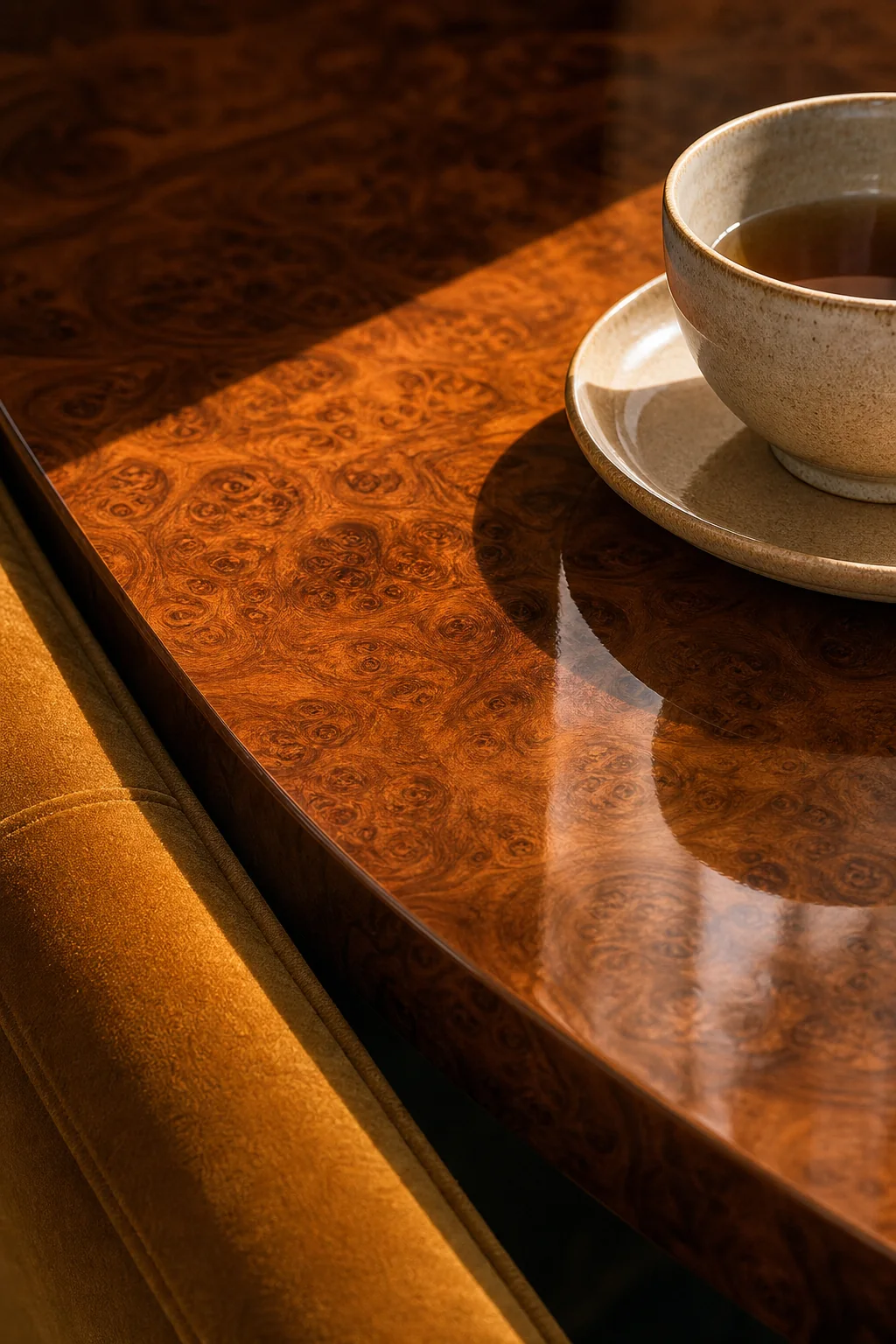
Lacquered burl wood mimics the samovar’s mirror-like finish, turning the dining table into a luminous focal point that anchors the banquette. By pairing this glossy table with matte linen shades, you soften the glare of the morning sun, maintaining a serene atmosphere while still celebrating the reflective warmth that originally inspired the space. The natural figuring of the burl adds an organic complexity that rivals the intricate engravings on the antique, proving that high-end materials can deliver both practical durability and profound visual interest.
Puncturing soft curves with mechanical precision
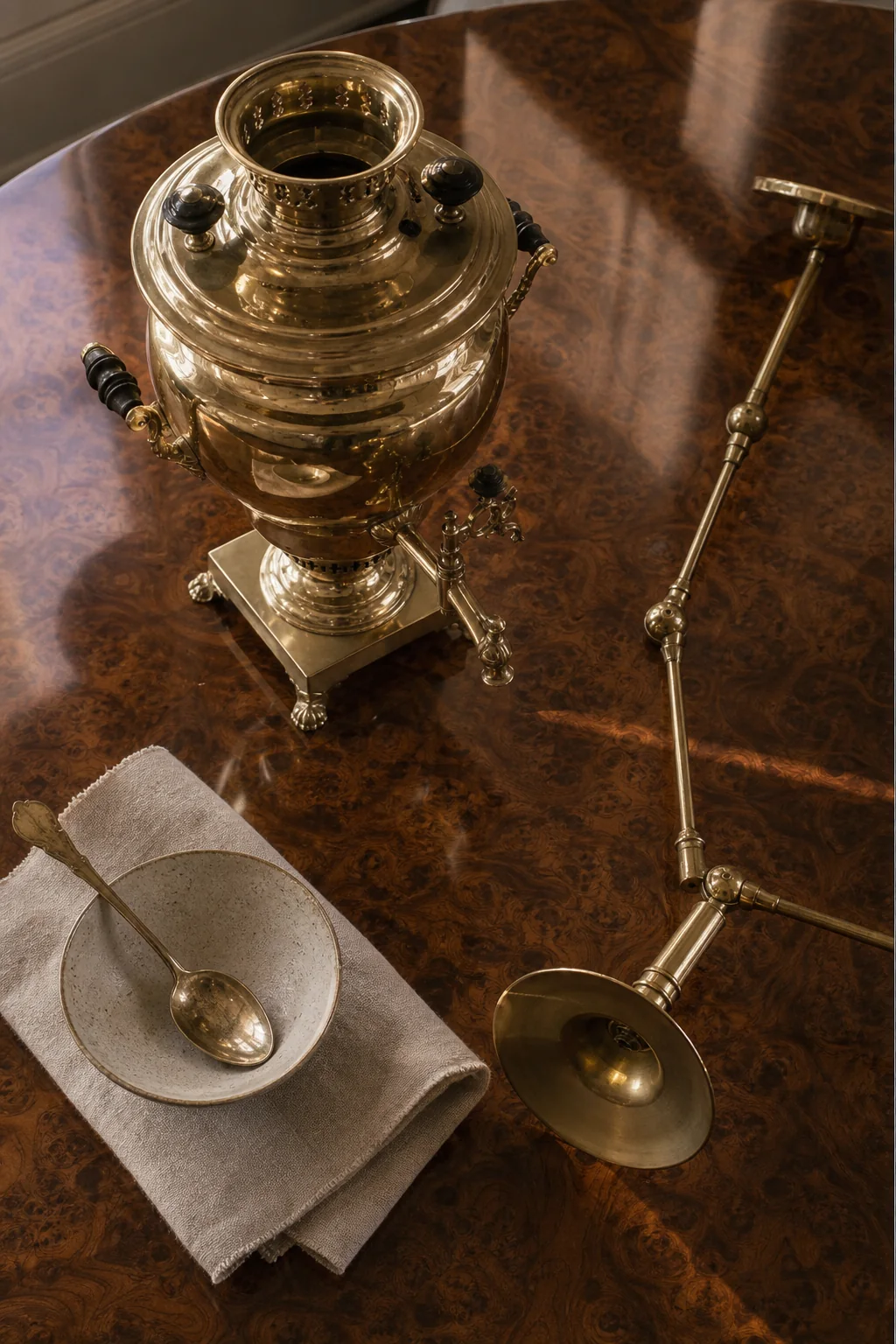
The intricate, protruding spigot of the samovar inspires slender, articulated lighting fixtures that add sharp, precise counterpoints to the room’s soft curves. Hanging a multi-jointed brass pendant directly over the table introduces this necessary mechanical geometry. You can easily scale this design’s intensity: a subtle approach uses a single pendant with neutral steam-white upholstery, while a balanced execution pairs the warm amber seating with the highly polished burl table. For a truly bold iteration, wrap the entire alcove in high-gloss amber lacquer to fully immerse the space in reflective warmth.
Choose unlacquered brass for your lighting fixtures. It will naturally tarnish and develop a rich patina, adding authentic antique character to the modern room.