
1950s Gaming Room Setup: Spot the Time-Traveling Object
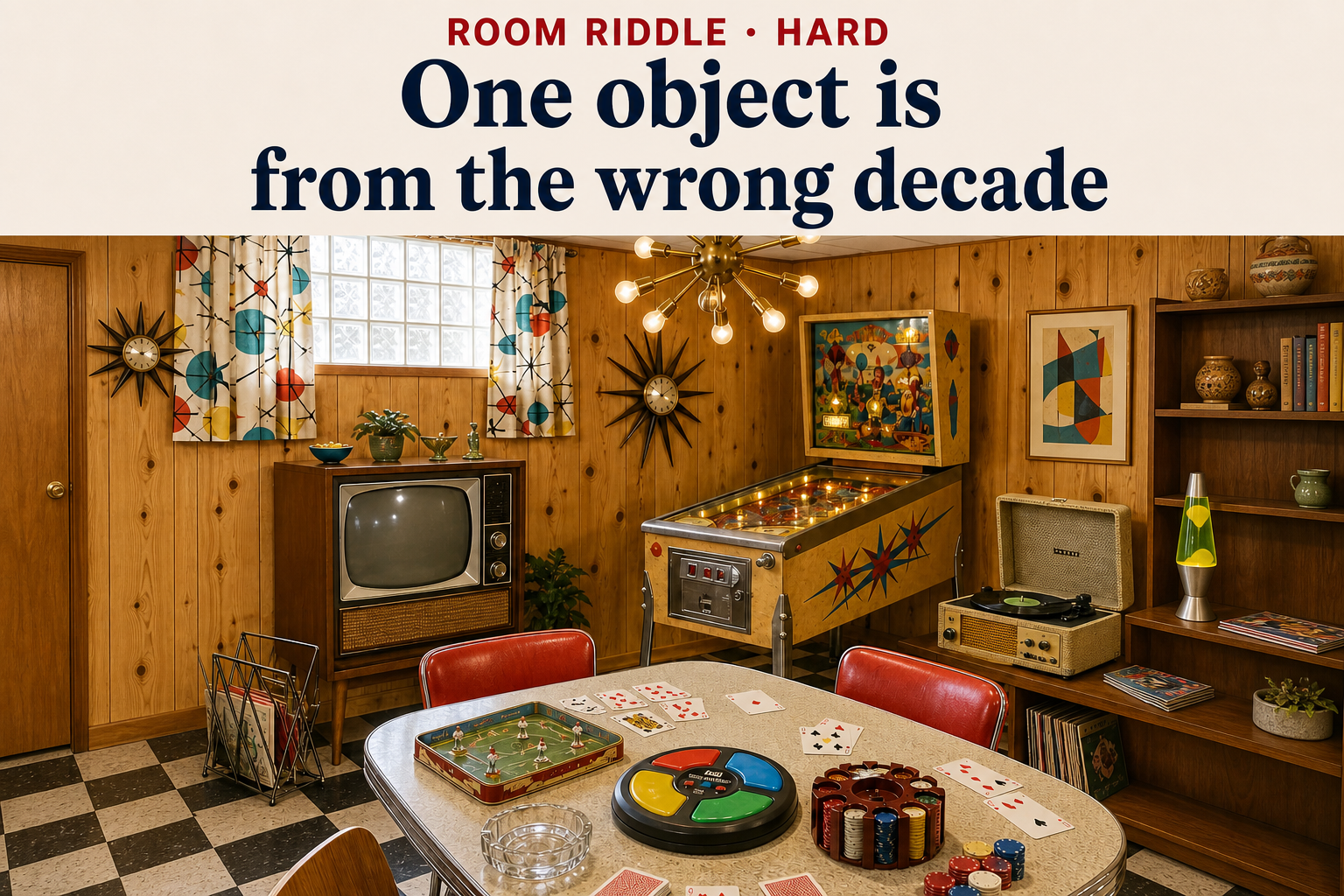
Explore the design idea behind this room and see how its key details work together. Then follow the visual riddle to discover the answer in the full reveal.
Embracing the 1950s knotty pine basement retreat
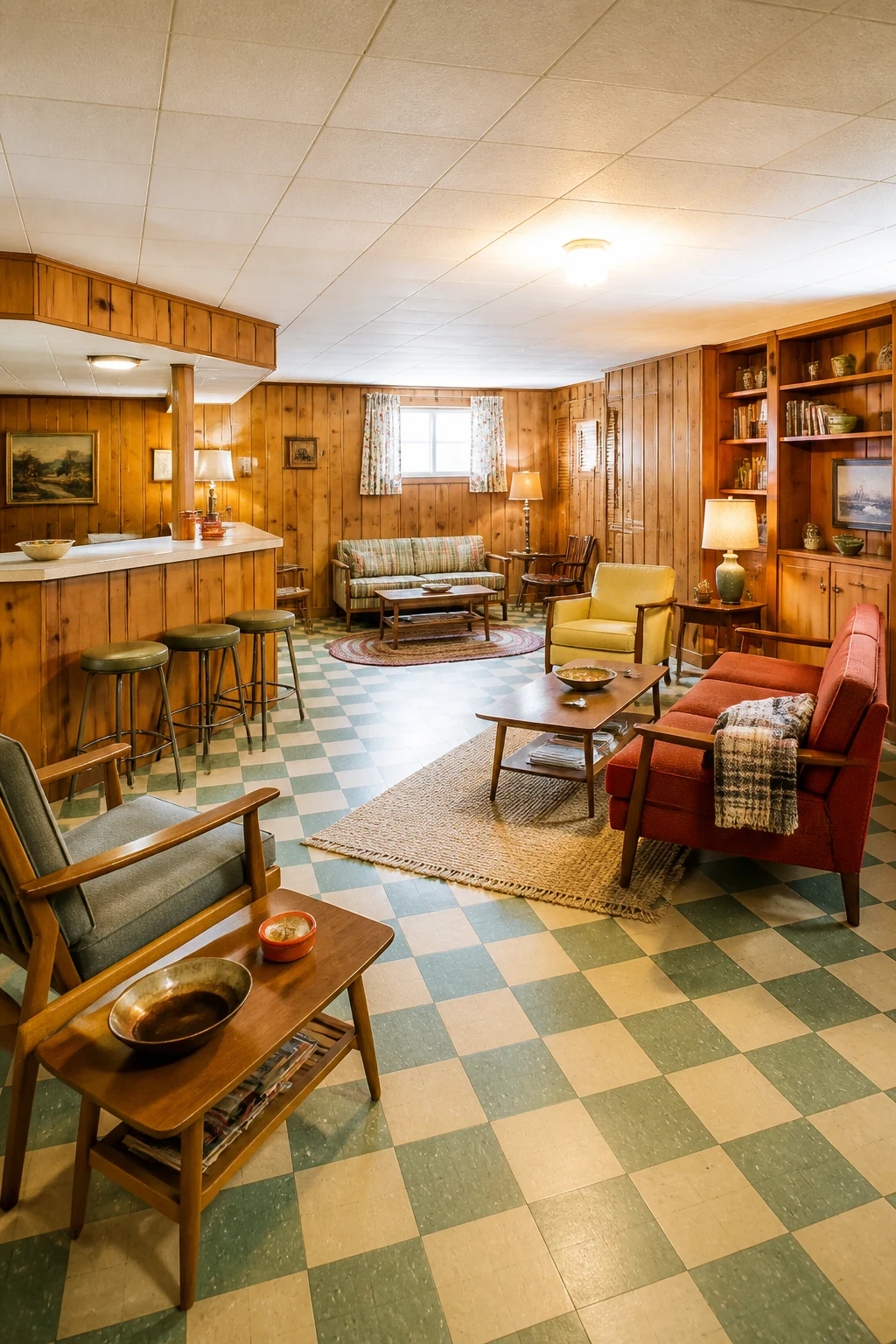
The 1950s post-war era transformed damp, cold cellars into dedicated family recreation zones wrapped in the casual warmth of knotty pine paneling. Smelling faintly of wood polish and echoing with the clatter of mechanical pinball, these cozy spaces became the ultimate weekend entertainment hubs. Homeowners embraced these inviting textures to create a relaxed environment distinctly separate from the formal living rooms upstairs. Understanding this authentic mid-century foundation makes spotting the time-traveling anomaly much more rewarding.
The time-travelling object
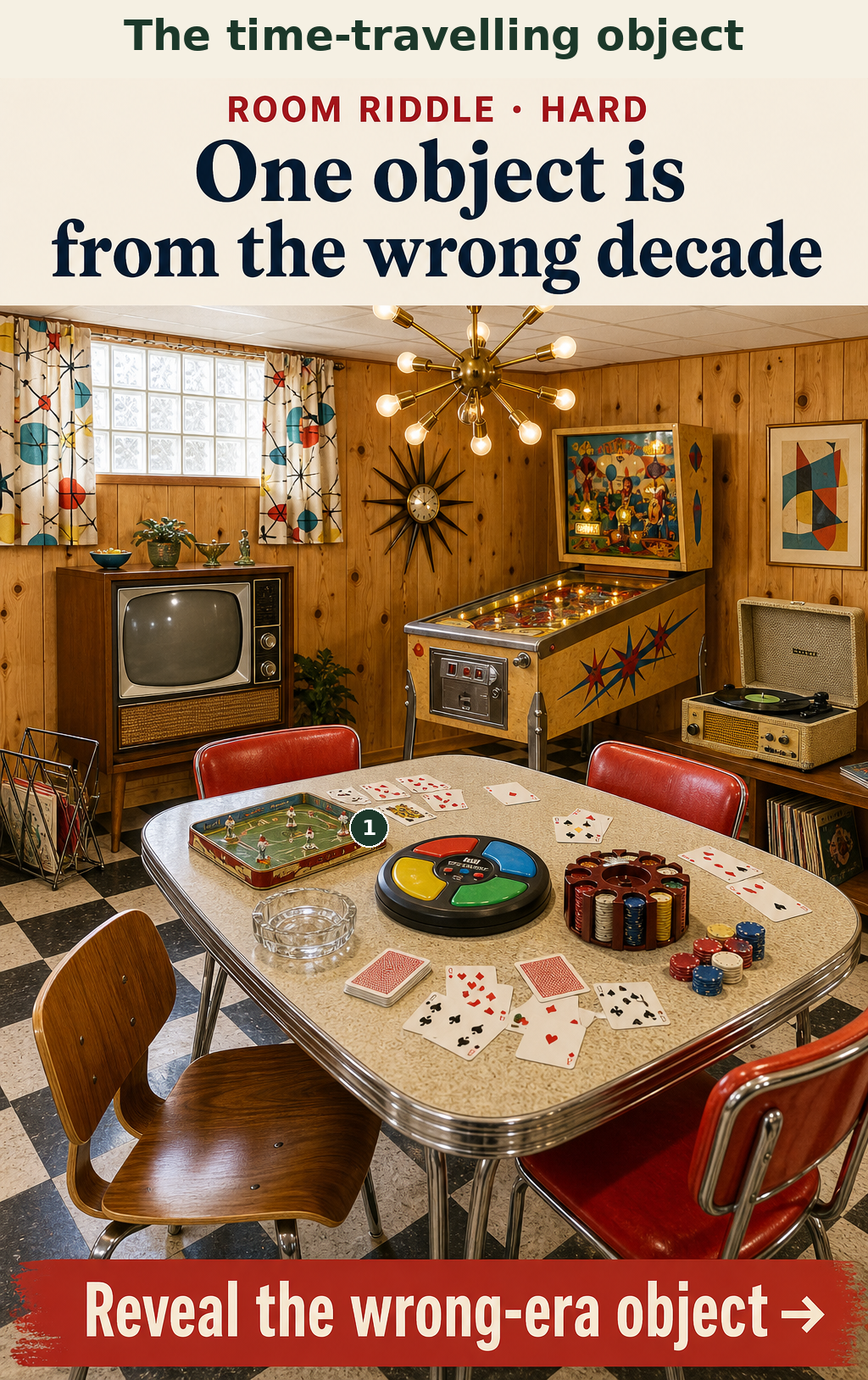
The circular electronic memory game sitting flat on the center of the Formica card table is from the late 1970s or 1980s, while the rest of the room is strictly from the 1950s. Its solid-state electronic design and large plastic light-up pads clash entirely with the era’s mechanical tabletop games and traditional paper playing cards. This battery-powered intruder gives away its time-traveling origins through advanced manufacturing methods that simply did not exist yet, despite cleverly matching the room’s primary color palette.
1950s atomic age optimism in lighting and textiles
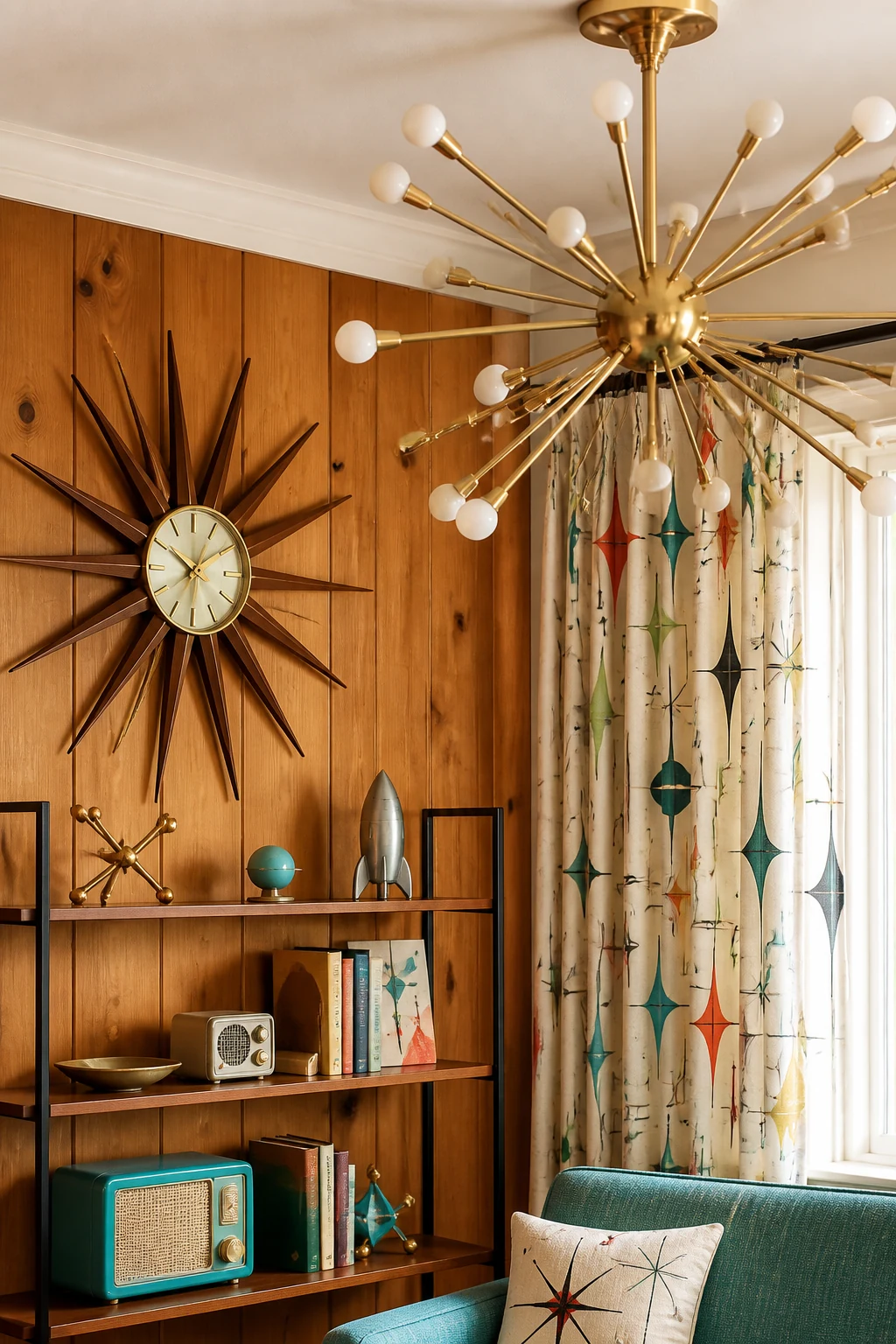
Decorating a recreation room in the 1950s meant capturing the boundless optimism of the space race through dynamic, futuristic silhouettes. Families proudly hung brass Sputnik-style chandeliers and gleaming starburst wall clocks, making everyday living feel directly connected to scientific progress and cosmic exploration. These striking atomic-patterned textiles and fixtures promised a thrilling tomorrow while illuminating the humble asphalt asbestos checkerboard linoleum floors below. Every angular shadow cast across the room reinforced a distinctly mid-century vision of modern domestic life.
Tactile 1950s materials versus 1980s electronic plastics
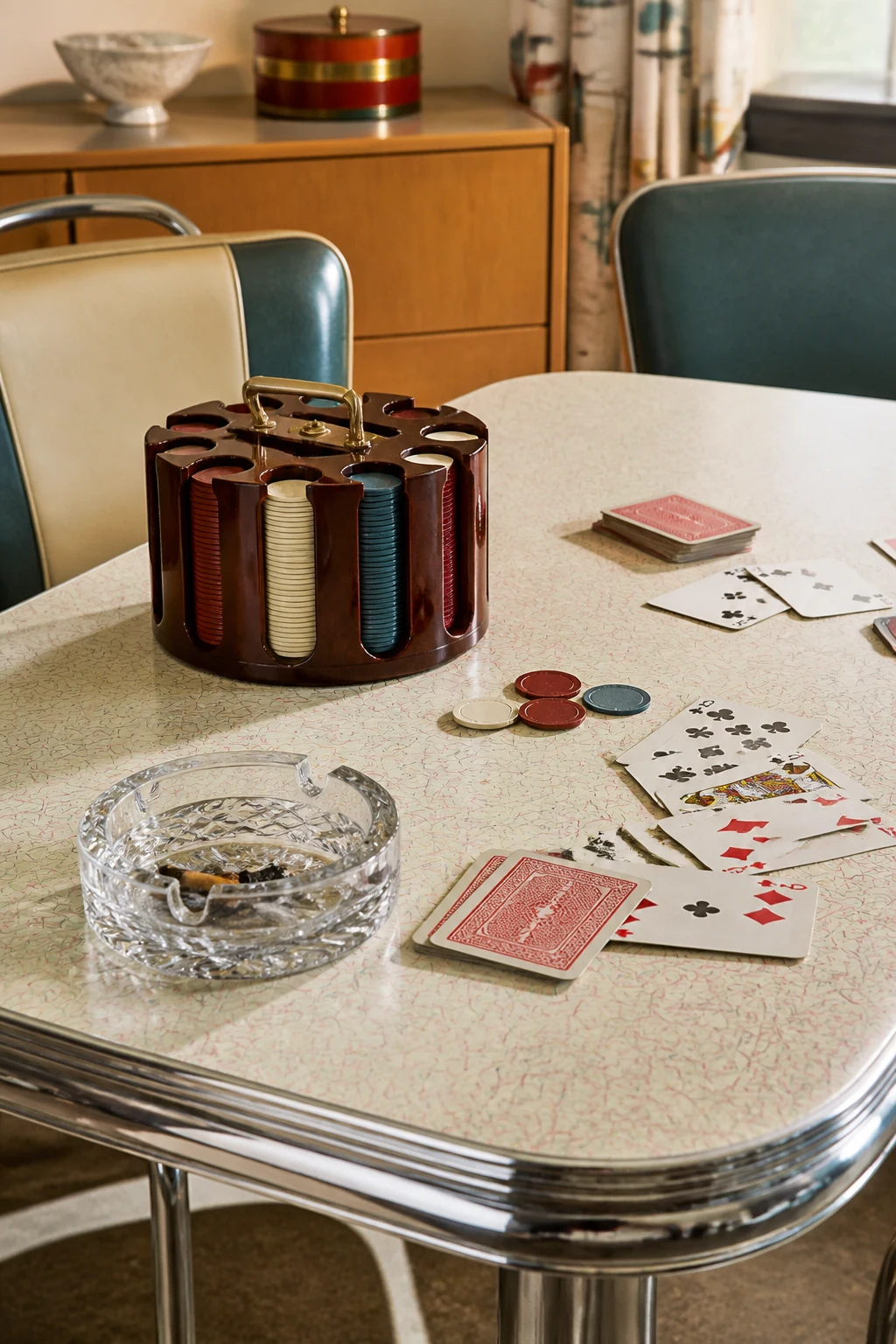
Gathering for game night in the 1950s meant interacting with substantial, tactile materials like cold chrome tubular legs and smooth Formica tabletops. Players handled heavy mechanical devices, dense gaming accessories, and crisp paper playing cards, enjoying the satisfying physical feedback of analog entertainment. This hands-on experience stands in stark contrast to the lightweight, solid-state electronic plastics and digital beeps that would eventually dominate the 1980s toy market.