
Sensory Spaces Room Riddles: Spot the Apothecary Jars
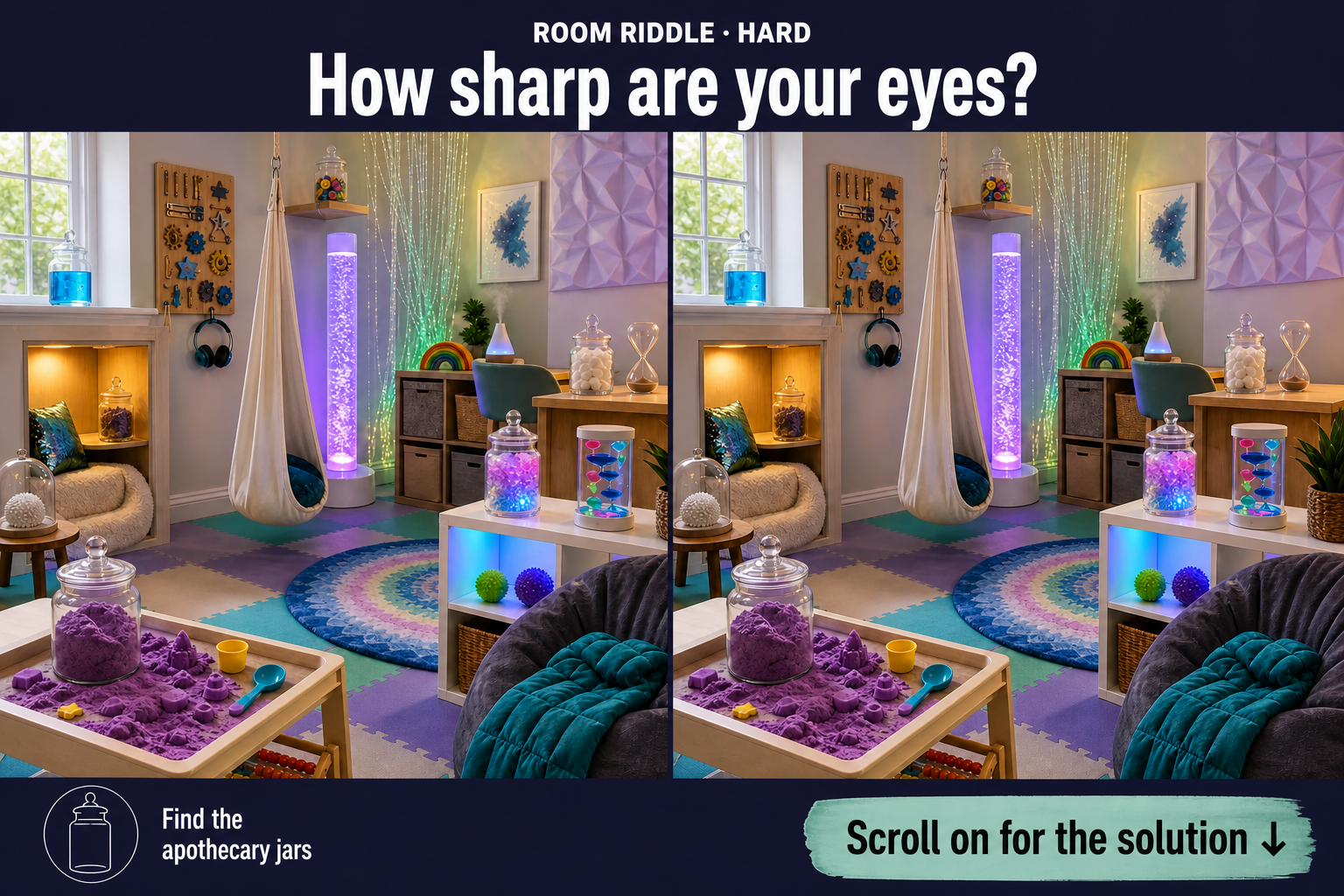
Explore the design idea behind this room and see how its key details work together. Then follow the visual riddle to discover the answer in the full reveal.
Layering Calming Ambient Light
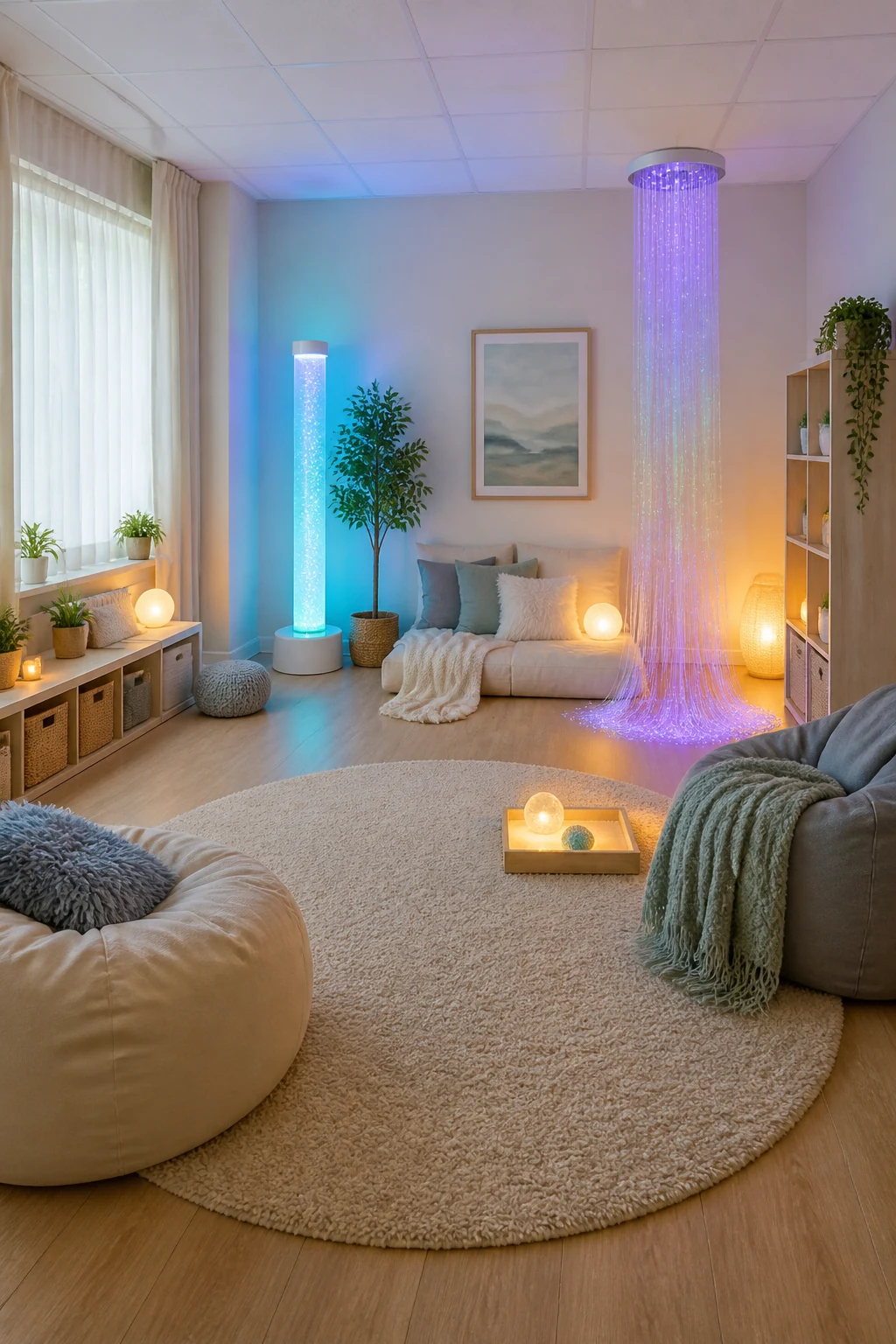
Soft lighting reduces visual fatigue and prevents overstimulation in therapeutic spaces. Using color-changing bubble tubes, cascading fiber optics, and diffused natural light creates a soothing atmosphere while maintaining enough visibility for focused activities. Understanding how functional decor blends into a therapeutic environment makes spotting our hidden objects much more rewarding.
Solution: All 6 Apothecary Jars Found
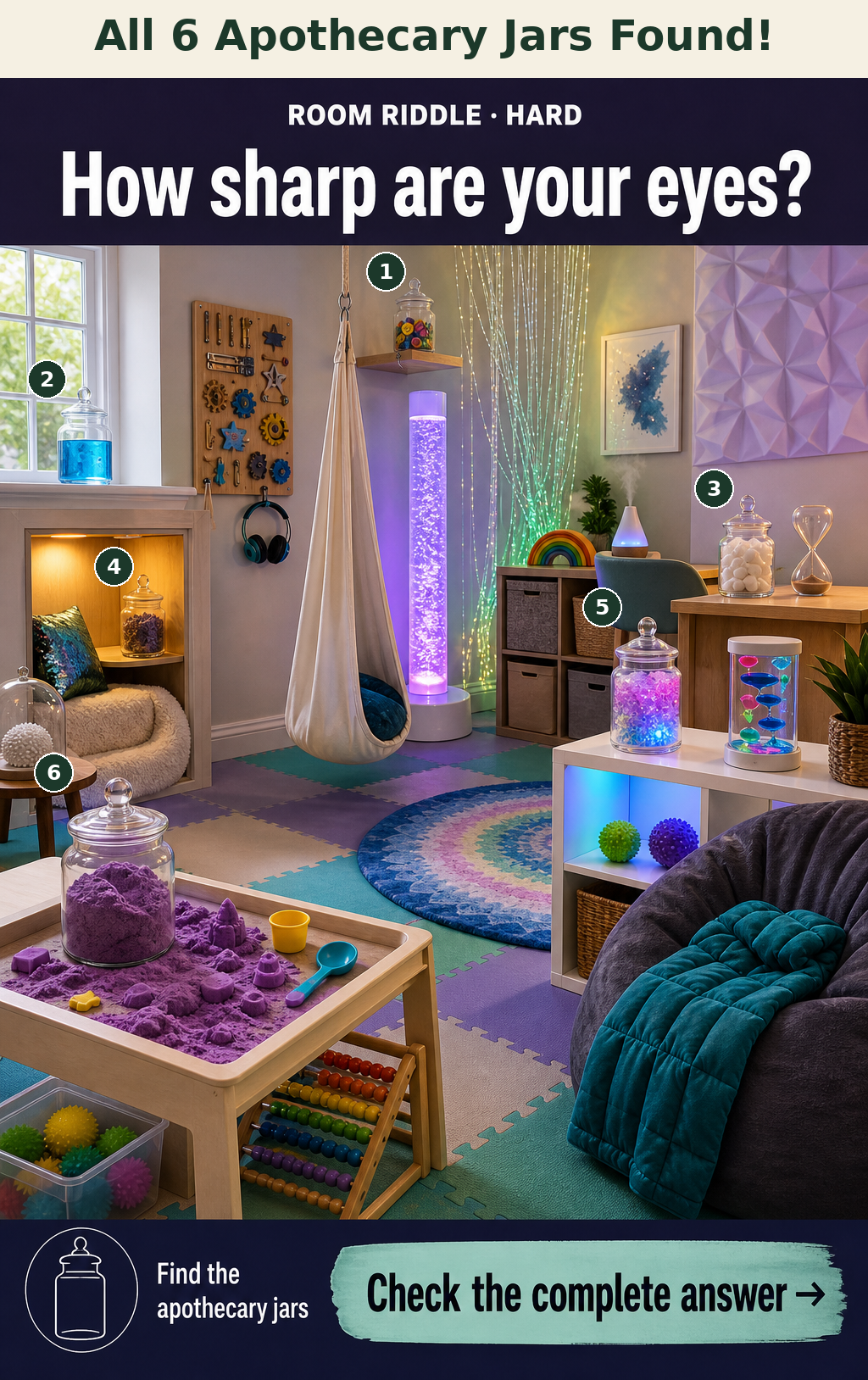
Exactly six qualifying apothecary jars feature both a clear glass body and a fitted glass lid, while decoys like the hourglass, bubbler, and cloche lack these structures. You will find one with kinetic sand on the foreground play table, another holding glowing beads on the light shelf, and a third containing lavender in the reading nook cubby. The remaining three sit on the window sill with blue water, on the desk holding cotton balls, and perched on the high floating shelf filled with colorful buttons.
Integrating Tactile Textures
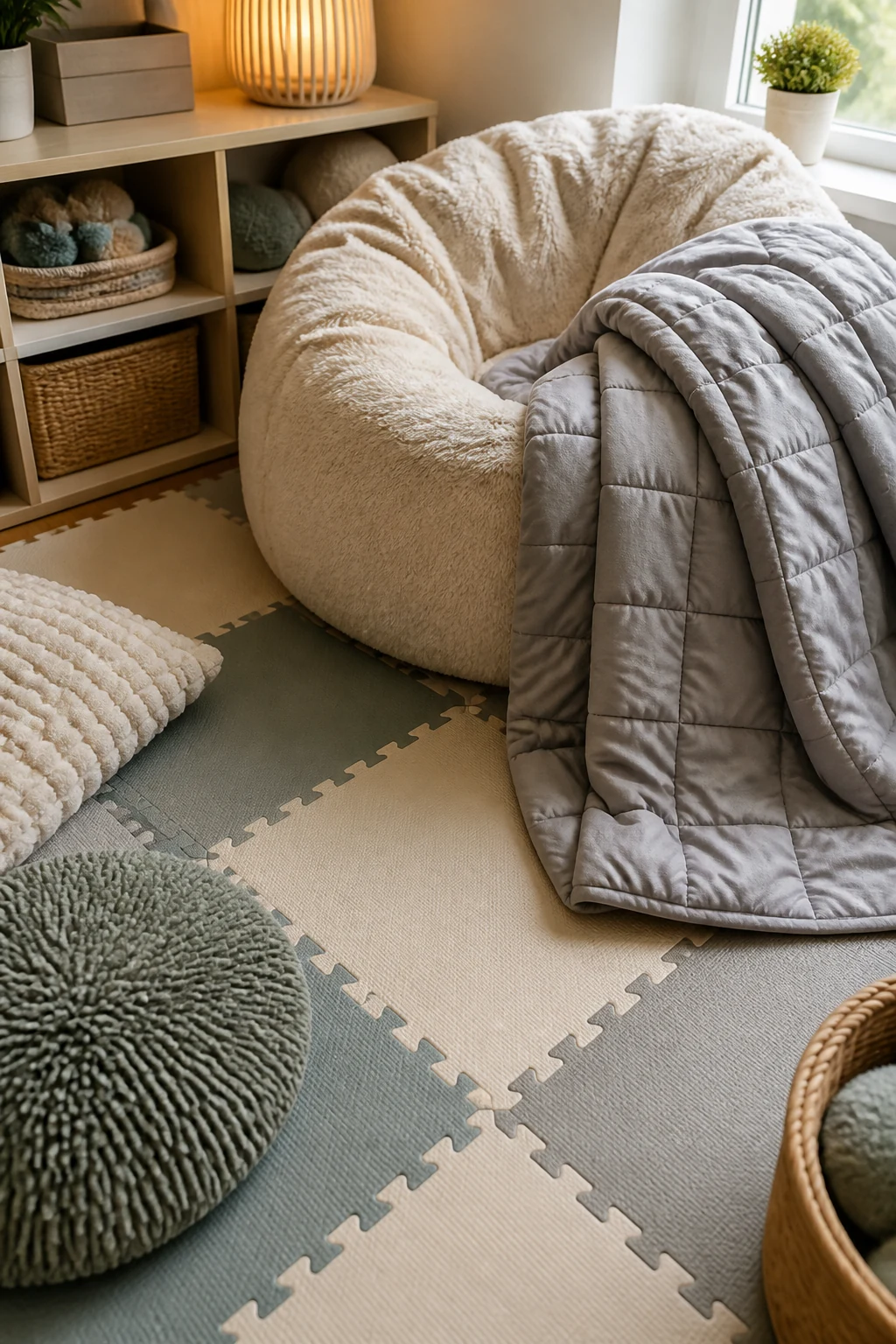
Varied textures provide essential grounding sensory input for individuals navigating overwhelming environments. Incorporating soft interlocking foam mats alongside plush oversized bean bags and draped weighted blankets offers immediate proprioceptive feedback. Providing this mix of soft and firm tactile surfaces allows users to self-regulate and find comfort based on their immediate physical needs.
Organizing with Transparent Storage
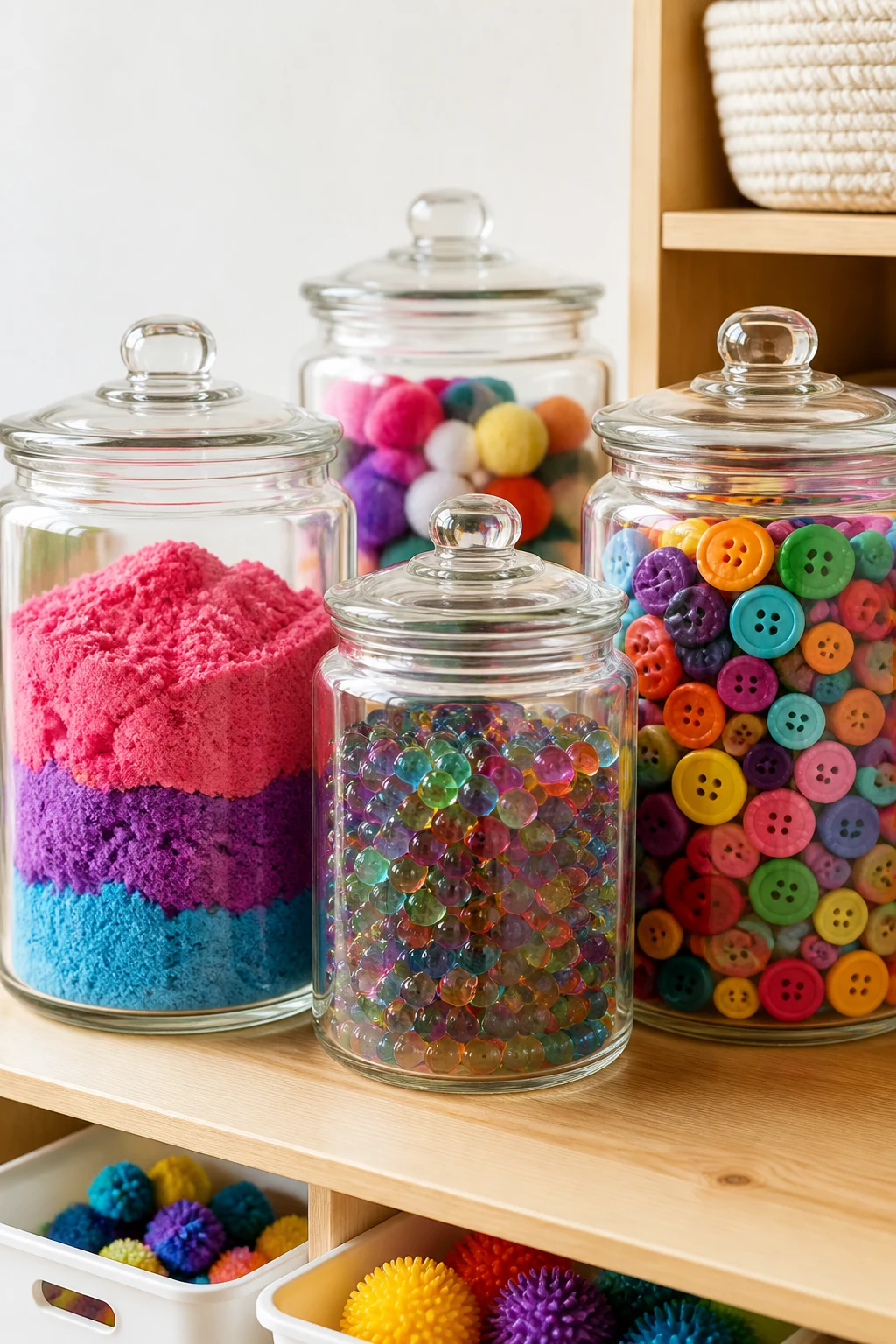
Clear containers make engaging materials instantly visible without adding visual clutter to a calming space. Using transparent glass or acrylic vessels to store colorful sensory tools like kinetic sand and textured buttons doubles as functional decor. This approach keeps therapeutic items easily accessible and visually stimulating while maintaining a tidy environment.
Sensory Storage Essentials
- Use transparent lidded jars to keep colorful materials visible but contained.
- Incorporate open acrylic bins for immediate access to larger tactile toys.
- Place fragile or heavy glass containers on higher, secured shelves.