
This Oyster Platter Became an Outdoor Dining Room
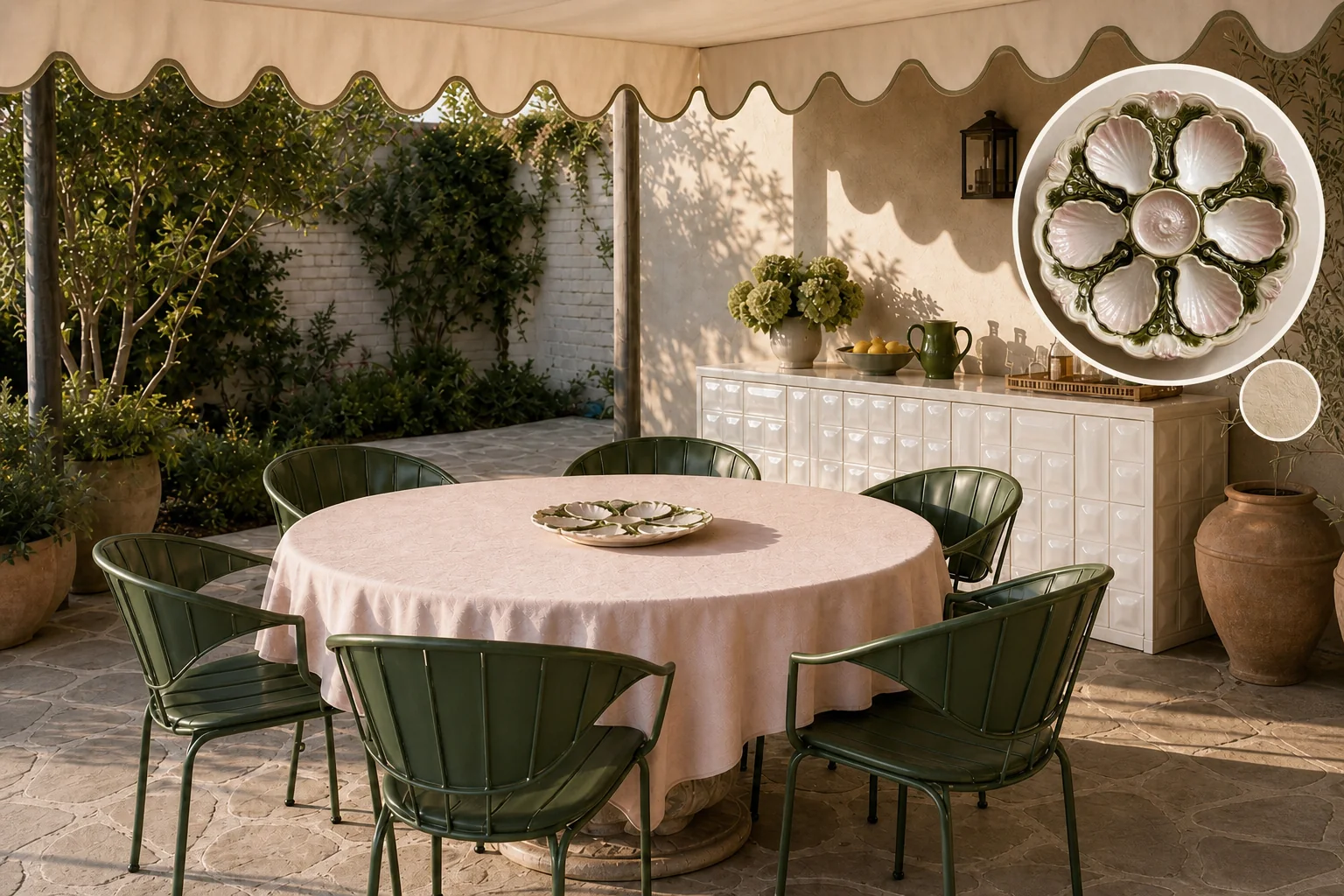
Discover how the ornate, aquatic charm of a Victorian majolica oyster platter translates into a relaxed, sun-drenched outdoor dining room built for entertaining. By echoing rhythmic curves and balancing earthy tones with aquatic glazes, you can contrast high-gloss ceramic accents against matte, weathered outdoor surfaces to prevent a theme-park look.
Setting the scalloped stage
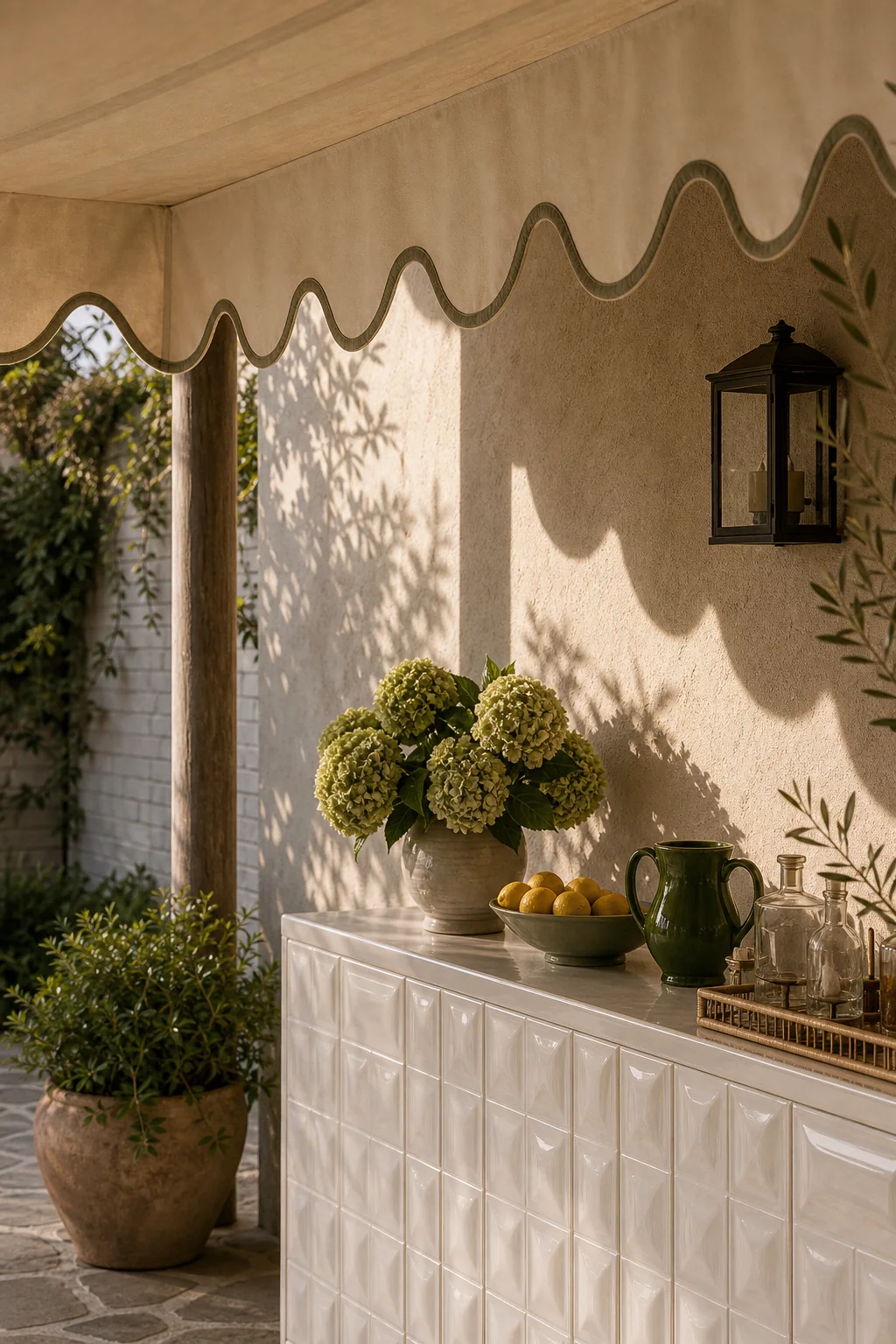
The continuous curves of the platter’s edge provide a soft, architectural boundary for the open-air space, inspiring a custom cream canvas awning with a deep, repeating scalloped valance. This undulating edge casts curved shadows over the weathered flagstone terrace, mimicking the porcelain rim while offering essential overhead sun protection for guests. Using heavy-duty, weather-resistant canvas ensures longevity, while keeping the valance drop deep enough guarantees distinct, dramatic shading throughout the late afternoon. To anchor this open-air room properly and establish a durable dining footprint, follow these structural terrace steps to build the foundation from the ground up.
- Install the structural awning frame over the terrace.
- Attach the cream canvas canopy with a scalloped valance.
- Position the round stone dining table in the center.
- Arrange six dining chairs evenly around the table.
Pouring the majolica palette
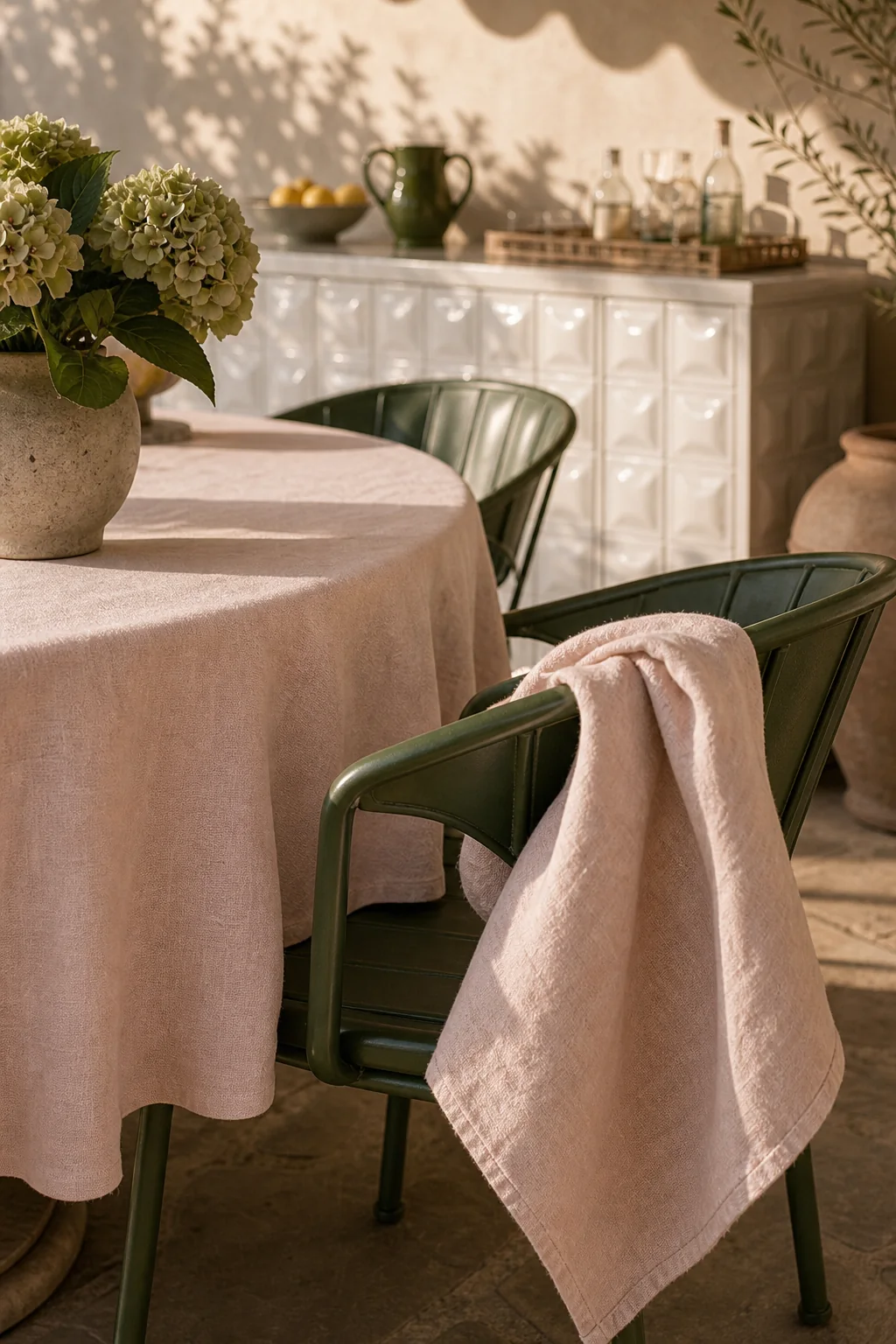
Translating the pooled glazes into textiles and powder-coated metals brings the ceramic’s rich depth to a garden setting without feeling overly literal. The deep seaweed green pooling in the recesses of the pearlescent wells is reimagined through seaweed green dining chairs, which contrast beautifully against expansive pale tones. Using matte fabrics helps soften the color transitions outdoors, ensuring the vibrant aquatic hues feel grounded and natural against the warm stucco wall. By balancing the dark green with a porcelain cream base, the terrace remains bright and welcoming. The visual-DNA mapping table below details how these historic traits become modern design moves.
| Source trait | Visible evidence | Room move |
|---|---|---|
| Undulating Edge | The continuous scalloped rim of the porcelain platter | A custom cream canvas awning with a deep, repeating scalloped valance that casts curved shadows over the flagstone terrace |
| Majolica Glaze | Deep seaweed green pooling in the recesses of the pearlescent wells | Seaweed green powder-coated dining chairs contrasting against a pale, pearlescent blush linen tablecloth |
| Glossy Relief | The high-shine, smooth glazed finish of the fired porcelain | An outdoor serving console clad in high-gloss, hand-molded white ceramic tiles that reflect the afternoon light |
| Concave Radiance | Six hollow shell wells radiating from a central circle | Curved, concave-backed dining chairs arranged in a perfect radial circle around a round stone dining table |
The blush linen drape
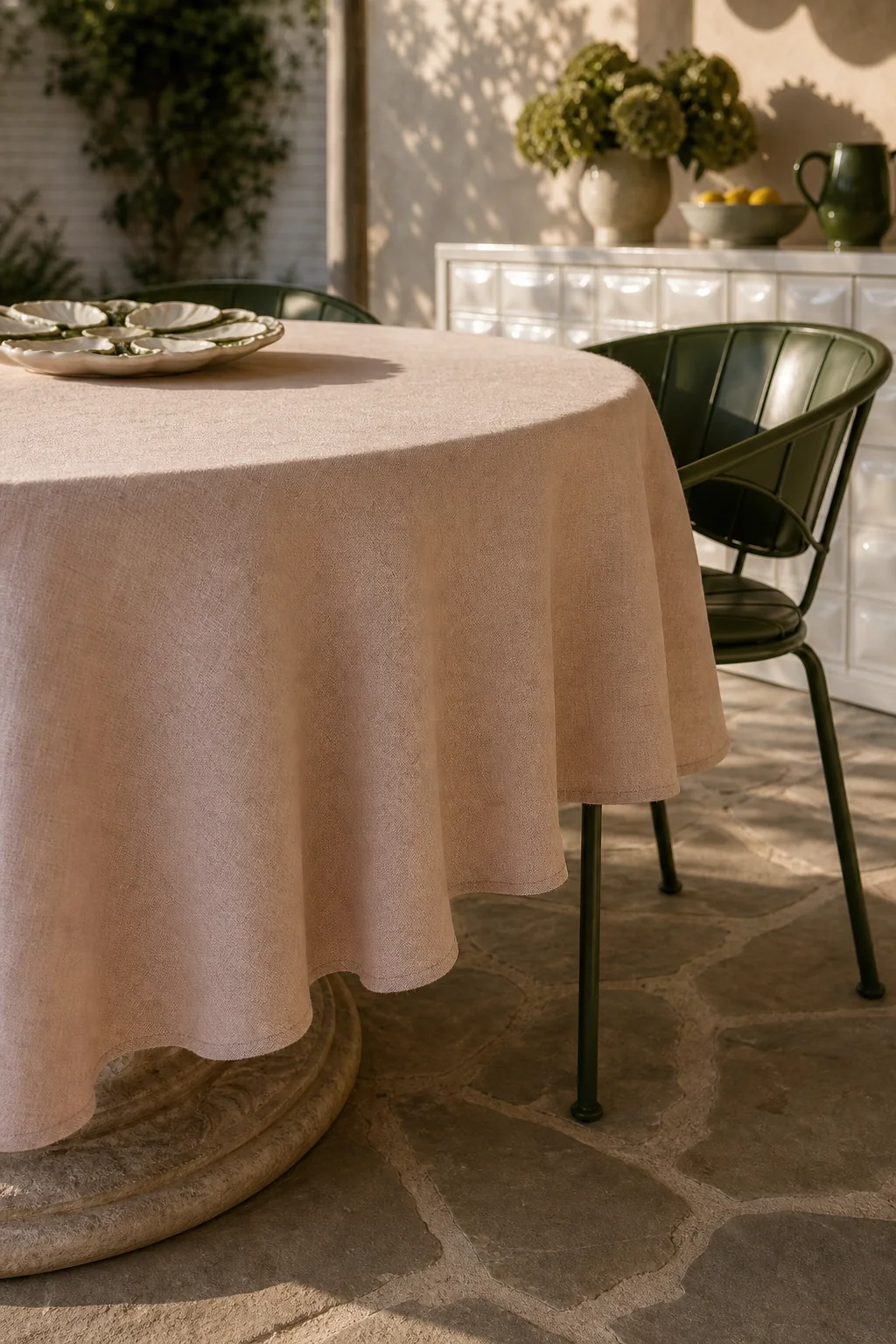
Pale blush linen captures the shell’s soft pearlescent interior, draping elegantly over the edge of the stone table to provide a tactile counterpoint to the metal seating. This delicate textile choice introduces a subtle warmth that balances the darker seaweed-green elements, ensuring the dining surface feels inviting and refined. By allowing the fabric a soft, relaxed drape, you echo the organic, smooth oyster shell interior, creating a dining experience that feels both luxurious and effortlessly suited for a sun-drenched afternoon gathering. The contrast between the rigid metal chair legs and the flowing fabric perfectly captures the majolica spirit.
Glazing the serving console
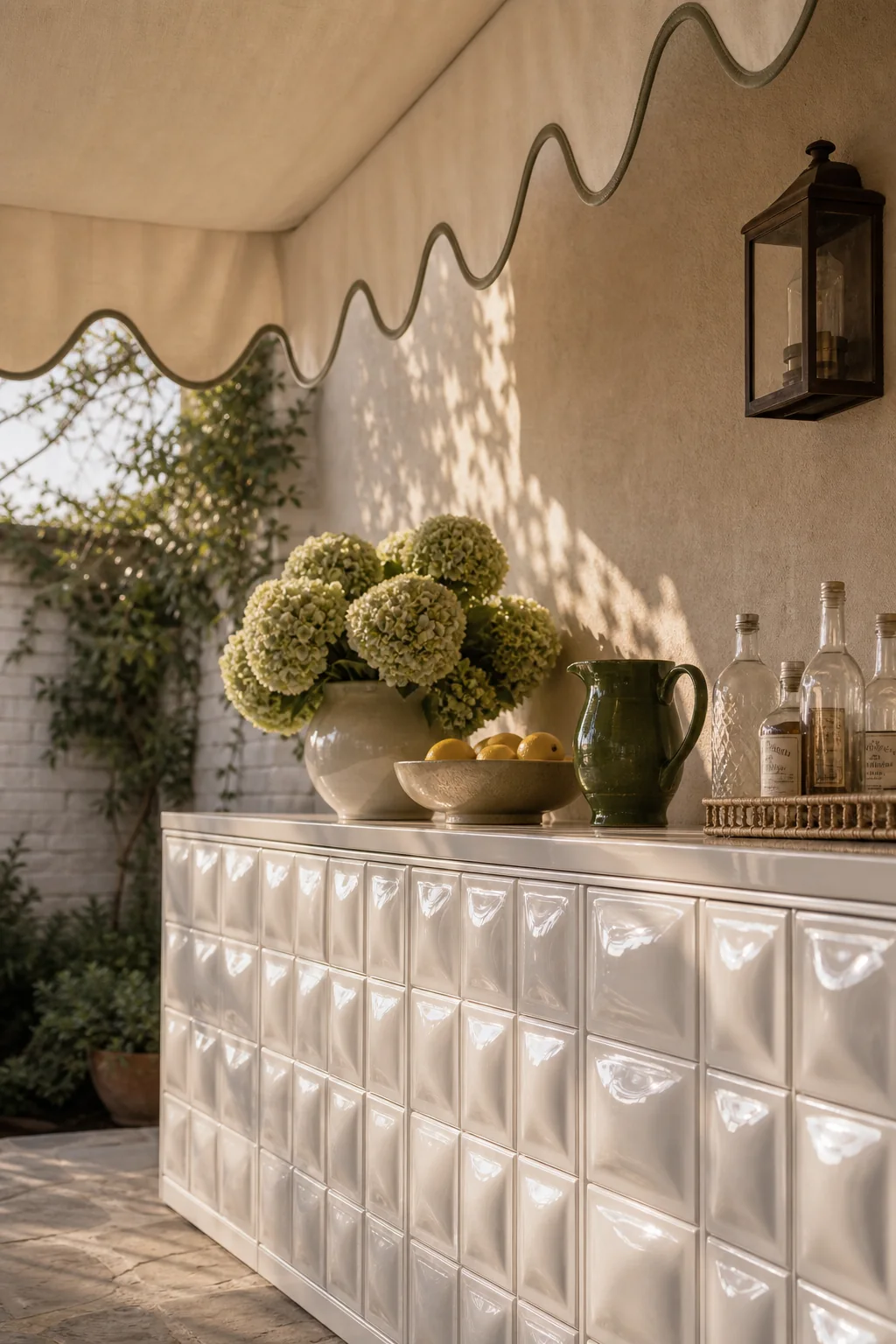
Introducing a high-gloss architectural element outdoors captures the platter’s fired ceramic brilliance without overwhelming the natural setting. By cladding the outdoor serving console in high-gloss white ceramic tiles, you reflect the afternoon light just like the smooth glazed finish of the original porcelain. It is crucial to specify frost-proof ceramic tiles for outdoor use and to contrast this glossy console with the rough, weathered flagstone paving to maintain a balanced texture profile. This tension between slick and rough surfaces brings the room to life. Gather these specific pieces for your outdoor material checklist to complete the elegant terrace look.
The tiled console surface
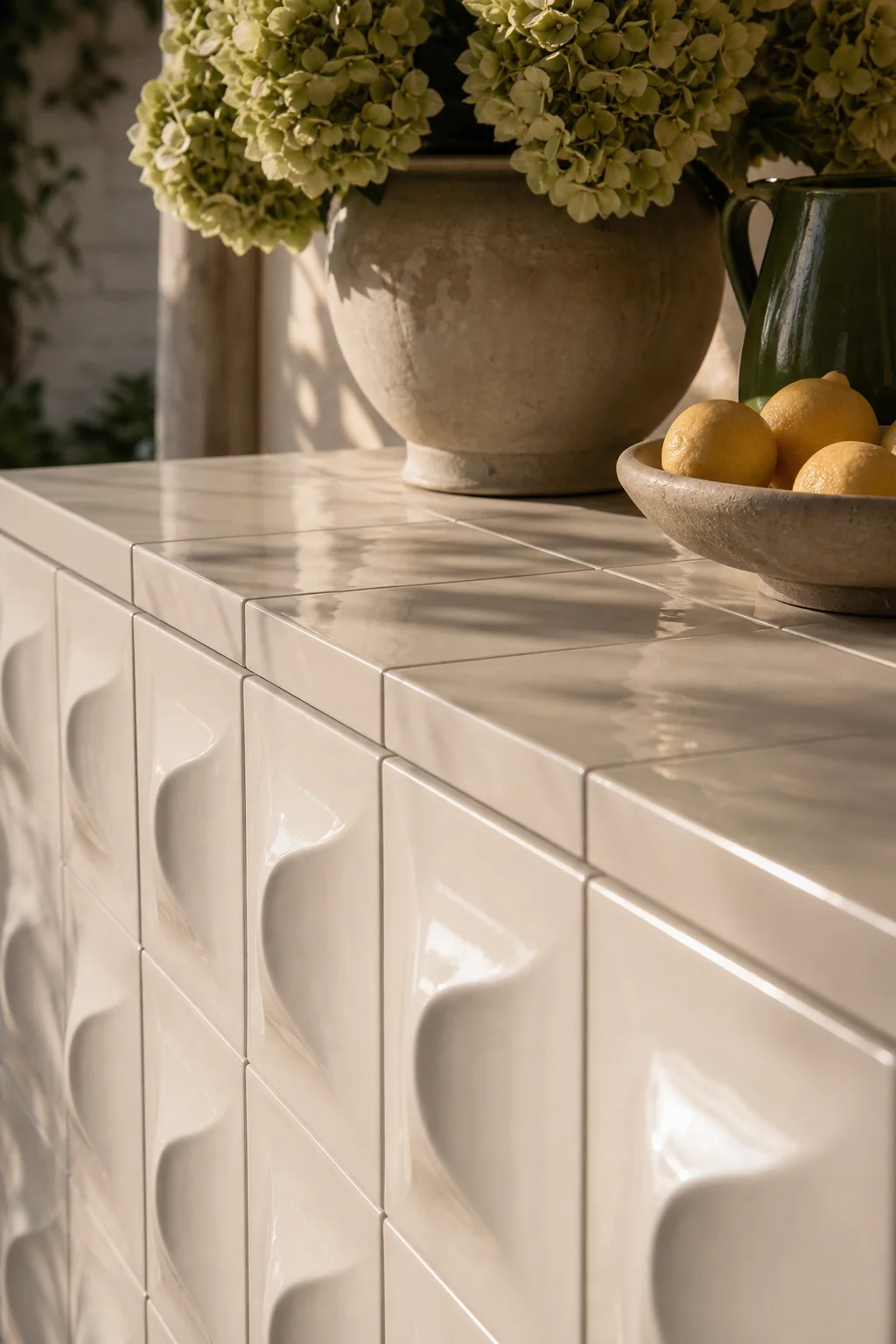
The hand-molded white tiles reflect light beautifully, mimicking the undulating, wet appearance of a freshly fired porcelain glaze. This tight focus on the serving console’s surface highlights how the subtle relief molding creates dynamic highlights and shadows as the late-afternoon sun moves across the terrace. Pairing this glossy, refined surface with the surrounding matte canvas and rough stone ensures the space retains its sophisticated garden character, allowing the hand-molded relief textures to serve as a luminous, functional focal point for food and drinks. The resulting interplay of light and shadow elevates the entire outdoor dining experience.
Arranging the radial shell
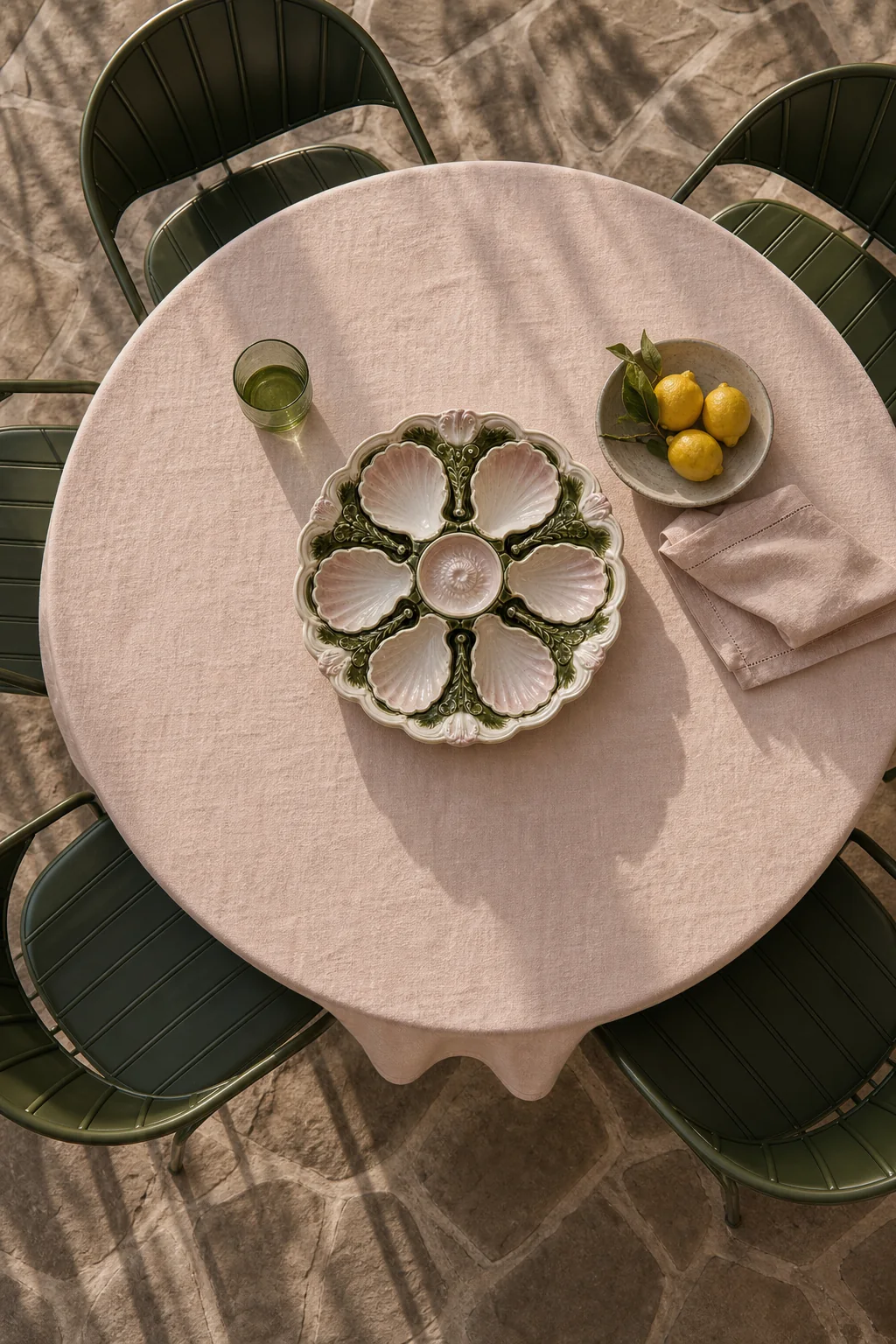
The platter’s defining geometry dictates a circular, inward-facing furniture arrangement that naturally fosters intimate dining. Six concave chairs radiate around a central round table, mirroring the hollow shell wells radiating from the platter’s center. For a balanced approach, keep the seaweed green chairs and glossy tiled console anchored by weathered flagstone. A subtle take might swap the green chairs for natural teak, focusing purely on the scalloped awning, while a bold execution could extend the green to awning stripes and use iridescent console tiles. Whichever intensity you choose, ensuring the round table is large enough guarantees the concave curved backrests fit seamlessly.
Leave at least three feet of clearance between the backs of the radiating chairs and the terrace edge to ensure comfortable movement around the table.