
Mannerism Meets Desert Minimalism: Dining Room
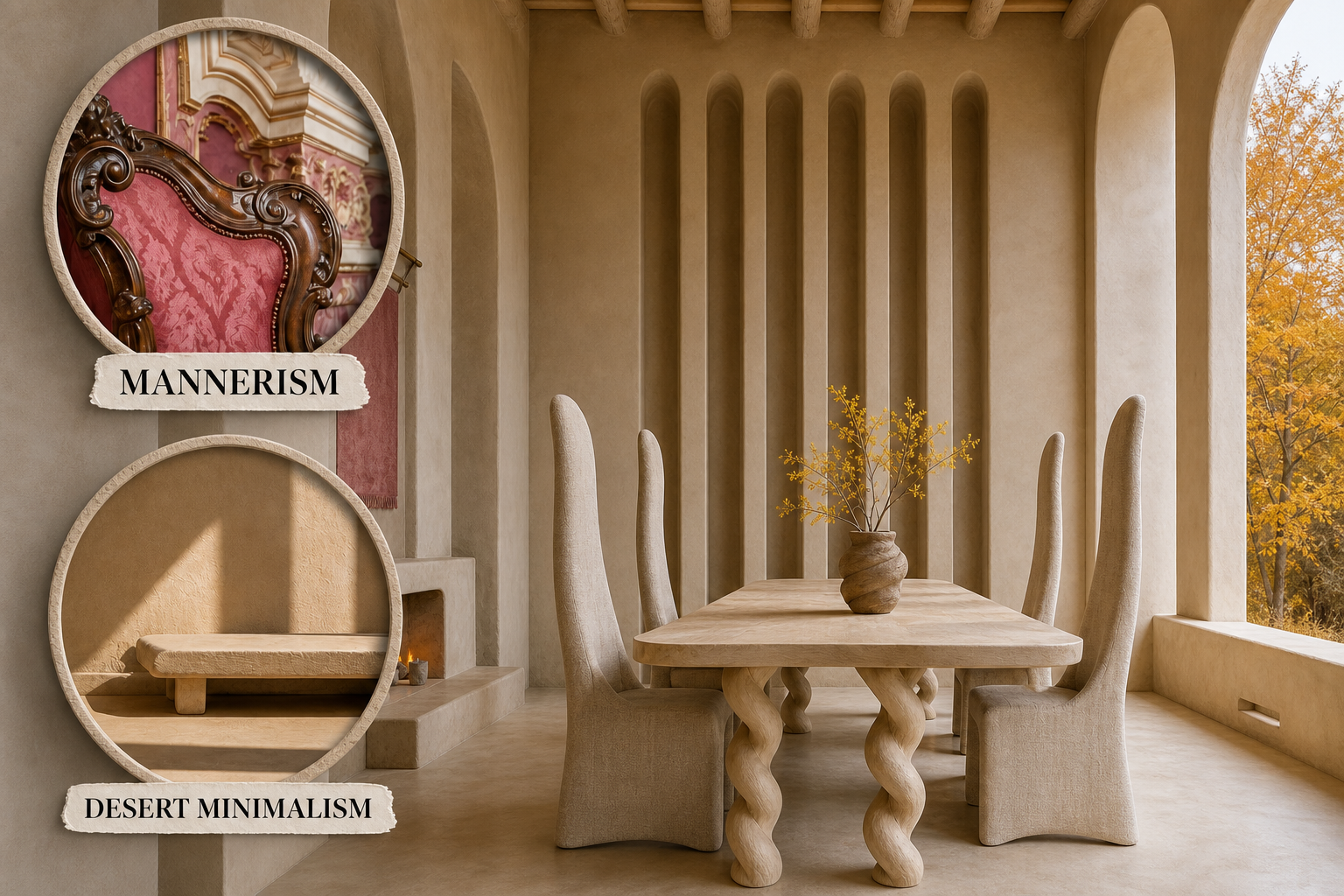
The highly artificial distortion of 16th-century Italian proportions clashes deeply with the grounded, wabi-sabi simplicity of arid landscapes. By executing surreal architectural forms entirely in raw earth and bleached wood, this unique dining room resolves the inherent aesthetic contradiction beautifully.
The Language of Mannerism
Mannerism thrives on intellectualized distortion, surreal elongation, and forced perspective that intentionally challenges classical rules. This historical aesthetic introduces towering verticality and twisting movement, demanding attention through its highly artificial, theatrical proportions and dramatic architectural presence within the modern home.
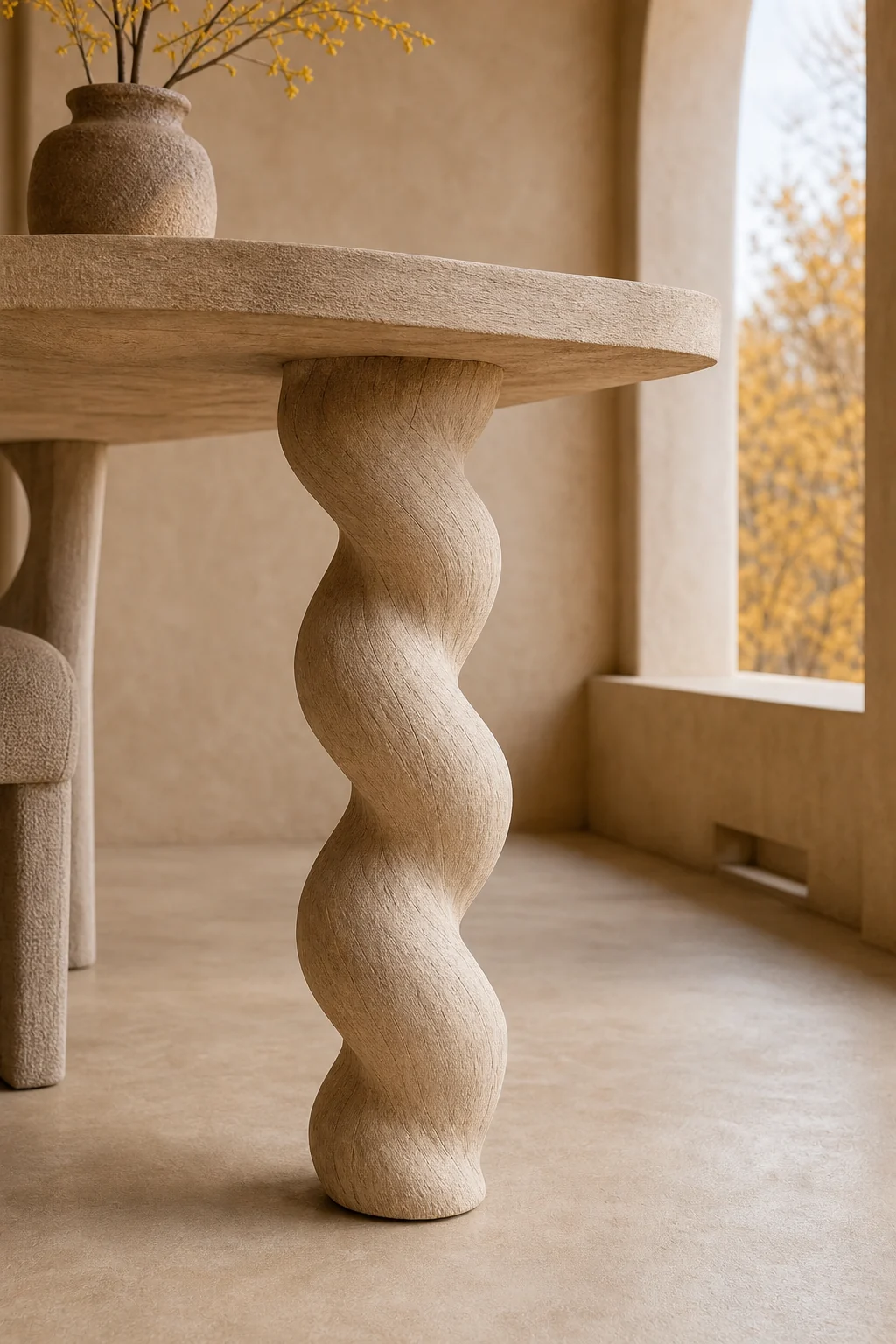
To successfully translate this dizzying historical aesthetic into a modern home, focus entirely on surreal architectural proportions rather than ornate surface decoration. The physical shapes must remain heavily exaggerated, even as the foundational materials shift drastically toward the natural desert landscape.
When selecting the foundational elements for this space, prioritize silhouettes that stretch the eye upward and twist unexpectedly. These structural choices establish the necessary visual tension long before any earthy, grounded materials are introduced to the serene dining room.
- Embrace impossibly elongated, narrow blind arches to create a dramatic sense of forced verticality within the dining room.
- Choose dining chairs with surreal, exaggeratedly tall backs to introduce unexpected scale and challenge traditional seating proportions completely.
- Seek out serpentine, twisted table legs that introduce fluid movement to the floor plan without relying on carvings.
The Language of Desert Minimalism
Desert minimalism grounds those dizzying heights with the raw, wabi-sabi simplicity of arid landscapes. This aesthetic completely strips away all unnecessary ornament, relying instead on the inherent tactile beauty of unrefined materials and the profound peacefulness of empty space and natural light.
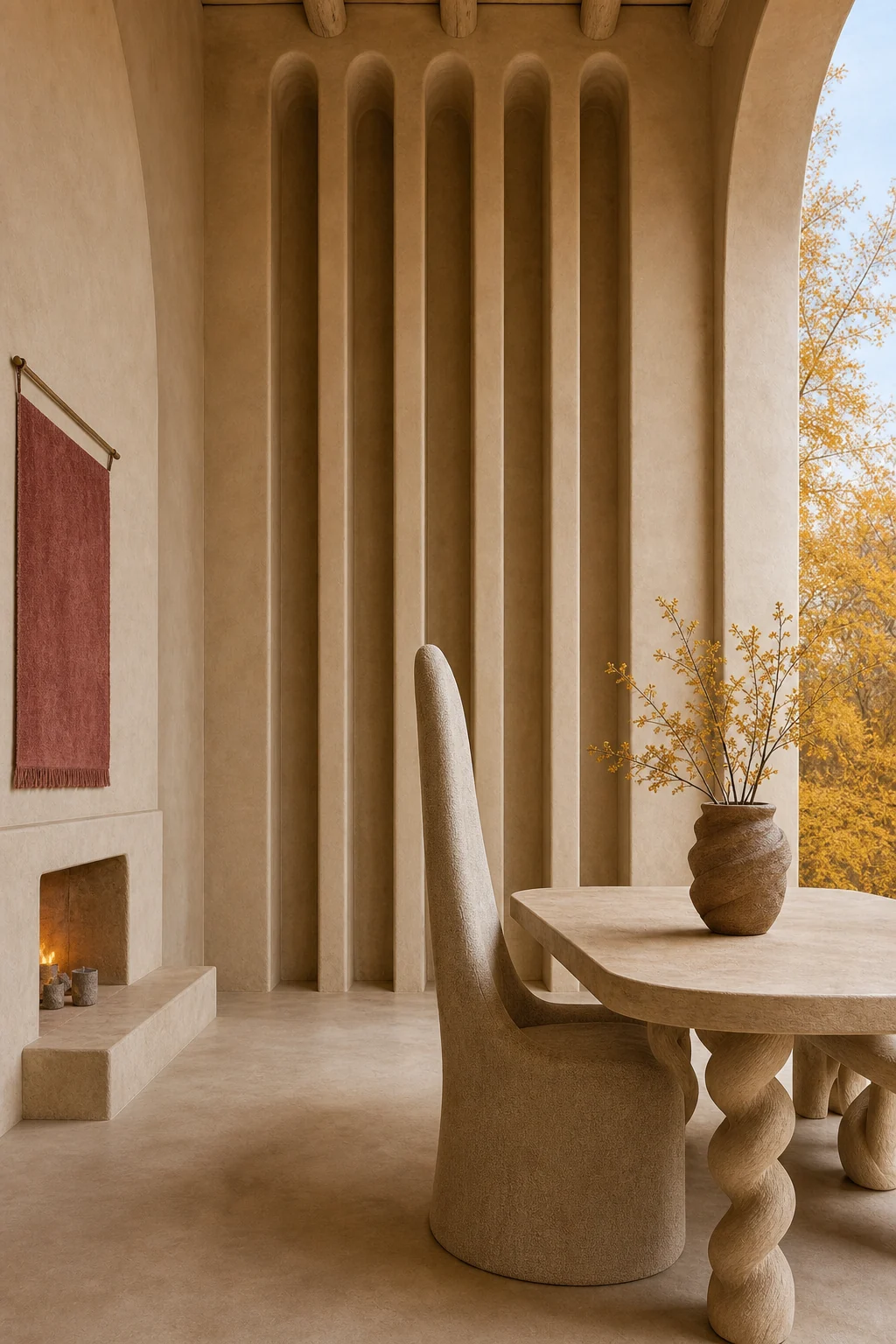
By heavily relying on unvarnished surfaces and vast negative space, the room breathes instead of overwhelming the eye. The starkness of the environment acts as a necessary, calming counterweight to the intense verticality of the surrounding architectural shell and furniture.
- Apply hand-troweled raw adobe to the walls for immediate tactile warmth, grounding the room in natural earth textures.
- Leave bleached wood surfaces completely unvarnished to emphasize their raw, natural grain and celebrate inherent material imperfections beautifully.
- Maintain a sparse, negative-space-heavy layout to ensure visual tranquility throughout the room and allow the architecture to breathe.
Bridging the Contradiction
Translating ornate serpentine forms into raw, monolithic wood requires a highly disciplined color palette. Without a unifying tonal strategy, the exaggerated historical silhouettes will simply look like misplaced antiques awkwardly dropped inside a rustic, minimalist earthen cave rather than a cohesive design.
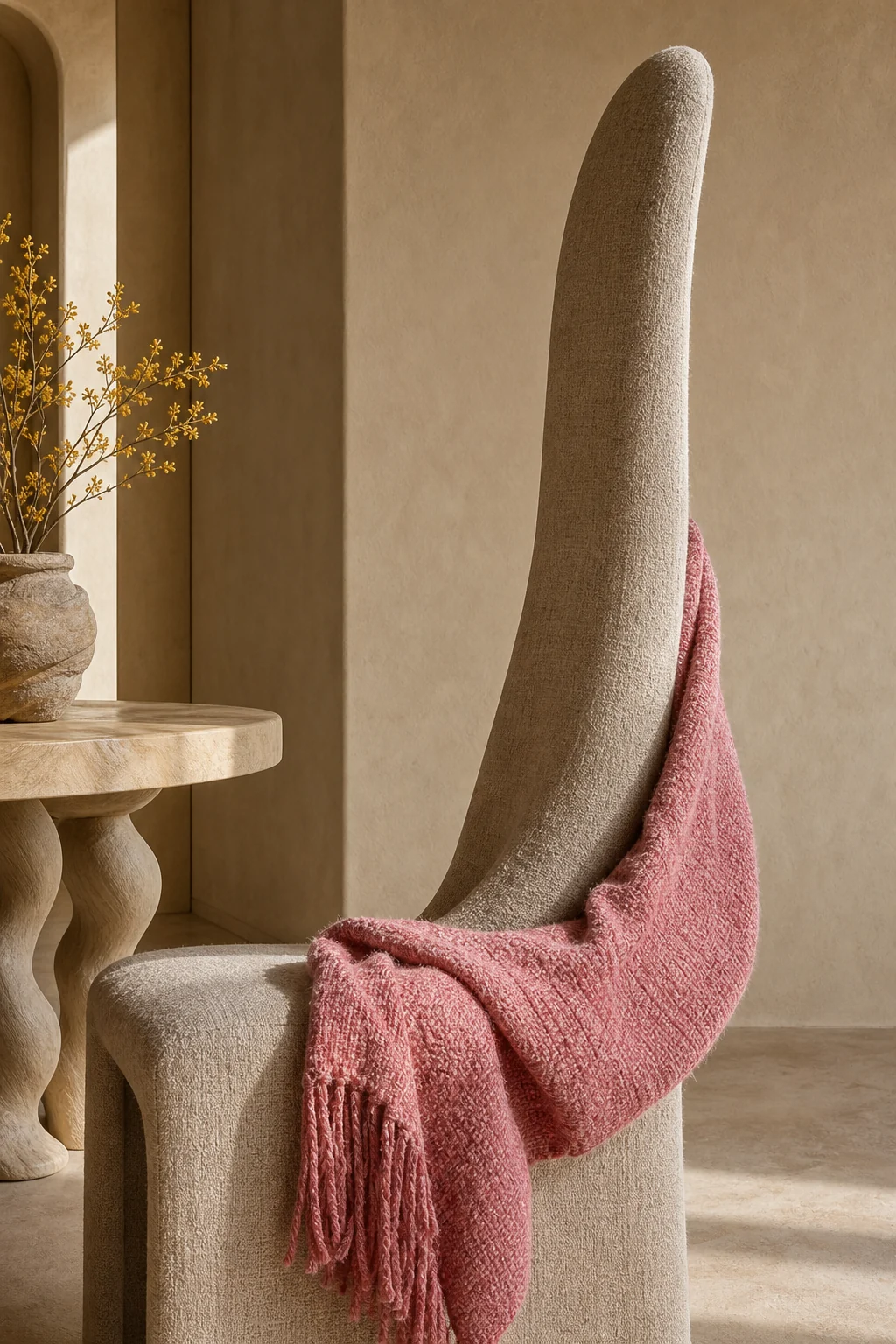
Muting acidic historical color shocks into natural autumn tones creates immediate harmony between the two aesthetics. The visual drama remains completely intact, but the sensory experience shifts from intellectualized artificiality to a deeply grounded, organic sense of warmth and quiet natural beauty.
By utilizing muted shades like raw adobe sand, bleached bone white, and faded cochineal pink, the transition becomes completely seamless. These specific hues allow the elongated blind arches to feel like natural formations rather than heavily constructed interventions within the home.
Building the Dining Room
A highly successful dining space balances towering vertical proportions with stark, empty minimalist negative space. The furniture must confidently hold its own against the soaring architecture without cluttering the floor plan or interrupting the natural flow of soft natural light.
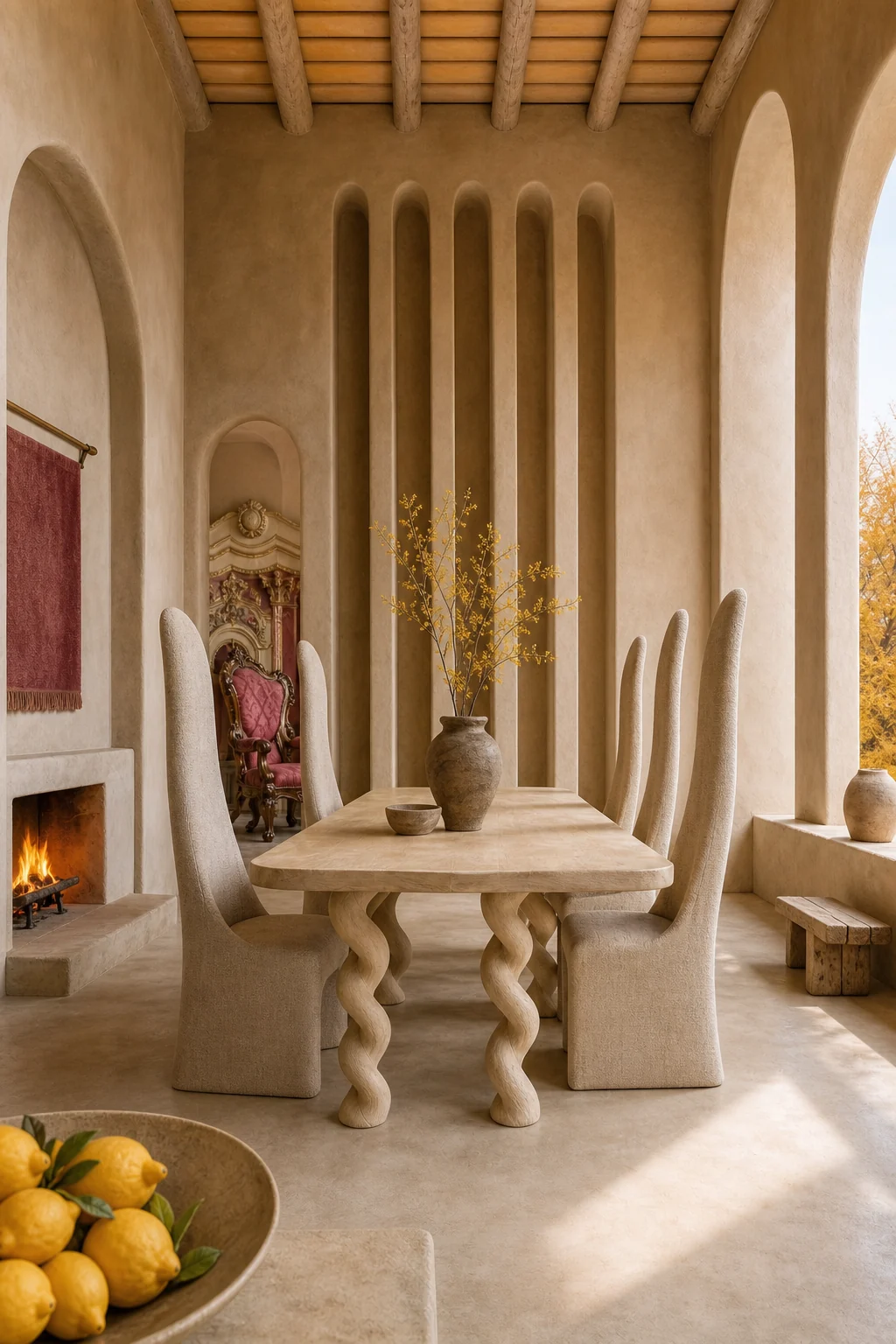
Every single piece must serve a specific, intentional role in bridging the gap between distortion and simplicity. The table below outlines exactly how to translate each design layer to ensure neither competing style overpowers the other in the final room.
| Design Layer | Mannerism Role | Desert Minimalism Role | Bridge Decision |
|---|---|---|---|
| Shell | Impossibly elongated, narrow blind arches | Hand-troweled raw adobe and seamless plaster | Executing forced-perspective verticality entirely in raw earth |
| Large Furniture | Exaggeratedly tall backs and twisted legs | Sparse, unvarnished bleached wood | Translating ornate serpentine forms into raw monolithic wood |
| Textiles | Vibrant, acidic silk upholstery | Raw, unbleached wabi-sabi linen | Using unbleached linen with subtle faded cochineal pink accents |
| Lighting | Dramatic, intellectualized focal points | Bright, crisp natural sunlight | Using generous daylight to highlight tactile plaster textures |
| Accents | Distorted, classical moldings | Stark, negative-space-heavy layouts | A single twisted ceramic vessel holding a chamisa-yellow branch |
When these distinct layers interact properly, the resulting dining room feels simultaneously grand and incredibly intimate. The inherent tension is resolved because the structural drama is entirely softened by the forgiving, tactile nature of the carefully chosen raw monolithic wood.
Light and Architecture
Crisp autumn daylight is absolutely essential to highlight the hand-troweled plaster without relying on moody, artificial shadows. Proper illumination ensures the soaring vertical lines feel uplifting and expansive rather than oppressive, heavy, or overly theatrical in their execution within the dining space.
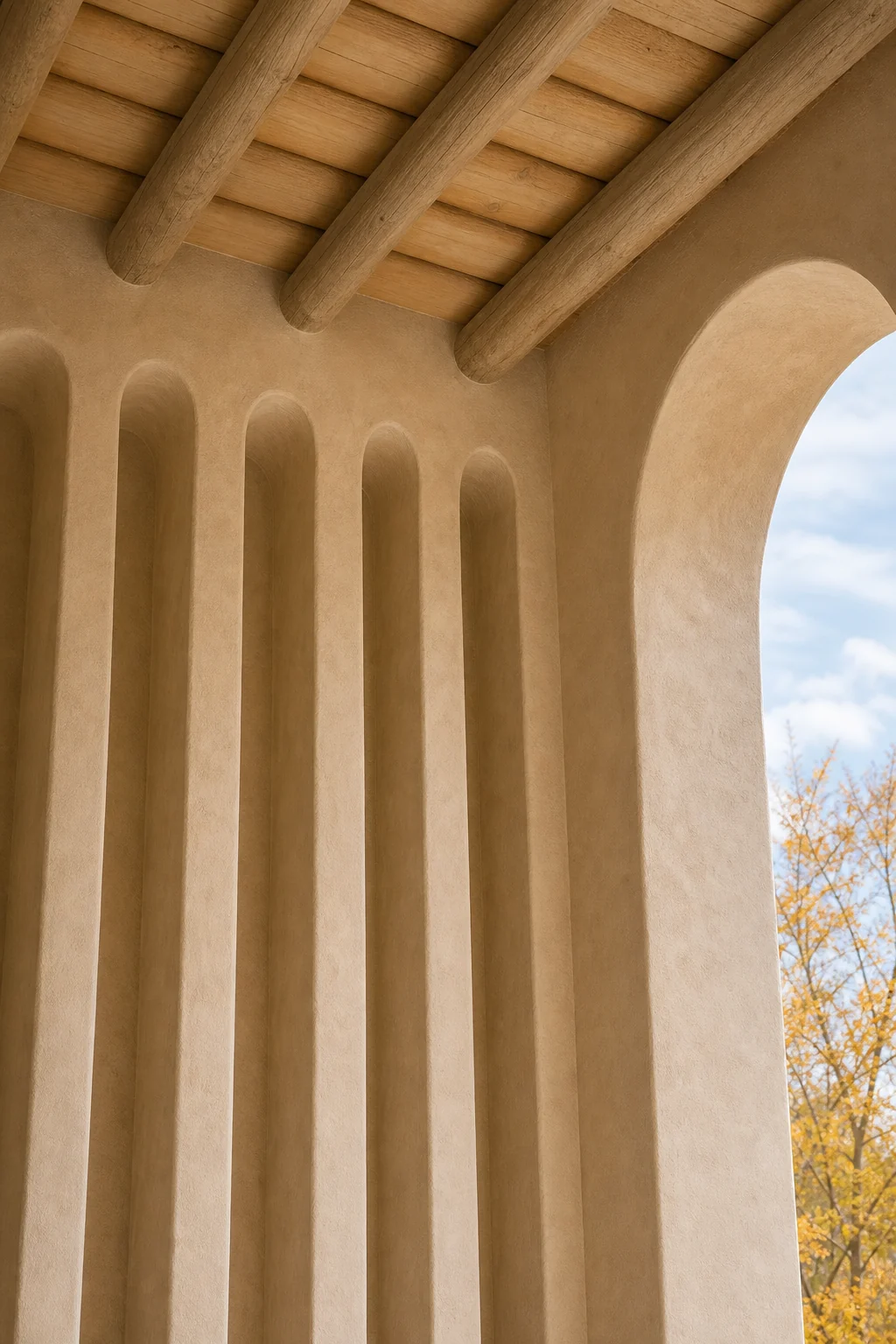
Generous exposure naturally lifts the midtones, allowing the seamless adobe architecture to feel bright and welcoming rather than cave-like. The subtle interplay of light and shadow across the textured walls provides all the necessary visual interest without requiring additional wall decor.
By keeping the shadows open and the midtones bright, the room effortlessly maintains its peaceful wabi-sabi soul. The sunlight acts as a unifying glaze, seamlessly blending the surreal proportions into the earthy, grounded shell of the serene desert home.
Styling the Details
A single twisted, asymmetrical ceramic vessel holding a chamisa-yellow branch provides just enough sculptural tension. In a space defined by vast negative space, every decorative object carries immense visual weight and must be chosen with absolute precision to maintain the aesthetic balance.
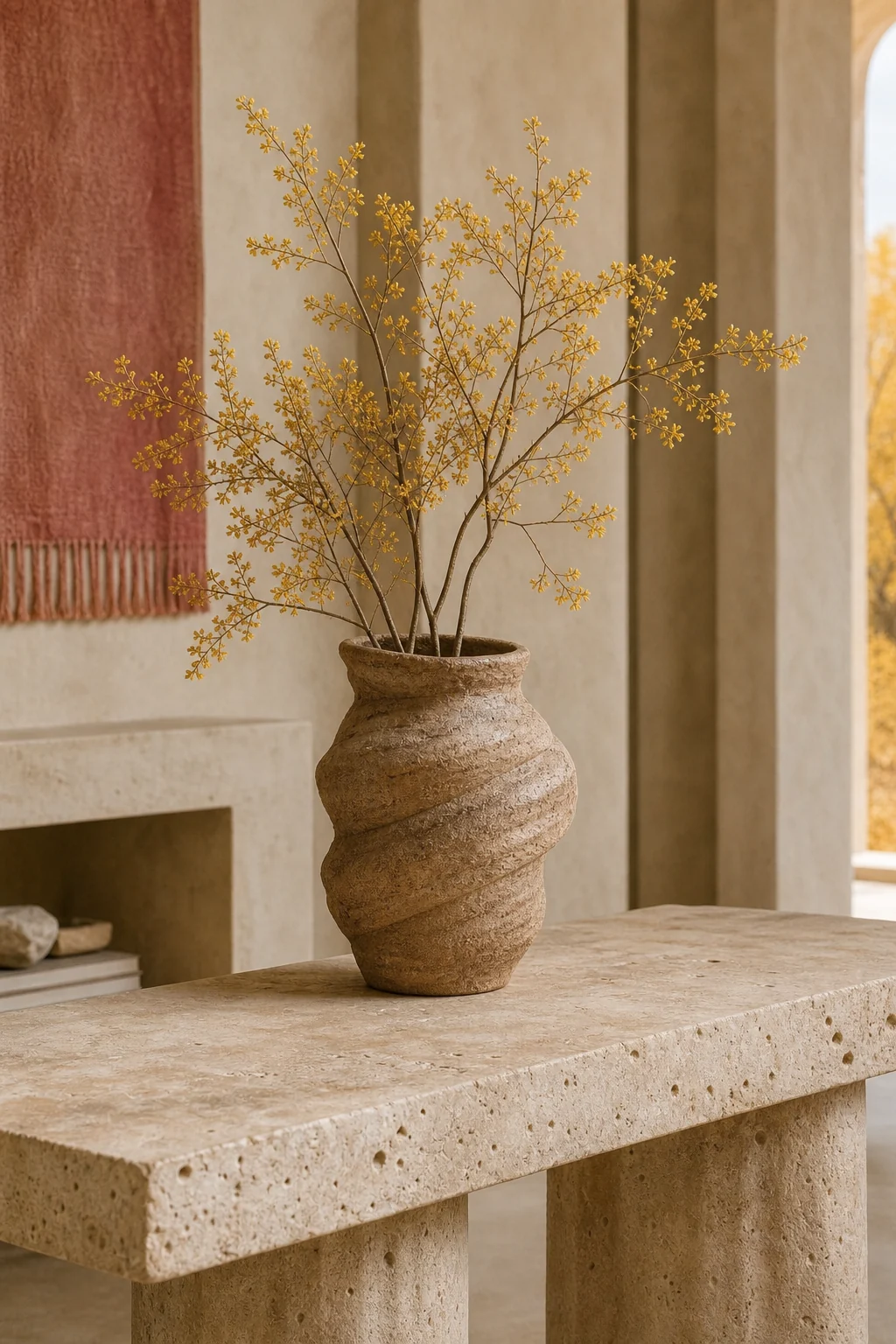
To successfully execute this look, focus heavily on acquiring foundational pieces that embody both structural distortion and material purity. Use the following shopping categories to guide your selections and maintain the delicate balance of the room while avoiding unnecessary decorative clutter entirely.
- Source unbleached raw linen upholstery fabric for a soft, deeply grounded texture that softens the surreal furniture silhouettes.
- Invest in bleached, unvarnished monolithic wood dining tables featuring unexpected serpentine curves to anchor the center of the room.
- Select matte travertine console tables to beautifully anchor the stark negative space without reflecting harsh, distracting artificial light.
- Display asymmetrical, hand-built ceramic vessels to perfectly echo the twisted architectural forms while maintaining a raw, earthy finish.
Adapting the Look
You can easily carry this underlying logic into adjacent hallways by pairing a low-slung raw earth bench with a soaring archway. The fundamental principles of scale and material apply beautifully to transitional spaces and smaller, intimate thresholds throughout the rest of the house.
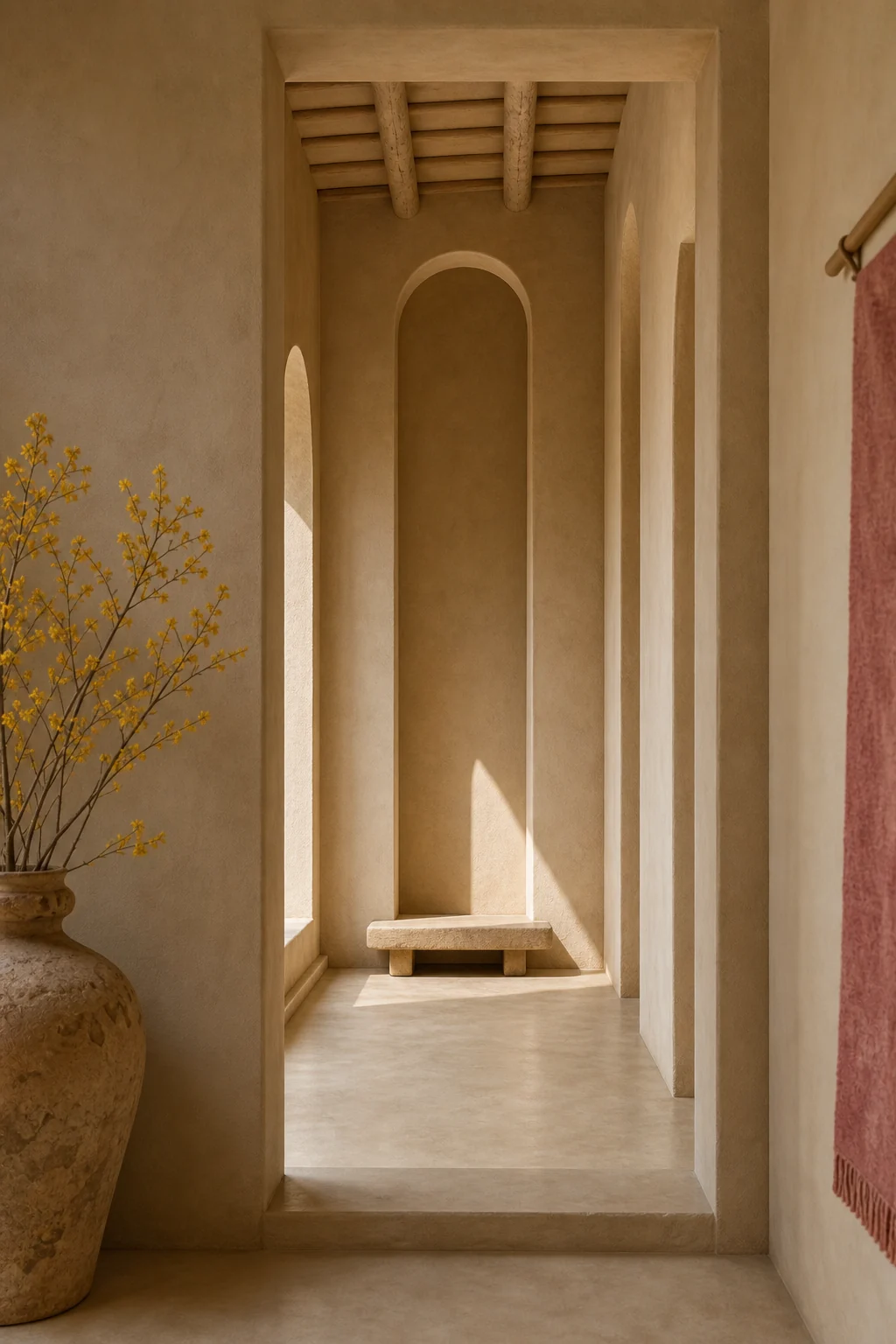
This threshold moment brilliantly introduces the home’s contrasting proportions before guests even reach the main dining area. It establishes the visual vocabulary early, making the surreal heights of the primary gathering space feel completely intentional and cohesive rather than shocking or entirely disconnected.
Avoiding the Costume
The quickest way to fail is by letting the historical references completely overpower the natural materials. If the room begins to feel like a theatrical set, the delicate wabi-sabi atmosphere will immediately collapse into pure, ungrounded pastiche that ruins the intended calming effect.
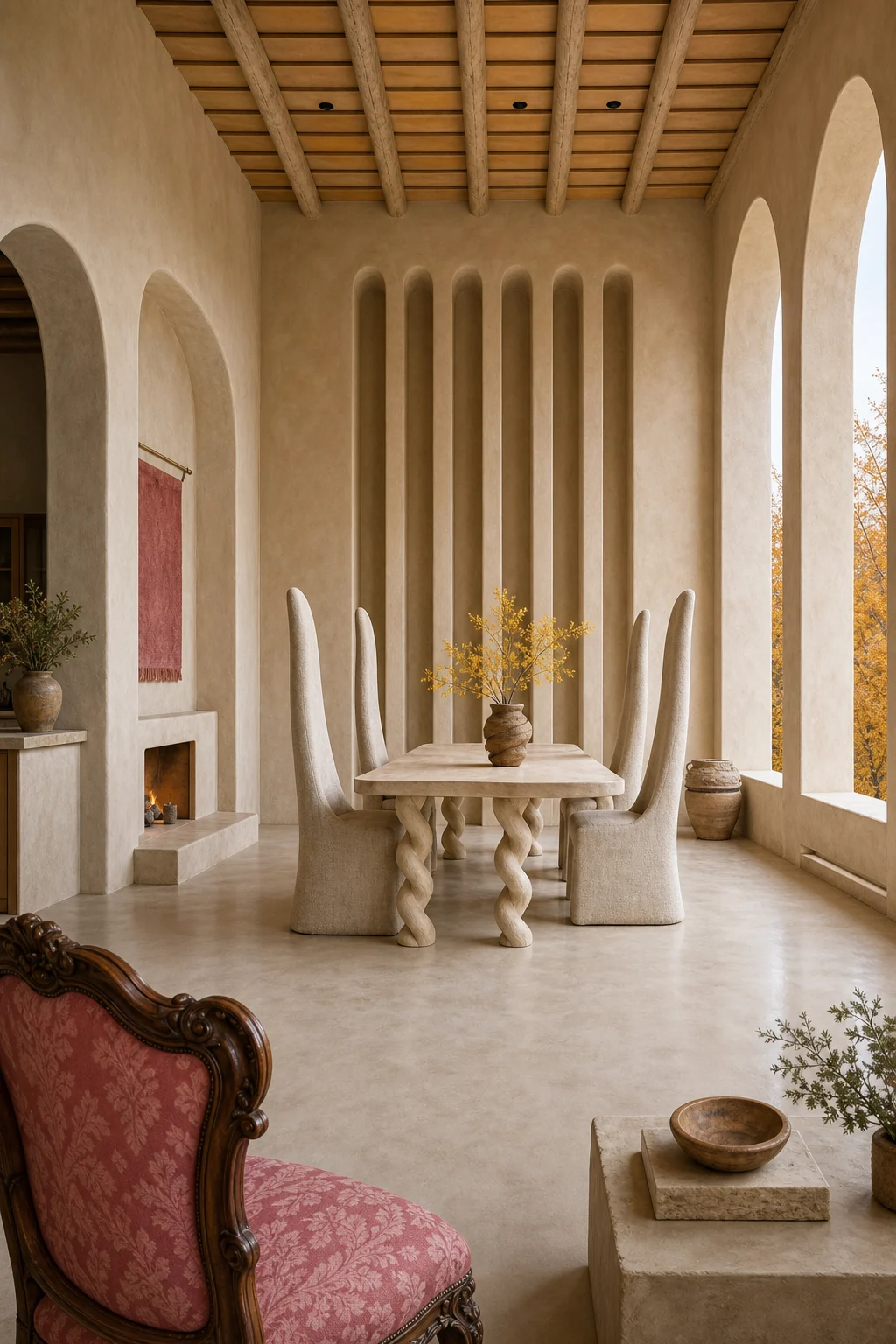
When the architectural drama truly serves the earthy soul of the space, the contradiction is finally resolved. The resulting environment proves that you do not have to sacrifice structural imagination to achieve a deeply grounding, peaceful home that honors both distinct styles.
- Avoid glossy varnishes that instantly ruin the raw earth and bleached wood illusion required for this specific aesthetic.
- Do not clutter the negative space with excess, unnecessary decorative tabletop accessories that distract from the architectural shell.
- Never use bright, acidic colors on any of the large foundational furniture pieces, as this breaks the natural harmony.