11+ Stunning Wedding Invitation Ideas
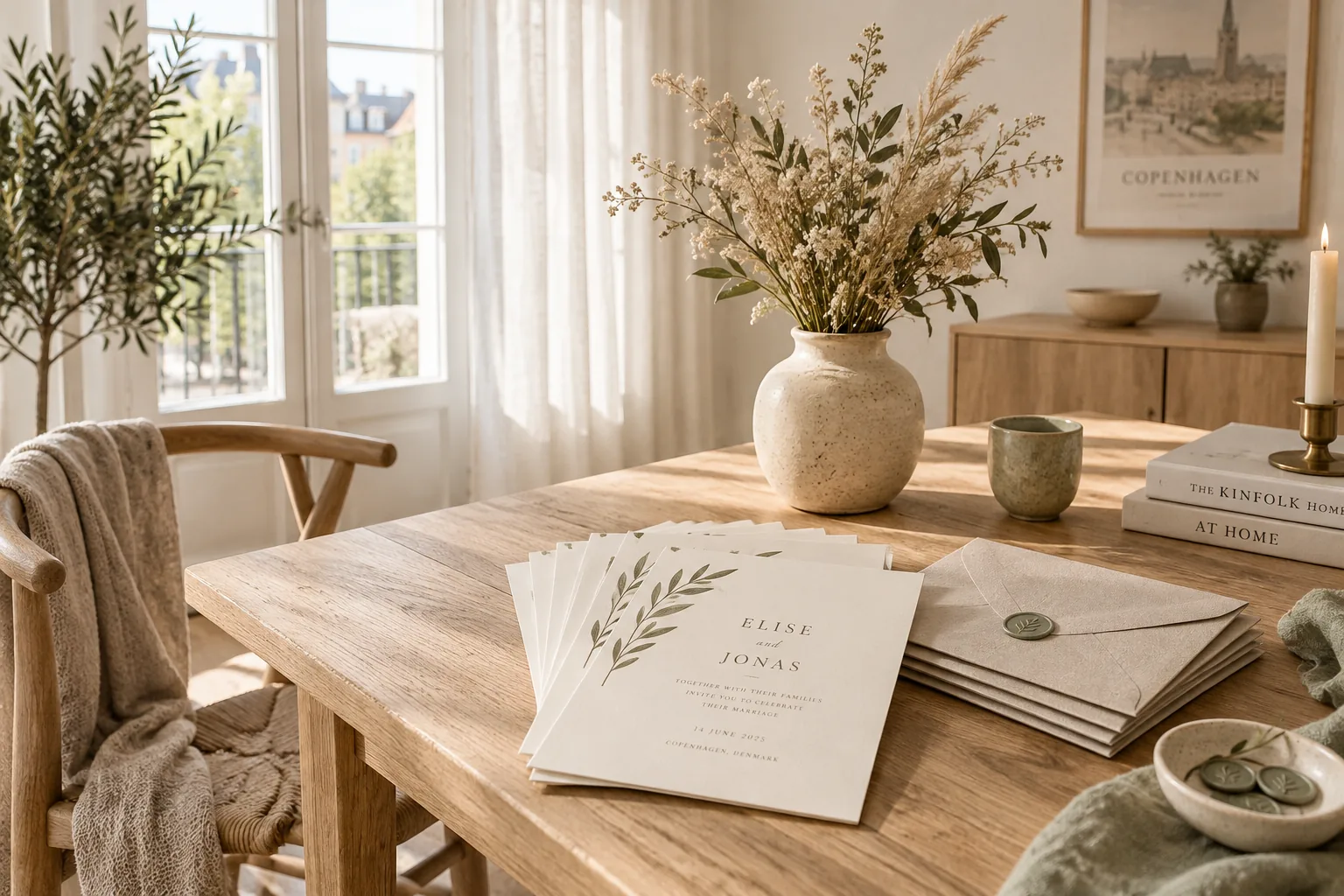
Setting the tone for your big day starts the moment your guests open their mail. Here are my favorite ways to make that first impression completely unforgettable.
1. Layered Textures
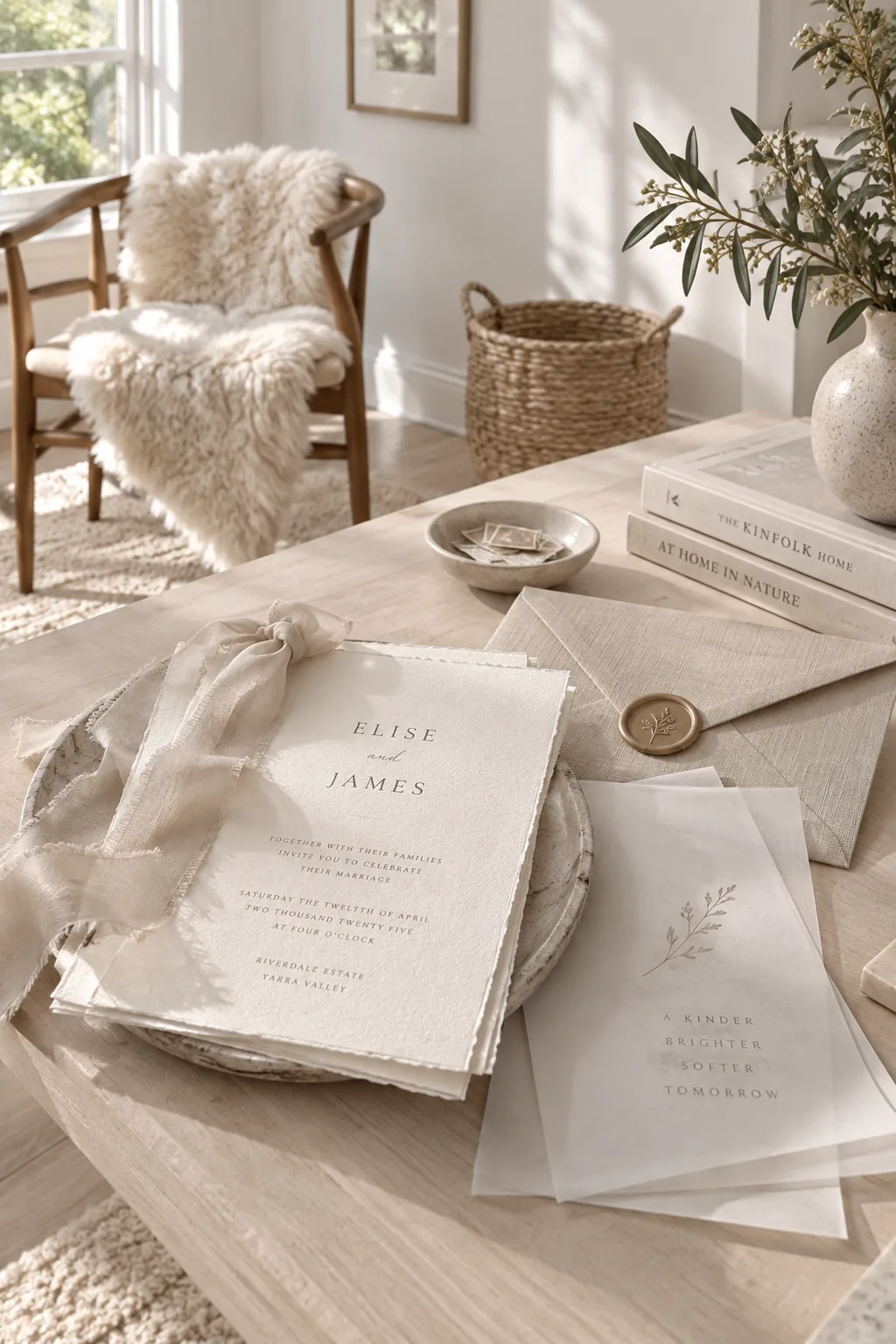
Layering different textures makes an invitation suite feel expensive and deeply personal before anyone even reads the details. You can easily achieve this custom look by combining these tactile elements:
- Vellum wraps
- Silk ribbons
- Custom wax seals
2. Deckled Edge Paper
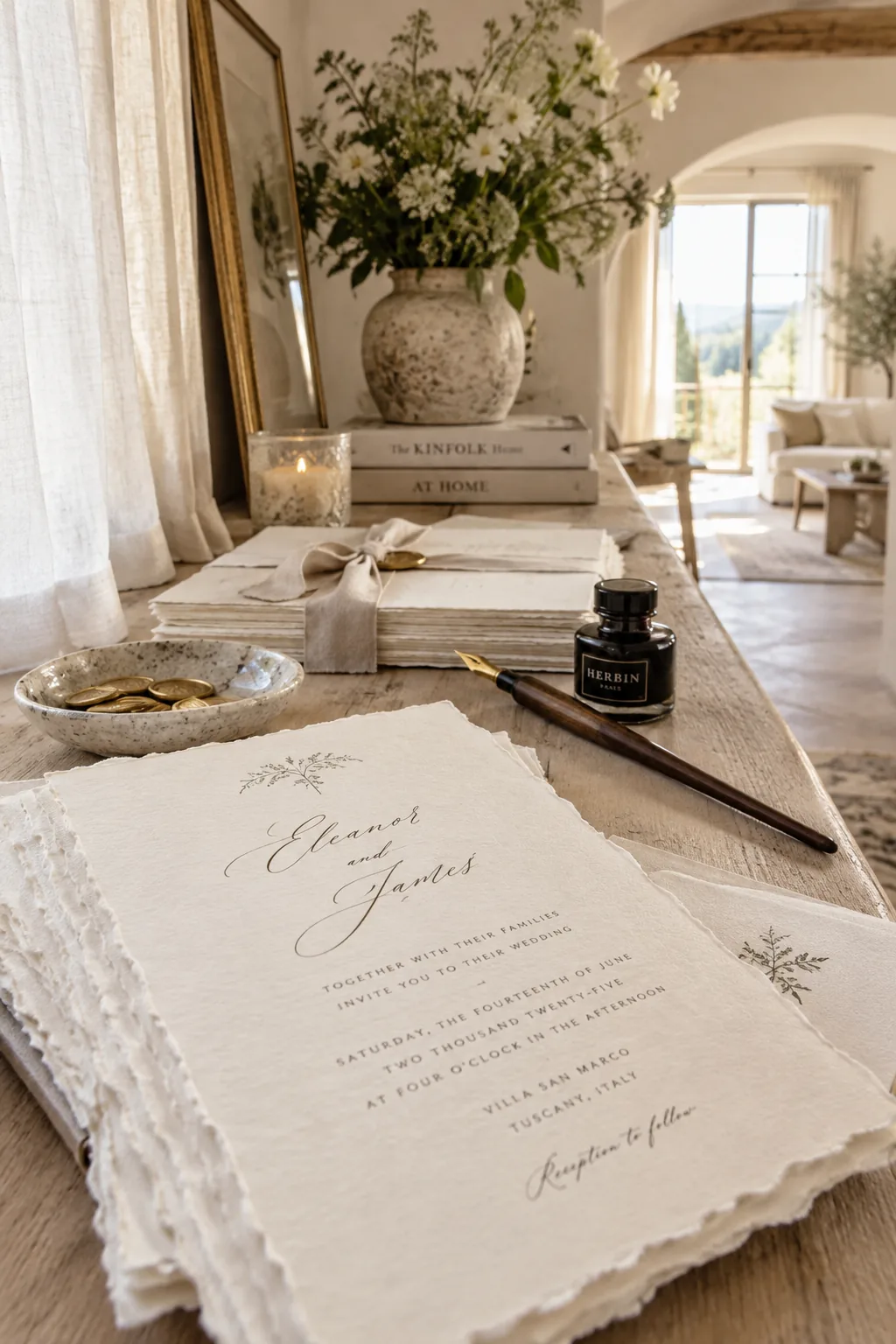
Deckled edge paper instantly adds an old-world romance.
Hand-torn borders give every single piece a slightly different, organic shape. I love pairing this rough edge with an elegant, sweeping calligraphy font. It strikes the perfect balance between raw and refined.
3. Monochromatic Palette
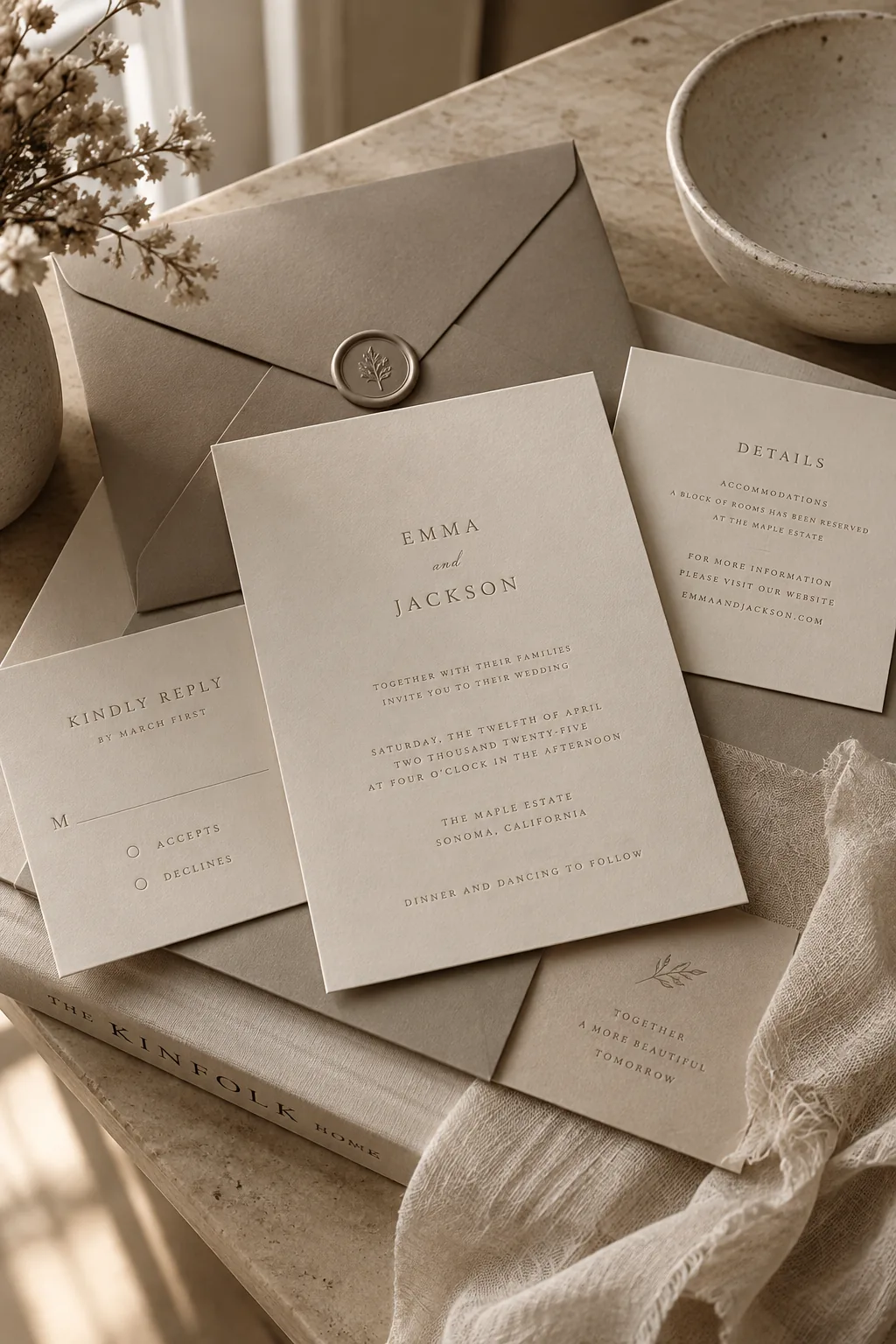
Using a monochromatic color palette works because it forces you to rely on texture and typography rather than bold contrast. A soft beige invitation card looks incredibly chic when paired with slightly darker taupe envelopes and cream-colored inserts. It feels cohesive without being boring. I always recommend using a blind letterpress technique for the main text to add a subtle, tactile element. This understated approach whispers luxury instead of shouting it.
4. Dark and Moody
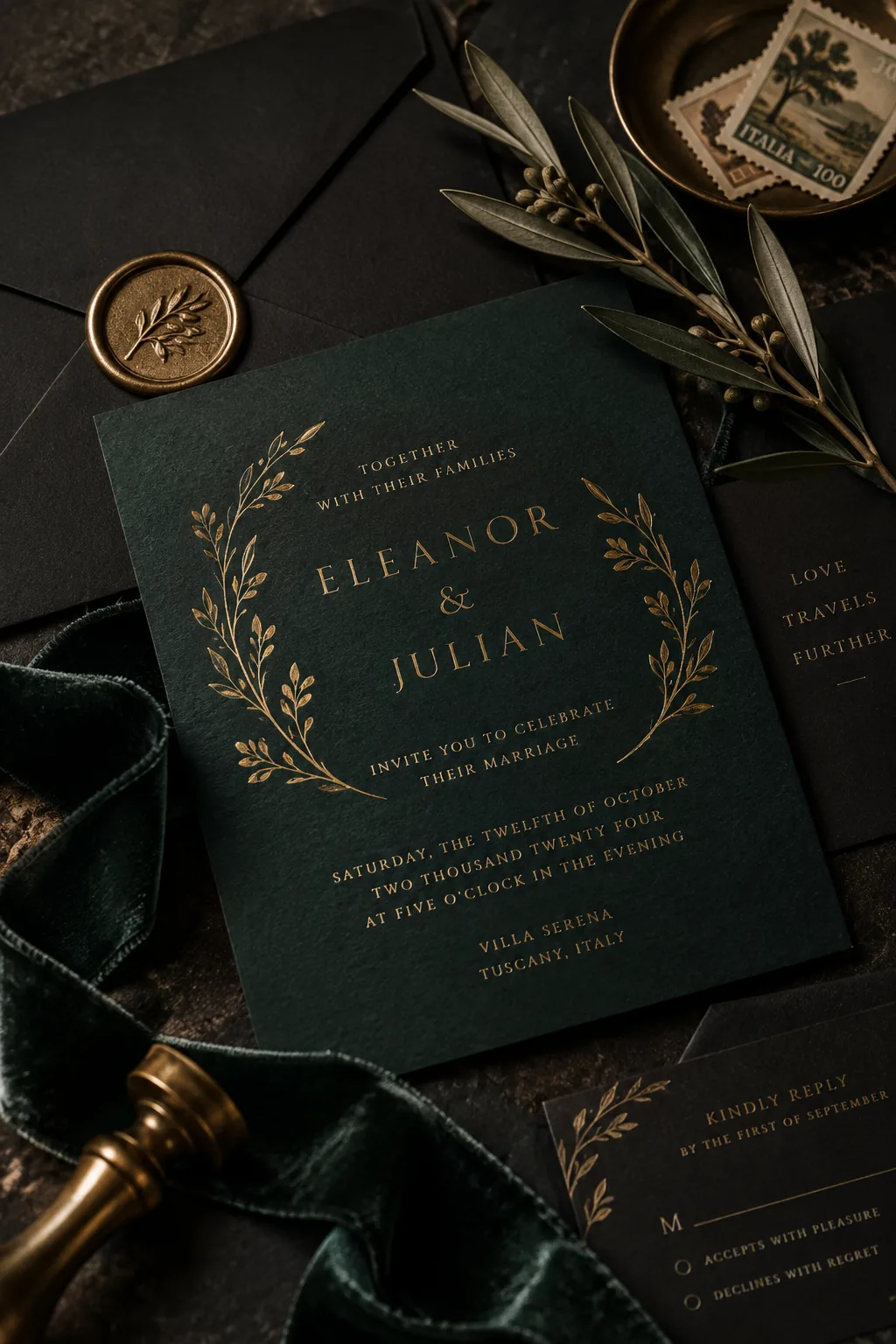
Dark, moody backgrounds create a dramatic and highly sophisticated look for evening weddings. A deep emerald or charcoal black card makes metallic foil stamping completely pop off the page. Consider building a striking suite with these rich components:
- Gold foil lettering
- Velvet envelope liners
- Black outer envelopes
5. Custom Watercolor Maps
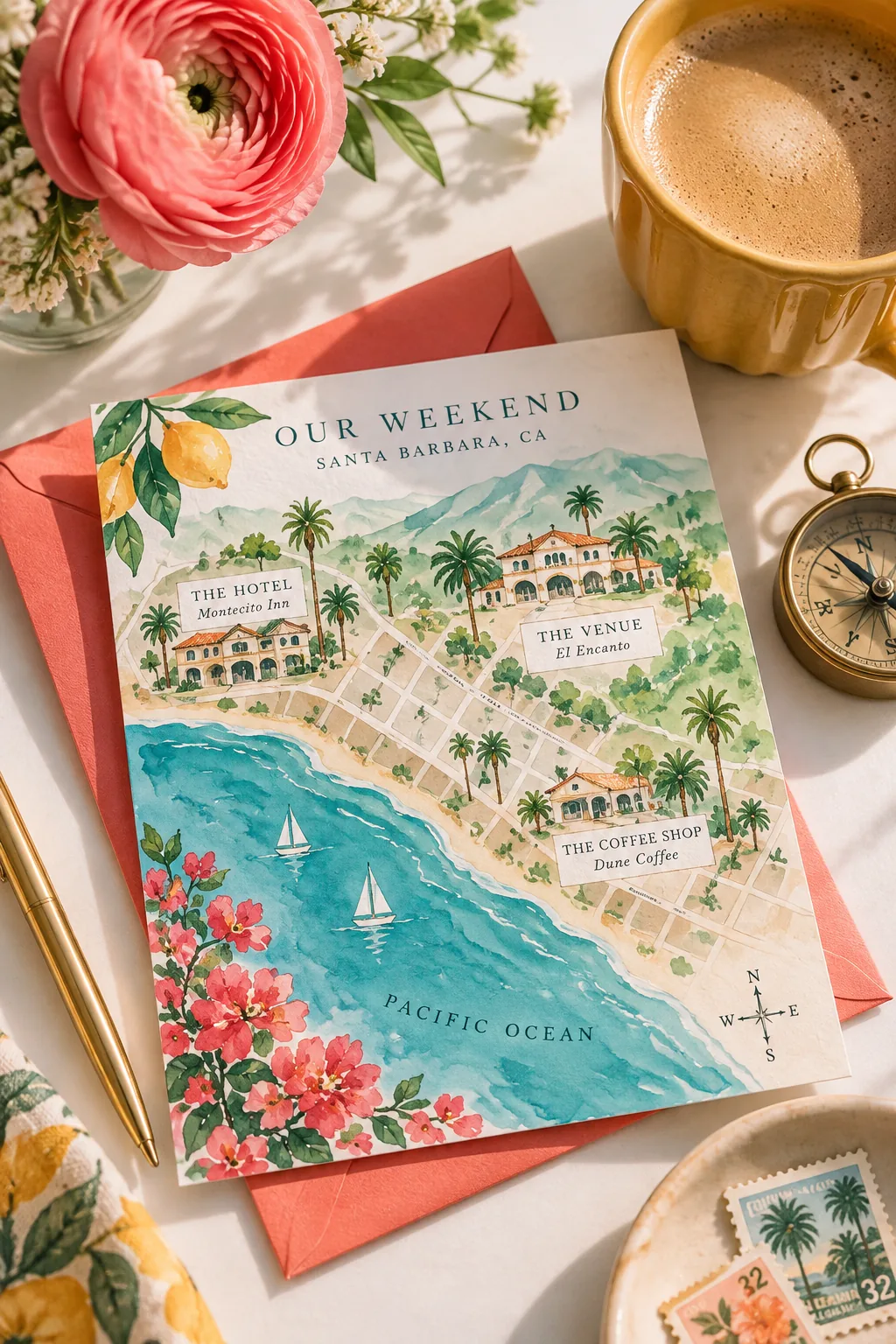
Custom watercolor maps give out-of-town guests a beautiful preview of your wedding weekend. Highlighting your venue, the hotel, and maybe your favorite local coffee shop turns a basic details card into a keepsake. People actually save these little works of art long after the party is over.
6. Classic Letterpress
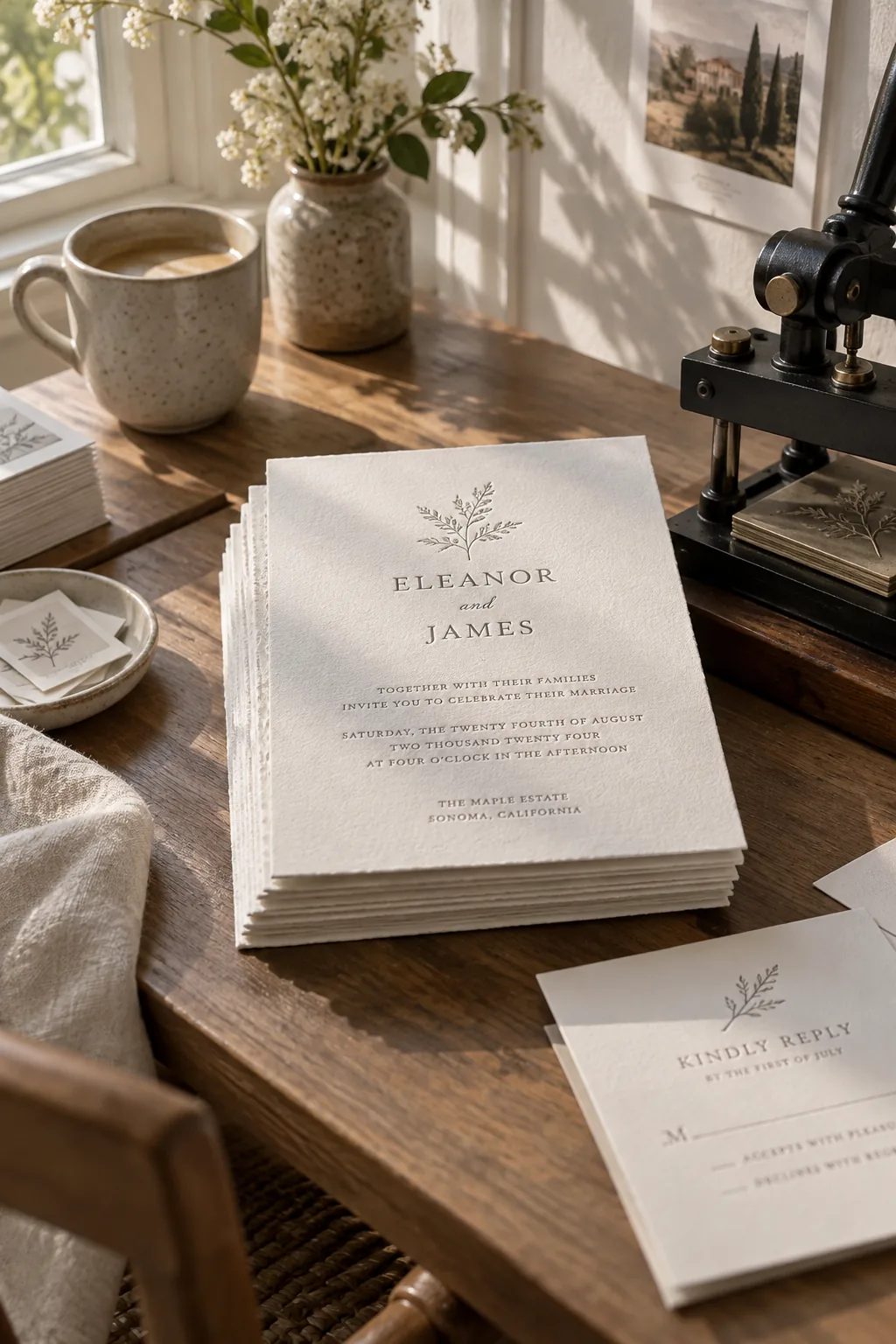
Nothing beats the tactile magic of true letterpress printing.
I used a deep impression on my own invitations, and guests could not stop running their fingers over the text. The way the heavy cotton paper catches the light around each stamped letter is just gorgeous. It requires a thicker cardstock, which naturally makes the whole package feel substantial in your hand.
7. Modern Acrylic
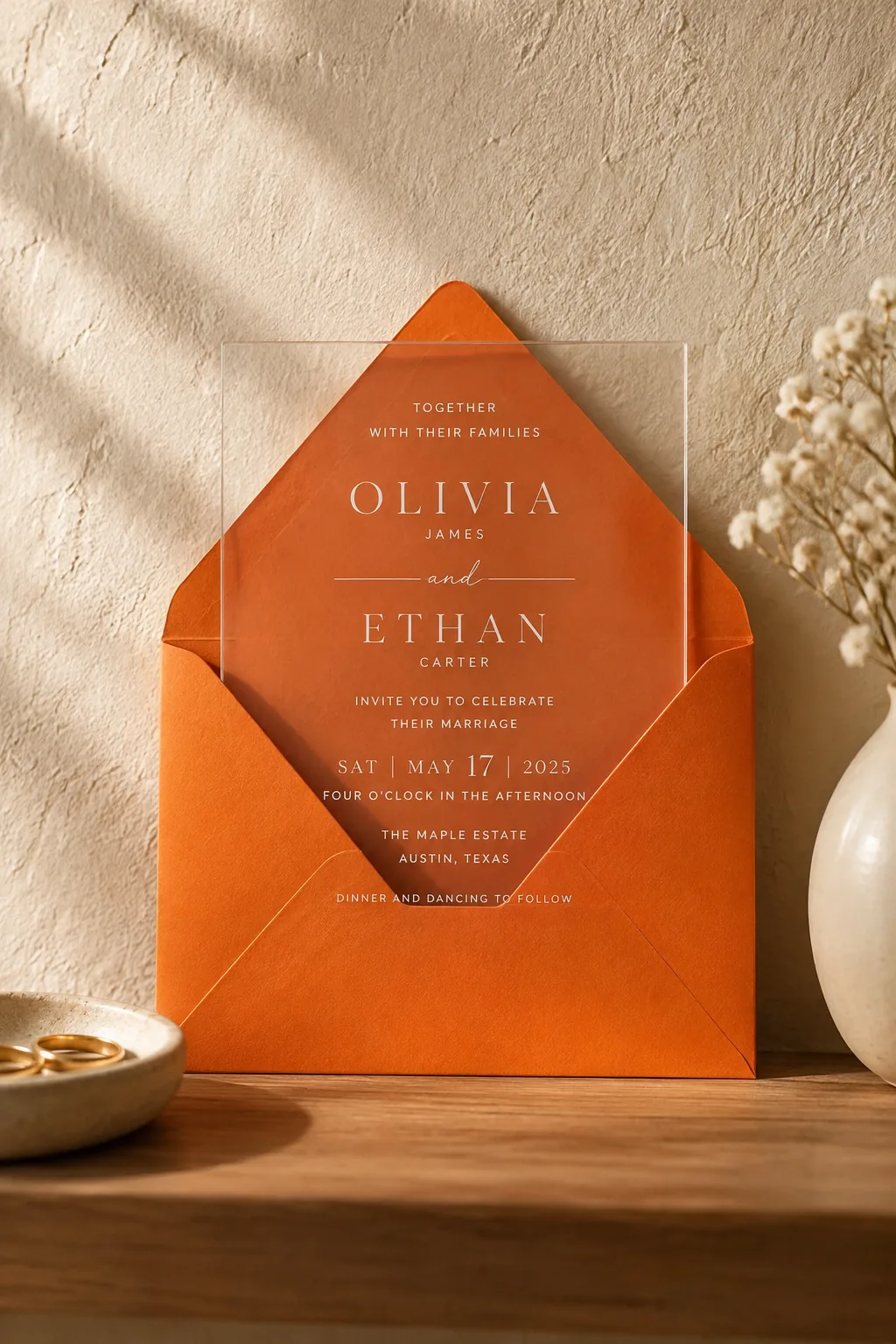
Acrylic invitations create a sleek, ultra-modern aesthetic that immediately tells guests to expect a contemporary celebration. The transparent material looks especially stunning when printed with crisp white ink and slipped into a vibrant, solid-color envelope.
8. Custom Monograms
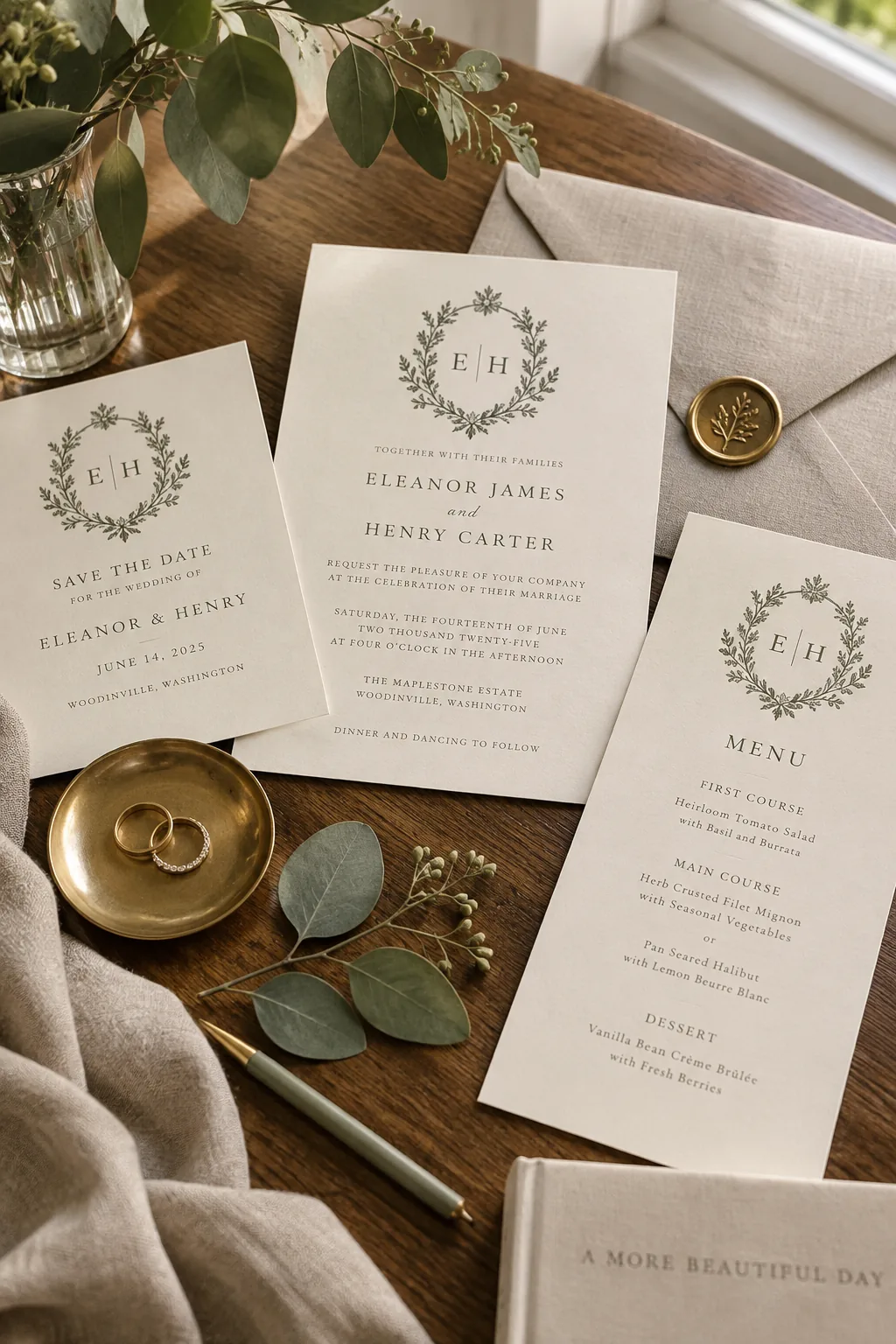
Invest in a custom monogram that you can use across all your wedding stationery.
A well-designed crest ties the save-the-dates, invitations, and day-of menus together perfectly. It acts as a subtle branding element for your entire event.
You can even have it engraved on your wedding bands later.
9. Vintage Postage
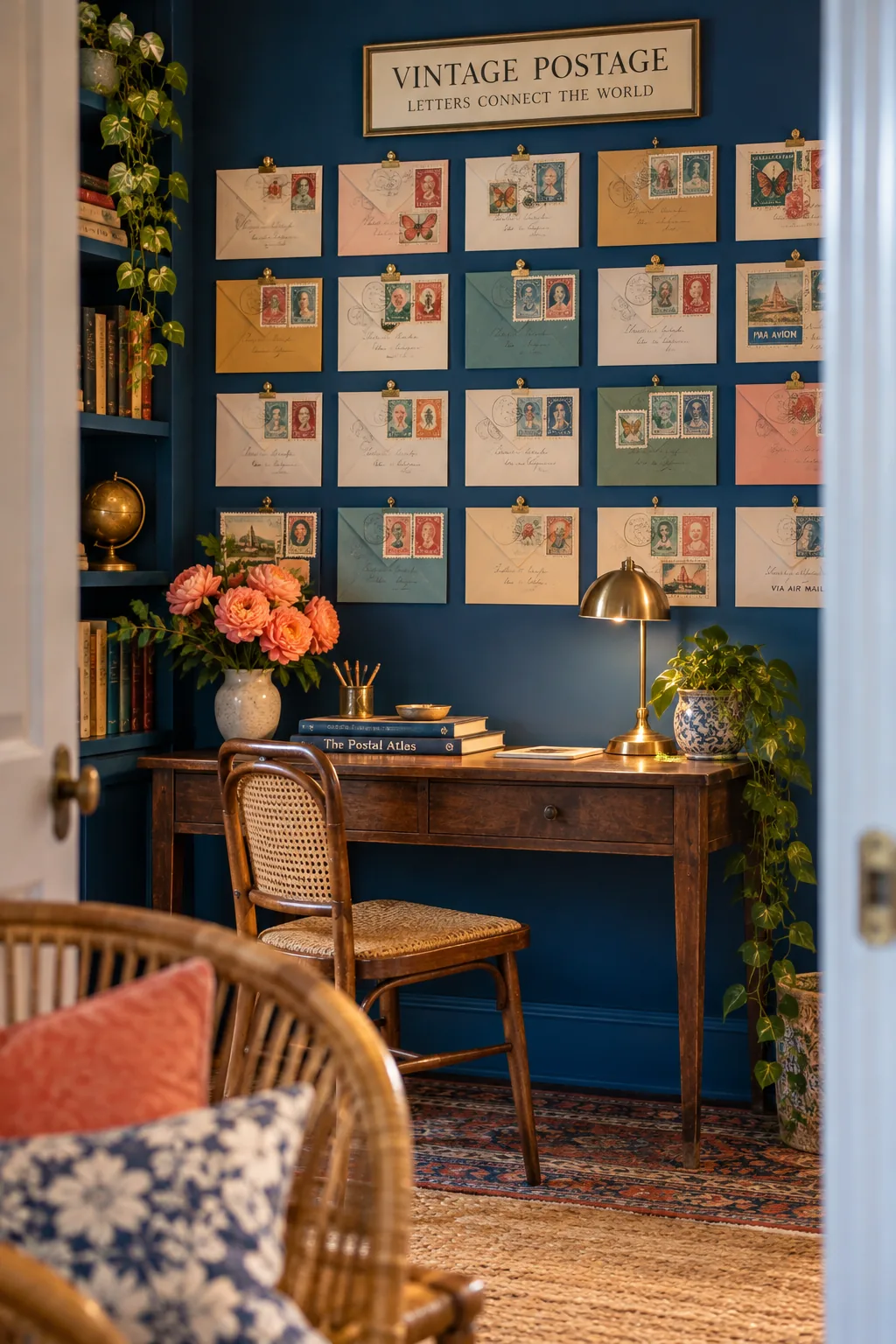
Vintage stamps work beautifully because they turn the outside of your envelope into a curated gallery wall. Sourcing unused postage from different decades in your wedding colors adds a thoughtful, nostalgic layer to the mailing experience.
10. Botanical Envelope Liners
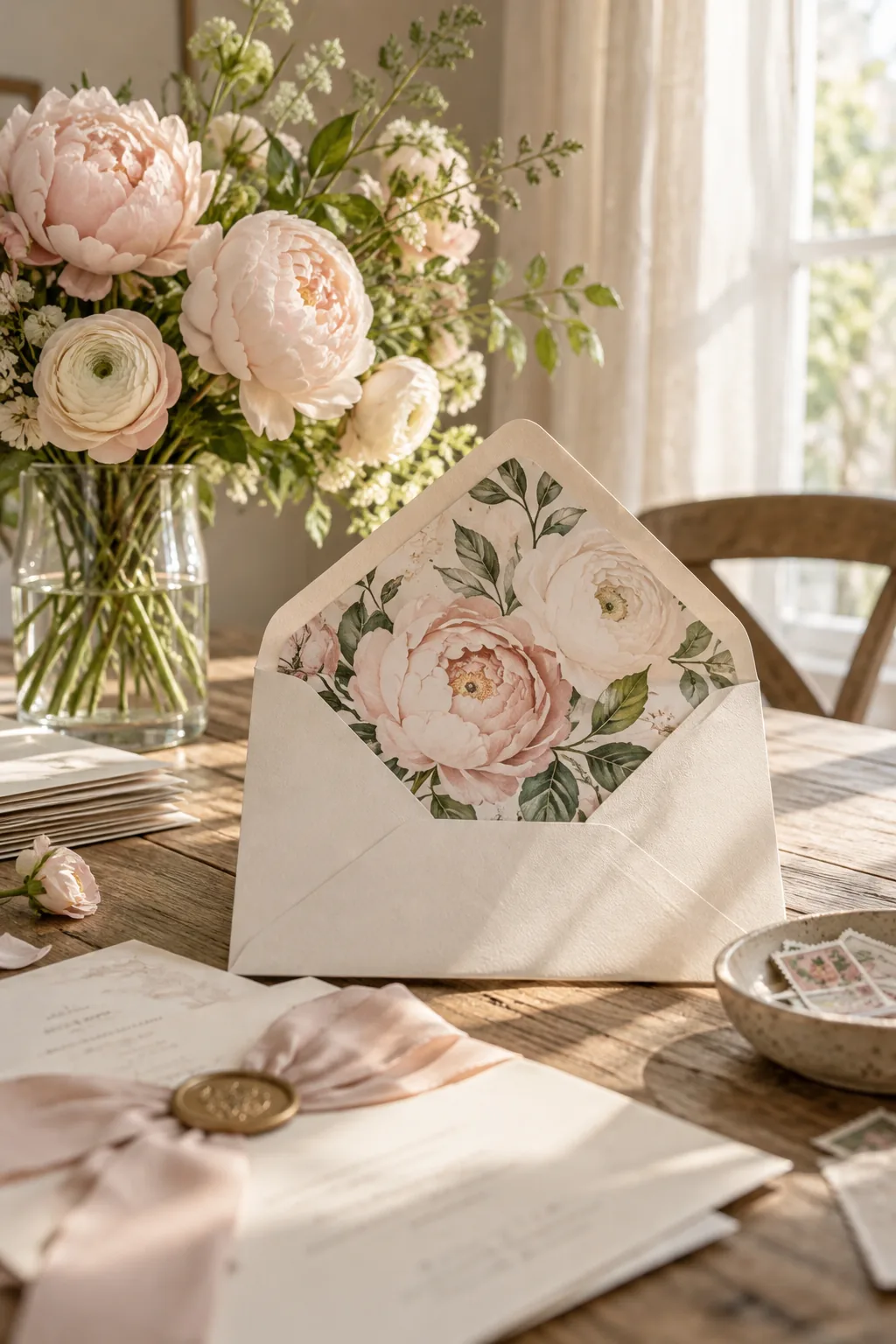
I always get excited when a couple chooses botanical envelope liners for their spring weddings. Opening a plain, neutral envelope to reveal a burst of oversized floral illustrations is a brilliant surprise. You can match the artwork directly to the actual flowers your florist is using for the centerpieces. It is a fantastic way to introduce your color scheme early on. Plus, it adds serious visual weight to the envelope without increasing your postage costs too much.
11. Pressed Flowers
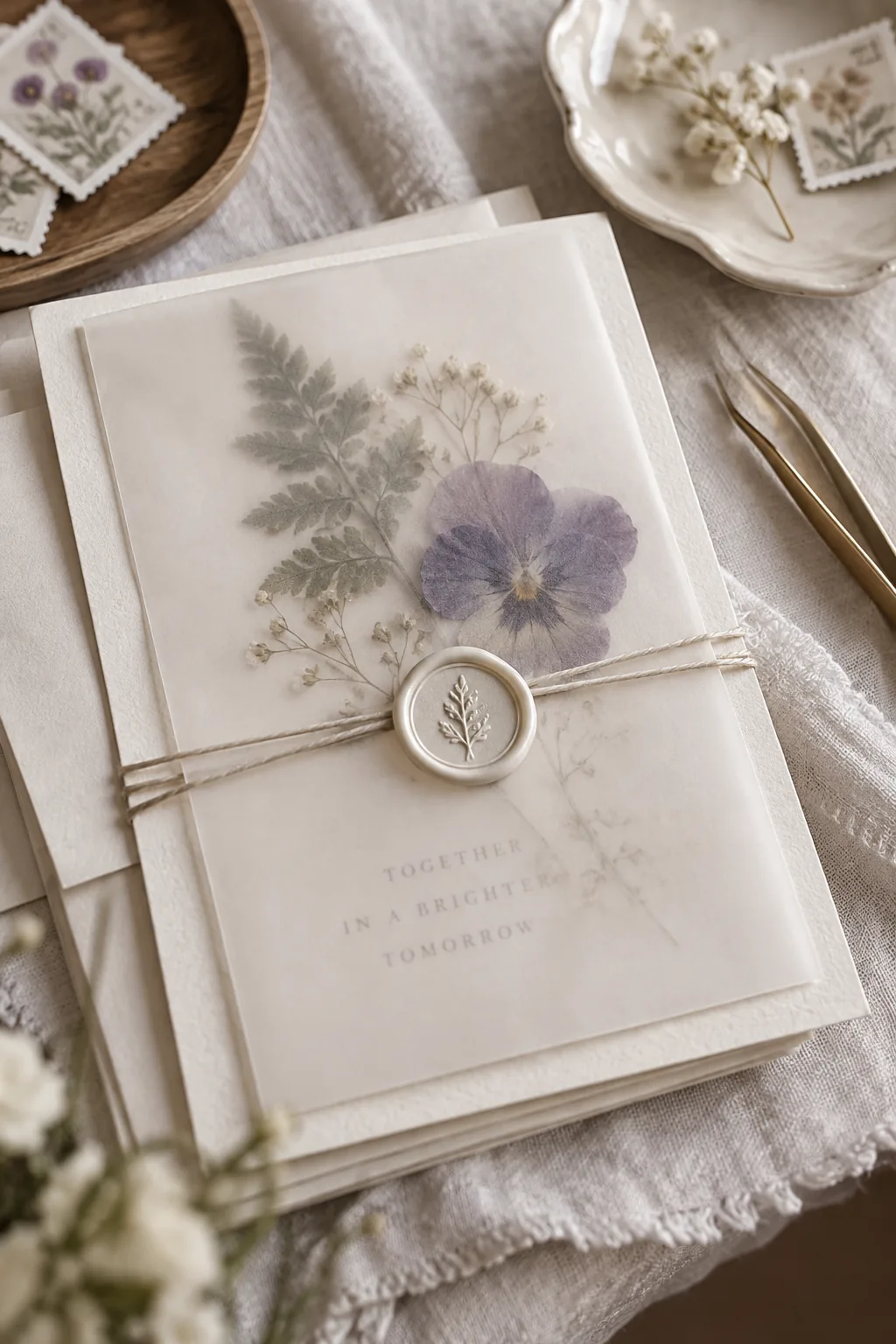
Using pressed flowers works so well because it brings an authentic, delicate piece of nature right into the envelope. Securing a tiny dried fern or a single pressed pansy under a vellum overlay feels incredibly intimate and romantic. It is a detail that mass-produced stationery simply cannot replicate.
Just make sure your post office hand-cancels these to protect the fragile blooms.
12. Blind Embossing
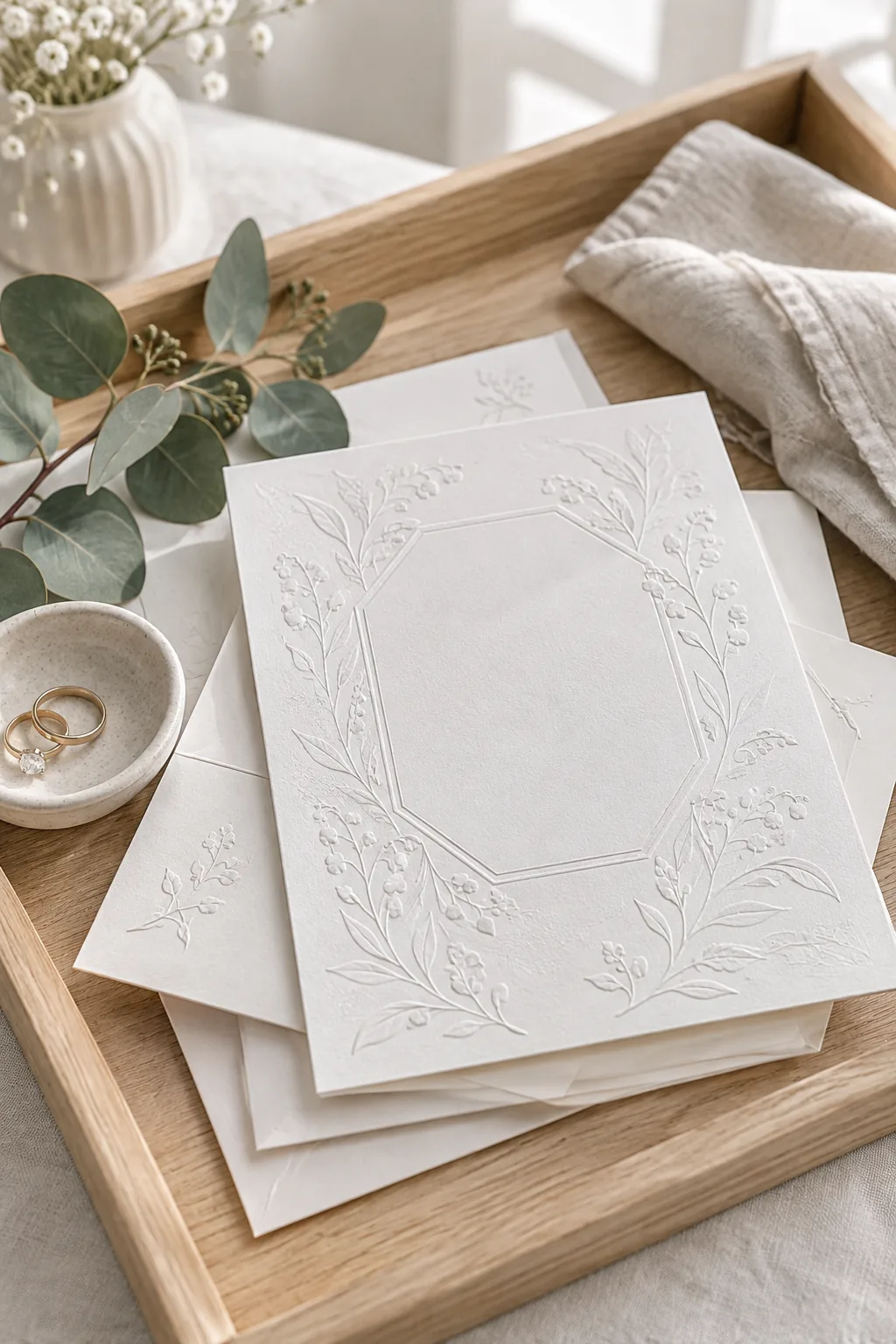
Blind embossing creates a subtle pattern that you feel more than you see.
Pressing a design into the paper without using any ink leaves a crisp, three-dimensional impression. It is the perfect technique for adding a floral border or a geometric frame around your main text. This keeps the design clean while still offering plenty of visual interest.
Why it works: It works because it adds rich texture without cluttering the minimalist aesthetic.