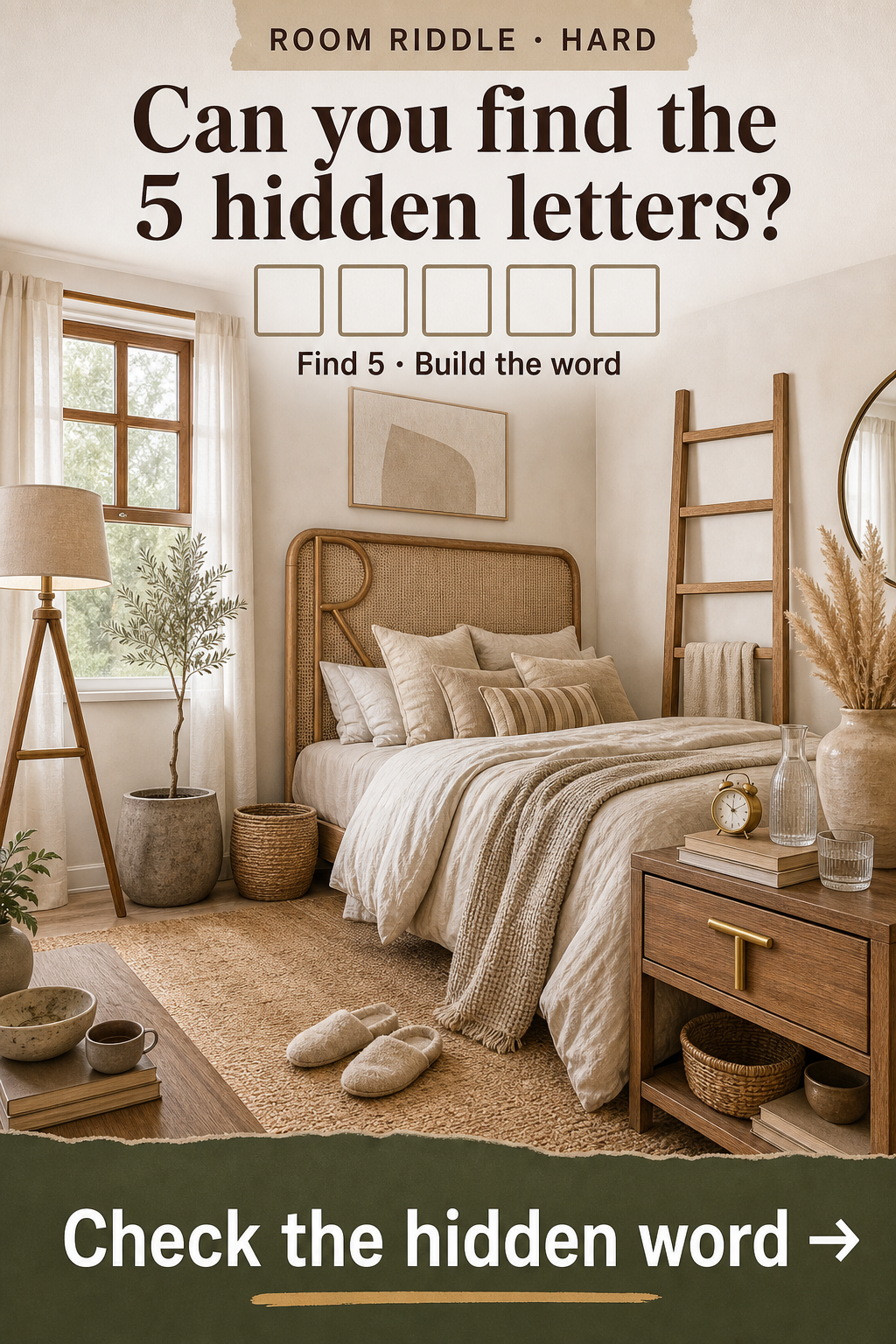
Neutral Bedroom Design: Master Wabi-Sabi Texture & Find the Hidden Word
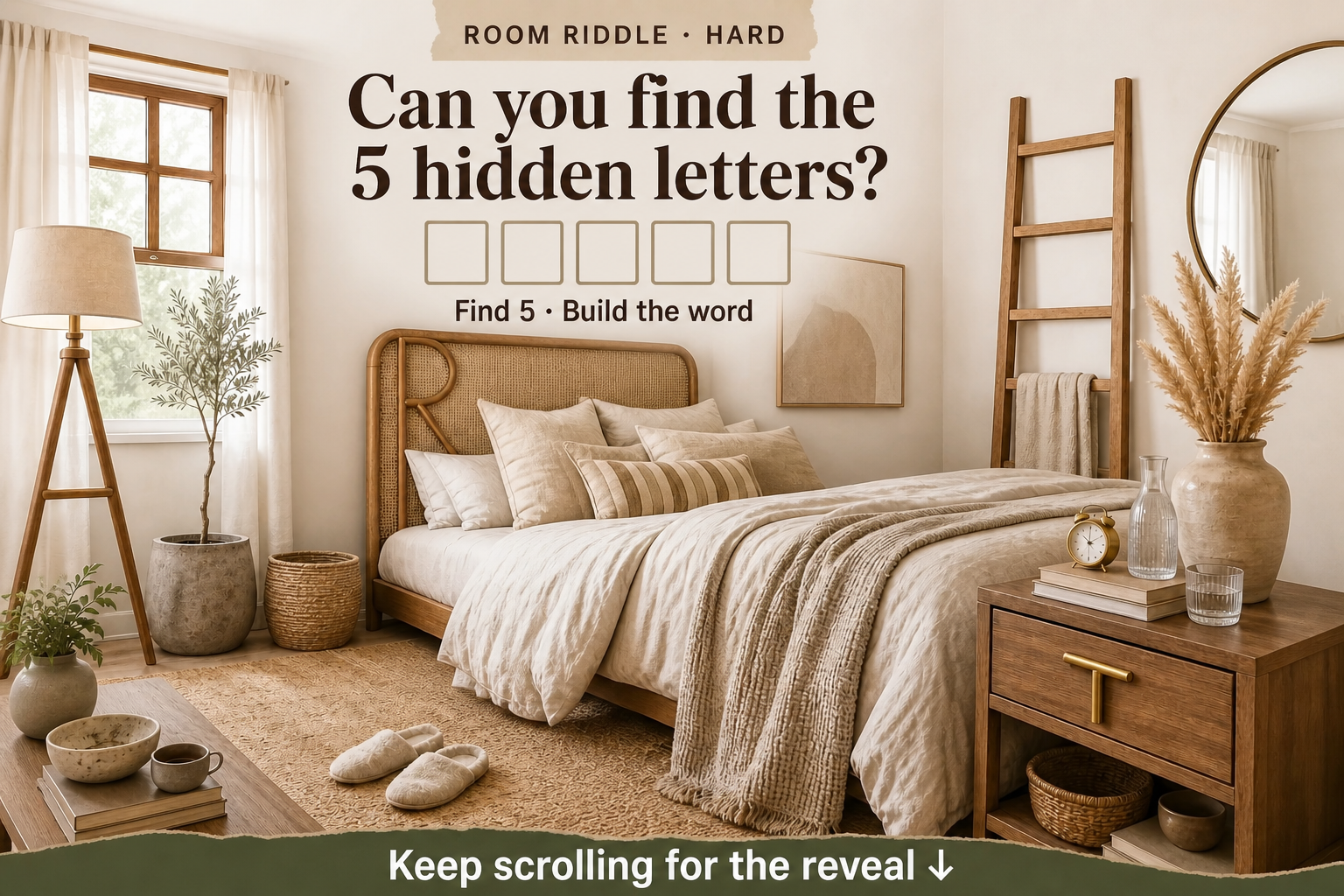
Explore the design idea behind this room before the visual riddle reveals its answer.
Layering Texture in a Neutral Bedroom
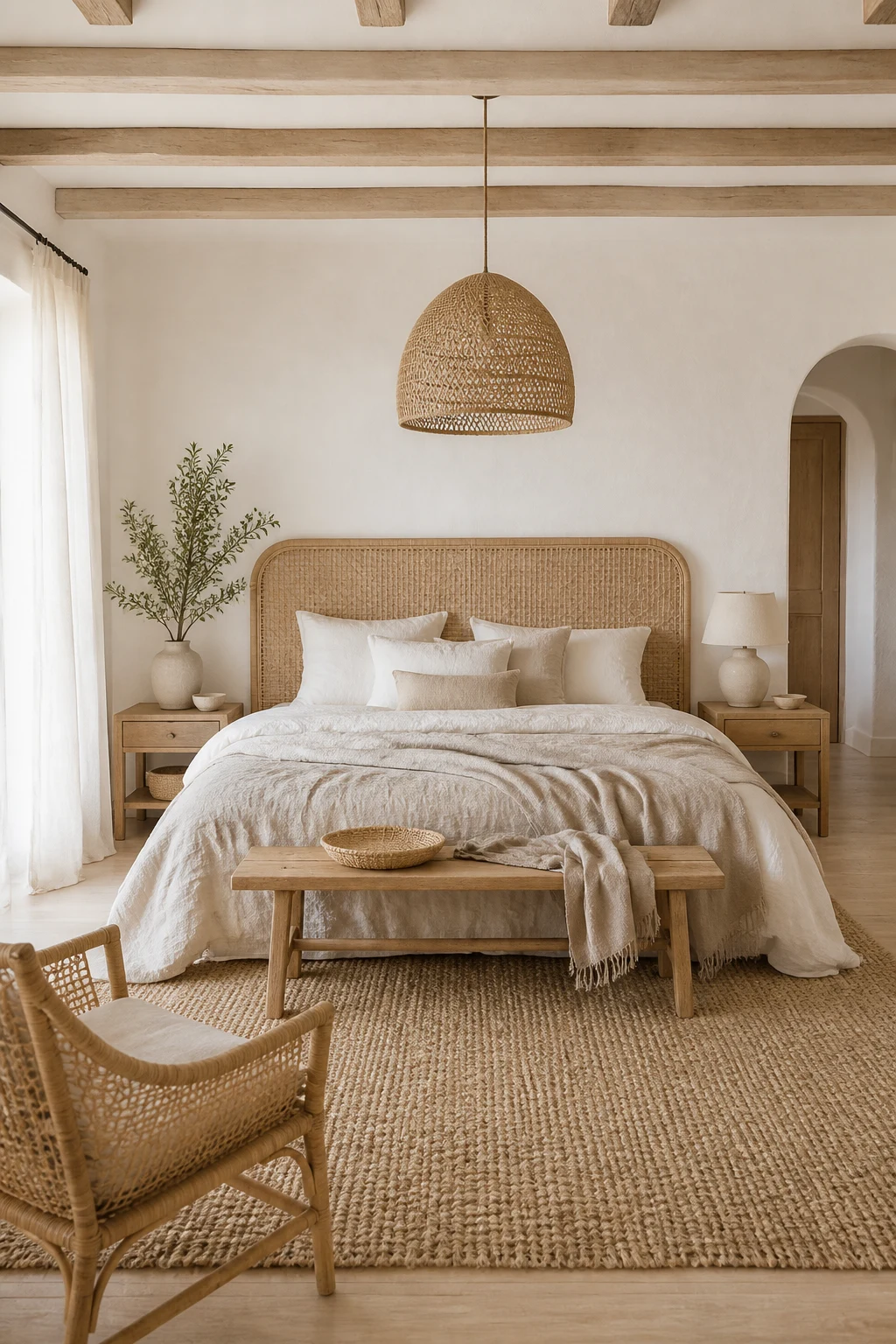
Mixing rough materials like jute and rattan with soft textiles like washed linen creates visual interest without relying on vibrant color. The importance of varied textures in a monochromatic space prevents the design from feeling flat or sterile. Understanding how these structural elements create calm makes spotting the hidden shapes much more rewarding.
The Hidden Word Reveal
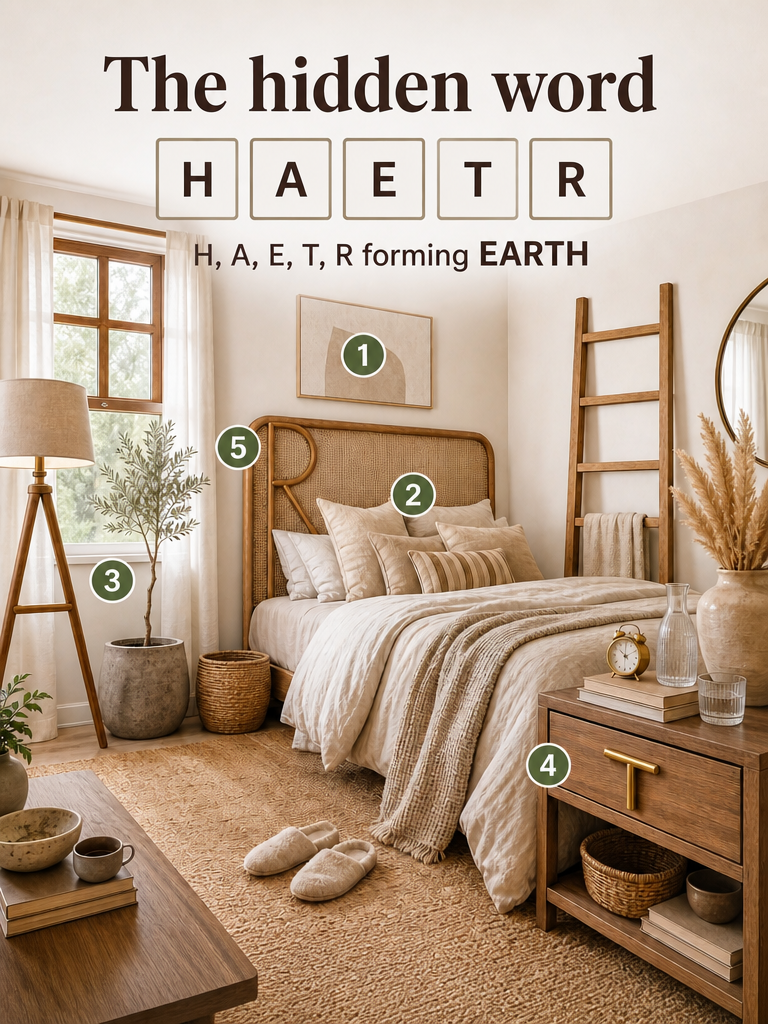
The five hidden letters are H, A, E, T, and R, which unscramble to spell the word EARTH.
- H: Formed by the wooden mullions of the window in the upper left.
- A: Created by the intersecting legs and bracket of the tripod floor lamp.
- E: Shaped by the left rail and three rungs of the blanket ladder on the right.
- T: Found in the solid brass drawer pull on the bedside table.
- R: Built into the structural framing of the rattan headboard in the center.
Embracing Wabi-Sabi Imperfection
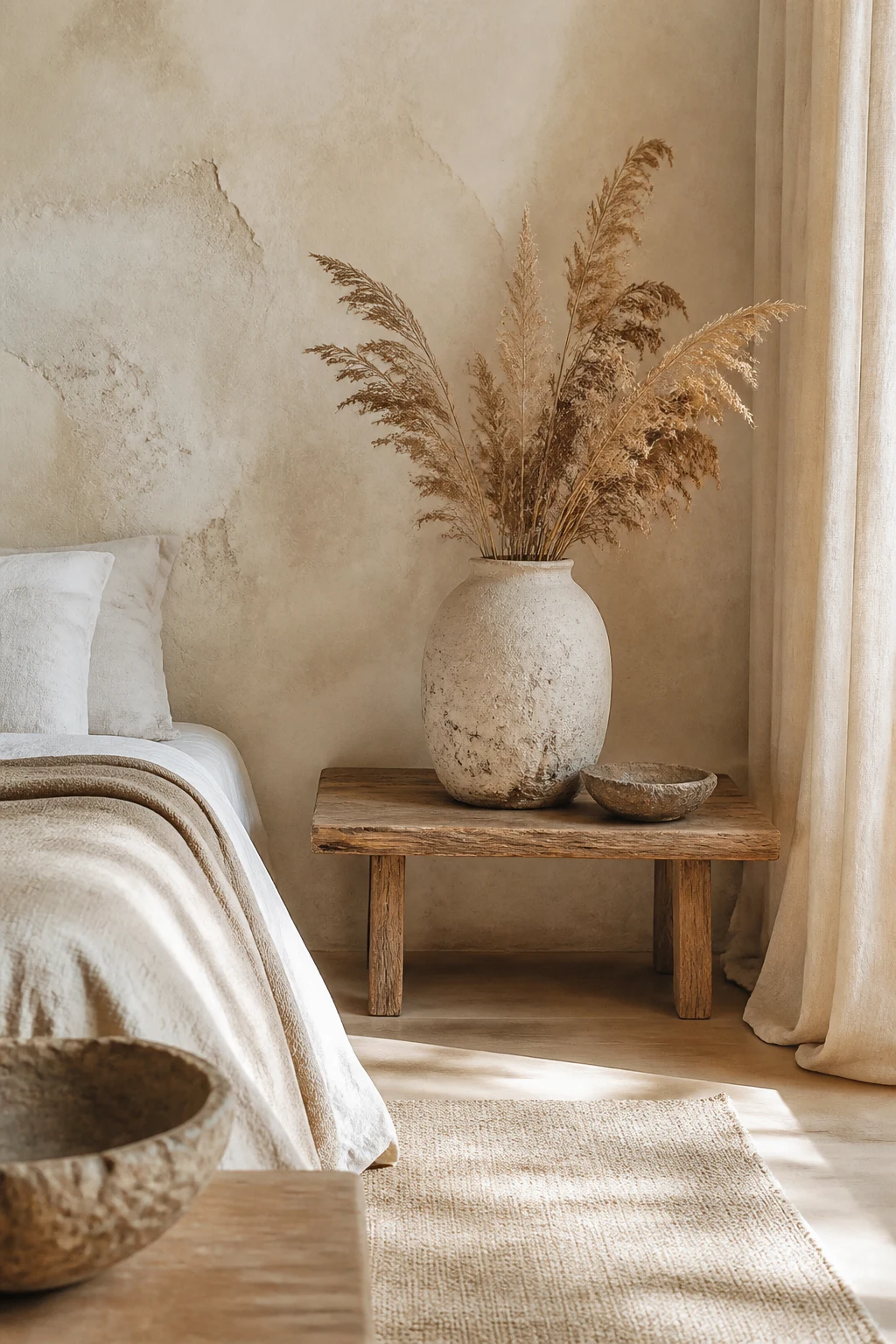
Introduce elements like handmade ceramics, dried branches, or uneven stone planters to bring a grounded, lived-in feel to the bedroom. Incorporating wabi-sabi principles through organic shapes and natural imperfections softens strict architectural lines and adds character.
Functional Decor: The Blanket Ladder
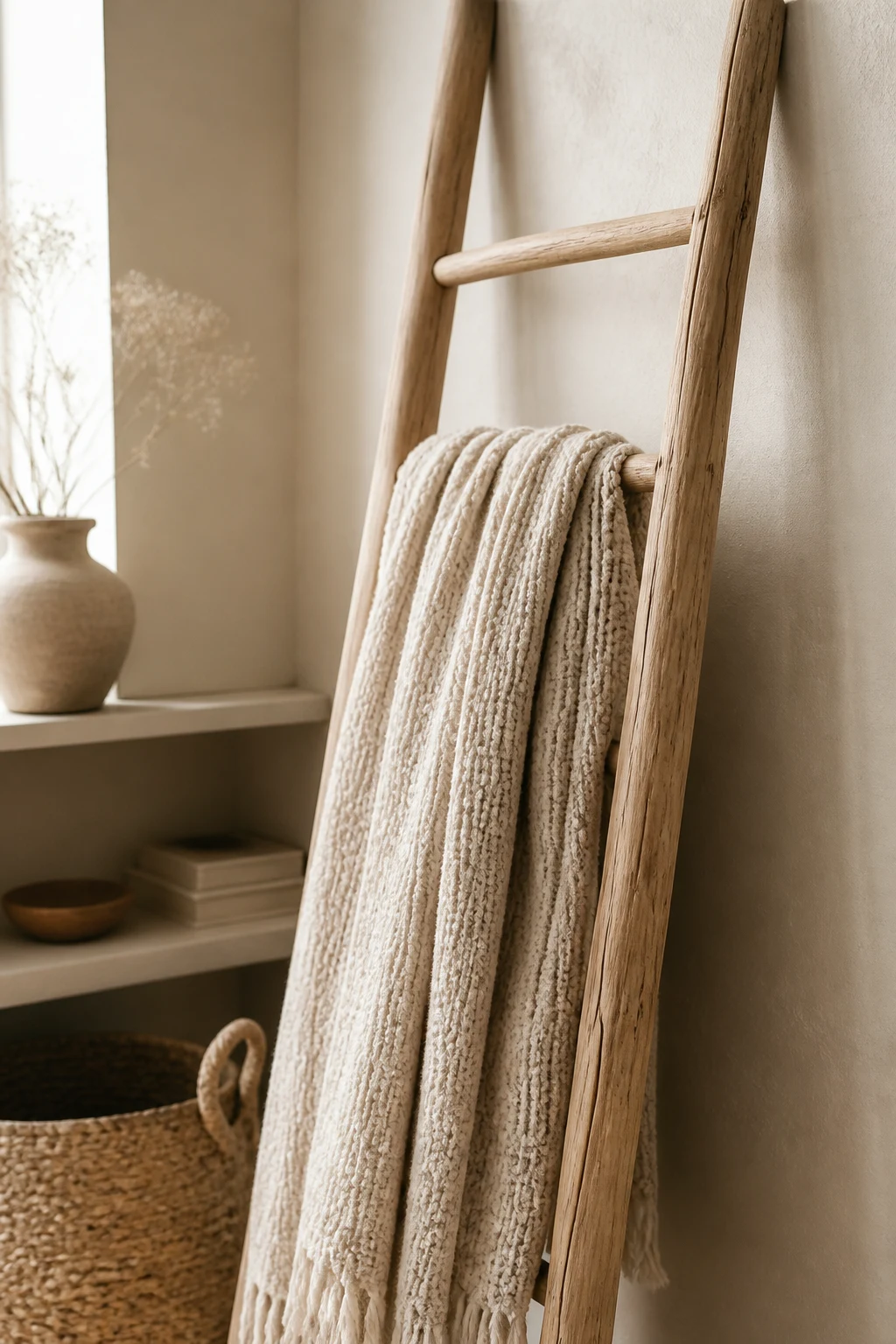
Using simple, structural furniture pieces like blanket ladders provides both function and aesthetic appeal. A leaning wooden ladder draws the eye upward, saving floor space while displaying textured throws that soften the room’s edges.
Full Pinterest pin
This full-ratio preview is shown temporarily for visual quality checks.