
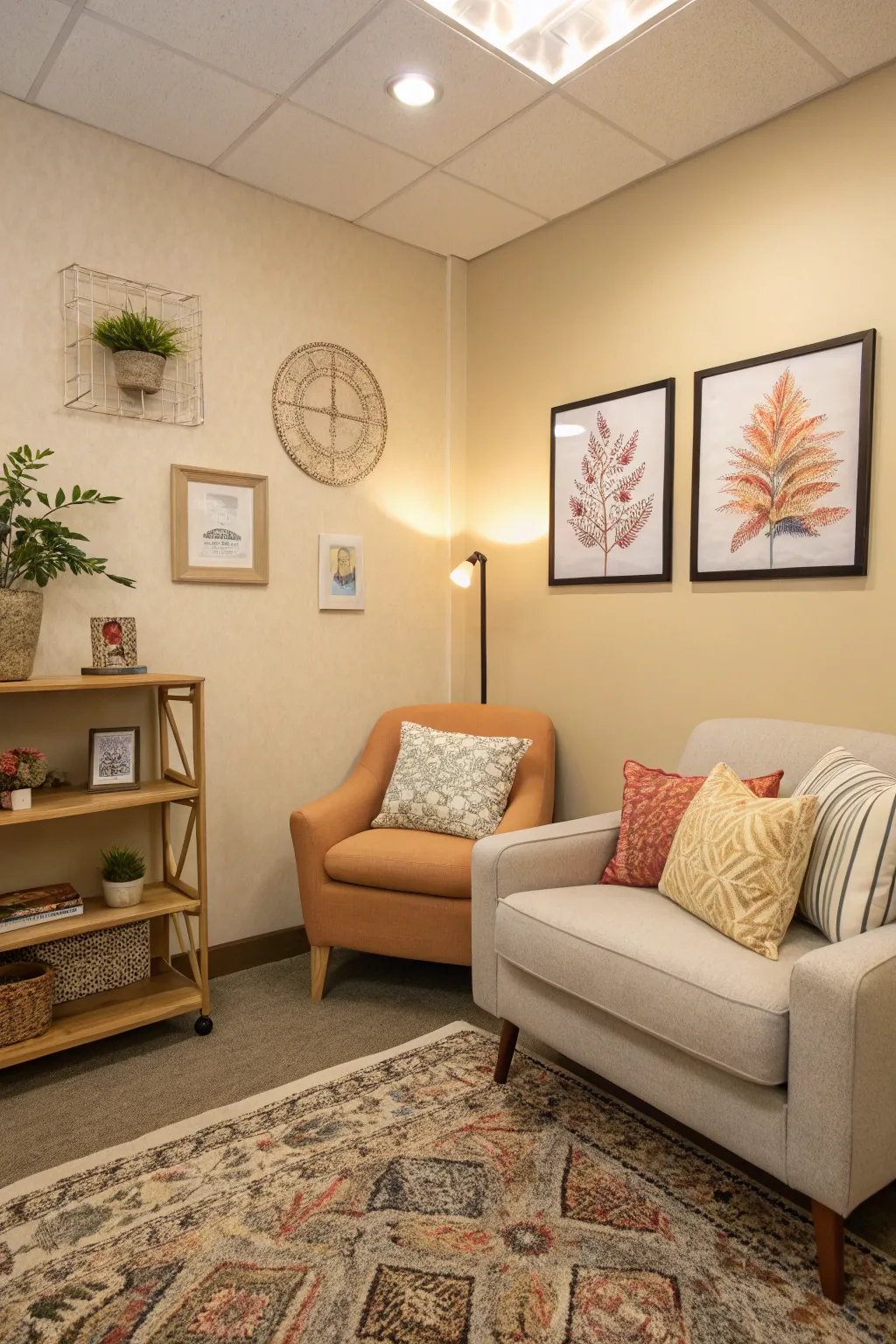
The space where a therapist works should be a safe haven, a zone where those seeking help can feel secure and willing to open up. Smart design can help turn a simple room into a space that promotes peace and facilitates recovery.
1. Set Up a Comforting Ambiance through Lighting

Use soft lighting to establish a welcoming mood. In my workspace, I depend on gentle office pendant lighting to reinforce the inviting and cozy ambiance.
2. Apply Organized Shelving and Storage

Arrange books and decorative pieces on shelves for both practical storage and visual appeal. I’ve found that thoughtfully arranged shelves often spark interesting dialogues. Explore our practical storage solutions to elevate your display.
3. Integrate Natural Accents

Place plants and foliage to bring a sense of vibrancy and freshness into your space. I have observed that even a few carefully chosen plants can greatly improve the atmosphere and overall positivity.
4. Optimize Natural Lighting

Arrange seating in a way that maximizes natural light, which brightens the area and provides a sense of warmth. The large windows in my own space have become a central comfort for many clients.
5. Blend in Soft Textiles

Place soft fabric items like covers and pillows on seating areas to encourage comfort. Those I work with value the extra coziness during our sessions.
6. Add a Water Feature

Think about installing a small water fountain to bring in relaxing sounds and movement. Many clients say that the soft sound of flowing water makes them feel more peaceful.
7. Make use of Soundscapes

Play gentle music or ambient sounds from nature to establish a soothing setting. I’ve noticed this can help mask any outside noise and promote focus.
8. Utilize Raw Materials

Add components like wood and stone to create a natural vibe. These accents add warmth and a raw, earthy feel to my workspace. You can explore stylish wood furniture ideas to further enhance this aesthetic.
9. Showcase Distinct Art Pieces

Choose artworks that are meaningful for your practice’s principles. These can capture the attention of clients and act as conversation starters.
10. Prioritize Comfortable Seating Options

Make sure you include comfortable sofas and chairs that beckon clients to unwind and relax. I make it a priority to ensure that every seat offers support and adaptability to suit different preferences.
11. Introduce Soothing Scents

If you’re going to include scents, choose light aromas like lavender or chamomile to encourage relaxation. I always ensure they are light enough to avoid affecting sensitive individuals. For more inspiration, explore these calming wellness room ideas to complete your space.
12. Set up a Mindfulness Space

Set aside a small section with pillows and mindful tools for individuals to engage with before their session. This space can help them ground and find their center before beginning therapy. You can find more inspiration for this area in our expert tips for decorating therapy offices.
13. Mix in Varied Fabric Textures

Play with different textures by layering pillows, covers, and floor coverings to enhance the feeling of warmth and depth. Materials like wool and linen give a comfy aspect to my practice space.
14. Add Individual Decorations

Include distinctive items that represent your individual taste or therapeutic approach. Personal details can make the area feel more welcoming and create a sense of connection.
15. Include Inspirational Decorations

Select artworks that inspire calm and uplifting feelings, for example, serene scenery or abstract works. In my office, these pieces often lead to heartening discussions.
16. Use Understated Furniture

Choose furniture that features simple designs to keep the room tidy and uncluttered. This strategy helps to keep the main focus on the therapeutic process, minimizing distractions.
17. Choose Gentle, Neutral Colors

Begin by choosing a color scheme with gentle blues, greens, and creamy tones to evoke tranquility. In my work setting, using these shades transforms the space into one where clients instantly feel more at ease.
18. Blend in Unusual Color Highlights

Add subtle color through accents like cushions or artwork to enliven the area. This surprising element can inject energy without being too intense.