
Winter Greenhouse Design: Print Your Vent & Barrel Sizing Sheet
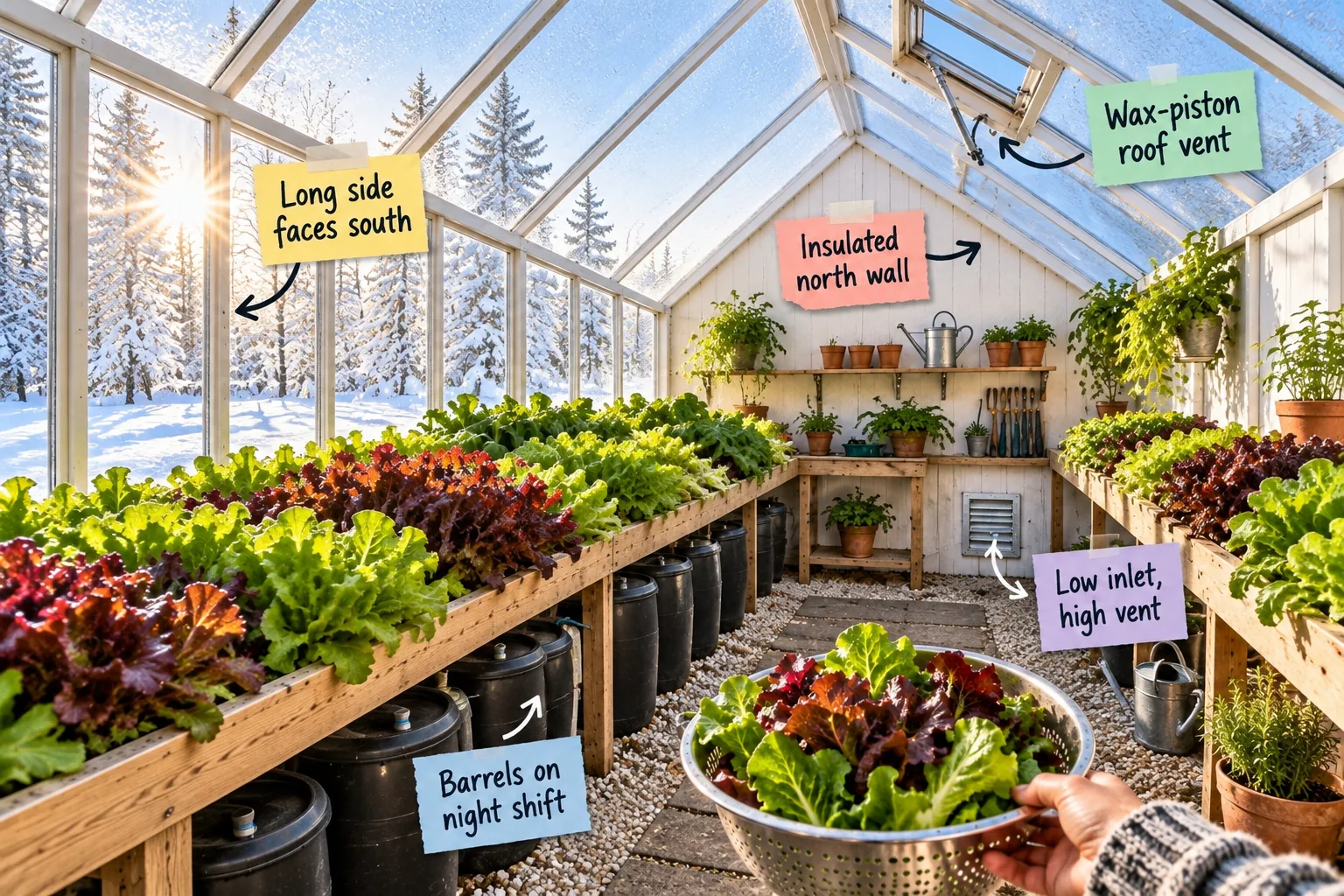
You can easily arrange your passive winter growing system using our free Two-Page Winter Greenhouse Layout Sheet to calculate the exact water barrels and vent sizes you need. This printable design guide provides the foundational measurements required to successfully harvest fresh, crisp salad greens even while it heavily snows outside.
Siting the Greenhouse for Winter Sun
Building a successful winter harvest starts from the outside in, which means your structure’s long side faces south to capture low-angle rays. Positioning the twelve-foot length of an eight-by-twelve footprint directly toward true south maximizes your critical passive solar gain.
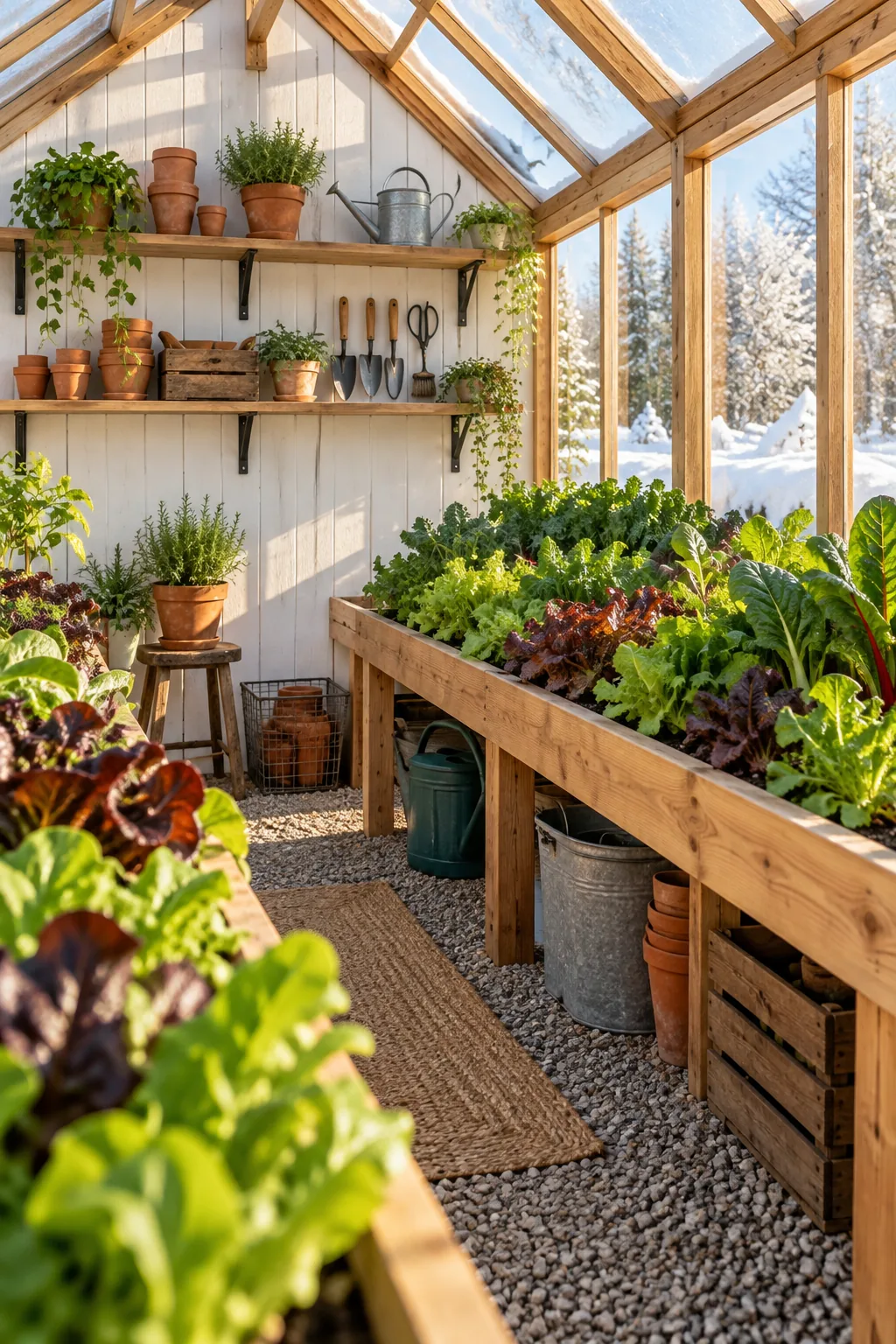
Tracking that lowest winter sun path ensures your interior beds absorb the maximum possible light energy during short, freezing daylight hours. This specific structural placement forms the absolute foundation of any passive heating strategy before you ever plant a single seed.
Solidifying the Insulated North Wall
Because the back of your structure receives absolutely zero direct winter sunlight, building an insulated north wall prevents massive heat loss overnight. You must construct this rear boundary using solid framing packed with rigid foam rather than standard glass or polycarbonate panels.
While traditional summer glasshouses look beautiful from all angles, applying that same transparent aesthetic to a winter build will quickly freeze your crops. Bouncing available ambient light back onto your lettuce beds requires careful interior surface planning to maintain active winter growth.
Stacking Thermal Mass Under the Benches
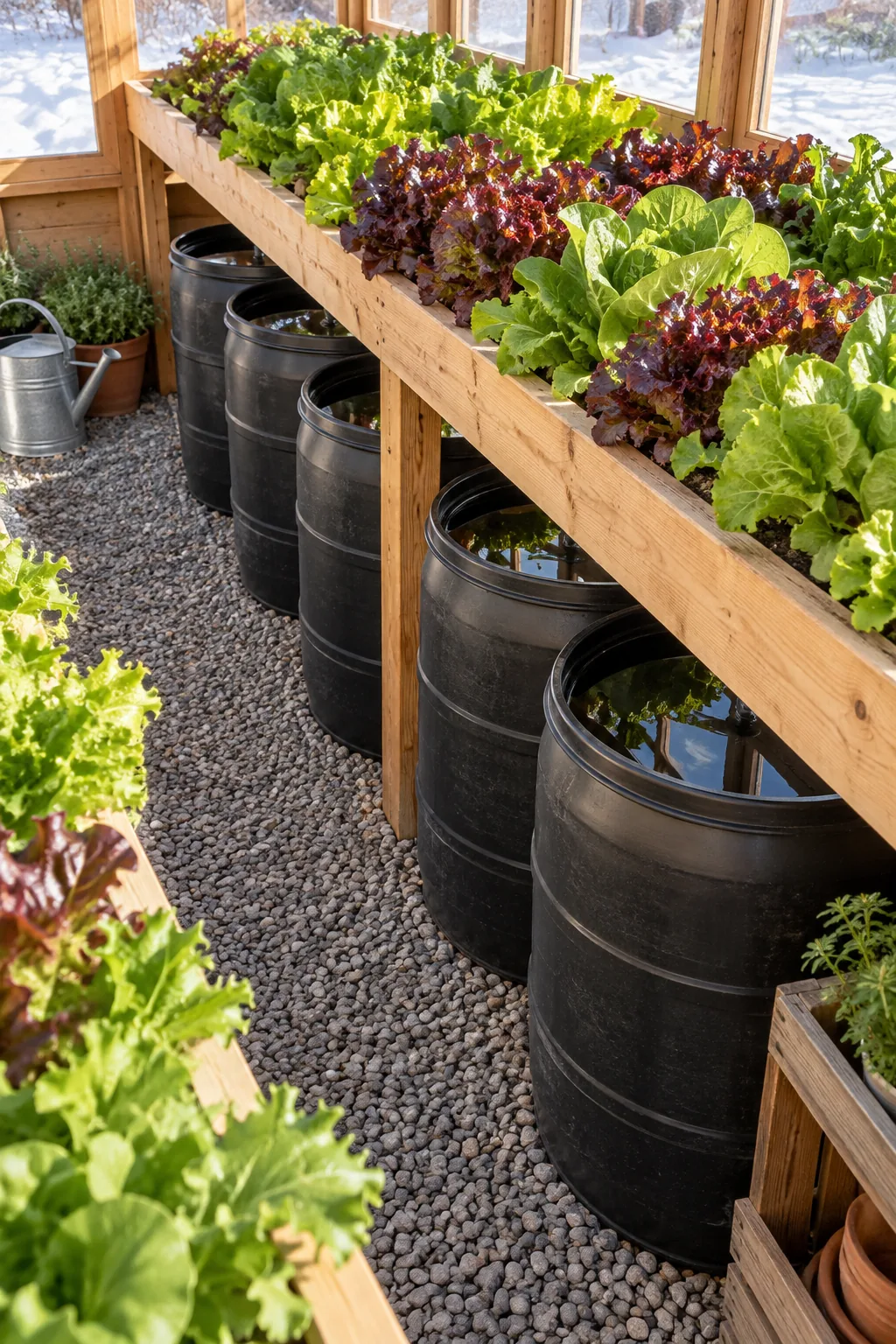
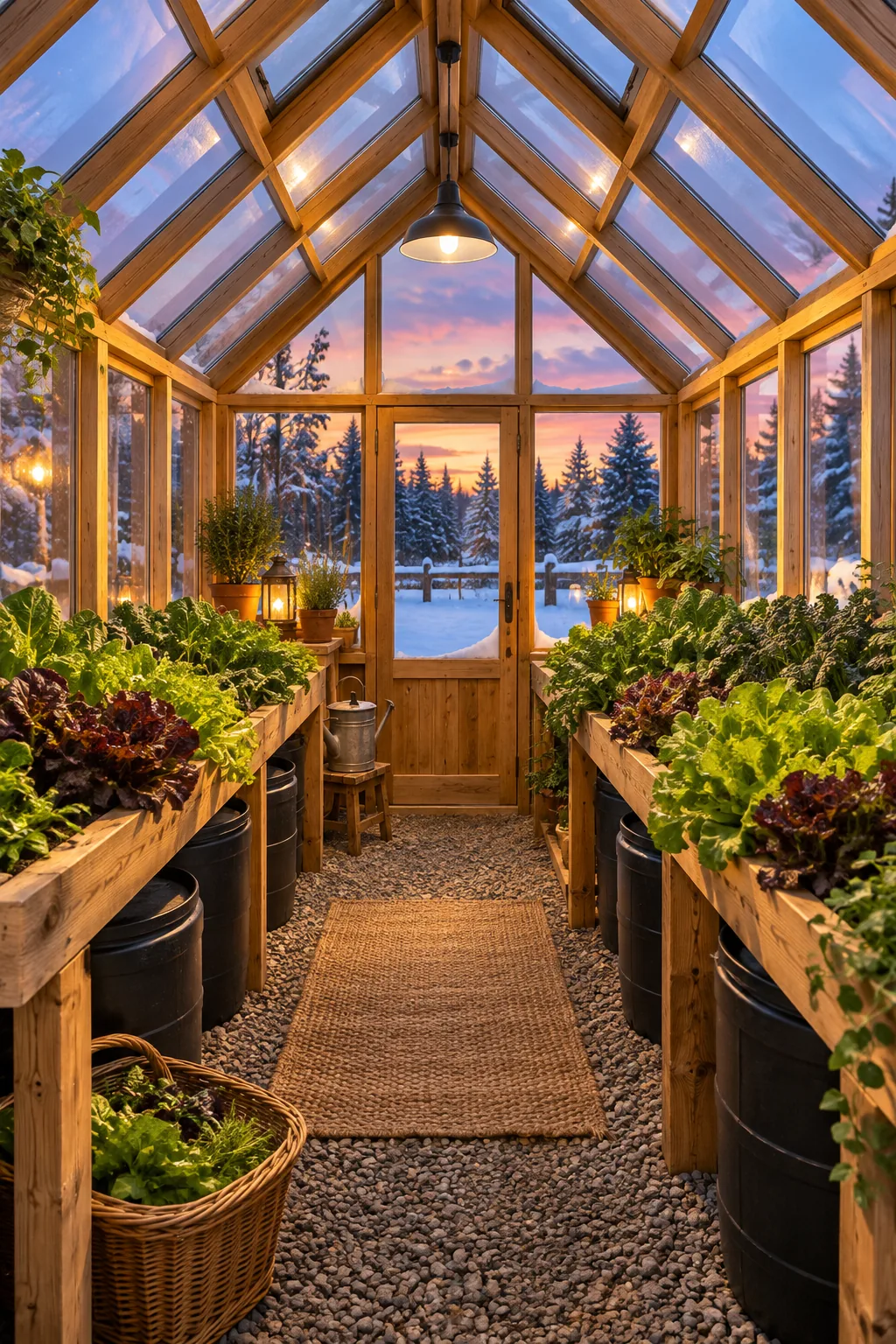
Putting your barrels on night shift means utilizing dark thermal mass to absorb solar radiation during the afternoon and slowly release it after sunset. You need to place a continuous, unbroken row of these black, water-filled containers directly underneath your south-facing wooden benches.
This strategic layout ensures the intense winter sun hits the dark plastic for the longest possible duration during those severely limited daylight hours. The stored thermal energy then naturally radiates upward through the wooden bench slats, gently and consistently warming the sensitive root zones all night.
Sizing the Black Water Barrels
When I built my first winter setup in Austin, I guessed my thermal mass volume and woke up to frozen spinach, teaching me the critical water-to-glazing ratio. The exact number of standard 55-gallon water barrels depends entirely on your specific floor square footage.
| Greenhouse Size | Glazing Area | Water Volume | 55-Gal Barrels |
|---|---|---|---|
| 6×8 feet | ~130 sq ft | 260 gallons | 5 barrels |
| 8×10 feet | ~210 sq ft | 420 gallons | 8 barrels |
| 8×12 feet | ~250 sq ft | 500 gallons | 10 barrels |
| 10×14 feet | ~340 sq ft | 680 gallons | 13 barrels |
Our printable layout sheet calculates these exact thermal mass requirements so you never have to rely on risky guesswork for your winter garden. Balancing your specific structural dimensions with the correct water volume guarantees your interior climate remains safely above freezing during severe overnight dips.
Installing the Wax-Piston Roof Vent
I once lost an entire beautiful crop of winter kale because a surprisingly sunny January afternoon completely baked my sealed greenhouse, making a wax-piston roof vent mandatory. This mechanical silver cylinder-and-arm opener automatically exhausts dangerous excess heat without requiring any hardwired electrical connection or battery power.
The internal wax cylinder naturally expands at approximately 65 to 70 degrees Fahrenheit, physically pushing the heavy ridge vent wide open to release the trapped hot air. As the late afternoon cools, the wax contracts and heavy-duty metal springs pull the glass tightly shut before freezing night temperatures can enter.
Pairing with a Low Intake Louver
Achieving a functional chimney effect requires a low inlet, high vent combination to pull cool, fresh air in near the gravel floor. This natural draft constantly replaces the hot, stale air escaping through the roof, keeping your localized winter climate perfectly balanced and healthy.
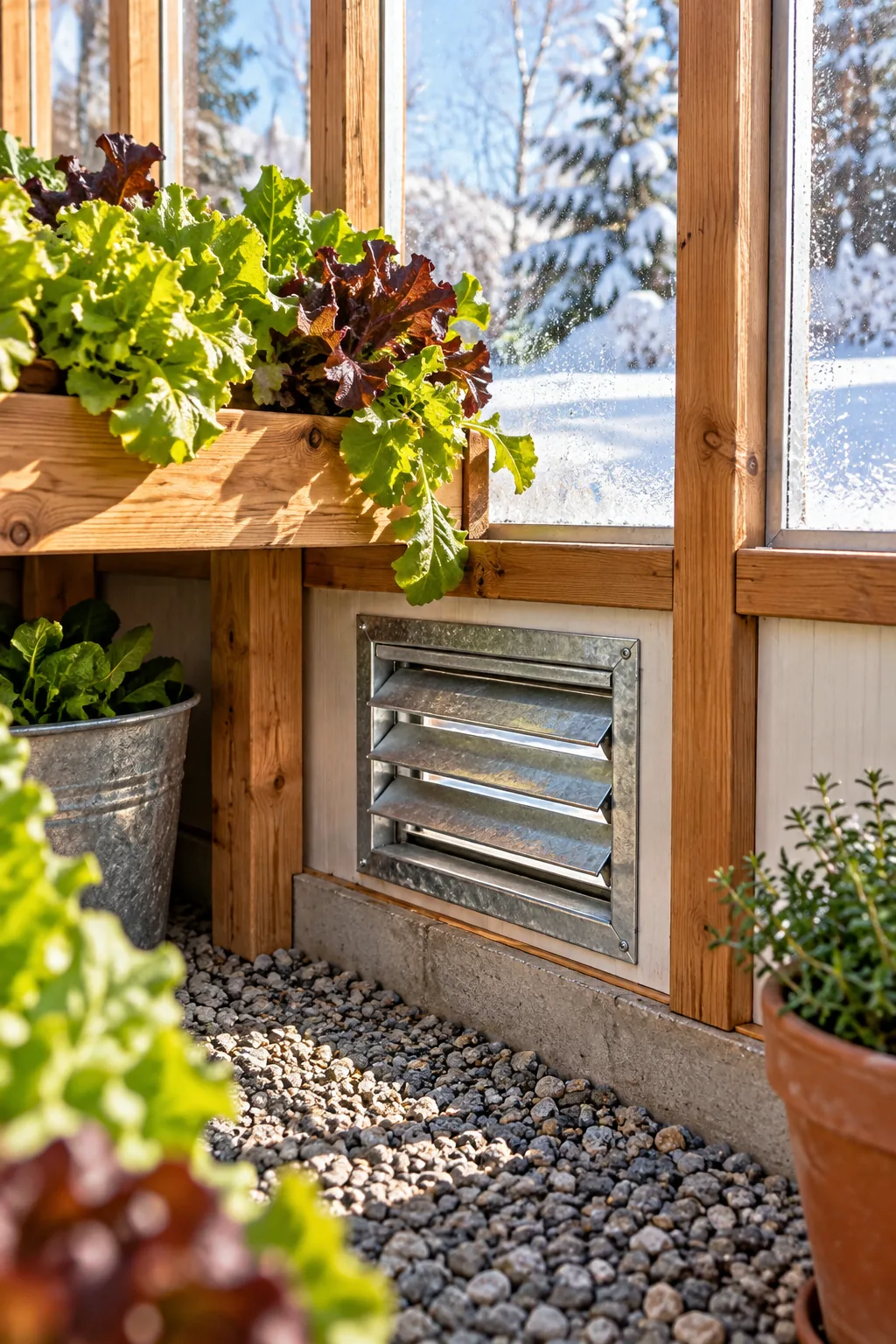
A high roof vent cannot exhaust hot air efficiently unless fresh oxygen has a clear, unobstructed path to replace it quickly from below. You must properly locate this lower intake on your side wall to guarantee continuous passive circulation throughout the tightly sealed winter structure.
Managing Condensation in Freezing Weather
Damp potting soil and actively transpiring plants generate incredibly high humidity levels inside a tightly sealed winter structure during the coldest months. Without adequate passive airflow, this trapped moisture quickly forms heavy, freezing condensation directly on the overhead interior glass panels.
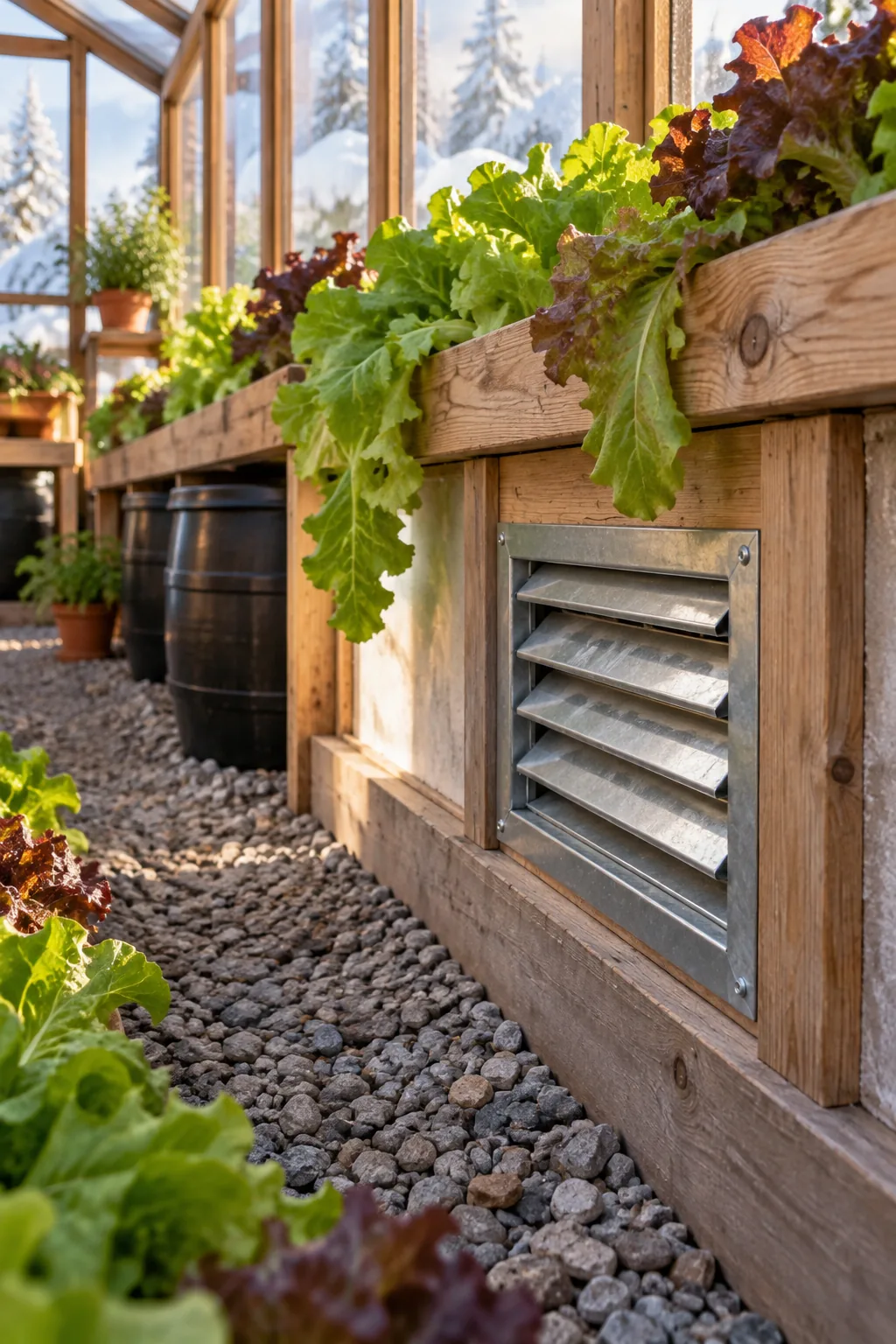
- Space your mature lettuce heads at least six inches apart to encourage natural airflow around the damp basal leaves. This generous spacing prevents stagnant, humid microclimates from forming directly at the soil level where devastating fungal diseases typically originate.
- Water your interior beds only on bright, sunny mornings so the surface soil can thoroughly dry out before the temperature drops. Evening watering drastically spikes the overnight humidity, guaranteeing heavy condensation will form on your freezing roof panels.
- Wipe down the underside of the roof glazing weekly with a squeegee to physically remove accumulated moisture droplets. Channeling this excess water away from the beds keeps the localized humidity manageable during extended stretches of overcast winter weather.
Managing this internal dampness prevents heavy ice water from dripping directly onto your tender salad greens during the freezing overnight hours. Maintaining proper plant spacing and strict morning watering schedules ensures your passive ventilation system can easily handle the daily ambient moisture load.
Harvesting Salad Greens in the Snow
Cold-hardy crops like winter lettuces, robust spinach, and curly kale actually thrive in this carefully balanced, passive solar greenhouse environment. These resilient plant varieties naturally concentrate their internal sugars when temperatures dip, resulting in incredibly sweet, crisp foliage throughout the snowy season.
- Wait until the warmest part of the early afternoon before opening the greenhouse doors to begin your daily winter harvest. This timing allows the interior air to reach its maximum temperature, ensuring the plant tissues are fully relaxed and pliable.
- Inspect the outer leaves carefully to ensure they are completely thawed and free of any lingering overnight ice crystals. Cutting into semi-frozen foliage severely damages the cellular structure, causing the greens to turn instantly to mush inside your kitchen.
- Snip only the outermost mature leaves with sharp garden shears, leaving the central crown completely intact for continuous future growth. This cut-and-come-again technique preserves the plant’s vital energy core, allowing it to push out fresh new growth for next week’s harvest.
Gathering your greens during this peak afternoon warmth ensures the delicate leaves remain perfectly crisp, structurally sound, and delicious. This selective harvesting method allows your protected plants to continuously produce fresh salad bowls straight through the darkest, coldest snowy months of the year.
Winter Greenhouse Styling Ideas
Explore four distinct ways to finish your passive solar greenhouse for both function and beauty.
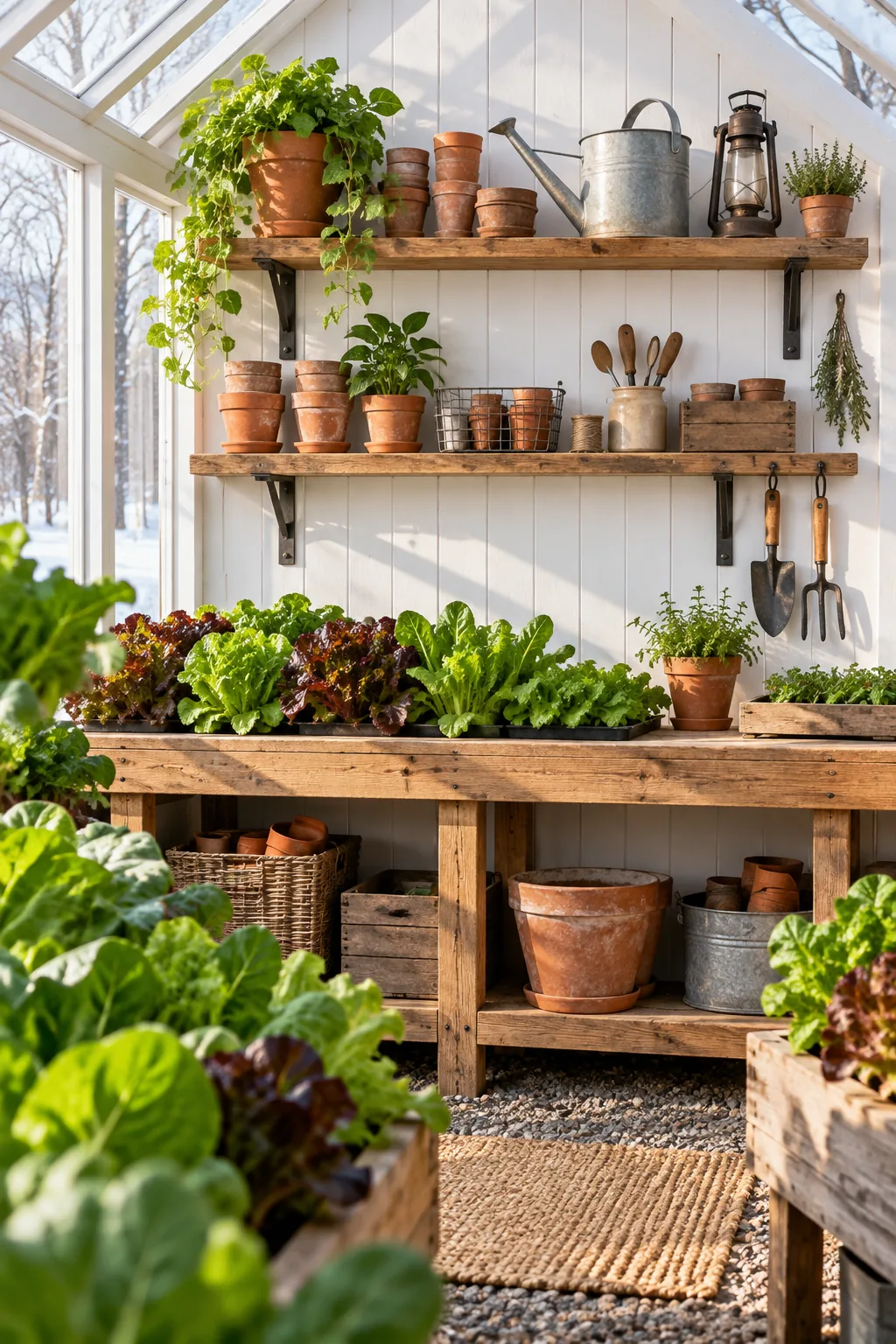
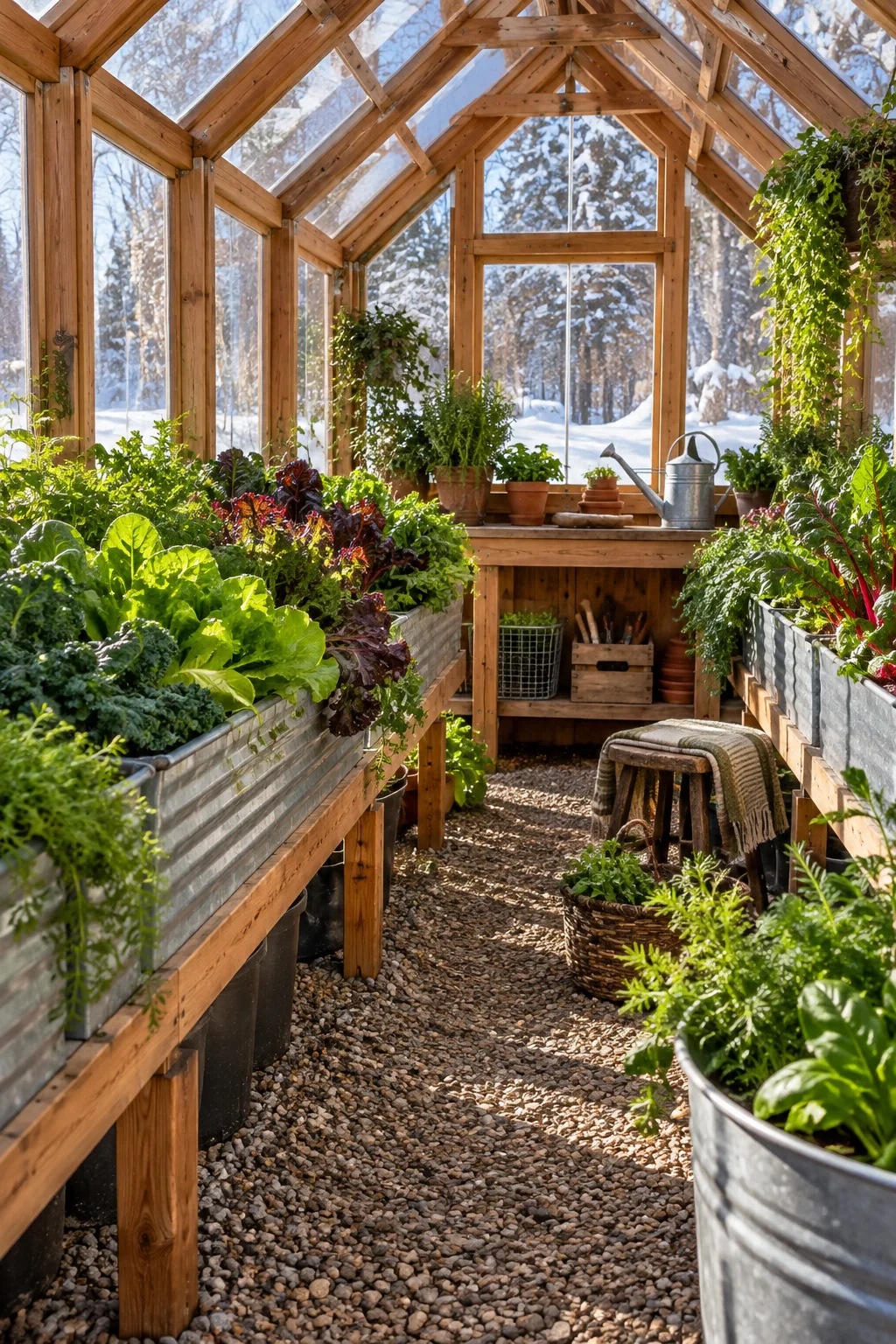
Rustic Cedar and Galvanized Steel: Raw cedar framing and galvanized metal accents create a rugged, natural environment that blends seamlessly into a woodland garden.
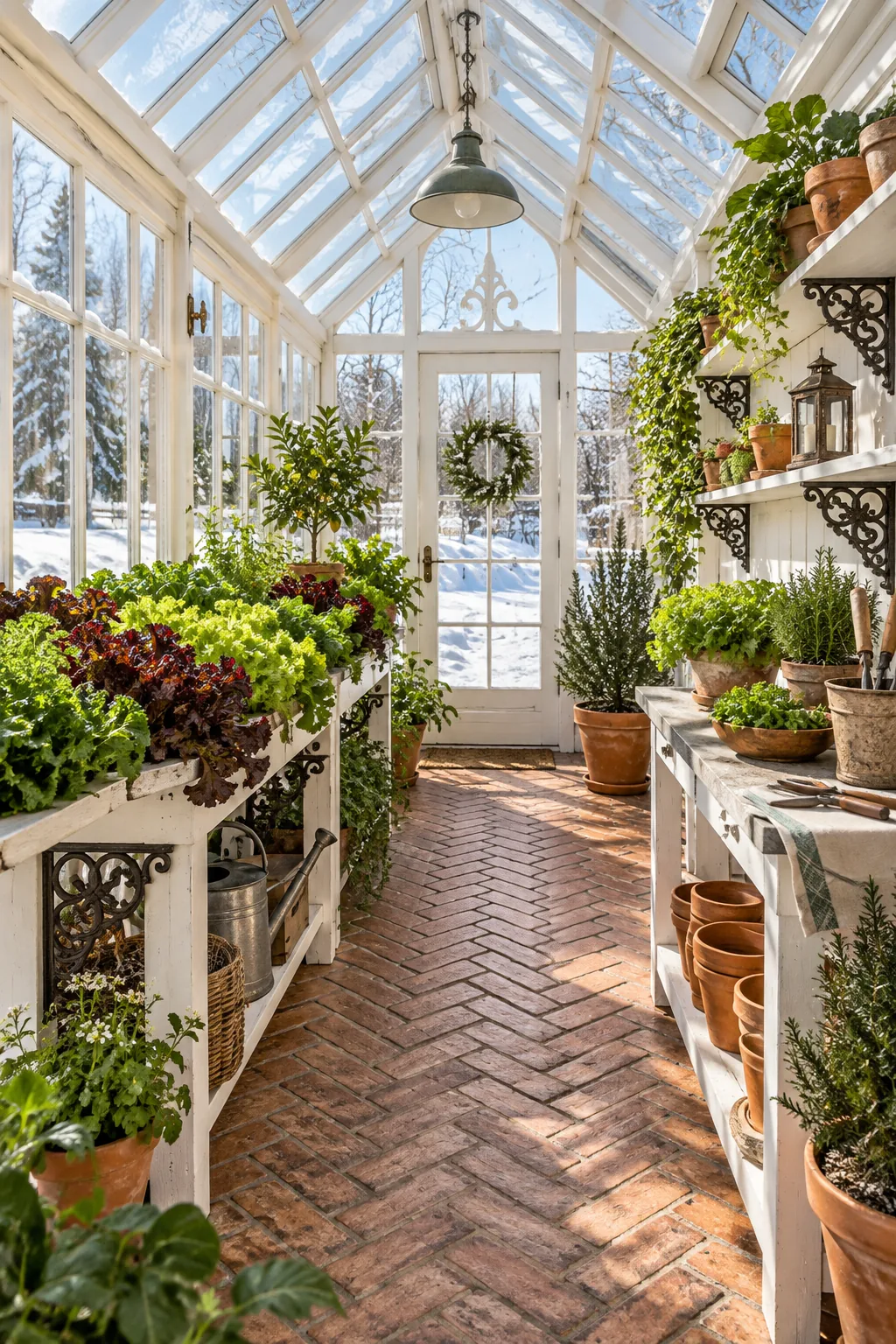
Classic Victorian White Wood: Crisp white paint and a herringbone brick floor elevate the passive solar structure into an elegant architectural focal point.
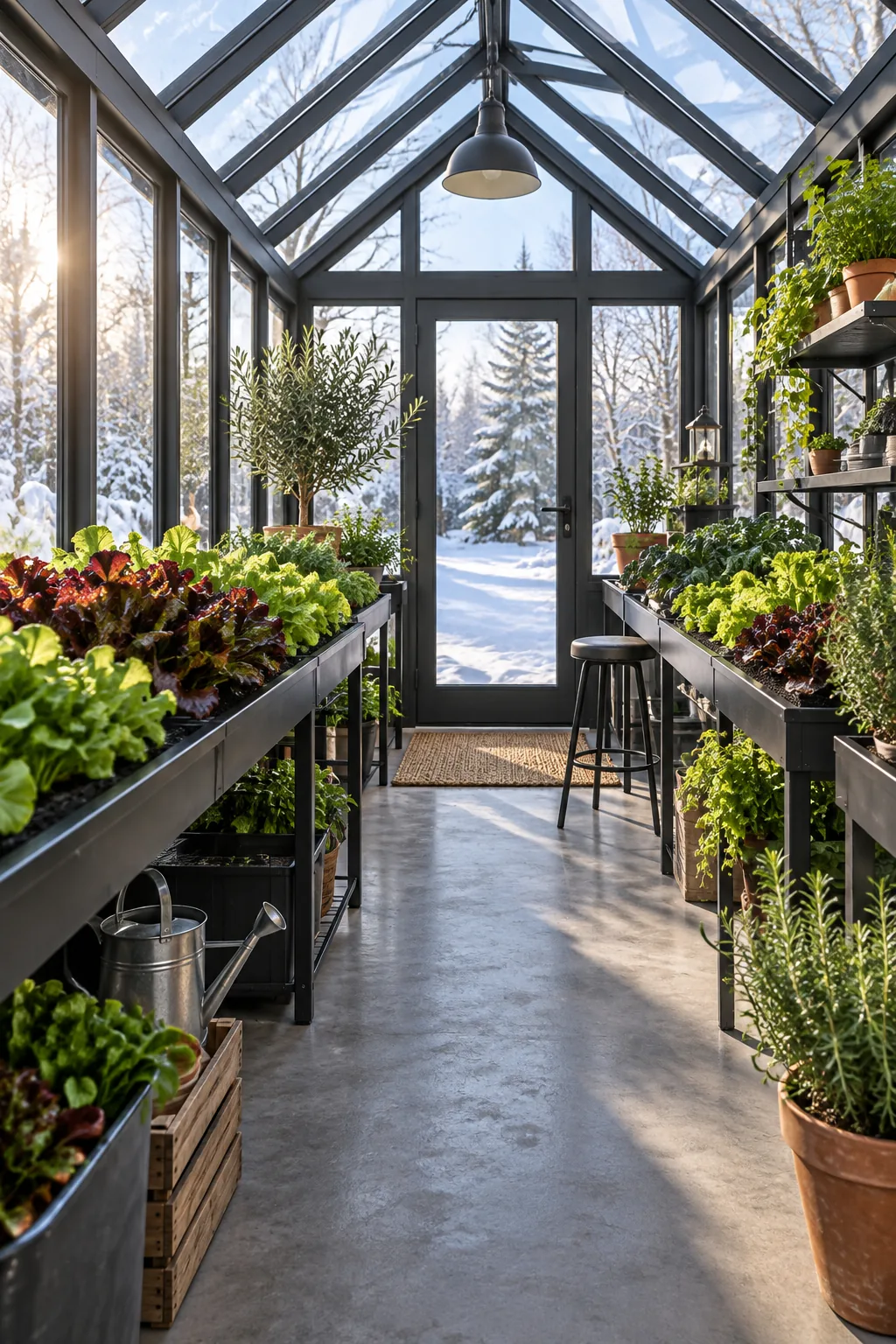
Modern Charcoal and Concrete: Dark grey framing absorbs additional heat while smooth concrete floors provide a clean, minimalist foundation for winter growing.
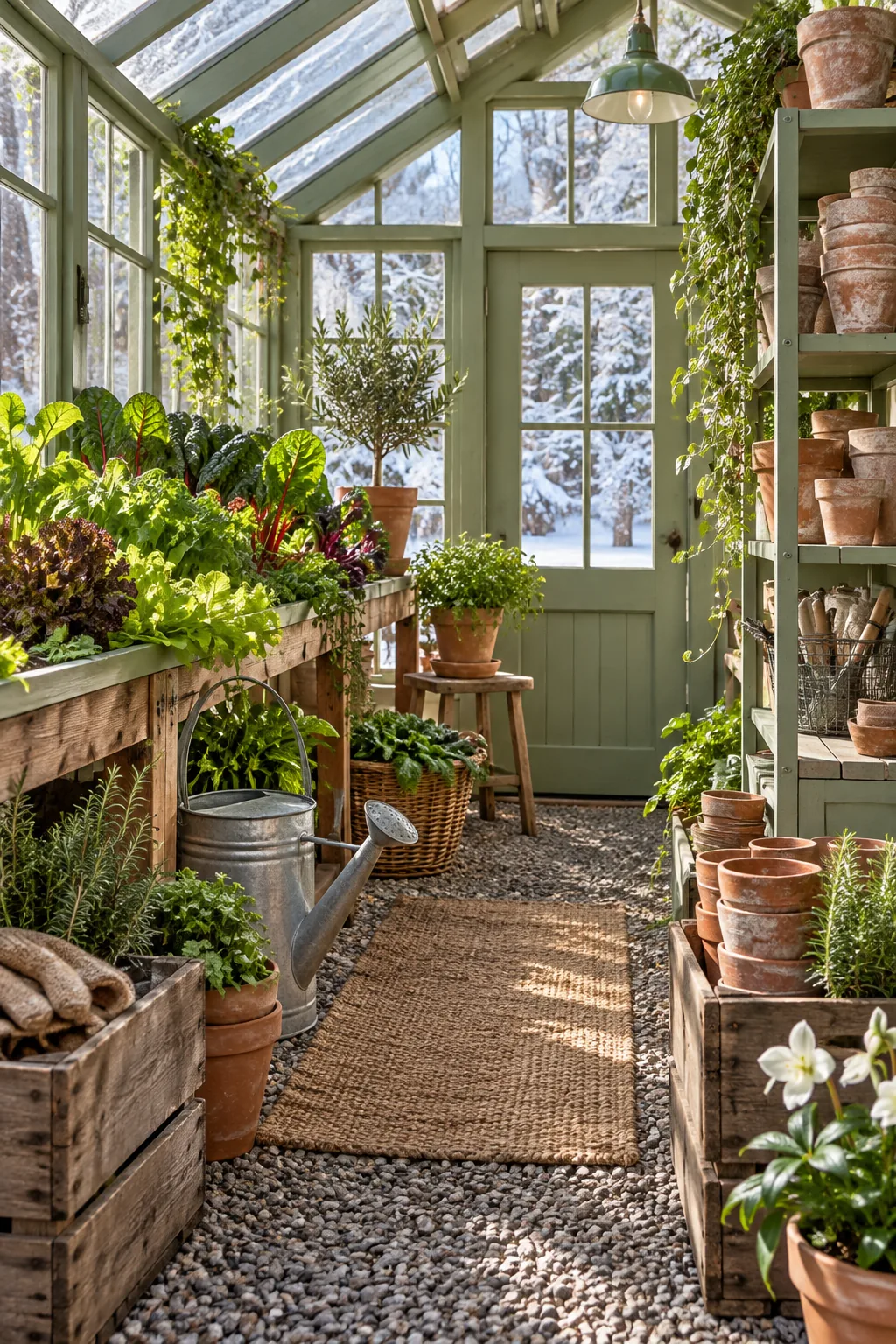
Cottage Garden Sage Green: Soft green paint and an abundance of weathered terracotta pots give the functional space a cozy, lived-in charm.
Your Winter Greenhouse Sizing Sheet
You can now confidently finalize your passive winter growing environment using our printable two-page layout sheet to guarantee your long-term harvesting success. This definitive guide provides the complete structural orientation checklist alongside the exact sizing chart for your roof-vent area and required low-louvre dimensions.
Having the precise mathematical breakdown of required water barrels based on your specific floor size removes all the frustrating guesswork from winter gardening. Grab the layout sheet today to confidently build a perfectly balanced thermal system that delivers fresh, vibrant salad bowls all season long.