
This Swan Vase Became a Sunroom Plant Nook
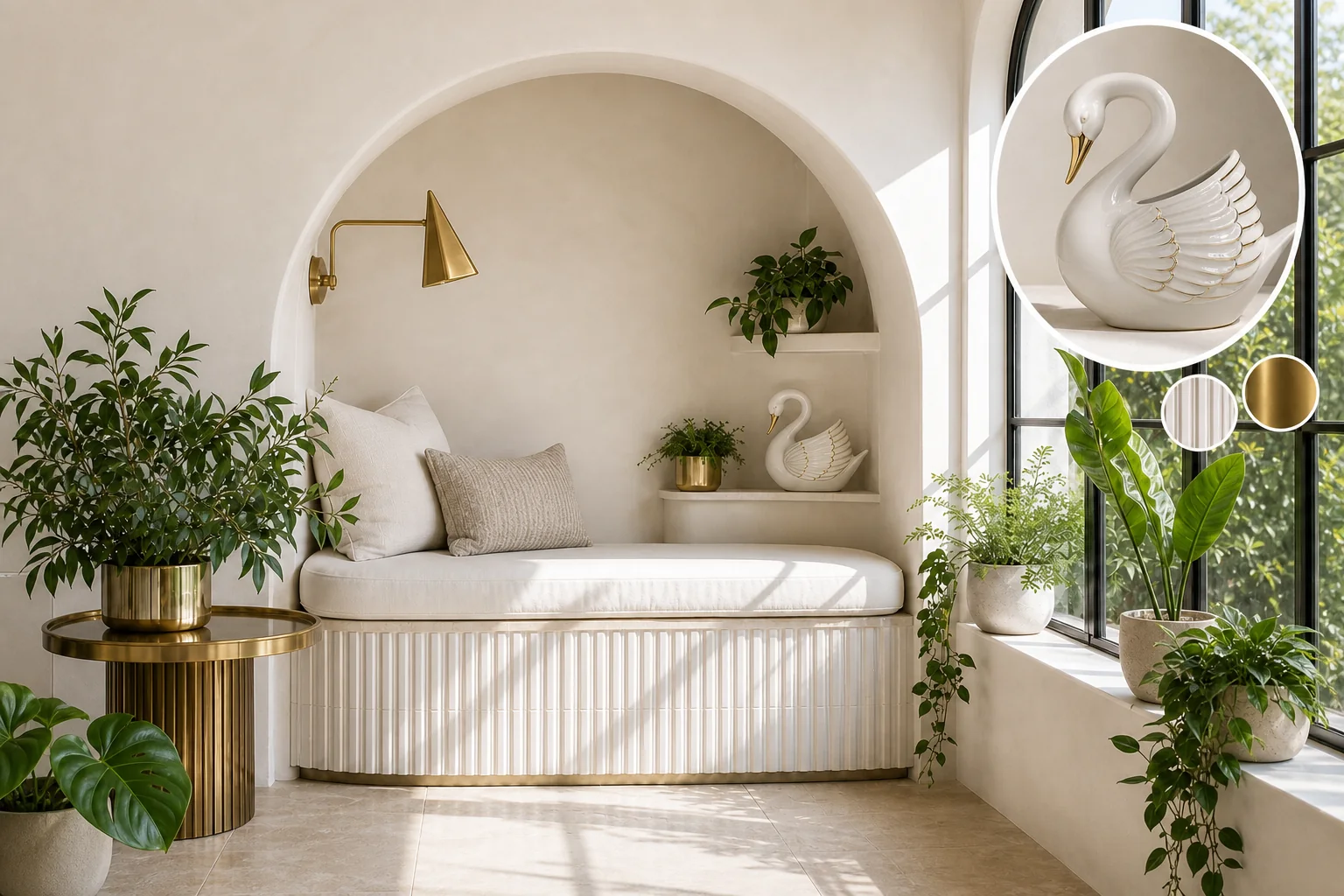
Discover how to translate a midcentury ceramic swan vase into a serene sunroom plant nook. By mapping sweeping curves and stark gold-on-white contrast, this space becomes a sculptural retreat where smooth, continuous forms are punctuated by deliberate, singular moments of sharp metallic contrast.
Shaping the Architectural Shell
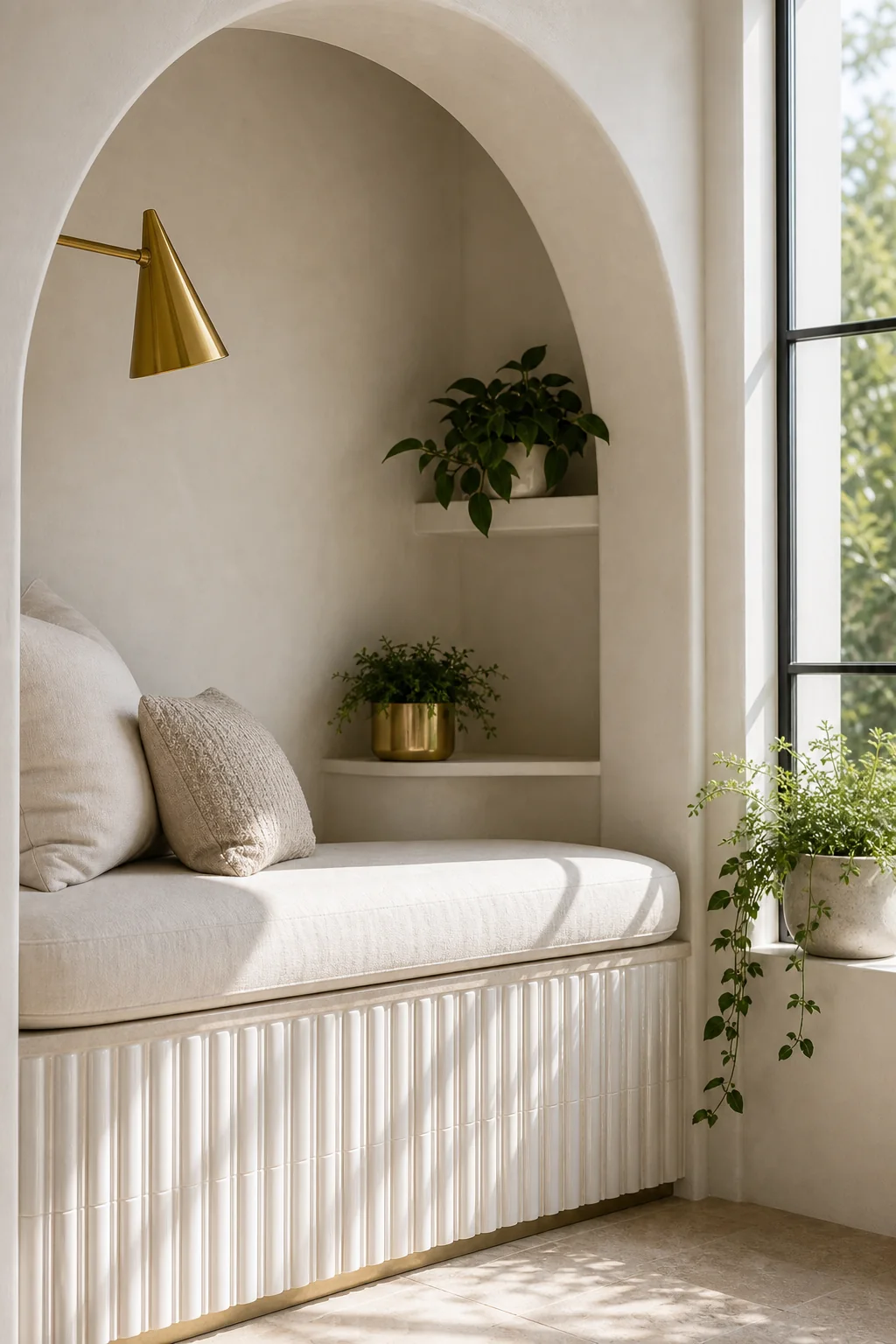
The room’s architecture adopts the vase’s defining silhouette, creating an enveloping shell that feels both sculptural and protective. A curved plaster alcove mimics the elegant, continuous arc of the swan’s neck, establishing the foundation for a serene botanical corner built for quiet reading and plant care. Frame the alcove with flexible plywood before applying plaster to ensure the curve seamlessly integrates with the built-in window seat. This approach honors the balancing rule to keep the architectural shell entirely soft and curved, restricting sharp angles strictly to metallic fixtures. The resulting space feels incredibly fluid and deliberately formed.
Use a flexible drywall corner bead when framing your alcove to achieve a perfectly smooth, continuous arc. This prevents harsh architectural breaks and maintains the soft, sculptural feel.
Framing the curved window seat
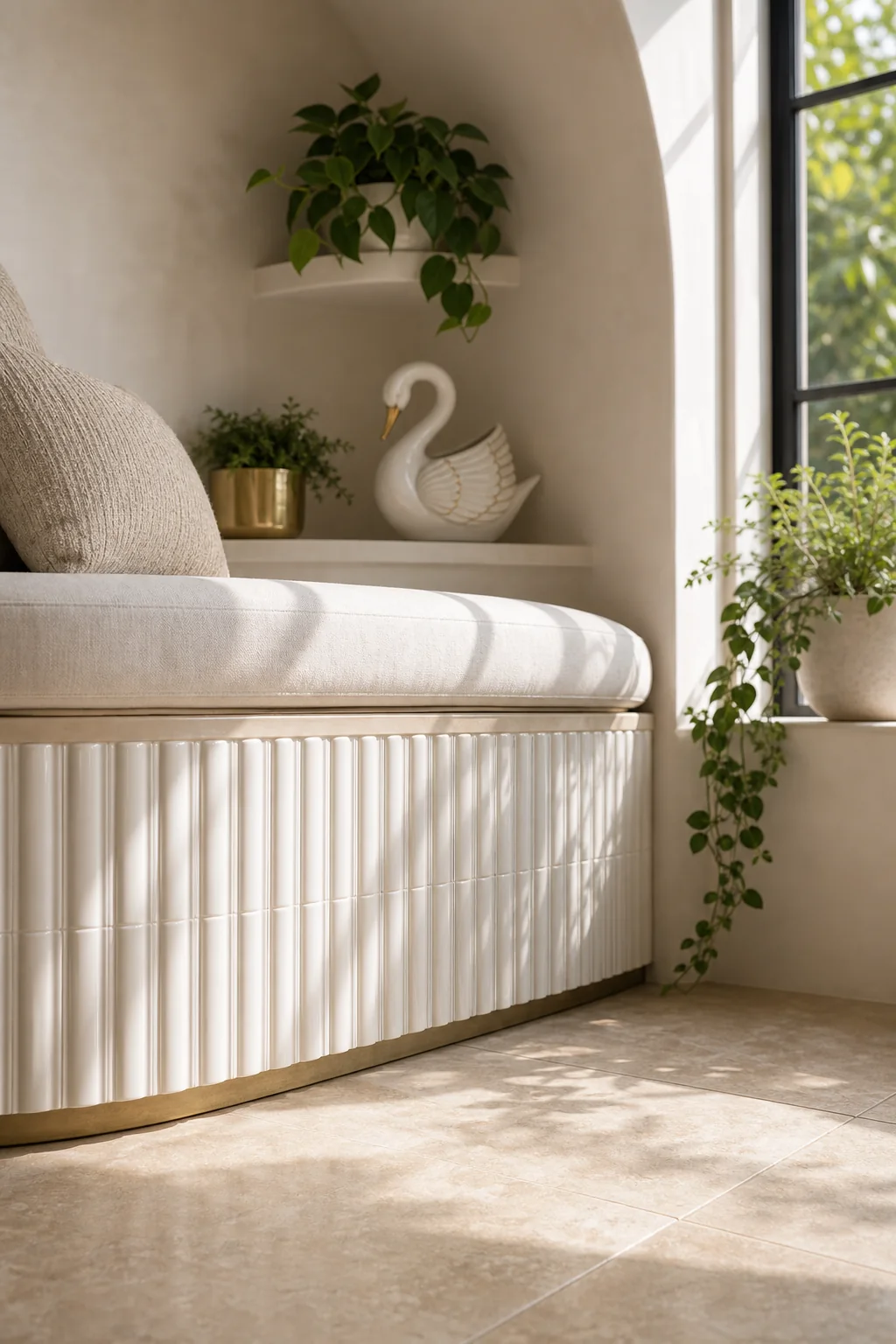
The built-in bench flows naturally from the swan’s neck curve, requiring careful construction to maintain the room’s sculptural tranquility. A sturdy wooden frame must sit flush with the alcove edges, providing a solid base for both reading and watering plants. Smooth matte plaster finishes the sweeping walls, translating the unglazed ceramic feel into an enveloping architectural shell. Electrical boxes are positioned early for angular brass reading sconces, ensuring the wiring is hidden behind the seamless curves. This careful sequencing guarantees the nook remains a peaceful, uninterrupted sanctuary for your favorite indoor foliage.
- Frame the alcove curve using flexible plywood
- Build the window seat base beneath the arch
- Apply plaster to the curved alcove walls
- Install task lighting wiring before final plaster
Establishing the Glaze and Gold Palette
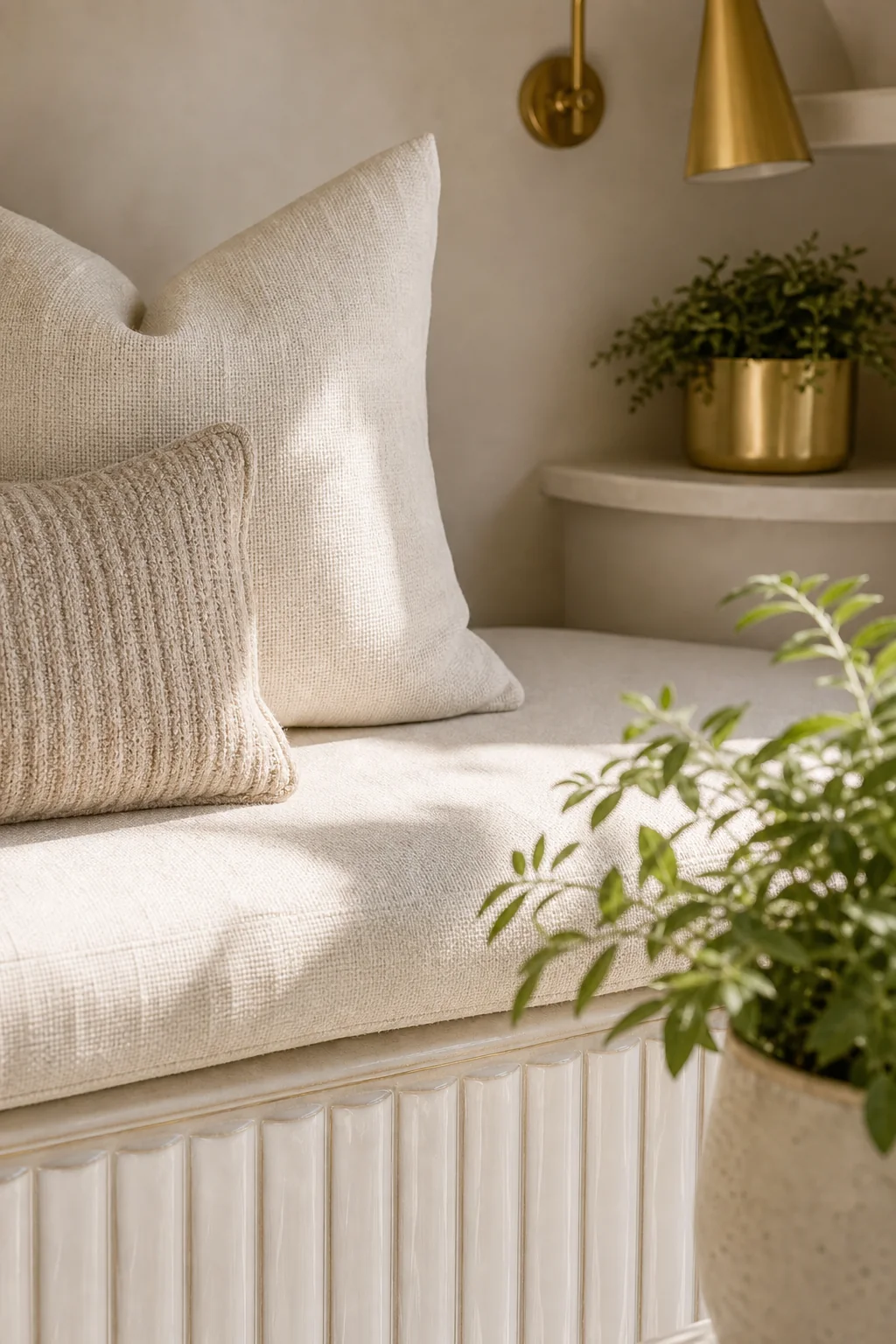
Stripping away complex patterns allows the pure contrast of warm white and brilliant gold to define the space’s palette, echoing the stark contrast between the pure white ceramic body and the bright gilded beak. Layering different shades of warm white prevents the space from feeling sterile or hospital-like, while unlacquered brass fixtures provide a sharp, gilded counterpoint that will develop a subtle patina over time. This monochromatic base allows the vibrant green of the plants to pop dramatically. The visual-DNA mapping table below illustrates how these stark contrasts translate directly from object to room.
| Source trait | Visible evidence | Room move |
|---|---|---|
| Sweeping Neck Curve | The elegant, continuous arc of the swan’s neck. | A curved plaster alcove mimics the swan’s neck. |
| Glaze and Gold | The stark contrast between the pure white ceramic body and the bright gilded beak. | Warm-white walls contrast sharply with beak-inspired brass accents. |
| Wing Relief | The stepped, scalloped texture of the molded ceramic wings. | Fluted ceramic tiles echo the scalloped ceramic wing relief. |
| Angled Beak | The sharp, triangular gilded beak that breaks the otherwise entirely curved silhouette. | An angular brass sconce mimics the sharp gilded beak. |
Translating the Wing Relief
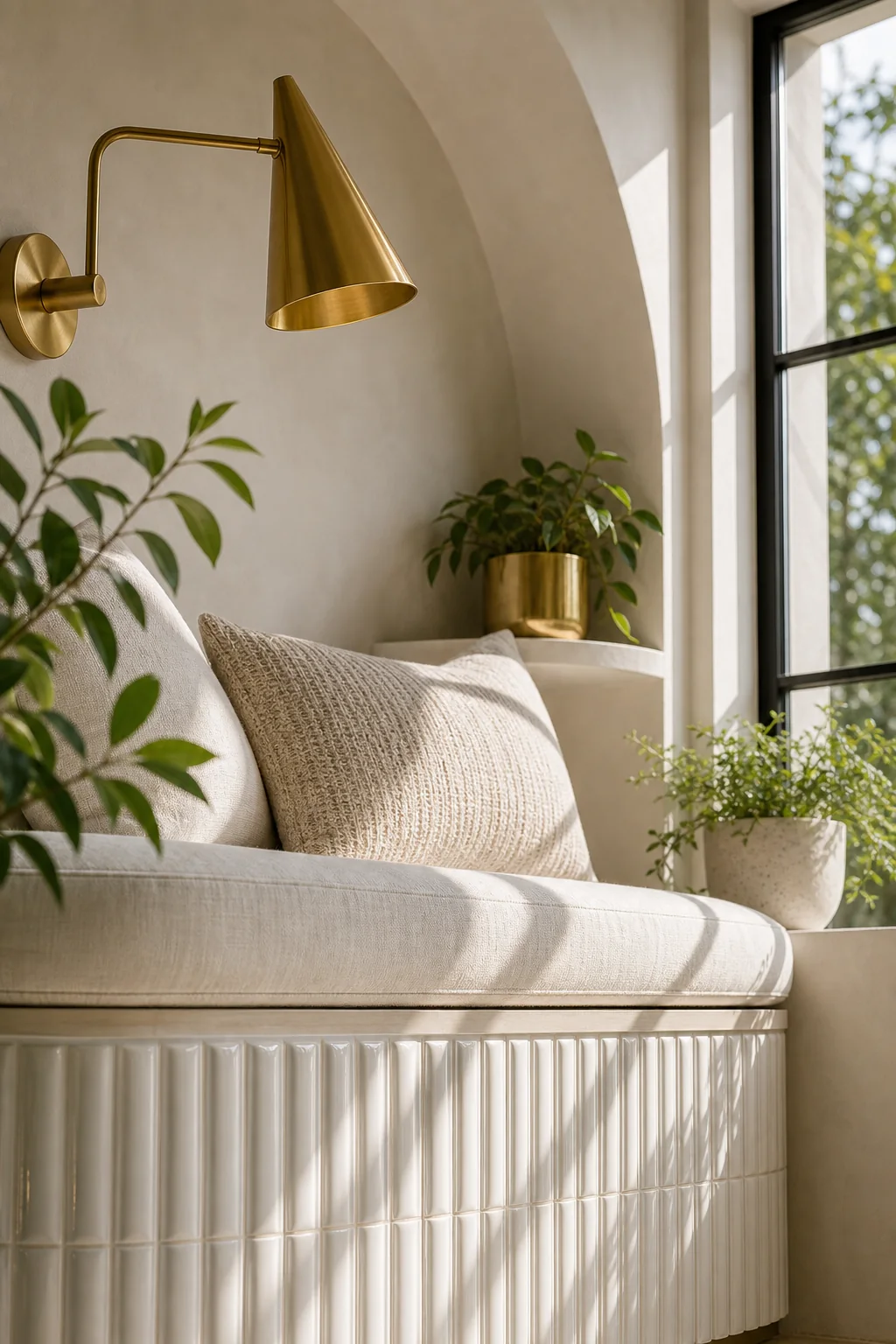
Tactile surfaces introduce the subtle rhythm of the vase’s molded wings without resorting to literal feather motifs or bird prints. Applying glossy white fluted tiles to the base of the window seat echoes the scalloped ceramic wing relief, maximizing shadow play and providing a water-resistant surface for plant care. Pairing this hard, reflective tile with matte heavyweight linen upholstery creates necessary textural depth, ensuring the botanical corner remains a comfortable, inviting retreat. This interplay of high-gloss and matte finishes directly mimics the surface logic of the original midcentury ceramic piece.
Punctuation Through Sharp Angles
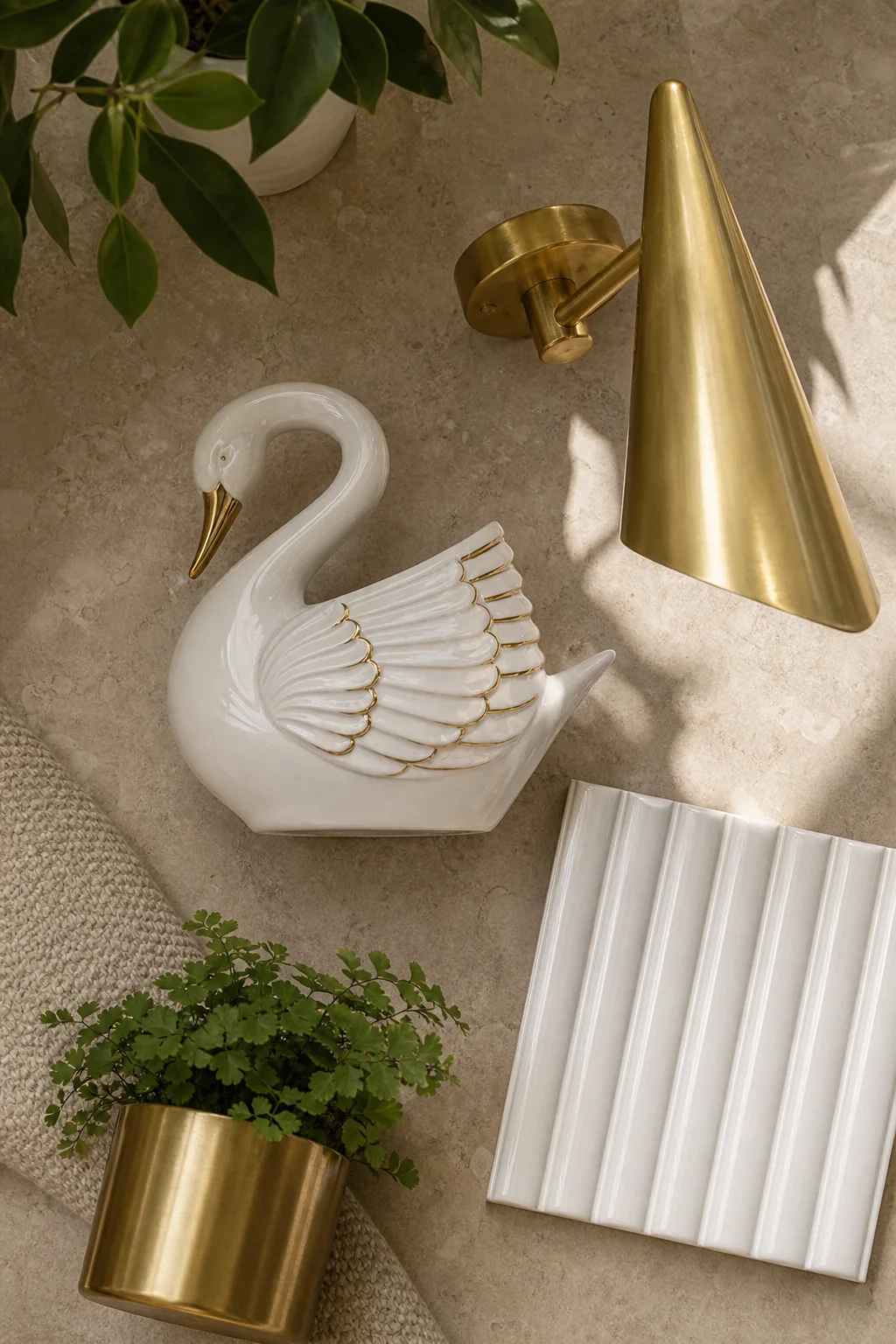
A single sharp geometric intervention provides the necessary visual tension to balance the room’s overwhelming softness. Mounting an angular brass sconce directly within the plaster curve mimics the sharp gilded beak that breaks the swan’s otherwise entirely curved silhouette. Restricting sharp geometric accents strictly to metallic fixtures ensures the architectural shell remains a serene, light-filled botanical corner. Selecting a fixture with a distinct triangular profile rather than a curved dome reinforces this crucial counterpoint. This singular moment of contrast prevents the sweeping arcs and layered scallops from feeling overly sweet or ungrounded.
Position your sharpest metallic accent at eye level while seated. This ensures the geometric contrast is immediately felt without overwhelming the room’s peaceful atmosphere.
Grounding plants with metallic accents
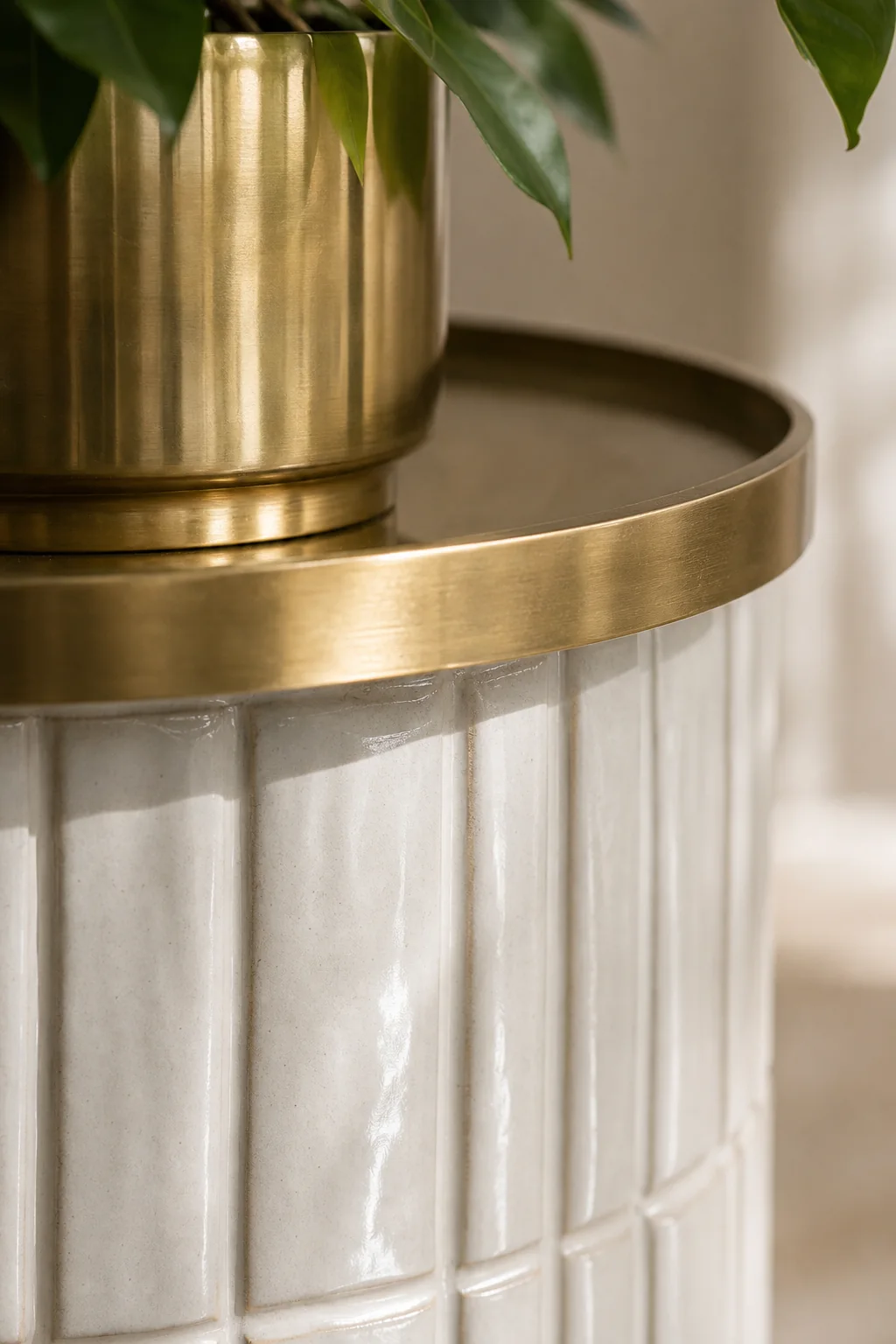
Brass plant pots echo the beak against white wing tiles, anchoring the greenery within the nook. A subtle approach focuses entirely on the warm-white palette and smooth plaster curves, limiting brass to tiny details like cabinet knobs or plant pot saucers. A balanced execution pairs the sweeping plaster alcove with a fluted tile bench base and a single prominent angular brass sconce to anchor the reading nook. For a bold statement, extend the fluted glossy tiles up the entire back wall and introduce oversized polished brass planters to amplify the striking metallic contrast.