
1950s Media Room Riddle: Spot the Time-Traveling Object
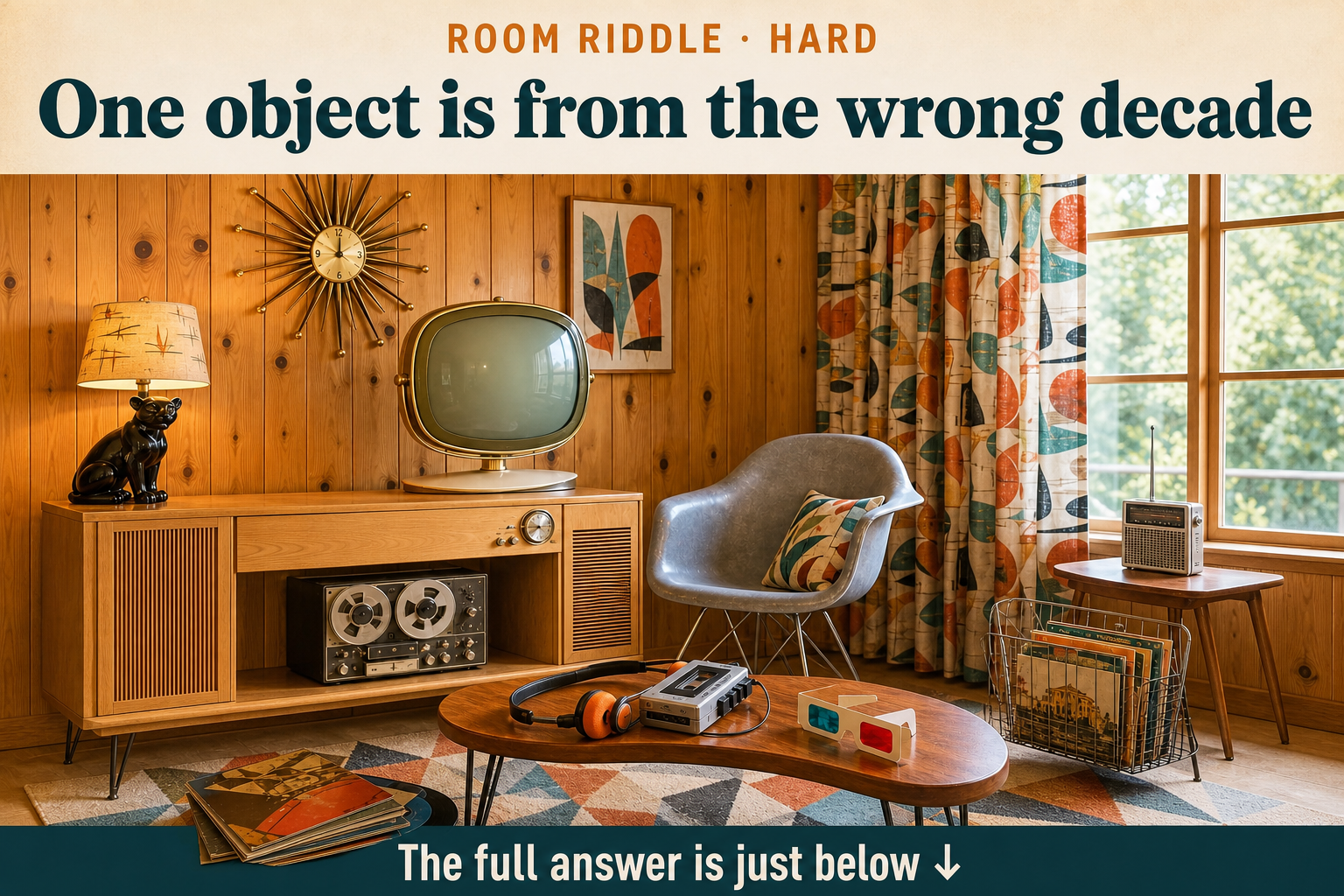
Explore the design idea behind this room and see how its key details work together. Then follow the visual riddle to discover the answer in the full reveal.
Embracing 1950s Knotty Pine Paneling
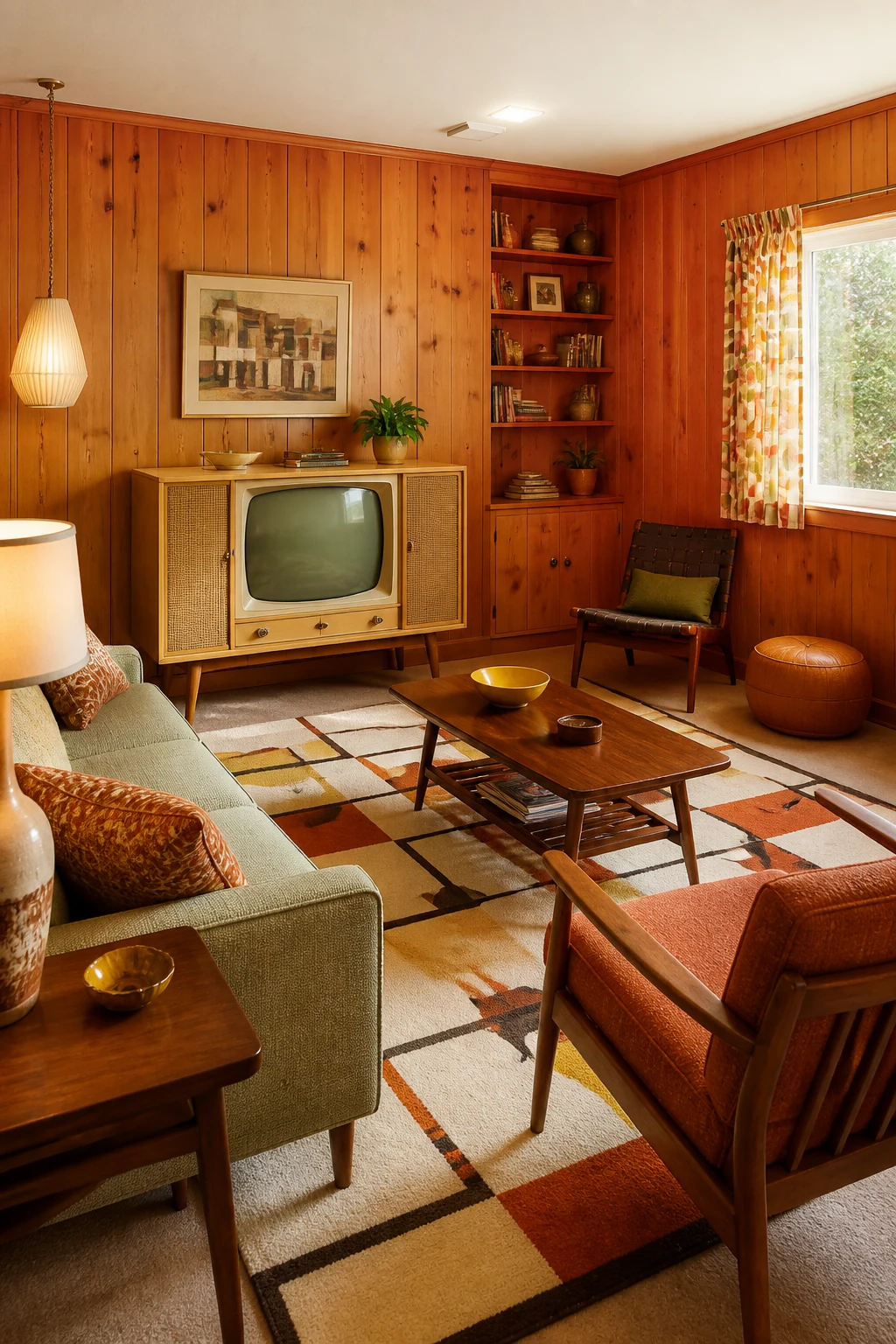
Living in the 1950s meant embracing natural, textured wood finishes that made media rooms feel like comforting retreats rather than formal parlors. The widespread use of knotty pine wood paneling created warm, informal gathering spaces where families could relax around the television, surrounded by the familiar scent of polished timber. These inviting walls provided the perfect rustic backdrop for the era’s sleek new entertainment technology. Understanding these authentic mid-century materials makes spotting the out-of-place item much more rewarding.
The 1980s Intruder Revealed
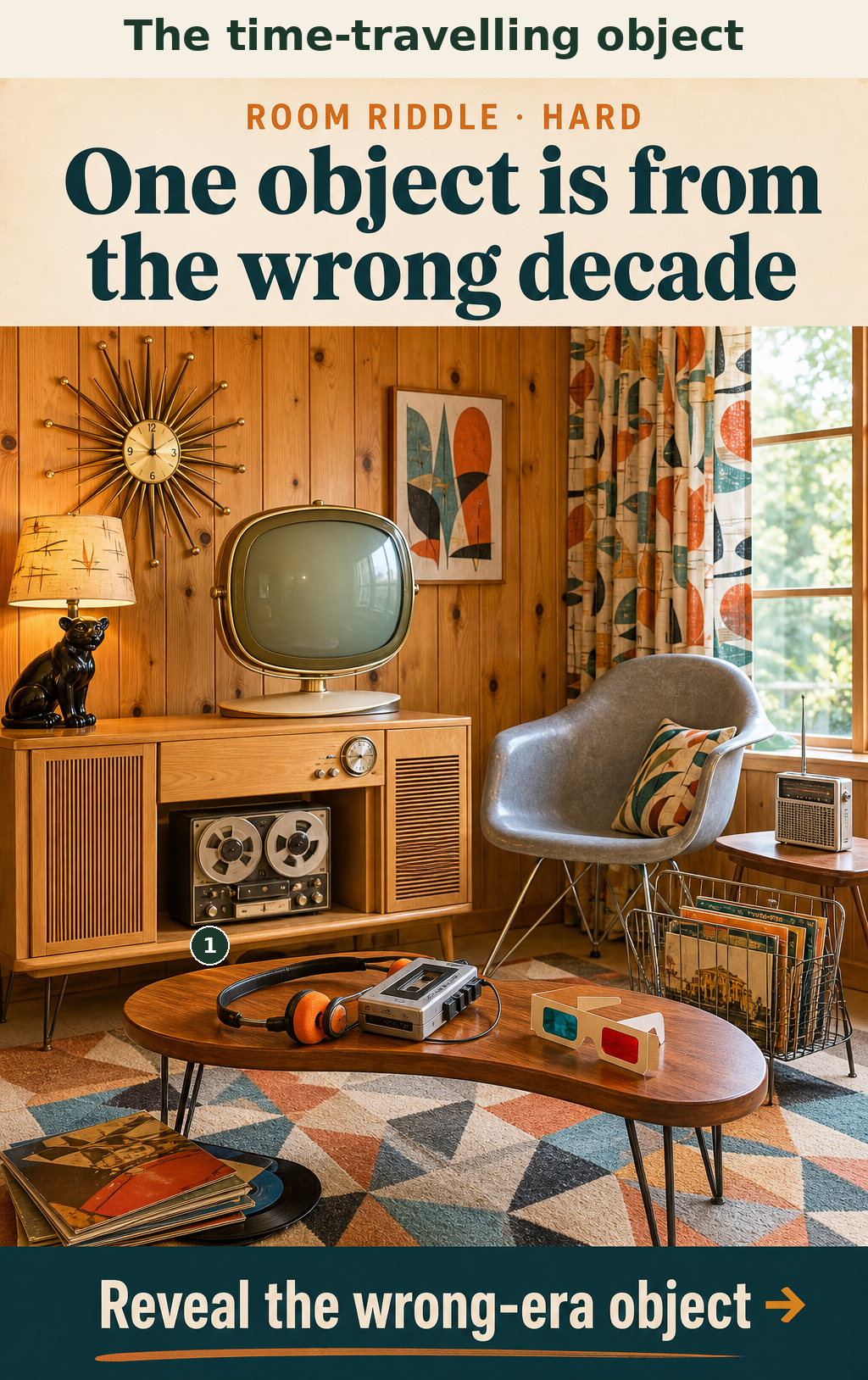
The portable cassette player with orange foam headphones resting on the boomerang coffee table is from the 1980s, while the rest of the media room is from the 1950s. Compact cassette technology and lightweight foam on-ear headphones simply did not exist during the atomic era, instantly giving away this personal audio device among the mid-century decor. Every other detail, from the detached television screen to the cardboard three-dimensional movie glasses, perfectly represents the authentic entertainment landscape of the 1950s.
Curating 1950s Atomic Era Silhouettes
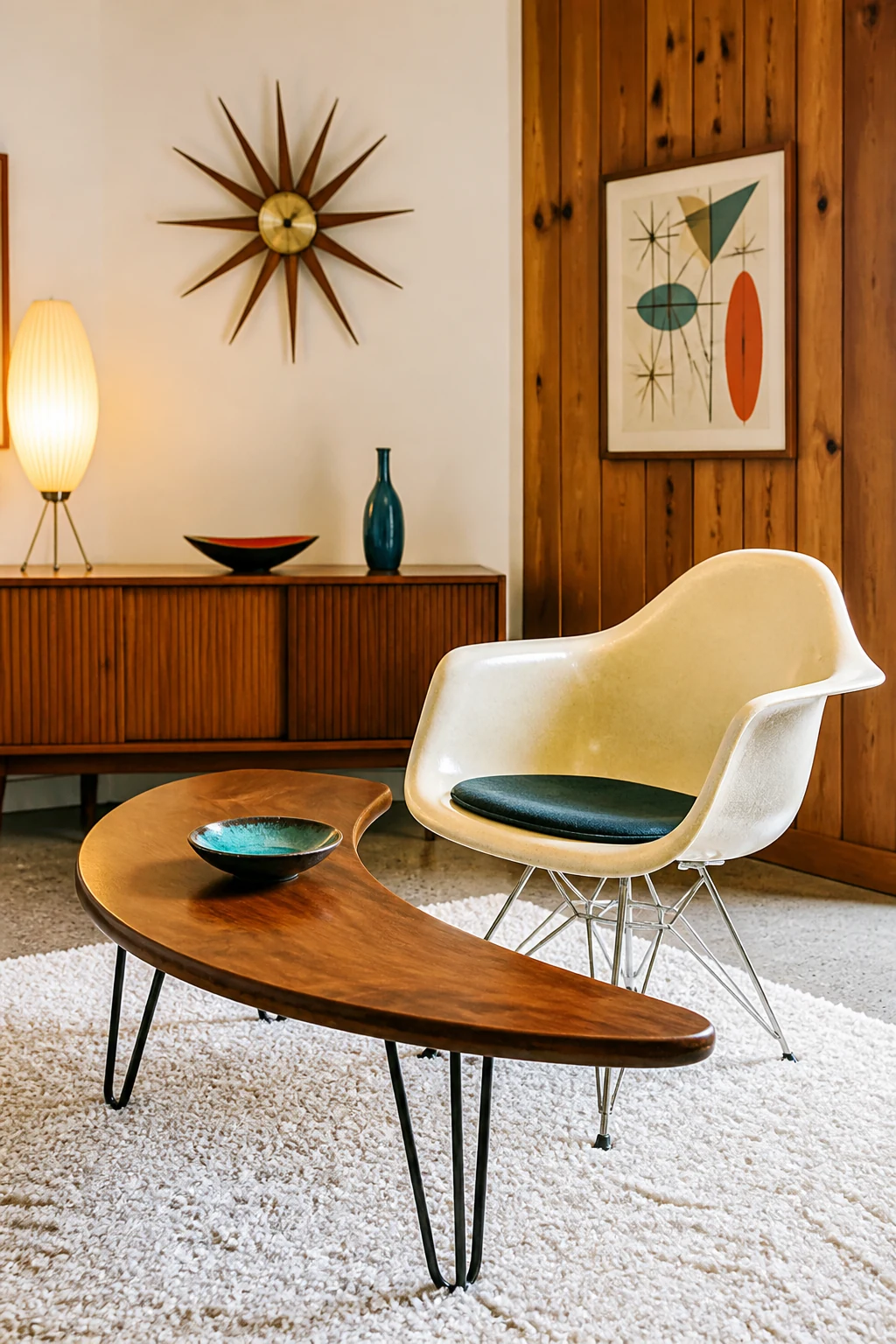
Incorporating 1950s design into daily life involved interacting with dynamic, sweeping lines like boomerang coffee tables and starburst clocks that symbolized forward-looking optimism. These distinct atomic and space-age shapes characterized 1950s furniture, contrasting sharply with the blocky, miniaturized consumer electronics that would eventually arrive in the 1980s. Families took immense pride in these sculptural pieces, which made the living room feel like a thrilling glimpse into a bright, streamlined future filled with endless possibilities.
Styling 1950s Geometric Textiles
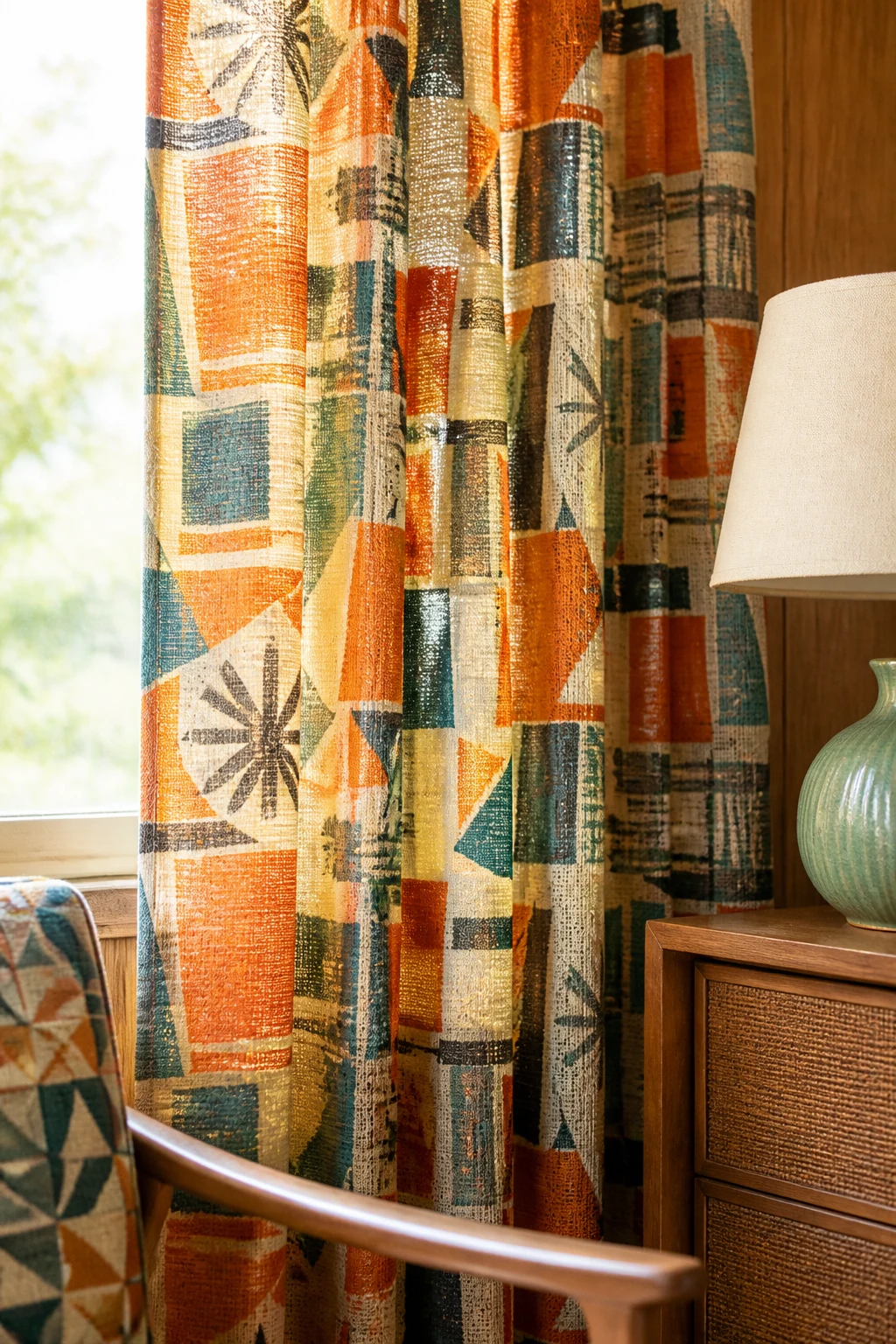
Families in the 1950s energized their wood-heavy rooms with vibrant barkcloth curtains and patterned rugs, using contrasting colors like teal and orange to brighten the space. The bold, colorful abstract patterns used in 1950s upholstery brought these living spaces to life, offering a cheerful visual backdrop to the crackle of a vinyl record or the warm hum of a tube television. Touching the heavy, durable texture of those geometric prints instantly recalls the vibrant, optimistic energy of mid-century home life.