
90s Gender Neutral Nursery Riddle: Spot the Time-Traveling Object
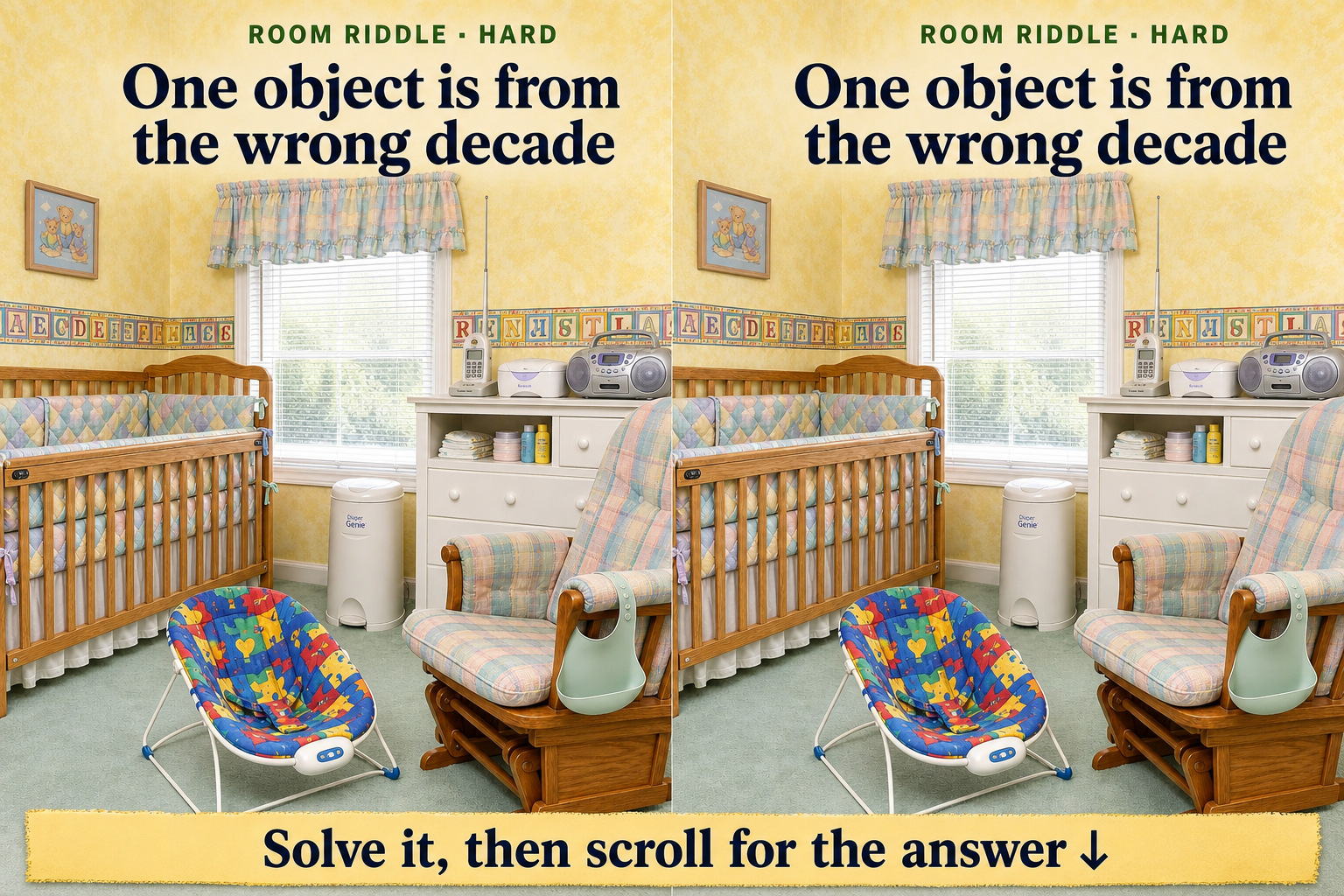
Step into a nostalgic 1990s nursery filled with comforting pastels and classic baby gear. Before we reveal the modern item hiding in this retro space, let’s explore what made these cozy rooms so beloved by parents.
The 1990s Pastel Color Palette
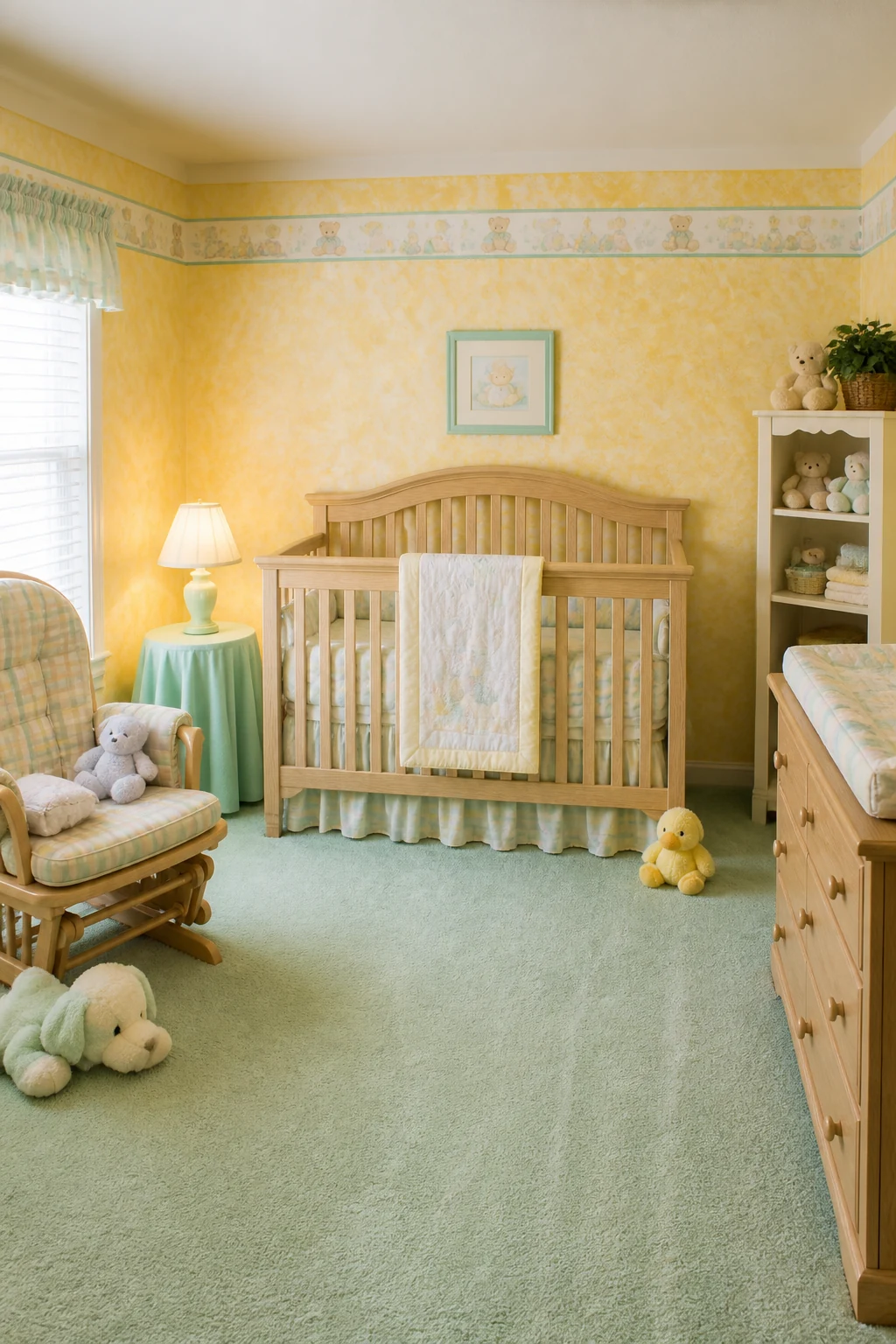
Living in a 1990s nursery meant embracing soothing, sponge-painted pastel walls that felt gentle and welcoming for any baby. The dominance of pale yellow and mint green created a soft, warm environment that defined the decade’s domestic aesthetic, completely distinct from the stark, minimalist neutrals popular today. These cheerful hues extended all the way down to the wall-to-wall carpeting. Understanding these comforting 1990s design choices makes spotting our out-of-place item much more rewarding.
The Time-Traveling Object Revealed
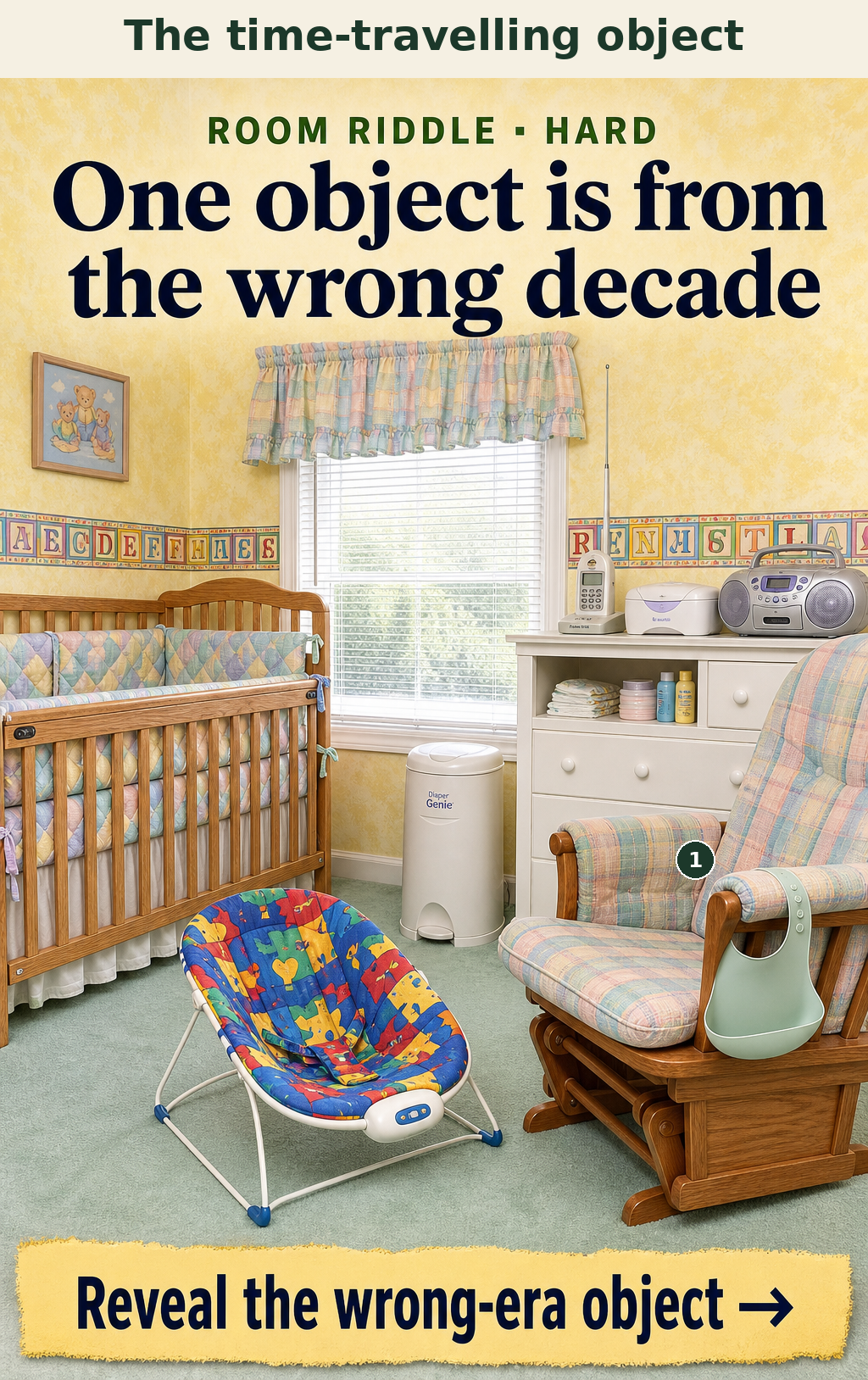
The molded silicone scoop bib hanging casually over the glider chair’s armrest is a modern 2020s essential, while the rest of the nursery features historically accurate 1990s decor. Its rigid, matte material, wipe-clean surface, and built-in crumb-catcher pocket simply did not exist yet, contrasting sharply with the traditional, easily stained cloth bibs of the era. Everything else, from the original Diaper Genie to the drop-side crib, perfectly belongs in the late twentieth century.
1990s Plaid Nursery Textiles
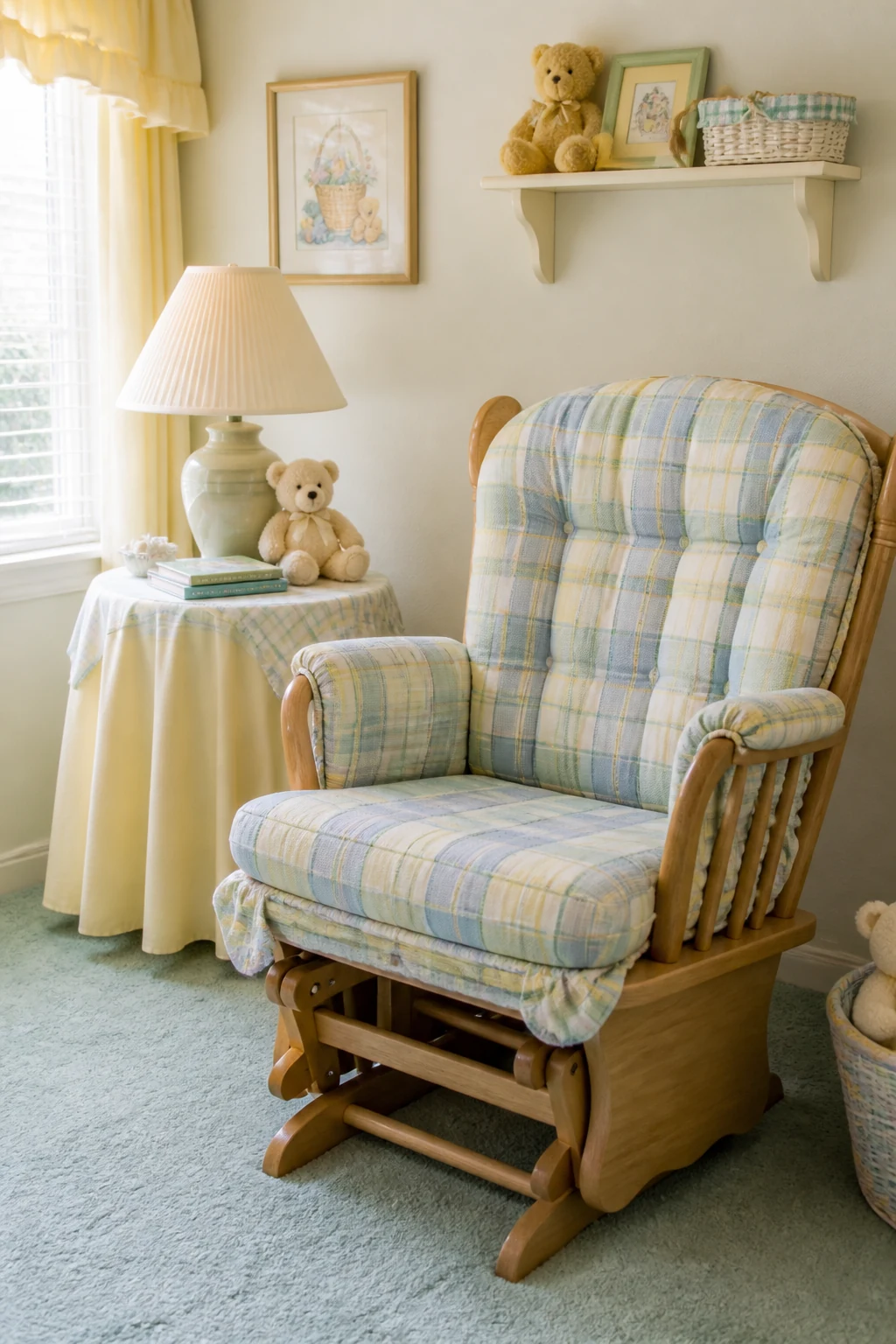
Parents in the 1990s spent hours rocking in heavily cushioned, pastel plaid wooden gliders that prioritized traditional comfort over modern sleekness. These cozy corners were defined by thick, quilted fabrics that felt incredibly plush and inviting during late-night feedings, anchoring the room in a sense of tactile warmth. The matching crib bumpers and ruffled window valances completed this highly coordinated, fabric-heavy interior trend.
Bulky 1990s Baby Technology
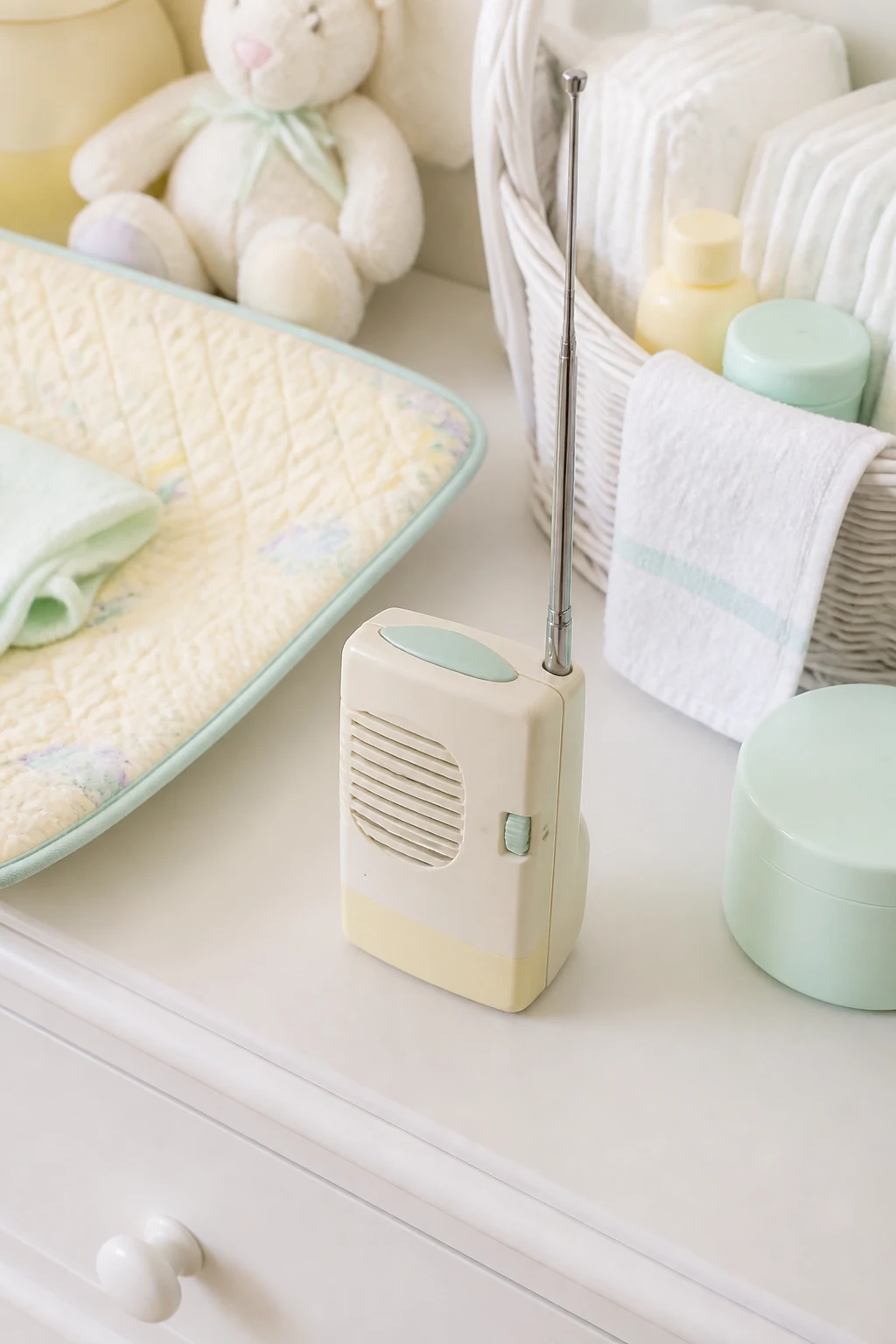
Managing a 1990s nursery meant interacting with chunky plastic baby monitors and long metal antennas that proudly took up valuable dresser space. Unlike today’s invisible, Wi-Fi-enabled smart cameras, these analog audio devices were tangible, physical objects that crackled with static as you walked down the hall. Parents relied on glowing red sound-level lights and rounded silver CD boomboxes to soothe their infants, fully embracing the era’s distinctive, bubble-like consumer electronics design language.