
Kitchenette Spot the Difference: Find All 7 Changes
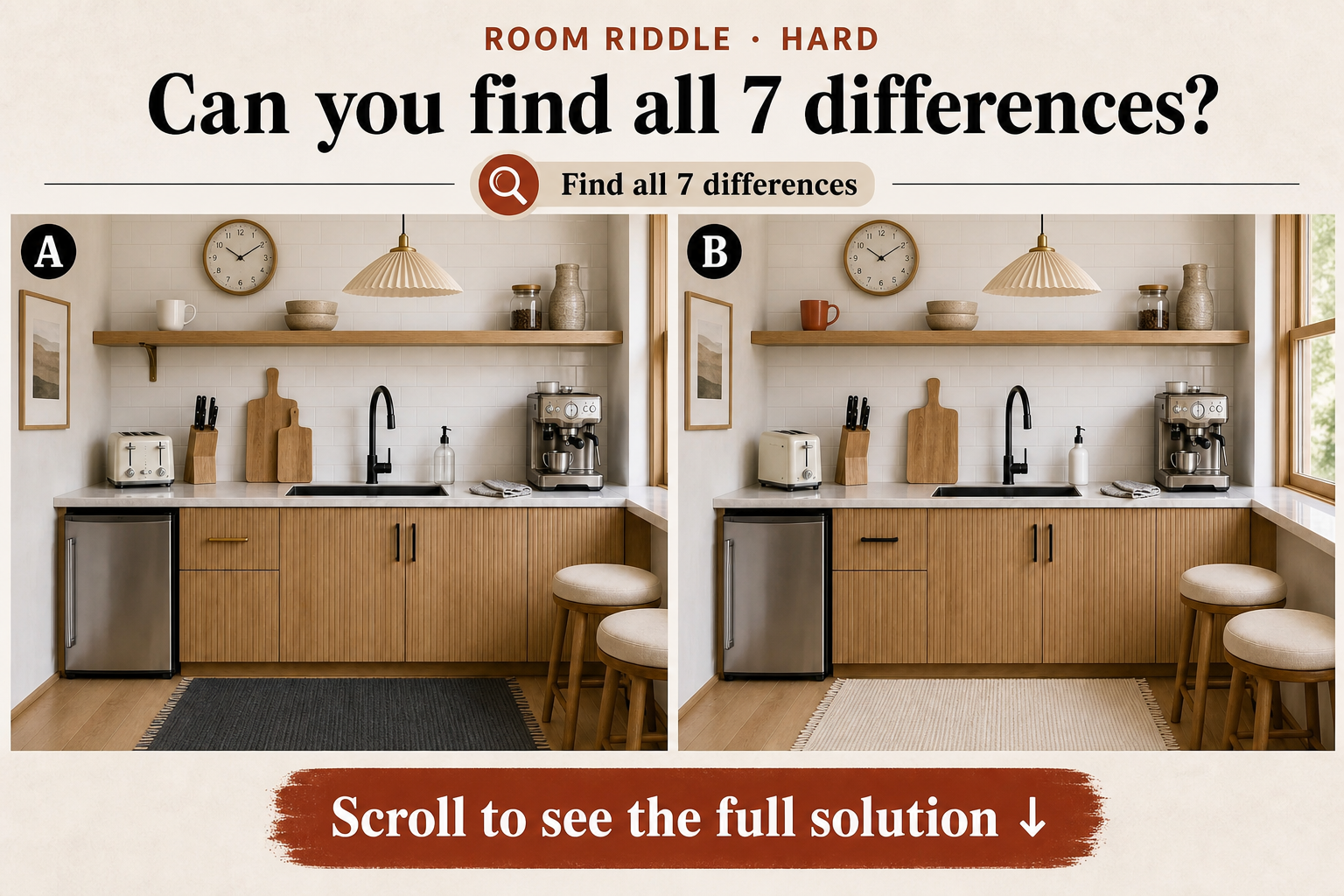
A well-designed kitchenette proves that limited square footage never has to mean sacrificing style or daily functionality. Explore these compact modern Japandi ideas before checking your answers to our seven-part visual puzzle.
Maximizing Warmth in Compact Kitchens
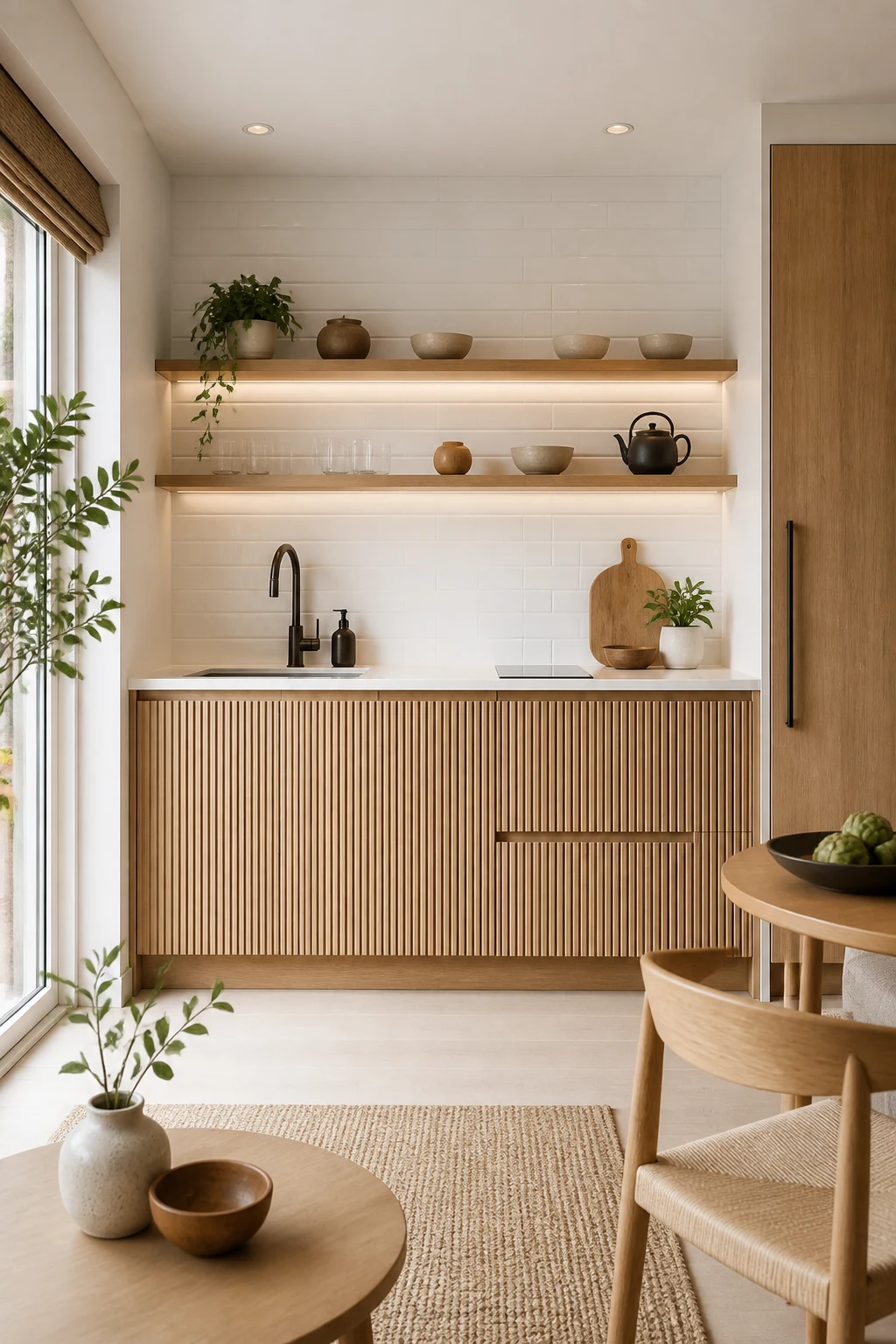
Incorporating fluted oak lower cabinets prevents a compact layout from feeling sterile or overly utilitarian. These beautifully textured natural materials bring essential warmth to small, highly functional spaces, contrasting perfectly with smooth white quartz countertops and classic subway tile. Understanding how these minimal elements work together makes spotting the subtle changes in our puzzle much more satisfying.
Solution: The 7 Kitchenette Differences
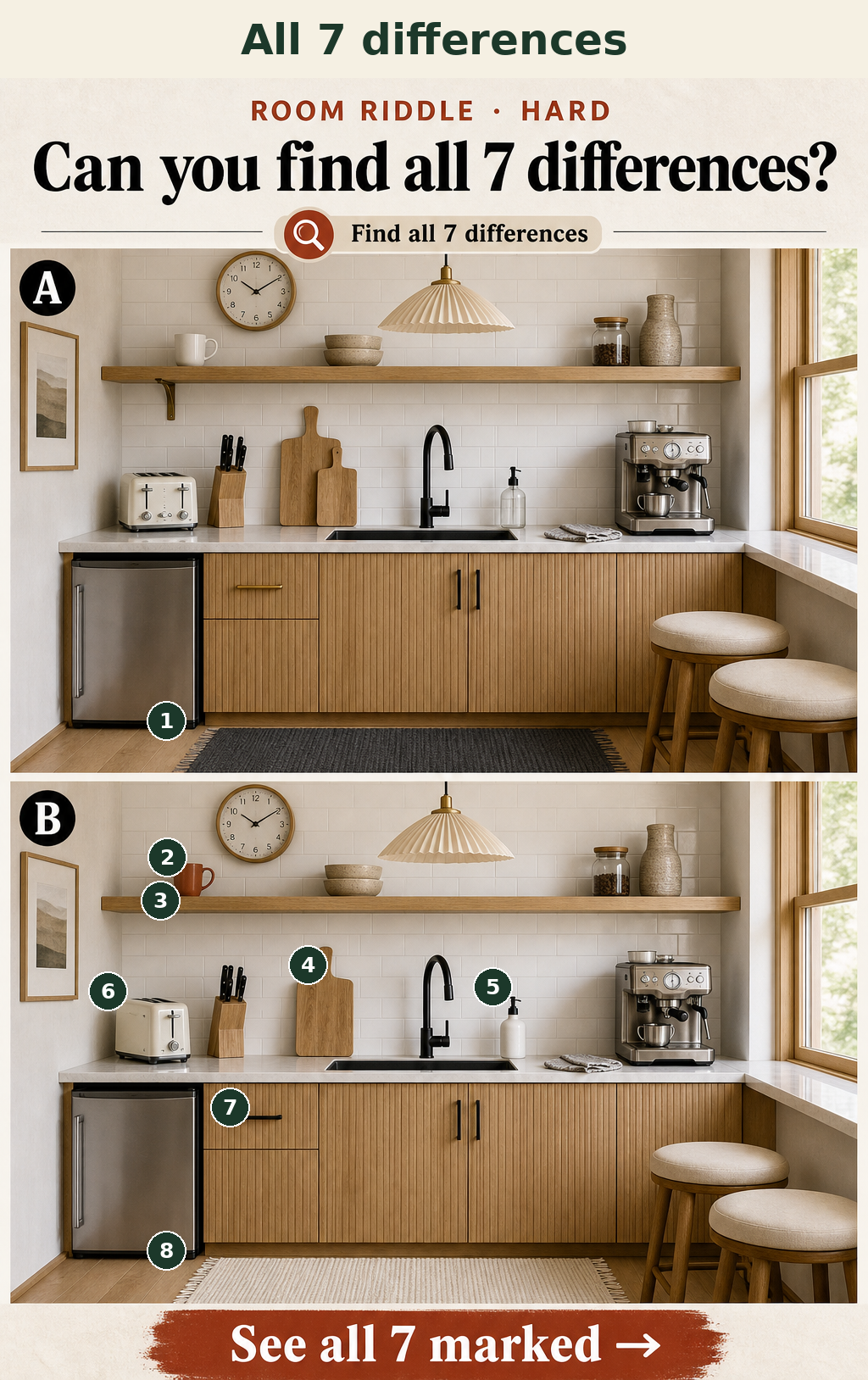
Seven objective changes across the floor, cabinetry, countertop appliances, and shelving distinguish the lower kitchenette from the upper one. In the bottom panel, the woven floor mat shifts to cream white, the lower left drawer pull becomes matte black, and the toaster angles to the right. Moving across the backsplash, only one cutting board remains, the soap dispenser changes to opaque white ceramic, the upper shelf mug turns terracotta, and the left metal floating shelf bracket is missing entirely.
Balancing Open Shelving and Storage
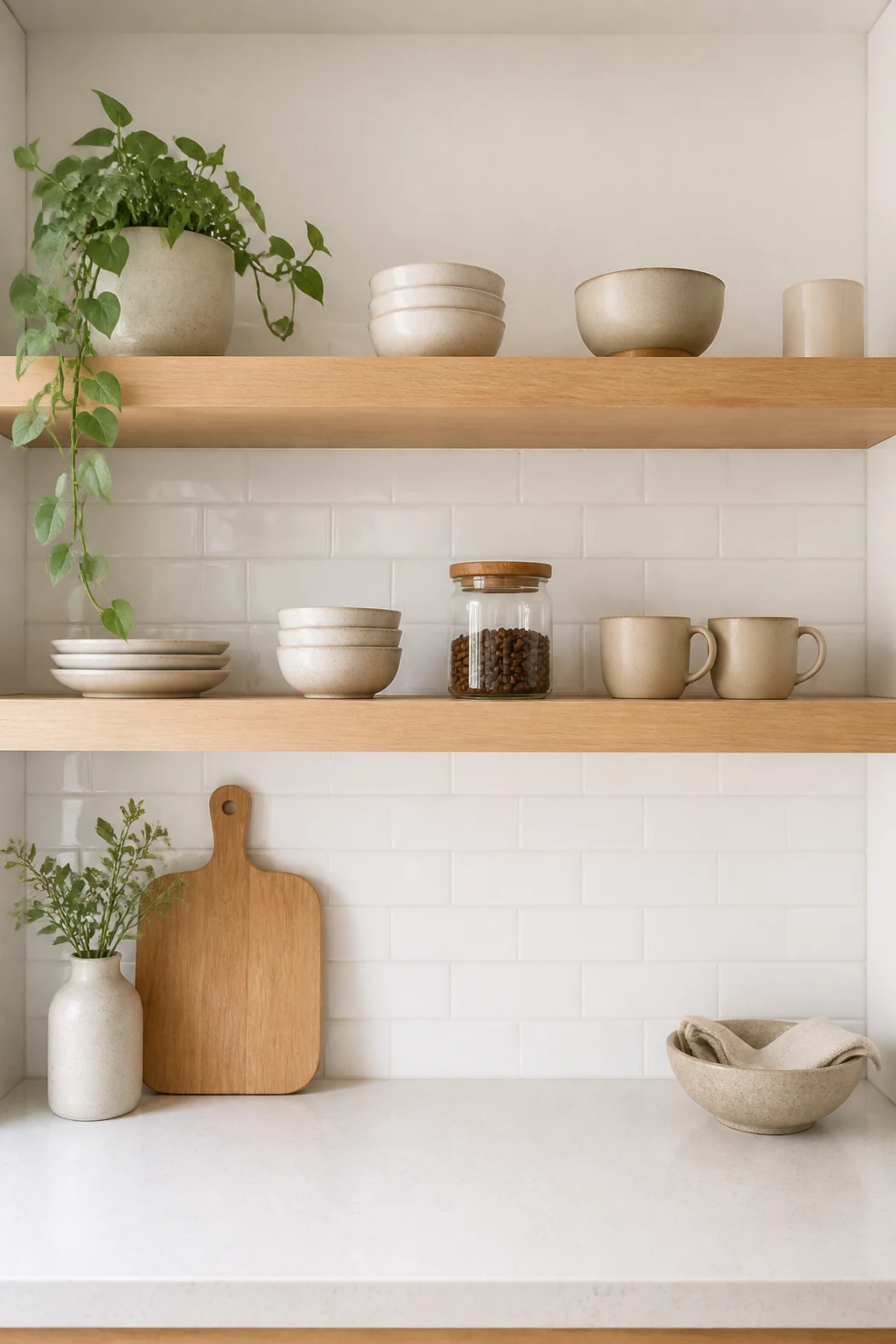
Light oak floating shelves naturally draw the eye upward, making the ceiling feel significantly higher while maintaining a beautifully airy atmosphere. They provide a perfect stage for curated dishware and daily coffee essentials, keeping necessary items highly accessible. This open storage strategy avoids the heavy visual weight of traditional upper cabinets, allowing the beautiful tile backsplash to truly shine.
High-Contrast Hardware and Fixtures
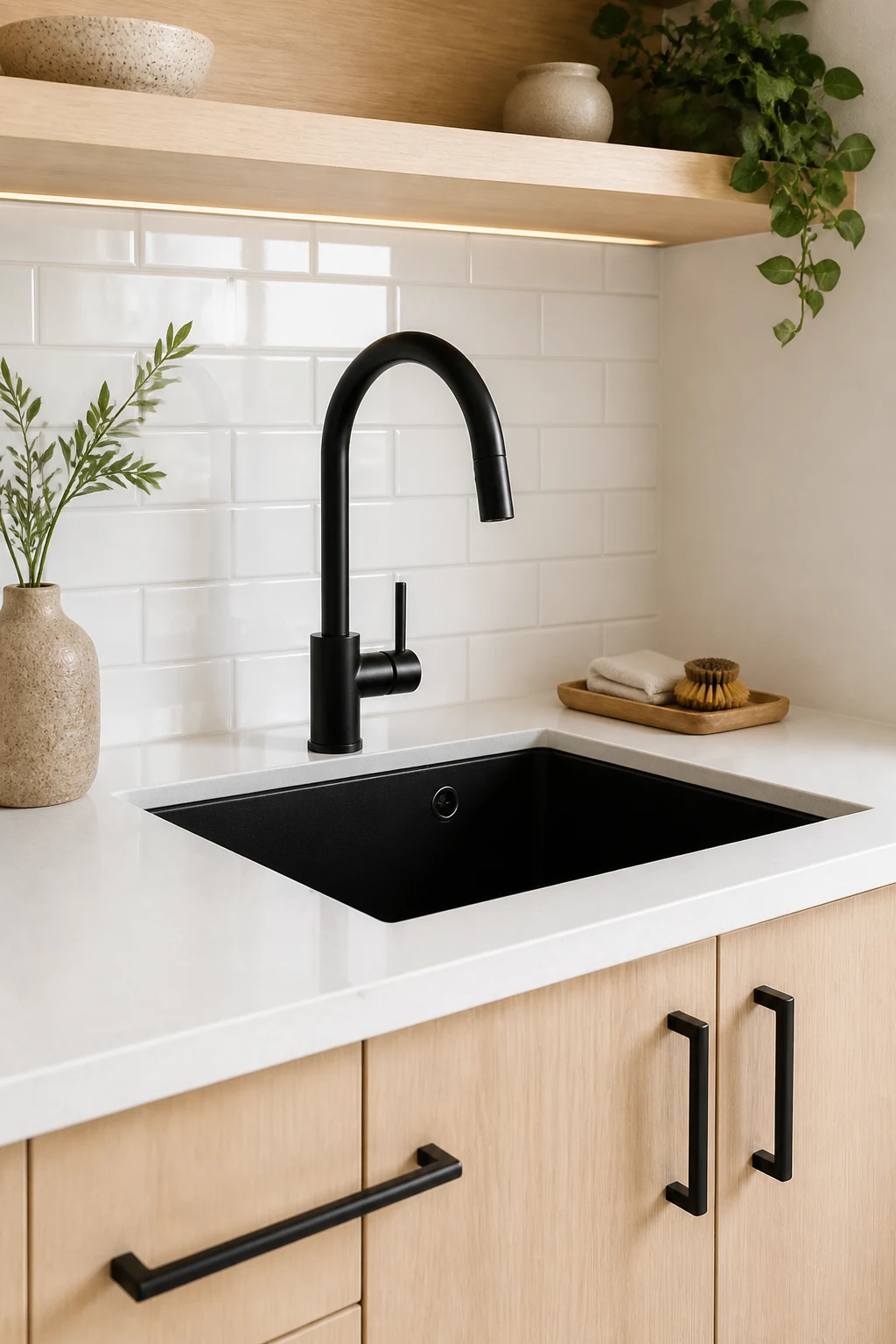
Matte black acts as a crucial visual anchor in Japandi design, strategically grounding light wood tones and bright white surfaces. A sleek gooseneck faucet and matching cabinet pulls provide necessary crisp contrast against soft natural woods. This deliberate dark hardware defines the functional zones beautifully, adding modern sophistication without overwhelming the small, carefully curated room footprint.