
The way a classroom is designed has a big influence on how well students learn and how they interact with each other. When you put some thought into it, you can put together a space that sparks both creativity and concentration.
1. Highlight Student Accomplishments

Set up a space where students can show off their projects. This not only makes them feel more confident but also gives them a sense of achievement.
2. Create Hands-On Learning Spaces

Set up specific zones for different activities, like reading nooks or science areas. My students have always appreciated how these spaces can make learning more energetic and interesting. You can optimize your floor plan by exploring these desk arrangement ideas for 20-student classrooms.
3. Try Nature-Based Designs

Add things like fake grass floor coverings or nature-themed wallpaper to bring the outdoors inside. It’s a surprising detail that often impresses students and gives the classroom a special touch. Explore our nature classroom theme ideas to find more ways to transform your space.
4. Create a Phonics Display

A phonics display using vowel and consonant charts can be a great tool for teaching phonetics. I’ve personally seen how it helps with language growth, turning a simple wall into a hands-on learning experience. You can explore creative word wall ideas to further enhance your classroom environment.
5. Emphasize Orderly Storage

Make use of shelves, containers, and labeled boxes to keep learning supplies organized and within easy reach. I’ve learned that having an organized space is essential for a productive classroom. You can also apply these bed sheet organizer ideas to keep your linens and fabric supplies neatly stored.
6. Add Environmentally Safe Materials

Use sustainable materials such as bamboo or recycled furniture to design your classroom. They’re not only environmentally friendly, but they also make the space look naturally stylish.
7. Bring in Natural Decorations

Add plants or nature-themed decorations to create a peaceful and inviting feel. I often use plants to balance the energy in a room, which turns it into a calm learning space. You can find more inspiration in these 3rd grade classroom decor ideas.
8. Create Quiet Areas

Set aside areas for quiet thought or focused studying to help those who need a peaceful break. These areas have turned out to be very helpful in my designs for supporting different learning styles.
9. Provide Adaptable Seating

Forget about the standard desk arrangement and pick different seating choices such as bean bags, small tables, and stools. I’ve noticed that flexible seating options encourage teamwork and relaxation among students. You can also explore top fire pit seating options to create a more versatile environment.
10. Use Pin Boards for Organizing

Swap out standard display boards for pin boards to create a flexible and organized classroom. Keeping the space organized and active is a personal preference of mine.
11. Pick Soothing Color Options

Pick calming colors like blues, greens, and earth tones to create a peaceful space. I’ve noticed that these palettes can lower stress and create a more focused setting. Explore our calm-inspired ideas for an energized classroom to further enhance your learning environment.
12. Choose Lively, Well-Lit Spaces

Putting energetic colors like green, blue, and yellow into your classroom can turn it into a space that feels alive and welcoming. I’ve discovered that these colors not only make the room brighter but also improve the spirits of students and teachers. You can even apply these vibrant blue and yellow color schemes to other areas of your home for a cohesive look.
13. Add Informative Decorations

Decorate your walls using educational charts, pin boards, and inspirational posters. These decorations not only make the room look better but also reinforce what’s being taught in subtle ways. You can find more inspiration in our best ideas for end-of-year classroom bulletin boards.
14. Apply Simple Design

Use a less-is-more strategy to keep the room from looking too cluttered. I’ve found that simple design helps students focus better and makes the room more useful overall.
15. Add Technology Wisely

Incorporate screens and devices in a way that helps, rather than gets in the way of, your teaching techniques. I’ve come to the conclusion that tech, when used properly, can create new methods for learning.
16. Use Markable Areas

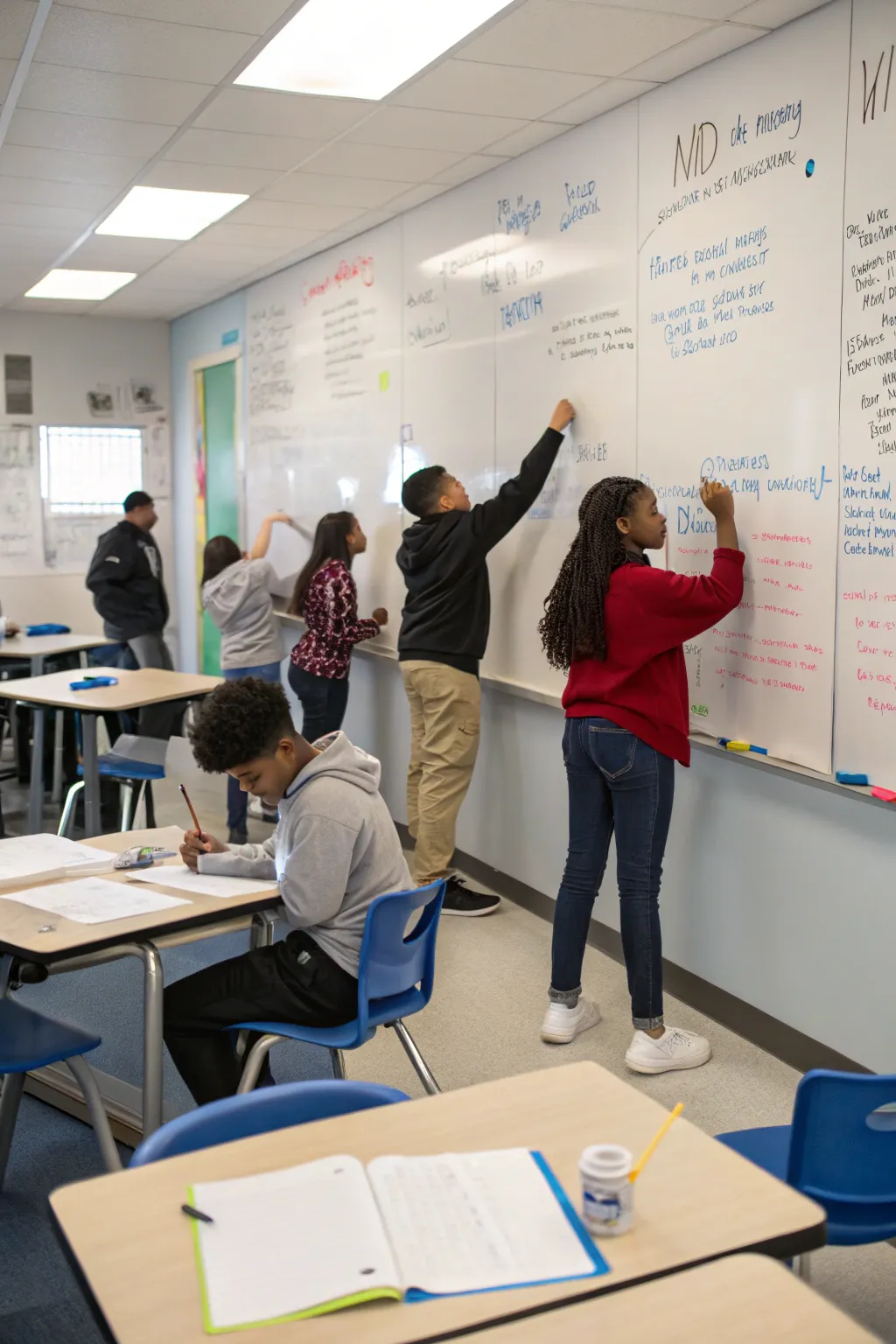
Turn parts of your walls or desks into markable surfaces using chalkboard paint or dry erase sheets. This not only saves paper but also encourages sharing ideas without planning.