
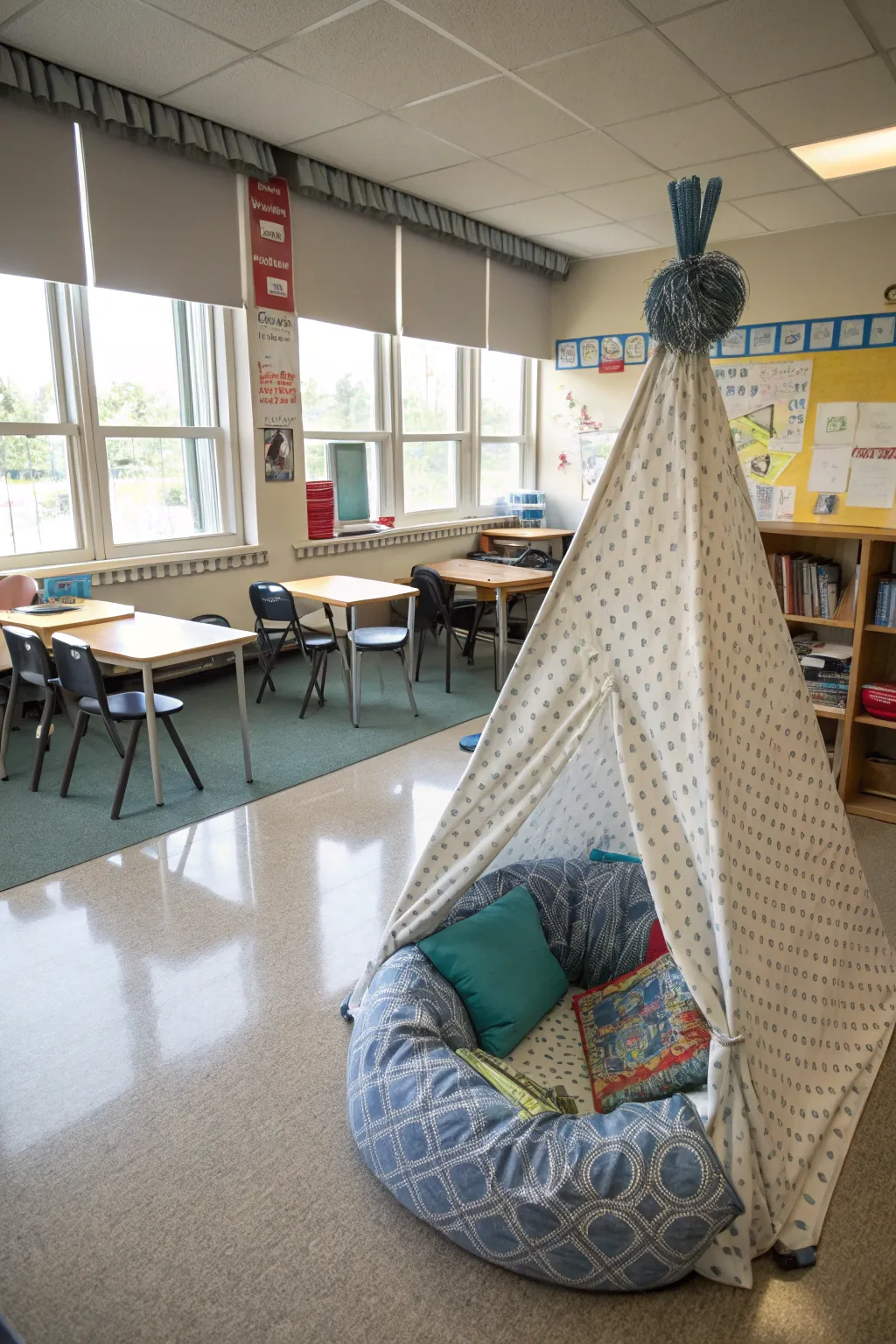
In the whirlwind of academic life, establishing a serene classroom is truly transformative. It not only supports greater student concentration but also cultivates a feeling of security and peace.
1. Use Gentle, Neutral Hues

Choosing gentle, neutral hues for your classroom can transform the area into a tranquil retreat. From my experience, incorporating shades like light sky, gentle sand, or soft moss soothes the senses and fosters a peaceful mood. These colors work perfectly when you implement a beach theme in your learning space.
2. Help With Open Conversation

Encourage open conversation to build trust and lower anxiety. I always ensure students know they can express their thoughts and feelings openly in our classroom. You can further support this environment by incorporating nature classroom theme ideas that promote a calming atmosphere.
3. Use Adaptable Seating

Adaptable seating choices allow students to select how and where they are most comfortable while learning. This approach can boost focus and reduce restlessness.
4. Include Sensory Aids

Offering sensory aids, like squishy balls or motion toys, can help students manage anxiety and stay focused. I’ve found these tools are very helpful for students needing tactile engagement. You can incorporate these items into your 3rd grade classroom decor to create a supportive learning environment.
5. Use Scent Therapy

A subtle touch of scent therapy can have calming effects. Consider using essential oils in a diffuser to build a soothing scent in the classroom. These sensory details pair perfectly with our creative fall classroom decorating ideas.
6. Design a Nature Display

A nature-themed display can bring the outdoors inside and offer a visual getaway. Use scenes of forests, oceans, or gardens to inspire and calm.
7. Greet with Uplifting Thoughts

Putting up uplifting thoughts on the walls can uplift and encourage students. I’ve personally seen how these messages build a supportive and inclusive space. You can further enhance this environment by using effective desk arrangement ideas to foster better collaboration.
8. Design Relaxing Seating Areas

Adding relaxing seating such as soft sacks or plush pads can make the area welcoming. I’ve noticed that students are more at ease and attentive when they have comfortable seating choices. You can find more inspirational ideas for classroom interiors to help design your space.
9. Assign Mindfulness Spots

Set up areas for mindfulness practices such as quiet time or deep breathing. These spots can act as a break for students who need a moment of calm. You can decorate these areas with fresh ideas for spring bulletin boards to create a welcoming environment.
10. Apply Muted Lighting

Using muted lighting can establish a warm and inviting classroom atmosphere. Adjustable lamps or twinkle lights can add a gentle glow that is softer than regular bright lights. You can also explore creative lighting for bunk beds to find more ways to enhance your space.
11. Elevate with Calm Sounds

Playing soft, calming music can help keep a peaceful atmosphere. I often use nature sounds or gentle instrumental music to build a soothing backdrop. You can explore more budget-friendly meditation room ideas to complete your space.
12. Add Natural Touches

Adding natural touches, like plants, can significantly elevate a calming vibe. In my designs, I ensure that plants are included to connect students with nature, enhancing their emotions and focus. You can also incorporate these elements into your Valentine’s Day classroom decorations for a festive yet serene environment.
13. Set Clear Activities

Consistent activities provide a feeling of security and predictability. I ensure my classroom has a clear schedule to help students feel more at ease, including festive St. Patrick’s Day classroom door decorations.
14. Organize Intentionally

A clutter-free area is essential for a calm classroom. I suggest using shelves and bins to keep materials neat and out of view, which lowers visual distractions. You can explore more feed room organization ideas to maintain a tidy space.
15. Add Art Expression Spots

Set up a small area for art expression, where students can express themselves creatively. This is a fantastic way to channel emotions constructively.
16. Design a Peace Garden

A small desktop peace garden can offer a moment of mindfulness. Students can take turns arranging the sand and stones, offering a peaceful break in their day.
17. Add Calming Accessories

Add elements such as canopies or teepees for personal space and calm. These accessories develop private areas where students can retreat when they need a break.